Biolighting: A New Alternative for Light

icone_v7qrqw

Glowee.com

In the developed world, light and electricity go hand in hand. But what if there was a way to produce light without electricity? That is the question Glowee, a biolighting living system, is striving to resolve. Glowee is a biological source of light that relies on the natural properties of marine microorganisms, specifically, the genetic coding for bioluminescence. The benefit to this alternative lighting is that it emits very low light pollution and CO₂.

To understand this new development, Continue reading

Going Bananas for a Good Cause

5591717_orig

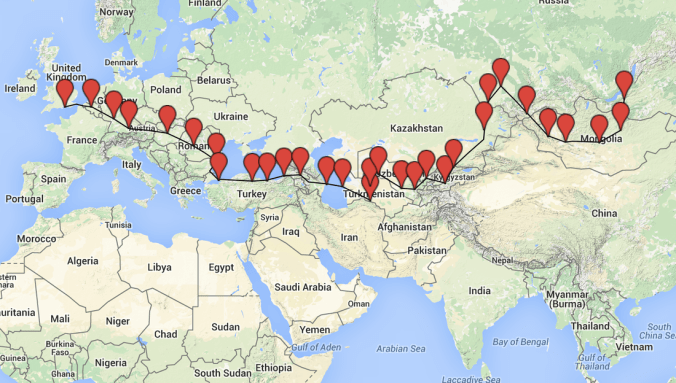
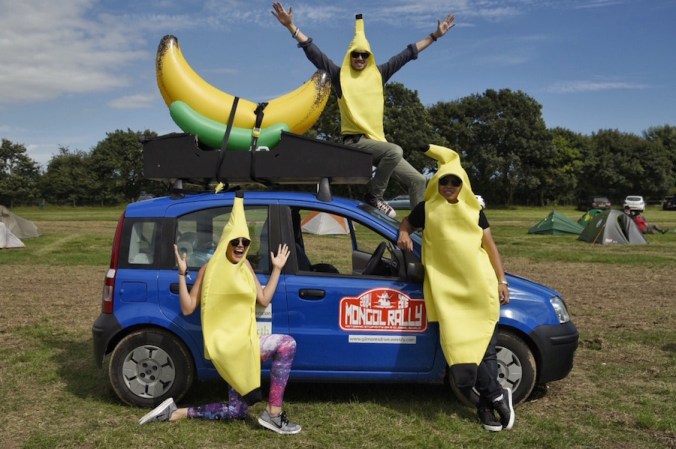
Driving 10,000 miles in a miniature, beat-up car from London to Mongolia might not be everyone’s ideal method to travel around the world (or at least, about 1/3 of the world’s surface). However, this challenge, known as the Mongol Rally, is more than just an unconventional thrill for adventurers. The challenge also requires participants to raise a minimum £1000 for charity, the first half going to Cool Earth, an organization dedicated to protecting endangered rainforest in order to combat global warming, and the rest to the charity of the team’s choosing.

2016-07-16-145637420-eabf5-ios_1_orig

Team Bananavan from gilmoresdrive.weebly.com

Continue reading

Plus-Energy Homes


roxbury-e-townhouses-by-interface-studio-architects-889x626

Roxbury E+ Townhouses. All photos: Inhabitat.com

We love finding new and innovative solutions to live more sustainably. In this case, imagine living in a home that not only produces enough energy (from renewable sources of course) to sustain its own energy consumption but also produces surplus energy.  These are known as plus-energy homes and they are not only energy efficient, but also eye appealing and becoming more affordable. Here is a list of eight homes that pioneer in sustainability (the three I have listed are my top favorites):

1. ZEB pilot House by Snøhetta in Norway

Dramatically tilted toward the southeast, Snøhetta’s ZEB Pilot House is a plus-energy family house that produces enough surplus energy to power an electric car year-round. Located in Larvik, Norway, the 200-square-meter home serves as a demonstration project to facilitate learning and is powered by rooftop solar energy and geothermal energy.

Continue reading

Keep Up Your Sustainable Efforts

5611

Source: The Guardian

Some positive news for all sustainable development worldwide (so yes, please continue your individual efforts to reduce your energy consumption and mitigate your carbon footprint, because they are paying off):

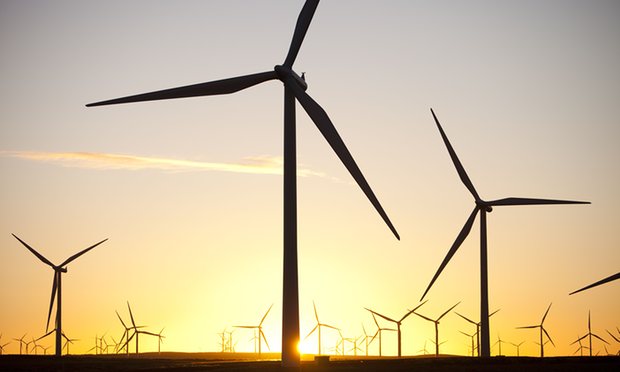
The amount of coal, oil, gas and renewable energy used by the global economy is falling quickly, a clear sign that economic growth is having less of an impact on climate change than in the past, according to new data from the U.S. Department of Energy.

The measure of the amount of energy that is used per unit of gross domestic product is known as energy intensity, and it’s an important indicator in the progress countries are making in tackling climate change. Globally, energy intensity has fallen 30 percent since 1990 and about 2 percent between 2014 and 2015.

Continue reading

A Fluttery Meal Companion

img_9901_zps957eyelg

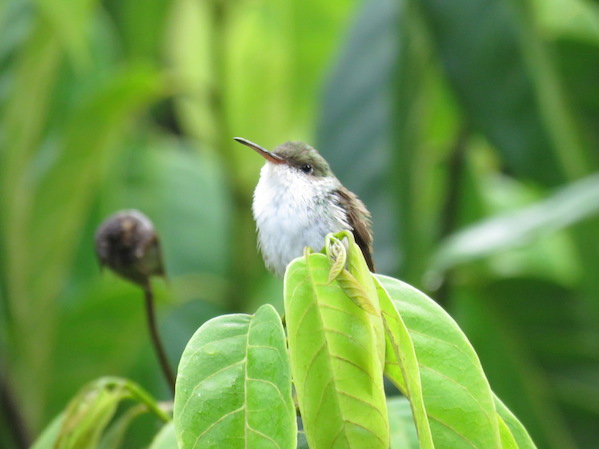
White-bellied Emerald by Seth Inman

You are always guaranteed to have a fluttery companion at every meal at Chan Chich Lodge. Whether you are sipping on an early morning cup of Gallon Jug coffee or munching on a hearty black bean burger for lunch, a variety of hummingbird species will perch on nearby branches, whiz by your ears, and fight one another for a precious sip of sugary liquid from the hummingbird feeder and nearby flowers. It is an entertaining and lively spectacle full of reproachful tweeting and muffled buzzing as the hummingbirds dive and zig-zag through the different obstacles (sedentary, observant humans included) that surround the dangling feeder.

Continue reading

Dirty Rio

wireap_206705173401436b8c64a3b0e628ca89_16x9_1600

Source: ABC News

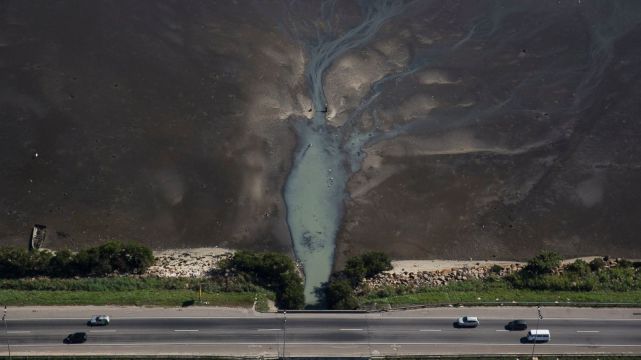
The 2016 Rio Olympics start in two days and in three days athletes will have to face the uncontrolled pollution debris and hazardous water contamination levels. The 1,400 athletes participating in water competitions and 300,000 to 500,000 foreigners expected to visit Rio de Janeiro and the beaches at Copacabana and Ipanema are at risk of becoming ill. This unfortunate predicament comes even after the city’s 2009 Olympic bid when authorities pledged that they would invest in a billion-dollar cleanup program to “regenerate Rio’s magnificent waterways.” Continue reading

My First Encounter with Chan Chich Lodge

img_9736_zpscnhylmqj

Chan Chich Lodge is camouflaged deep within the Belizean forest and within the ancient ruins of a Mayan structure. When you are driving along a rocky one-way limestone road through a variation of open cattle pastures and the dense forests for several hours, you don’t realize you have reached the lodge until you have driven past the welcome sign and are passing by one of the twelve wooden cabañas. Disclaimer: perhaps this first impression is singular to me because I first arrived to the hotel via ground transportation, at dusk, and in a drowsy state. Continue reading

Cool Chemistry

120556_web

Source eurekalert.org

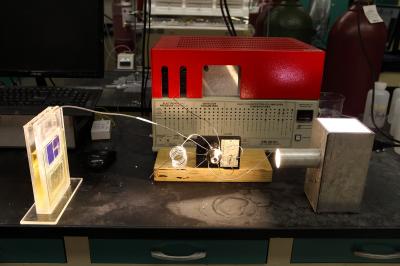
Increasing levels of CO₂ are the principle cause of the alarming climate changes that we have observed in the past several decades, so why not use the same chemical compound that is causing all our woes to generate fuel, or electricity, as we saw here a few days ago? The scientific community is well aware of the common and “conventional” renewable energies, so researchers at the University of Illinois at Chicago have engineered a solar cell that converts atmospheric carbon dioxide directly into usable hydrocarbon fuel, using only the sunlight for energy.  This new invention removes the necessity of batteries and solves two crucial problems: Continue reading

The Big Headed Ant


072716_ca_ants_feat_new

Source sciencenews.org

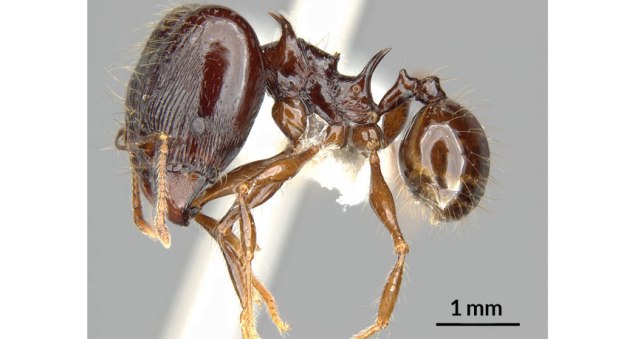
Whether it be inside or outside of our homes, ants are everywhere on land. The Pheidole drogon and Pheidole viserion worker ants, found in the rainforests of Papua New Guinea, are ones that have spines protruding from their thoraxes, an intimidating sight for anyone or anything trying to tangle with them. However, researchers suggest that the thorny-looking spine might instead be a muscular support for the ant’s over-sized head, which is used to crush seeds. Continue reading

The Most Avid Fans of Flying

weimerskirch3hr_860

Photo © AURÉLIAN PRUDOR/CEBC CNRS

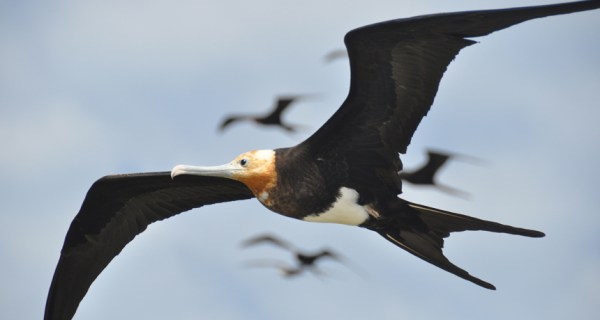
Who enjoys flying? I do (on planes, of course) and birds certainly do as well (they better because they do a lot of it)!  According to recent study, frigatebirds can drift in the skies for up to two months without landing (I think this makes them the biggest fans of flying, along with albatrosses, another ocean-faring flier). In order to do this, the seabird seeks out routes with strong and upward-moving currents to save energy on its flights across the ocean. By hitching a ride with favorable winds, frigates can fly more than 400 kilometers a day (which is the equivalent of a daily trip from Boston to Philadelphia) and avoid having to flap their wings as much.

For instance, the birds skirt the edge of the doldrums, windless regions near the equator. For this group of birds, that region was in the Indian Ocean. On either side of the region, the winds blow steadily. The winds come from cumulus clouds (the ones that look like fluffy cotton balls), which frequently form in the region. Riding upward-moving air currents underneath the clouds can help the birds soar to altitudes of 600 meters (about a third of a mile).

The birds don’t just stop there, though. Sometimes they fly higher into the [cumulus] clouds…[and] use the rising air inside the clouds to get an extra elevation boost. It can propel them up to nearly 4,000 meters (2.4 miles).

Continue reading

“Kissing” Corals

Source discovermagazine.com

You don’t have to be a romantic to appreciate the underwater rainbow canvas that is a coral reef and marvel at the fact that these organisms have been spotted exchanging an underwater embrace, a behavior researchers have termed “polyp kissing.”

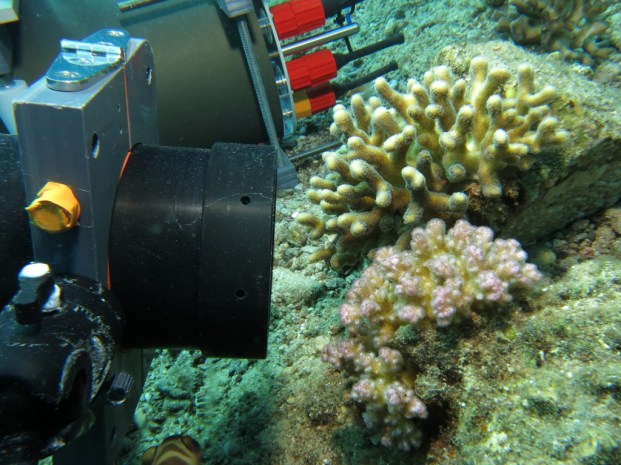
A first-of-its-kind underwater microscope that can observe coral polyps at resolutions of up to 2 micrometers while still remaining a safe distance away allowed marine biologists to watch coral behavior in real time. Not only did they see two species of coral fighting for territory (a previously observed behavior), but also two corals entwine their gastrovascular openings in the act of “polyp kissing” (a previously unknown behavior). Continue reading

Pigeons Helping with Health Research

newyorkpigeon

Source conservationmagazine.org

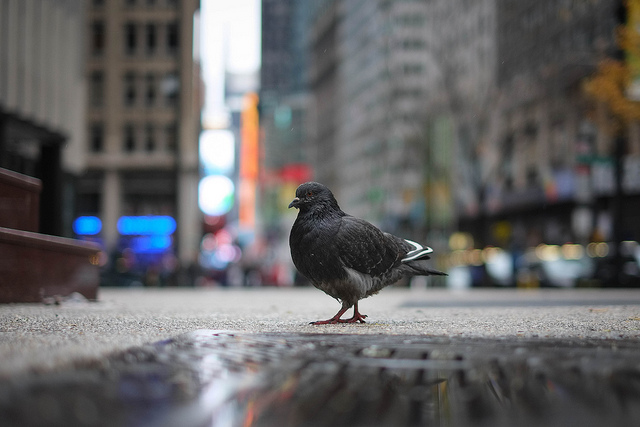
For most city dwellers, pigeons are just another speck in the hustle and bustle of urban life and are only truly noticed when they don’t move out of the way fast enough as you stride down the sidewalk. However, for environmental health scientist Rebecca Calisi from the University of California, Davis, pigeons are her primary focus and the basis of her research for potentially finding areas in cites with high level of contaminants dangerous to humans.

Continue reading

Green Rooftops

rooftop20hydroponic20garden_zpsaz6euobl

Source Pinterest.com

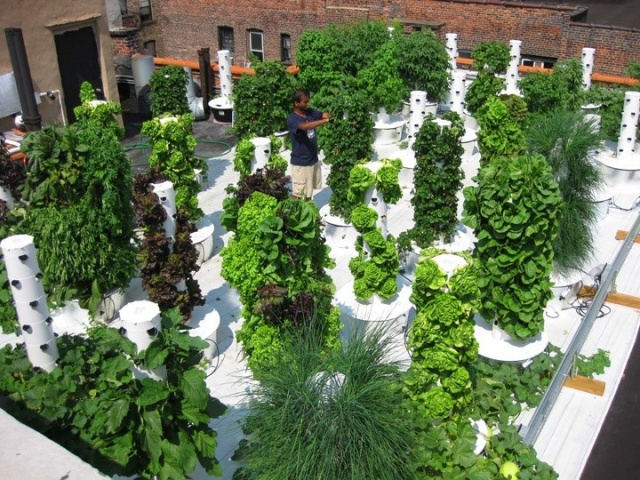
According to the Population Reference Bureau, since 2008 more than half of the total global population lives in urban areas. What does this mean for farmers and the food industry? It means that as cities expand, farmland is receding farther away from the markets that supply the city consumers. In effect, the food has to travel longer distances, which increases their cost and environmental impact. However, there is good news for those with a green thumb (or pinky!) and creative mind (here are some examples we’ve written about previously). Continue reading

Slothy Sloths

sloth_zpsz5rmsghb

Source news.wisc.edu

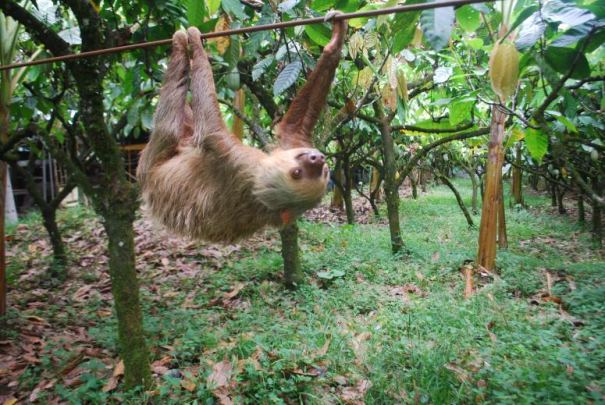
Sloths are my favorite arboreal folivore, which is just the short, scientific way of saying an animal that lives in trees and feeds only on leaves. Observing this placid-looking creature was and still is quite a novelty for visitors (and locals, like me) to Costa Rica given that its sluggish nature is uncommon for a arboreal vertebrate…and its adorable fuzziness is simply too cute not to stare at. To understand the rarity of this type of animal (arboreal folivores) better, a group of researchers from the University of Wisconsin traveled to Costa Rica and began to investigate the sloth’s adaptation to a slow lifestyle. Continue reading

Kakaw Designs

kakaw_zpsromz8y4q

Image from Vimeo

Recently I was introduced to a small online business that sells handmade women’s boots and bags called Kakaw Designs. Seth met the company’s founder, Mari, before his work at the school they both taught at in the Galapagos four years ago and mentioned the ethical concept of her business.

Continue reading

Pinocchio in the Forest

pinocchio20lizard_zpsnwefj0ks

Source: BBC.com

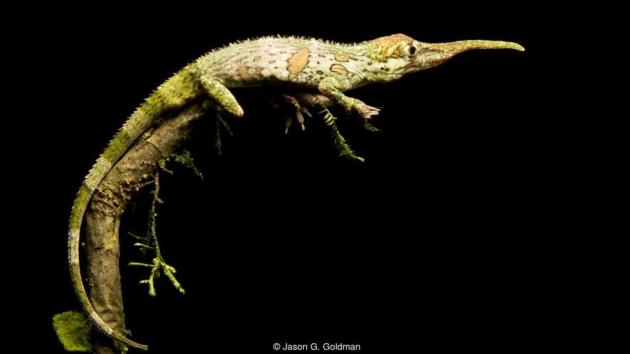
Eccentric and alien-like creatures abound on Earth, but often times these species are found in very remote and small areas. The Ecuadorian horned anole, also known as the “Pinocchio lizard,” is a species that would likely appear in Discovery Channel’s TV series Life (if it has not done so already).  This curious lizard with a long, malleable nose was found in the Mindo cloud forests of Ecuador’s Pichincha Province in the 50’s. Aside from its peculiar nose, what makes the story more intriguing is that it ‘disappeared’ from human research world for almost 40 years until it was rediscovered by a group of birders (hurray birders!) in 2005. The purpose of the horn and how it moves are still a mystery, but Jason Goldman has written an article for the BBC Earth website that elucidates some of the rare reptile’s habits:

Lucas Bustamante carefully aims his laser pointer at a small branch some 50ft (15m) above the ground. The green spot of light is clearly visible, but I just cannot see the lizard he has spotted: just branches, leaves and moss.

Continue reading

The New Ranchera (In Practice)

Ranchos, mountains, and coastline make up the bulk of Baja California Sur. The languid cattle or skittish chickens are what one most commonly sees when one is driving along the dirt roads, but if you take what might look like a short cut or a fun exploration route, you are most likely driving on someone’s driveway and will find a ranchero’s home at the end of it. I was keen to do some off-road exploring, particularly through the arroyos, but a car would not make it through and walking seemed too inefficient.  We were told by our neighbors (the only family that comes to vacation at their beach house exclusively in the summer time) two houses down from Villa del Faro that the family who delivers the water has a mule that they let people ride. As we talked more about the possibility of riding their mule up the arroyo, I learned that it was not a typical offer the family made to strangers, so that meant we were going to have to get introduced.

Continue reading

A Leap into the Sun


20160717_085340_zpsehmrqyi6

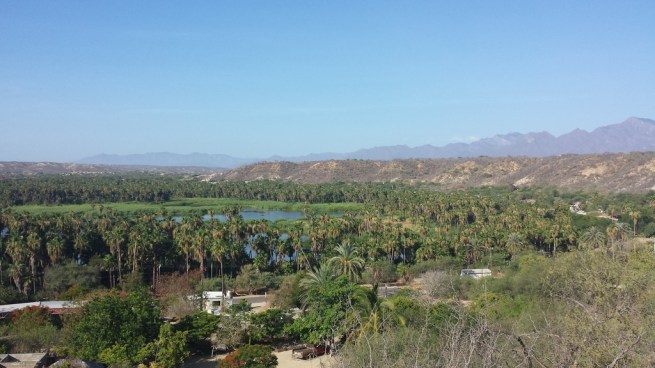
Among the foothills of the Sierra de la Laguna mountain range in Baja California Sur lies a geological marvel of isolated natural hot springs, fresh lakes, and rocky canyons, so we dedicated a whole day to discover a few of these natural wonders, protected within the Biosphere Reserve of Sierra de la Laguna. After almost two weeks of gazing upon a landscape of brown shrubs and dusty arroyos (not counting the great gardens here at Villa del Faro), the sight of a freshwater pond surrounded by palm trees and green undergrowth near the town of Santiago at the base of the sierra was like seeing a dear friend from childhood once again. I could not stop smiling and felt revitalized at the sight. Continue reading

A Birdy Kinda Film

compressed20wild20parrot20flock

Image from Evergreen.edu

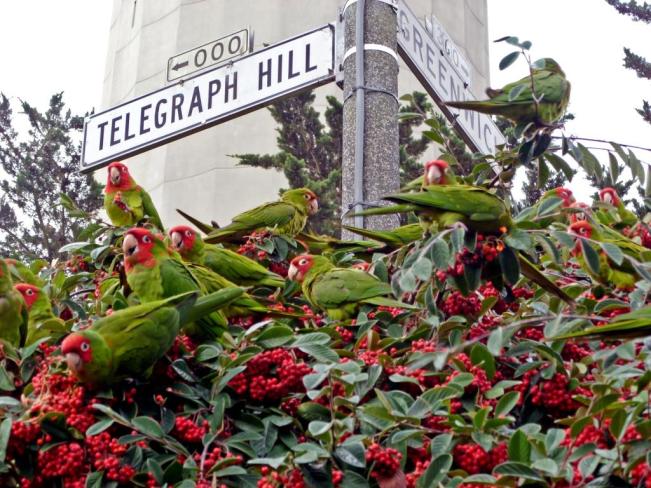
Given the large amount of bird lovers on this blog, if you have not seen the documentary The Parrots of Telegraph Hill I recommend you watch it (list-keeping birders, on the other hand, might not like it as much). As any of our followers would know, every day on our blog we feature a bird, usually exotic to westerners, on our Bird of the Day post, and frequently have a bird-related post (as you can see below) regarding their habits, migration, population change, and more (I guess I’ll add another one to that list right now!). Continue reading

Out of Sight, Out of Water

acquifer_zpsl4jzg8aa

Source: National Geographic

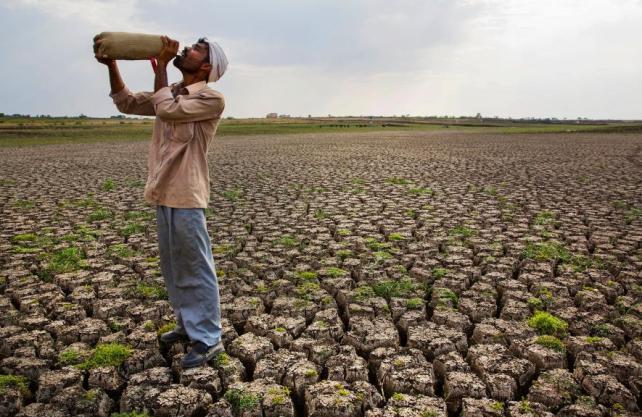
As a person who’s had the privilege to live her entire life in areas that have access to potable municipal water, I view water as an environmental commodity that only involves the twist of a faucet knob to obtain it (as I think most people who have enjoyed the same privilege do). Even when the water supply was cut off for some unknown reason, getting usable water was as simple as going to the closest convenience store and purchasing a five gallon jug or waiting for the daily Costa Rican downpour in the rainy season to collect some rainwater in large bins.

I have read, studied, and heard of the diminishing freshwater reserves on our planet and it is always on the back of my mind whenever I turn on a faucet to wash dishes, take a shower, brush my teeth, etc. I am frugal with my water consumption, but that is not enough. The fact that it is so easily accessible leads to the classic conundrum of  ‘out of sight, out of mind.’   Continue reading