Costa Rica Coffee Terrain: Central Valley

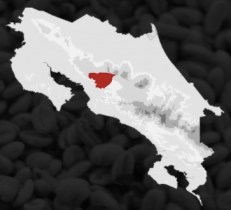
Organikos, the enterprise and its first regenerative agriculture project, is located in Costa Rica’s Central Valley. Also, one of the two Authentica shops is located on a Central Valley coffee hacienda, so we have multiple reasons to favor this region over others. But, no. It is just one more important part of the mix that makes up this country’s remarkably diverse coffee terrain:

CentralValleyCoffeeIn general, Central Valley beans produce well-balanced cups, with flavors such as chocolate and fruits and aromas including honey , among others. Its intensity varies depending on the altitude where the crop is established and may be medium to strong.

The Central Valley is composed of the provinces of San José, Heredia and Alajuela. It is the most highly populated region of Costa Rica, where the capital, San José, is located. Here, coffee plantations were first established and were then taken to the other seven coffee growing regions. Continue reading

Costa Rica Coffee Terrain: West Valley

When we talk of shade-grown coffee terrain, the Western Valley of Costa Rica has the classic look that would come to mind for many, as per the video above. The Costa Rica Coffee Institute describes the coffee from this region, which recently has been the “hot stuff” among coffee specialists, in this way:

WestValleyCoffeeFlavors range from traditional and beloved chocolate notes to a more complex selection, where good tasters can find citrus-like flavors such as orange, in addition to peach, honey and vanilla, among others. This is all in line with good fruit harvesting and processing practices.

Inhabitants of San Ramón, Palmares, Naranjo, Grecia, Atenas, Valverde Vega and Alfaro Ruiz in the province of Alajuela, in the Western Valley, enjoy a pleasant climate throughout the year, with well-defined dry and rainy seasons. Continue reading

Costa Rica Coffee Terrain: Guanacaste

The Costa Rica Coffee Institute, we believe, is a very important factor in the success of the country’s coffee sector, with the Tarrazu region leveraging the Institute’s resources more effectively than most. This, in turn, has played a role in Tarrazu’s exceptional success with its own regional cooperatives. Good growing conditions, of course, are the most important factor. But why else do some regions do so much better than other regions? What explains our neglect of the Orosi region during the first year of Organikos operations?

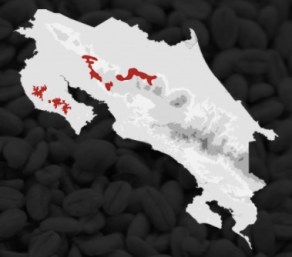
We have also neglected Guanacaste coffee region, but this seems more obviously based on its geography. If you have been to Costa Rica, as a statistical fact it is very likely you spent some of your time in the northwest of the country. Most visitors spend at least part of their vacation in this zone due to the exceptional beauty of the Pacific coast, especially as contrasted to the arid conditions just inland. It does not sound like coffee country. Read the Institute’s own description, where the bold section might throw off anyone, but the nuances that follow help understand why a closer look makes sense:

GuanacasteCoffeeHigh temperatures and a dry climate result in a bean that is long and soft when roasting. The drink is soft, full-bodied and lightly acid, with well-defined salty and bitter notes.

The Guanacaste region is characterized by the exploitation of coffee crops in small areas, distributed in the provinces of Guanacaste, Puntarenas and Alajuela (Sarapiquí and San Carlos). Coffee plantations are located between mountainous areas with the cool temperatures of the Central Volcanic and Guanacaste mountain ranges. Continue reading

Costa Rica Coffee Terrain: Orosi

One year ago, when we had completed all the cupping sessions, farm visits and decision-making about the 12 coffees we would start with, a couple regions were left out of our mix. One of them was Orosi, and there was no good reason other than our shelf space considerations. We will resume our search and find a coffee to represent Orosi in our offering soon.

Costa Rica Coffee Terrain: Tarrazu

Costa Rica has a remarkably diverse landscape for such a small country. And that diversity translates into an excellent variety of high quality coffees, each unique according to the region of origin, and the particular farms within those regions. We have chosen twelve coffees from the regions that international tasting competitions have consistently prized the most, including four single estate coffees that stand out for their quality. Continue reading

Curvy Berms, Seedlings & Fertile Earth

OrgLand3

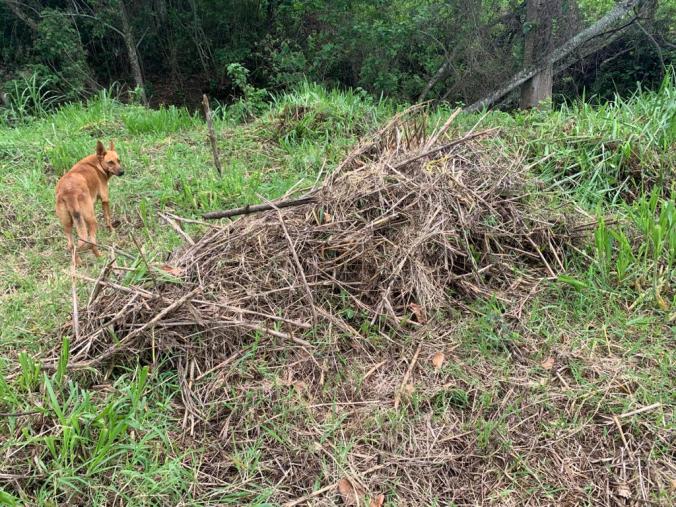
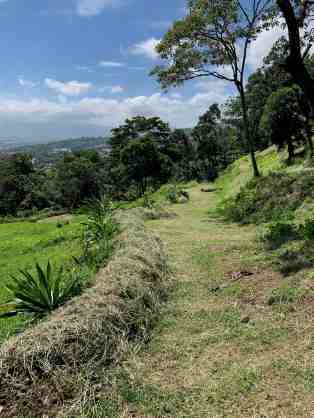
Curvy berm

What looks like an elongated haystack curving downslope in this photo we call a berm. No hay there, just a mix of cut grass covering branches, logs, and such. The purpose of a berm, diagonally traversing this hill, is explained better by others. When we prune trees and bushes, cut grass, and find old logs on the land their biomass help build this berm. Recently we trimmed all our vetiver grass, a soil retention ally that grows waist-high in rows throughout our hills. We cut it back twice a year, and added it to the  top of the curvy berm.
PoroSeedlings

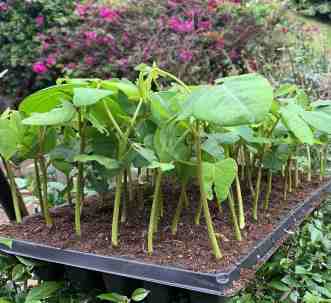
Poro seedlings

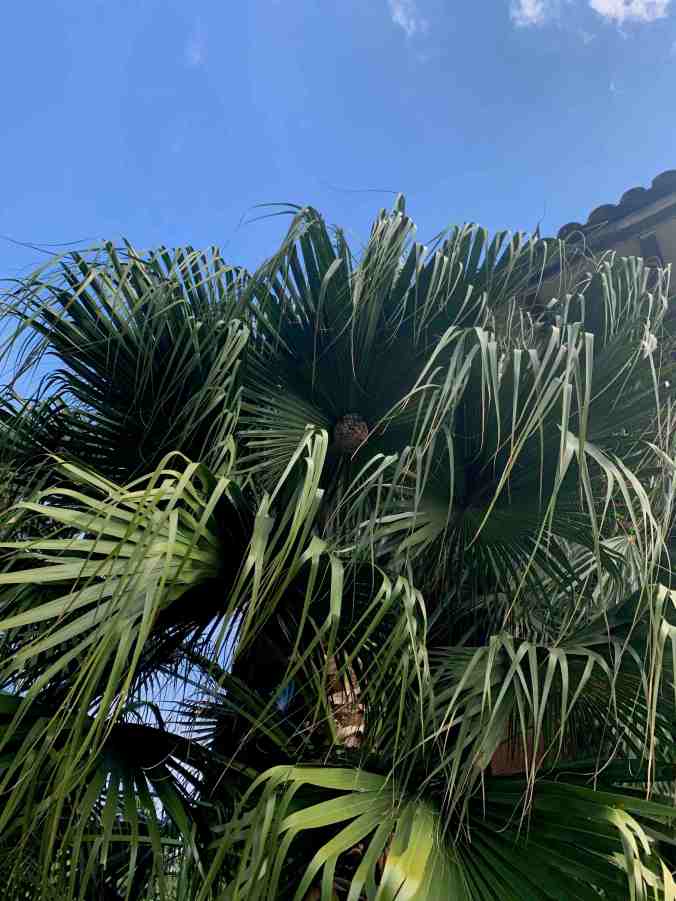
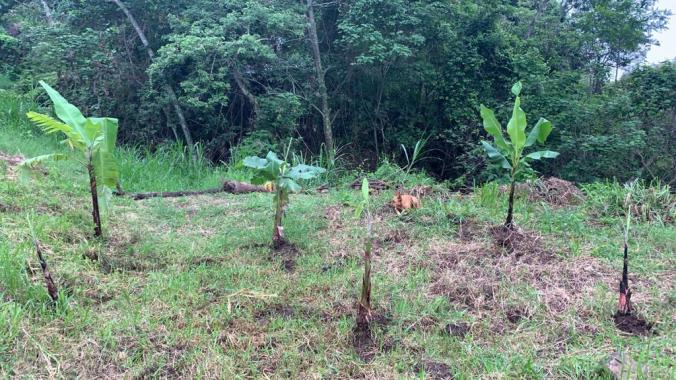
To the left of that berm are re-plantings of a type of palm that we had growing on the property already, which birds love for the orange fruit it provides and for nesting. Those 20 palms join the 30 banana and plantain trees on the flat area below, and the dozen or so citrus trees recently planted. The shade-providing and nitrogen-fixing tree called poro will be planted during the next waning moon cycle.
Poro

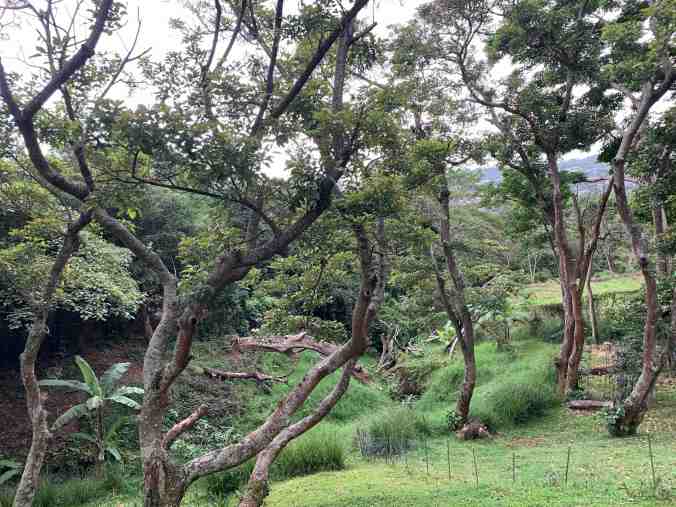
Poro trees, parents of the seedlings, with vetiver grass downslope

We have collected hundreds of seedlings from the poro trees originally planted when this land was part of a coffee farm.
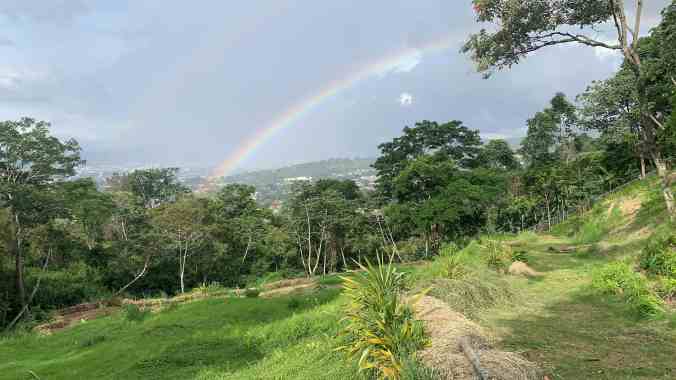
OrgLand2

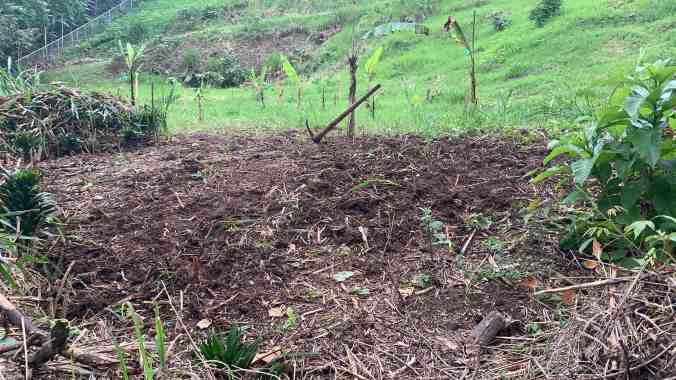
This rainbow reminded me to document the work on the land where the bees are, and where the coffee will be. For now, just a quick note. On the lower left of the photo above you can see where I have been using a pickax to loosen soil, dark and rich and teeming with earthworms, for planting in between the rows of bananas. I last cleared this space before we moved to Croatia in 2006. The grasses and vines that occupied this space for the intervening years until recent months, now our enemy for growing plants we favor, have performed an amazing ecosystem service. The earthworms and smell of the soil tell me that.
OrgLand4

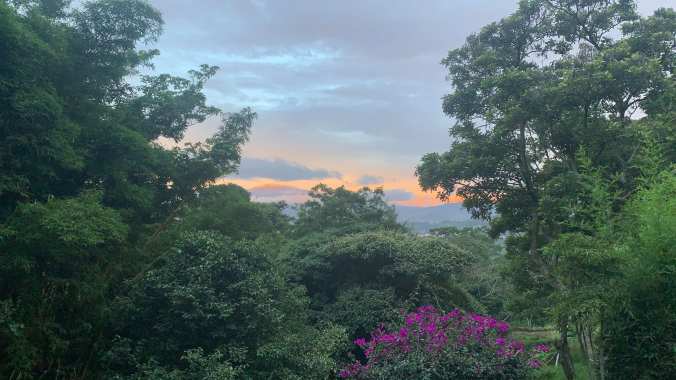
End of day, sunset time, back on the terrace of our home, an unexpected spectacle. In the photo below, which is looking due east, the sun is coming from the west, hitting Irazu volcano and lighting it up in such a way that it almost looks like golden lava is flowing down its cone. I’ll take that view, with thanks to whatever caused it.
OrgLand1

Sunset-illuminated Irazu volcano in the distance

Wasp Surprises

WaspNest

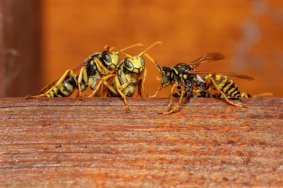
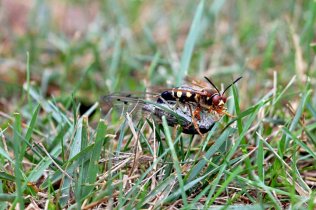
Nearly a month ago Cara Giaimo surprised me with a primer on bee vomit, and today she has done it again with an appreciation of wasps, whose ranking on the favored insect list is somewhere more tolerated than mosquitoes and less creepy than cockroaches. The bees we provided a new home for are doing well, and while their honey is something we look forward to, pollination is our primary motivator. I have been watching wasps build a home in the tree closest to our home–see it in the upper center of the tree in the photo above–and wondering whether to leave them in peace. Maybe so, for reasons outlined here:

merlin_174686076_b18624be-77dd-41b1-ba34-f5a7e2356151-jumbo

Paul Hobson/Nature Picture Library/Alamy

There Are Wasps in the Yard. You’d Better Get to Know Them.

They buzz. They hover. Sometimes they sting. But how much do you really know about these insects that can menace our summers?

merlin_174685686_9a58813a-5ccc-44ac-a4e2-7aa511c2b4a3-jumbo

Uwe Grün/Alamy

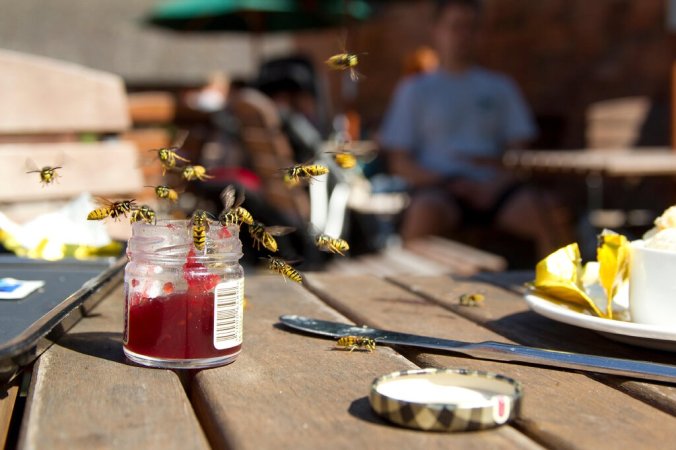
Wasps get a bad rap. And sometimes, they deserve it. Bumblebees don’t swarm your barbecue the moment you pour the lemonade. Butterflies won’t nest by the hundreds in your rafters, then sting you for the crime of walking by.

merlin_174684141_0d30f639-1805-4649-9d1b-630a1618d563-jumbo

Mark Lehigh/Alamy

But they’re not all “murder hornets,” and there’s another side to these so-called pests. Wasps have a place in the whirl of summer life. They raise families, stage complex battle royals and make paper with their own spit. Some even help us by hunting caterpillars and other crop-munching bugs.

They’re also your neighbors. As you’re mowing, gardening or dining al fresco this summer, you’ll probably meet some of them. Here’s how to appreciate — and not tick off — these creatures we share the season with.

20SCI-WASPS2-jumbo

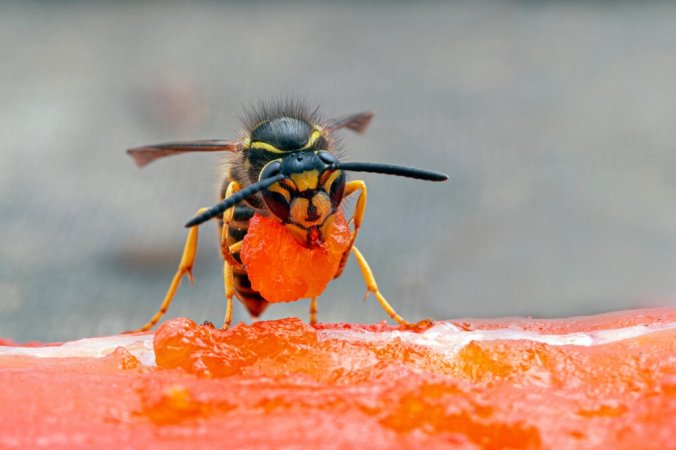
A German yellowjacket with a chunk of salmon to bring back to the nest. Ernest Cooper/Alamy

Uninvited guests have arrived at your picnic. They’re striped and kind of stocky, with black dots on their faces. They’re German yellowjackets, and they will not leave you alone. Continue reading

Swifts Here & There

Knight-Swifts

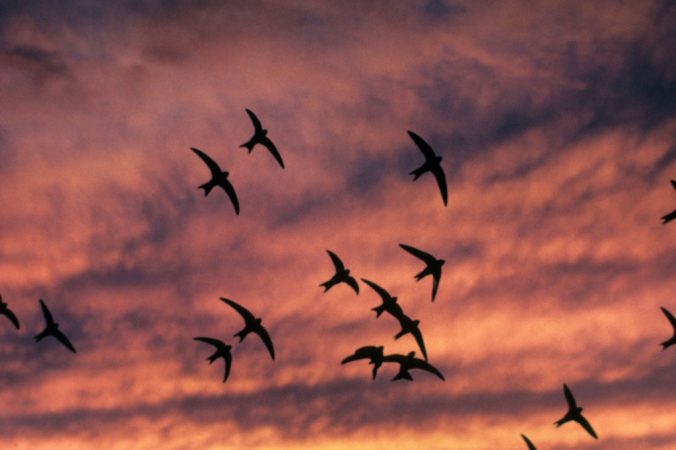
Watching a flock of swifts power and zoom all over the sky in Cornwall, I realized that the feeling of being trapped by the coronavirus is not just about wanting to be somewhere else—it is about wanting to escape this time entirely. Photograph from Alamy

53386951

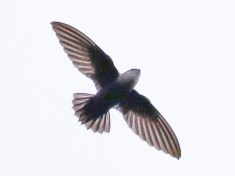
Costa Rican Swift. Chaetura fumosa. Smallest swift in most of range. All dark gray with contrasting pale rump and paler throat, both of which can be difficult to see in many viewing conditions. A good look at the rump is necessary for a firm visual identification, otherwise Vaux’s Swift can look very similar. However, in some parts of its range (the Osa Peninsula, for example) this is the only small Chaetura swift. Makes twittering calls similar to many other swifts. Usually found in flocks over forests and more open areas.

I am not even the second birdiest member of our family. I enjoy birding events and join the fun from time to time. Apart from such events I do not travel specifically for birds, even the one to the right.  We see it on occasion and it is a particular pleasure. Not as thrillingly colorful as a scarlet macaw, nor as resplendent as a quetzal, but it is part of a famed family of birds. The essay below explains why. In Costa Rica the airports will be opening up again on August 1. Until then, and still for the foreseeable future, tourism is primarily locals going on weekend outings. Birding is usually thought of as a motivator for foreigners visiting Costa Rica–especially those from the UK–but now is an activity appreciated by more locals than usual. Sam Knight‘s perspective from the UK, where tourism is also primarily local currently, can be especially well appreciated from our vantage point in Costa Rica:

Letter from the U.K.

Swifts and the Fantasy of Escape

On July 17th, I drove out of London for the first time since the start of the pandemic. The last time I had seen a field or sensed a broad horizon was four months earlier, when we escaped the city in the early days of the coronavirus, feeling faintly ridiculous, to celebrate my daughter’s third birthday with an Easter-egg hunt on a quiet country lane. Last week, I was taking my daughters to stay with their grandparents for a few days, in the town of Helston, in Cornwall. It’s about three hundred miles from London—no great shakes by U.S. standards but about as far as you can drive in England without crossing into Scotland or falling into the sea. We left at 5:30 a.m., heading west, and arrived in Helston in the early afternoon. It’s hard to describe the effect of movement after being confined in a dense urban neighborhood for so long. The monotonous walks to the shitty park. I felt like I was being unpeeled. As we stood in my mother-in-law’s garden, in the bright July sun, a party of swifts, tipping from right to left, their long wings like blades, came over our heads and spiralled higher and higher into the sky, screaming. Continue reading

Wordists & Their Discontents

One of the earliest series of posts on this platform, wordsmithing was a way for us to say something about words we like, words we avoid, and important words almost lost to history. A fun, useful, if shortlived series. On August 12, 2011 we started the Bird of the Day series, where photos tell colorful stories with no words other than species name and photo location. Yesterday’s BOTD marks the 3,251st entry in that series, whereas the wordsmithing ended after the 26th entry. Parsimony of words combined with excellent photography wins the series longevity contest. But I find I still care enough about words to post on the topic. I cringed when I heard this news below, but was glad to read more about the decision to include a nonsensical word creation in the dictionary (I am 100% with the teacher who will still mark it as incorrect):

Regardless Of What You Think, ‘Irregardless’ Is A Word

Merriam-Webster raised the hackles of stodgy grammarians last week when it affirmed the lexical veracity of “irregardless.”

The word’s definition, when reading it, would seem to be: without without regard.

“Irregardless is included in our dictionary because it has been in widespread and near-constant use since 1795,” the dictionary’s staff wrote in a “Words of the Week” roundup on Friday. “We do not make the English language, we merely record it.”

Merriam-Webster defines irregardless as “nonstandard” but meaning the same as “regardless.” “Many people find irregardless to be a nonsensical word, as the ir– prefix usually functions to indicates negation; however, in this case it appears to function as an intensifier,” the dictionary writes. Continue reading

Backyard Birding & Organikos

ViviBirding

Education Images/Universal Images Group/Getty Images

Thanks to the folks at Short Wave for this brief tutorial on backyard birding, featuring a scientist from the Cornell Lab of Ornithology. For those fortunate enough to be able to use some of their time in recent months for this purpose, the tutorial may resonate. A total novice like me finds it useful so I recommend it to others.

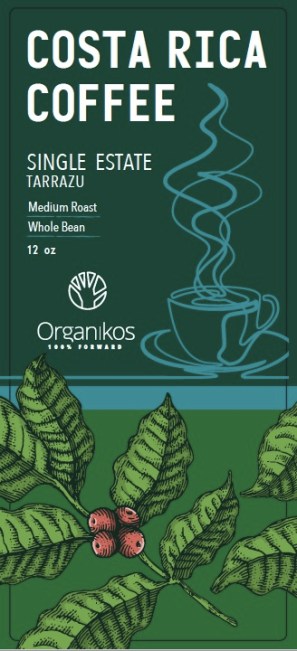
SETarrazuLabelI especially appreciated the advice of paying attention to the coffee that you purchase, because it can have significant impact on migratory birds. The new series of Organikos labels are almost ready for print-testing. One of the final decisions made in the last month was to let the label on the bag focus on the coffee and keep the bird-habitat mission messaging on the website and in places like this. A key part of that message is that the particular coffee offered matters most. We believe that if we start with the highest quality green beans, apply the perfect level of heat, and deliver them at the fairest price we will get what we need to plant more trees. So, the Tarrazu single estate is the second label I will share here. Along with the Hacienda la Amistad single estate organic, this is some of the most spectacular coffee grown in Costa Rica. And for every bag sold, the difference between what we pay to get this to you, and what you pay to Organikos, goes to bird habitat regeneration.
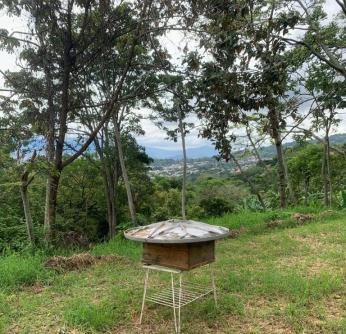
Bee Surprises

HiveOur bee obsession on this platform has many explanations, but my personal motivation for following the science of bees goes back to a summer in the late 1970s when I worked for a beekeeper. I cleared brush and vines from the forest edge to make way for more bee-friendly plantings. I worked within sight of a dozen active bee colonies in boxes where I could see buzzing swarms constantly. I learned to be calm around them from the man who tended them. He used a poncho, a mask, and a smoker when opening the boxes to remove honey, but other times walked among them with no protective gear. To my surprise the resins from Toxicodendron radicans–poison ivy, poison oak and poison sumac–did more harm to me than the bees I worked around. In fact, I was never stung by those bees. Not once.

Which explains why when we finally had the chance to start our own bee colony I was all in. Above is a bee box, with found objects inside, above and below it. The bees inside had nested at the top of our house so we had a beekeeper extract them. He gave them this new home in a location where we have been clearing brush to make way for coffee planting. The old table had been in the chicken coop and the mysterious disk was on the roadside headed for recycling. One month later now, very happy bees.

Brush

Above is a small sampling of the vines and brush I have been clearing from the land near that hive. History may not repeat, but sometimes it rhymes. As it happens, on my arm I have some of the same toxins from vines like those 40 years ago. The clearing work started in March and is nearing completion to make way for several hundred shade trees and several thousand coffee plants.

Bananas

One section of this clearing has already received twenty banana plants, based on the practice of our friends at Hacienda la Amistad. These make excellent companions to the coffee and are pollinated by bats, so provide another kind of ecological service too complex to discuss in a post primarily about bee surprises.

So, with all that in mind I was very happy to come across the story below by Cara Giaimo. Her work first appeared in our pages last October, then again a few months ago–both times related to birds. Somehow I missed this short article on bees from earlier this year, and I thank her for it now for making me laugh when there is not enough other news to laugh about:

22TB-BEES-jumbo

Frank Bienewald/imageBROKER, via Alamy

Bumblebee Vomit: Scientists Are No Longer Ignoring It

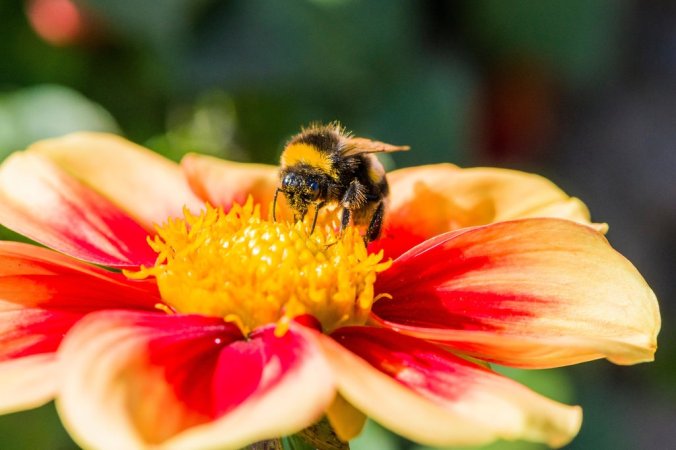
Regurgitation is an important consideration when it comes to the process of pollination.

The bumblebee is a discerning nectar shopper. When choosing which flowers to gather the sticky substance from, it might consider a plant’s distance, the shape of the petals and how sugar-rich the nectar is. Continue reading

Perils In The Great North

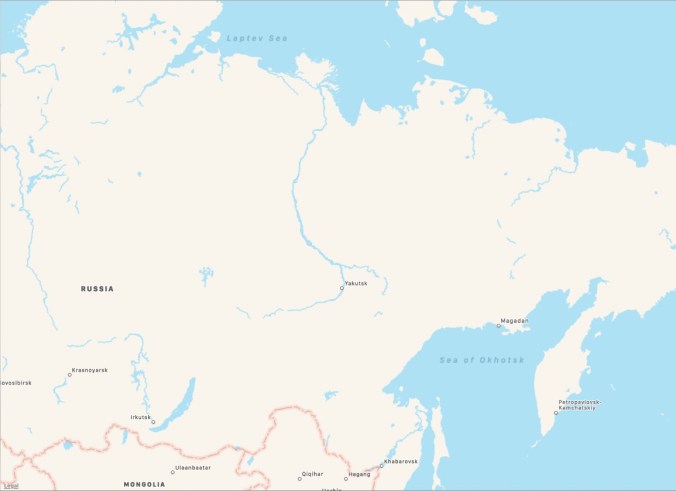
In the summer of 2005 I worked in Yakutia (officially known as the Republic of Sakha). My strongest memory is a week on a boat going from Yakutsk up into the Arctic circle. I can still feel the intensity of the August sun through my sunglasses at midnight, while freezing air pierced my fleece. My project assistant, who was also my translator, helped me understand from the boat’s captain and two crew members that our passage on the Yana River toward the Laptev Sea was getting easier and easier each year. They had all been Soviet naval crew on this river long ago and could remember plenty of Augusts when the northern stretch of this passage was not possible.

Yakutia

I was aware of climate change as a distant calamity that required urgent action, but did not have a clue what it might eventually mean for this location. The funding for our tourism development strategy came from a natural attraction discovered in the permafrost. Our assumptions about attracting nature tourism to this region were clearly rooted in the permafrost. For the following decade, projects we worked on in the region continued with these assumptions, which seems ignorant now.

Kormann-ArcticSummer

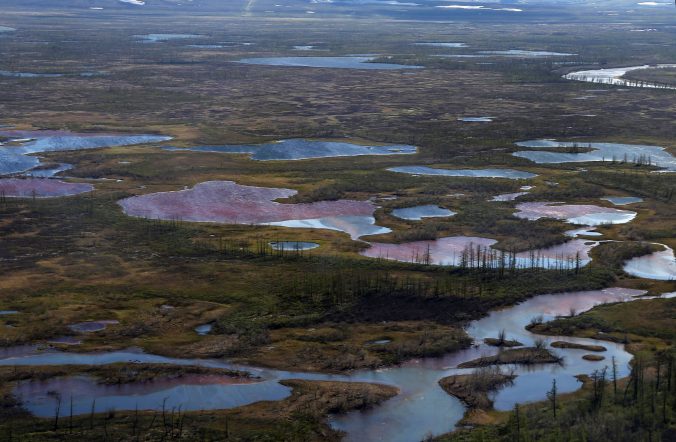
In Siberia in late May, thawing permafrost caused an oil-storage tank to collapse, leading to the largest oil spill ever to occur in the Russian Arctic. Photograph by Irina Yarinskaya / AFP / Getty

We have linked out to some of Carolyn Kormann’s various smile-inducing environmental stories, as well as more serious ones. A Disastrous Summer in the Arctic goes darker than her previous darkest, but is a must-read for keeping current on the impacts of climate change in faraway places.

The remote Siberian town of Verkhoyansk, three thousand miles east of Moscow and six miles north of the Arctic Circle, has long held the record, with another Siberian town, for the coldest inhabited place in the world. The record was set in 1892, when the temperature dropped to ninety below zero Fahrenheit, although these days winter temperatures are noticeably milder, hovering around fifty below. Last Saturday, Verkhoyansk claimed a new record: the hottest temperature ever recorded in the Arctic, with an observation of 100.4 degrees Fahrenheit—the same temperature was recorded that day in Las Vegas. Miami has only hit a hundred degrees once since 1896. Continue reading

Sensory Heritage Is The New Green

20200620_EUP501

For some time now green has been the new thing and we live in one of its showcases, with access to all kinds of tropical nature within easy driving distance. But it has been where we live that, for the last few months, has had us greening our own living patterns. There will be a fuller post on that soon, but for now I just smile at my friends across the Atlantic, on a day when our rooster woke me as usual well before the sunrise. And opening the gallinero (chicken coop) on my way to the lower land we are planting, I was sensitive to the smell that I had otherwise stopped noticing until I read this short piece. I appreciate the imaginative approach, probably unique to France, to protecting heritage that some at best take for granted and others find a nuisance:

Townies v tractors

French urbanites fuss about rustic noises and smells

Some second-home owners have sued over loud livestock and church bells

France’s sense of itself has long been rooted in the land, even though three-quarters of French people live in towns. Now, however, having locked down in small airless spaces, many city-dwellers feel the call of the wild. Estate agents report an uptick in searches for homes with gardens. Diehard urbanites talk wistfully of a bucolic existence in la France profonde. In a poll, 61% of the French think confinement will encourage people to move to the country or buy a second home. But do today’s townsfolk know what rural life really entails?

The question arose late last year, when Pierre Morel-À-L’Huissier, a deputy from the Lozère, a remote rural area, introduced a bill to protect France’s “sensory heritage”. By this, he meant “the crowing of the cockerel, the noise of cicadas, the odour of manure”, and other rural sounds and smells. Continue reading

Eliminating Fish From The Diet

1314 (1)

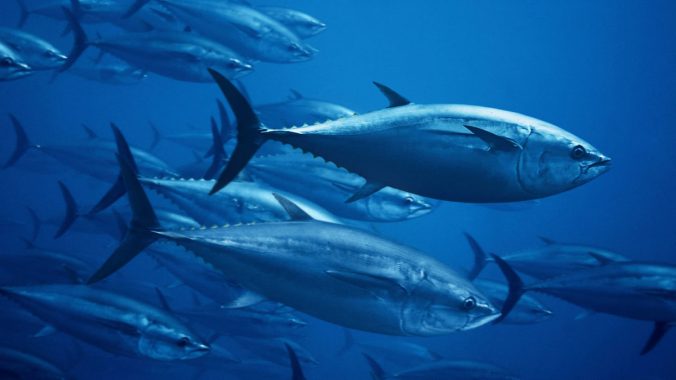
Atlantic bluefin tuna (Thunnus thynnus) off the coast of Madeira Island, Portugal. PAULO OLIVEIRA / ALAMY

Of all the ways to transition to vegetarianism, which I am on snail’s pace doing, I just realized that the one form of animal protein that I have completely eliminated without thinking about it is fish. I cannot remember planning on doing this, but at this moment I cannot remember the last time I ate fish. It may have been 2016. But I have been conscious of the sensation every time I am grocery shopping that I avoid the fish.

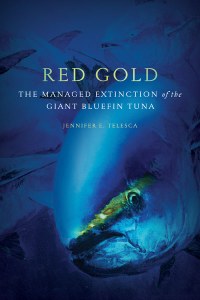
image_miniSushi was my favorite treat of a meal years ago, and while living in India we were as much pescatarian as vegetarian. But that changed with a growing awareness of the challenges related to regulating the world’s seas. So I quit eating things from it. Jennifer E. Telesca, writing in Yale e360, does not make me feel any better about this–as a data point I am exactly of zero relevance compared to the total market size–but I am gratified to see a book on a topic that will help me better quantify the reasons why exiting the market for fish is a priority:

How Global Regulators Are Selling Out the World’s Largest Tuna

The international commission responsible for managing Atlantic bluefin — prized for high-quality sushi — is failing to protect this magnificent fish. The regulators’ focus on fishing industry profits points up the need to change the way we view, and value, the lives of wild creatures.

In 2010, after years of global headlines highlighting the runaway harvest of bluefin tuna in the Mediterranean Sea and eastern Atlantic Ocean, the international regulatory agency managing this endangered fish capitulated. It cut the total allowable annual catch to 12,900 metric tons, the lowest level recorded. For the world’s most valuable fish, coveted as the most succulent sushi on the planet, a return to plenty looked promising. Continue reading

Re-Opening, Regeneration & Restoration

BeesAmie

Friday, one of the hotels where we operate Authentica re-opened. With not much exaggeration I can say that for hotel staff, for Amie and me, and for the Costa Rican guests we interacted with, seeing tourism start up again after three months felt emotionally kind of like this, only with serious social distancing.

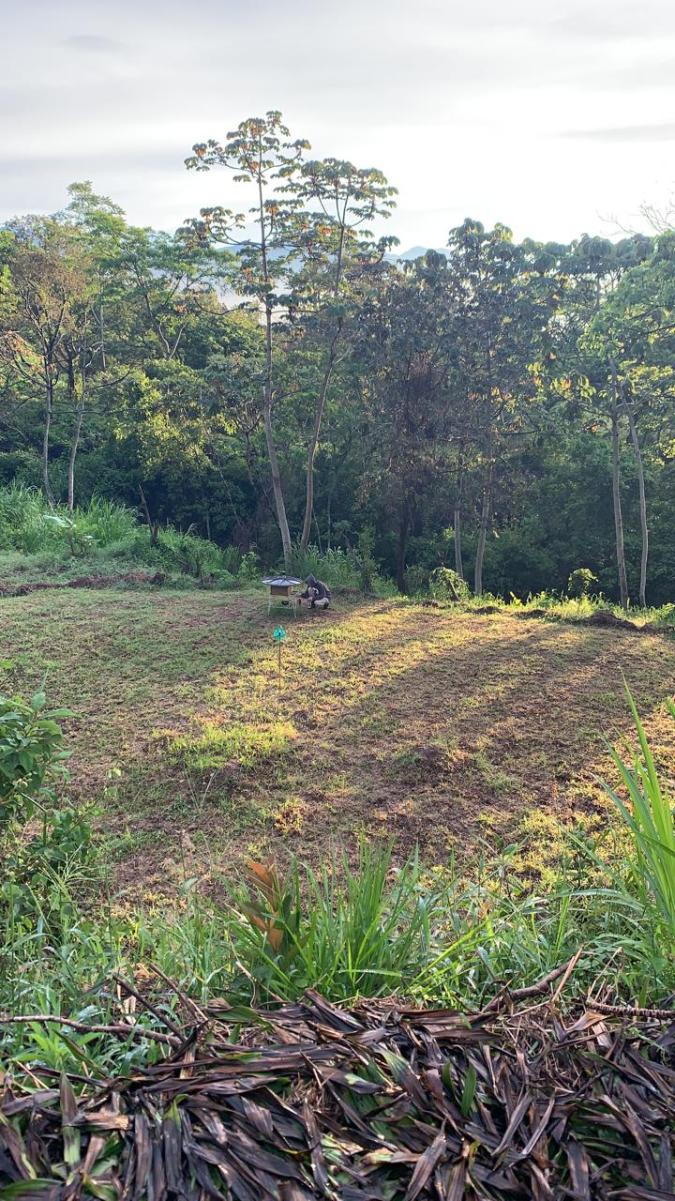
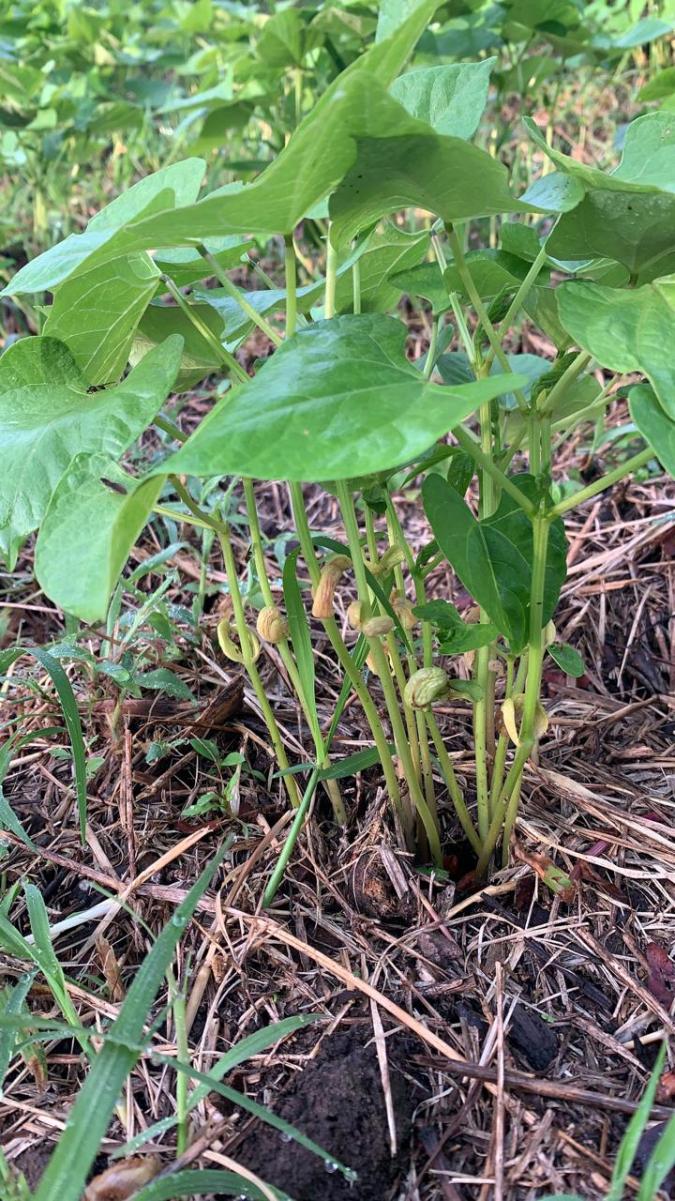
Yesterday, day 2 of this experiment in moving forward, before going to greet guests at the shops we began on the land. Above is the first of what we expect to be a larger set of honey bee colonies that will pollinate our coffee and fruit trees. Amie is in beekeeping tutorial mode and after a few weeks in place it seems to my untrained eye that the bees are happy with her progress. The land surrounding the hive, and other parts of the property, have been planted with beans common to the Costa Rica diet–mostly black and red–and some special varieties that we favor, such as white and butter varieties. Those we planted first, as you can see below, are already sprouting.

BeansSprouting

While we look forward to their eventual edible state, the primary purpose of these legumes is to fix nitrogen in the soil in advance of planting when our coffee seedlings are ready. Regeneration of the nutrients will allow the soil to host the coffee we are preparing for the microlot restoration project, planned long before current crises and to bear fruit some time after we have figured out how to move on with life. For now, seeing guests again, having beans sprout and bees buzzing is good enough.

Organikos Coffee

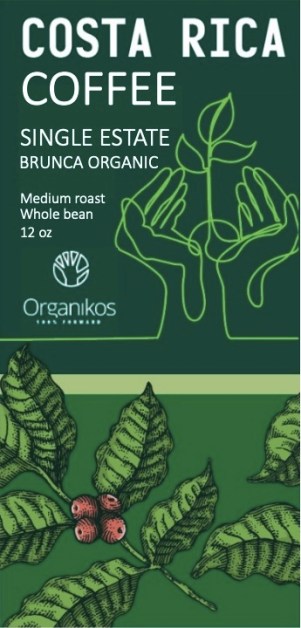
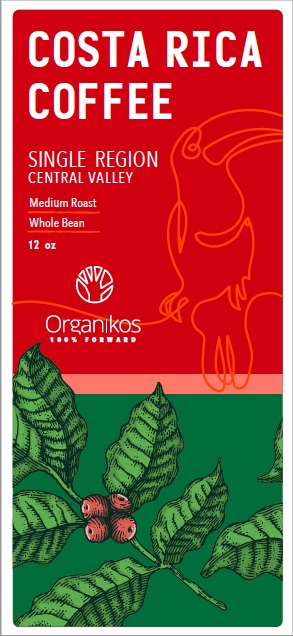
OrganikosNewLabelAmistadSince mentioning the new Organikos labeling and upcoming delivery of coffee in the USA we have progressed enough to predict that by sometime in August we will be shipping. The label to the left is mostly the same as three weeks ago, but now highlights the two general categories of coffee we offer. We knew one year ago that we would be featuring single estate and single region coffees from Costa Rica, but our labels did not focus attention on that as clearly as we now will. Organic, as well as Fair Trade and Decaffeinated were treated as their own categories, even though our organic is at least as special because it is a single estate. The same can be said for the two single region coffees–special for that reason but also due to their fair trade practices and decaffeination processing–so we decided to simplify the format as you see here, and can also see in the example below.

OrganikosNewLabelWhile we wait for our coffee to germinate, and for our graphic designer to complete the remaining sketches that accompany the twelve coffees, we are also finishing the structure of the e-commerce platform where the coffee can be purchased.

We started receiving requests last year from people who had bought our coffee while in Costa Rica about how to buy more and have it delivered to them. Not all of those queries were from the USA but under current circumstances it happens that fulfilling the requests in the USA is most feasible. So, we will be roasting weekly and coffee will arrive to those who order it within a few days.

If you are in the USA and you are interested in learning more about this option, please leave a message in the comment section here, or send an email to me at crist@organikos.com

Alladale’s Entrepreneurial Conservation Accomplishments

Alladale first came to my attention in 2017, several years after I had started reading about rewilding. It came to my attention because of an introduction, through a mutual friend, to the founder of Alladale. I recall finding his description of what he was doing as identical to our own work in entrepreneurial conservation. I cannot recall why we have only two prior links to Alladale in our pages, but here is one more, in the form of a 30 minute podcast and its descriptor page:

How to bring back a forest, and a Scotland of the past, one tree at a time

Listen to the latest episode of THE WILD with Chris Morgan!

7ad379620abc8aceddf0b11e06e91ce4

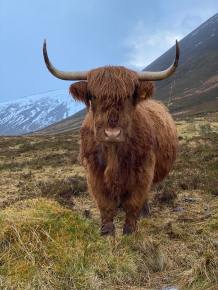
Scottish cow at the Alladale Wilderness Reserve.

The wind is really ripping through this valley in the remote Scottish Highlands as I’m zipping along in an ATV. I’m with highlander Innes MacNeil. He’s showing me a few remaining big old trees in the area.

The trees appear like something from a Tolkien novel — remnants of a forgotten time, like a magical connection to the past. There used to be a lot more trees like these across the Highlands. These are anywhere from 250-400 years old — and many are too old to reproduce.

“So these, we would describe them as granny pines,” MacNeil says. “The ones down here in front of us are about 250 to 300 years old, just sat in the bottom of the glen.” Continue reading

Looking Again At Tegucigalpa, Seeing Why Place Matters

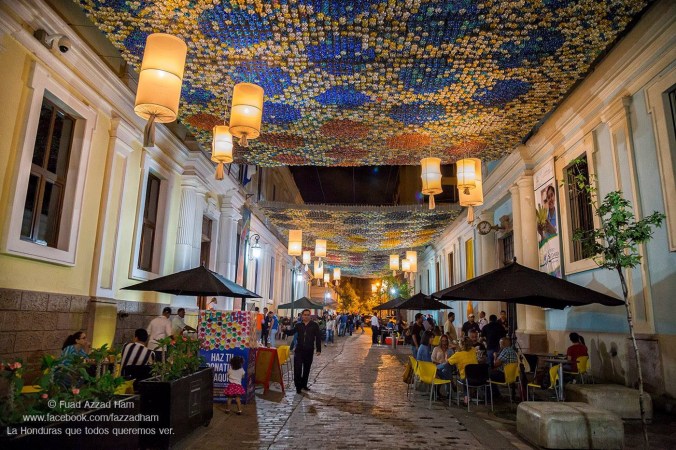
Starting in 1997 I got to know the entire country of Honduras over two years while working on a sustainable tourism development project for the government. I spent more time in Tegucigalpa than anywhere else because my monthly meetings with the Ministry of Tourism were held there. While poverty was visible, the city had a charm, unique in Central America, based on its particular history. At the time I also had many students from Honduras, most from Tegucigalpa, so it was more than a workplace for me. When hurricane Mitch descended on Central America in 1998, nowhere was more devastated than Tegucigalpa; by the time my project ended in 1999 I could not picture how or if the city would recover. I have not been back since, but continued to wonder. Nando Castillo has given me part of the answer, and I thank him for the clarity of his presentation on Medium, which I recommend taking five minutes to read:

Why Place Matters, Part I.

Can our cities evolve into the places we truly need?

1_U-iCEsQyUwFwdbL0H7CgfQ

Image: Fuad Azzad Ham

At Raíz Capital our mission is sustainable urban revitalization. Our vision is for Tegucigalpa, a community with a neglected urban core, to become the creative capital of Central America and regain its glory as a prosperous city. We are still a ways from realizing it, but this is the story of how we found that vision and began to make it come true. Continue reading

Crickets, Food For Thought

Cricket

ANNALS OF OBSESSION

WHY YOU SHOULD ADD CRICKETS TO YOUR DIET

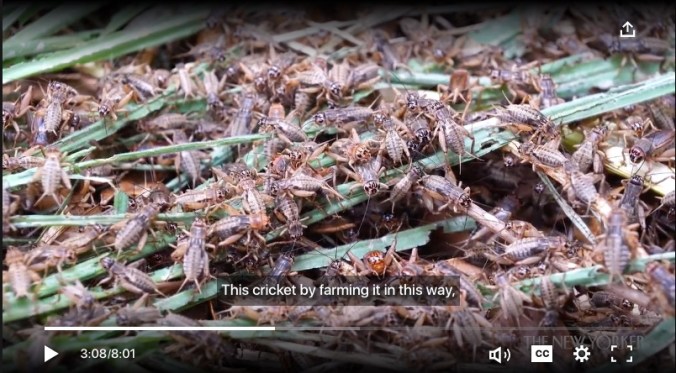
As climate change, disease, and political instability loom, the cricket farmers Adam Brody and Jude Tallichet, of Brooklyn and Queens, respectively, find comfort in the insects they’ve raised in their homes.

When we started carrying nutrition bars made from cricket meal in our shops earlier this year, I was not prepared for how well they would catch on. We started with a small, exploratory inventory. They sold out quickly, and when we reordered more they sold out again. I had not had cricket in my diet previously, and I am still not fully there (Gricket bars being my only foray to date), but I appreciate the efforts of those entrepreneurs making the case.

13,832 Seeds To Germinate

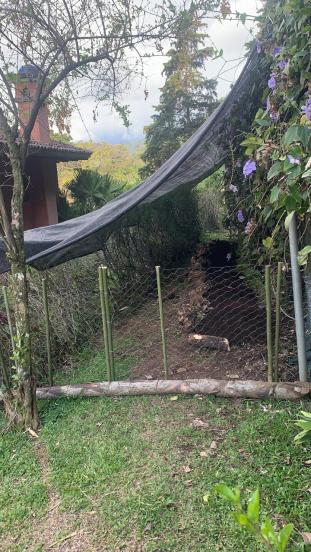
CoffeeClean5Time to see what our coffee is capable of. After cleaning the last parchment off, hundreds of beans unsuitable for planting were removed. For germination we took the path with a ratio of lowest cost to highest probability of success. On the spectrum of possibilities is no seedlings in August, or more than the few thousand we expect. The area in this photo, normally with no chicken wire or covering, has for two decades served no other purpose than for our dogs to run along the ivy-covered fence line on the right, chasing the occasional passing horse or cow or car. All that running has packed the earth pretty well so we built up a base of compost and potting soil, about two feet wide and thirty feet long. Diagonally above it all is agricultural mesh, to shade the seeds and to keep the rain from washing the seeds away.