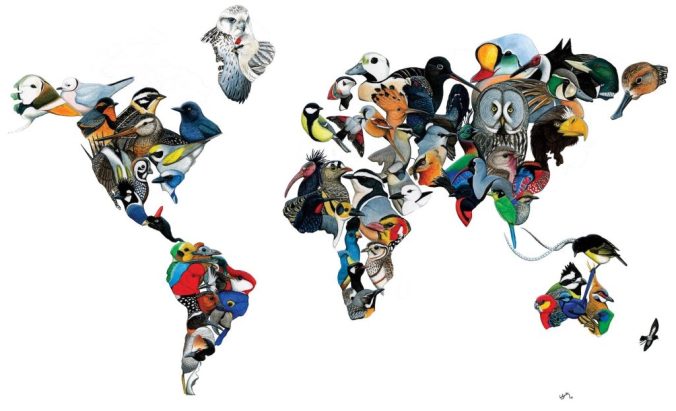
This year will be the best year yet for birding, and to prove it I am starting today to get ready for the next Global Big Day. I do not know where we will be that day, yet, but I am working on plan. May I suggest you do the same?
Last May, more than 30,000 people took to fields and forests around the world, noting more than 7,000 species in a single day—Global Big Day. In less than 3 months, birding’s biggest day is coming back. Wherever you are in the world, you can be a part of birding’s next world record!
On 4May, will you join more than 20,000 others and become a part of Global Big Day? You don’t have to commit to birding for 24 hours—an hour or even 10 minutes of watching birds makes you part of the team. Visit your favorite spot or search out someplace new; enjoy a solo walk or get some friends to join in the Global Big Day fun.
How to participate
Get an eBird account: eBird is a worldwide bird checklist program used by millions of birders. It’s what allows us to compile everyone’s sightings into a single massive Global Big Day list—while at the same time collecting the data for scientists to use to better understand birds. Sign up here. It’s 100% free. Continue reading →
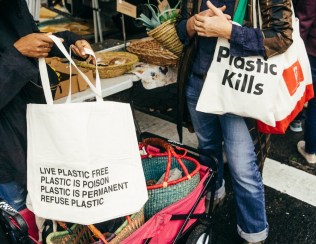
Ms. Cohen favors vendors who don’t use plastic. Credit Adam Amengual for The New York Times
When I started my Saturday morning reading it was just prior to our weekly visit to the farmer’s market and there was visual resonance with our own experience eliminating, or trying to eliminate plastic:
Going plastic free starts with cloth bags and straws. Suddenly, you’re … making your own toothpaste?
Reusable cloth bags are a must. Credit Adam Amengual for The New York Times
Like most people, resonance is always welcome in my reading. But like a second cup of coffee to really get the day going, there is nothing like cognitive dissonance. I can think eliminating plastic from our lives is a big deal one moment, and then the next it is clear that it is not enough, that it is like tinkering. Or as the punchy cliche puts it, like arranging deck chairs on the Titanic. David Wallace-Wells is a skilled dissonance artist in this vein. He can make your best efforts suddenly seem pathetic; not in a snarky way and if you listen to him explain his work you will realize resistance is futile; you cannot look away from what he is saying, even if you want to.
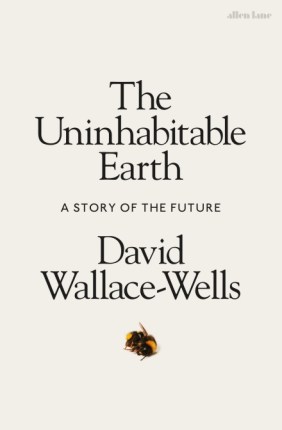
‘A profound book, which simultaneously makes me terrified and hopeful about the future’ Jonathan Safran Foer A Times and FT Most Anticipated Book 2019
His book will not likely be damned by faint praise; its look at our future prospects will more likely draw extreme responses in favor of the intensity of his alarm, and claims of alarmism from the usual suspects. He is catching up to Elizabeth Kolbert in balancing our preference for optimism with extreme realism. His op-ed on Saturday tipped the balance for me quite like a second, maybe third cup of coffee:
The age of climate panic is here. Last summer, a heat wave baked the entire Northern Hemisphere, killing dozens from Quebec to Japan. Some of the most destructive wildfires in California history turned more than a million acres to ash, along the way melting the tires and the sneakers of those trying to escape the flames. Pacific hurricanes forced three million people in China to flee and wiped away almost all of Hawaii’s East Island.
We are living today in a world that has warmed by just one degree Celsius (1.8 degrees Fahrenheit) since the late 1800s, when records began on a global scale. We are adding planet-warming carbon dioxide to the atmosphere at a rate faster than at any point in human history since the beginning of industrialization. Continue reading →
For reasons I will need to write more about another time, Colombia has been on my radar recently. When I first visited that country, the conflict was in full swing and my only task was to give a series of lectures related to the country’s potential for nature-based tourism. And I remember very clearly my sense of responsibility for not creating false expectations: as long as there was conflict, this potential would remain just that.
My most recent visit was as the conflict was nearing formal resolution. At that time I was engaged for some weeks of work to be very specific about the potential, location by location. And I was then able to say, based on my own direct observation, that this country would be a powerhouse in the birdwatching market. And I have to admit, I did not have then the knowledge I have now, thanks to the Lab of Ornithology, about the country’s species count and its ranking in the world. The information was there, but I did not have it. Now I do, and my sense of confidence in the country’s opportunity to leverage this abundance into sustainable development is strong. The film above came to my attention in the last 24 hours from several sources, all of whom I thank. But particularly I thank the sponsors of the film for their vision, and the director of the film for his visual acuity:
The Birders, a documentary film on Colombian bird diversity and birdwatching presented by ProColombia, with support of FONTUR and directed by Gregg Bleakney. The film highlights Colombian local birdwatching guide, Diego Calderon-Franco and National Geographic photographer / videographer Keith Ladzinski as they travel through one of the most diverse bird regions in the world to capture new and rare birds that have never been filmed before. The Birders, also takes people through the Colombian landscape, highlighting several of its’ top locations, culture, birds and music. Continue reading →
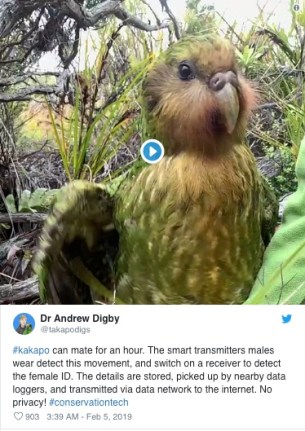
Kakapo on Codfish Island, New Zealand.Photo:Tui De Roy/Minden Pictures Conservation
Modernization has put pressure on bird populations in so many ways, it is easy to forget that it has its occasional bright sides. We have favored on this platform the citizen science possibilities that technology allows, but even social media can add value. Thanks to Audubon Magazine for pointing this out:
With a savvy social media presence, caretakers of the endangered parrots have created an utterly delightful, conservation-focused corner of the web.
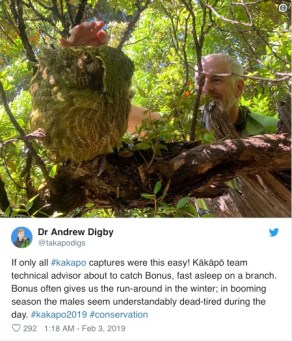
Soon, the Kākāpō of New Zealand will have a little extra motivation when it’s time to mate. That’s because, thanks to a recent competition, some of these large, flightless, long-lived parrots will be treated to a special saxophone-laden soundtrack. The composer behind the mood music will be the winner of a recent search to find the next Kenny G. of Kākāpō smooth jazz.
Of course, there’s no evidence that critically endangered Kākāpō, which breed in leks every two to three years, find saxophone music particularly romantic. For the Kākāpō Recovery team and its partner in the project Meridian Energy, the campaign was more about raising awareness than coming up with a serious conservation strategy. But the search points to a larger truth about the Kakapo conservation effort: It’s as good at getting the word out about the Kākāpō as it is at working to save them.
Kākāpō, the heaviest parrots in the world, need all the help they can get. The birds evolved without natural mammalian predators, making them easy targets for the cats, rats, and stoats that arrived with European settlers hundreds of years ago. Kākāpō were nearly wiped out by these invaders, but in the mid-1990s, when the population hovered around 51 birds, New Zealand’s Kākāpō Recovery Program was formed to help bring these birds back from the brink.
The birds’ first big social media break came in 2009, when the internet met Sirocco, a 21-year-old Kākāpō who went viral for, in the words of the BBC television hosts, “shagging” zoologist Mark Carwardine while filming a documentary on the species (remember his name). The video of Sirocco wildly beating his wings against Carwardine’s head launched the bird’s career: In 2010, New Zealand Prime Minister John Key appointed Sirocco the country’s first Spokesbird for Conservation. Continue reading →
The title I give to today’s post is impossible to justify with any metrics, but read on and you may see my point. Jon Gertner, for this first time featured in our pages, and for what is likely the longest of any longform treatments of any topic in the New York Times, thank you for making it about this:
Christoph Gebald, left, and Jan Wurzbacher, the founders of Climeworks, at their plant in Hinwil, Switzerland. Luca Locatelli for The New York Times
Two European entrepreneurs think they can remove carbon from the air at prices cheap enough to matter.
A pilot project at a Swiss university that uses Climeworks equipment to make methane out of airborne CO₂. Luca Locatelli for The New York Times
Just over a century ago in Ludwigshafen, Germany, a scientist named Carl Bosch assembled a team of engineers to exploit a new technique in chemistry. A year earlier, another German chemist, Fritz Haber, hit upon a process to pull nitrogen (N) from the air and combine it with hydrogen (H) to produce tiny amounts of ammonia (NH₃). But Haber’s process was delicate, requiring the maintenance of high temperatures and high pressure. Bosch wanted to figure out how to adapt Haber’s discovery for commercial purposes — as we would say today, to “scale it up.” Anyone looking at the state of manufacturing in Europe around 1910, Bosch observed, could see that the task was daunting: The technology simply didn’t exist.
Over the next decade, however, Bosch and his team overcame a multitude of technological and metallurgical challenges. He chronicled them in his 1932 acceptance speech for the Nobel Prize for Chemistry — an honor he won because the Haber-Bosch process, as it came to be known, changed the world. His breakthrough made possible the production of ammonia on an industrial scale, providing the world with cheap and abundant fertilizer. The scientist and historian Vaclav Smil called Haber-Bosch “the most important technical invention of the 20th century.” Bosch had effectively removed the historical bounds on crop yields, so much so that he was widely credited with making “bread from air.” By some estimates, Bosch’s work made possible the lives of more than two billion human beings over the last 100 years. Continue reading →
James Rebanks had come to my attention twice before. I found him compelling both times but because he was described in shorthand as the tweeting shepherd, my interest waned as quickly as it waxed. Now, after listening to him on a third occasion, and because of his music choices (on a show that illuminates a person beyond their words, through their musical taste), he won my attention back.
Mainly, I was intrigued that he brings his experience to bear in a consultancy that sounds like it has plenty of overlap with our own practice. And once I discovered that he had taken a break from tweeting I decided to venture onto that platform, which I rarely do, to try to understand that part of him better. And that led further afield and allows me to suggest that longform communication suits him better than shortform:
Focusing less on the meat-free or health aspects of plant-based dishes, like this jackfruit burger — and more on their flavor, mouthfeel and provenance — could go a long way toward getting meat lovers to choose these options more often. That’s according to research by the World Resources Institute’s Better Buying Lab in conjunction with food chains, marketers and behavioral economists. Westend61/Getty Images
As much as I would like to dedicate another post to a shout out for Carolyn Kormann, since her latest posting is on a topic I am following closely, something else seems even more of the moment.
Against the image of the millennial left, Pete Buttigieg appears to be a relatively prosaic Presidential candidate, but, in his own understated way, he is suggesting a sharp break with the past. Illustration by Tyler Comrie; Source Photograph by Alex Wong / Getty
…“So much of politics is about people’s relationships with themselves,” Buttigieg said. “You do better if you make people feel secure in who they are.”…
In the food story, just reading the caption in the image above you get the same message: meet people where they are. As sensible in politics as in changing food preferences. For all our attention to the important ecological reasons to reduce or even better to eliminate animal protein consumption, better to appeal to what most people most quickly respond to, namely their existing preferences. Meat where they are seems like the best option, so show how another option is tastier, healthier, or whatever is the most salient point for a particular type of consumer according to Godoy’s reporting:
…”The language for meat, and beef in particular, just sounds so much more delicious,” says Daniel Vennard. And labels like “meat-free,” “vegan,” and “vegetarian” tend to be turn offs for consumers. “People don’t create positive associations with how it’s going to taste and don’t feel it’s very indulgent.”
And that’s a real problem for Vennard: As head of the World Resources Institute’s Better Buying Lab, it’s his job to work with food companies, behavioral economists and marketing experts to find ways to get people to eat more sustainably. Or, as he puts it, to make “this party sound even better than the other party.”…
Slat cares deeply about the environment, but, for him, the appeal of cleaning the oceans is also about puzzle solving. Illustration by Cristiana Couceiro
In the pantheon of writers we have linked out to since 2011, of those who focus on science and/or environmental issues Carolyn Kormann is a relatively recent arrival. Since I started noticing her work three years ago she has started 2019 with an especially strong duo of stories. One is a longform profile and a must-read if you have been even just glancing at the headlines about giant garbage patches swirling in the ocean. How to deal with epic waste after the fact, after the out-of-sight-out-of-mind approach that has been building this mess for decades, is no simple matter. Nor is the man she introduces us to.
Last year, the U.S.’s carbon-dioxide emissions increased by an estimated 3.4 per cent, the second-largest gain in the past two decades.Photograph by Fernando Moleres / Panos Pictures / Redux
The profile of Slat is compelling, disturbing and inconclusive–hallmarks of the type of profile I most appreciate when the subject involves seemingly intractable environmental challenges. The other item is shorter, with a pair of metaphors for economic periods that I wish I had known earlier. If you only have time for one, read about William Nordhaus’s many contributions to the otherwise dismal science, especially his description of the economic transformation from my lifetime to that of the next generation:
In 1974, the economist William Nordhaus described the transition from a “cowboy economy” to a “spaceship economy.” In the former, he wrote, “we could afford to use our resources profligately,” and “the environment could be used as a sink without becoming fouled.” But, in the spaceship economy, “great attention must be paid to the sources of life and to the dumps where our refuse is piled.” He added, “Things which have traditionally been treated as free goods—air, water, quiet, natural beauty—must now be treated with the same care as other scarce goods.” Toward the end of his landmark paper, “Resources as a Constraint on Growth,” Nordhaus discussed the possible adverse effects of energy consumption, most notably the “greenhouse effect.” Continue reading →
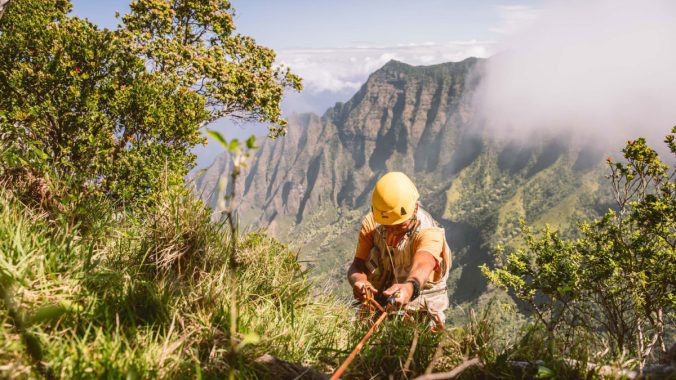
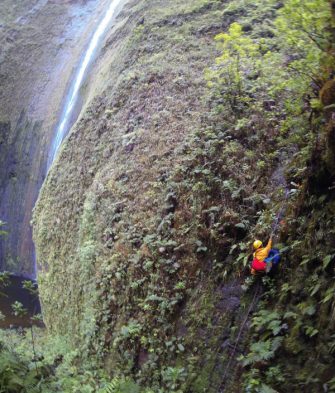
Botanist Steve Perlman rappels into the Kalalau Valley, a biodiversity hotspot on the Hawaiian island of Kauai.COURTESY OF BRYCE JOHNSON/FLUX HAWAII
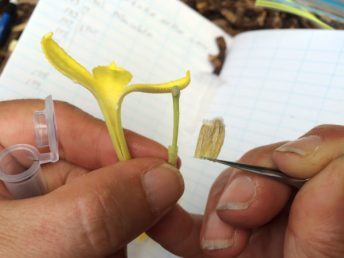
A botanist collects pollen from the flower of Brighamia insignis. NATIONAL TROPICAL BOTANICAL GARDEN
The work described in this article may explain why I first missed the story when it was published in October. The heroics get lost in the delicacy. My attention, like that of many people who are fortunate enough to have plenty of exposure to the natural world, gravitates to megafauna. And next in line for our attention is usually the rest of the fauna. But without flora, none of that fauna would be possible. And so our concern for biodiversity, and perhaps especially for the hotspots of biodiversity, should reflect an equal gravitational pull. So, my thanks to Yale e360 for this story:
They don’t make the headlines the way charismatic animals such as rhinos and elephants do. But there are thousands of critically endangered plants in the world, and a determined group of botanists are ready to go to great lengths to save them.
A scientist with the Plant Extinction Prevention Program climbs through remote Hawaiian ecosystems to study endangered plant species. PEPP
To save plants that can no longer survive on their own, Steve Perlman has bushwhacked through remote valleys, dangled from helicopters, and teetered on the edge of towering sea cliffs. Watching a video of the self-described “extreme botanist” in action is not for the faint-hearted. “Each time I make this journey I’m aware that nature can turn on me,” Perlman says in the video as he battles ocean swells in a kayak to reach the few remaining members of a critically endangered species on a rugged, isolated stretch of Hawaiian coastline. “The ocean could suddenly rise up and dash me against the rocks like a piece of driftwood.”
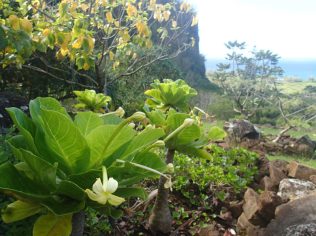
The plant known as cabbage-on-a-stick (Brighamia insignis) has been grown at Limahuli Garden & Preserve on Kauai, which is within the historic range of the species. SEANA WALSH
When he arrives at his destination, Perlman starts hauling himself up an impossibly steep, razor-sharp cliff 3,000 feet above the sea without a rope, his fingers sending chunks of rock tumbling down to the waters below. Finally, he reaches the plants and painstakingly transfers pollen from the flowers of one to those of another to ensure that the species can perpetuate itself. At the end of the season, he will return to collect any seeds they were able to produce. Continue reading →
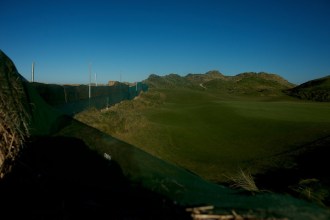
Grass bales intended to prevent erosion, in place last month at the Trump resort in Doonbeg, Ireland. Paulo Nunes dos Santos for The New York Times
I cannot explain why of all the mailing lists in all the world, most of which I opt out of preemptively and nearly all of which I opt out of within a week or two–I have remained on this mailing list since its inception. And this call to action catches my attention enough that I am passing it along. I first heard of this issue from Save the Waves a couple years ago. Then I noticed it in the news late the same year (click the image to the left), and again about a year ago there was this from Save the Waves. Now, one more time before it is too late, here is a copy/paste of the email from this week:
The Fight Against Trump’s Irish Seawall.
The ongoing campaign #NatureTrumpsWalls continues! Save The Waves Coalition and local partners urge careful consideration from Ireland’s national planning appeals board in the case against Trump International Golf Links’ seawall in Doonbeg, Ireland.
If approved, the proposed project would allow two seawalls to be built on a public beach to provide ‘coastal erosion management’ for Trump’s private golf resort and cause profound negative impact on Doughmore Beach – a popular surf break and coastline for surfers and beach goers.
The case is still left undecided one year after the appeal. Save The Waves continues to implore the Appeals Board to hear the case and recognize the severe implications of the project on the surrounding coastline.
Rutabaga tagliatelle, from Olmstead, in Brooklyn.Photograph by Evan Sung
In the interest of cutting back meat consumption, my eye is easily caught these days by pretty shiny things, like the image above, but even more so by rich description, especially when the history of a food is illuminated. This brief history of one root vegetable, accompanied by a couple of beautiful photos, led me to the book below right. Click the book image to go to the source.
The Swiss botanist Gaspard Bauhin was born in Basel in 1560, and he dedicated his life to obsessively cataloguing the vegetable world. To present-day historians, he’s notable primarily for his botanical thesaurus “Pinax Theatri Botanici” (“An Illustrated Exposition of Plants”), published in 1623. But, among cooks, he’s sometimes recalled for his lesser work, published in 1620: “Prodromos Theatri Botanici” (“Prologue to the Exposition of Plants”), a compendium of flora in which he describes a plant with vivid yellow flowers, a spray of leaves, and massive, hairy roots “more or less similar to those of turnip or carrots.” It was a specimen that had never before appeared in any scientific list of plants: the rutabaga.
The rutabaga is a culinary underdog. It struggles to shine among its fellow root vegetables.Photograph by Matthias Haupt / Picture Press / Redux
The annals of botany abound with claims that Bauhin was not only rutabaga’s biographer but also its inventor: that he found it growing wild and domesticated it; that he was a civic-minded scientist seeking a cold-resistant turnip to feed his chilly countrymen and not (more likely) a monomaniacal scholar who spent his life ensconced in an herbarium, scrivening endless latinate lists of plant names. “The turnip is older than history,” the caption on a color plate in a 1949 issue of National Geographic declares. “The rutabaga almost modern.” In fact, the vegetable has been around at least since ancient-Roman times, when the naturalist Pliny the Elder, writing in the first century, described an edible root “between a radish and a rape”—meaning the plant from which rapeseed oil derives, which is a cultivar of the same species. Bauhin writes that in his time the vegetable was widely grown in “the cold Noric fields of Bohemia,” where it was eaten pickled or mashed and was called simply “root” by its cultivators. Continue reading →
To help protect the planet and promote good health, people should eat less than 1 ounce of red meat a day and limit poultry and milk, too. That’s according to a new report from some of the top names in nutrition science. People should instead consume more nuts, fruits and vegetables, legumes, and whole grains, the report says. The strict recommended limits on meat are getting pushback. Westend61/Getty Images/Westend61
Preparing ahead for a meal to be cooked today, I was reading this recipe, whose image (below) was competing for my attention with the image above. The picture above is eye-catching, at least to me, a visual cue leading me to the type of meal I should be thinking about more often. It is a big picture picture. I have red lentils in the cupboard, and I intend to prepare them today, so the recipe won the race for my attention.
Melissa Clark’s red lentil soup.CreditJoseph De Leo for The New York Times. Food Stylist: Monica Pierini.
The story by National Public Radio (USA) waited. It is about diet, with the kind of explanatory information that motivates me to find lentils more appealing, and to understand why meals like this should dominate the weekly menu:
What we eat – and how our food is produced – is becoming increasingly politicized.
Why? More people are connecting the dots between diet and health – not just personal health, but also the health of the planet. And the central thesis that has emerged is this: If we eat less meat, it’s better for both.
So, how much less? A new, headline-grabbing report — compiled by some of the top names in nutrition science — has come up with a recommended target: Eat less than half an ounce of red meat per day. That works out to about 3.5 ounces — or a single serving of red meat — per week. And it’s far less red meat than Americans currently consume on average: between an estimated 2 and 3 ouncesper day. Continue reading →
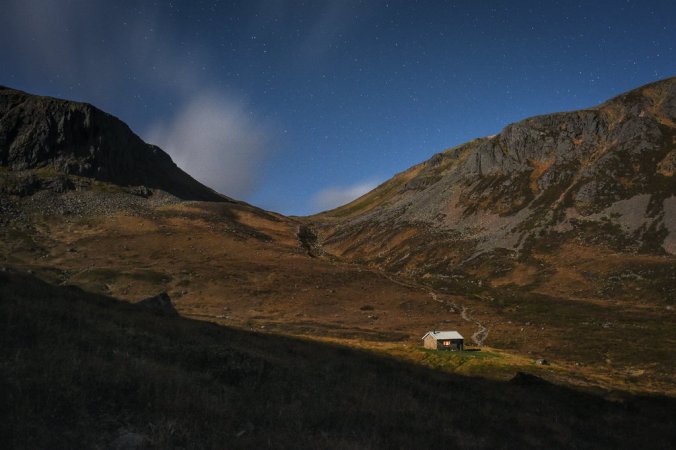
The Hutchison Memorial Hut, colloquially called the Hutchie Hut, illuminated by moonlight in Scotland’s Cairngorms National Park. Stephen Hiltner/The New York Times
How did Stephen Hiltner know? I was just looking through photos from the 2009 edition of the Patagonia Expedition Race, and remembering the huts along the way. They were perfect places to escape the realities of the rest of the world, in order to contemplate more clearly. With perspective. They could come in handy for plenty of folks these days, I am sure. Seems certain to me now that those huts at the southern tip of the South American continent were built by folks from the hills sampled in the story below:
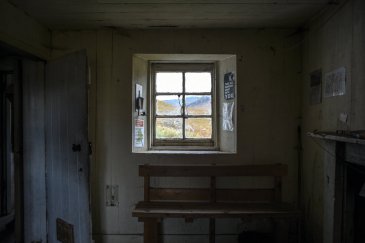
Rustic shelters called bothies — more than 100 of which are scattered throughout England, Wales and Scotland — are an indispensable, if little-known, element of British hill culture.
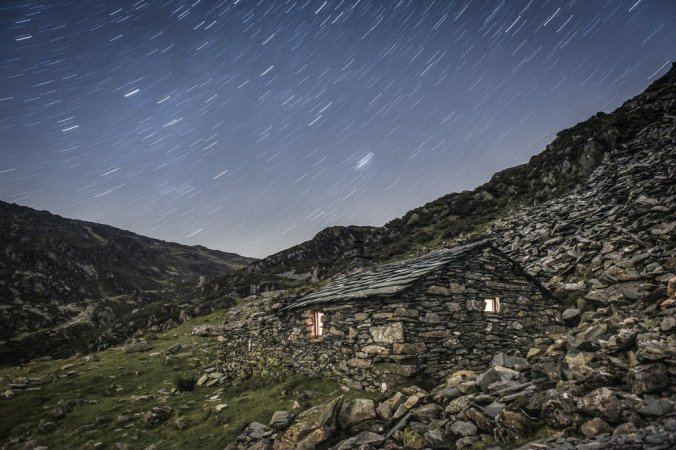
Warnscale Head at night. Since bothies are often built with local stones, they’re easily camouflaged in their surrounding landscapes. Stephen Hiltner/The New York Times
Shenavall Stephen Hiltner/The New York Times
By the time the tiny hut came into view, nestled high in a corrie in Scotland’s 1,748-square-mile Cairngorms National Park, I’d trekked for nearly nine miles, three of which, regrettably, I’d had to navigate after nightfall. The hike, through a broad valley in the Eastern Highlands called Glen Derry, carried me past groves of Scots pines and over a series of streams, some of which, lined with slick steppingstones, made for precarious crossings. All the while, two rows of smooth, eroded mountain peaks enclosed me in an amphitheater of muted colors: hazel-hued heather, golden grasses. Though much of my walk was solitary, the flickering glow in the hut’s main window, I knew, meant I’d have some company for the night and the warmth of a fire to greet me. Continue reading →
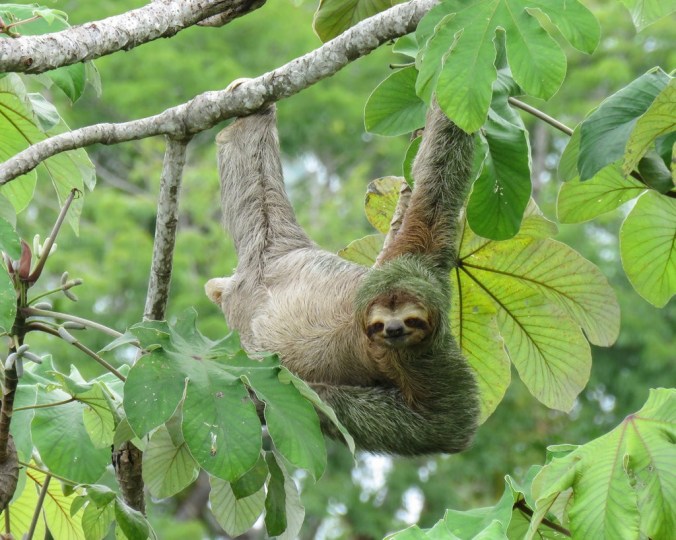
I had never heard the name guarumo for this tree before. Cecropia is the name we have commonly heard for it in Costa Rica. Veronique Greenwood, who we have linked to twice until now, has contributed more than vocabulary to me through this article. I am particularly thankful for the realization that cacao can be more useful than I had been aware. Beyond the benefits of being grown organically it may play a key role in regenerative forest development. This, entrepreneurial conservation in mind, must become a variable by which Organikos sources chocolate in Costa Rica:
A study showed that when some animals find a crucial resource, they can survive in changing environments and even thrive.
Look closely up in the trees of a shade-grown cacao plantation in eastern Costa Rica, and you’ll see an array of small furry faces peering back at you. Those are three-toed sloths that make their homes there, clambering ever so slowly into the upper branches to bask in the morning sun. You might also spot them munching on leaves from the guarumo tree, which shades the cacao plants. Continue reading →
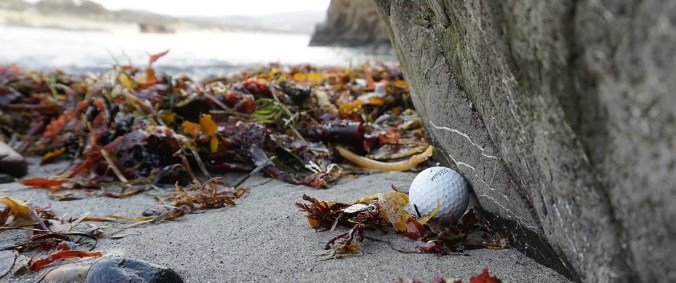
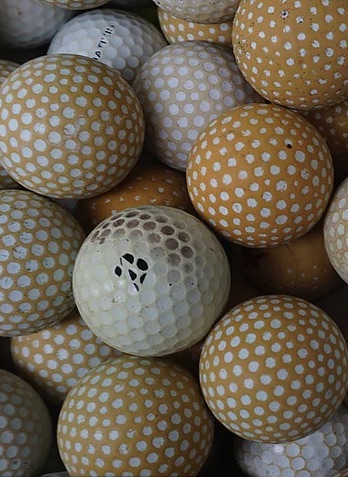
Reading further, I sensed that Yale e360 was being a bit polite saying “thousands” — more than 50,000 balls have already been extracted over two years. The article linked to National Public Radio’s coverage of the same story, with this slightly more aggressive headline:
During my PhD years I got to be reasonably competent at the game of golf. I can say I even loved the game. One odd bi-product of my dissertation was that I learned of the perils to the planet from out of control golf course development. Then I felt compelled to give up the game. (I did play a bunch during the mid-1990s, in Costa Rica, as I slowly learned of those perils.) Recently I found the clubs I used to play with, and the shoes, while cleaning out a store room in Costa Rica. I left them there.
To this day I have some close friends who play golf. I never comment on this topic in front of them, because my message is easily misconstrued. I am not against all golf. I just think there are more than enough courses already built on this planet. A moratorium on building more would make me happy. My friends already have more than enough courses to play on. Anyway, this topic is of interest now for a new, very specific reason. And it comes as a bit of a surprise what a big problem golf balls are in the ocean. The website of the organization that is featured in both articles can be reached by clicking the image below:
I remember advertisements from not that long ago that encouraged you to daydream about hitting balls endlessly into the ocean from cruise ship voyages with golf tees on the back of the ship. At first I thought maybe that kind of weird pleasure was the culprit, considering all the other dirty outcomes of cruising. But it’s complicated, as I learned from The Plastic Pickup website:
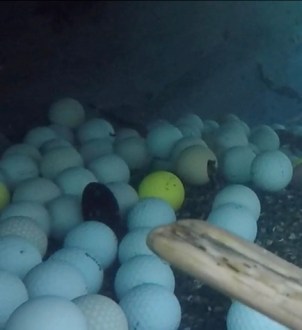
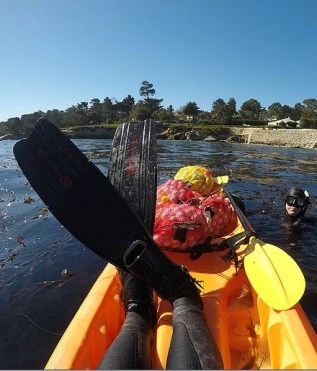
In the spring of 2016, my dad (Mike Weber) and I (Alex Weber) were freediving along the central coast of California in the shallow waters adjacent to the Pebble Beach golf course, when we came across a discovery that had never been reported before. Thousands of golf balls blanketed the seafloor, and inhabited nearly every crack and crevice in the underwater and onshore environment. The overabundance of inorganic materials was overwhelming but for a second it did not phase us. As we began diving to the bottom to collect the balls, we realized what perfect freediving training it was and the whole operation felt like a fun game; we were having a blast. But soon, the enormity and vast scale of the pollution set in and it made me feel sick to my stomach. To preface this day, for a few years prior I had been spending at least an hour a day down at the beach collecting microplastics and nurdles after heavy storms would wash them ashore. As a kid I was raised in the sea, boogie boarding everyday after school in kindergarten, scuba diving as soon as I was allowed to, and spending each summer day swimming offshore to hang out with dolphins and swim through giant kelp forests. To me the ocean was a peaceful home as well as my favorite teacher, so the discovery of such a large scale underwater plastic problem both shocked me and also captivated my curiosity. What began as a day of freediving resulted in a project that has changed my life ever since.
The next dive-able day, we were underwater early in the morning equipped with mesh bags and a new diver, Jack Johnston. Jack and I had been long time friends since middle school, and spent all our time together either underwater or on mountains, so he didn’t need much convincing to come along. Jack’s reaction was similar to mine, but his wildly curious mind helped him stay positive and motivated. That day we collected nearly 2,000 golf balls which was just the start of what grew into The Plastic Pick-Up. As we continued diving, we were not only collecting golf balls, but data too…
Read the whole story here. And if that interests you, there is another website that mentions a different Alex and his buddy Andrew who have also found a mission-driven business focused on ocean cleanup:
to Bali Indonesia that would inevitably change their lives and the fate of the ocean. Devastated by the amount of plastic in the ocean, they set out to find out why no one was doing anything about it. Continue reading →
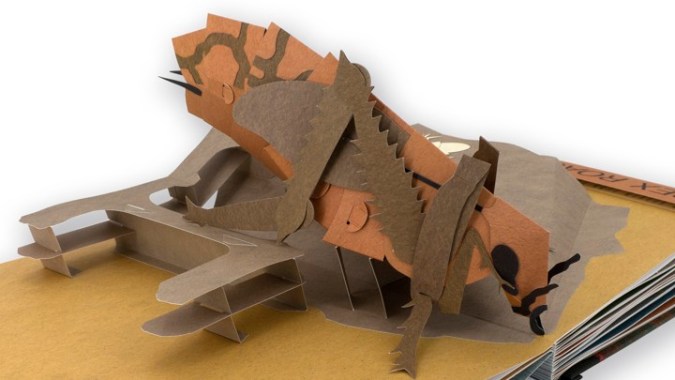
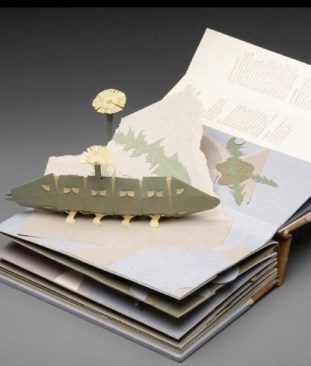
…Though Beyond the Sixth Extinction can be enjoyed solely for its dystopian yuks, its elegant paper sculptures tell a deeper story. The book doesn’t spend much time blaming humans for the world it imagines, or spell out exactly what has befallen Homo sapiens during the nearly three millennia between 2019 and 4847. But it does hint at a world in which the human footprint has been radically reduced. Chicago transformed into the diminished district of Cago, and life to some extent has moved on without us…
When I first saw something vaguely akin some years ago, the creative approach to a dark topic made me smile. This time, I am drawn in by an artist’s unique vision of the future as it relates to the natural world, and my reaction is to think while smiling.
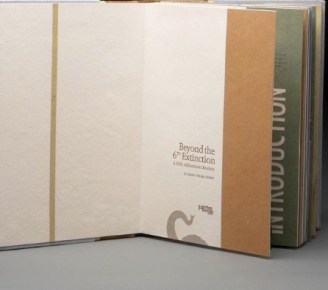
So, off to Candlewick Press (click the image of the book to the left). Even though I am not inclined to dystopia, I like what the author / artist / pop-up engineer says about what looks to be its hand-made progenitor:
In his book The Sixth Extinction, Richard Leakey describes five major catastrophes in Earth’s history that led to significant extinctions—the last of which was the meteor impact that eliminated the dinosaurs. He theorizes that the sixth big extinction has already begun, and that it is human-authored. Be it through over-hunting, global warming, or habitat destruction, humans have the power to destroy species at alarming rates.
Evolutionary theorists like Stephen Jay Gould have studied and written about the speciation that followed these previous die-offs, like the mammalian bloom that followed the extinction of the dinosaurs. I myself wonder which species might survive and flourish in a new environment if humans are successful in instigating a profound die-off. I wonder what anatomical adaptations they might acquire in their proliferation.
All of the creatures in this book are based on organisms that have high survival ratings, including: ubiquity (or nearly so), omnivory (linked to high intelligence), adaptability (especially to human-made habitats), and escape mobility. Since I am interested in representing a single system, they also had to have the potential to entertain plausible interdependencies.
Though the content of this book is bleak, the tone is cautiously optimistic. Some ecological theorists believe that humans—being the most adaptable species in the history of the planet—will be the very last species to be exterminated, but there is still hope that a sustainable balance can be found between human resource use and the resource use of everything else. Continue reading →
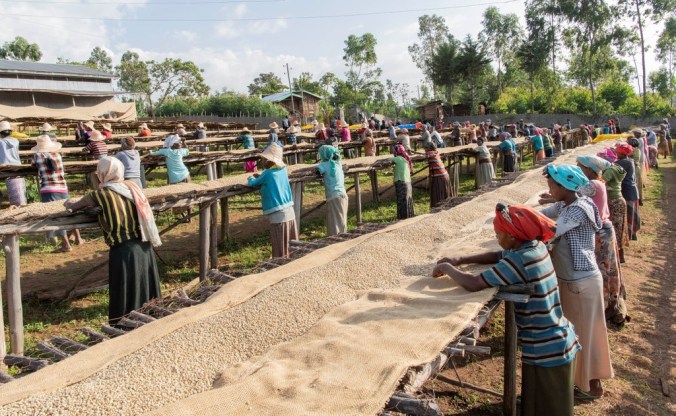
Drying coffee beans in Ethiopia. More than half of all species are at risk of vanishing in the wild because of climate change and deforestation. Maheder Haileselassie/Reuters
As much as I thought I learned in the last year about coffee, I got a hint just now, reading the article below, how steep my learning curve remains. 124 species of coffee? So much to hunt, so little time! Thanks to Somini Sengupta for this story:
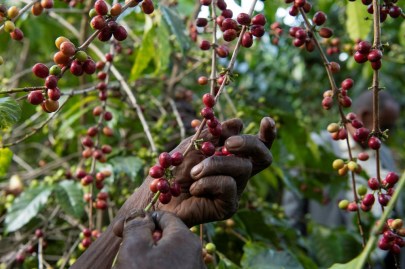
Picking coffee berries on a farm in Ethiopia. Maheder Haileselassie/Reuters
Aaron Davis, a British botanist, has spent 30 years trekking across forests and farms to chronicle the fate of one plant: coffee.
He has recorded how a warming planet is making it harder to grow coffee in traditional coffee-producing regions, including Ethiopia, the birthplace of the world’s most popular bean, arabica. He has mapped where farmers can grow coffee next: basically upcountry, where it’s cooler. He has gone searching for rare varieties in the wild. Continue reading →
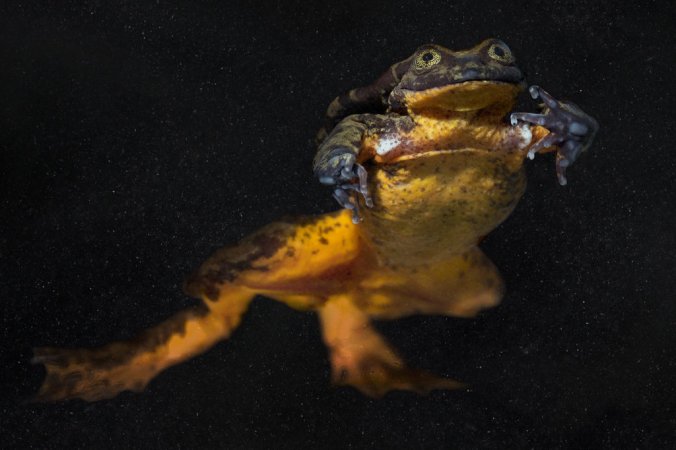
Romeo, who was thought to be the last Sehuencas water frog: “Did my heart love till now? forswear it, sight! For I ne’er saw true beauty till this night.” D. Alarcol and D. Grunbaum/Global Wildlife Conservation
The lonely male in a Bolivian museum was thought to be the last Sehuencas water frog, but an expedition has found him a potential mate.
Romeo was made for love, as all animals are. But for years he couldn’t find it. It’s not like there was anything wrong with Romeo. Sure he’s shy, eats worms, lacks eyelashes and is 10 years old, at least. But he’s aged well, and he’s kind of a special guy.
And there is more. In this same story as reported by National Public Radio (USA), I cannot be happy about the long-term macro situation, but the shorter-term micro situation for this Romeo looks like it may have a happy ending:
While Shakespeare’s Romeo spent only about two days banished in Mantua, away from his beloved Juliet, Romeo the frog has remained in complete isolation — sans love interest, cousins, friars or friends — living in a laboratory for the last 10 years. But that’s all about to change.
Juliet appears to be a perfect match for Romeo — she’s a Sehuencas water frog and of reproductive age. Robin Moore/Global Wildlife Conservation
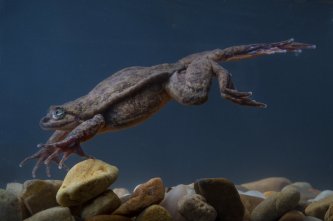
The world-famous amphibian was believed to have been the last of his kind – a Bolivian Sehuencas water frog (Telmatobius yuracare) – and lived under the protection of researchers at the Museo de Historia Natural Alcide d’Orbigny in Cochabamba City. They have made it their mission to find Romeo a special lady friend who might respond positively to his plaintive mating calls and help save the species from becoming extinct.
Year after year, scientist scoured Bolivia’s cloud forests for signs of other googly-eyed, orange-bellied Sehuencas, but they’ve always come up empty, until recently. Continue reading →
Going for an unremarkable walk in the English countryside has a lot in common with other old British freedoms. Everyone swears by it, though no one knows quite how it works. Photograph by Education Images / UIG / Getty
As someone who walks 5-10 miles most days, I am always looking for new things to think about, or to pay attention to during my walking. In the olden days I was left to my own thoughts and in recent days I am podcast-fueled. But some days I resist the earbuds and instead focus thought on a particular thing. One of my favorite pathways through the mountains where we live was fenced off in recent years, which already was on my mind before reading the article below. And I love the idea of an unremarkable walk, which my daily walks are, except that I have gotten to know most of the families who live in the mountains near us only by walking and having the chance to say hello. Which is a remarkable side benefit of trying to live now without owning a car. Thanks to Sam Knight for this other perspective on how to think about this thing:
Nineteen years ago, the British government passed one of its periodic laws to manage how people move through the countryside. The Countryside and Rights of Way Act created a new “right to roam” on common land, opening up three million acres of mountains and moor, heath and down, to cyclists, climbers, and dog walkers. It also set an ambitious goal: to record every public path crisscrossing England and Wales by January 1, 2026. The British Isles have been walked for a long time. They have been mapped, and mapped again, for centuries. But that does not mean that everything adds up, or makes sense. Between them, England and Wales have around a hundred and forty thousand miles of footpaths, of which around ten per cent are impassable at any time, with another ten thousand miles that are thought to have dropped off maps or otherwise misplaced. Finding them all again is like reconstructing the roots of a tree. In 2004, a government project, named Discovering Lost Ways, was given a fifteen-million-pound budget to solve the problem. It ended four years later, overwhelmed. “Lost Footpaths to Stay Lost,” the Daily Telegraph reported. Since then, despite the apparent impossibility of the task, the 2026 cutoff has remained on the statute books, leaving the job of finding and logging the nation’s forgotten paths to walkers, horse people, and other obsessives who can’t abide the muddled situation. Continue reading →
Amie and I recently met with an artist who paints on silk. In a post after that we displayed a couple of her pieces that feature coffee farm themes, and here are a couple more featuring coastal themes. Our practice of entrepreneurial conservation has allowed us to post frequently on this theme over the years. Less frequently we have mentioned sense and sensibility, words we work by.
Our assumption is that most people want to sense how a place they visit is different from where they normally live. Commonalities are also helpful for the sake of comfort and the travelers we have gotten to know through our practice in the last 2+ decades are much like us: interested in the balance between things we already understand and things that make us wonder.
When we saw these silk pieces we had a sense of Costa Rica that would be difficult to find words for. The artist has an ecological and socially responsible orientation, backed with actions that represent what make this place unique. This is the aspect of Costa Rica that inspires and motivates not only those who have chosen to live there, but those who choose to visit. Visitors should have the opportunity to take home with them items like these painted silks, that somehow represent Costa Rica. Little reminders.
















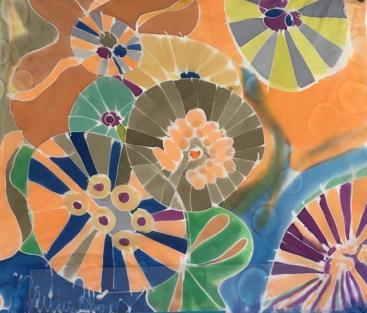 Amie and I recently met with an artist who paints on silk. In
 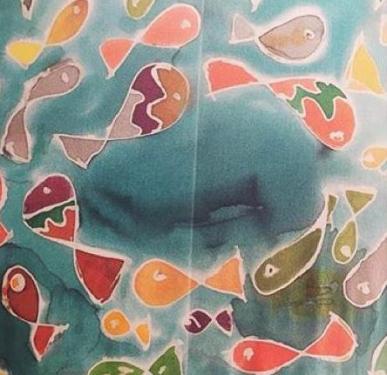 Our assumption is that most people want to sense how a place they visit is different from where they normally live. Commonalities are also helpful for the sake of comfort and the travelers we have gotten to know through our practice in the last 2+ decades are much like us: interested in the balance between things we already understand and things that make us wonder.
 Organikos