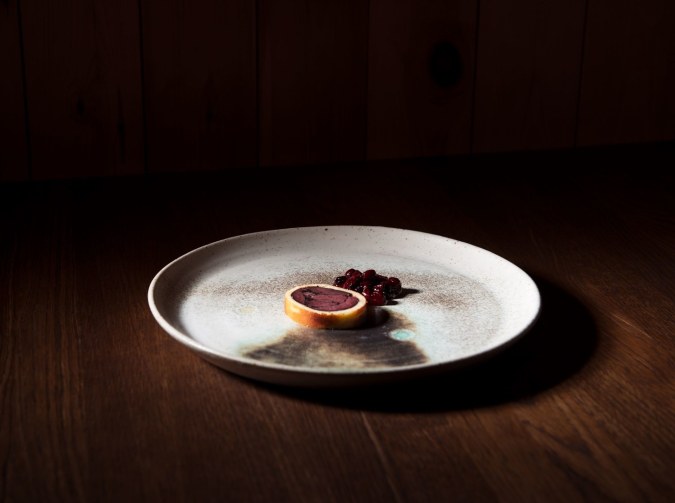
The razorbill Wellington at Koks, a Michelin-starred restaurant in the Faroe Islands. Chefs wrap the seabird in a pancake and serve it with a sauce made from beet, elderberry, and rose hip.
Photograph by Anne Golaz for The New Yorker
The dish above is not one we would likely think to offer in our hospitality operations, which may explain why we have not (yet) developed any entrepreneurial conservation initiatives in the Faroe Islands. Nonetheless, this is the type of reading that makes a Monday morning full of thoughts of where to travel next:
Koks, the World’s Most Remote Foodie Destination
People are flocking to a Nordic archipelago to sample cuisine—like fermented lamb tallow—that challenges even the most adventurous palate.
By Rebecca Mead
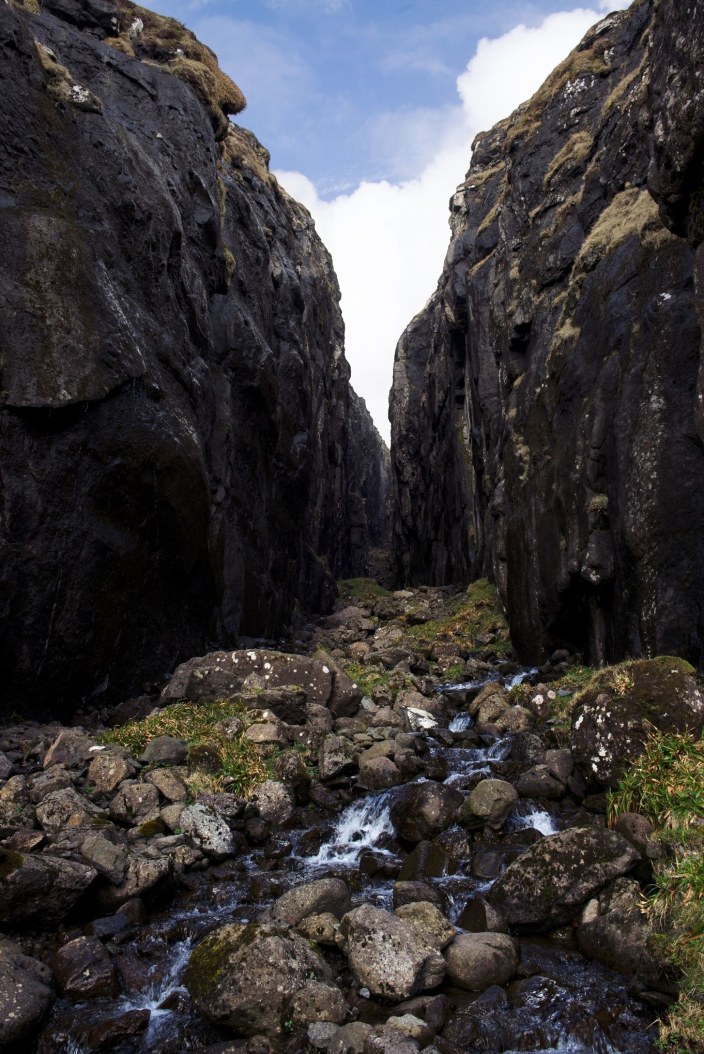
The Faroe Islands, a mountainous archipelago two hundred miles north of Scotland, has a landmass of only five hundred and forty square miles, and is sparsely populated with fifty thousand people and seventy thousand sheep.Photograph by Anne Golaz for The New Yorker
The Faroe Islands, an austere, mountainous archipelago marooned in the North Atlantic two hundred miles north of Scotland, has a landmass of only five hundred and forty square miles, and is sparsely populated with fifty thousand people and seventy thousand sheep. But, looked at another way, the country, an autonomous outpost of the Kingdom of Denmark, is much larger: its territorial waters extend for more than a hundred thousand square miles around nearly seven hundred miles of coastline. Only one village, Vatnsoyrar, isn’t on the coast, and wherever you are on any of the Faroes’ eighteen islands you’re never more than three miles from the crashing, frigid ocean. Like the human body, the Faroes are mostly water.
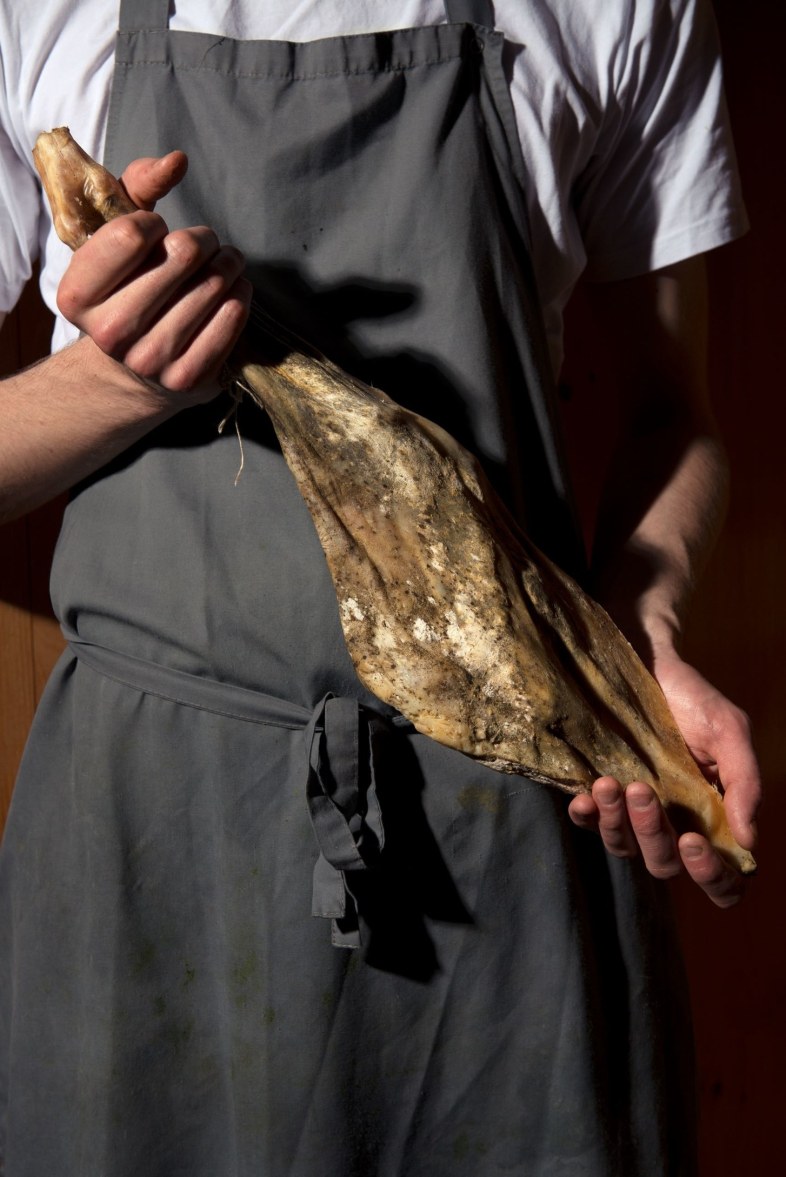
Fermented lamb, a Faroese specialty. “Fermented food is maybe the most important cultural heritage we’ve got,” Johannes Jensen, the entrepreneur behind Koks, said. Photograph by Anne Golaz for The New Yorker
The inhabitants of the islands, which were settled by Vikings in the ninth and tenth centuries, have always depended on sustenance from the ocean. But the local diet is surprisingly selective. The waters of the Faroes teem with edible creatures that the Faroese do not eat. They don’t gorge on the mahogany clams, buried in underwater sand, that can live for centuries. They ignore the abundant mussels that cling to coastal rocks, and consider langoustines and sea urchins to be revolting. It’s a favorite game among Faroese children to pick up sea urchins and hurl them at one another, because they make a satisfying splat on impact.
The Faroese do eat cod and haddock—masses of it, typically prepared in one of two ways. When eaten fresh, the fish is subjected to prolonged boiling (or “killed twice,” as some locals put it). Continue reading















 I had already been impressed with the Atlantic’s weekly interview podcast, but since that most often has to do with politics or other topics not central to our purpose here, I have never linked to one of those. But here is an 8-episode show, whose




 Organikos