Restorative Justice, Environmental Case Study

1500.jpg

I am linking to this with a long series of links to rewilding stories in mind. Thanks to the Guardian for occasional environmental rags to riches stories:

How millions of trees brought a broken landscape back to life

After 25 years, the decision to site the National Forest amid derelict coal and quarry workings has borne spectacular fruit

by John Vidal

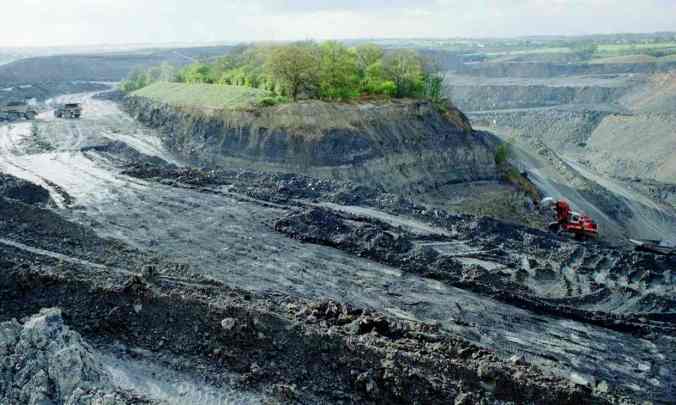
Twenty-five years ago, the Midlands villages of Moira, Donisthorpe and Overseal overlooked a gruesome landscape. The communities were surrounded by opencast mines, old clay quarries, spoil heaps, derelict coal workings, polluted waterways and all the other ecological wreckage of heavy industry.

The air smelt and tasted unpleasant and the land was poisoned. There were next to no trees, not many jobs and little wildlife. Following the closure of the pits, people were deserting the area for Midlands cities such as Birmingham, Derby and Leicester. The future looked bleak.

Today, a pastoral renaissance is taking place. Around dozens of former mining and industrial communities, in what was the broken heart of the old Midlands coalfield, a vast, splendid forest of native oak, ash and birch trees is emerging, attracting cyclists, walkers, birdwatchers, canoeists, campers and horse-riders.


Continue reading

Wood Wide Web

7650980706_652e5ab178_k.jpg

Forests and fungi–words that make me think of Milo circa 2010-2012 in the south of India, especially in the Periyar Tiger Reserve (but also later, writing about fungi in relation to food waste). When I first heard this a week ago, it seemed typical of Radiolab’s attention to quirky outlier science stories:

From Tree to Shining Tree

Saturday, July 30, 2016

A forest can feel like a place of great stillness and quiet. But if you dig a little deeper, there’s a hidden world beneath your feet as busy and complicated as a city at rush hour.

In this story, a dog introduces us to a strange creature that burrows beneath forests, building an underground network where deals are made and lives are saved (and lost) in a complex web of friendships, rivalries, and business relations. It’s a network that scientists are only just beginning to untangle and map, and it’s not only turning our understanding of forests upside down, it’s leading some researchers to rethink what it means to be intelligent.

And it was typical, in that sense. But Milo’s attention to the underworld of fungi, which at the time seemed to me as quirky as this Radiolab story does today, got me to start paying attention to anything in our news network with certain keywords (mushroom, fungi, etc.) and just now I came across a short journalistic account that taps into the same science as the Radiolab piece above, and I am realizing it may not be merely quirky: Continue reading

An Architect Shines Brilliantly On

terraza0

© Fundación de Arquitectura Tapatía Luis Barragán A. C.

Intense weather woke me up just after 1:00 a.m. a couple nights ago. Gale force winds, which I had not experienced before, provided such exhilaration that returning to sleep was not an option. I made coffee and sipped it in the dark, out of reach of the horizontal rains. We were prepared for the arrival of Hurricane Earl, expected to reach where I was sitting at 2:00 a.m. I was committed to witnessing the force of nature. After realizing that I was still just hearing the warm up to the real thing, I decided to read until the main act arrived. I finished reading this story just in time to be ready for Earl. Continue reading

Blue Ventures, Belize

Screen Shot 2016-08-04 at 6.41.54 PM.jpg

We have been introduced to Blue Ventures by Phil Karp, and want to share their website far and wide:

We rebuild tropical fisheries with coastal communities

Blue Ventures develops transformative approaches for catalysing and sustaining locally led marine conservation. We work in places where the ocean is vital to local cultures and economies, and are committed to protecting marine biodiversity in ways that benefit coastal people. Continue reading

Turns Out the Red Wolf is Part Gray, Part Coyote

John Woodhouse Audubon – Red Texas Wolf – Google Art Project via WikiMedia Commons

Last time I recall linking to a story with gray wolves, it was in the context of rewilding. And though I haven’t written about the red wolf before, it’s another North American species that is protected under US federal law in the Endangered Species Act. But new genetic research published last week on the DNA of North American wolf genomes is showing that the red wolf is in fact a hybrid species; a mix of gray wolf and coyote. The same goes for the Eastern gray wolf, another protected species. Carl Zimmer reports for the New York Times:

The finding, announced Wednesday, highlights the shortcomings of laws intended to protect endangered species, as such laws lag far behind scientific research into the evolution of species. Continue reading

When Silence Is Golden

Finland

It is not a principle of branding, per se, that silence is golden; just the opposite normally, since getting the message out is the point, and messages seem defined by noise, however subtle or clever. But Finland, by way of this article in Nautilus, has had me thinking, in the couple days since I read it, about alternative views on the value of silence, on messaging, on branding:

One icy night in March 2010, 100 marketing experts piled into the Sea Horse Restaurant in Helsinki, with the modest goal of making a remote and medium-sized country a world-famous tourist destination. The problem was that Finland was known as a rather quiet country, and since 2008, the Country Brand Delegation had been looking for a national brand that would make some noise.

Over drinks at the Sea Horse, the experts puzzled over the various strengths of their nation. Here was a country with exceptional teachers, an abundance of wild berries and mushrooms, and a vibrant cultural capital the size of Nashville, Tennessee. These things fell a bit short of a compelling national identity. Someone jokingly suggested that nudity could be named a national theme—it would emphasize the honesty of Finns. Someone else, less jokingly, proposed that perhaps quiet wasn’t such a bad thing. That got them thinking. Continue reading

2.5 Minutes With David Lynch, Well Spent

Lynch1

Take a moment, just listen to this unusual, gifted man speak:

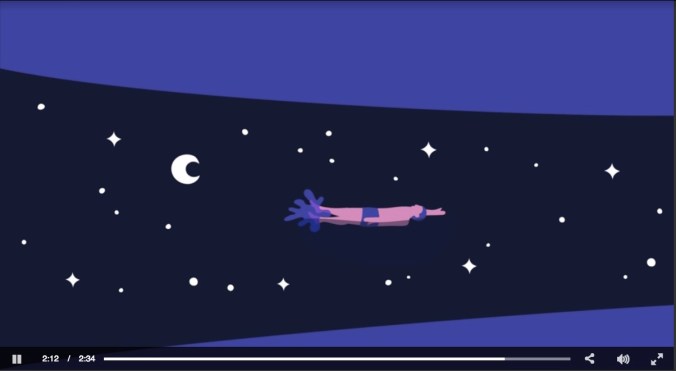
David Lynch on Where Great Ideas Come From

In 2008, The Atlantic sat down with the filmmaker David Lynch as he mused about inspiration and how to capture the flow of creativity. Now, we’ve animated his words of advice. “A lot of artists think that suffering is necessary,” he says. “But in reality, any kind of suffering cramps the flow of creativity.”

Belize, We Love You For So Many Reasons

BelizeShrimp

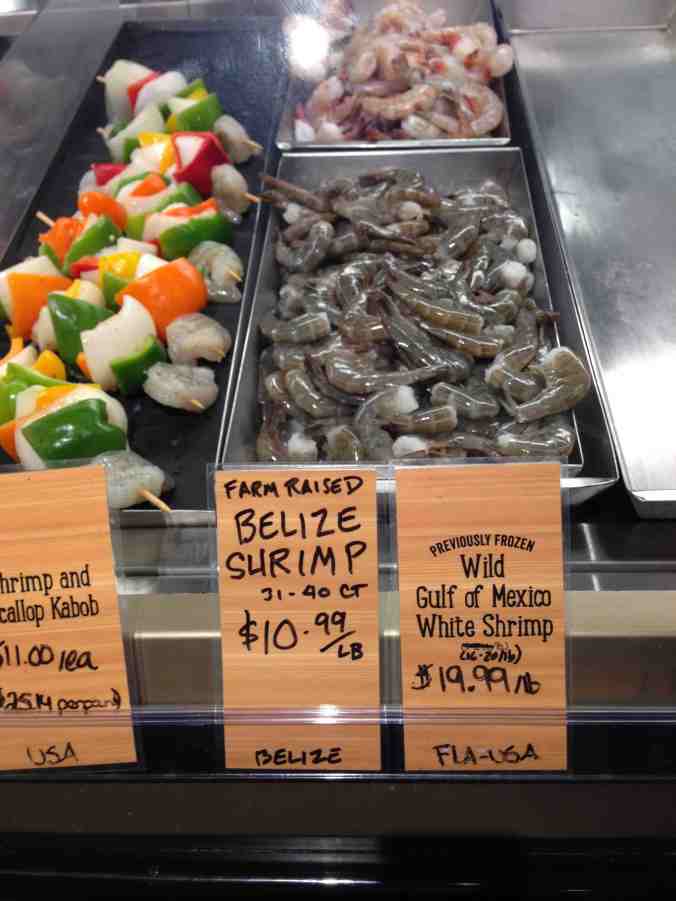
I said a while back that you would be hearing more on Belize, and tomorrow after I arrive there I will keep that promise. For now, in the spirit of anticipation, I share a snapshot just taken from the seafood section of a Wegmans grocery store in Northborough, MA (USA) during a pre-Belize reconnaissance mission.


Putting A Value On National Parks

Academic research publications tend to appear dry and out of reach to most non-academics. As someone who prepared for an academic research career, but who subsequently left that career, I am conflicted in what to say about that.

So I will say nothing about that. Instead, I say, read this (we rarely post without images, but the point of this post is purely a thought exercise, so I am keeping it strictly limited to words):

1. Summary This paper presents the first-ever comprehensive estimate of the total economic value of the National Parks Service. The estimate covers administered lands, waters, and historic sites as well as NPS programs, which include protection of natural landmarks and historic sites, partnerships with local communities, recreational activities and educational programs.

Our estimate of the total economic value to the American public is $92 billion. Continue reading

Kerala Beef Fry

_89839519_89839518

The Kerala beef fry is the stuff of legend

Last week, sitting with a new colleague for lunch–I had ordered a classic north Indian version of the ubiquitous biryani served across the country; she had ordered a very Kerala dish, one with beef–I wondered why I had not ordered what she ordered, since it is the more local dish, and I am still not vegetarian. The BBC makes me wonder again:

The Indian state that is obsessed with beef fry

Not many people would associate India with beef. Spirituality yes, perhaps even vegetarianism, but certainly not beef.

But then they have probably never been to Kerala, the south Indian state that loves its beef – preferably fried.

The Kerala beef fry is the stuff of legend. Continue reading

Museums, Things, Epiphanies

Reading the review, and the museum’s description of this show, I immediately thought of a museum that Amie and I had the chance to visit in Istanbul, which had been on our to-do list for some time; and the next click through the museum’s website led me to this:

THURSDAY 09/29 /16 7PM 

Orhan Pamuk in Conversation with Massimiliano Gioni

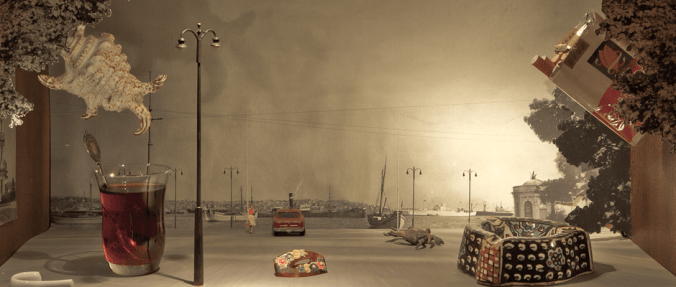
Which just seemed right because the museum in Istanbul was create by Orhan Pamuk. I will do my best to find a recording of this conversation, if they make a recording or transcript available and but for now the best I can do is direct you to the website of the museum in Istanbul which, hopefully, will lead you to the actual museum, easily the most moving museum experience of my life:

slider-1

The Museum of Innocence is both a novel by Orhan Pamuk and a museum he has set up. From the very beginnings of the project, since the 1990s, Pamuk has conceived of novel and museum together. The novel, which is about love, is set between 1974 and the early ’00s, and describes life in Istanbul between 1950 and 2000 through memories and flashbacks centred around two families – one wealthy, the other lower middle class. The museum presents what the novel’s characters used, wore, heard, saw, collected and dreamed of, all meticulously arranged in boxes and display cabinets. It is not essential to have read the book in order to enjoy the museum, just as it is not necessary to have visited the museum in order to fully enjoy the book. But those who have read the novel will better grasp the many connotations of the museum, and those who have visited the museum will discover many nuances they had missed when reading the book. The novel was published in 2008, the museum opened in Spring 2012.

Be sure that you read the explanation for this floor motif.

Almond Versus Cow Versus?

RippleAt first, the name does not help me think anything useful. I do not only mean the name of the contents of the bottle; I mean the brand name on the bottle. So I am showing only the information side of the label. Looks like milk inside. Good start.


If you compare it to almond milk, this one has 8 times the protein. If you compare it to 2% cow milk, this one has half the sugar and 50% more calcium; plus 32mg DHA Omega 3’s Vitamin D & Iron. If this were an advertisement I would face the bottle forward, but it is more an appreciation of how products like this come to be. I like startup stories and particularly the stories of co-founders of startups (which is why I have been listening to this podcast). According this company’s website:

Neil and Adam are committed to making a difference. Adam created Method to bring the world sustainable, beautiful cleaning products. Before trading in his lab coat to start Continue reading

Demolition, Conservation & Creative Destruction

Puppet2

THE STAGE LIFE OF A PUPPET Watch as Dan Hurlin’s puppets from “Demolishing Everything with Amazing Speed” come to life.

Dance is not one of the art forms I have ever immersed myself in, so I only occasionally read articles by a Dance critic. Joan Acocella, however, is also a great book reviewer and I know I should always at least glance at what she publishes. This was one of those times when I was pulled in, and could not stop reading (or watching; click above to go to a short video based on the subject of her review).

Her brief description of a series of puppet shows captures my attention, in spite of my not having seen a puppet show in decades. First, it has to do with lost and found heritage being valorized by a talented artist–a variation on what we call entrepreneurial conservation. And the mix of written and video presentation of the review is a fine example of the rapid paced march of an old school, paper-based magazine to the drum of its new digital platform, something we can appreciate as the same happens in our sector (travel and hospitality). In that sense even the title of the work being reviewed, “Demolishing Everything with Amazing Speed,” echoes the Schumpeterian notion of creative destruction.

FORGOTTEN FUTURIST PUPPET SHOWS

Dan Hurlin stages Fortunato Depero’s unproduced plays at Bard SummerScape.

In 2013, Dan Hurlin, a performance artist and puppet artist, was working at the American Academy in Rome when he stumbled on evidence that during the First World War Fortunato Depero (1892-1960), one of the Italian Futurists, had written four puppet plays that were never produced. Where were they? Hurlin travelled to Depero’s home town, Rovereto, at the foot of the Italian Alps, to examine the man’s archive. “I sat at this big table, wearing those white cotton gloves they make you wear,” Hurlin remembers. Continue reading

I Love IPA, And I Know Why

HopsOne of the ironies of living in India for six years, as a devotee of IPA, is that IPA is not to be found in India. So, I have it only when I travel, and mostly in the USA where the craft of brewing in small batches has grown radically in recent years.

The book to the right is a tiny drop in a big bucket of evidence of how the craft of brewing has reached far and wide, and it came to my attention when I visited a website associated with its authors:

IPAWhich came to my attention in this post by Russell Shorto, which must be read in its entirety (it takes only a few minutes) if you care about IPA, hops, ethnobotany or just excellent non-fiction writing, and includes these two paragraphs:

…while an emphasis on hops has likewise boosted the business of small-scale brewers, I.P.A. aficionados are known to be among the most fickle of beer consumers, flitting from one label to another in their endless search for new flavor elements. That puts pressure on brewers to come up with new beers, which, in turn, leads to a hunt for new hops varieties.

Enter Paul Matthews, who is to hops what John James Audubon was to birds. He has been involved in the search for wild hops strains from Colorado to the Caspian Sea; from these he teases out flavor components. Spicy, floral, grassy, citrus, herbal, evergreen: the horizon keeps expanding, and still the crowd wants more…

Ha! Top that. Actually, he does. Keep reading it. Continue reading

The Sense Of A Place

proulx-desk

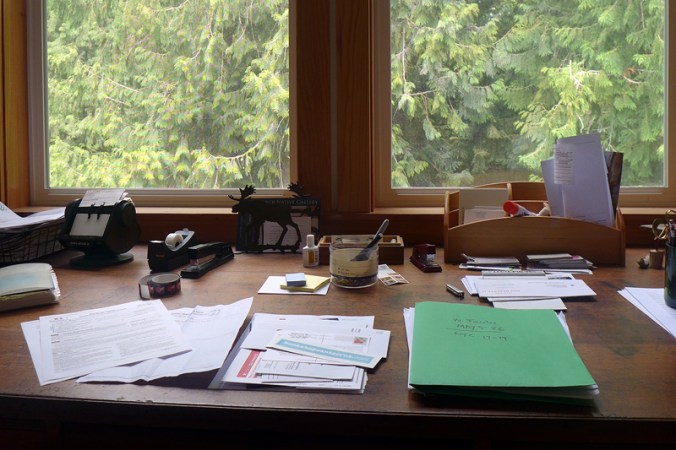
What Annie Proulx says about places she has lived–through her fiction especially but also in this interview below–rings a bell for us, considering the number of places we have chosen to live to do what we do. What the interview echoes specifically for me is the inherent improbability of accomplishing one of our key objectives: we want travelers to become as attached to places as we are, so that they will care about the conservation mission of our initiatives in each location as much as we do. It occurs to me that our guests spend about as much time with us in any given location as a reader spends on any given book by Proulx; also, books and our locations share in common the fact that they can be revisited an indefinite number of times.

That said, we want our guests to care more about these locations than even the most devoted reader cares about a Proulx character; not because we think less of her characters but because our conservation mission is about places in need of constant support. Improbability in this context refers to the question: how can our guests become intensely attached–as happens when a reader is gripped by a compelling character in a deeply human situation in an exquisitely described location–in a limited amount of time and continue to care intensely after they depart? That is our challenge, and we are constantly finding new ways of answering that question.

Another echo from reading what Annie Proulx says about the places she has lived, about belonging, feels strongly relevant. If we are a fraction as good at what we do as she is at what she does, belonging becomes irrelevant. What matters is how much sense we make of the place, and how much sensibility we harness in showcasing it to our guests. If you have read any of her books, you know how evocative place can be–like an additional character–and if that captures your attention you should read the interview that follows the introductory section excerpted below.

HOW THE WRITER RESEARCHES:
ANNIE PROULX

JOHN FREEMAN INTERVIEWS THE PULITZER PRIZE WINNER IN HER SNOQUALMIE VALLEY HOME

Annie Proulx is 80 years old and still not sure where she belongs. Standing in the atrium of her home in the Snoqualmie Valley, the Pulitzer Prize-winning novelist eyes a photograph of the cottage she once occupied in Newfoundland, the setting of her 1993 novel, The Shipping News. “I fell in love with that landscape,” Proulx says, speaking in the tone of a woman describing an ex-lover. Continue reading

Tapping Other Types Of Rewards

060616_Duhaime_046_605.jpg

Jon Chase/Harvard Staff Photographer. Radcliffe fellow and HMS professor Ann-Christine Duhaime, whose new project explores how inherent brain drive and reward systems may influence behaviors affecting the environment and global warming.

One possible breakthrough approach to countering the causes of climate change is to frame the issue as an epic scale equivalent to what we do to improve our diets, or to address conspicuous consumption of other varieties. If a neurosurgeon has an idea that I can relate to, that gives some hope after an otherwise kind of gloomy week of news. Thanks to the Harvard Gazette for this one:

Turning the brain green

Neurosurgeon wants to unleash our anti-hoarding tendencies

By Colleen Walsh, Harvard Staff Writer

Could a better understanding of the brain’s reward system — a network fine-tuned over millions of years and laser-focused on survival — help mankind skirt environmental disaster? Continue reading

Rethinking Fish

5120

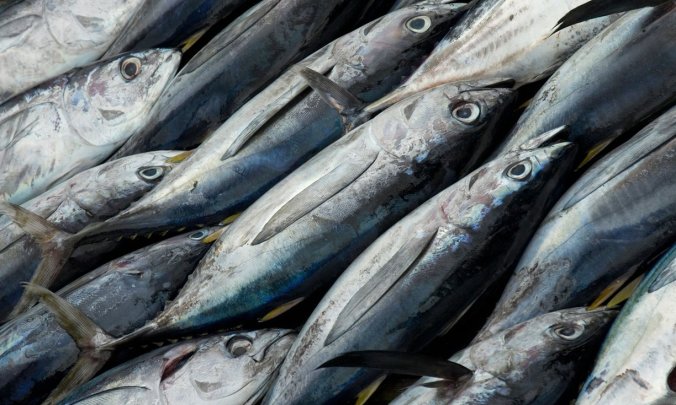
More than 40% of popular species such as tuna are being caught unsustainably, UN FAO says. Photograph: Alamy

Articles like this have me thinking about the meal I had last night, which had not one bit of animal protein in it, and wondering whether I could happily resist adding my own weight to the immensity of the food problem, especially with regard to fish:

Global fish production approaching sustainable limit, UN warns

Around 90% of the world’s stocks are now fully or overfished and production is set to increase further by 2025, according to report from UN’s food body

Continue reading

What Would I Read At Villa del Faro?

Proust

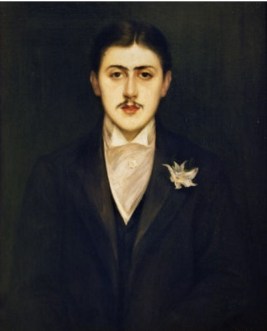
As a teen-ager, Marcel Proust filled out a questionnaire as part of a parlor game. His responses have experienced a startling afterlife. PHOTOGRAPH BY IMAGNO / GETTY

Seth’s post, followed by Jocelyn’s post, both reach me just after reading this fascinating short history on the so-called Proust questionnaire, which I first encountered in the back pages of Vanity Fair magazine when I had nothing better to do. I am reminded of two things: guilty pleasure reading, and actual reading of something other than news, news analysis, or long-form non-fiction–which are a mainstay of my contributions on this site.

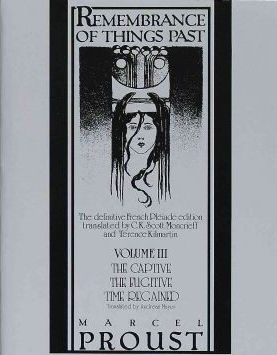
I am reminded of a third thing: Amie’s marathon reading of Proust, and the view of this 3-volume set around our home for a long stretch of time. Those books that she would lug around were the sign of an unreformed, unrepentant student of literature, whose career started as a book editor in New York City, when she had nothing better to do.

41vfEDKvg7L._SY344_BO1,204,203,200_

I say that mainly to contrast what I did with my guilty pleasure reading time back then, and what she did with hers. I say that because in more recent times, especially the past six years in India, she has had something much better to do, and plenty of it to do, and I think we are all better for that. Which has me thinking: if I had the time, what would I read if I could just leave it all behind right now and land at Villa del Faro with nothing but books (and at least a couple changes of clothes, of course)? Would I find that Proust set Amie has in storage? As an amateur nostalgist with limited writing talent, I might choose those volumes as a self-help guide.

9780394711843I write on this site partly to share about events, people and places that I believe are worthy of others’ attention; but also for the sake of further reflection and sense-making of those. Patterns repeat; some people and places important once come back to be important again.  For example, nearly five years ago I was on my third of five extended periods of work in Baja California Sur.  It was on an earlier visit in 2008 that I had met Andy Murphy, then with WWF, with whom I became friends and then eventually more with our project in Ghana. Continue reading

Risky Business, Catchy Name For Catchy Idea

RiskyB

Catchy name means, perhaps, we first think of teenaged Tom Cruise playing the air guitar, until we realize it (the organization whose name is Risky Business) is about something serious. Catchy idea means serious (respected) businessmen funding research on a serious (not respected enough, if you consider the volume of deniers out there) looming crisis:

The U.S. economy faces significant risks from unabated climate change. Every year of inaction serves to broaden and deepen those risks. Founded by co-chairs Michael R. Bloomberg, Henry Paulson, and Tom Steyer, the Risky Business Project examines the economic risks presented by climate change and opportunities to reduce them.

Continue reading

If Only I Could Have Learned So Quickly

Small Talk

The current issue of the New Yorker is a gold mine, but of particular note from my own experience and perspective is this gem of cross-cultural observation:

MY STRUGGLE WITH AMERICAN SMALL TALK

By

“How’s it going?” I ask the barista. “How’s your day been?”

“Ah, not too busy. What are you up to?”

“Not much. Just reading.”

This, I have learned, is one of the key rituals of American life. It has taken me only a decade to master. Continue reading