At Play In A Greek Kitchen

19eat1-jumbo-v2.jpg

William Brinson for The New York Times. Food stylist: Suzanne Lenzer. Prop stylist: Deborah Williams.

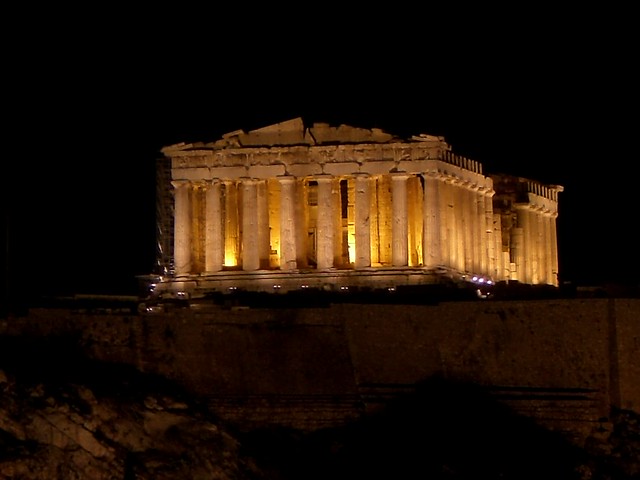
Click the image to the right to go to the story (and take a few minutes to watch the video), which contains a brief cooking lesson in the form of a travelogue. It will either get you reaching for your cookbook, or your travel planner. As we prepare the opening of a restaurant facing a harbor whose waters have hosted ships from the Mediterranean for thousands of years now, we find ourselves with a soft spot for any and all mentions of the foods from that faraway region.

5a979914-eca2-4613-b6ea-e92213533640_2.707f21163a3b20e8172a52d4e1bf533b.jpegWe have been offering authentic Malabar cuisine, in its present day form, in multiple venues over the years already.  Now it is time to go back to some of the less considered influences. For that reason, a quick trip to a kitchen in the Greek islands is a welcome diversion. In his article Life of Pie the food writer Mark Bittman has described the same food in the same location where Amie and I recently ate what we thought was the best hortopita, a variation on the more well known spanakopita, we had ever tasted. And by chance we were on a scouting mission on the island of Ikaria, so this article and the forthcoming cookbook are both perfectly timed for us:

When Diane Kochilas said we were making phyllo, I confess I was intimidated. But as Kochilas taught me, although “phyllo” means “leaf,” that leaf need not be the paper-thin type we’re accustomed to seeing in flaky Middle Eastern pastries. It may be, as it is here, a thin but readily made dough, rich in olive oil, smooth to the touch and easy to handle. Continue reading
Just Stop, Leave, And Do Not Come Back

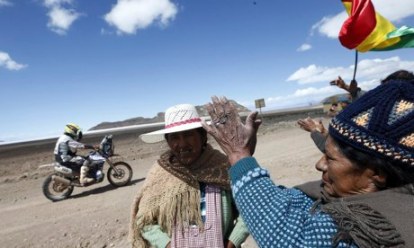
A Dakar rally competitor passes indigenous people between Bolivia and Chile. The rally, it is claimed, turns their land into a tourist attraction. Photo: Felipe Trueba/EPA

A Dakar rally competitor passes indigenous people between Bolivia and Chile. The rally, it is claimed, turns their land into a tourist attraction. Photo: Felipe Trueba/EPA

From 2008-2010, several contributors to this platform were spending time in the Patagonia region of Chile working on various projects, and during that period first came to know of the obscene event known as the Dakar Rally.

With no offense intended to motorbike racing, car racing or other enthusiasts of motorized sport, it is impossible to reconcile the destruction this event causes with any supposed positive outcomes. We can think of plenty of healthier alternatives to this method of getting around the southern part of South America. And yet, the event organizers have continued making their case to a government that has continuing granting an unwarranted privilege, and the annual event it is still going strong in spite of all the evidence of its negative spillovers:

The Dakar Rally of 500 off-road vehicles bumping and skidding through clouds of dust may be one of the world of motor sport’s most spectacular sights but archaeologists, environmentalists and indigenous groups are warning the 14-day event is ruining Chile’s ancient heritage.

Chilean government studies seen by the Guardian confirm the damage done to geoglyphs, protected sites, burial grounds and tracks on the Inca trail during previous races, but such is the race’s importance for tourism that it has once again been given the green light. Continue reading

Journeys, Science, Souvenirs, Photographs

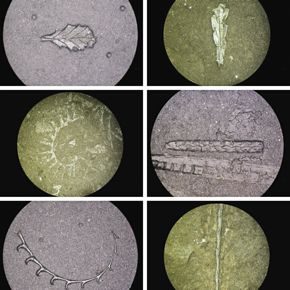
A GLORIOUS ENTERPRISE. Photographs from a book of Philadelphia’s Academy of Natural Sciences’ collection depict the making of American science. Cleared and stained specimens of youg horse-eye jacks (Caranx latus) from Dominican Republic, Santo Domingo. ANSP Ichthyology Department. This is a species that was first described by Academy member Louis Agassiz (1807-1873) in 1831. Photography by Rosamond Purcell

Click on the image above to go to the Audubon Magazine website, where a review of the photographs in this book, A Glorious Enterprise, was published.  Just realizing that, for a blog that features birds every day, we do not link to stories in the best magazine in the world for bird lovers, we aim to correct this.  First, credit where due. The photographer Rosamond Purcell, whose work accompanies the text in a book that sounds worthy of accompanying a long journey, has more work featured in an article currently on National Geographic’s website:

Walter looks comfortable. Dead for 50 years, the giant Pacific octopus is resting in a ten-gallon tank of ethanol solution, six-foot arms folded in cephalopod repose. His next-door neighbors hail from the Atlantic: a jarred colony of sea squirts, their blue-green bioluminescence long extinguished. Corals and algae bloom on a shelf. Leis of Tahitian snails dangle from hooks. Pearly shelled mussels from the Mississippi River, source of a once profitable button industry, glisten under glass. Continue reading

Thevara Badminton, Inauguration

This slideshow requires JavaScript.

Raxa Collective has at least as many neighborhoods to consider as we do properties under our management–each of which has a remarkable surrounding community–which is to say six in Kerala, one in Costa Rica, and one in Ghana. Continue reading

Thevara Badminton, Final Practice And Laying The Lines

This slideshow requires JavaScript.

6pm this evening, our neighborhood will be the scene of intense competition. Yet, of course, friendly.  Raxa Collective, as sponsor, has a special seat of honor watching the event, so we will hope to photo/video-document the fun. Liveblogging, alas, is not going to happen this time. It is peak season here for lodging operations, and all hands are on deck elsewhere. The recap, we promise, will be worth a look.

Fact-Checking Walter Isaacson

Walter Isaacson has done some remarkable things (according to his present byline he is “CEO of the Aspen Institute. Author of biographies of Steve Jobs, Albert Einstein, Benjamin Franklin, and Henry Kissinger. Former editor of Time, CEO of CNN”).  Little reason for him to doubt his own authority, on anything.  But he invites you to fact check the book he is currently working on, starting with a draft of a chapter published in Medium.  I appreciate the creative spirit of collaboration, and his faith in the wider community to get his facts both straight and full of color:

The Culture That Gave Birth to the Personal Computer

I am sketching a draft of my next book on the innovators of the digital age. Here’s a rough draft of a section that sets the scene in Silicon Valley in the 1970s. I would appreciate notes, comments, corrections

In that draft he makes reference to the starting point of the Whole Earth Catalog, and the meme that came with it of using an image of the earth from space to communicate its fragility and limitations as much as its wondrousness; which, along with the rest of the draft (as if you needed convincing) makes the book sound worth the wait: Continue reading

Geology And The Natural History Of The Environment’s Future

Here is the second installment in a series on natural/environmental history from the perspective of what is referred to here as human impact and the geology of the future. The author requires you to work, but it is important work, worthy of the effort to focus the lens of history for the sake of our decisions about the future:

The Geological Society of London, known to its members as the Geol Soc (pronounced “gee-ahl sock”), was founded in 1807, over dinner in a Covent Garden tavern. Geology was at that point a brand-new science, a circumstance reflected in the society’s goals, which were to stimulate “zeal” for the discipline and to induce participants “to adopt one nomenclature.” There followed long, often spirited debates on matters such as where to fix the borders of the Devonian period. “Though I don’t much care for geology,” one visitor to the society’s early meetings noted, “I do like to see the fellows fight.” Continue reading

Our Gang, Thevara (Racquets In Hand)

photo

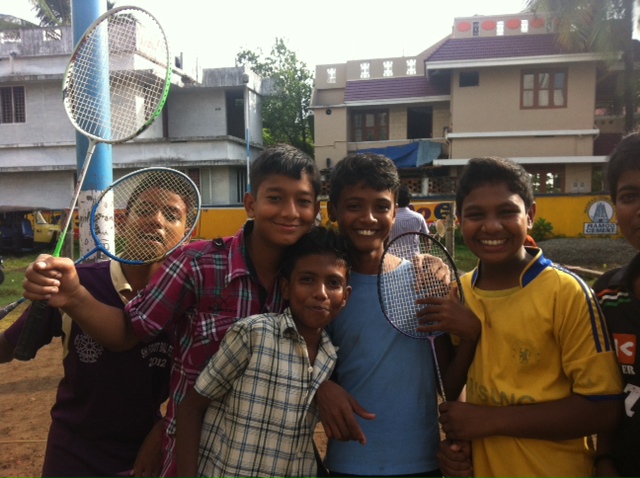
As we post this, collaboration on the badminton court is in full swing; these young friends in our community are Raxa Collective’s best hope for global domination of a sport: the power smile. We are cheering them on in badminton as well. December 23 is a big day, we are told. Stay tuned.

Environmental Pre-History

131216_r24386_g290_cropWho knew of such a thing as a calendar specific to the French Revolution? I obviously missed that session in my history education, or have forgotten it; but it is good to be reminded. And the way it is invoked is an almost-missable detail but essential to thinking about how we, in all our wisdom as evolving cultures, rewrite rules in ways that sometimes moves us two steps backward for every step we had already taken forward. From the New Yorker‘s environment-focused writer, a superb new look at the earth’s history from the unexpected perspective of teeth:

ANNALS OF EXTINCTION PART ONE

THE LOST WORLD

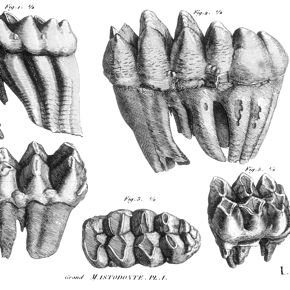
The mastodon’s molars.

BY 

DECEMBER 16, 2013

On April 4, 1796—or, according to the French Revolutionary calendar in use at the time, 15 Germinal, Year IV—Jean-Léopold-Nicholas-Frédéric Cuvier, known, after a brother who had died, simply as Georges, delivered his first public lecture at the National Institute of Science and Arts, in Paris. Cuvier, who was twenty-six, had arrived in the city a year earlier, shortly after the end of the Reign of Terror. Continue reading

The World Needs Another Golf Course Like It Needs Another Hole In The Ozone

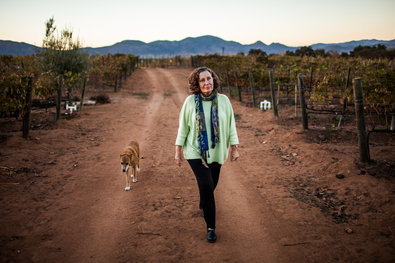
Max Whittaker for The New York Times Natalia Badán, a winery owner and longtime resident of the Guadalupe Valley, called a zoning change “an aggression.”

Max Whittaker for The New York Times
Natalia Badán, a winery owner and longtime resident of the Guadalupe Valley, called a zoning change “an aggression.”

If you have ever swung a golf club, in earnest, on a challenging hole somewhere on a beautifully crafted course, you might agree: the game is good for the soul. But there is such thing as too much of a good thing:

A Rustic Paradise, Open for Development

By DAMIEN CAVE Continue reading

Our Gang, Thevara (Future Houseboat Craftsman)

This slideshow requires JavaScript.

Our young friends in the neighborhood were recently trying their hand at the design and mock up of a new houseboat. The parents of most of the children in the Our Gang, Thevara series are fishermen and fish___ (if you know the name for wives who clean and process the fish for sale, please comment). Most build and maintain their own simple boats.  Kids follow in their footsteps, traditionally, but this being Kerala our neighborhood gang is also getting a superb education at their local public school.  Some will leave the fishing and boat-making to siblings and cousins.  Some will become boat designers, we imagine. Continue reading

Thanks For The First Book Press-Printed In The New World

Photograph by Emmanuel Dunand/AFP/Getty.

Photograph by Emmanuel Dunand/AFP/Getty.

If you are familiar with the history of the place now called the United States of America, you may be familiar with the role religious pilgrims played in the early settlement of the northeastern region of what is now that country (and what before that was the home of people who lived a very different life from the pilgrims before those pilgrims arrived, and a radically changed life after). Now, if you are a more ambitious follower of that history, you may know when the first printing press was brought to the New World, and by whom. And in that case, you likely also know what book was first published. Fitting that today, when Thanksgiving Day is celebrated in the USA, news of that first book is in front of us thanks to Casey Cep and the New Yorker‘s ever resourceful and innovative website:

Today, Sotheby’s will auction a copy of the first English-language book printed in America. “The Whole Booke of Psalmes,” or the Bay Psalm Book, as it is now known, is expected to sell for between fifteen and thirty million dollars, which would make it the most expensive book in the world. Continue reading

Our Gang, Thevara, (Team Spirit)

This slideshow requires JavaScript.

It is that time of the year. The place where the cow is often roaming, or otherwise is just pleasant open space, becomes energentic-kid-space about now. Soon it will be school break time and the kids are thinking about what they will do with all that free time. So today, as two of Raxa Collective’s team members were walking through the neighborhood the kids stopped them and asked: Want to be on our team?


Paleo-ethical Questions

young-tyrannosaur-990x664

Scientists, like all others, are faced with puzzling  ethical questions from time to time. Questions where there is no right or wrong answer, but for which “do the right thing” is the imperative. We like to think we know exactly how we would answer such a question, but sometimes the questions (or answers) are dark grey or light grey rather than black and/or white, as various characters referred to in this blog post make clear (click the image above to go to the original post):

On November 19th, science may lose a pair of dinosaurs. Preserved next to each other – and given the dramatic title the “Dueling Dinosaurs” – the tyrannosaur and ceratopsid are going up for auction at Bonham’s in New York City. The two are expected to rake in around nine million dollars, with no guarantee that the fossils will go to a museum or that their beautiful bones will even have the chance to be rigorously studied by scientists. That’s exactly why paleontologists were aghast when the auction block tyrannosaur made an appearance at the Society of Vertebrate Paleontology annual meeting yesterday afternoon. Continue reading

Enough Dancing Bears, Already

Patrick Barkham’s editorial in the Guardian does not sufficiently consider the occasional good that a zoo can do for the charismatic felines, but my sentiments are generally the same as those he expresses here:

The Zoological Society of London is an august, enlightened charity, which carries out wonderful scientific work. London Zoo, created in 1826 as a rebuke to the cruel and squalid menageries of the day, makes the most of its limited space on the edge of Regent’s Park. So why on earth is it caging tigers? Does it really believe it is important conservation work? Continue reading

Charles C. Mann, Come To Kerala!

Screen Shot 2013-10-15 at 9.47.30 AMMagazines are increasingly opening their archives, and the Atlantic has been at the forefront of sharing centuries’ worth of great writing. This particular great piece of writing is one whose author would no doubt appreciate the 1491-ness of Kerala. He joins a list of others we have already invited, for one reason or another. Click the image about to go to this writer/editor’s website and here for the 2002 article that begat the book:

1491

Before it became the New World, the Western Hemisphere was vastly more populous and sophisticated than has been thought—an altogether more salubrious place to live at the time than, say, Europe. New evidence of both the extent of the population and its agricultural advancement leads to a remarkable conjecture: the Amazon rain forest may be largely a human artifact
CHARLES C. MANN MAR 1 2002, 12:00 PM ET Continue reading

Hermes Circa 1983

Blacksmithing and Greek language, two ambitions placed in my path by the trickster god of transitions, two ambitions that strengthened my arms and tongue and confidence that looking backward was not my future, were both important deviations. There had been no plan or map but both of these deviations helped ensure that my path would not be too straight or narrow. A couple years later I was preparing for another deviation. On September 23, 1983 I would get on an airplane and make another pilgrimage to Vourthonia. Continue reading

Hermes, Circa 1981

In the avatar of a blacksmith, Hermes next caught my attention during the spring of 1981. I had never heard of a gap year, but as my freshman year of college was concluding the opportunity for passage came in the form of apprenticeship. I had started thinking, in Vourthonia two years earlier, that I was born into very good fortune, but somehow in the wrong century and the wrong language.

So the avatar’s greeting, in the form of a generous, simple man plying this old trade, was compelling. Some months later, after deciding I needed to connect that smithing experience to this old form of speaking and thinking, I found myself in the old market area of Athens, after a day with my tutor.  With me were two women, both my own age, one whom I knew well, the other not at all. Continue reading