Hermes, Circa 1979

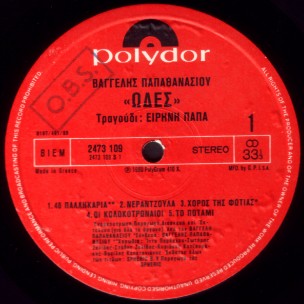
OdesLPLabelAt Easter time, 1979, my mother and I traveled back to Vourthonia. Musical soundtrack can accompany an occasion in life, just as in film. Vangelis, in collaboration with Irene Pappas, had just released the soundtrack for that visit.  Click the image to the left to read a bit about the album; better yet find the music and listen.
The lamb had been over the fire since morning, and was now on the table. Feta, salads, and the best olives in the world were there too. That music was playing from the open doors of an old VW Beetle parked near where we were sitting–my mother, many villagers, and me. That god gave safe passage. Continue reading

Hermes, Circa 1969

As one of the contributors referred to in this post, and as the one who took the photographs in that post, it occurred to me that I should comment further on the reference.  And in doing so, perhaps I could add to the small collection of personal statements that have been gathering on this site since mid-2011.  I am 100% sure I took the photograph above during that same visit to Greece in 2008.  As I snapped this photo my mother was at my side and we both remembered having stood in the same spot in 1969. Continue reading

The Last Bookstore

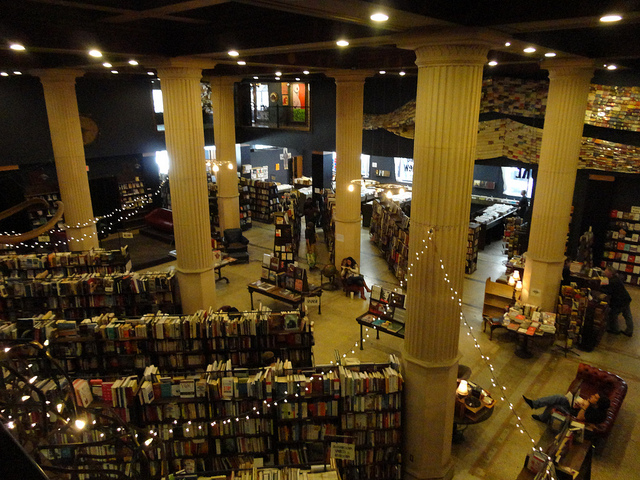
Photography credit Scott Garner.

Thanks to Paris Review, and particularly Casey N. Cep, for a reminder of why bookstores have more meaning than other forms of merchandising:

…Our inheritance felt large, but it was the sawhorses that I most admired, especially when my father put them to use constructing bookshelves for my bedroom. My father was no stranger to construction; he built the log cabin in which I was raised. He inherited not only tools but also skills from his father, so he was able to cut, stain, and install the wide bookshelves on my bedroom walls in no time. The shelves were required to house my growing library, acquired book by book in a thrilling sequence of gifts, purchases, and trades. Continue reading

Thinking, Communicating, Doing

From even just one brief interaction with students and faculty at Brown University, I might have predicted that a leader of that university would be so well suited to make this argument:

…we should embrace the debate about the value of the humanities. Let’s hear the criticisms that are often leveled, and do what we can to address them. Let’s make sure we give value to our students, and that we educate them for a variety of possible outcomes. Let’s do more to encourage cross-pollination between the sciences and the humanities for the benefit of each. Let’s educate all of our students in every discipline to use the best humanistic tools we have acquired over a millennium of university teaching—to engage in a civilized discourse about all of the great issues of our time. A grounding in the humanities will sharpen our answers to the toughest questions we are facing… Continue reading

Eat Wild, Eat Well

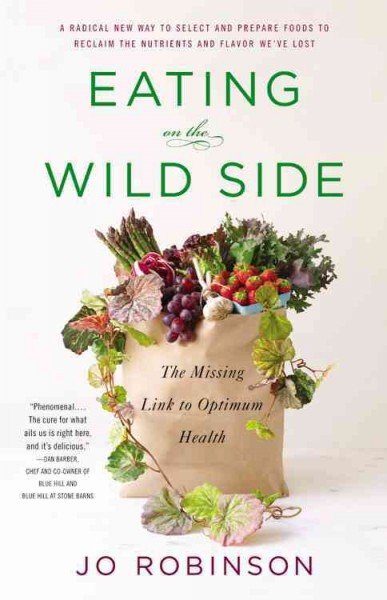
9780316227940_custom-6ce3aa1cfe7dd79644c4d9978c27fa29b29f3b20-s500-c85.jpgAs we start thinking through food programming at the two new properties we are working on here in Kerala, our attentions are scattered around the world, but eating wild keeps coming to us from all over. So when the great interviewer Dave Davies discusses this book with its author, podcast here, our attention is riveted:

In her new book, Eating on the Wild Side, Robinson argues that our prehistoric ancestors picked and gathered wild plants that were in many ways far more healthful than the stuff we buy today at farmers’ markets.

But this change, she says, isn’t the result of the much-bemoaned modern, industrial food system. It has been thousands of years in the making — ever since humans first took up farming (some 12,000 years ago, more or less) and decided to “cultivate the wild plants that were the most pleasurable to eat,” she writes. More pleasurable generally meant less bitter and higher in sugar, starch or oil.

Continue reading

Indian Food For Thought

Thank you, Mr. Cardoz, on behalf of all those who resist the family’s gravitational pull to other professions, and choosing food.  And thanks to the New York Times for bringing your story in brief, thoughtful form:

In Edison, New Jersey, “Floyd Cardoz was scanning the shelves at a supermarket called Apna Bazar Cash and Carry, looking for inspiration,” Jeff Gordinier wrote in The New York Times. Continue reading

Kitchen Collaboration

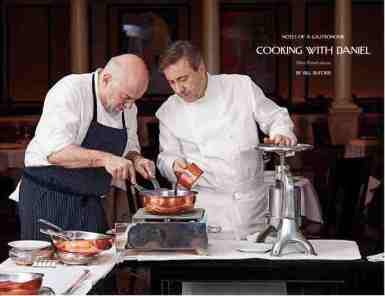
Kitchen Confidential juggled with foodies’ fascinations in new and unusual ways, and since then reality television seems to be the appropriate new home for that side show.  Oddly, it began in 1999 with an article in the New Yorker. So it is only fitting that the magazine has been balancing those dynamics with the work of less celebrity-oriented writers ever since.  None better than Bill Buford, who gets out there, and in there, like a citizen scientist for the story (though he is not shy of carny, either). Here what catches my attention is the collaboration, but plenty on the ethos of an artisan, the farm as the garden of eden, and last but not least the role of food in heritage and heritage in food (click the image above to go to the article):

Two years ago, during the summer of 2011, Daniel Boulud, the New York-based French chef, told me he had been thinking about a project that we might do together. We were both in France at the time. I was living in Lyons—I had moved there in order to learn French cooking—and Boulud was visiting his family in Saint-Pierre-de-Chandieu, a nearby village on a wooded ridge in the open countryside. Continue reading

Complications Of Kayaktivism

What makes a great New Yorker Talk of the Town piece?

Small surprises.

Quirks.

Unexpected perspective.

At the outset in this case our hearts are immediately with the folks daring the harbor on kayaks, but our brains are (gulp) subsequently with the residents against the kayakers.  All within a few hundred words:

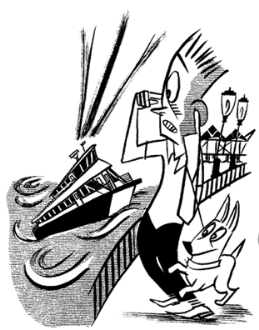
…Last year, in her capacity as a co-chair of the New York City Water Trail Association, Brous began collating the complaints of other paddlers that the myriad ferryboats using the river routinely failed to toot their horns before pulling away from the dock, in defiance of maritime law, specifically Inland Navigation Rule 34. The kayakers feared that a ferry might run one of them down. Brous wrote to various entities with some waterfront sway and eventually found herself sending periodic e-mails to the Coast Guard, detailing instances of law-flouting ferries. Nothing changed. The ferries ferried hornlessly…

Search Well, Do Good, Avoid Not Being Evil

The big guns of the tech world have the financial weight to reinvest in new services, but can startups give them a run for their soul?

I have not tested it yet, but there is a new, alternative search engine worthy of checking out. Click the image above to go to the Guardian story about would-be giant-killing do-gooders (or is it giant-killing would-be do-gooders?):

A new breed of internet startup is taking on the big guns of the tech world. Seeking to capitalise on consumer disillusionment with the established order in the wake of headlines about tax-dodging, personal data profiteering and poor factory conditions, these startups represent the radical face of the internet.

Unusually for a tech company, however, it is not technological innovation that gives them their unique selling point. Rather it is the promise to do social and environmental good.

“They started with decent values – Google and Apple,” says Christian Kroll, founder of Ecosia, an eco-conscious search engine based in Berlin. “They wanted to build something that improves the world. But as soon as you become a public company, shareholders exert influence.” Continue reading

Our Gang, Thevara (First Day Of School)

This slideshow requires JavaScript.

In our neighborhood, the gang of kids we have been snapping photos of in recent years are among our favorite reasons to be in Thevara.  Today was the first day of school (ever) for the two individual youngsters above; the three young ladies together were happy that school is back in session after a late summer, early monsoon break.

For The 2012 Design Team

Hey you!  We think of you guys almost every day, and this vimeo made it necessary to stop and post a quick hello.  The property we called Harbour is looking fabulous. And the property called Pearl down at Marari beach is curvaceous in exactly the manner we talked about.  We have heard rumors that one of you got a job in New York.  True or false?  The rest of you?  Stay in touch!

Community, Collaboration, Career

If you spend five minutes listening to Gerald Chertavian in the video above, and it resonates in any manner, then you should learn more about the organization he formed.  It came to our attention, as many other great stories have recently, thanks to From Scratch, Jessica Harris’s radio show and podcast repository. Continue reading

Our Gang, Thevara (To Fly A Kite)

This slideshow requires JavaScript.

Our neighborhood, where kids know how to have fun on a hot summer’s day, is currently full of kids all day every day, now that school has been out for a while. The usual suspects are at it again, thinking about how to get airborne.


Weird Businesses, Natural History Edition

Eric Prokopi, of Gainesville, in the five-thousand-square-foot fossil workshop that he built in his back yard. Photograph by Richard Barnes.

Eric Prokopi, of Gainesville, in the five-thousand-square-foot fossil workshop that he built in his back yard. Photograph by Richard Barnes.

I am not sure what to make of this.  Is it entrepreneurial conservation from a different angle? This story, in character with the New Yorker‘s brand of long form journalism, tells a remarkably odd story in must-read fashion:

Natural history goes to auction five or six times a year in America, and one Sunday last May a big sale took place in Chelsea, at the onetime home of the Dia Center for the Arts. The bidding, organized by a company called Heritage Auctions, began with two amethyst geodes that, when paired, resembled the ears of an alert rabbit. Then came meteorites, petrified wood, and elephant tusks; centipedes, scorpions, and spiders preserved in amber; rare quartzes, crystals, and fossils. The fossils ranged from small Eocene swimmers imprinted on rock to the remains of late-Cretaceous dinosaurs.

Continue reading

Coffee’s Contentments

In the mid-1990s I moved with Amie and our two sons Seth and Milo from Ithaca, NY in the USA to Costa Rica for my first post-Ph.D. venture, working with the governments and business leaders in each country of Central America.  The project combined a few then-young strategic and economic development models–competitiveness, economic clustering, and sustainable development–with several of their luminary proponents from Harvard Business School and at the Harvard Institute of International Development.  My job was to take those ideas and apply them to my area of expertise as a newly minted Ph.D. from Cornell University.

Sustainable Tourism Development was the terminology applied to this hybrid. In 1996, the third country in my regional rotation was El Salvador, after Costa Rica and Nicaragua. I have not had reason to think of El Salvador lately, but a nearly-lost article in my to-read-later folio popped out today:

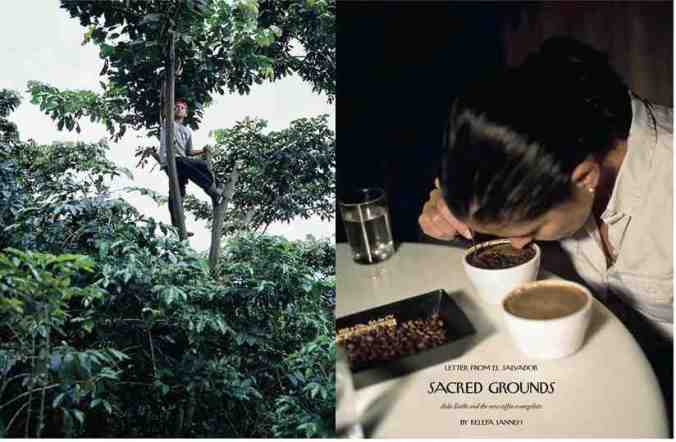
Aida Batlle is a fifth-generation coffee farmer and a first-generation coffee celebrity. On the steep hillsides of the Santa Ana Volcano, in western El Salvador, she produces beans that trade on the extreme end of the coffee market, where a twelve-ounce bag may cost twenty dollars or more and comes accompanied by a lyrical essay on provenance and flavor. These beans have made Batlle an object of obsession among coffee connoisseurs and professionals–the coffee equivalent of a European vigneron–and she is willing to play the role, if it helps raise coffee’s status. Continue reading

Echoes Of Net Impact 2010

AlexCountsAlex Counts spoke at the Net Impact Conference in 2010, which took place at Cornell University during the spring semester, while I was teaching a course there. I had the good fortune of being recommended to listen to his talk.  Today I had the good fortune of encountering him again, on this podcast series that I have so far been batting 1,000 with:

Microfinance lending, the practice of making small loans to individuals who would otherwise not qualify for traditional loans, has been a proven method of nurturing entrepreneurship in developing countries. As a college student, Alex read about the work of Noble Prize winning Dr. Muhammad Yunus and his efforts in microfinance. Continue reading

Happy Birthday, Douglas Adams

One year ago today I posted this to make sure that anyone who loves this author would be aware that there are still opportunities to celebrate his life in tangible, meaningful ways that he would have appreciated.  I encourage anyone and everyone to continue to do so because the conservation needs have grown rather than diminished.  You might also enjoy his final public appearance above, which will give you 90 minutes of intense amusement and learning.   Continue reading