Coca-Cola Thinking Plants

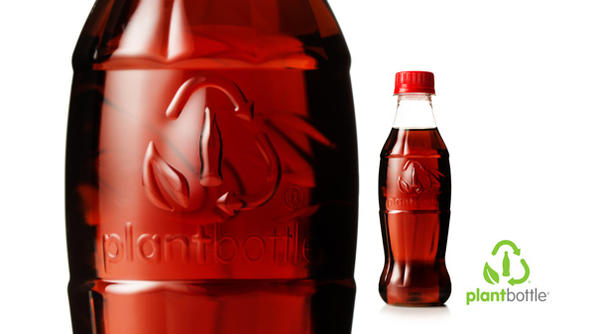
BUSINESS THE BITE Coca-Cola debuts 100% plant-based bottle as companies go eco-friendly (+video)  csmonitor icon Latest News MORE EMAIL Subscribe Coca-Cola has unveiled a bottle made entirely of plant-based materials. The new Coke bottle is the latest sign of the company's growing shift toward more environmentally friendly practices. By Ellen Meyers, Staff writer JUNE 4, 2015 About video ads Coca-Cola to release plant-based recyclable bottles WSBTV - Atlanta Coca-Cola to release plant-based recyclable bottles Coca-Cola debuted an updated version of its PlantBottle, its first bottle made from 100 percent plant materials at the Expo Milan 2015 on Wednesday. The Atlanta-based beverage giant did not specify when the 100 percent plant-based bottles would be available to consumers. However, the company said it wants its current version of its PlantBottle, made of 30 percent plant-based materials, to be used in all of its products by 2020. “Our vision was to maximize game-changing technology, using responsibly sourced plant-based materials to create the globe’s first fully recyclable PET plastic bottle made entirely from renewable materials,” Nancy Quan, the company’s global research and development officer, said in a press release. Recommended: Who owns Gatorade: Coke or Pepsi? Take our 'parent company' quiz! Since the 2009 launch, Coca-Cola has distributed more than 35 billion bottles in nearly 40 countries using its current version of PlantBottle packaging, according to the release. The company estimates that the packaging helped save the equivalent annual emissions of more than 315,000 metric tons of carbon dioxide. TEST YOUR KNOWLEDGE Who owns Gatorade: Coke or Pepsi? Take our 'parent company' quiz! PHOTOS OF THE DAY Photos of the day 06/16 In 2011, Coca-Cola licensed the technology for making PlantBottles to H.J. Heinz to use in its ketchup bottles. In 2013, Ford Motor Company said it plans to use the same material found in PlantBottle packaging in the fabric interior in certain test models of the Fusion Energi hybrid sedan. Coca-Cola says the new bottles will be the world's first entirely plant-based PET bottles. PET, known as polyethylene terephthalate, is a plastic resin and the most common type of polyester, according to the National Association for PET Container Resources (NAPCOR). It was discovered and patented in England in 1941, but it was not until the late 1990s when more companies and manufacturers started to make and use PET containers for products. NAPCOR says PET is appealing for both consumers and manufacturers for its low weight, strength, and recyclability, and its use in packaging materials, like bottles, has ticked up over the past few years. However, PET has its drawbacks. It can be an expensive packaging material to produce, according to a 2004 report from the Recycling Operators of New Zealand. RONZ also found that “PET acts as a gas ‘sieve,’ slowly allowing oxygen in and carbon dioxide out. This means the shelf life of beverages can be limited by the reduction, over time, in carbonation and oxygen degradation of flavours.” In other words, the carbonation in soda could go flat faster.  In terms of recycling, quality and quantity of supplies are also still major concerns. For reclaimers – professional recycling centers – PET packaging can be harder to clean than other plastics, Reclaimers still reported high levels of contamination in PET containers in 2013, according to NAPCOR’s 2014 report on recycling activity for PET containers. That complication can mean less PET materials are actually reused. In fact, only 22.6 percent of recycled PET containers in the US went on to be used in other products.   NAPCOR also reported that domestic collection of PET containers in the US is growing, but it is not enough to meet current and potential demand from reclaimers. That's led them to import PET from places like Canada, Mexico, and Latin America. While PET recycling has a long way to go, Coca-Cola's latest move highlights a long withstanding trend: the importance of businesses being more envronmentally conscious

While PET recycling has a long way to go, Coca-Cola’s latest move highlights a long withstanding trend: the importance of businesses being more envronmentally conscious

Coca-Cola has unveiled a bottle made 30% of plant-based materials. The new Coke bottle is the latest sign of the company’s growing shift toward more environmentally friendly practices. Can it be sustained? That remains to be seen.

Since its introduction in 2009, PlantBottle packaging has been distributed in a variety of packaging sizes across water, sparkling, juice and tea beverage brands—from Coca-Cola to DASANI to Gold Peak. Today, PlantBottle packaging accounts for 30 percent of the Company’s packaging volume in North America and 7 percent globally, some 6 billion bottles annually, making The Coca-Cola Company a large bioplastics end user.  In 2011, the company licensed PlantBottle Technology to H.J. Heinz for use in its ketchup bottles. In 2013, Ford Motor Company announced plans to use the same renewable material found in PlantBottle packaging in the fabric interior in certain test models of the Fusion Energi hybrid sedan. And in 2014, the first reusable, fully recyclable plastic cup made with PlantBottle Technology rolled out in SeaWorld and Busch Gardens theme parks across the United States. More.
Continue reading

The Food Cart Just Turned Green

One hundred of the first carts will be funded by MOVE and reserved for disabled veterans, and the remaining 400 will go to vendors who sign up—at no cost to them, because the pilot program will be sponsored. PHOTO:  Today's the Day I

One hundred of the first carts will be funded by MOVE and reserved for disabled veterans, and the remaining 400 will go to vendors who sign up—at no cost to them, because the pilot program will be sponsored. PHOTO: Today’s the Day I

Food carts are an iconic part of New York City’s street life. NYC has over 5,000 licensed trucks and carts, and an estimated 3,000 unlicensed ones on the streets. Cart operators, representing diverse ethnicities and cuisines, serve approximately 1.2 million customers every day. A food cart can be started with little capital and improved with sweat equity. However, until now, this industry has had no choice but to rely on smoke-spewing carts and their antiquated technologies that are dirty and unsafe. But hold on, the MRV100 is here.

Most food carts run off a diesel generator that’s designed to run only a few hours. Vendors run them for stretches of up to 14 hours, leading to a high output of greenhouse-gas emissions such as carbon monoxide, nitrous oxide, and particulate matter. You can see the smoke with the naked eye, but the hard facts are even more frightening: The research and consulting firm Energy Vision found that each cart produces the same amount of nitrous oxide as 186 cars on the road.

Continue reading

This Furniture Can Grow You Dinner

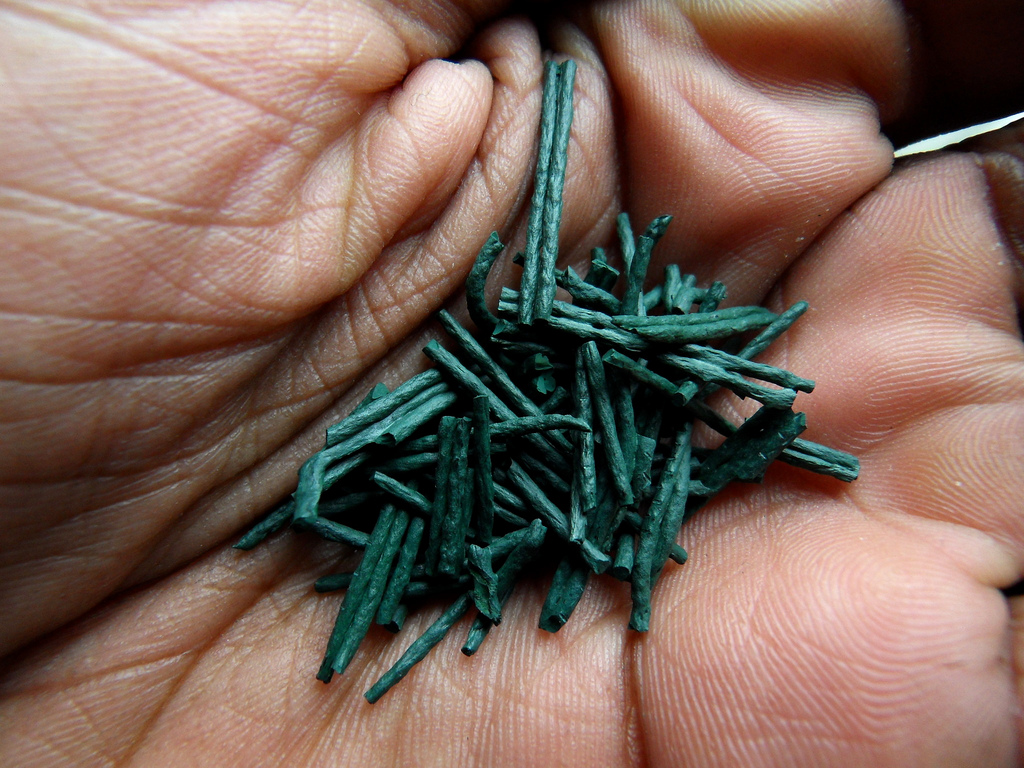
Spirulina is said to be the richest food in iron, 20 times higher than common iron-rich foods; and its iron is twice as effective than iron found in most vegetables and meats. COURTESY: Esse Spirulina

Spirulina is said to be the richest food in iron, 20 times higher than common iron-rich foods; and its iron is twice as effective than iron found in most vegetables and meats. COURTESY: Esse Spirulina

In the living room of the not-so-distant-future, you might have a glowing green blob of microorganisms next to your sofa instead of a lamp. A new line of photosynthetic furniture is filled with spirulina—a tiny, edible bacteria—that the designers imagine could help feed us without the incredible environmental footprint of conventional agriculture.

A new line of photosynthetic furniture is filled with spirulina… The custom glass bioreactors use waste heat, light, and carbon dioxide from a home to feed the spirulina inside. Periodically, someone can turn a tap, empty out the green sludge, and eat it.

Continue reading

Stop Typing!

Sustainable fonts require the least amount of energy to load. Using one also allows one to process more even when internet speeds are low.

Sustainable fonts require the least amount of energy to load. Using one also allows one to process more even when internet speeds are low. Is Ryman Eco one of them?

It’s only been an exact week since we discussed the ‘most eco-friendly’ ad campaign. And we vaguely remember a 14-year-old from a Pittsburgh-area middle school challenging the government to use the Garamond font in official communication to save up to $136 million each year. Find the original study here. So, clearly the sustainability debate has reached the doors of design. Supporters and naysayers abound, as is the case with Ryman Eco, whose creators claim it can reduce ink usage by 33 per cent.

“Ink is only about 15 percent of the total carbon footprint of a printed page. Despite the rise of e-everything, paper use is prodigious in the United States. Americans still use an average of 10,000 sheets of office paper per year, which is a lot.”

Continue reading

Sri Lanka Takes the Ecofeminism Route

The new national scheme aims to set up 1,500 community groups around Sri Lanka's 48 lagoons, which will offer alternative job training and micro-loans to 15,000 people. The groups will be responsible for the upkeep of designated mangrove forests.

The new national scheme aims to set up 1,500 community groups around Sri Lanka’s 48 lagoons, which will offer alternative job training and micro-loans to 15,000 people. The groups will be responsible for the upkeep of designated mangrove forests. PHOTO: Outdoor Conservation

Big news for the environment: Sri Lanka’s new government just took the unprecedented, historic step to protect all of its mangroves. The move, the first of its kind anywhere in the world, will provide long-term environmental, social and, last but not least, economic benefits to the Indian Ocean island nation, and provide a model for other vulnerable tropical nations to follow. Whose are the champions of this mission? Women.

Started in the 1970’s and gaining in much popularity during the next two decades, ecofeminism seeks to foster a connection between repression of women with the damage caused to nature and natural resources. It is based on the philosophy that both women and nature exhibit the same values and characteristics like nurturing and hence see it as the responsibility of women to undertake ecological causes. One of the most memorable events of ecofeminism occurred in Kenya when rural women planted trees as part of a soil conservation effort to avert desertification of their land as a part of the Green Belt Movement formed by Wangari Maathai. The women of Greenham Common Peace Camp were instrumental in the removal of nuclear missiles there, a fight lasting for over ten years. Sometimes ecofeminism has also been an avenue through which minority and repressed communities like the Native Americans have found their voice. Mohawk women along the St. Lawrence River established the Akwesasne Mother’s Milk Project to monitor PCB toxicity while continuing to promote breastfeeding as a primary option for women and their babies. More.

Continue reading

What’s in Your Tequila?

Although demand for tequila is booming, the younger generation of laborers is deserting the land of the agave in Mexico, from which the liquid is extracted. PHOTO: The Huffington Post

Although demand for tequila is booming, the younger generation are deserting the land of the agave in Mexico, from which the liquid is extracted. PHOTO: The Huffington Post

Find yourself taking a shot at the tequila often? Or are you one to cook with it, whipping up some tequila wings, tequila-cured salmon or infusing the liquid in cheesecakes and ice cream? Not to forget those breezy cocktail mash-ups featuring flavors of rose, mango, strawberry, and even pepper! Now that we have your attention, we are going to take a shot at bringing you this story from the home of the drink – Mexico. A story with a mood-board that will definitely not have you screaming “One tequila, two tequila, three tequila, floor”. One that may possibly leave you with questions about the future of the drink and Mexico’s loss of a family tradition.

The craft of the agave harvest, still done entirely by hand, has remained virtually unchanged since around 1600 when tequila was first invented by the Spanish conquistadors. It is also one that has traditionally remained in families, with each generation teaching the next, ensuring that the mechanization of the tequila harvest has been kept at bay.

Yet traditions of the jimador, a figure still cloaked in romantic mystique in literature and even Mexican telenovelas, are slowly disappearing. While the demand for high-quality tequila is rising year on year, with the industry worth over $1bn and seven out of 10 liters produced now exported worldwide, the younger male generations who would once have taken on the mantle of their fathers to become jimadores are turning away from the agricultural way of life in droves.

Continue reading

Stepping Up to the Plate

Polystyrene lunch plates are being shown the door in some US cities. PHOTO: NRDC

Polystyrene lunch plates are being shown the door in some US cities. PHOTO: NRDC

New York, Los Angeles, Chicago, Miami, Orlando, and Dallas. Six cities. 4,536 schools. 2,848,000 students enrolled. 469,000,000 meals served annually. And one organisation that unites them all and its plans to combine purchasing power and coordinate menu creation and food service in schools. Meet the Urban School Food Alliance. And here’s their latest idea: ditching polystyrene lunch trays and replacing them with compostable lunch plates. It’s a significant move since all together, the schools in the Alliance serve up 2.5 million meals a day.

But what’s most revolutionary about these new plates is what they’re made of. The polystyrene used in traditional lunch trays is a petroleum-based plastic that won’t break down for hundreds of years. When the trays end up in landfills — and 225 million of them do every year — they leech pollutants into the water and air, according to the group. The new plates, by comparison, are made of recycled newsprint and can break down within a matter of weeks in commercial composting facilities. They’re also only a tiny bit more expensive, at $0.049 apiece compared with $.04 apiece for the plastic trays.

Continue reading

Wind Powered Race Goes To Team Elsie Piddock

Team Elsie Piddock sails up Nichols Passage south of Ketchikan on the way to winning the Race to Alaska. TAYLOR BALKOM / KETCHIKAN DAILY NEWS

Team Elsie Piddock sails up Nichols Passage south of Ketchikan on the way to winning the Race to Alaska. TAYLOR BALKOM / KETCHIKAN DAILY NEWS

Fishermen gonna fish, sometimes pushed to do remarkable things under extreme challenge. Sailors gonna sail, sometimes pushed to do remarkable things under extreme challenge. We thank Seattle radio station KUOW for sharing the news of the conclusion of this race that has had our attention for the last week:

Screen Shot 2015-06-15 at 4.36.40 AM

Ross Reynolds talks to Jake Beattie the director of the Northwest Maritime Center in Port Townsend and the organizer of the first ever Race to Alaska contest about how Team Elsie Piddock managed to defy expectations and win the race in one week and a day.

See more at the Ketchikan Daily News.

Fishing for Life

Greece is now heavily investing in open-ocean fish farming to meet demand.  PHOTO: Gerald Brimacombe

Greece is now heavily investing in open-ocean fish farming to meet demand. PHOTO: Gerald Brimacombe

The traditional Greek fisherman casting a net from his small wooden caique is a postcard image of the Mediterranean. In the past, these fishermen supplied tavernas and fish markets. But fish stocks are so low now that many say they can’t make a living. Reason? Commercial trawlers scoop most of the fish out of the sea, there’s over-exploitation of marine wealth, and fishing regulations are lax. National Public Radio tells this story from the port of Laki, a fishing village on the Aegean island of Leros:

It’s a sunny afternoon on the port of Laki, a fishing village on the Aegean island of Leros. The seaside tavernas are filled with happy tourists and local families listening to traditional violin music and eating fresh grilled fish. But fisherman Parisi Tsakirios is not celebrating. He’s on his wooden fishing boat, cleaning a bright yellow net. Two days at sea, he says, and barely a catch.”We caught just 20 pounds of fish,” says Tsakirios, who, at 29, has been fishing for 15 years. “We can sell that for 200 euros (about $225). But fuel costs almost as much, so we’ll be lucky if we make 20 euros (about $22).”

Continue reading

Know Your Cup of Tea

While tea has an impressive history stretching back 5,000 years, iced tea has a history stretching back only as far as the discovery of preserving ice. PHOTO: darter.in

While tea has an impressive history stretching back 5,000 years, iced tea has a history stretching back only as far as the discovery of preserving ice. Picture of a tea garden in Munnar, Kerala. PHOTO: darter.in

Having spent the weekend maneuvering through tea plantations in Munnar, the drive brought back memories of conversations over tea here. There was the post on the complete tea experience – from planting a seed to hand plucking the tender green “silver tips” of the tea, to hand roasting and finally enjoying the “fruits” of one’s labor in distant Thailand. The one on the history of tea, too. And here is the account of how America popularized iced tea (we are betting on it being one of your go-to drinks), courtesy NPR’s The Salt: 

You’d be forgiven for not knowing this, but Wednesday was National Iced Tea Day. And while it’s only an unofficial food holiday, it makes sense that Americans would set aside a day to celebrate this favorite summertime sip: We popularized it. Tea itself, of course, has been consumed in America since Colonial times. (Remember the Boston Tea Party?) But before you could drink iced tea, you needed ice — and that was a rare summer luxury until the early 1800s. New Englanders could cut large chunks of ice from frozen ponds and lakes in winter, then insulate it with sawdust so that it could last into the warmer months. But in the hot South, snow and ice didn’t exactly abound.

Continue reading

Six Yards of Handwoven History

An understated tourist destination, Chanderi and its looms are often missed on the route to nearby Orchha and Khajuraho. PHOTO: Gaatha

An understated tourist destination, Chanderi and its looms are often missed on the route to nearby Orchha and Khajuraho. PHOTO: Gaatha

You must have heard of India’s ubiquitous piece of clothing that is the sari. Graceful, flattering, stately – several are the adjectives used to describe this six yards of fabric. But have you heard its story? From the threads and to the loom, to the people striving to uphold the dignity of working by hand and keeping the powerloom lobbies at bay? Then, the story of the Chanderi sari is for you to read, courtesy the Outlook:

The softly shimmering legacy of many hands lingers in its weave, the gorgeous rustle of cotton and silk hails its arrival: the handloom sari, timeless showcase of India’s heritage textile, gathered from all over the country to drape the Indian woman. From Delhi living room conversation piece to subtle South Indian wedding showstopper, the handloom sari has always kept standards high. Parrot green, frighteningly pink, marvellously magenta, from Kancheepuram in Tamil Nadu to Sambalpuri in Orissa, it wends its way into trousseaus, staple sari collections and 100 Sari Pacts (the most recent trend in sari preservation has women vowing to wear a hundred saris and commemorate the traditional garment). Its weavers are craftsmen, their outlines blurred by the sheer number of people involved in the creation of one long, winding stretch of cloth.

Continue reading

The ‘E’ word – E-waste

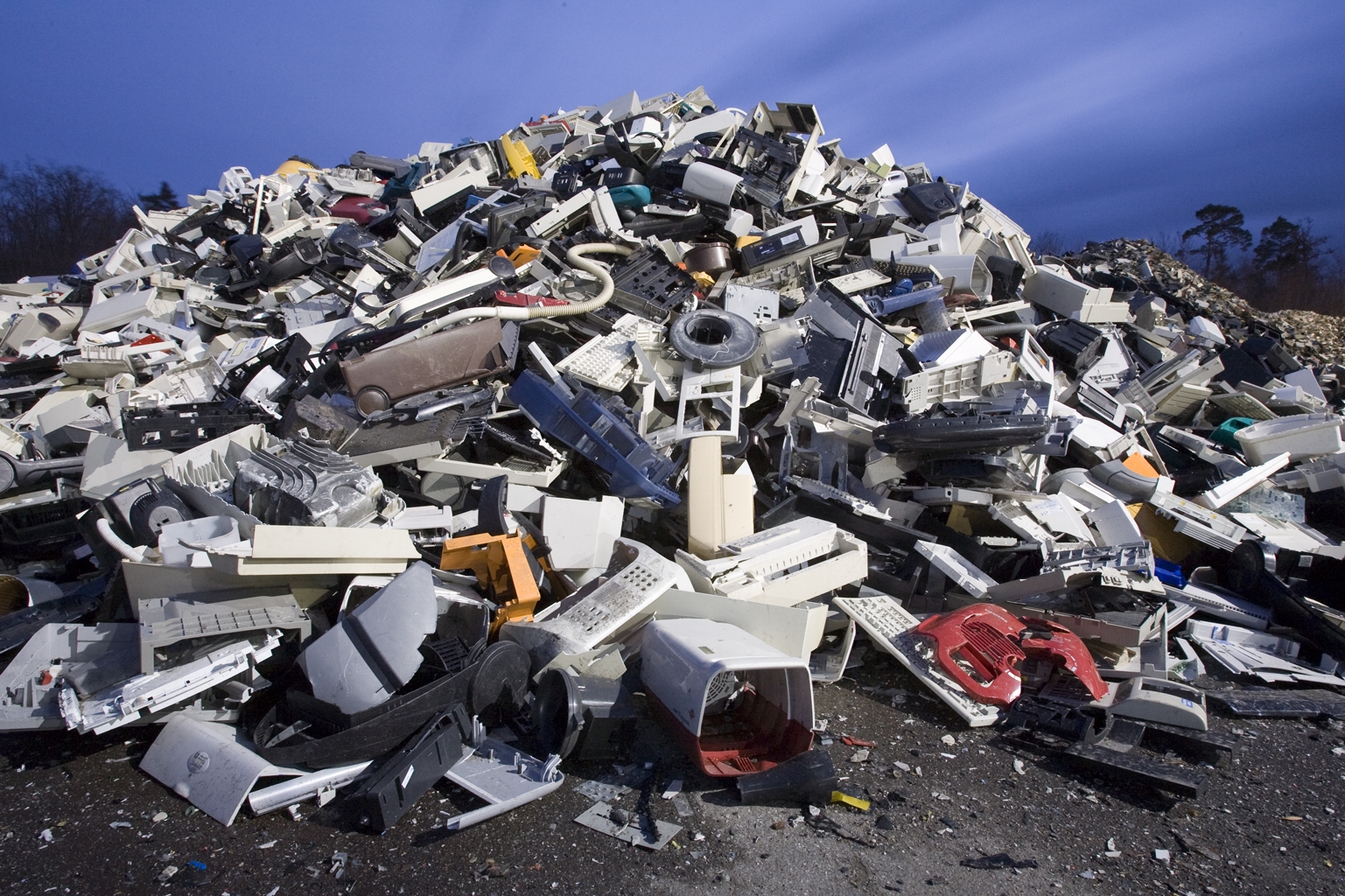
The StEP Initiative forecasts that by 2017, the world will produce about 33 percent more e-waste, or 72 million tons (65 million metric tons). That amount weighs about 11 times as much as the Great Pyramid of Giza.

The StEP Initiative forecasts that by 2017, the world will produce about 33 percent more e-waste, or 72 million tons (65 million metric tons). That amount weighs about 11 times as much as the Great Pyramid of Giza.

By 2017, the global volume of discarded refrigerators, TVs, cellphones, computers, monitors and other electronic waste will weigh almost as much as 200 Empire State Buildings, a new report predicts.The forecast, based on data gathered by United Nations organizations, governments, and non-government and science organizations in a partnership known as the “Solving the E-Waste Problem (StEP) Initiative,” predicts e-waste generation will swell by a third in the next five years, led by the United States and China. The StEP Initiative created a map of the world’s e-waste, which is available online. [Infographic: Tracking the World’s E-Waste]

Continue reading

10,000 km in a Tuk-tuk and With the Sun

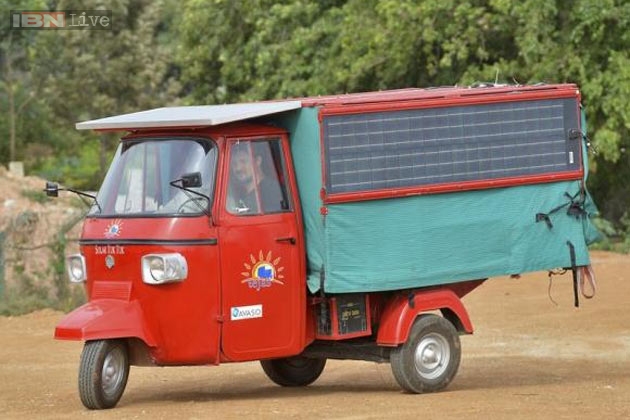
Tejas is a renovated Piaggio Ape  with a 13-kilo-watt prototype engine, lithium-ion batteries and six solar panels. PHOTO: IBN

Tejas is a renovated Piaggio Ape with a 13-kilo-watt prototype engine, lithium-ion batteries and six solar panels. PHOTO: IBN

Our itinerary has been filled with travel all week. And we almost gave The New Indian Express article on the travel plans of Indian engineer Naveen Rabelli and Austrian filmmaker Raoul Kopacka a miss. That was only until we read the details: a 10,000 km journey from India to London on a self-built solar-powered tuk-tuk/autorickshaw to Britain to promote a sustainable low-cost alternative-transport solution and check air pollution in towns and cities across their journey. Talk about going the extra mile.

Continue reading

A Garden of Waste

Successful stories of upcycling, recycling and effective waste management are heartwarming to say the least. Because they speak of someone thinking about the future and taking the time and effort to act on a lay thought. That’s what the world (and the environment) needs – time. And, Nek Chand, who was born in Pakistan but made India his home, gave almost 60 years of his life to make trash beautiful, to give it meaning and purpose. He created a garden of sculptures and waterfalls out of trash over 40 acres and managed to hide it from everybody for 18 years. It was his secret to keep and is now Chandigarh’s pride. The nation’s, too.

In his spare time, Chand began collecting materials from demolition sites around the city. He recycled these materials into his own vision of the divine kingdom of Sukrani, choosing a gorge in a forest near Sukhna Lake for his work. The gorge had been designated as a land conservancy, a forest buffer established in 1902 and nothing could be built on it. Chand’s work was illegal, but he was able to hide it for eighteen years before it was discovered by the authorities in 1975. By this time, it had grown into a 12-acre (49,000 m2) complex of interlinked courtyards, each filled with hundreds of pottery-covered concrete sculptures of dancers, musicians, and animals.

Continue reading

Dad, I Dirtied the Nest!

Animal sanitation studies — the exploration of how, why and under what conditions different species will seek to stay clean, stave off decay and disrepair, and formally dispose of the excreted and expired. PHOTO: John Rakestraw (Northern Flicker - male)

Animal sanitation studies — the exploration of how, why and under what conditions different species will seek to stay clean, stave off decay and disrepair, and formally dispose of the excreted and expired. PHOTO: John Rakestraw (Northern Flicker – male)

Nature may be wild, but that doesn’t mean anything goes anywhere, and many animals follow strict rules for separating metabolic ingress and egress, and avoiding sources of contamination. Want examples? Take the Northern Flicker. According to a new report in the journal Animal Behaviour on the sanitation habits of these tawny, 12-inch woodpeckers with downcurving bills, male flickers are more industrious housekeepers than their mates.

Researchers already knew that flickers, like many woodpeckers, are a so-called sex role reversed species, the fathers spending comparatively more time incubating the eggs and feeding the young than do the mothers. Now scientists have found that the males’ parental zeal also extends to the less sentimental realm of nest hygiene: When a chick makes waste, Dad, more readily than Mom, is the one who makes haste, plucking up the unwanted presentation and disposing of it far from home.

Continue reading

When Nature is the Weatherman

Its monsoon delayed and weakened by a cyclonic  storm and the El Nino, India is bracing for tough days ahead. PHOTO: Madhyamam

Its monsoon delayed and weakened by a cyclonic storm and the El Nino, India is bracing for tough days ahead. PHOTO: Madhyamam

All through the last weeks of May and the first days of June, most Indians have been looking to the skies. For answers and signs of the monsoon rains. With India being a predominantly agrarian country, the rains decide whether the country grows enough to feed its 1.25 billion people or relies on imports to satiate hunger and demand. And last evening, we saw the first signs of a healthy monsoon, amid fears of the rains being a poor show this year.

Continue reading

When Ideas Take Flight

A team of Indian students won the fourth edition of the Airbus Fly Your Ideas global competition organised in partnership with UNESCO to encourage innovators . PHOTO: Airbus

A team of Indian students won the fourth edition of the Airbus Fly Your Ideas global competition organised in partnership with UNESCO to encourage innovators . PHOTO: Airbus

A few weeks ago, Hamburg hosted the fourth edition of the Airbus Fly Your Ideas competition. The city is where the most popular single isle A320 family aircraft are finalised, where A380 cabin interiors are fitted and where the revolutionary A350XWB sections are manufactured. Organised in partnership with UNESCO to encourage the next generation of innovators, the competition saw 518 multi-disciplinary ideas, representing 3,700 students from over 100 countries – all to better the future of flight. And a team of four Indian students and their “good vibes” took home the top prize money of €30,000 (£21,500). And here’s the best bit: the winners physically met only on the day of the finals.

Continue reading

Most Eco-friendly Ad Campaign Ever?

French organic food retailer Biocoop claims to have come up with the most eco-friendly campaign ever. PHOTO: AdWeek

French organic food retailer Biocoop claims to have come up with the most eco-friendly campaign ever. PHOTO: AdWeek

Welcome to the age of ‘organic’ being the marketing appeal of food production, design, crafts, consumer goods, and more. With it being a coveted USP and given the large planning and effort that go into taking the organic route, you might as well tell everyone who has a moment to listen. And that’s precisely what French organic food retailer Biocoop is doing. And doing it with a creative difference – rather than investing in commercials and monstrous hoardings, the company and its agency Fred & Farid Paris decided to make the medium their message. Marshall Mcluhan, you’d be proud! Organic by business and eco-friendly in their ad campaign, Biocoop’s message is crystal clear.

Continue reading

A Culture in Need of Safeguards

Each year since 2009, UNESCO puts out two lists that closely look at indigenous practices across the world. The List of Intangible Cultural Heritage in Need of Urgent Safeguarding is composed of heritage elements that require urgent measures to keep them alive. During the period from 2009 to 2014, 38 elements have been included on this List. These include Mongolian calligraphy, the Paach (corn-veneration ritual) of Guatemala, the male child cleansing ceremony of northern Uganda, practices of the Kayas of the sacred forests of Mijikenda in Kenya and more. The second list –  Representative List of the Intangible Cultural Heritage of Humanity – comprises practices that help demonstrate the diversity of heritage and raise awareness about their importance.

Continue reading