New York Bike-Sharing Update

We were happy when it was first introduced by others,  in other cities in the USA, and even happier now to see this news on the first month of New York City’s experience with bike-sharing:

It’s been a long slog for New York City’s bike-share program. Continue reading

Deaccession, De-Weasled

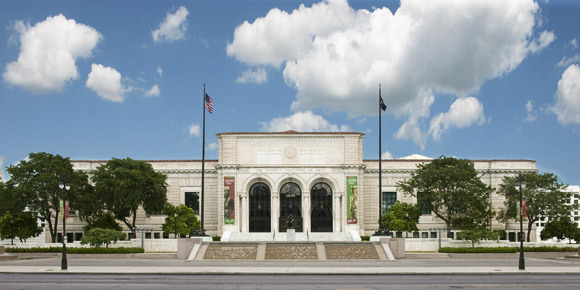
Several contributors to Raxa Collective have family living in Greece. There is nothing to be said here about that country’s economic and political woes that has not already been said better elsewhere, so no insult is intended to Greeks by making reference to the woes of another location.  Detroit, an American city facing economic woes comparable, when scaled to the municipal level, of Greece, is considering the sale of art it owns to raise what may be billions of dollars worth of needed cash.  Peter Schjeldahl, art critic for the New Yorker, has posted a brief observation about it, the latter portion excerpted below. Out of this mess comes an observation worthy of comment considering Raxa Collective’s mission:

…Art works have migrated throughout history. Unless destroyed, they are always somewhere. It’s best when they are on public display, but if they have special value their sojourns in private hands are likely temporary. At any rate, they are hardly altered by inhabiting one building rather than another. Continue reading

Bravo, WWF & Odnoklassniki!

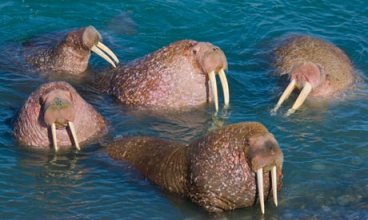
Pacific walruses (Odobenus rosmarus divergens) come ashore at a gravel beach on Arakamchechen Island in the Bering Sea, Chukotka, Russia. Photograph: Jenny E Ross/Corbis

Thanks to Guardian’s coverage of this excellent, innovative campaign:

The 148m users of the Russian social network service Odnoklassniki are being targeted by a World Wildlife Fund for Nature campaign that uses ‘404’ error pages to raise awareness of species on the verge extinction.

Continue reading

Urban Muse

This slideshow requires JavaScript.

It does not matter whether you are a farmer, a geneticist, or whatever you do with your time: you will almost certainly be affected in important, unexpected ways after time spent in Paris.   Continue reading

The Pastoral Muse

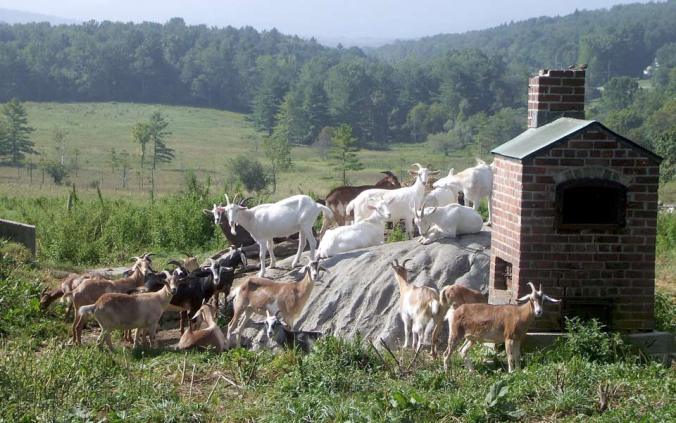
Goats on the hillside in Vermont. Photo by Anne Buchanan

Goats on the hillside in Vermont. Photo by Anne Buchanan

It has been some time since we first found an article in this publication, which we have continued following. There is at least one emerging pattern to explain why we keep going back: every article has an image that transports us, that makes us want to go see the who, what and where of the description:

…Jennifer and her husband Melvin work Polymeadows Farm, a small goat dairy farm and dairy plant in Vermont. They are currently milking about 120 goats. During kidding season, twice a year, the newborns spend their first night in a barrel of hay in the kitchen. This is important during Vermont winters, but also in summer, so that Jennifer knows the kids are healthy before they go out and join the rest. Continue reading

Upcycling Mattanchery

Getting greener on the transportation front is partly about reducing use of fossil fuel, partly about reducing the noise and particulates generated by motorized vehicles, and partly just the fun of alternative methods of getting around. Sometimes pedicabs are simple visions, other times elaborate hipsterisms.  The image above links to just one of the several companies peddling practical person-powered vehicles, now ubiquitous world-wide… Continue reading

Karkidakam – Ramayana Masam

Reciting Holy Book Ramayana

Reciting the Holy Book of Ramayana

Karkidakam is the last month in the Malayalam calendar, which this year falls between 17th July and 16th August on the Western calendar. Historically the southwest monsoon is bringing chilling torrential rain during this period. In Kerala every observant Hindu family recites the Holy Book of Ramayana in homes and temples during this time, making Karkidakam popularly known as Ramayana Masam. Continue reading

Other Winged Wonders

Birds are the most common feature on this site, for reasons we cannot possibly explain in the prelude to a post about another type of flying creature. Butterflies are certainly underrepresented here, and with this post we will begin to correct that. Four of Raxa Collective’s contributors, and many others who have visited Costa Rica, first learned of butterfly farming due to the good graces of Joris Brinckerhoff and Maria Sabido and that is just one of the reasons to smile thanks to Robert Krulwich’s recent post:

I’ve got a friend, Destin, who has a YouTube channel called Smarter Every Day, where he pokes around with his camera to get extremely intimate looks at small miracles in nature. In this one, about the secret life of baby butterflies, he learns that when it comes time for the caterpillar to turn itself into a butterfly, it doesn’t spin a lot of silk and build itself a shelter (a pupa). I thought that what caterpillars do. But no … take a look at what actually happens. Continue reading

Europeans And Indians, The Early Days

Screen Shot 2013-07-21 at 12.19.40 PM

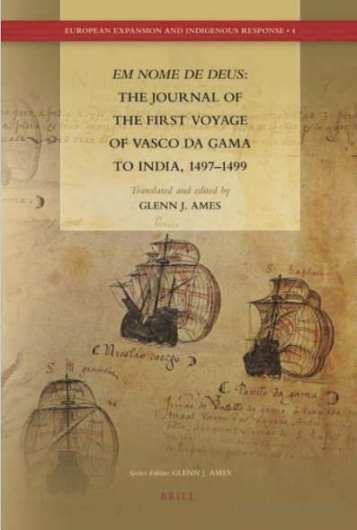
In several past posts about historically interesting interactions between Europeans and Indians, the New World variation on that story was invoked to make a point, mainly with an eye toward environmental history. Today’s Hindu has an article that draws on the history contained in the journal to the left about (Old World) Vasco de Gama’s first experience in (Older World) India, specifically the Malabar Coast and what is now the state of Kerala. Click the image to go to the source of the book, and here to go to the Hindu article:

The hero of the first Portugese contact on Indian shores is a degradado, or Portugese convict and exile, not Vasco da Gama.

One of the greatest navigators from the Age of Discoveries, da Gama, appointed by Dom Manuel, King of Portugal, for his “energy and high spirits” refused to take the initiative to go ashore on the morning of May 21, 1498. Instead, da Gama chose to wait in the depths of his ship, Sao Gabriel, while the convict Joao Nunes stepped out into the monsoon showers off the western coast of Kozhikode to meet, much to his amazement, a pair of multi-lingual Tunisian merchants. Continue reading

Stuff, Change, And Examining Broke

View the video by clicking the image above, again brought to you on Cornell University’s website:

The United States isn’t broke; we’re the richest country on the planet and a country in which the richest among us are doing exceptionally well. But the truth is, our economy is broken, producing more pollution, greenhouse gasses and garbage than any other country. Continue reading

Entrepreneurial Conservation Embraced By A Great Designer

TonyFadellToday’s New York Times’ regular feature called The Boss provides one man’s self-described transition from the pinnacle of consumer tech design, which he helped establish, to a greener entrepreneurial form of the same:

After years of work at Apple, designing iPods and iPhones, the founder of Nest Labs now makes a self-programming thermostat that enables homeowners to save energy. Continue reading

If You Happen To Want To Live in Felpham, West Sussex

This slideshow requires JavaScript.

We are not brokers, but in the spirit of entrepreneurial conservation, and a price tag so seemingly reasonable, we are obliged to bring this to your attention:

Guide Price Of £650,000 Continue reading

Like Water Into Wine

By now everyone knows that availability of potable water is among the most important challenges facing this and coming generations. Thanks to the USA-based tax and donor-funded National Public Radio for bringing this to our attention:

…A more common technology for removing salt and other impurities from water is known as reverse osmosis, which uses lots of energy to produce the extremely high pressure required to force raw water through a semi-permeable membrane. You can see a diagram of how it works here. Continue reading

Fruit, Every Day, Everywhere


We appreciate the reminder provided by one of the Atlantic’s many talented writers, about a topic we have had more than passing interest in for the last couple years. Our own previous mention of this film, and the phenomenon make this article no less interesting:

There are more than a thousand banana species in the world, but you’ve probably only ever tasted one. The Cavendish banana is the one we know and love. It’s the one the international banana economy is based on–the only species that’s exported from one country to another, anywhere in the world. But its extinction is coming… Continue reading

Alaska, Brown Bear And Salmon Via Camera Trap

This slideshow requires JavaScript.

We had already come to the conclusion that camera traps are valuable for the sake of conservation. Thanks to the Guardian‘s coverage of these bears and the camera trap provided by a generous foundation to a worthy recipient:

Caught on camera trap: brown bears feast on salmon – in pictures

Explore.org has launched a summer salmon bearcam to stream live video from Brooks river in Alaska’s Katmai national park. Organisers hope for the first time to record the entire salmon run, from the frenzied dash upstream in July through to the autumn months

Dietary Geography Lessons

[image]

Continuing the conversation about diet with experts (click the image for the source), who are asked what single change they would recommend:

Jeffrey Flier: With Caveats, Consider a ‘Mediterranean Diet’

This is a tough question to answer, for many reasons. Here are three:

1) Diet is extremely complex. Continue reading

It’s About The Collaboration

All six minutes are a pleasure, but the last few seconds resonate across time and space:

This past fall, Yolanda Cuomo, a New York-based artist and graphic designer, learned that she had to vacate her Chelsea studio of twenty-five years. Continue reading

Green Citizens, Green Consumers, Fear And Hope At The Aspen Ideas Festival

Thanks to James Fallows for referring this on his blog page on the Atlantic‘s website:

After a brief stage-business intro from me, the first 15 minutes or so are Harvey presenting an overview of how to think about carbon, coal, natural gas, electric grids, extreme weather, and other sources of problems and possibilities. The rest is our discussion, and questions from the audience.  Continue reading

An Old Dog Doing New Tricks

John W. Adkisson for The New York Times. Peony, a Carolina dog. Some of the breed’s rare traits include a fishhook tail, a pointed, somewhat lupine face and the habit of digging snout pits.

John W. Adkisson for The New York Times. Peony, a Carolina dog. Some of the breed’s rare traits include a fishhook tail, a pointed, somewhat lupine face and the habit of digging snout pits.

DNA is the trick that brings some new respect to this canine line, in a debate we did not even know about until today’s New York Times Science section revealed it:

Carolina dogs, like a few other breeds, are without certain genetic markers indicating European origins, suggesting they have been in the Americas Continue reading