Is An Organic Diet Better?

Associated Press photo. Organic foods have made big inroads in supermarkets like this Hannaford store in Quincy, Mass.

Associated Press photo. Organic foods have made big inroads in supermarkets like this Hannaford store in Quincy, Mass.

This question is asked in relation to the diet of a particular nation, but the various answers provided by these experts could apply anywhere:

Sales of organic food have been rising steadily over the past decade, reaching almost $30 billion in 2011, or 4.2% of all U.S. food and beverage sales, according to the Organic Trade Association.

Many of the consumers who purchase these products say paying more for organic produce, milk and meat is a trade-off they are willing to make in order to avoid exposure to chemical pesticides and fertilizers and milk from cows given bovine growth hormone. But other families—especially those whose food budgets may be more limited—wonder if organic food is really worth its hefty price tag.

So far, researchers haven’t been able to provide them with a definitive answer. Continue reading
Kashmir In Watercolor

This slideshow requires JavaScript.

Thanks to India Ink for this story:

Four years ago, Masood Hussain, one of Kashmir’s most renowned artists, worked on a series of watercolors of places, people and activities in and around his city, Srinagar. Imbued with realistic touches, alive with filigree details, and emitting a translucence bequeathed by the medium in the hands of a master, the series “Transparent Strokes” was snapped up by visitors to the city. Continue reading

To Read It To The End, You Must Disbelieve It

Mark Thomas (left) and Guy Shorrock keep watch on Britain’s egg obsessives. “These are not normal criminals,” Shorrock says. Photographs by Richard Barnes.

Thanks to the New Yorker‘s commitment to a difficult topic–birds and their fate at the hands of regular and irregular people–and especially to Julian Rubinstein and his confidants for this taxing piece of journalism:

On the afternoon of May 31, 2011, Charlie Everitt, an investigator for the National Wildlife Crime Unit in Edinburgh, Scotland, received an urgent call from a colleague in the Northern Constabulary, the regional police department whose jurisdiction includes the islands off the country’s western coast. The officer told Everitt that a nature-reserve warden on the Isle of Rum, twenty miles offshore, had reported seeing a man “dancing about” in a gull colony. Everitt looked at the clock. It was 4 p.m., too late to catch the last ferry, so he drove Continue reading

If You Happen To Be In London

This slideshow requires JavaScript.

The National History Museum in London is offering an opportunity to see works by a photographer whom you might have first encountered here, or you may be a member of his online community:

The world premiere of Sebastião Salgado: Genesis unveils extraordinary images of landscapes, wildlife and remote communities by this world-renowned photographer.

Sebastião Salgado: Genesis
11 April – 8 September 2013
Waterhouse Gallery Continue reading

Powdermill Avian Research Center (PARC)

This slideshow requires JavaScript.

Thanks to Atlantic‘s website for hosting the Venue folks’ post about this remarkable research station devoted to a phenomenon we pay tribute to every day. In particular, this post helps understand a century+ of evolution in the research tools used to study the behavior of birds:

On a recent morning, Venue joined researchers Luke DeGroote, Amy Tegeler, Mary Shidel, Kate Johnston, and Matt Webb, as well as several dozen warblers, catbirds, and a cuckoo, for a tour of the various devices of bird surveillance at the Powdermill Avian Research Center (PARC), part of Carnegie Museum of Natural History’s Powdermill Nature Reserve. Continue reading

Impossible, Past Tense

There are already more than a million views of this, in what looks like one day’s time (but may be a hoax and may be old news, but does not look like either as this is posted, so we hope to add to the hype if we are correct).  Thanks to the folks at The Verge for this story:

A Canadian duo and their Kickstarter-funded, pedal-powered helicopter have won one of the longest-standing challenges in the history of aviation — keeping a human-powered aircraft hovering up in the air at height of at least 9.8 feet, within a 32.8 by 32.8-foot square, for 60 seconds minimum. The challenge, known as the Sikorsky prize, has withstood at numerous failed attempts since it was established in 1980, 33 years ago, even with a $250,000 bounty. But it was finally bested earlier in June by the Atlas, a gigantic human-powered helicopter designed by Cameron Robertson and Todd Reichert, aeronautical engineers from the University of Toronto, who cofounded a company AeroVelo. Continue reading

Sagan’s Pale Blue Dot

Scientists, among other communities we follow, make us smile when they speak in a language we can understand (those of us who are not scientists, which is most of us on this site). We have had occasion in the past to point to the famed scientist and former Cornell University professor Carl Sagan, and now Robert Krulwich shares this video on one of his Wonders posts (after clicking through, scroll down):

…Looking at this, Carl Sagan thought, first, how small we look, how small we are — which inspired him to write his eloquent Pale Blue Dot meditation, which, if you haven’t read it lately, take a minute and a half to look at this short version gorgeously animated by Joel Somerfield at Order, a British design studio. Carl Sagan himself is narrating. Continue reading

Smiling, Thinking Of Math As Language

Planning our work with communities in diverse locations, language is a challenge, a puzzle. We are constantly on the lookout for new ways of thinking about how to resolve this puzzle, so when we hear this fellow speak on the topic, it makes us smile. Nothing to do with conservation, but everything having to do with community and collaboration at a very fundamental level, we thank Open Culture for bringing this wonderful recording to our attention:

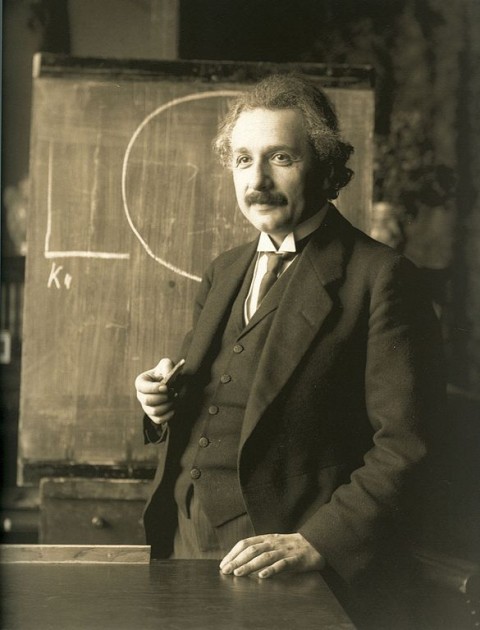
The essay is called “The Common Language of Science.” It was recorded in September of 1941 as a radio address to the British Association for the Advancement of Science. The recording was apparently made in America, as Einstein never returned to Europe after emigrating from Germany in 1933. Continue reading

Bay Area Branding

Anyone who has been following the Raxa Collective blog would likely be aware that natural beauty trumps man-made wonders for us, hands down.  Because of that, rather than in spite of it, we have also been sensitive to built space because we live and work in it every day, and welcome travelers to such places.  Paying tribute to design, as we like to do from time to time, we recommend this item on Atlantic’s website about a new landmark building in the Bay Area and the ideas it represents (worth reading in full; excerpted here are the early and closing lines):

…The heart of the development is a ten-story tower that the company’s architect, NBBJ, says “will create a powerful brand image for Samsung.” Continue reading

Birthday Present For Mr. Tesla

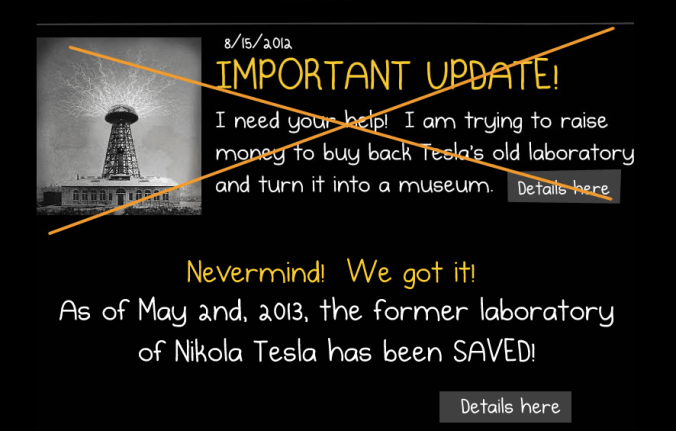
Last August we recommended reading to the end of Mr. Inman’s mischievously hilarious tribute to Nikola Tesla, partly because every bit of it was great, but the end asked for attention to an initiative that rang true to us: the conservation of patrimony related to this exceptional man.  A couple months ago, when we saw on Mr. Inman’s site that the initiative had succeeded we decided to investigate further before celebrating this. Now, in honor of Tesla’s birthday, seems like a good time to highlight it.  Click the image above to see the results.  There have been some birthday tributes to Tesla elsewhere and we share one of those as well. Continue reading

The Upsides Of Downside Exploration

The Shinkai6500 deep-sea submersible

The Shinkai6500 deep-sea submersible. Photograph: Jon Copley

Told in the first person, we appreciate Jon Copley’s account of his most recent amazing work, and the Guardian’s coverage of it:

Five kilometres, or 3.1 miles, is not a great distance on land – the length of a pleasant stroll. But five kilometres vertically in the ocean separates different worlds. On 21 June I had the opportunity to make that short journey to another world, by joining Japanese colleagues for the first manned mission to the deepest known hydrothermal vents, five thousand metres down on the ocean floor. Continue reading

Entrepreneurial Conservation Through Carbon Visualization

Thanks to the University of Washington’s magazine Conservation, we found our way to this video, and the magazine’s blurb about the source of the video is a worthy introduction because of its explanations of the images that accompany:

For Antony Turner, pictures make a story come alive—and in the climate change story, one of the main characters is invisible. In 2009, together with artist/scientist Adam Nieman, he founded Carbon Visuals to help people “see” the carbon dioxide that’s trapping heat in Earth’s atmosphere. Continue reading

Ideas That Give ‘Far Out’ A New Meaning

Chaco Guardians

Biologist Erika Cuéllar says that unless the indigenous inhabitants are involved it will be impossible to save the biodiversity of the Gran Chaco. Photograph: Dan Collyns

Biologist Erika Cuéllar says that unless the indigenous inhabitants are involved it will be impossible to save the biodiversity of the Gran Chaco. Photograph: Dan Collyns

Thanks to the Guardian for its coverage of the Chaco’s guardians in this story, Bolivia’s indigenous people join fight to save Gran Chaco wilderness, by Dan Collyns:

Second largest wilderness in South America threatened by farming, ranching and drugs trade

Only from Cerro Colorado – a rocky outcrop that rears vertiginously over the treetops – is it possible to make out the vastness of the Gran Chaco as it stretches from this corner of Bolivia beyond the horizon into Paraguay. This enormous swath of dry forest and scrubland, where every plant or tree bears thorns, is South America’s second largest wilderness after the Amazon rainforest.

The Gran Chaco is threatened on all sides: Mennonite cattle ranchers have bought up large tracts in Paraguay and Brazilian farmers looking for cheap land for their soy crops have flooded across the border. Continue reading

Onion Plantation

Photo credits: Dileep

Photo credits: Dileep

In India and throughout the world, onions are often used as a spice, and are an essential ingredient in many meals.  Specifically in India, onions are considered to be one of the most important cash crops.  They are a staple food, and are relied upon by everyone from the rich to the poor.     Continue reading

Communities Acting Collectively With Entrepreneurial Leadership

Screen Shot 2013-07-08 at 9.50.42 AM

Thanks to this interview podcast on Fresh Air, we learned about Ava DuVernay and through her we learned about @AFFRM (click the banner above to go to their site, and be sure to read her interview with Director Spike Lee). DuVernay is a cultural entrepreneur, par excellence, and we salute her sense of community and collaboration:

Before she started making movies a few years ago, DuVernay made a name for herself through her marketing and publicity firm DVA Media + Marketing, which has handled films by brand-name directors like Clint Eastwood and Steven Spielberg. Continue reading

Malayalam Milestone

Sabdatharavali compiled by Sreekanteswaram

Sabdatharavali compiled by Sreekanteswaram

Sreekanteswaram is our kind of hero, protecting his cultural heritage without much fanfare but with a sense of humor:

That the first and the most authentic Malayalam dictionary to date, Sabdatharavali by Sreekanteswaram G. Padmanabha Pillai, turns 90 this year is a fact lost on Malayalis basking in the language’s hard-won classical status.

While such forgetfulness on the part of language Tsars is understandable, given the backward status of linguists and lexicographers in cultural hierarchy, a handful of ordinary language-lovers like poet Kureeppuzha Sreekumar Continue reading

Natural Resources, Economic Development, And Fair Play

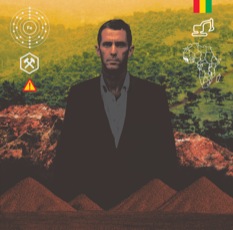
Guinea, in West Africa, is one of the world’s poorest countries. The iron ore buried inside the Simandou range may be worth a hundred and forty billion dollars.

Guinea, in West Africa, is one of the world’s poorest countries. The iron ore buried inside the Simandou range may be worth a hundred and forty billion dollars.

An article in this week’s New Yorker documents the challenges of sustainability in resource-rich developing economies with a history of political instability:

One of the world’s largest known deposits of untapped iron ore is buried inside a great, forested mountain range in the tiny West African republic of Guinea. In the country’s southeast highlands, far from any city or major roads, the Simandou Mountains stretch for seventy miles, looming over the jungle floor like a giant dinosaur spine. Some of the peaks have nicknames that were bestowed by geologists and miners who have worked in the area; one is Iron Maiden, Continue reading

If You Happen To Be In New York

Last time we mentioned this library, it was to raise some important questions; on a previous occasion to recommend a lecture; this time we recommend what looks like an important exhibition curated by Leonard S. Marcus:

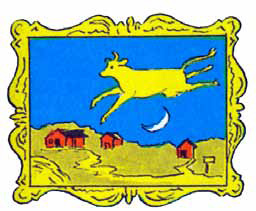
The ABC of It is an examination of why children’s books are important: what and how they teach children, and what they reveal about the societies that produced them. Through a dynamic array of objects and activities, the exhibition celebrates the extraordinary richness, artistry, and diversity of children’s literature across cultures and time. Continue reading