A Future More Beautiful?

We are completing the architectural designs on several new properties, and this talk had strong resonance on several dimensions:

Architect Thomas Heatherwick shows five recent projects featuring ingenious bio-inspired designs. Some are remakes of the ordinary: a bus, a bridge, a power station … And one is an extraordinary pavilion, the Seed Cathedral, a celebration of growth and light.

Click the image above to go to the TED Architectural Inspiration playlist.

Plant Collaboration, Productivity, And Waste Minimization

Alex Koeberle

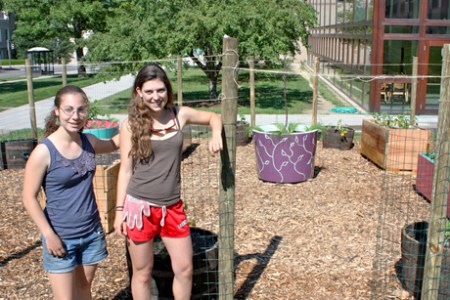
Alex Koeberle. Plant science students Sarah Nechamen ’15 and Celine Jennison ’14 helped create a garden outside Kennedy Hall to demonstrate permaculture.

An item from Cornell University’s newspaper, the Chronicle, highlights a topic we want to know more about:

Diners at Trillium need not look farther than out the window to see where part of their meal originates.

The basil in their pasta or cilantro in their quesadilla may have been plucked from the new garden adjacent to Kennedy Hall, constructed by students last week.

The site will also enable staff and students to stroll around and learn about permaculture – a self-sustaining agricultural system in which herbs, fruits and vegetables are strategically planted so that they work together in mutual benefit. Some plants provide shade, for instance, while others offer pest resistance.

A permaculture garden is essentially a network, with each plant working together, explained plant sciences major Sarah Nechamen ’15, past president of the Cornell Permaculture Club. This increases garden productivity while minimizing waste and human interference. Continue reading

Hyperlocal Journalism With A Heritage Twist

The Rajasthan Patrika headquarters in Kesargarh, Rajasthan.

The Rajasthan Patrika headquarters in Kesargarh, Rajasthan.

Thanks to India Ink for this story about hyperlocal journalism:

JAIPUR, Rajasthan – On the June 25, I walked into Kesargarh Fort in Jaipur, the capital of the northern Indian state of Rajasthan. Where cannon were once mounted, now lies a silver printing press. The monotype-casting machine is the only giveaway that the stone and terracotta façade is home to a newspaper group, Patrika. Continue reading

Metro Travelers Meet Mega-Fauna

Buying Illegal Ivory is Killing Me’: One of the posters from the Shanghai campaign. Credit: UNEP

Shanghai is famous as China’s “City of the Future” and in collaboration with this United Nations-backed campaign metro travelers are finding large-screen displays and posters of endangered animal species during their daily commute.

Public awareness was a key factor behind the reduction in the demand for ivory in North America and Europe in the 20th century, and it can play its part in reducing the illegal wildlife trade today as demand moves to emerging markets. Continue reading

Music, Duets, And Inspiration For Other Forms Of Collaboration

Collaboration has been central to music since the beginning of time. Most of our posts about collaboration intend to point out more unusual, but much needed, forms of collaboration related to communities and their surrounding ecosystems. Something about this album captures our intent with this word better than most news items usually do.  Credit for our finding our way to this musical collaboration goes to the interview the duet gave some time back:

Emmylou Harris and Rodney Crowell were featured on today’s episode of NPR’s Fresh Air. The two spoke with host Terry Gross about their long friendship and their new album, Old Yellow Moon, a new 12-track duets album featuring song by Crowell and others that marks the first official collaboration from the duo since Crowell joined Harris’ Hot Band as guitarist and harmony singer in 1975. The two also discuss a few of their musical Continue reading

The Truth About Komodo Dragons

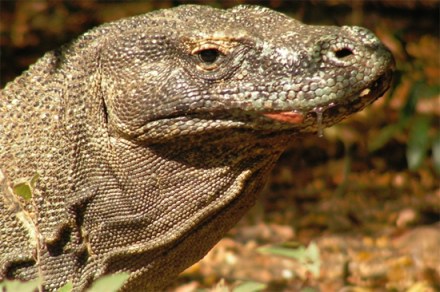
The Komodo dragon: surprisingly clean.

The Komodo dragon: surprisingly clean.

Myth-busting science writers, especially when they free a phenomenal animal from the clutch of wrongly bad reputation, are heroic folk to us:

In 1969, an American biologist named Walter Auffenberg moved to the Indonesia island of Komodo to study its most famous resident—the Komodo dragon. This huge lizard—the largest in the world—grows to lengths of 3 metres, and can take down large prey like deer and water buffalo. Auffenberg watched the dragons for a year and eventually published a book on their behaviour in 1981. It won him an award. It also enshrined a myth that took almost three decades to refute, and is still prevalent today. Continue reading

Green Lipstick On A Pig

Greenpeace is leading the charge against corporations that practice what has come to be called greenwashing. Image: iStockPhoto

Greenpeace is leading the charge against corporations that practice what has come to be called greenwashing. Image: iStockPhoto

Worth a moment of your time:

Dear EarthTalk: I hear the term “greenwashing” a lot these days but am still not sure exactly what it means. Can you enlighten?—Ruth Markell, Indianapolis

In essence, greenwashing involves falsely conveying to consumers that a given product, service, company or institution factors environmental responsibility into its offerings and/or operations. CorpWatch, a non-profit dedicated to keeping tabs on the social Continue reading

A Master Class For “Creative Business” Entrepreneurs

Pip Jamieson, Jeff Lyons, Danny Miller

Pip Jamieson, Jeff Lyons, Danny Miller

The Guardian continues its quest to creatively avoid the irrelevance and economic demise challenging all print-based journalism enterprises:

Overview

In a uncertain economic climate, many of us dream of setting up our own business – using our creative skills, while becoming our own boss. It could be a design studio, a series of events, a retail empire or a web venture – there are common challenges to meet and problems to solve. Continue reading

Conservation Is Sometimes The Story Of Change

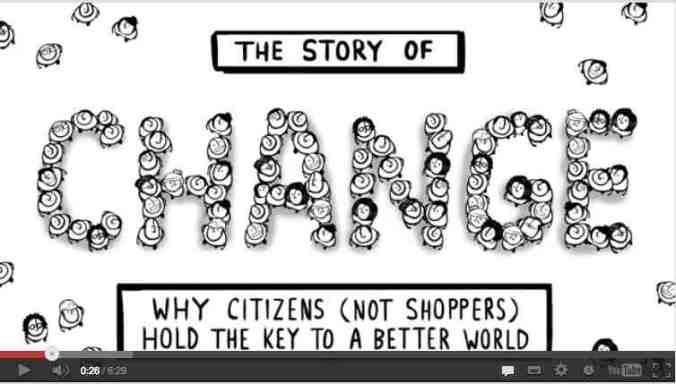
Click above to go to the location where Cornell University is hosting this brief video by a fellow alum of several Raxa Collective contributors:

Can shopping save the world? The Story of Change urges viewers to put down their credit cards and start exercising their citizen muscles to build a more sustainable, just and fulfilling world. Continue reading

Congratulations Eesha Khare!

batteries

Another science fair-winner, again a young woman, has caught our attention (click the image to the left to go to the source):

Interest in nanochemistry research and energy storage led 18-year-old Eesha Khare, a senior at Lynbrook High School in San Jose, to develop a supercapacitor that could potentially be used in flexible displays and fabrics.

Her effort won her first prize at the Intel Science Fair and the Project of the Year award in the California State Science Fair’s senior division for 2013. Continue reading

Tulsi Thara

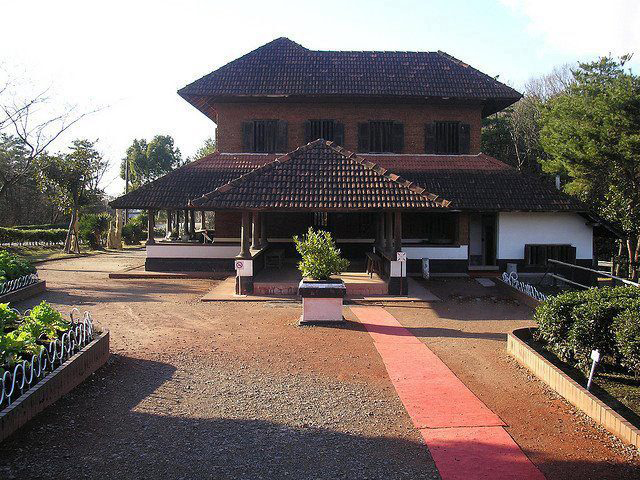
Tulsi Thara in frond of the house

Tulsi Thara in frond of the house

Tulsi Thara is a sacred stone platform in front of traditional Kerala houses on which the Holy Basil (tulsi) plant is grown. Tulsi is a sacred herb known as the Queen of the herbs. Tulsi Thara is made to welcome the Goddess Lakshmi. In mornings and evenings a burning lamp is placed on the platform. Continue reading

Celebrating Conservation’s Important Moments In History

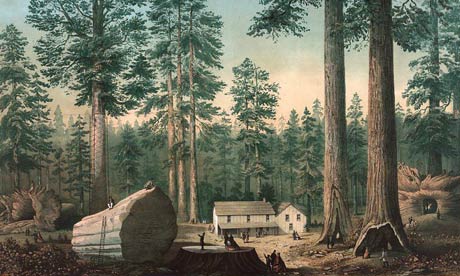
Tourists inspecting the stump of the 'Mammoth Tree' in Calaveras County, California, c1860. The 'Mother of the Forest', without its bark, can be seen in the background. Image: LoC

Tourists inspecting the stump of the ‘Mammoth Tree’ in Calaveras County, California, c1860. The ‘Mother of the Forest’, without its bark, can be seen in the background. Image: LoC

We have written about and sometimes celebrated important moments in conservation history in the past, and these celebrations are among those most responded to by readers of this blog.  A few days ago, a landmark anniversary was observed in an editorial at the newspaper that most consistently keeps us in perspective:

Today marks the 160th anniversary of a seminal, but largely forgotten moment in the history of the conservation movement.

On Monday, 27 June, 1853, a giant sequoia – one of the natural world’s most awe-inspiring sights – was brought to the ground by a band of gold-rush speculators in Calaveras county, California. It had taken the men three weeks to cut through the base of the 300ft-tall, 1,244-year-old tree, but finally it fell to the forest floor. Continue reading

Science Writer’s Advice

As fans of Mr. Zimmer‘s craft as a science writer, we recommend a recent advice column of his:
From time to time, I get letters from people thinking seriously about becoming science writers. Some have no idea how to start; some have started but want to know how to get better. I usually respond with a hasty email, so that I can get back to figuring out for myself how to be a science writer. I thought it would be better for everyone—the people contacting me and myself—to sit down and write out a thorough response. (I’m also going to publish a final version of this on my web site, here.) Continue reading

Urban Fish Market

photo credits: Ramesh Kidangoor

photo credits: Ramesh Kidangoor

Urban fish markets are a common sight in Kerala. The extensive network of rivers, coastline and backwaters means that fish is central to the local menu and these open-air markets provide a daily supply of fresh fish. Continue reading

Plants & Math

NIGEL CATTLIN/GETTY

NIGEL CATTLIN/GETTY

Heidi Ledford introduces the following scientific finding on Nature‘s website:

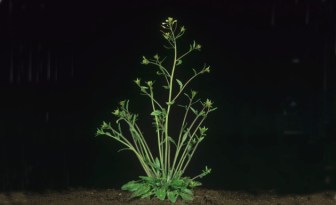
As if making food from light were not impressive enough, it may be time to add another advanced skill to the botanical repertoire: the ability to perform — at least at the molecular level — arithmetic division. Continue reading

Entrepreneurial Conservation In Rajasthan

Photography by Robert Polidori.  BLUE HEAVEN | Built in the 15th century by Rao Jodha, the walls of the fortress of Mehrangarh are 70 feet thick. Many of the houses of Jodhpur are painted blue to deflect the sunlight, and, according to folklore to repel insects.

Photography by Robert Polidori. BLUE HEAVEN | Built in the 15th century by Rao Jodha, the walls of the fortress of Mehrangarh are 70 feet thick. Many of the houses of Jodhpur are painted blue to deflect the sunlight, and, according to folklore to repel insects.

The Wall Street Journal carries a feature that is quite our cup of tea:

EACH SPRING, Maharaja Gaj Singh II hosts a Sufi music festival inside his family’s vast desert fort in the Indian city of Jodhpur. From a distance, this monumental sandstone fortress, called Mehrangarh, looms over the city’s chalky blue buildings, evoking the country’s ancient and otherworldly history. And yet people fly in from across the globe because the festival—and the maharaja who hosts it—blends old India so deftly with new. Continue reading

Congratulations Elif Bilgin!

We have a particular interest in students on their way to university, in the middle of their university experience, or just on their way out.  Today we celebrate the accomplishment of a young woman in Turkey with a science project that has been recognized as brilliant, as noted in this press release:

On Thursday, June 27, Elif Bilgin, 16, from Turkey, was declared the winner of the second annual Scientific American Science in Action Award, powered by the Google Science Fair. Continue reading

A Tomb In Peru That Looters Thankfully Missed

Photograph by Daniel Giannoni. With eyes wide open, a painted Wari lord stares out from the side of a 1,200-year-old ceramic flask found with the remains of a Wari queen. Giersz and his colleagues think the Wari may have displayed the body of the queen after death in a royal ancestor cult.

Heather Pringle, at National Geographic, shares this about the photos (click on any image to go to the source) from this rare find:

The Wari forged South America’s earliest empire between 700 and 1000 A.D., and their Andean capital boasted a population greater than that of Paris at the time. Today, Peru’s Minister of Culture will officially announce the discovery of the first unlooted Wari imperial tomb by a team of Polish and Peruvian researchers. In all, the archaeological team has found the remains of 63 individuals, including three Wari queens. Continue reading

Cornell Tech Redefines “Industrial Complex”

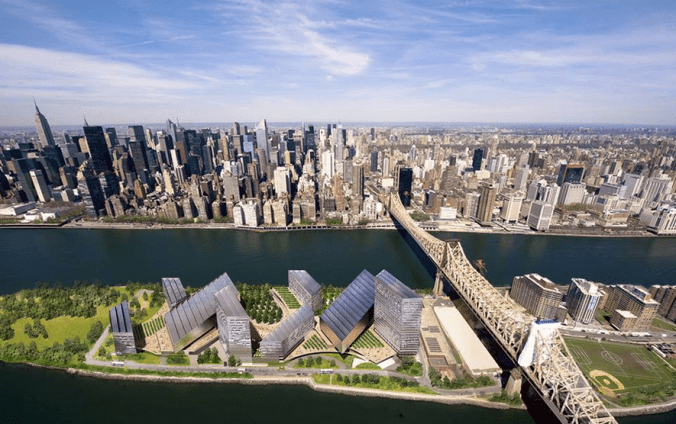
Architectural firm WEISS/MANFREDI project rendering

Architectural firm WEISS/MANFREDI project rendering

When President Eisenhower warned of the rising power of the hyphenated industrial complex his concerns were clearly well-founded. Cornell NYC Tech, the upcoming Roosevelt Island campus of graduate high-tech education, is in the process of rehabilitating the concept of collaboration with industry with the development of its first “corporate co-location” building.

“Cornell Tech is radically rethinking how industry can collaborate with faculty, students and researchers, and corporate co-location is vital to making that a success,” Continue reading

Wildlife Conservation Society Announces Discovery Of New Bird Species

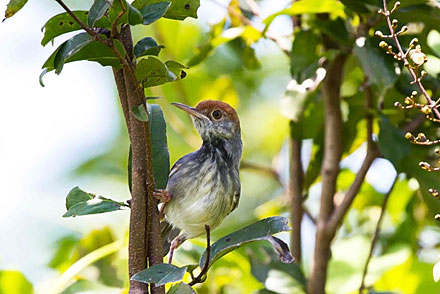
© Ashish John/WCS.  A new species of bird turns out to have been hiding in plain sight: in Cambodia’s capital city limits of Phnom Penh, home to 1.5 million people.

© Ashish John/WCS. A new species of bird turns out to have been hiding in plain sight: in Cambodia’s capital city limits of Phnom Penh, home to 1.5 million people.

One of the conservation organizations we most admire announced some unexpected news via the CS Monitor:

It can be easy to go unnoticed in a big city, and that may describe how the Cambodian tailorbird kept its low profile for so long. A team of scientists discovered the new red-headed, wren-sized bird in Cambodia’s urbanized capital Phnom Penh and several other nearby locations, including at a construction site. It is one of only two bird species found solely in Cambodia. The other, the Cambodian laughingthrush, is restricted to the remote Cardamom Mountains.  Continue reading