Pre-Kerala’s Influence On Indian Illustration

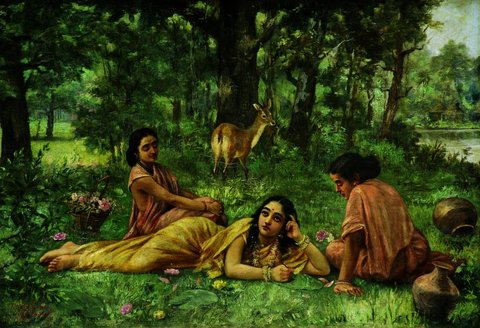
The Shakuntala Patralekhan artwork by Raja Ravi Varma from the Kiran Nadar Museum of Art collection.

The Shakuntala Patralekhan artwork by Raja Ravi Varma from the Kiran Nadar Museum of Art collection.

Thanks to Aayush Soni at India Ink:

NEW DELHI— In 1881, Sayaji Rao Gaekwad III, was looking for a painter to create his portrait as the newly crowned maharaja of Baroda, a princely state in Western India. As always, he sought the help of his mentor, Thanjavur Madhava Rao, the diwan, or chief minister, of his state, who had held the same position in the princely state of Travancore in southern India from 1857 to 1872. Continue reading

Only A Few Days Left To Enter The National Geographic Photo Contest

This and all other images copyright of the individual photographers

One of the magazines we follow and link to frequently has sponsored a contest:

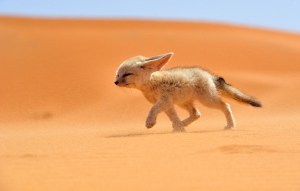
The 25th annual National Geographic Traveler Photo Contest is now accepting submissions. Harness the power of photography and share your stunning travel experiences from around the globe with us. Enter today  Continue reading

Change In The Air

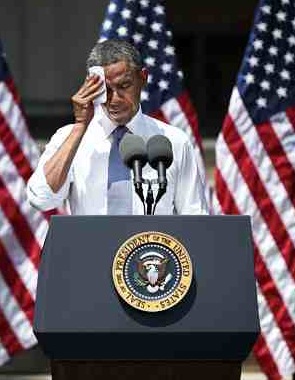
U.S. President Barack Obama wipes sweat off his face as he unveils his plan on climate change June 25, 2013 at Georgetown University in Washington, DC. President Obama laid out his plan to diminish carbon pollution and prepare the country for the impacts of climate change. (Photo by Alex Wong/Getty Images)

Thanks to Elizabeth Kolbert for a timely, pithy explanation of yesterday’s announcement of policy action in the USA:

Better late than never. This afternoon, speaking at Georgetown University, President Obama laid out what his aides had billed as a major initiative to fight climate change. The big news—which was not really news, since it had already been widely reported—was that the Administration will impose rules limiting carbon emissions from both new and existing power plants.

“For the sake of our children and the health and safety of all Americans, I’m directing the Environmental Protection Agency to put an end to the limitless dumping of carbon pollution from our power plants,” Obama said. This is, truly, a big deal. Power plants are responsible for about forty per cent of U.S. emissions. Continue reading

Tree-Sitting Success

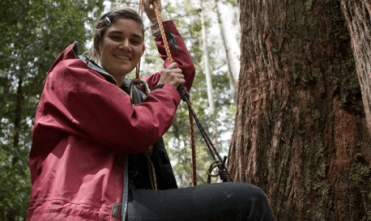
Miranda Gibson tree-sitting. Photograph: Miranda Gibson

Miranda Gibson tree-sitting. Photograph: Miranda Gibson

When we first wrote about Miranda Gibson November 2012 she’d already lived an arboreal life for 300 days. Her goal was simple: to protect Tasmania’s wild forests from logging and other man-made degredation. She’d learned early on that sometimes grandstand gestures were the only way to get her voice heard, and if living (and blogging about) 449 days in a tree without touching the ground isn’t such a gesture we don’t know what is.

We’re happy to report that yesterday the decision was official to increase the Tasmanian Wilderness World Heritage Area by 170,000 hectares to now cover over 1.4 million hectares (or about 3.46 million acres), thereby representing about 1/5 of the area of the island state of Tasmania.

Nothing can explain how I felt the moment the hammer went down to mark the decision yesterday – Tasmania’s Wilderness World Heritage Area was officially extended by 170,000 hectares. Forests that I had spent the past six years of my life fighting to defend, some of the most contentious forests that thousands of people here and around the world have fought to save for over two decades, were now officially listed.

There’s one patch of that forest that I know like the back of my hand. It’s the Tyenna Valley, surrounding a 400 year old giant Eucalypt known to me as the Observer Tree, and whose upper canopy I lived in for over 14 months without once setting my feet on the ground. Continue reading

Voice Versus Exit

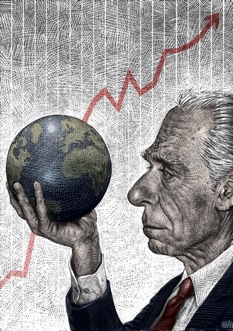
Malcolm Gladwell brings to our attention an economist/planner/idea guy who might not otherwise have found his way to our reading list.  In his usual writing style, Gladwell makes the man, by reviewing his biography, irresistible.  Toward the end of the review, what is described as one of the economist’s key contributions provides a perfect counterpoint to these ideas.  We like this guy because he chooses voice over exit (click the image to the right and it is definitely worth reading to the end):

In the mid-nineteenth century, work began on a crucial section of the railway line connecting Boston to the Hudson River. The addition would run from Greenfield, Massachusetts, to Troy, New York, and it required tunnelling through Hoosac Mountain, a massive impediment, nearly five miles thick, that blocked passage between the Deerfield Valley and a tributary of the Hudson. Continue reading

Seasteading, Self-Reliance Utopia, And Our Shared Future

An article recently published in n+1 examines a utopian futurist form of an idea that seems oddly symmetric with Seth’s posts about the history of exploration using Iceland as a case study. Looking back, we see much in common with explorers, pioneerspilgrims and adventurous thinkers of all sorts.  Looking forward, we are inclined to embrace smart, creative, enthusiastic group efforts to resolve seemingly intractable challenges. Especially when they involve living on boats. We recommend reading the following all the way through:

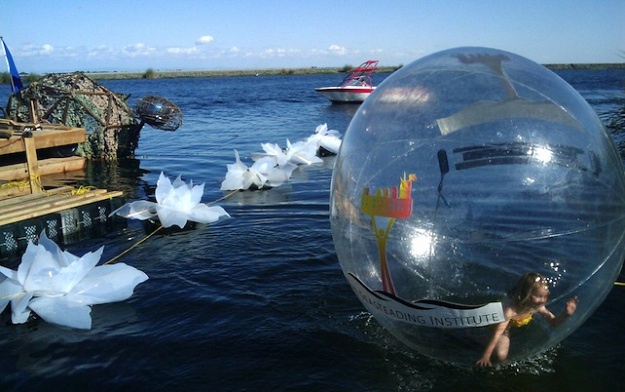
To get to Ephemerisle, the floating festival of radical self-reliance, I left San Francisco in a rental car and drove east through Oakland, along the California Delta Highway, and onto Route 4. I passed windmill farms, trailer parks, and fields of produce dotted with multicolored Porta Potties. I took an accidental detour around Stockton, a municipality that would soon declare bankruptcy, citing generous public pensions as a main reason for its economic collapse. After rumbling along the gravely path, I reached the edge of the Sacramento–San Joaquin River Delta. The delta is one of the most dredged, dammed, and government subsidized bodies of water in the region. It’s estimated that it provides two-thirds of Californians with their water supply.  Continue reading

Veg Beat

New research shows that cabbage, carrots and blueberries are metabolically active and depend on circadian rhythms even after they’re picked, with potential consequences for nutrition. Photo by Flickr user clayirving

New research shows that cabbage, carrots and blueberries are metabolically active and depend on circadian rhythms even after they’re picked, with potential consequences for nutrition. Photo by Flickr user clayirving

Smithsonian has an article about a surprising natural phenomenon, which may not impact your feelings but should get your thoughts stirred up a bit:

You probably don’t feel much remorse when you bite into a raw carrot.

You might feel differently if you considered the fact that it’s still living the moment you put it into your mouth.

Of course, carrots—like all fruits and vegetables—don’t have consciousness or a central nervous system, so they can’t feel pain when we harvest, cook or eat them. But many species survive and continue metabolic activity even after they’re picked, and contrary to what you may believe, they’re often still alive when you take them home from the grocery store and stick them in the fridge. Continue reading

Books In A Pre-Amazonized India

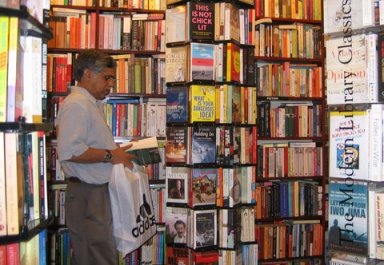
Courtesy of Jairaj Singh A customer at the Fact & Fiction bookstore in New Delhi.

Courtesy of Jairaj Singh
A customer at the Fact & Fiction bookstore in New Delhi.

Our friends at the India Ink blog site offer a cross-generational look at the world of books in our part of the world:

In the summer of 1984, two years before I was born, my father, Ajit Vikram Singh opened a small corner bookshop, Fact & Fiction, in South Delhi’s Vasant Vihar area,      Continue reading

Harnessing The Sun To Study Climate Change On The High Seas

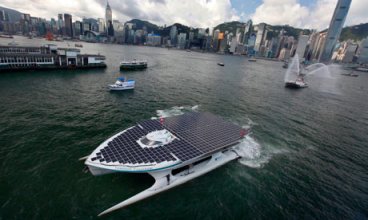
MS Türanor SolarPlanet will measure emissions in the open ocean. Photograph: Alex Hofford/EPA

MS Türanor SolarPlanet will measure emissions in the open ocean. Photograph: Alex Hofford/EPA

The Guardian is reporting on a floating phenomenon worth a look if you want to peer into the future of climate change science:

The solar-powered boat docked in Battery Park City in New York could easily have been packed off to a museum as a relic.

Continue reading

Creative Uses Of Intelligence, Intelligent Uses Of Creativity

How smart are they? Do they drink alot of coffee?  Find out by clicking the image above, or reading the following from the article accompanying that video:

…Google X seeks to be an heir to the classic research labs, such as the Manhattan Project, which created the first atomic bomb, and Bletchley Park, where code breakers cracked German ciphers and gave birth to modern cryptography. After the war, the spirit of these efforts was captured in pastoral corporate settings: AT&T’s (T) Bell Labs and Xerox (XRX) PARC, for example, became synonymous with breakthroughs (the transistor and the personal computer among them) and the inability of each company to capitalize on them. Continue reading

Creativity And Coffee’s Catch

For all you coffee-fueled creatives out there, take note of recent scientific findings about Balzac’s blessed bean:

Honoré de Balzac is said to have consumed the equivalent of fifty cups of coffee a day at his peak. He did not drink coffee, though—he pulverized coffee beans into a fine dust and ingested the dry powder on an empty stomach. He described the approach as “horrible, rather brutal,” to be tried only by men of “excessive vigor.” He documented the effects of the process in his 1839 essay “Traité des Excitants Modernes” (“Treatise on Modern Stimulants”): “Sparks shoot all the way up to the brain” while “ideas quick-march into motion like battalions of a grand army to its legendary fighting ground, and the battle rages.” Continue reading

False Starts, Heroic Conclusions

ESSAY: A Different River Every Time
What is ‘smart’ and how does it fit our consciousness? Is there just one way to it? Are smarter people happier, richer? The answers may not always be that obvious. by SANDIPAN DEB

…Which, of course, brings us to that common capitalist question: “If you’re so smart, why aren’t you rich?” There is something abhorrent about this query. Of course, Mukesh Ambani is super-smart, but so was Jagadish Chandra Bose, who invented wireless communication at least a couple of years before Guglielmo Marconi, who received the Nobel prize for the breakthrough (It is now established that Marconi met Bose in London when the Indian scientist was demonstrating his wireless devices there, and changed his research methods after that meeting). Bose also invented microwave transmission and the whole field of solid state physics, which forms the basis of micro-electronics. Bose’s contributions are all around us today, from almost every electronic device we have at home to the most powerful radio telescopes in the world. But he steadfastly refused to patent any of his inventions, or to license them to any specific company. Some 70 years after Bose’s death, the global apex body, Institute of Electrical and Electronics Engineers, officially acknowledged Bose to be the father of wireless communication.

This is an excerpt whose catchy question pervades an essay worth reading in full. Intelligence, specifically smart Indian people, is the subject of a whole special issue of Outlook magazine. We have pondered amazing people from India on occasion in the past, and if the brief tale above intrigues you then see this post about Tesla versus Edison, but for now Continue reading

More On The Full Stop In India

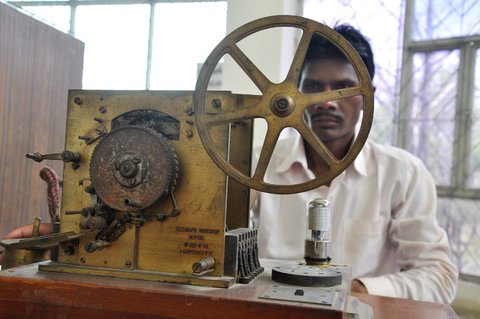
Sanjeev Gupta/European Pressphoto Agency. An employee of the National Telecom Museum in Bhopal, Madhya Pradesh, sitting behind an 1871 model of a telegraphic code machine invented by French engineer Emile Baudot.

Sanjeev Gupta/European Pressphoto Agency. An employee of the National Telecom Museum in Bhopal, Madhya Pradesh, sitting behind an 1871 model of a telegraphic code machine invented by French engineer Emile Baudot.

As we mentioned, history is about to be amended and here is a small post at India Ink about what various people intend to do in honor of the occasion:

On Saturday afternoon, Vikrant Deshpande, a 32-year-old Indian Air Force pilot, drove with his wife to the Central Telegram Office in New Delhi. The newly married couple gazed at a sign in the Telegram Office lobby that read, “Standard Phrases for Greeting Telegrams.” Continue reading

Full Stop In 21st Century India

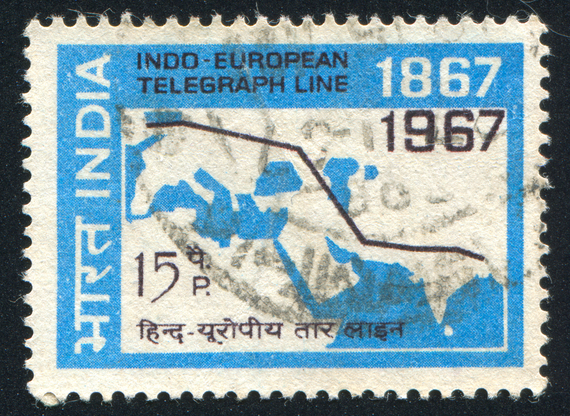
A stamp for the Indo-European Telegraph, circa 1967 (Shutterstock/rook76)

A stamp for the Indo-European Telegraph, circa 1967 (Shutterstock/rook76)

The Atlantic is reporting, and it reaches us in India, that July 14 will be a historic day.  On that day (coincidentally aka Bastille Day in France), an era will end:

In 1850, the British inventor William O’Shaughnessy — who would later become famous for his early experiments with medical cannabis — sent a coded message over a telegraph line in India. His telegram would usher in a new age of communication in and for India, connecting the country in a way that had never before been possible. Continue reading

Every Picture Tells A Story, And Every Road Leads Somewhere

This slideshow requires JavaScript.

The Atlantic‘s website has a great feature that will capture your imagination in 5 minutes or less:

Inspired in part by the great geography game GeoGuessr, I spent some time recently in Google Maps, finding the edges of their Street View image coverage. 

Continue reading

Transformative Innovation, Collaboration And The Growth Of Community

Click the image to the left for an interview with Tim Westergren about his experience prior to and as founder of Pandora. The path to that founding is colorful and unlike other startup stories. Launching a business that threatens the status quo is a classic tale, retold often.Travis Kalanick tells his own variation on a founder’s story about an industry’s reaction to disruptive technology; it is worth listening to both interviews back to back.

Michael Philips has a very insightful blog post covering Pandora’s recent moves in a brutal chess game–incumbents are under no obligation to sit back and watch an upstart deliver creative destruction on a silver platter, but the defensive moves to protect entrenched interests from the power of innovation obviously do not always serve the best interests of society. Philips gives attention to Kalanick’s Uber travails at the same time:

This week, the Internet-radio service Pandora planted itself in South Dakotan soil. It bought an FM radio station in Rapid City. The station, KXMZ-FM (Hits 102.7, “Today’s hits without the rap”), serves the two hundred and fifty-fifth largest radio market in America. Its Facebook page highlights a local Good Samaritan who bought new tires for a stranger’s beat-up pickup truck. But Pandora’s purchase is not a bid for heartland radio; it is the company’s latest gambit in the war between artists, publishers, broadcasters, and technology companies over who will profit from popular music. Continue reading

Bhutan’s Different Approach

Singye Wangchuk/Reuters A statue of Lord Buddha at Kuensel Phodrang in Thimphu, Bhutan on May 20, 2012.

Singye Wangchuk/Reuters. A statue of Lord Buddha at Kuensel Phodrang in Thimphu, Bhutan on May 20, 2012.

Our friends at India Ink share a story about the mysteriously happy kingdom to the north:

Bhutan does things differently in South Asia, and nothing illustrates this so as much as the way it has conducted its transition to democracy. Continue reading

Kathakali Chamayam – Makeup and Costumes

Photo credits: R Ranjith

Photo credits: R Ranjith

Kathakali is known for its heavy, elaborate makeup and costumes.In fact, the makeup is so  intricate and the costumes so huge and heavy that it looks as though the artist is wearing a mask. The makeup is based on a certain set of colors each of which is used to represent a particular character. Only natural dyes are used on the face and the process will take hours. Continue reading

Thalappoli – Traditions Of Kerala

Photo Credits: Ramesh Kidangoor

Photo Credits: Ramesh Kidangoor

Thalappoli is a traditional and ritual procession carried out by young girls and ladies of Kerala to attract happiness and prosperity in the community which holds the festival. The participants wear traditional dress and hold thalam (a metal plate) in their hands  filled with fresh paddy, flowers, rice, coconut and a lighted lamp. Continue reading