Ladyville, Belize
Bird of the Day: Lesser Nighthawk
Ladyville, Belize
Ladyville, Belize
Golden Gate Park, California
female – Telegraph Hill, California
Pucusana, Peru
Weatherby Lake, MO
San Francisco, California
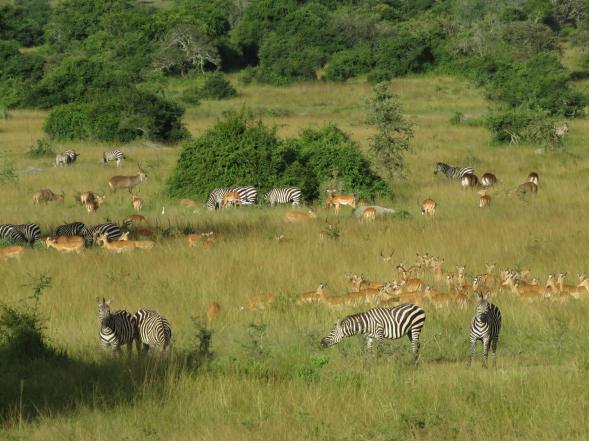
Impala, zebras, topi, and waterbuck share this savanna scene in Akagera National Park
The next park we visited on the Rwanda Study Tour after Nyungwe was Akagera National Park. Although the park was created in 1934, it’s only been run by a partnership between the Rwandan government and an NGO called African Parks—which helps manage about fifteen parks on the continent—since 2010. At this point, a change in operation style and protection started to help wildlife bounce back as well as increase visitation to the park. Back in 2010, the park hosted around fifteen thousand visitors per year and only made about $200,000 (while losing money), but last year the park received thirty-six thousand visitors and made $2,000,000 (getting out of the red for the first time).
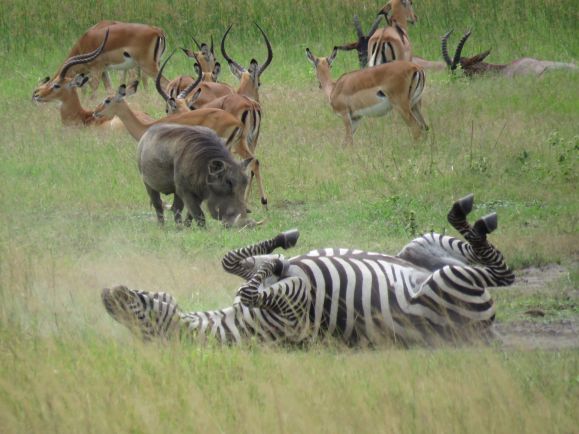
A zebra gives itself a dustbath while a impala, two topi, and a warthog watch on
Pucusana, Peru
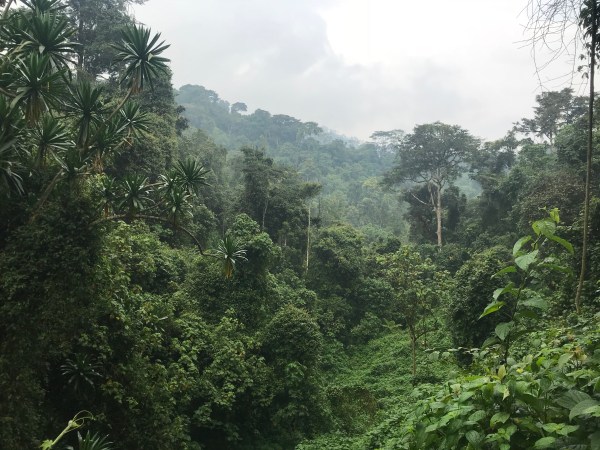
Gishwati Forest of Gishwati-Mukura National Park
Two weeks ago I promised an update from the field, and after completing the necessary government permits and preparing for work in the forest, I’m finally ready to write about the summer project that the Yale School of Forestry and Environmental Studies requires of its Master of Environmental Management candidates. We can choose between completing an internship or independent research, and I opted for the latter, since I wanted the experience of designing my own field season and collecting data for scientific analysis for peer-reviewed publication, pursuing a subject that I’m both personally and academically interested in: tropical bird conservation. Now, with the generous support I’m grateful to receive as a fellow of the Yale Institute for Biospheric Studies (YIBS), Yale’s Tropical Resources Institute (TRI), and the University of Rwanda’s Center for Excellence in Biodiversity and Natural Resource Management (CoEB), I’ve started my project exploring a subset of montane avifauna distribution in the Albertine Rift.
Rancho San Antonio Open Space Preserve, California
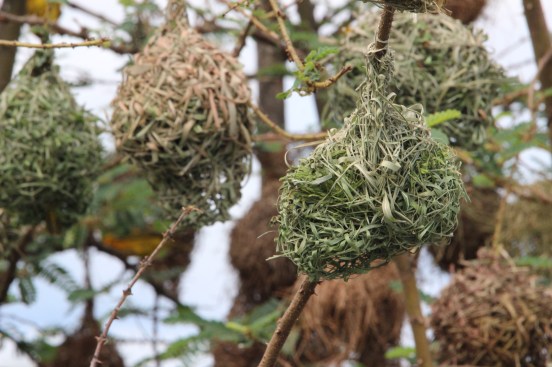
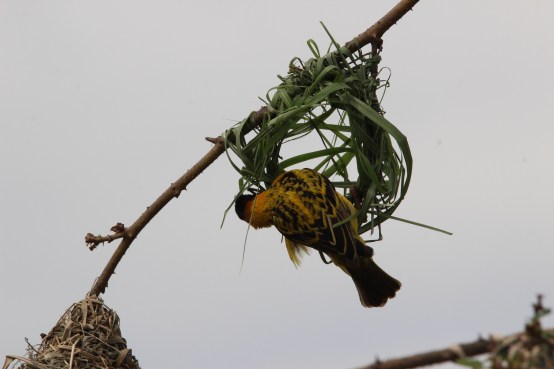
On the shore of almost any body of water in Akagera National Park in the east of Rwanda, trees festooned with balls of dried grass are a common sight, although what will often draw your attention to these trees first is not the strange vegetation, but the cacophony of a dozen or more weaver birds chattering away as they bring strands of grass to build these nests, display to potential mates, or warn of possible predators. The species featured here, the Village Weaver Ploceus cucullatus, is a fairly common bird in this region, and entertained us with their craft on the day that we visited Lake Ihema, the second largest lake in Rwanda after Lake Kivu to the west.
Pucusana, Peru
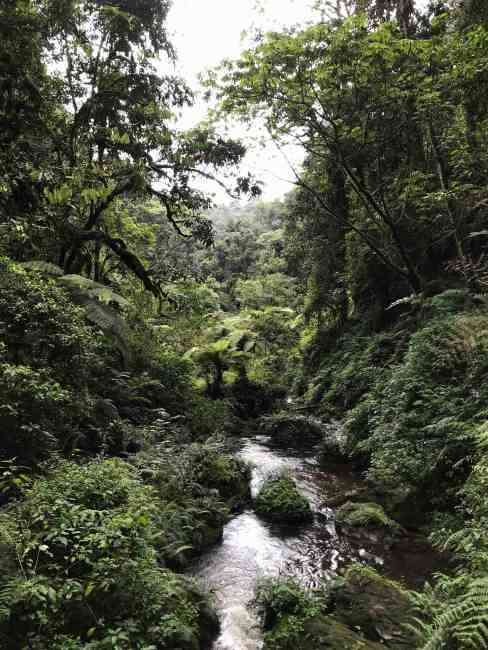
A view from inside Nyungwe National Park
When I came into the master of environmental management program at Yale FES, the Wildlife Conservation Society (WCS) wasn’t really on my radar as a big international conservation NGO — other names like the World Wildlife Fund, The Nature Conservancy, Conservation International, or Flora and Fauna International came to mind first. As I started to learn about the biodiversity hotspot of East Africa’s Albertine Rift, however, WCS programs and technical reports started to come up more and more, and the professional experience shared by my professors Amy and Bill in their class (Building a Conservation Toolkit: From Project Design to Evaluation) led to many discussions about their work with WCS.
As part of the Rwanda Study Tour, we met with WCS employees in Kigali and two towns neighboring Nyungwe National Park called Gisakura and Kitabi. These Rwandans, some of whom had been with the NGO for over fifteen years, told us about the conservation efforts carried out by WCS in the region, much of which revolves around capacity building, scientific monitoring, and community education and engagement. For example, since the nineties WCS has been recording phenological data from native trees and vegetation in Nyungwe, which can be a valuable reference for seasonal variations in plants affected by climate change. WCS has also trained park rangers on different data collection methods that have improved monitoring systems in the park to document cases of poaching efforts such as wire snares, which are still a major threat to the small forest antelopes that live in Nyungwe.
Dunwoody, GA
Reserva Nacional Lomas de Lachay, Peru
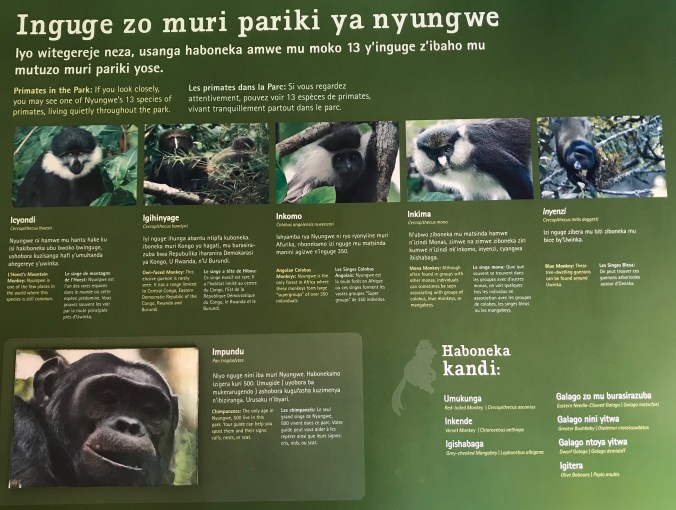
from the Uwinka Visitor Center of Nyungwe National Park
The first national park that the Yale FES Rwanda Study Tour visited was Nyungwe, in the south of the country bordering Burundi’s Kibera National Park. A montane tropical forest spanning over a thousand square kilometers, Nyungwe is quite biodiverse, and while it used to host elephants, water buffalo, and leopards, many other mammals are still present in the forest, including thirteen species of primate. Of these, we were able to see eight: vervet monkeys, l’Hoest’s mountain monkeys, blue monkeys, grey-cheeked mangabeys, black-and-white colobus monkeys, mona monkeys, a single olive baboon, and eastern chimpanzees. This was fairly lucky, as the only primates we missed were the owl-faced monkeys, which are shy and restricted to the bamboo groves in a remote part of the park, red-tailed monkeys, which I know nothing about, and three species of galago, which are very small nocturnal primates sometimes called bushbabies, of controversial cuteness. I’ve included some of my photos below:
I’ve already been here a month, and Crist has shared some of my photos from brief missives that I’ve sent home, so I am overdue for an explanation of what I’m doing in Rwanda this summer.
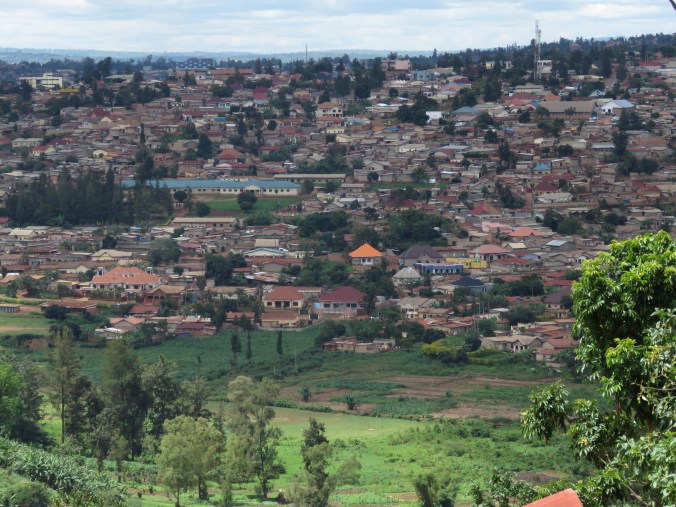
A view from the Nyamirambo neighborhood of Kigali
At first I was in the country with four classmates from the Yale School of Forestry and Environmental Studies (FES) and our professor, Dr. Amy Vedder, who started working in Rwanda back in the late seventies, studying mountain gorillas in Volcanoes National Park and, with her husband Dr. Bill Weber, helped set up the tourism program that has now become the cornerstone of the country’s economy. The six of us were participating in the Rwanda Study Tour, an opportunity for five Yale FES students to learn about conservation as practiced in this tiny nation of twelve million people.
Loess Bluffs National Wildlife Refuge, MO

Nyarutarama Lake, Kigali, Rwanda
 Organikos