Jamaican Golden Swallow Expedition Part Two: Into the Blue Mountains

IMG_2880_zpsyzulvsiy

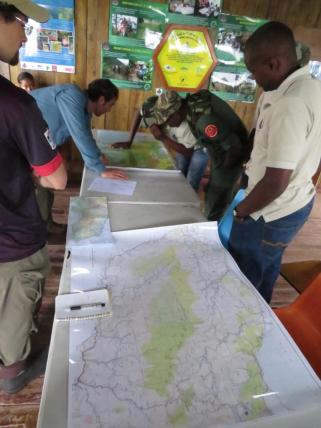
We’re back in Jamaica and now in the second portion of our trip, where we explore the Blue Mountains and John Crow Mountains National Park looking for any signs of the Jamaican Golden Swallow. We arrived at the main visitor center for the park in Holywell yesterday, where we met with park rangers as well as representatives of the Jamaican Conservation and Development Trust, the organization that runs the park. We introduced everyone to our project using an adaptation of the standard slideshow that Justin uses to explain his masters research in Hispaniola to people, and then opened the table for a discussion of the best possible areas to hike and survey.
IMG_2722_zpsvhhlep1v

Map exploration with representatives of the Jamaican Conservation and Development Trust

The park rangers had many helpful suggestions for certain regions that they thought best matched the type of habitat and un-birded nature that we’re looking for, and thanks to their help while poring over our maps we have a much better idea of where to go from here. The national park is simply so massive that any head start we can get on the right places to survey is a great help.

Today, we enjoyed some beautiful weather – blue skies and quite refreshing temperatures comfortably between the wind-chilled -10°F of Ithaca and the muggy 90°F of Cockpit Country. From our short hikes around the park so far we all agree that it’s an amazing area with stunning views and lots of potential for the Golden Swallow.
Continue reading

Libraries of Life

Elsie, a former teaching assistant for Cornell’s ornithology course, holds up an Impeyan Pheasant skin specimen. Photo by Rebecca Snow.

At Raxa Collective we’ve always been big admirers of museums, whether focussed on art, culture, or nature. In today’s op-ed section of the New York Times, two biologists write about the importance of natural history museums. The authors, Larry M. Page and Nathan K. Lujan, argue that funding shouldn’t be cut from these types of institutions and that the active collection of specimens from the wild should not be curtailed:

These specimen collections serve as the bedrock of our system of taxonomy — the rules by which we classify life — and are integral to our understanding of the threats, origins and interrelationships of biodiversity. And yet, thanks to budget cutbacks, misplaced ethical critiques, public misconceptions and government regulations that restrict scientists while failing to restrict environmental exploitation, the continued maintenance and growth of these libraries is in danger.

Though most visitors never know they are there, natural history collections are as critical to modern biologists as libraries are to journalists and historians. Indeed, like good literature, each museum specimen allows reinterpretation by every person who examines it.

A couple of our contributors–myself included–are currently working for the Smithsonian Institution, and our supervisor is the curator of birds Continue reading

A Sneak Peek at Jamaican Bird Videos

We have several full hours of raw bird behavior footage from our first trip, so it’ll be a while before we have much processed to the point of sharing here, but I thought it’d be nice to have a quick preview of some things to come once we’re back from our second trip to the Blue Mountains.

In the video above, you can see four relatively common bird species in Jamaica: the American Kestrel, Northern Mockingbird, Merlin, and Orangequit. The first three species can be found in the United States but have resident populations in Jamaica, while the last is endemic to the island. The behavior exhibited in the video is typical of all the species. Continue reading

Preparing for the Blue Mountains

A friendly caterpillar I found crawling around my tent’s rainfly on one of the last days in Jamaica.

We just finished our first week back in Ithaca, where temperatures have stayed below 0ºF most of the time and therefore we have stayed indoors most of the time. Mostly we’ve been writing up all our observations from the first expedition, digitizing our paper field notes and organizing our photos and videos; playing around with bird data in Excel, eBird, and ArcGIS (a mapping-data program); and looking at maps of the Blue and John Crow mountain ranges.

Continue reading

A Successful Part One

View of a foggy Barbecue Bottom valley in Cockpit Country

This past weekend, the first stage of the Smithsonian’s Jamaican Golden Swallow Expedition came to a close. After a full month of exploring Cockpit Country for whatever aerial insectivores we could find, we flew back to Ithaca on the 14th. Now we will process our data and imagery for two weeks while restocking for the second trip.

The bulk of our gear laid out for washing, drying, and sorting on the Windsor Research Centre’s lawn during our last day in Cockpit Country.

Continue reading

Jamaican Columbids

Cockpit Country from “the Alps”

In rural Jamaica there appears to be a traditional pastime of hunting pigeons and doves (scientifically known as the family Columbidae). There are a total of twelve species on the island, of which seven or eight can be expected in Cockpit Country.

So far we’ve seen six of those species, and although we’d like a closer look at some like the Crested Quail-dove, we’re pretty satisfied with our luck so far. Continue reading

Roads and Trails Through Cockpit Country

A Turkey Vulture is king of the power tower

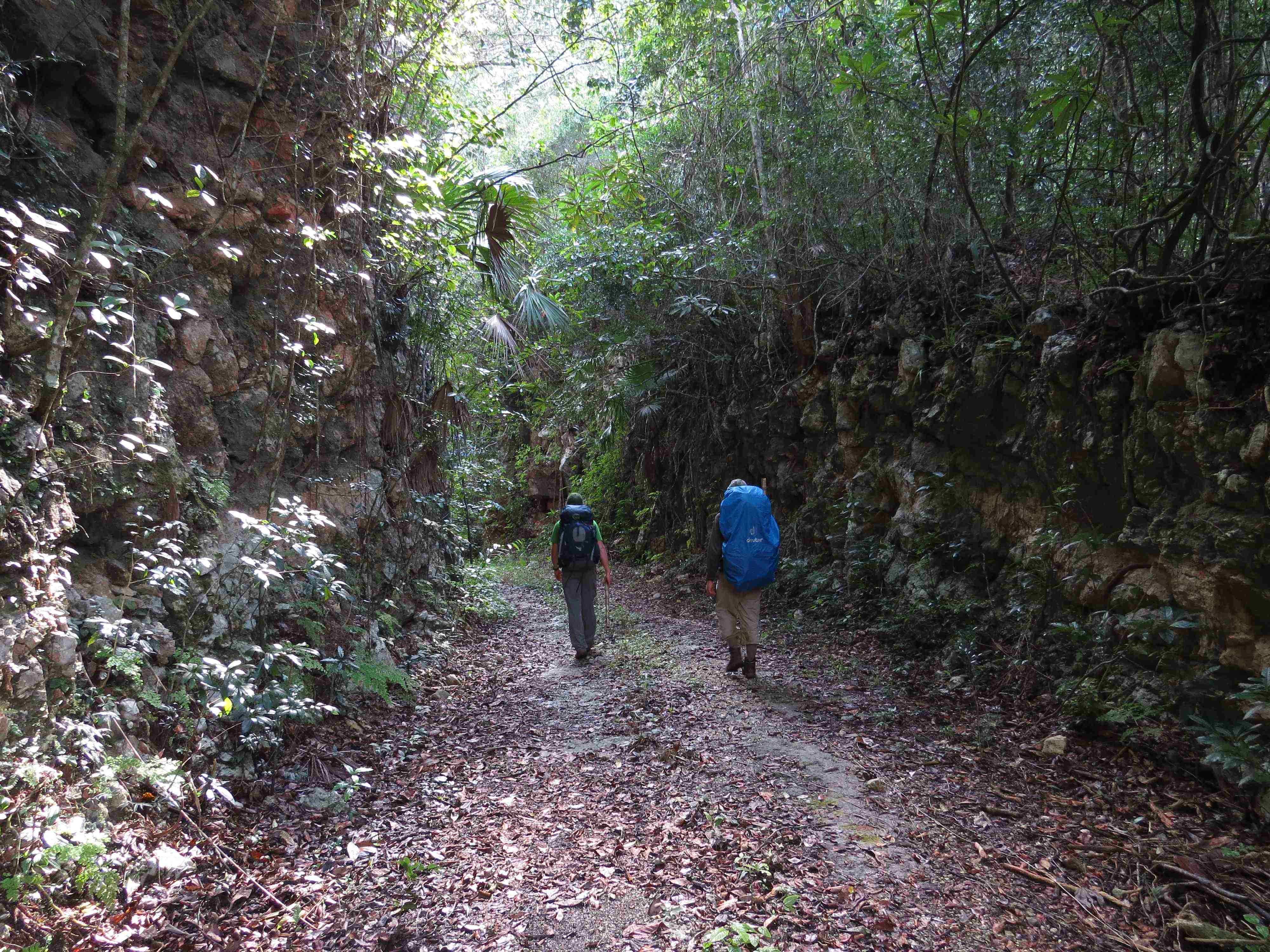
As I mentioned in my previous post, we’ve been traveling around Cockpit Country over the last week and a half by driving around from town to town and finding trails to lead us into the bush. Sometimes these trails are old roads that are clearly still sometimes used by SUVs and donkeys; often they are even older tracks that are for single-file passage and no longer pack-animal-friendly.

Justin on one of the “karstier,” more rugged valley trails

We started out our trip to Jamaica hiking some of these latter types of paths, accurately predicting that they would take us to places few people have birded and naively hoping that they would offer us views of hidden valleys or even the sky. They ended up being difficult to traverse and, as far as we can tell, not the right type of habitat for swallows. Continue reading

Cockpit Country Circumnavigated

a view from the fringe of Cockpit Country out over the plains by Seth

After a week and a half of trekking and camping out of our crappy little rental car with about four inches of clearance, John, Justin and I have completed our preliminary clockwise perimeter of Cockpit Country.

the locals in Accompong show us the start of a trail

a strangler fig lifts a karst boulder off the ground

Parking at the head of every trail into the interior that we found on our 1959 map of the area–some of which are incredibly listed as secondary highways on our 2012 road map of the country–we’ve set up a routine of hiking down trails and back all day, camping for the night, and driving out the next morning.

Continue reading

Aerial Insectivores

Cockpit Country

Cockpit Country

As we head west along the southern portion of Cockpit Country from Barbecue Bottom Road and Albert Town, we’re noticing a big difference in the amount of aerial insectivores we’re able to see while out hiking every day.

Justin and John on the trail from Windsor to Troy

During our initial excursions into the bush, we were taking densely wooded trails that required constant vigilance of the path in front of us due to shifting stones, twisting roots, and strong ground vines. In some of the worse areas we needed machetes to clear vegetation and big fallen trees, and even when we had time to look up at the skies they were often covered by thick canopy.

Continue reading

Jamaican Hummingbirds

Red-billed Streamertail (male) by Seth

During the first week of our time in Jamaica, all of us were able to see the three species of Jamaican hummingbirds, although none of us had gotten a really good look at the prize: a male Red-billed Streamertail. Male Red-billed Streamertails are iridescent green with a black cap and two extremely long tail feathers that flutter behind the birds when they flit around. The birds move quite quickly and are often in and out of your field of view in a flash, but their call is relatively loud–as is the hum from their wings–so with practice you can locate them eventually.

Jamaican Mango by Seth

Jamaican Mangos are the largest hummingbird in the country and very recognizable given their flashy purple plumage and strongly decurved bills. From what I’ve noticed they perch for fairly long periods scanning their territory for intruders (most hummingbirds do something like this all the time), and this offers good photo opportunities. Continue reading

Northern Cockpit Country Complete

One of our camps

Justin, John and I have been in Jamaica almost two weeks, and the “Sharpied” names on our Rite in the Rain notebook covers have already faded off, our shirts smell soberingly of rotting onion, and our feet are eager to be released from their boots at any opportunity. At one point John had over a hundred tick nymphs on his body––the actual count was 163––but we won’t talk any more about that.

Barn Owl startled out of an abandoned house

We’ve seen over sixty species of bird in our twelve days here, and only one of them has been a swallow: the Cave Swallow. In general, aerial insectivores like swifts and swallows have been quite scarce, which is really surprising since we’re going through huge swaths of great habitat.

Barbecue Bottom Road with John and Justin by Seth

Barbecue Bottom Road with John and Justin

Continue reading