This post continues the hypothetical situation described in my previous posts, the first of which you can find here.

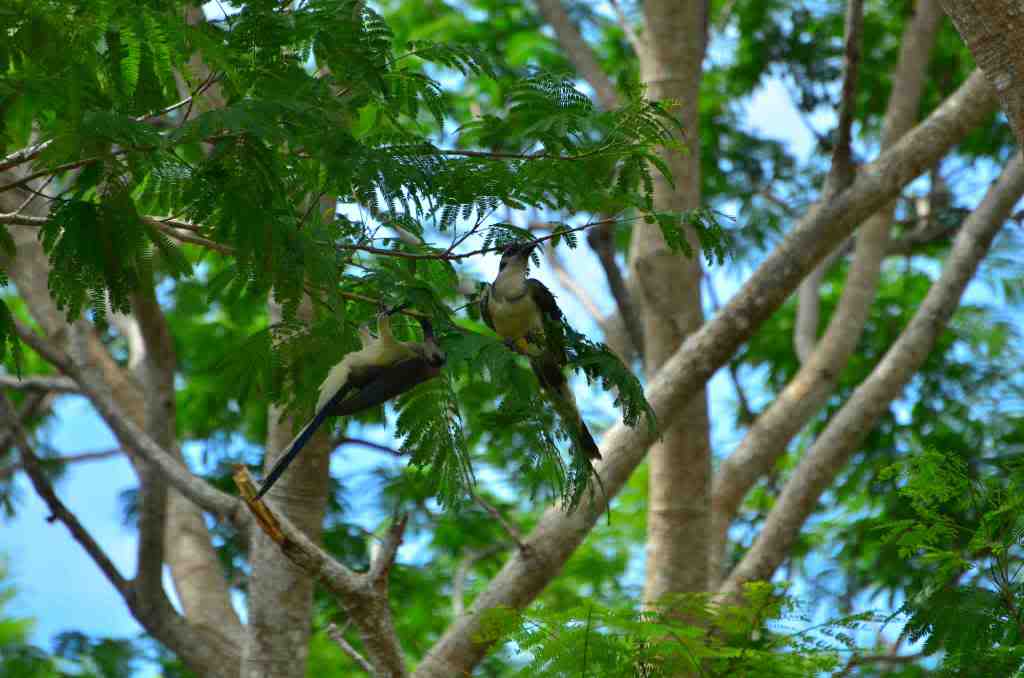
What if the turaco barring and display were a different sort of quality indicator? They could be amplifiers that emphasize a trait perceived by other turacos as directly related to high fitness. For example, some birds’ feathers, such as those of the European jay, are colored in stripes that develop similarly to, or perhaps accentuate, growth bars. As the turaco’s barring correlates directly to its age, the bars must have typical widths at certain ages. These widths, along with the display, probably serve as a standard by which females can compare males, and males assess competitors. The bars are likely indicators similar to the stripes on jays and other birds—that is, they may portray the bird’s growth regularity, or accentuate flight behavior, body size, feather wear, symmetry, and other potential quality indicators. Should the turaco barring amplify any of these possible traits, then displaying the bars is not a deceptive signal, because it genuinely reflects quality. For instance, if a three-year-old male turaco has successfully avoided predators and found the best food throughout his life, his barring should reflect such facts, and portray his success through low feather wear, larger body size, or more regular bars; a one-year-old male with similar traits but different barring would presumably be less preferable to females. Continue reading