McKibben In The Guardian

3840

Global direct action began with hundreds of environmental activists invading the UK’s largest opencast coal mine in south Wales on Tuesday. Photograph: Kristian Buus for the Guardian

More McKibben, who we believe we will never tire of sharing here:

The time has come to turn up the heat on those who are wrecking planet Earth

An interesting question is, what are you waiting for?

Global warming is the biggest problem we’ve ever faced as a civilisation — certainly you want to act to slow it down, but perhaps you’ve been waiting for just the right moment. Continue reading

Another Call to Action from McKibben

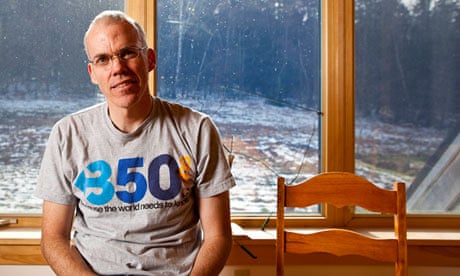
Photo of Bill McKibben by Corey Hendrickson/Polaris via The Guardian

We’ve been sharing pieces about or by Bill McKibben for many years now, like this interview from 2012, the news that he was stepping down from leading 350.org, a piece he wrote for the Guardian last year, and the story of his direct activism in New York a couple months ago. He’s now published an article, once again in the Guardian, about the need to take action around the world against fossil fuel companies. “The time has come to turn up the heat on those who are wrecking planet Earth,” McKibben writes, the question being, what are we all waiting for?

Global warming is the biggest problem we’ve ever faced as a civilisation — certainly you want to act to slow it down, but perhaps you’ve been waiting for just the right moment.

The moment when, oh, marine biologists across the Pacific begin weeping in their scuba masks as they dive on reefs bleached of life in a matter of days. The moment when drought in India gets deep enough that there are armed guards on dams to prevent the theft of water. The moment when we record the hottest month ever measured on the planet, and then smash that record the next month,and then smash that record the next month? The moment when scientists reassessing the stability of the Antarctic ice sheet have what one calls an ‘OMG moment’ and start talking about massive sea level rise in the next 30 years?

Continue reading

Soaked Boots and River Squirms

dsc01733_zps0mvho6g0

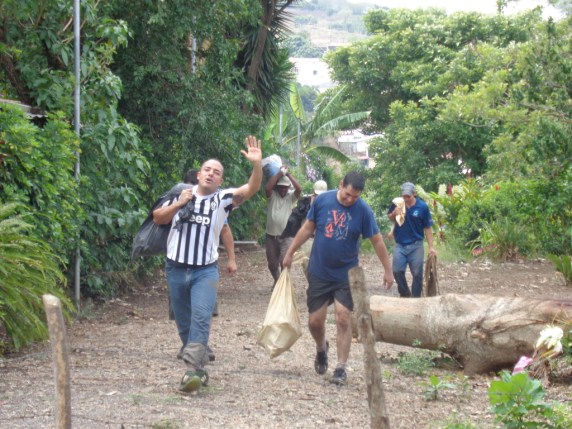
In the spirit of Earth Day, Xandari held a river clean-up last week along the Tacacorí River, which not only is the hotel’s primary supply for irrigation but also the local town’s. Similar to the community street clean-up we led last September and years prior, the purpose of this event was to remove any garbage along the river starting from the river spring and through the length of the property, which amounts to about 1km. Unlike the last clean-up, however, this one was of a smaller, and damper, scale. Continue reading

Bad News for European Vultures

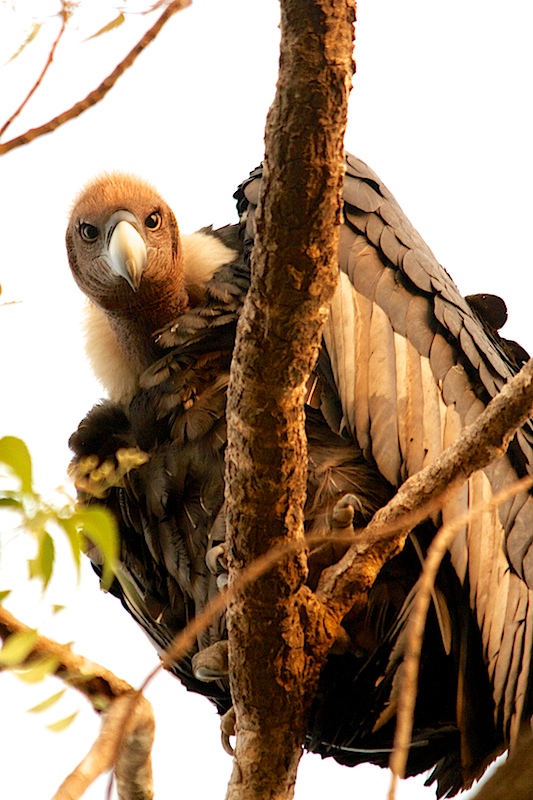
Bird of the Day August 13, 2013: White-rumped Vulture in Ahmedabad, India photographed by Srinivasa Addepalli

Vultures are very important members of many ecosystems in the world as members of a waste-management team, but their role as carrion-feeders is putting them at risk, and has been since the California Condor was endangered in the US (though it’s recovering now). We’ve featured these birds in our daily photo posts quite a bit, even just a week ago, and now there’s news from Scientific American, covering research published in the Journal of Applied Ecology, that European vultures are more threatened than ever, this time by a veterinary drug given to cattle:

A veterinary drug blamed for driving vultures to the brink of extinction on the Indian subcontinent could cause thousands of bird deaths now that it is being used in Spain.

Researchers have expressed concern over use of the anti-inflammatory drug diclofenac in cattle since it was approved for veterinary use in Spain in 2013, as the drug is toxic to vultures who may consume it via dead cows. Now, modelling by Rhys Green, a conservation scientist at the University of Cambridge, UK, and his colleagues suggests that the drug could cause populations of that country’s Eurasian griffon vultures (Gyps fulvus) to decline by between 1–8% each year.

Continue reading

Eavesdropping on Primate Poachers

Preuss’s Red Colobus, one of the 25 most endangered primates in the world

We hate poaching, so any novel method of preventing it is good news in our opinion. From Claire Salisbury for Mongabay’s Great Apes series, on a new project to particularly protect the Preuss’s Red Colobus, a severely endangered primate in Africa:

Cameroon’s Korup National Park is home to elephants, chimpanzees, red colobus monkeys, drill, and a myriad of noisy species, whose squawks, squeals and howls fill the forest air. For more than two years, twelve acoustic monitors were deployed there and recorded every sound covering a 54 square kilometer (21 square mile) area of protected tropical forest.

They were tuned to listen around the clock for just one sound: gunshots.

“Our ultimate goal is to improve the effectiveness of anti-poaching patrols in African tropical forest protected areas,” Joshua Linder, one of the lead scientists working on the acoustic monitoring project, told Mongabay.

Bushmeat is a major source of protein in Central Africa, with 4.5 million tons extracted from the Congo Basin each year. Taking bushmeat itself is not always illegal, and it can be a vital source of protein for the poor and a valued commodity for the rich. But hunting endangered species, especially within protected areas, is against the law. It can pose a real threat to the survival of animal populations, and particularly to rare species.

Continue reading

Endangered Natural History

The Spectrum of Life, at the American Museum of Natural History, an evolutionary trip through the amazing diversity of life on Earth. Credit Matthew Pillbury/Benrubi Gallery

We’ve said often that we’re die-hard supporters of natural history museums before, and even quite recently. So it’s nice to see yet another article championing the role these institutions can have in scientific discoveries, education, and more. Here’s an op-ed in last Sunday’s New York Times by Richard Conniff, highlighting some threats to some US museums:

When people talk about natural history museums, they almost always roll out the well-worn descriptive “dusty,” to the great exasperation of a curator I know. Maybe he’s annoyed because he’s spent large sums of his museum’s money building decidedly un-dusty climate-controlled storage sites, and the word implies neglect. (“Let me know,” the curator advises by email, “if you want to hear me rant for an hour or so on this topic.”)

Worse, this rumored dustiness reinforces the widespread notion that natural history museums are about the past — just a place to display bugs and brontosaurs. Visitors may go there to be entertained, or even awe-struck, but they are often completely unaware that curators behind the scenes are conducting research into climate change, species extinction and other pressing concerns of our day. That lack of awareness is one reason these museums are now routinely being pushed to the brink. Even the National Science Foundation, long a stalwart of federal support for these museums, announced this month that it was suspending funding for natural history collections as it conducts a yearlong budget review.

Continue reading

Methane Is Madness, Central New York

25559408356_2c9efc84c5_b

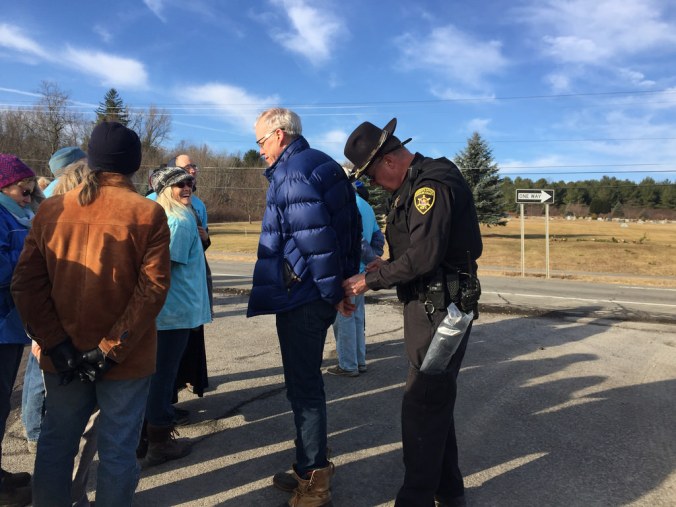
No one contributing to these pages has (yet) taken protest quite this far. We are not surprised to see the man in the blue jacket getting arrested, on principle, but the others listed below–none with as famous a name but all living in a famously protest-inclined part of New York State–make us wonder whether we have what it takes:

Bill McKibben Arrested at Civil Disobedience Action Against Gas Storage at Seneca Lake

Famed author and climate activist joins 56 people from 20 NYS counties to form human blockade at the gates of Crestwood Midstream, demands halt to climate-damaging fracked gas infrastructure, as total number of arrests in sustained campaign hits 537

Watkins Glen, NY – The fight over the fate of the Finger Lakes became national today when best-selling author, environmentalist, and founder of the international climate campaign, 350.org, Bill McKibben joined the opposition. McKibben, 55, was arrested this morning with 56 area residents as part of an ongoing civil disobedience campaign against proposed gas storage in Seneca Lake’s abandoned salt caverns. Continue reading

Climate Denier Roundup

leospeech_750.jpg


You will never have seen Leo’s name in these pages before; our reason for linking to this story is just because the subtitle/byline is so delicious (thanks to EcoWatch):

What Climate Deniers Had to Say About Leo’s Oscars Speech

Climate Denier Roundup | March 1

Millions heard the call for climate action on Sunday night, when Leonardo DiCaprio (finally) accepted the Academy Award for Best Actor for his role in The Revenant.

Continue reading

A Lone Couple, a Desert Island, and Turtles

Despite living in utter isolation on a desert island for 40 years, one inspirational couple has overcome disability and blindness to make a difference. PHOTO: BBC

Despite living in utter isolation on an island for 40 years, one couple has overcome disability and blindness to make a difference. PHOTO: BBC

Isn’t there a line about finding heroes in the most unlikely places? This is the setting of Daeng Abu’s and his wife Daeng Maida’s inspirational story: a desert island off the coast of Sulawesi in Indonesia, disabilities in Abu being blind and facing leprosy, their days spent raising sea turtles and speaking against the cyanide and dynamite fishing that is devastating Indonesia’s reef.

Neither knows how old they were when they entered their arranged marriage on nearby Pulau Pala (Nutmeg Island) – they currently believe they’re in their 80s – but Abu thinks he was older than 20 and Maida remembers it was the dry season. Her uncle fired three shots in the air; she walked over to his family’s home; Abu built a shack from bamboo and palm leaf; and married life began. Little did they know at the time – the couple was bound to become a rather unlikely pair of environmental activists.

Continue reading

To Our Sisters In Bali, Thank You

Ted Bali Sisters

A few months ago, with 11 minutes on stage in London at a regional TED event, these two poised and articulate, compelling Balinese sisters made a bold challenge. We commend their decisiveness and commitment, and will do our best to support them both in Bali and on our various home turfs:

Melati and Isabel Wijsen:

Our campaign to ban plastic bags in Bali

Plastic bags are essentially indestructible, yet they’re used and thrown away with reckless abandon.  Continue reading

Love For, Of the Planet

claude-and-norma

Claude and Norma Alvares are the pillars of conservation in India’s extreme tourist city of Goa. PHOTO: Rahul Alvares, Scroll

There’s a small but wonderful tribe of people who keep the dignity of life on the planet. Call them eco warriors, guardians of tomorrow, nature’s advocates. No tag can do justice to their lives spent preserving, restoring, and protecting life. Goa, the tourist mecca of India, has sundowners, music, beaches and a welcoming culture going for it. It is also the base of Claude and Norma Alvares’ environmental movement of over 40 years.

Continue reading

Lionfish Jewelry Update – Caribbean Gulf and Fisheries Institute Conference

I’ve posted previously about the emergence of lionfish jewelry as one of several market-based approaches to controlling the invasion of this non-native species which poses an unprecedented threat to marine ecosystems in the Western Atlantic.

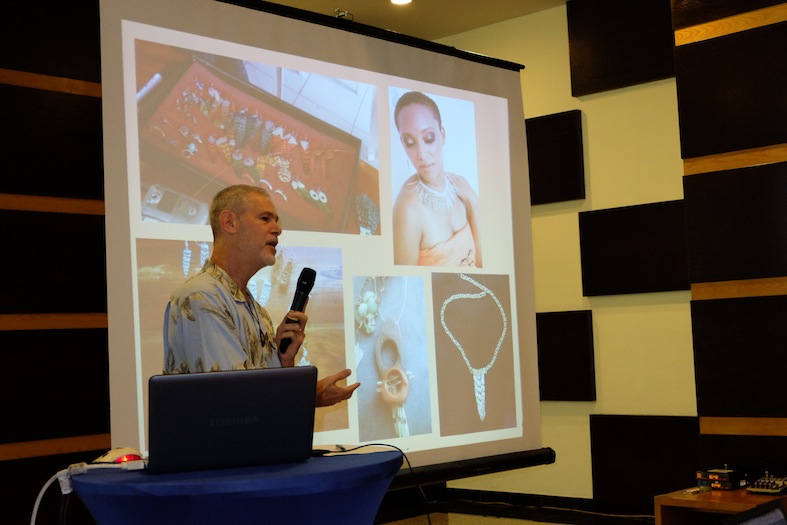
Last month I had the opportunity to make a presentation on lionfish jewelry at a special workshop on lionfish management that was held during the annual conference of the Gulf and Caribbean Fisheries Institute, in Panama. The conference program also included a full-day lionfish research symposium and a lionfish research poster session, both of which gave me an opportunity to learn more about the science aspects of the lionfish invasion and some of the latest findings on lionfish biology and behavior and to meet some of the leading researchers on these subjects.

The lionfish management workshop, which was organized by the United Nations Environment Program’s Caribbean Regional Activity Center on Specially Protected Areas and Wildlife (SPAW-RC) and the International Coral Reef Initiative (ICRI), brought together marine scientists, managers of marine protected areas, fishermen, and representatives of international organizations to share experiences and lessons learned with respect to strategies for controlling the invasion. Continue reading

Saving the Hill of Her Childhood

Plant and animal life on Flag Hill, near the hill station town of Mussoorie in north India, has been restored through the efforts conservationist Sejal Worah.

Plant and animal life on Flag Hill, near the hill station town of Mussoorie in north India, has been restored through the efforts conservationist Sejal Worah.

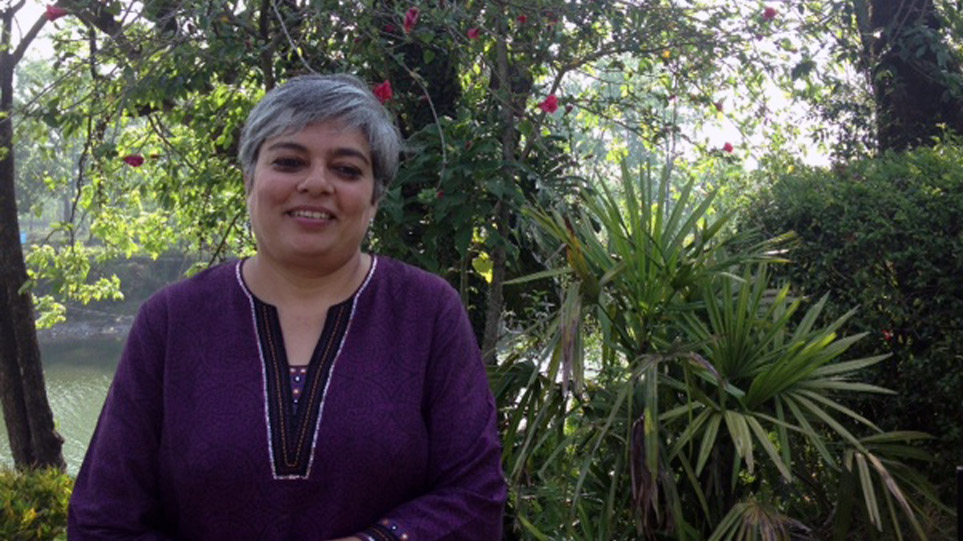
Environmentalist and WWF India Programme Director, Sejal Worah, and her local team have spent the last two years attempting to revive a 400 acres area situated in the Garwhal Himalayas, in Mussoorie, Uttarakhand.  From being a degraded and over grazed territory, within two years of conservation efforts the protected area has become a sanctuary for wildlife which hadn’t been reported for years, like the Himalayan black bear and Sambhar deer.

Continue reading

Washing Hands to a Cleaner World

When Dr. Pawan found out about the unhygienic living conditions in Gadchiroli, Maharasthra, India, he created a hand-washing device in just Rs.35 (50 cents) that has been saving the lives of the villagers. - PHOTO: Better India

When Dr. Pawan found out about the unhygienic living conditions in Gadchiroli, Maharasthra, India, he created a hand-washing device in just Rs.35 (50 cents) that has been saving the lives of the villagers. – PHOTO: Better India

Clean care is safe care, says the World Health Organisation and follows it with a campaign on washing hands towards cleaner living and working conditions across the globe. And Dr. Pawan did his part too. By creating a hand-washing device that costs less than 50 cents, roping in children to keep the initiative going, and relying on elders for the device to adapted and adopted into the community.

In 2008, Dr. Pawan was one of the seven students selected for a two-year fellowship programme at Nirman’s SEARCH (Society for Education, Action and Research in Community Health), in Gadchiroli district, Maharashtra, India. The programme encourages students to work in areas affecting rural communities like water management and NRGA schemes, and being a physician, Dr. Pawan chose to work in the health sector. Living in the community, he realised that there were several diseases persisting in the village, those that could be prevented by merely drinking clean water or paying more attention to cleanliness. He promptly did a study that revealed that of the 64 families living in the village, only six families used soap for washing hands.

Continue reading

Making Silk Non-violent

Kusuma Rajaiah displaying a sari made from 'Ahimsa Silk'. Photo: Balachander Goud

Kusuma Rajaiah displaying a sari made from ‘Ahimsa Silk’. Photo: Balachander Goud

Do you know how many silkworms are normally killed to make a five yard silk sari? Kusuma Rajaiah, a 55-year old government officer from India’s Andhra Pradesh state, does: “Around 50,000.” Rajaiah estimates that around 15 silkworms are normally sacrificed to produce a gram of silk yarn. For years, he’s been battling against what he describes as the “cruel killing of millions of innocent worms.” And has come up with an alternative. He realized the lure of silk was too strong to persuade people to give it up altogether so he came up with a technique that spares the life of the silkworm.

Ahimsa silk derives its idea and the brand name from Mahatma Gandhi, who was also critical of the conventional method of silk production. In fact, he had written to the Silk Board of India to explore ways of producing silk without hurting any living being. For Rajaiah, it’s a matter of pride to have fulfilled that wish; a pride shared by those who use the fabric.

Continue reading

The Man of Mangrove Forests

Pokkudan’s pursuit of mangrove conservation started back in the 80s when he started collecting mangrove seeds and planting them in the marshy lands of in Pazhayangadi. PHOTO: Mathrubhumi

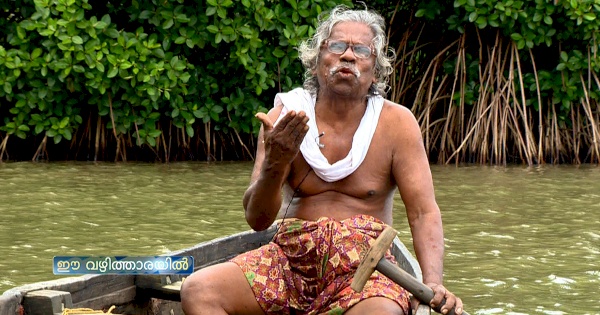
Pokkudan’s pursuit of mangrove conservation started back in the 80s when he started collecting mangrove seeds and planting them in the marshy lands of in Pazhayangadi. PHOTO: Mathrubhumi

Kallen Pokkudan, also known as Kandal (mangrove in vernacular) Pokkudan, an Indian environmental activist and writer from Kerala, devoted his life to mangrove forests and planted more than a hundred thousand mangroves over three decades across Kerala.These trees of the tropics offer a lifeline to areas under the threat of natural disasters, prevent soil erosion, form a breeding ground for marine animals, purify water, and sustain coastal livelihoods. Pokkudan’s pursuit of mangrove conservation started back in the 80s when he started collecting mangrove seeds and planting them in the marshy lands of in Pazhayangadi. His work to expand mangrove cover along the Indian coastline has earned him a UNESCO special mention.

As the noon breeze blows Pokkudan’s silver wisps into his eyes shaded by thick glasses, the octogenarian talks with an unvarnished matter-of-factness about the revolution he started in 1989. At a time when most people were ignorant of the many scientific and envi¬ronmental uses of mangroves, Pokkudan—until then a political thinker—saw them as wind-cheaters that, to a great extent, prevented schoolchildren from losing their umbrellas to strong winds blowing from the Ezhimala area. “I started planting mangrove saplings to shield school-going children from the wind,” says Pokkudan humbly. “I also believed they would prevent the sea from eroding the ground and, above all, I wanted to see the beautiful trees growing.”

Continue reading

365 Days in the Wilderness

Amy and Dave Freeman paddle into the Boundary Waters, starting their 365 days in the wilderness to raise awareness of mining plans in the region.PHOTO: Alex Chocholousek

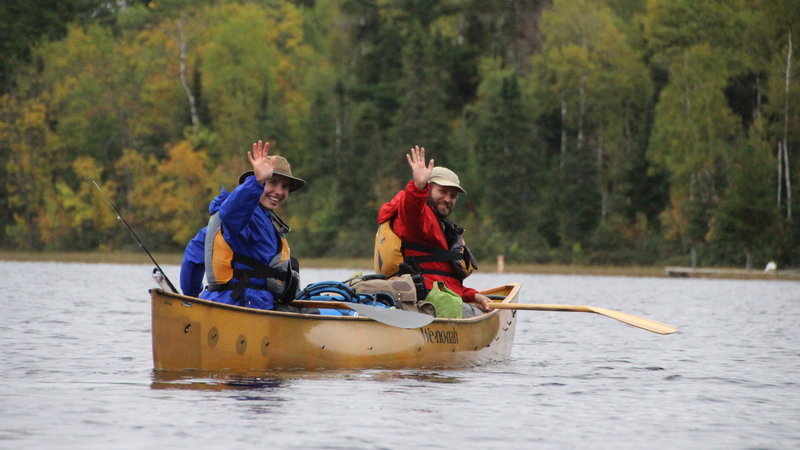
Amy and Dave Freeman paddle into the Boundary Waters, starting their 365 days in the wilderness to raise awareness of mining plans in the region.PHOTO: Alex Chocholousek

The Boundary Waters Canoe Area Wilderness is located in the northern third of the Superior National Forest in northeastern Minnesota. Over 1 million acres in size, it extends nearly 150 miles along the International Boundary adjacent to Canada’s Quetico Provincial Park and is bordered on the west by Voyageurs National Park. The BWCAW contains over 1200 miles of canoe routes, 12 hiking trails and over 2000 designated campsites. Wilderness offers freedom to those who wish to pursue an experience of expansive solitude, challenge and personal integration with nature.

And now some, or all of it, may be lost to sulphide mining.

Continue reading

Flood-proofing Education

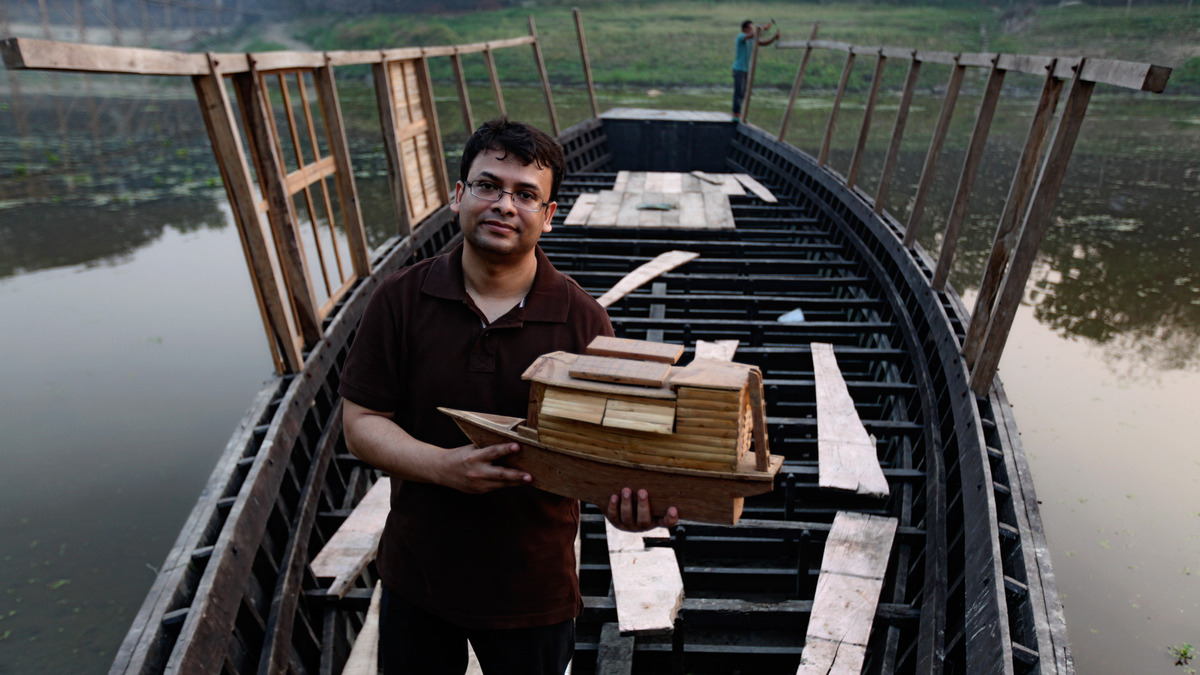
Architect Rezwan’s idea is to combine a school bus with the schoolhouse, and use the traditional wooden boat to create a floating space to bring primary education to doorsteps. PHOTO: ABIR ABDULLAH/ SHIDHULAI SWANIRVAR SANGSTHA

Architect Rezwan’s idea is to combine a school bus with the schoolhouse, and use the traditional wooden boat to create a floating space to bring primary education to doorsteps. PHOTO: ABIR ABDULLAH/ SHIDHULAI SWANIRVAR SANGSTHA

Bangladesh is prone to flooding due to being situated on the Ganges Delta and the many distributaries flowing into the Bay of Bengal. Coastal flooding, combined with the bursting of river banks is common, and severely affects the landscape and society of Bangladesh. 75% of Bangladesh is less than 10m above sea level and 80% is floodplain, therefore rendering the nation very much at risk of periodic widespread damage, despite its development. One man, who as a child often found himself cut off from school, did not want the future generations to face the same plight.

His idea: using boats to facilitate education at the time of floods.

Continue reading

Belize Lionfish Jewelry – Update


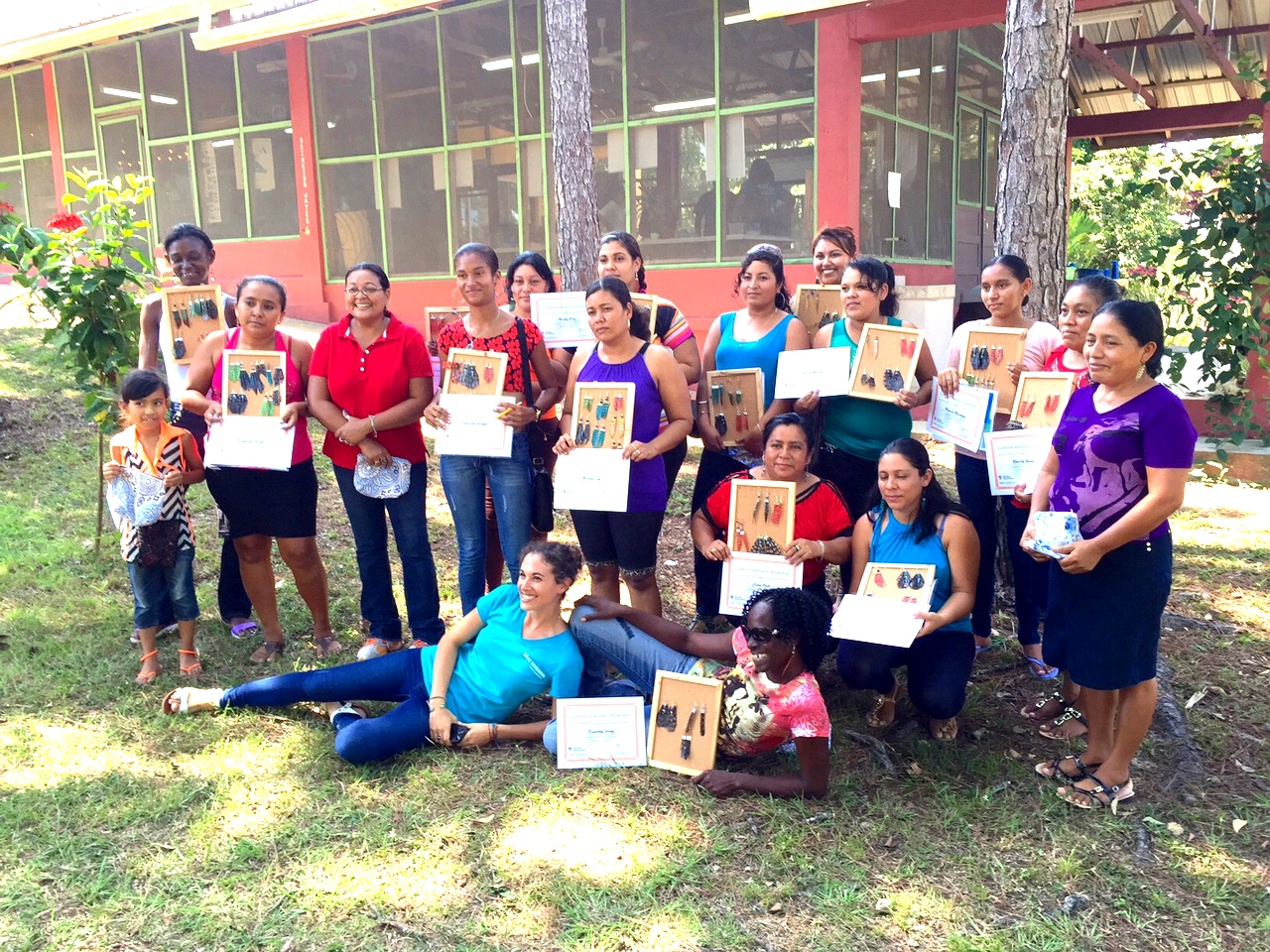
Belize Lionfish Workshop participants with their certificates

Belize Lionfish Workshop participants with their certificates

I’ve posted previously about the emergence of lionfish jewelry as one of several market-based approaches to controlling the invasion of this non-native species which poses an unprecedented threat to marine ecosystems in the Western Atlantic.

Last month, for the third year in a row, I spent two weeks in Belize where I had a chance to get an update on how the market is developing.  I started my visit in Placencia, which is home to Kaj Assales, the most successful of the lionfish jewelry artists in the country, with her own jewelry line which she sells through her boutique as well as online.  It was my first chance to visit her shop and to see some of her new designs.

Next I spent a week in the Sapodilla Cayes with ReefCI, the NPO that I first collaborated with to help jump-start the lionfish jewelry market in the country.  This gave me a chance to practice my lionfish spearing skills, as the ReefCI team and visiting volunteers continue to remove several hundred lionfish per week dissecting a sample of 30-40 of these for stomach content. Data on size, sex, and stomach content is provided to the Belize Fisheries Department and has been a valuable input to its national lionfish control strategy.  Coincidently, ReefCI’s lionfish control program was profiled in the August issue of United Airlines magazine; not only a nice recognition of the group’s efforts, but also a great boost for raising awareness about the lionfish invasion. Continue reading

Flower Garden Banks Lionfish Invitational

I have posted previously about the lionfish invasion and the threat that it poses to marine ecosystems in the Western Atlantic. In an earlier post, I noted that there is increasing evidence that regular removals can be effective in controlling lionfish infestation, allowing native fish populations to recover. Removals are being undertaken via organized efforts such “lionfish derbies” and other forms of sanctioned fishing tournaments as well as via market approaches that create commercial incentives to harvest the fish.

While marine protection agencies are generally supportive of these efforts and are indeed engaging in removals themselves, they lack the data and evidence needed to make informed decisions about the optimal mix of approaches and the level of effort and resources needed to effectively control the invasion. I recently had the opportunity to participate in a research expedition aimed at helping to address this gap. I was fortunate enough to be selected to join 29 other volunteer citizen scientists, professional/semi-professional spear fishers, and marine scientists for a fish survey and lionfish culling effort in the Flower Garden Banks National Marine Sanctuary. Situated about 100 miles off the coast of Texas, the sanctuary is home to a unique ecosystem with almost 300 species of fish, 21 species of coral, and several other invertebrate species. Lionfish are being observed with increasing frequency within the sanctuary, a cause for concern by the sanctuary’s managers. They have previously undertaken periodic culling of lionfish, but the recent effort was the first time that removals were undertaken in a systematic fashion. Continue reading