If You Happen To Be In London

Peter Kelleher/Victoria and Albert Museum, London, 2015. Spike studs, used to keep people from sleeping near buildings, are part of the exhibition.

Peter Kelleher/Victoria and Albert Museum, London, 2015. Spike studs, used to keep people from sleeping near buildings, are part of the exhibition.

When we hear of civic-minded initiatives, museum shows are not the first thing that comes to mind. Schools, and libraries, and conservation initiatives come to mind.

Museums are civic institutions, of course, and we have posted more on this site about museums than almost any other topic.

But civic? We like the theme. This is a show we know will be worth seeing:

V&A Museum Returns to Its Civic-Minded Roots

“All of This Belongs to You,” an exhibition running through July 19 at the Victoria and Albert in London, seeks to stimulate debate about citizenship and the role of museums as public spaces.
Where Are The Market Forces When We Need Them?

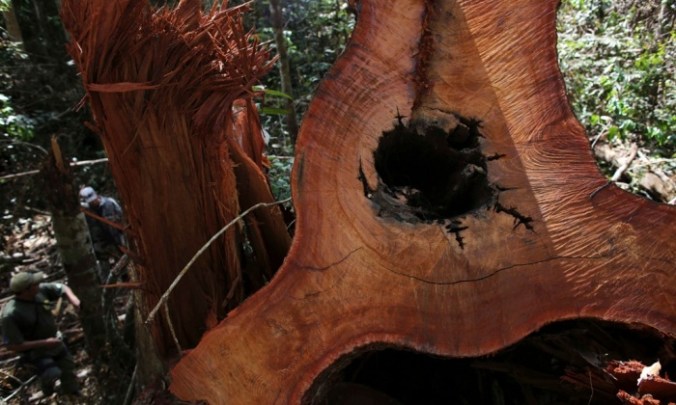
More than half of the world’s forest loss between 1990 and 2010 took place in Brazil and Indonesia. Photograph: Nacho Doce/Reuters

More than half of the world’s forest loss between 1990 and 2010 took place in Brazil and Indonesia. Photograph: Nacho Doce/Reuters

Thanks to the Guardian‘s environment-focused reporting for this sad evidence on the state of affairs:

Subsidies to industries that cause deforestation worth 100 times more than aid to prevent it

Brazil and Indonesia paid over $40bn in subsidies to industries that drive rainforest destruction between 2009 and 2012 – compared to $346m in conservation aid they received to protect forests, according to new research

Brazil and Indonesia spent over 100 times more in subsidies to industries that cause deforestation than they received in international conservation aid to prevent it, according to a report by the Overseas Development Institute (ODI).

The two countries handed out over $40bn (£27bn) in subsidies to the palm oil, timber, soy, beef and biofuels sectors between 2009 and 2012 – 126 times more than the $346m they received to preserve their rainforests from the United Nations’ (UN) REDD+ scheme, mostly from Norway and Germany.

Continue reading

Waste Less, Want Less, Lean In, Pop Up

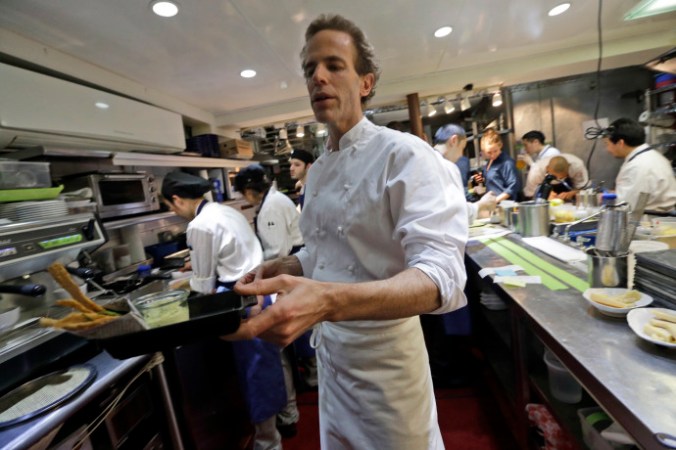
In this Thursday, March 19, 2015 photo, chef Dan Barber hands a waiter an order of fried skate wing cartilage with smoked whitefish head tartar sauce at WastED in New York. Dishes using scraps and other ignored bits comprise the menu at chef Dan Barber's WastED, a pop-up project at one of his Blue Hill restaurants intended to shed light on the waste of food. (AP Photo/Mary Altaffer)

In this Thursday, March 19, 2015 photo, chef Dan Barber hands a waiter an order of fried skate wing cartilage with smoked whitefish head tartar sauce at WastED in New York. Dishes using scraps and other ignored bits comprise the menu at chef Dan Barber’s WastED, a pop-up project at one of his Blue Hill restaurants intended to shed light on the waste of food. (AP Photo/Mary Altaffer)

Thanks to Hannah Goldfield for this post:

The other night, as I ate a salad at Blue Hill, in the West Village, a server approached my table with an iPad. “Have you seen this?” she asked. “Chef wanted you to see this.” By “Chef,” she meant Dan Barber, the man behind Blue Hill and Blue Hill Stone Barns, a sister restaurant and farm upstate. By “this,” she meant a photograph of a dumpster, into which a chute was depositing an enormous quantity of multi-colored scraps of fruit and vegetables—the runoff from a commercial food processor. The experience felt something similar to being shown a picture of what would happen to a sad-eyed old horse if you didn’t save it from the glue factory. Sitting in a small, enamel casserole dish in front of me were fruit and vegetable scraps that Barber had rescued, just like the ones in the photo. Arranged in an artful tangle, bits of carrot, apple, and pear were dressed with a creamy green emulsion, studded with pistachios, and garnished with a foamy pouf that turned out to be the liquid from canned chickpeas, whipped into haute cuisine. Continue reading

Don’t Go Away Mad, Just Go Away

koch_sitegraphic-830x467

The Koch brothers are a wondrous phenomenon. You probably knew that. What can you do (?), you might ask. We know the feeling. Well, here is something. A public service announcement from our colleagues at EcoWatch, linking to a petition effort worthy of your consideration:

The Natural History Museum just released an unprecedented letter signed by the world’s top scientists, including several Nobel laureates, calling on science and natural history museums to cut all ties to the fossil fuel industry.

The letter comes on the heels of recent news that Smithsonian-affiliated scientist Willie Soon took $1.25 million from the Koch brothers, Exxon Mobil, American Petroleum Institute and other covert funders to publish junk science denying man-made climate change, and failed to disclose any funding-related conflicts of interest.

In particular, it points a finger at the Smithsonian National Museum of Natural History (D.C.) and the American Museum of Natural History (NY), where David Koch is a member of the board, a major donor and exhibit sponsor.

Oil mogul David Koch sits on the boards of our nation’s largest and most respected natural history museums, while he bankrolls groups that deny climate science.

Sign this petition to the Smithsonian and the American Museum of Natural History: It’s time to get science deniers out of science museums. Kick Koch off the Board! Continue reading

Jane Goodall, Journey On

Michael Christopher Brown/Magnum, for The New York Times. Jane Goodall on Lake Tanganyika, offshore from Gombe Stream National Park in Tanzania.

Michael Christopher Brown/Magnum, for The New York Times. Jane Goodall on Lake Tanganyika, offshore from Gombe Stream National Park in Tanzania.

A journey to Greece in 1969 planted a seed in me that grew into my life’s ambition. Another in 1983 led to meeting Amie, and fusing our life’s ambitions together. Together we went to Costa Rica in 1995, which led to continuing our joint life’s journey abroad.

Jane Goodall Is Still Wild at Heart

Half a century ago, she journeyed into the Tanzanian jungle to change how the world saw chimpanzees. Today the world’s most famous conservationist is on a mission to save their lives.

I believe in the power of a journey to change one’s life path. In the story that follows, this woman’s singular life’s journey is just one more example, albeit an extreme and heroic one, of why we believe in the power of a journey. She visited Cornell while I was a graduate student, and Amie and I were deeply moved by what she came to say. Seth was a one year old and Milo was not yet a “twinkle in the eye.”

The child-sized t-shirt we bought to support the Jane Goodall Institute with our limited graduate student funds was passed from older brother to younger until neither of them could fit into it any more, by which time we were well into our new lives in the emerging field of entrepreneurial conservation in Costa Rica.  In no small part, our family’s dedication to conservation is an unexpected outcome of a short journey across campus that Amie and I made to listen to Jane Goodall talk about her long life’s journey. Continue reading

Florida, Marbles Lost

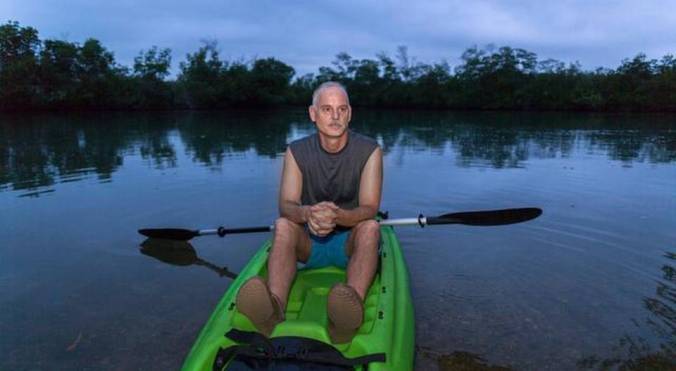
In 2013, Jim Harper, a nature writer in Miami, had a contract to write a series of educational fact sheets about how to protect the coral reefs north of Miami. ‘We were told not to use the term climate change,’ he said. ‘The employees were so skittish they wouldn’t even talk about it.’ JOHN VAN BEEKUM FOR THE MIAMI HERALD

In 2013, Jim Harper, a nature writer in Miami, had a contract to write a series of educational fact sheets about how to protect the coral reefs north of Miami. ‘We were told not to use the term climate change,’ he said. ‘The employees were so skittish they wouldn’t even talk about it.’ JOHN VAN BEEKUM FOR THE MIAMI HERALD

Knowing the Miami Herald has been recognized as a newspaper of reasonably high standards, we cannot chalk this up to careless reporting. We wish there was something intelligent to say about the news they report on this article, but are left without words, so we can only say read it for yourself:

The state of Florida is the region most susceptible to the effects of global warming in this country, according to scientists. Sea-level rise alone threatens 30 percent of the state’s beaches over the next 85 years.

But you would not know that by talking to officials at the Florida Department of Environmental Protection, the state agency on the front lines of studying and planning for these changes.

DEP officials have been ordered not to use the term “climate change” or “global warming” in any official communications, emails, or reports, according to former DEP employees, consultants, volunteers and records obtained by the Florida Center for Investigative Reporting. Continue reading

Eat a Lionfish, Save a Reef – Markets and Menus to the Rescue

photo credit: Reef.org

photo credit: Reef.org

At the risk of back-patting and preaching to the converted, it’s heartening to connect with others in the world community calling attention to and making efforts toward education and action against invasive species.

We thank the contributors of Conserve Fewell for introducing themselves to us!

As many of you who follow this blog know, invasive species can have devastating impacts on local economies and wipe out endemic wildlife populations.  Scott Cameron a frequent blogger here at ConserveFewell has established a new coalition devoted to reducing the risks and economic costs from invasive species, RRISC.

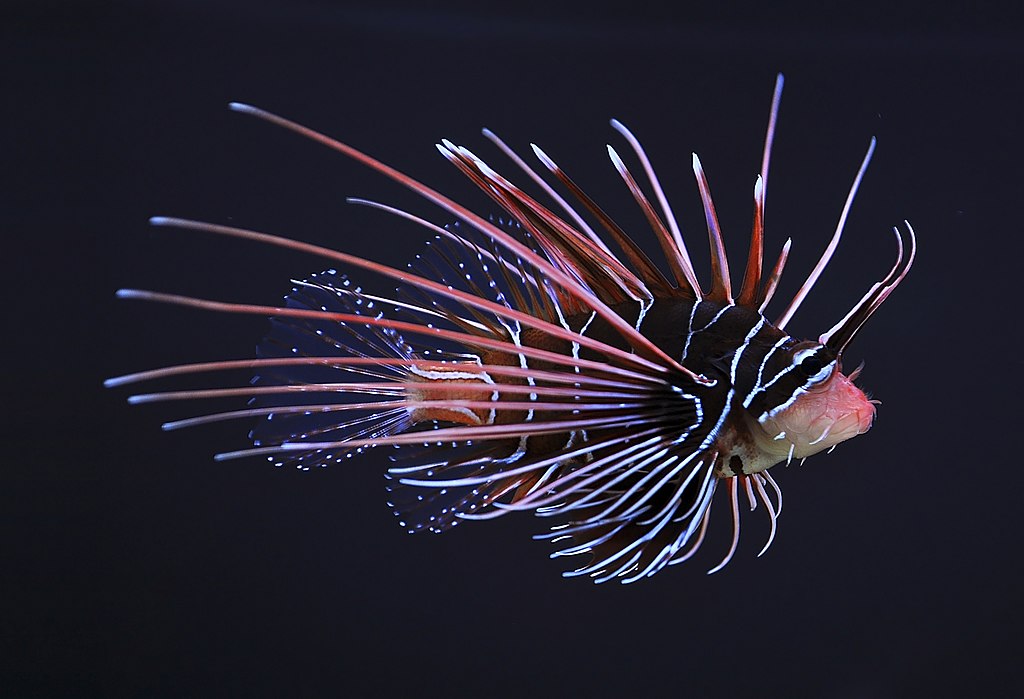
The lionfish is one of those perfectkillers, introduced by aquarium enthusiasts into places it doesn’t belong and wreaking havoc on native fish populations and decimating reefs. Continue reading

Not Cool, Greenpeace

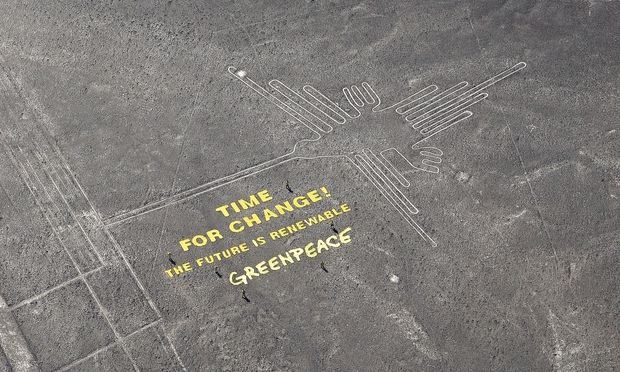
Greenpeace’s ‘time for change’ message next to the hummingbird geoglyph in Nazca. Photograph: Thomas Reinecke/TV News

Greenpeace’s ‘time for change’ message next to the hummingbird geoglyph in Nazca. Photograph: Thomas Reinecke/TV News

Hard to believe, but sometimes otherwise smart people do really dumb things, and sometimes apologies cannot correct the damage:

Greenpeace has apologised to the people of Peru after the government accused the environmentalists of damaging ancient earth markings in the country’s coastal desert by leaving footprints in the ground during a publicity stunt meant to send a message to the UN climate talks delegates in Lima. Continue reading

Are You Listening?

MOTHERNATUREConservation International’s new campaign, Nature Is Speaking, has released various short films from the perspective of different elements of nature voiced by an actor or actress: Harrison Ford is the Ocean, Lupita Nyong’o is a Flower, Edward Norton is the Soil. The organization’s “humanifesto” reads,

Nature doesn’t need people. People need nature.

Human beings are part of nature.

Nature is not dependent on human beings to exist.

Human beings, on the other hand, are totally

dependent on nature to exist.

The growing number of people on the planet

and how we live here is going to determine the future of nature.

And the future of us.

Nature will go on, no matter what.

It will evolve

The question is, will it be with us or without us?

Continue reading

A Human’s Best Illustration Of Important Stuff

179571de-e7d8-4a39-82bf-ad6bef672f58-620x372

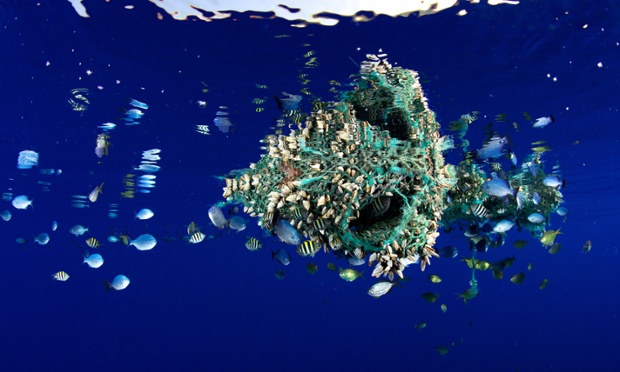
Plastic pieces in the ocean damage wildlife and enter the food chain when ingested by fish. Photograph: Bryce Groark/Alamy

Thanks to the Guardian for ongoing coverage of the world’s great environmental challenges:

Full scale of plastic in the world’s oceans revealed for first time

Over five trillion pieces of plastic are floating in our oceans says most comprehensive study to date on plastic pollution around the world

More than five trillion pieces of plastic, collectively weighing nearly 269,000 tonnes, are floating in the world’s oceans, causing damage throughout the food chain, new research has found.

Data collected by scientists from the US, France, Chile, Australia and New Zealand suggests a minimum of 5.25tn plastic particles in the oceans, most of them “micro plastics” measuring less than 5mm.

Continue reading

Who’s Got Your Back, Long Term?

Stewartjp-mediumThreeByTwo210We read both publications regularly, and find that both cover environmental issues well, as such; but the difference between this New York Times article and the New Yorker post we started the day with speaks for itself. We understand the purpose of the article below meeting current needs, but do we really need our news to be so parochial? Sorry, Times. You will have to work harder for your subscription money.

Steep Slide in Oil Prices Is Blessing for Most

If history is any guide, it’s hard to see falling oil prices as anything but good news for everyone whose fortunes aren’t tied to oil.

Culture Of Hack

9781781685839_Hacker__hoaxer-294b89cbd6b3950d9cdbfb0e39e66884We are the antithesis of radical, in the political science and political activism sense of that word. We have been more incremental, often experimental and necessarily patient in our approach to entrepreneurial conservation than political radicals are in their approach to social change. Working with children, as we often do in our community outreach, we use methods appropriate to the situations. We sometimes say, perhaps just in the spirit of cheekiness, that we “hack” solutions in remote locations. We even say sometimes that the outcome is “radical.”

But that is the slang use of the word, just as we once called skateboarding or ball-dribbling moves in football “wicked.” We aspire to neither radical nor wicked outcomes in our day to day work, in the proper definitions of those words. Still, as with Mr. Watson, whose methods are different from ours but his objectives are akin, this review of Hacker, Hoaxer, Whistleblower, Spy: The Many Faces of Anonymous in the current issue of Book Forum helps us see some recognizable objectives in this particular culture of hack (with plenty of notable exceptions, as the review makes plain to anyone who regularly reads our blog):

By Any Memes Necessary

An inside look at the hacking group Anonymous reveals a boisterous culture of dissent and debate

ASTRA TAYLOR

THE FIRST TIME I SAW Gabriella Coleman speak about the hacker group Anonymous I was befuddled. It must have been around 2009. Anonymous was already at least three years old, having materialized out of the bowels of the popular, and often excruciatingly obscene, online bulletin board 4chan as early as 2006, yet it was still known mostly for its antisocial pranks.  Continue reading

Keep On Truckin’ 350!

Bill McKibben: ‘I’d rather be causing more trouble more directly, as well as doing some writing’ Photograph: Graeme Robertson

Bill McKibben: ‘I’d rather be causing more trouble more directly, as well as doing some writing’ Photograph: Graeme Robertson

that tag line in the title of this post is directed specifically at the organization, for reasons the article below makes clear, but we extend the sentiment equally to one of our most admired and favorite heroes due to his relentless activism:

Keystone XL opponent Bill McKibben steps down as head of 350.org

‘I’ve had enough years of reviewing budgets’ says US author and climate activist as he steps down from leadership role

The author Bill McKibben, who founded a new generation of environmental activism in the Keystone XL pipeline and divestment campaigns, is stepping down from the daily leadership of his 350.org organisation.

Continue reading

The Worst News Of The Week

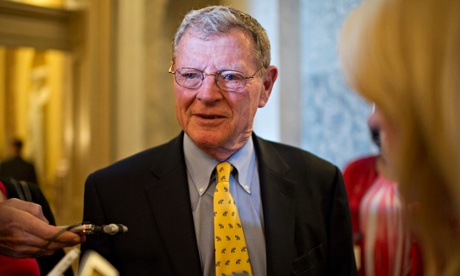
Republican Senator Jim Inhofe is expected to get the Senate top environmental job. Photograph: Tom Williams/Getty Images

Republican Senator Jim Inhofe is expected to get the Senate top environmental job. Photograph: Tom Williams/Getty Images

Read it and weep (thanks to the Guardian):

Climate change denier Jim Inhofe in line for Senate’s top environmental job

Obama faces a fight to protect his climate change agenda after midterm results suggest Senate’s top environmental post will fall to Republican stalwart of climate denial

The Senate’s top environmental job is set to fall to Jim Inhofe, one of the biggest names in US climate denial, but campaigners say Barack Obama will fight to protect his global warming agenda.

Continue reading

If You Happen to Be in Washington, DC

Photo by Wikipedia User “The High Fin Sperm Whale”

For over a year, we have been happy and fortunate to host Phil’s writings on the lionfish invasion and what entrepreneurial means might be taken to mitigate it. Next Tuesday, if you happen to be in the DC area and are looking for an educational way to spend your evening, consider going out for a happy hour lecture at Rosemary’s Thyme Bistro.  Continue reading

Shiny, Pretty Things

2014RAPLighters_copy

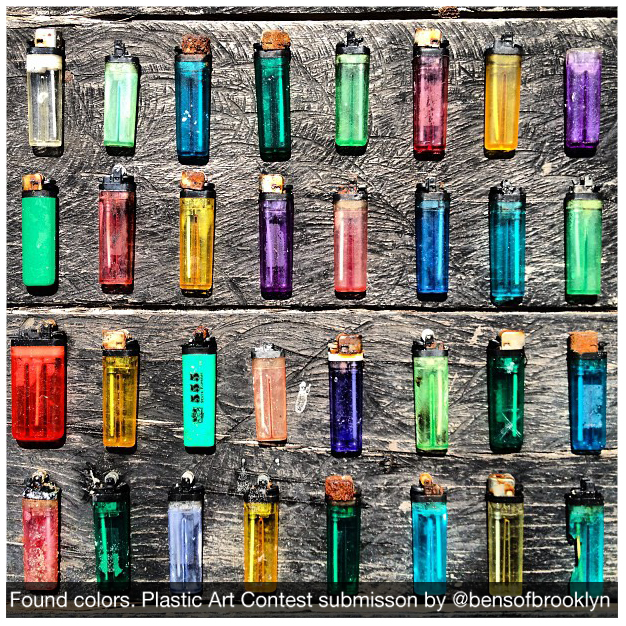
We have not eliminated plastic entirely at our properties, but we have been thinking about it for the last few years and taking action every chance we get. How to make the best of an otherwise horror show of plastic, according to this post on Surfrider Foundation’s blog:

The reality of plastic pollution is that it is happening in every home, office, school and community. It’s plaguing our country. Plastic creates toxic pollution at just about every stage of its existence, from manufacture, to use, to disposal. Considering the facts, it’s no surprise that it’s the most prevalent type of marine litter worldwide.

The extent of plastic use is mind-boggling.

Take plastic bags for instance. Americans go through about 100 billion plastic bags a year. That’s 360 bags for every man, woman and child in the United States. And, less than five percent of these bags are recycled. Continue reading

Earth Hour 2014 at Xandari

This past March, on the 29th, Xandari supported the 60+ Earth Hour movement by hosting a candle-lit dinner and inviting guests to turn off their lights between 8:30-9:30PM to join hundreds of millions of people around the world in saving energy. In 162 countries and around 7,000 cities, people joined Earth Hour and the World Wildlife Fund for Nature to symbolically pledge to do more for the environment and engage in energy-saving efforts throughout the year. Watch the video below for some footage of national monuments around the world flipping the switch for an hour, and learn more about the 60+ movement.  Continue reading

Pots Calling Kettles Black

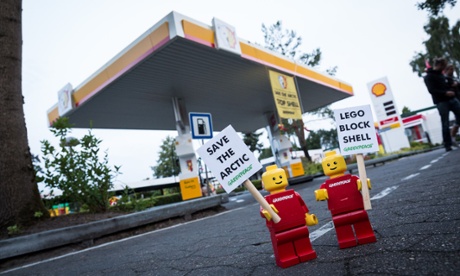
Mini activist figures at a Shell gas station in Legoland in Billund, Denmark, part of a global campaign targeting Lego and highlighting Shell’s plans for Arctic oil exploration. Photograph: Uffe Weng/Greenpeace

Mini activist figures at a Shell gas station in Legoland in Billund, Denmark, part of a global campaign targeting Lego and highlighting Shell’s plans for Arctic oil exploration. Photograph: Uffe Weng/Greenpeace

Lego is easy to love. Anyone who had these toys as a child, or who has children who have these toys, can testify to the joy they bring.

Shell is easy not to love, for reasons that do not really need to be explained here.

And yet, Lego is a product made up primarily of petroleum, so what we learn in this story in today’s Guardian seems odd as much as it seems good:

Lego will not renew its marketing contract with Shell after coming under sustained pressure from Greenpeace to end a partnership that dates to the 1960s.

The environmental campaign group, protesting about the oil giant’s plans to drill in the Arctic, had targeted the world’s biggest toy maker with a YouTube video that attracted nearly 6m views for its depiction of a pristine Arctic, built from 120kg of Lego, being covered in oil. Continue reading

Lionfish, Prized Case Study In Innovative Environmentalism

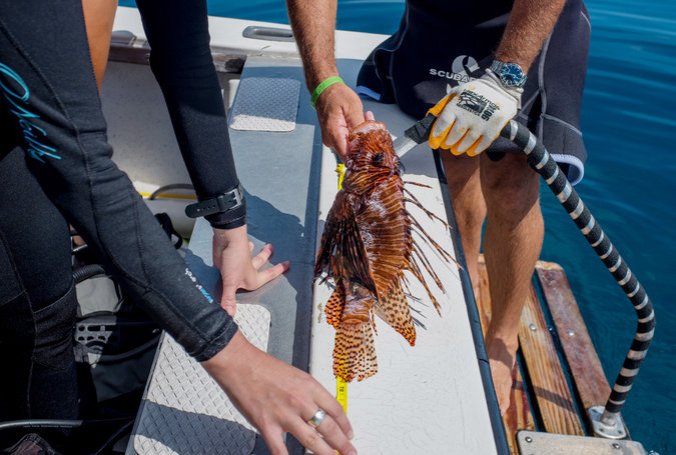
A lionfish caught near Homestead, Fla., by researchers for the Reef Environmental Education Foundation, which is trying to curb the species’ proliferation. Credit Angel Valentin for The New York Times

A lionfish caught near Homestead, Fla., by researchers for the Reef Environmental Education Foundation, which is trying to curb the species’ proliferation. Credit Angel Valentin for The New York Times

We have hosted a series of posts from Raxa contributor Phil Karp, with citizen science and entrepreneurial conservation angles to the story; and now the New York Times considers the story fit to print in a well-detailed reportage:

A Call to Action Against a Predator Fish With an Import Ban, an App and Even Rodeos

Continue reading

National Clean-up Day in Costa Rica

This Sunday, while thousands of people were marching in NYC and other major cities around the world, Costa Rica had its national clean-up day in communities, rivers, lakes, beaches, and oceans. Designed to collect recyclable material as well as trash, the program was organized in part by the Ocean Conservancy and Terra Nostra, and sponsored by relevant government agencies. Xandari invited community members to join in to work around the roads in Tacacorí and the neighboring town of Tambor, and including four hotel employees and myself we had forty-five people come out from 7am-11am to pick up and sort trash. Many of these individuals were young children and teenagers, which was an encouraging sight!

Part of the street before trash pick-up

On Saturday, a team of thirteen hotel employees had also gone out along the Tacacorí river, and they collected a total of twenty-two pounds of plastic, forty-four pounds of glass, ninety pounds of scrap metal (tins, car parts, etc.), two-hundred pounds worth of car tires, and four-hundred and sixty-two pounds of just trash (clothing and other non-recyclable waste). The next day, the group of forty-five combing the streets found a hundred and twenty-seven pounds of plastic, a hundred and nineteen pounds of glass, sixty-six pounds of paper and cardboard, and six-hundred and six pounds Continue reading