Keystone XL Just Got More Interesting

Photograph by Chip Somodevilla/Getty.

Photograph by Chip Somodevilla/Getty.

We stay away from politics as much as possible, but on occasion it is a topic we cannot avoid if we want to stay tuned to important environmental issues.  Keystone XL is one we have been following from various angles in the last year or so.  Here is some hopeful news about the future of this issue, especially if you know something about politics in the USA (click the image above to go to the source):

Shortly after the 2012 election, John Podesta was invited to speak at a board meeting of the American Petroleum Institute. Podesta is an outspoken environmentalist who served as Bill Clinton’s White House chief of staff and then founded the Center for American Progress, an influential liberal think tank. A.P.I. represents the interests of the oil-and-gas industry. Continue reading

MFA, Welcome

Educational Complex, by Mike Kelley, at MoMA PS1.

Educational Complex, by Mike Kelley, at MoMA PS1.

We do not claim to be experts on education in the fine arts, but we do know one person who went to RISD who added a huge amount of value to several Raxa Collective initiatives, and we would welcome him (and other members of the design team he was part of) back in a heartbeat.  For now, we can just share these thoughts by a more well-informed person (beware the four-letter words and strong opinion):

In her excellent essay, now out in Modern Painters, artist Coco Fusco pulls back the curtains on the risky business and chancy racket of the Master of Fine Arts degree. Fusco deftly addresses, among other things, how M.F.A. programs are “discursive battlefields.” Continue reading

Controlling The Appetite To Feed

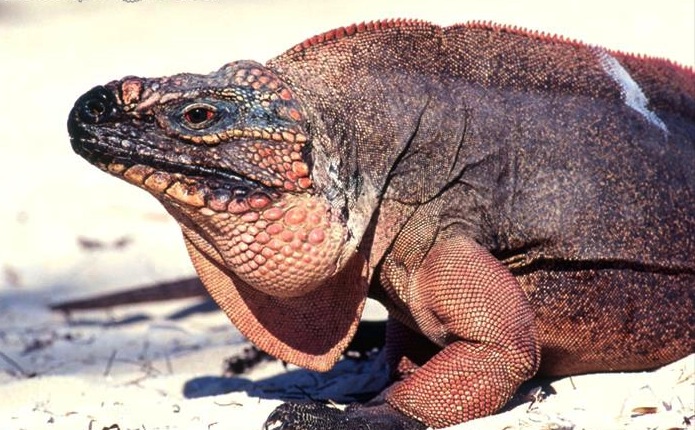
Bahamian Rock Iguana (click image to go to source)

Bahamian Rock Iguana (click image to go to photo’s source)

In its Conservation This Week feature, Conservation Magazine (last week) carried the following, which we hope gets plenty of circulation (we wish it was not even necessary to say so, but wishful thinking is not sufficient):

TOURISTS: STOP FEEDING JUNK FOOD TO IGUANAS

December 6, 2013

On islands in the Bahamas, tourists routinely feed iguanas grapes, cereal, ground beef, and even potato chips. This unnatural diet could be affecting the health of these endangered reptiles, researchers warn in Conservation Physiology. Continue reading

The World Needs Another Golf Course Like It Needs Another Hole In The Ozone

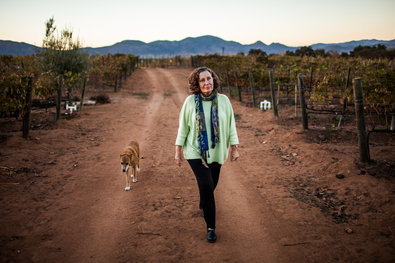
Max Whittaker for The New York Times Natalia Badán, a winery owner and longtime resident of the Guadalupe Valley, called a zoning change “an aggression.”

Max Whittaker for The New York Times
Natalia Badán, a winery owner and longtime resident of the Guadalupe Valley, called a zoning change “an aggression.”

If you have ever swung a golf club, in earnest, on a challenging hole somewhere on a beautifully crafted course, you might agree: the game is good for the soul. But there is such thing as too much of a good thing:

A Rustic Paradise, Open for Development

By DAMIEN CAVE Continue reading

Technology, Activism, Discontent & Keeping It Honest

Doug McLean

It was just recently when we started noticing it on the Atlantic‘s website, and needed some time to determine the fit with our blog:

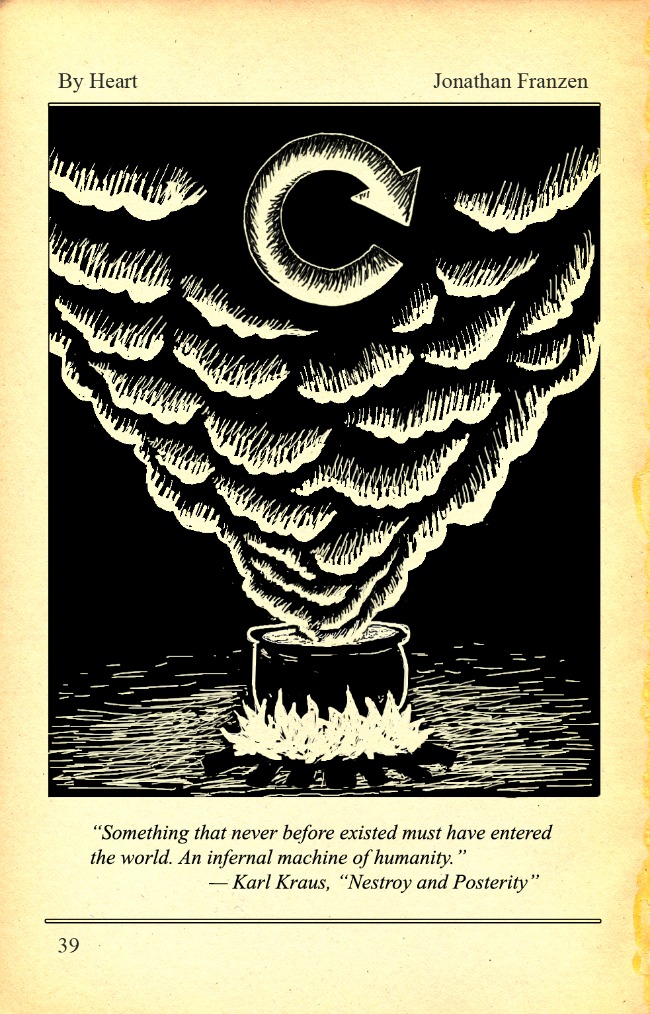
By Heart is a series in which authors share and discuss their all-time favorite passages in literature.

It took this one to make us realize the fit:

Jonathan Franzen on the 19th-Century Writer Behind His Internet Skepticism

His new book translates works by Karl Kraus, whose misgivings toward progress mirror Franzen’s belief that technology can be “very harmful” to artistic production.
 OCT 1 2013, 3:43 PM ET

We have several times linked to stories involving Franzen, and there is no question that it is in part because of his bird-loving devotions; but it is not only that.  We put ourselves in his corner a few months ago and there are plenty of paradoxes in this corner but read this to appreciate the depth of Franzen’s sense of purpose related to technology, starting with Joe Fassler’s excellent commentary:

Karl Kraus, the Austrian satirist, playwright, and critic of the mass media, was born in 1874 and ran the magazine Die Fackel (“The Torch”) from 1899 until his death. And according to novelist Jonathan Franzen, he was the first-ever iteration of what we might now call a media theorist. Continue reading

Drink the Wild Air

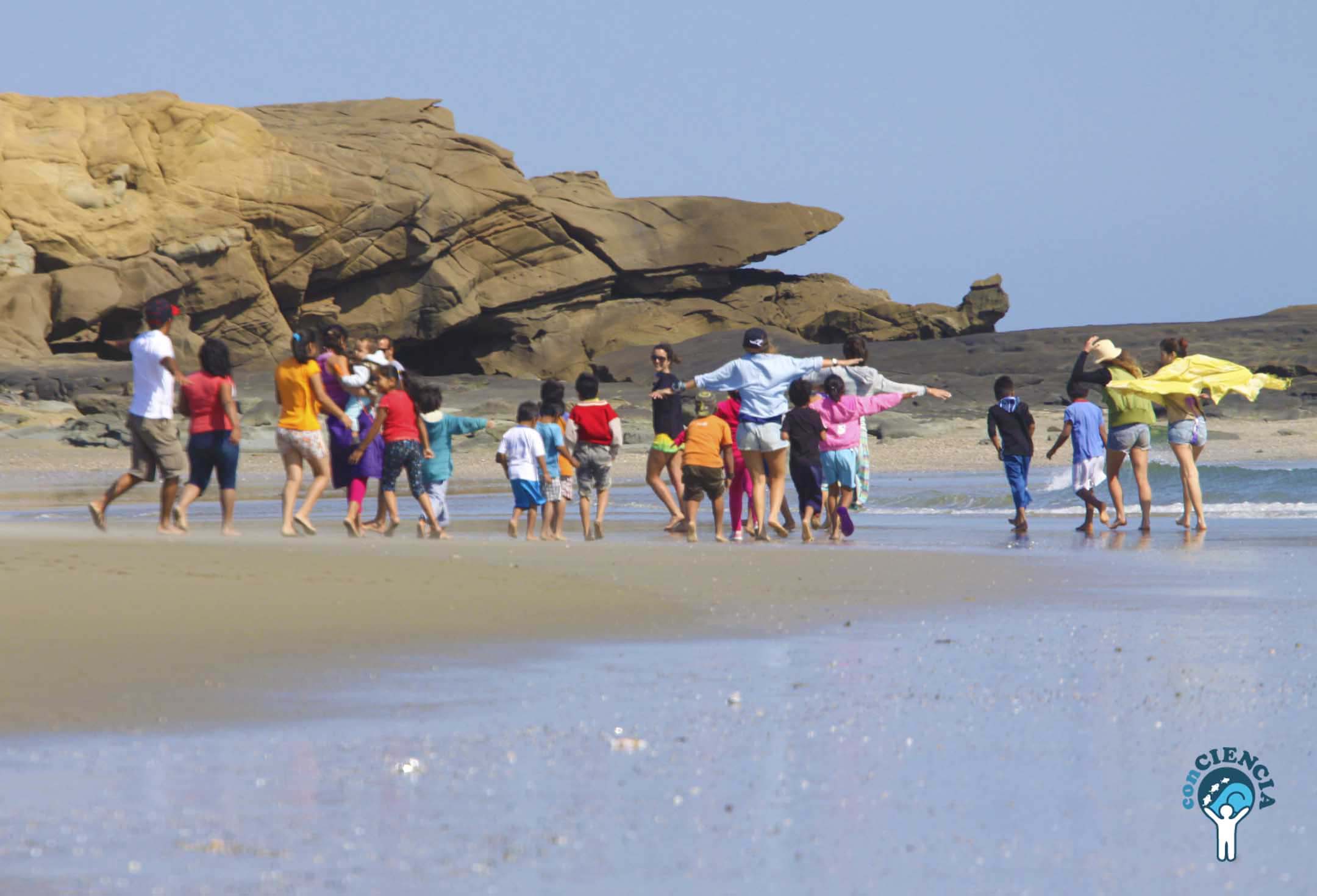
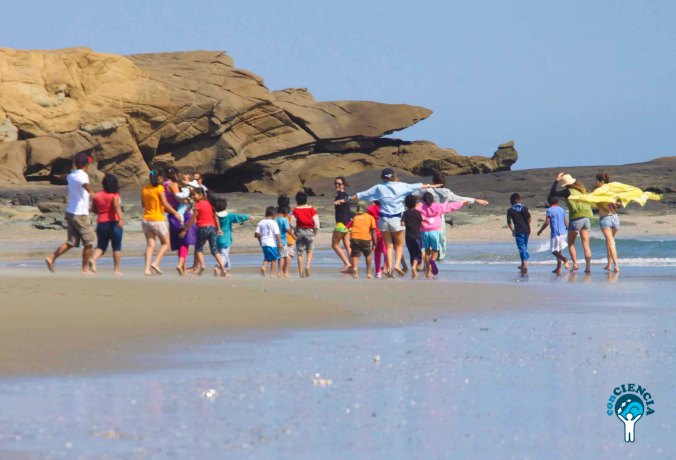
“Live in the sunshine, swim the sea, drink the wild air.” Alejandra Benavides/conCIENCIA

Working for the balance and health of nature as a conservation biologist brought me to understand the importance of nature in the balance and health of communities. The great gap between the two inspired me to establish conCIENCIA, a nature-based education design program. We build environmental identity in fishing villages across Peru through nature-based integrated learning guided by play, creativity, curiosity and the senses.
As First Mermaid in conCIENCIA, I work with an amazing group of artists and scientist, to connect coastal children to the natural wonderland, since 2010.

Lobitos has some of the most beautiful beaches on the Peruvian coast. Its world-class surfing draws hundreds of surfers from all over the planet and is known far and wide. A lesser-known fact is that it also has 153 children enrolled in its elementary school. Walking down the beach we wonder where these kids are. We walk from point to point with not one in sight. There’s no laughter or splashing on the shores. Surfers and fishermen dominate our view. No mothers and children sharing the democratic fun the beach offers: a place with more attractions than we could ever finish exploring.

In Latin American cities like Rio de Janeiro it is on the beach that rich and poor meet, crossing the giant social chasm that separates them, virtually identical in their bathing suits, covered in sand, sweat and salt. Surprisingly, this doesn’t seem to be the case in many of Peru’s coastal towns. Exactly why is hard to say. Our NGO conCIENCIA helps coastal communities develop an environmental identity and engagement through outdoor science-based learning. We hope to be able to answer the question ‘why’ through surveys, conversation and appreciation.

On the surface one could say it is cultural.  Fishermen don’t bathe in the sea or lounge on the beach. This is their place of work, as for a New Yorker her office would be–of course, with greater hardships and demands. The sea is treacherous and fish stock is dwindling. Continue reading

The River Project, A Template From New York Ready For Replication

Photograph by Peter Keegan/Keystone/Getty.

Photograph by Peter Keegan/Keystone/Getty.

The news in this New Yorker website blog post is the short and sweet specialty we most enjoy:

On a recent Wednesday that felt like the first of winter, about a hundred and fifty children—mostly under seven—and their parents gathered at Pier 40, over at West Street and Houston. Their mission: to thank for their service the numerous small riverine creatures that have whispered their secrets to the kids since last spring, and liberate them. The River Project’s tanks needed to be drained and emptied for winter. Ergo, fishy freedom. Continue reading

Vegan Viewpoint

'By preventing the growth of trees and other deep vegetation in the hills, and by compacting the soil, grazing animals cause a cycle of flash floods and drought.' Photograph: Farley Baricuatro (www./Getty Images/Flickr RF)

‘By preventing the growth of trees and other deep vegetation in the hills, and by compacting the soil, grazing animals cause a cycle of flash floods and drought.’ Photograph: Farley Baricuatro (www./Getty Images/Flickr RF)

One of the editorialists at the Guardian whom we read for an unflinching environmentalist perspective, today on veganism:

He did it quietly, and the decision is the better for that: Al Gore, according to reports in the US press, has gone vegan.

Certain things could be said about other aspects of his lifestyle: his enormous houses and occasional use of private jets, for example. While we can’t demand that everyone who espouses green causes should live like a Jain monk, I think we can ask that they don’t live like Al Gore. He’s a brilliant campaigner, but I find the disjunction between the restraint he advocates and the size of his ecological footprint disorienting.

So saying, if he is managing to sustain his vegan diet, in this respect he puts most of us to shame. I tried it for 18 months and almost faded away.  Continue reading

Western Ghats Ecosystem Must Be Protected, But Humans Will Be Humans

The Hindu

Local farmers in the Western Ghats, like their counterparts everywhere, generally want to be unencumbered to do what farmers do. Any given morning we wake up feeling complete solidarity with farmers. Full stop. We wake up every day looking for opportunities to support conservation where we live and work. Full stop. Currently, one such region where we work, known as the Western Ghats in southern India, is wrestling with the challenge of letting farmers be farmers while also allowing the ecosystem–one of those rare places worthy of being called a biodiversity hotspot–to continue to be the ecosystem.  Sometimes, farmers and ecosystems do not get along well. We thank the Hindu for its coverage of this issue, which is much more complicated than one article can convey:

…The sites, spread over 34 countries, “harbour the majority of the populations of more than 600 birds, amphibians, and mammals, half of which are globally threatened. Many of these irreplaceable areas are already designated as places of ‘Outstanding Universal Value’ under the UNESCO World Heritage Convention,” the report said. Continue reading

Cats In The Ghats

Whether wild or domesticated, cats are unique in their ability to compel. If you are a cat person, you know that to be true. If you are not a cat person, you probably also know it to be true. Here in the Western Ghats region of south India, we take cats to be among our most important beneficiaries of whatever tangible outcomes we can generate through our entrepreneurial conservation initiatives. Mainly we are focused on initiatives with the Periyar Tiger Reserve, but on the lookout constantly for more opportunities. Earlier this year we started tracking Panthera because of these interests. Their website (click the logo to the left), and the mission as stated here, are worth revisiting from time to time:

Panthera’s mission is to ensure the future of wild cats through scientific leadership and global conservation action. Continue reading

If You Build It They May Come, But If You Build It Better Will They Pay For It?

fairTradeLogoThe following paper has been influential since its publication more than two and a half years ago, and seems destined to have a lengthy shelf life, which we hope to contribute to.  It is not only interesting theoretically, but gets at practical questions we consider existential at the level of our enterprise. If consumers (in our case travelers) are willing to pay a fair premium for building and operating a business that is more sensitive to environmental and social responsibility, we can afford to engage in fair trade; if they are not really willing, uh oh…

We are more than happy to share our empirical evidence, but for now let’s take a look at some scientifically-derived evidence:

Consumer Demand for the Fair Trade Label: Evidence from a Field Experiment

Jens Hainmueller

Massachusetts Institute of Technology (MIT) – Department of Political Science

Michael J. Hiscox

Harvard University

Sandra Sequeira

London School of Economics

April 1, 2011

MIT Political Science Department Research Paper No. 2011-9B

Abstract: 

A majority of surveyed consumers claim to prefer ethically certified products over non-certified alternatives, and to be willing to pay a price premium for such products. There is no clear evidence, however, that people actually seek out such ethically certified goods and pay a premium for them when shopping. We provide new evidence on consumer behavior from experiments conducted in a major U.S. grocery store chain. Continue reading

Will We Ever Tire Of This? Probably Not

Oil, coal and gas companies are contributing to most carbon emissions, causing climate change and some are also funding denial campaigns. Photograph: David Gray/Reuters

Oil, coal and gas companies are contributing to most carbon emissions, causing climate change and some are also funding denial campaigns. Photograph: David Gray/Reuters

It bears repeating:

The climate crisis of the 21st century has been caused largely by just 90 companies, which between them produced nearly two-thirds of the greenhouse gas emissions generated since the dawning of the industrial age, new research suggests.

The companies range from investor-owned firms – household names such as Chevron, Exxon and BP – to state-owned and government-run firms.

The analysis, which was welcomed by the former vice-president Al Gore as a “crucial step forward” found that the vast majority of the firms were in the business of producing oil, gas or coal, found the analysis, which has been published in the journal Climatic Change. Continue reading

Stop The Rot

One-fifth of what households buy ends up as waste, and around 60% of that could have been eaten, according to a report from the government’s waste advisory group, Wrap. Photograph: Murdo MacLeod

One-fifth of what households buy ends up as waste, and around 60% of that could have been eaten, according to a report from the government’s waste advisory group, Wrap. Photograph: Murdo MacLeod

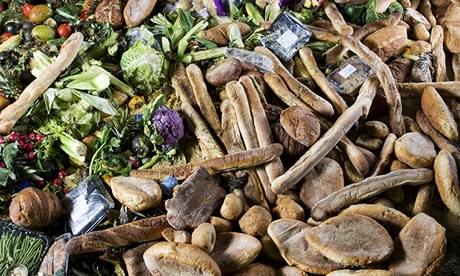
The Guardian carried a story recently about how in the UK food producers, sellers and consumers are being urged to support a ban on food waste going to landfills by 2020 to which we add our hurrah:

…Compulsory collections of food waste from all homes and businesses by local councils are among a series of measures recommended in a new report to enable food waste to be harnessed as a valuable resource to provide energy, heat and benefits for agriculture.

The ambition is to save the UK economy over £17bn a year through the reduction of food wasted by households, businesses and the public sector, preventing 27m tonnes of greenhouse gases a year from entering into the atmosphere.

The new study, Vision 2020: UK Roadmap to Zero Food Waste to Landfill is the culmination of more than two years’ work and has the backing and input of local authority and industry experts. It sets the framework for a food waste-free UK by 2020. Continue reading

Waste Not, Want Less

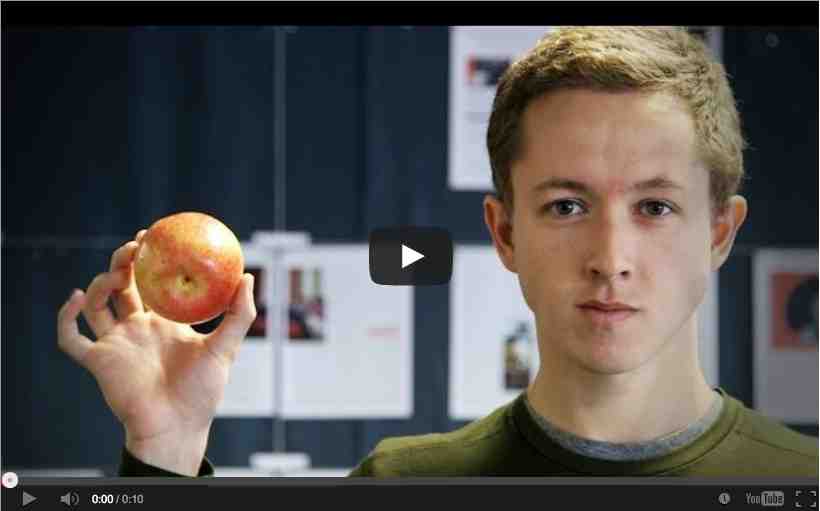
The Atlantic‘s Senior Editor, James Hamblin, MD, has advice we are compelled to share:

What do you think an apple core is? What’s the thing we throw away?

It is a ghost. If you eat your apples whole, you are a hero to this ghost. If you do not, you are barely alive. Come experience vitality.

Earlier this year, in “How to Eat Apples Like a Boss,” a video by Foodbeast, the Internet was promised the gift of confidence in apple-eating. Elie Ayrouth ate an apple starting at the bottom, proceeding to up to the top, and finishing with a wink to the camera, as bosses do. Eating as such, Foodbeast said, the core “disappears.”

Continue reading

Wendell Berry Sharing His Wisdom, With Gandhian Revolutionary Overtones

You have heard his name enough times to recognize it, but you may not be sure what for. If this guy is in the room to listen, it is likely to be interesting. Thanks to Bill Moyers for sharing this:

Wendell Berry, a quiet and humble man, has become an outspoken advocate for revolution. Continue reading

Seeds Of Change

Rounding out the hat trick of food-related stories for today, this story details the intersection between food, commerce and governance:

Kauai has a long agricultural history – from the first Polynesian settlers thousands of years ago bringing taro — a starchy pacific vegetable – to plant, to biotech-companies producing genetically-modified crops today. When Captain James Cook landed on the island in 1778 — little did he know that he had stumbled upon a farmer’s utopia. Continue reading

Food Transparency

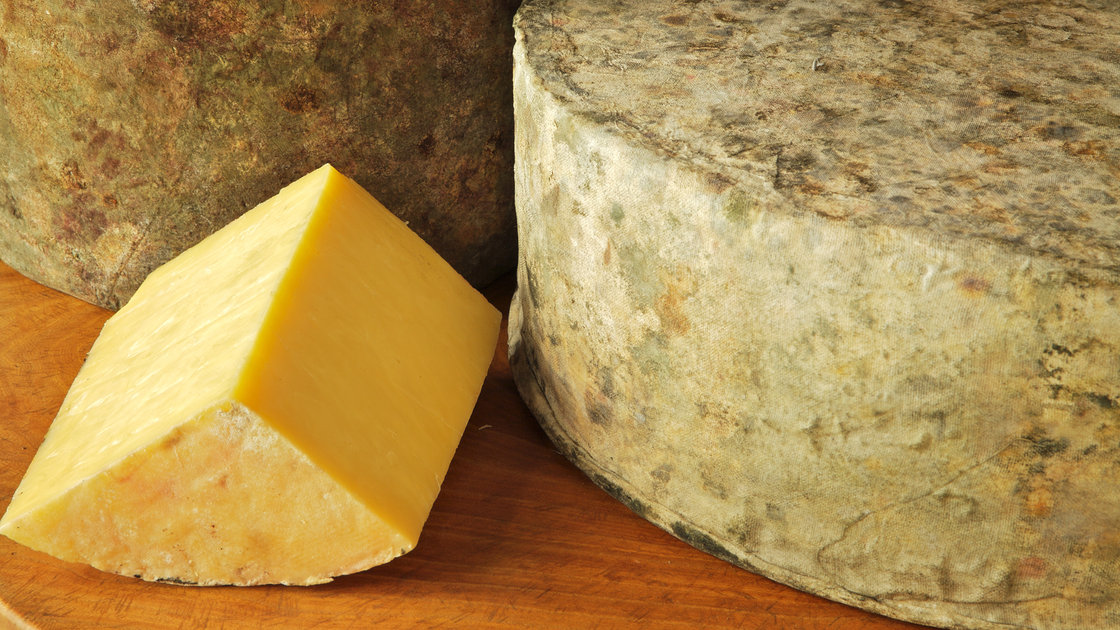
Shelburne Farms' clothbound cheddar has a bright yellow color because it's made from the milk of cows that graze on grasses high in beta-carotene. Courtesy of A. Blake Gardner

Shelburne Farms’ clothbound cheddar has a bright yellow color because it’s made from the milk of cows that graze on grasses high in beta-carotene. Courtesy of A. Blake Gardner

We have been posting on the topic of transparency in food several times each year since starting this blog, so this news/commentary podcast fits in a tradition:

The news from Kraft last week that the company is ditching two artificial dyes in some versions of its macaroni and cheese products left me with a question.

Why did we start coloring cheeses orange to begin with? Turns out there’s a curious history here. Continue reading

The Educational Mission Of A Food Entrepreneur

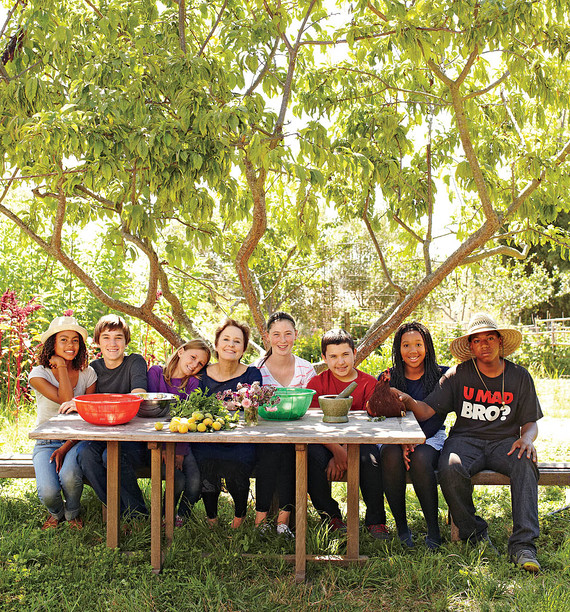
With students, under an elephant heart plum tree at the Edible Schoolyard Photography by William Abranowicz

With students, under an elephant heart plum tree at the Edible Schoolyard Photography by William Abranowicz

We never tire of listening to Alice Waters or watching for her next move. This article is ostensibly focused on an award from the Wall Street Journal, but we are most interested in the educational component of her work, which closes out the article:

AS THE EDIBLE SCHOOLYARD moves toward its third decade, Waters aims to expand its curriculum into high school programs, like at Edible Sac High, a Sacramento charter high school—housed within the second-oldest high school west of the Mississippi—where Waters’s ideals have been incorporated. Continue reading

The Newest, Dismalest Branch Of Science

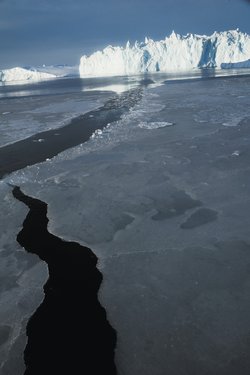
Stanley Greene/NOOR/Redux Greenland, photographed from a boat navigating the melt where dog sleds used to travel across the ice, October 2009

Stanley Greene/NOOR/Redux
Greenland, photographed from a boat navigating the melt where dog sleds used to travel across the ice, October 2009

We prefer the news about solutions to challenging problems. Preferably positive news. Preferably innovations that invoke smiles. Sometimes, dismal is the only way to move forward. Thanks to the New York Review of Books, and Paul Krugman for this review:

Forty years ago a brilliant young Yale economist named William Nordhaus published a landmark paper, “The Allocation of Energy Resources,” that opened new frontiers in economic analysis.1 Nordhaus argued that to think clearly about the economics of exhaustible resources like oil and coal, it was necessary to look far into the future, to assess their value as they become more scarce—and that this look into the future necessarily involved considering not just available resources and expected future economic growth, but likely future technologies as well. Moreover, he developed a method for incorporating all of this information—resource estimates, long-run economic forecasts, and engineers’ best guesses about the costs of future technologies—into a quantitative model of energy prices over the long term. Continue reading