Stuff, Change, And Examining Broke

View the video by clicking the image above, again brought to you on Cornell University’s website:

The United States isn’t broke; we’re the richest country on the planet and a country in which the richest among us are doing exceptionally well. But the truth is, our economy is broken, producing more pollution, greenhouse gasses and garbage than any other country. Continue reading

Collaborative Poaching-Patrol

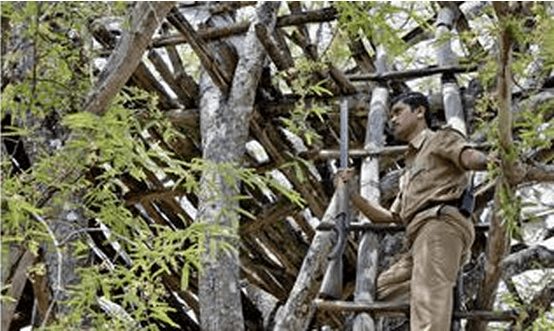
The Hindu— File Photo

We’ve written about the importance of forest stewards before, primarily because in many cases they straddle the roles of guard and guide within the territories they protect. But many of those protected areas in India are suffering from severe shortages of qualified field staff, putting enormous areas of land, not to mention the wildlife that call it home, at risk.

But the Karnataka Eco-Tourism Development Board is initiating an innovative plan to train volunteers to be forest naturalists who will assist the forestry department a minimum of two weeks per year in their anti-poaching activities.

In order to create this pool of trained volunteers, the Karnataka Eco-Tourism Development Board is offering, for the first time in the country, three- and four-day Naturalist and Volunteer Training. The board is offering the training programme in association with Jungle Lodges and Resorts Ltd. Continue reading

Entrepreneurial Conservation Through Carbon Visualization

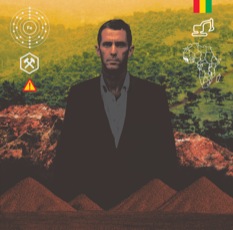
Thanks to the University of Washington’s magazine Conservation, we found our way to this video, and the magazine’s blurb about the source of the video is a worthy introduction because of its explanations of the images that accompany:

For Antony Turner, pictures make a story come alive—and in the climate change story, one of the main characters is invisible. In 2009, together with artist/scientist Adam Nieman, he founded Carbon Visuals to help people “see” the carbon dioxide that’s trapping heat in Earth’s atmosphere. Continue reading

Search Well, Do Good, Avoid Not Being Evil

The big guns of the tech world have the financial weight to reinvest in new services, but can startups give them a run for their soul?

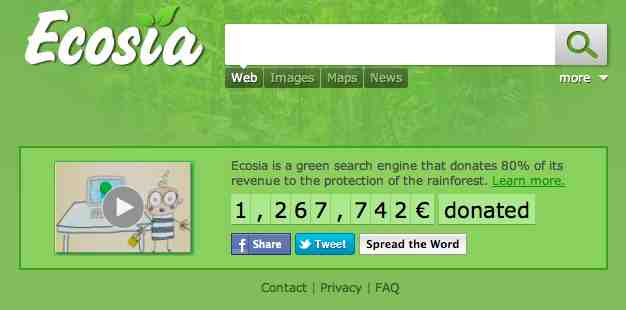
I have not tested it yet, but there is a new, alternative search engine worthy of checking out. Click the image above to go to the Guardian story about would-be giant-killing do-gooders (or is it giant-killing would-be do-gooders?):

A new breed of internet startup is taking on the big guns of the tech world. Seeking to capitalise on consumer disillusionment with the established order in the wake of headlines about tax-dodging, personal data profiteering and poor factory conditions, these startups represent the radical face of the internet.

Unusually for a tech company, however, it is not technological innovation that gives them their unique selling point. Rather it is the promise to do social and environmental good.

“They started with decent values – Google and Apple,” says Christian Kroll, founder of Ecosia, an eco-conscious search engine based in Berlin. “They wanted to build something that improves the world. But as soon as you become a public company, shareholders exert influence.” Continue reading

Chaco Guardians

Biologist Erika Cuéllar says that unless the indigenous inhabitants are involved it will be impossible to save the biodiversity of the Gran Chaco. Photograph: Dan Collyns

Biologist Erika Cuéllar says that unless the indigenous inhabitants are involved it will be impossible to save the biodiversity of the Gran Chaco. Photograph: Dan Collyns

Thanks to the Guardian for its coverage of the Chaco’s guardians in this story, Bolivia’s indigenous people join fight to save Gran Chaco wilderness, by Dan Collyns:

Second largest wilderness in South America threatened by farming, ranching and drugs trade

Only from Cerro Colorado – a rocky outcrop that rears vertiginously over the treetops – is it possible to make out the vastness of the Gran Chaco as it stretches from this corner of Bolivia beyond the horizon into Paraguay. This enormous swath of dry forest and scrubland, where every plant or tree bears thorns, is South America’s second largest wilderness after the Amazon rainforest.

The Gran Chaco is threatened on all sides: Mennonite cattle ranchers have bought up large tracts in Paraguay and Brazilian farmers looking for cheap land for their soy crops have flooded across the border. Continue reading

Communities Acting Collectively With Entrepreneurial Leadership

Screen Shot 2013-07-08 at 9.50.42 AM

Thanks to this interview podcast on Fresh Air, we learned about Ava DuVernay and through her we learned about @AFFRM (click the banner above to go to their site, and be sure to read her interview with Director Spike Lee). DuVernay is a cultural entrepreneur, par excellence, and we salute her sense of community and collaboration:

Before she started making movies a few years ago, DuVernay made a name for herself through her marketing and publicity firm DVA Media + Marketing, which has handled films by brand-name directors like Clint Eastwood and Steven Spielberg. Continue reading

Natural Resources, Economic Development, And Fair Play

Guinea, in West Africa, is one of the world’s poorest countries. The iron ore buried inside the Simandou range may be worth a hundred and forty billion dollars.

Guinea, in West Africa, is one of the world’s poorest countries. The iron ore buried inside the Simandou range may be worth a hundred and forty billion dollars.

An article in this week’s New Yorker documents the challenges of sustainability in resource-rich developing economies with a history of political instability:

One of the world’s largest known deposits of untapped iron ore is buried inside a great, forested mountain range in the tiny West African republic of Guinea. In the country’s southeast highlands, far from any city or major roads, the Simandou Mountains stretch for seventy miles, looming over the jungle floor like a giant dinosaur spine. Some of the peaks have nicknames that were bestowed by geologists and miners who have worked in the area; one is Iron Maiden, Continue reading

Green Lipstick On A Pig

Greenpeace is leading the charge against corporations that practice what has come to be called greenwashing. Image: iStockPhoto

Greenpeace is leading the charge against corporations that practice what has come to be called greenwashing. Image: iStockPhoto

Worth a moment of your time:

Dear EarthTalk: I hear the term “greenwashing” a lot these days but am still not sure exactly what it means. Can you enlighten?—Ruth Markell, Indianapolis

In essence, greenwashing involves falsely conveying to consumers that a given product, service, company or institution factors environmental responsibility into its offerings and/or operations. CorpWatch, a non-profit dedicated to keeping tabs on the social Continue reading

Conservation Is Sometimes The Story Of Change

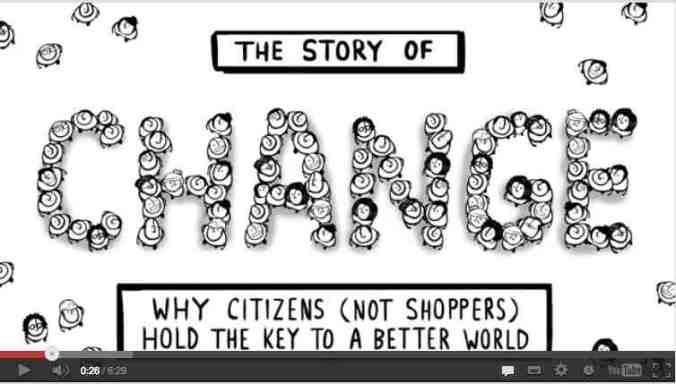
Click above to go to the location where Cornell University is hosting this brief video by a fellow alum of several Raxa Collective contributors:

Can shopping save the world? The Story of Change urges viewers to put down their credit cards and start exercising their citizen muscles to build a more sustainable, just and fulfilling world. Continue reading

Celebrating Conservation’s Important Moments In History

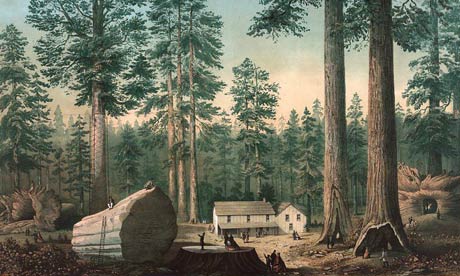
Tourists inspecting the stump of the 'Mammoth Tree' in Calaveras County, California, c1860. The 'Mother of the Forest', without its bark, can be seen in the background. Image: LoC

Tourists inspecting the stump of the ‘Mammoth Tree’ in Calaveras County, California, c1860. The ‘Mother of the Forest’, without its bark, can be seen in the background. Image: LoC

We have written about and sometimes celebrated important moments in conservation history in the past, and these celebrations are among those most responded to by readers of this blog.  A few days ago, a landmark anniversary was observed in an editorial at the newspaper that most consistently keeps us in perspective:

Today marks the 160th anniversary of a seminal, but largely forgotten moment in the history of the conservation movement.

On Monday, 27 June, 1853, a giant sequoia – one of the natural world’s most awe-inspiring sights – was brought to the ground by a band of gold-rush speculators in Calaveras county, California. It had taken the men three weeks to cut through the base of the 300ft-tall, 1,244-year-old tree, but finally it fell to the forest floor. Continue reading

Change In The Air

U.S. President Barack Obama wipes sweat off his face as he unveils his plan on climate change June 25, 2013 at Georgetown University in Washington, DC. President Obama laid out his plan to diminish carbon pollution and prepare the country for the impacts of climate change. (Photo by Alex Wong/Getty Images)

Thanks to Elizabeth Kolbert for a timely, pithy explanation of yesterday’s announcement of policy action in the USA:

Better late than never. This afternoon, speaking at Georgetown University, President Obama laid out what his aides had billed as a major initiative to fight climate change. The big news—which was not really news, since it had already been widely reported—was that the Administration will impose rules limiting carbon emissions from both new and existing power plants.

“For the sake of our children and the health and safety of all Americans, I’m directing the Environmental Protection Agency to put an end to the limitless dumping of carbon pollution from our power plants,” Obama said. This is, truly, a big deal. Power plants are responsible for about forty per cent of U.S. emissions. Continue reading

Tree-Sitting Success

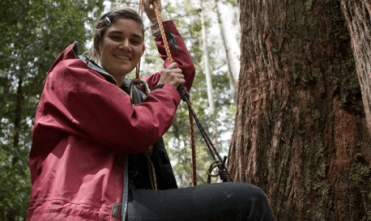
Miranda Gibson tree-sitting. Photograph: Miranda Gibson

Miranda Gibson tree-sitting. Photograph: Miranda Gibson

When we first wrote about Miranda Gibson November 2012 she’d already lived an arboreal life for 300 days. Her goal was simple: to protect Tasmania’s wild forests from logging and other man-made degredation. She’d learned early on that sometimes grandstand gestures were the only way to get her voice heard, and if living (and blogging about) 449 days in a tree without touching the ground isn’t such a gesture we don’t know what is.

We’re happy to report that yesterday the decision was official to increase the Tasmanian Wilderness World Heritage Area by 170,000 hectares to now cover over 1.4 million hectares (or about 3.46 million acres), thereby representing about 1/5 of the area of the island state of Tasmania.

Nothing can explain how I felt the moment the hammer went down to mark the decision yesterday – Tasmania’s Wilderness World Heritage Area was officially extended by 170,000 hectares. Forests that I had spent the past six years of my life fighting to defend, some of the most contentious forests that thousands of people here and around the world have fought to save for over two decades, were now officially listed.

There’s one patch of that forest that I know like the back of my hand. It’s the Tyenna Valley, surrounding a 400 year old giant Eucalypt known to me as the Observer Tree, and whose upper canopy I lived in for over 14 months without once setting my feet on the ground. Continue reading

Seasteading, Self-Reliance Utopia, And Our Shared Future

An article recently published in n+1 examines a utopian futurist form of an idea that seems oddly symmetric with Seth’s posts about the history of exploration using Iceland as a case study. Looking back, we see much in common with explorers, pioneerspilgrims and adventurous thinkers of all sorts.  Looking forward, we are inclined to embrace smart, creative, enthusiastic group efforts to resolve seemingly intractable challenges. Especially when they involve living on boats. We recommend reading the following all the way through:

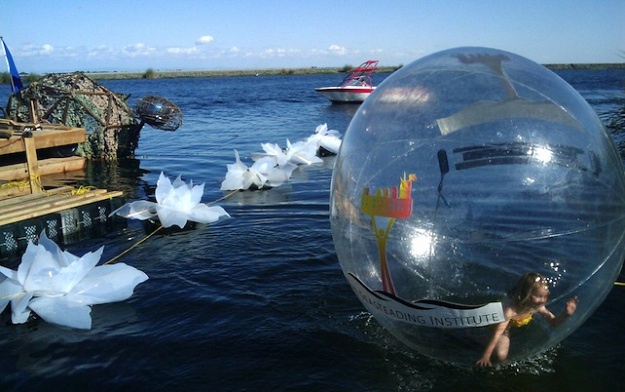
To get to Ephemerisle, the floating festival of radical self-reliance, I left San Francisco in a rental car and drove east through Oakland, along the California Delta Highway, and onto Route 4. I passed windmill farms, trailer parks, and fields of produce dotted with multicolored Porta Potties. I took an accidental detour around Stockton, a municipality that would soon declare bankruptcy, citing generous public pensions as a main reason for its economic collapse. After rumbling along the gravely path, I reached the edge of the Sacramento–San Joaquin River Delta. The delta is one of the most dredged, dammed, and government subsidized bodies of water in the region. It’s estimated that it provides two-thirds of Californians with their water supply.  Continue reading

Food, Waste, Change

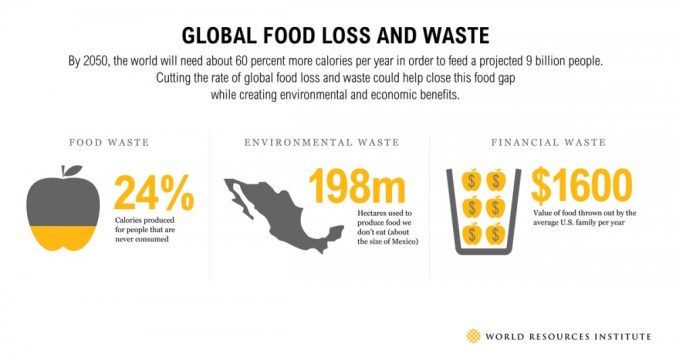
While we are on the subject of looking at food differently, as well as depending on others for new perspective, we can wrap all that around last week’s emphasis on food waste.  We will not let that topic go until we see the dial turning. We will keep a spotlight on the need for change, and share whatever we find from our good neighbors on this topic. WRI shares a thorough examination that is worth a click and read:

The Food and Agriculture Organization of the United Nations (FAO) estimates that 32 percent of all food produced in the world was lost or wasted in 2009. This estimate is based on weight. When converted into calories, global food loss and waste amounts to approximately 24 percent of all food produced. Essentially, one out of every four food calories intended for people is not ultimately consumed by them. Continue reading

Really, Bechstein?


Beauty is in the eye of the beholder.  Disgust seems to us the only appropriate response to this seemingly beautiful, ultimate craft luxury.  We appreciate craft, but not when ivory is part of it.  It does not matter how the ivory was sourced: at this moment in time there is no justification for supporting the notion that ivory is still an acceptable definition of luxury. Shame on Bechstein, and more so to anyone who purchases their musical instrument made with elephant body parts. We try to keep it positive on this site, but with stories like this who can possibly contain the outrage? Continue reading

Community At The Heart Of Our World Environment Day 2013

This slideshow requires JavaScript.

Sharing a meal is the best way to make good use of food. The UNEP initiative Think.Eat.Save encouraged us to become more aware of the environmental impact of the food choices we make and empowered us to make informed decisions. It also gave us extra energy to continue the donations to Kumily Sneshashram that have been part of our routine for over a decade.

WED 2013: Happy World Environment Day

WED 2013 - Raxa Collective

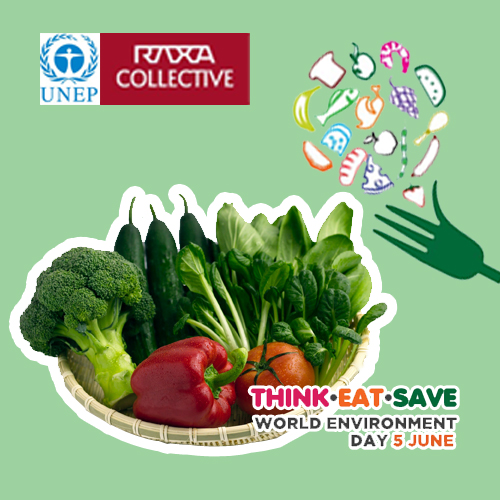
On June 5, we’ll celebrate World Environment Day. This year UNEP focuses on the theme Food waste/Food Loss. At Raxa Collective we’ll be carrying out actions and sharing experience and ideas. Come and join us with your ideas and tips to preserve foods, preserve resources and preserve our planet.
Here is a video which explains how we save the food we produce at our restaurant All Spice at Cardamom County from wastage. Our process includes a dedicated team, talented suppliers, our farm animals and organic garden and a local pig farm. It also explains how we give back.

Paul Watson, Back Out There

nachtwey-580

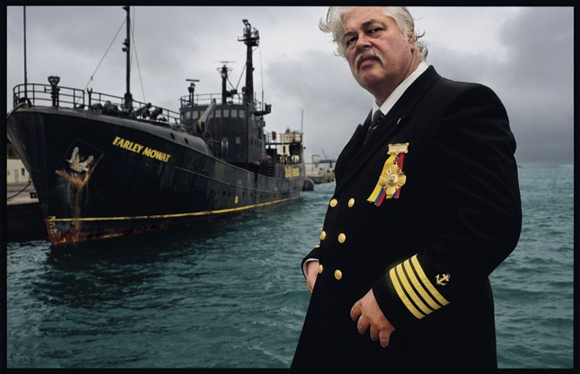
Photograph, from 2007, by James Nachtwey/VII.

We have followed his story and linked to it on several occasions during the past year. Why? Like others, we find his mission important and his means worthy of discussion. We are most gratified by Raffi Khatchadourian’s persistence in keeping up with the life and times of this man who is not so easy to track down:

Fans of Animal Planet’s “Whale Wars,” a reality show that documents members of the Sea Shepherd Conservation Society battling Japanese whalers every winter in the Southern Ocean, will have to wait several months longer than usual for the show’s new season to première. The airdate for “Whale Wars,” usually slated for June, has been pushed back, possibly to the fall, or even to 2014. In the past year, Sea Shepherd has become mired in litigation, diplomatic pressure, I.R.S. audits, and Interpol notices, and Animal Planet decided that, instead of placing its own crew on Sea Shepherd ships, it would stitch together episodes from footage that the activists shot of themselves. This may be a first for a reality show—certainly one this popular—but if Animal Planet is able to pull together a season that has integrity, the sixth installment of “Whale Wars” promises to be the show’s most entertaining and provocative. Continue reading

WED 2013: Food for Thought

WED 2013 - Raxa Collective

On June 5, we’ll celebrate World Environment Day. This year UNEP focuses on the theme Food waste/Food Loss. At Raxa Collective we’ll be carrying out actions and sharing experience and ideas. Come and join us with your ideas and tips to preserve foods, preserve resources and preserve our planet.

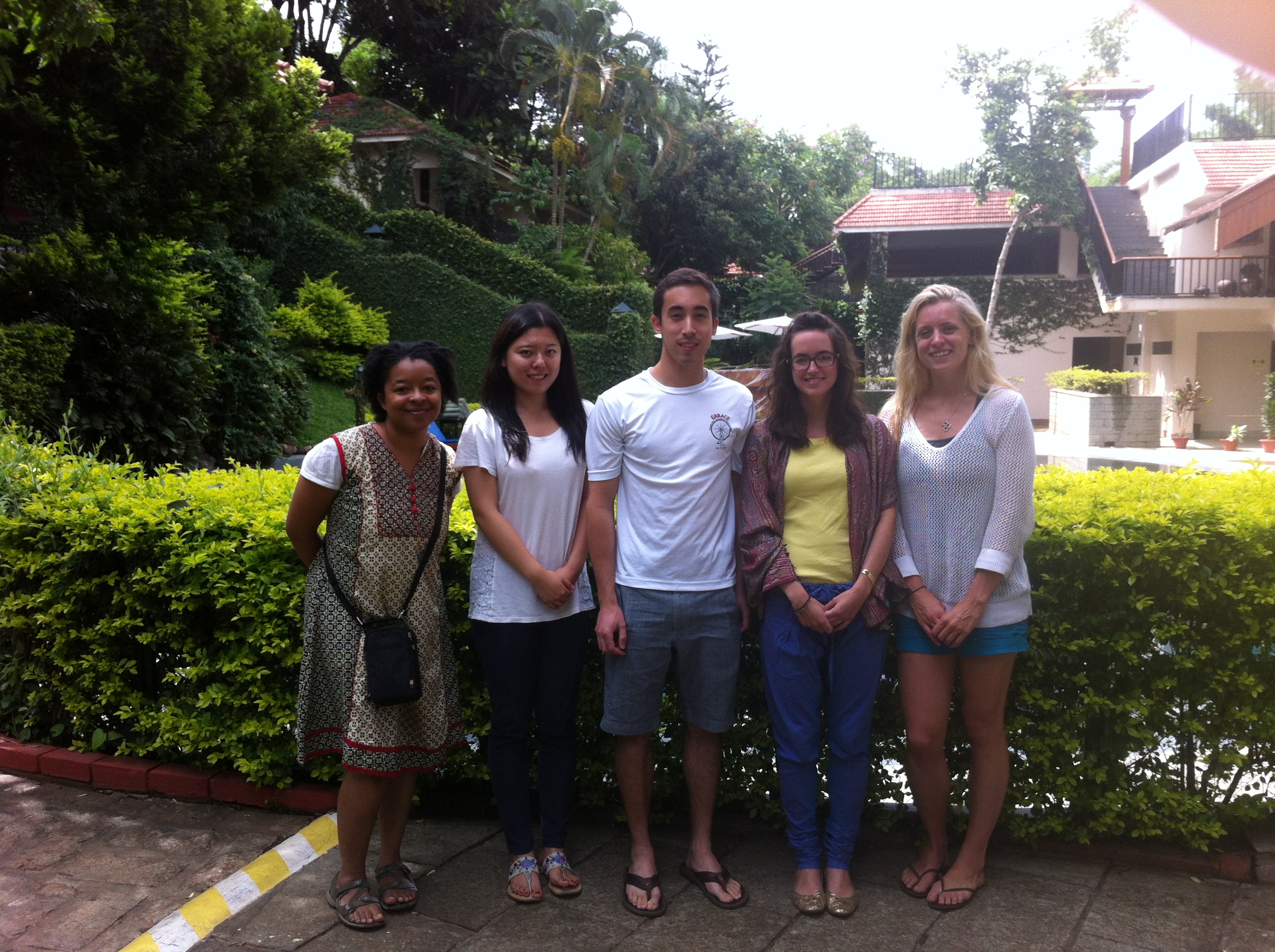
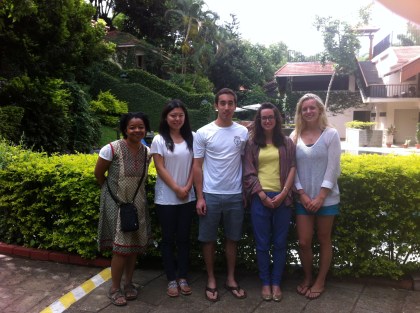
From left: Allegra Marzarte, Lu Li, Martin Bawden,  Raphaëlle De Gagné, Ashley Ostridge

From left: Allegra Marzarte, Lu Li, Martin Bawden, Raphaëlle De Gagné, Ashley Ostridge

Tomorrow is World Environment Day. A United Nations Environmental Programme initiative, WED is annually celebrated on June 5th in an effort to increase environmental awareness and positive environmental action. This year the theme is food wastage, with the motto: Think, Eat, Save. A recent report by the UNEP  concluded that every year, roughly one third of the food produced in the world for human consumption — approximately 1.3 billion tonnes — never makes it to from farm to table.

While one may imagine that most food wasted is a result of the actions of individuals in developed countries, this is not the case. Many developing countries, including India, also have an enormous food waste crisis. Specifically, while India is 2nd in the world in food production, as much as 20 to 40 percent of the food grown spoils before reaching consumers.

Here at Raxa Collective we have several initiatives to both alleviate food wastage and help both the local community and the environment. Continue reading

Story Of Stuff, Now Including A Cornell Degree

Lindsay France/University Photography. Annie Leonard visits campus in April.

Lindsay France/University Photography.
Annie Leonard visits campus in April.

Allegra was recently asking several Raxa Collective veterans (with the vast experience of two years maintaining this site), in advance of posting this, whether we had posted any “stories of stuff,” or heard of Annie Leonard before. The answers she got, incorrectly, were no and yes. Apparently it was forgotten that we have mentioned her “stuff” once previously in one of our earliest posts (note to WordPress: please improve your search function), but she most certainly had an influence on our interest in bringing more information from the field into the public domain using online distribution. So this news item caught our attention:

Annie Leonard, environmental activist and creator of the 2007 viral hit video “The Story of Stuff,” spent nearly 25 years traveling the world investigating environmental health issues and ecological sustainability.

This spring, she finished a long-overdue project she had put on hold during that time: completing her Cornell master’s degree. Continue reading