Every Picture Tells A Story, And Every Road Leads Somewhere

This slideshow requires JavaScript.

The Atlantic‘s website has a great feature that will capture your imagination in 5 minutes or less:

Inspired in part by the great geography game GeoGuessr, I spent some time recently in Google Maps, finding the edges of their Street View image coverage. 

Continue reading

Exploring Iceland

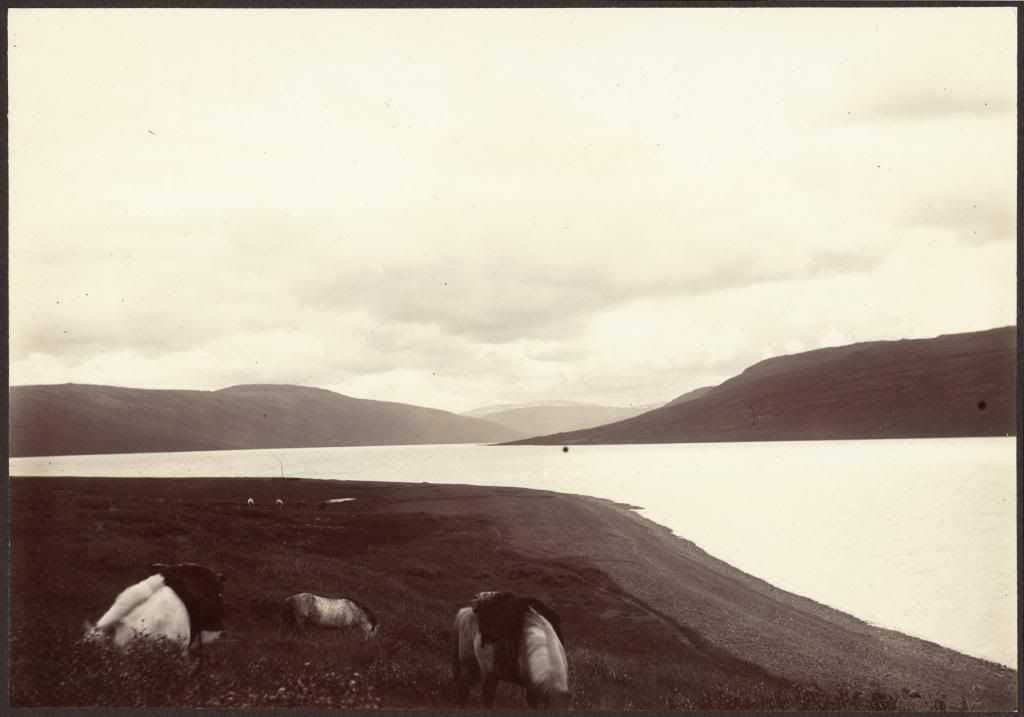
The head of Skorradalsvatn. Collodion print ca. 1900 by Frederick W. Howell. Bequest of Daniel Willard Fiske; compilation by Halldór Hermannsson at the Fiske Icelandic Collection of Cornell University.

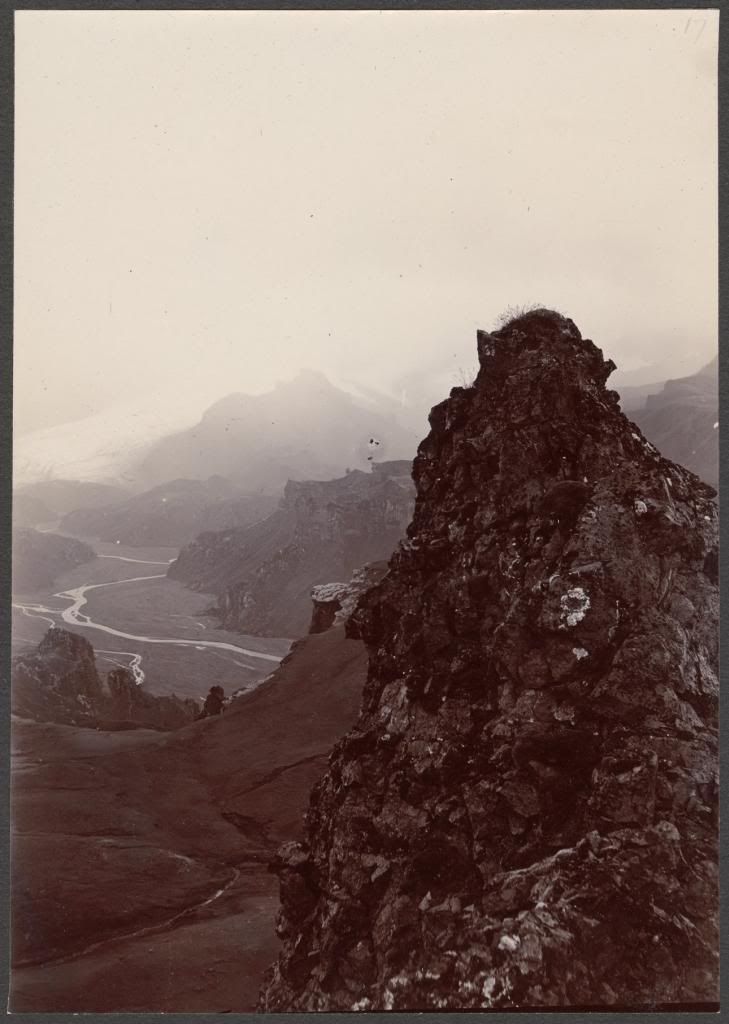
Þórsmörk. Head of Krossárdalur. Collodion print ca. 1900 by Frederick W. Howell. Bequest of Daniel Willard Fiske; compilation by Halldór Hermannsson at the Fiske Icelandic Collection of Cornell University.

It was mentioned a week or two ago that Iceland is in the air. For me, Iceland is on my mind, in my laptop, hidden throughout the Cornell libraries, and scattered about my room. After a couple essays for an environmental history course last year and some preliminary research for finding an honors thesis topic in the history major, I discovered that, thanks primarily to Cornell University’s first librarian, we have one of the largest collections of Icelandic material in the world. Since one of my projects for the environmental history class had shown me that Iceland was an interesting place to examine more closely, I did some more research and found the topic of European travel there during the eighteenth and nineteenth centuries engaging enough to choose as an honors thesis subject.

One of the places in Europe with the most spaces left blank by cartographers through the eighteenth and nineteenth centuries, Iceland’s inner regions were not fully mapped until 1901. Continue reading

Ueli Steck, Collaboration And Culture


The article is worth the time, and the subscription, for reasons we pointed to herehere and here.  Click above to go to this brief video for another enticement to read it and you will also see this additional wording from the author:

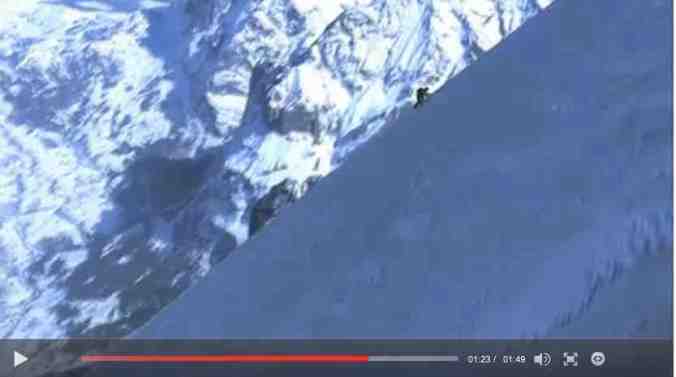
Many Americans got their first glimpse of Ueli Steck in the 2010 short film “The Swiss Machine,” which depicts Steck speed-climbing the North Face of the Eiger, as well as the Nose on El Capitan, in Yosemite. This short video consists of excerpts from that film. I approached Steck almost a year ago, in the hope he’d allow me to write a Profile of him, but he was hard to pin down. Continue reading

Climbers, Sherpas And Everest

We recently linked to a post at India Ink that gave some backstory to an incident that was mainly of interest to people who follow the “Everest culture”–a group of people enlarged enormously by one book (if you only read the original the updated version with a new afterword is worth the price of a new copy of the book)–and members of the climbing culture. Climbers and non-climbers alike will appreciate Nick Paumgarten’s article in the current issue of the New Yorker about the Swiss climber Ueli Steck:

…who made a name for himself climbing mountains at high speed with no ropes. In a recent climb, on Mt. Everest, Steck and his climbing partners got into a violent confrontation with Nepalese Sherpas…

Continue reading

Dispatch From Everest

This slideshow requires JavaScript.

India Ink has a story about a group of young Indians collaborating in the upper reaches of the region’s mountains, at a time when many are celebrating the six decades-old historic accomplishment in the same region:

KHUMBU GLACIER —It was nearly 60 years ago this month that Tenzing Norgay, the Sherpa guide, and Sir Edmund Hillary from New Zealand scaled the highest peak in the world, Mount Everest. Continue reading

Captain Robert Scott’s South Pole Expedition, Exposed Again

This slideshow requires JavaScript.

People with an interest in exploration, expeditions, adventure have a higher likelihood of knowing who Captain Scott was.  Only an expedition photography geek, a historian, or otherwise quirky know-it-all is likely be familiar with the name Ponting. Thankfully, such people exist and they have brought Ponting back from the archival grave. Outside magazine’s website has this collection on display. The captions follow in order of the slideshow above:

1. A program for Herbert Ponting’s lectures on Captain Scott. Ponting’s lectures, which accompanied his silent films at the Philharmonic Hall in London, were a huge success, with over 100,000 people going in to hear him, including leading politicians and celebrities of the day. His films were a significant milestone in the history of the cinema. Continue reading

Bamboo Rafting – Periyar Tiger Reserve

Bamboo Rafting

Community based ecotourism is the hallmark of the Periyar Tiger Reserve. These programmes are conducted by the local people responsible for the surveillance of the vulnerable parts of the reserve. Bamboo Rafting is a dawn to dusk range hiking and rafting programme through some of the richest forest tracts of the reserve. Continue reading

Lost Civilization, Collaborative Discovery

Seekers of past Honduran, Mexican civilizations to speak Wednesday at Meeting of Americas

We should not be surprised at the headline above or that the article we linked to here was a precursor to the pre-conference press release issued this week by the AGU:

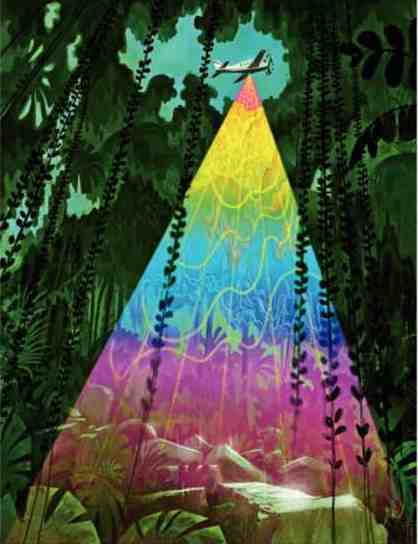
A high-tech archeological exploration team of scientists and a filmmaker, who announced a year ago that they had glimpsed remnants of what might be a fabled ancient city in the Honduran rain forests, plans to speak about the team’s discoveries here tomorrow (15 May) at the 2013 Meeting of the Americas, and to show previously undisclosed images of apparent archeological sites. Continue reading

Another India : impressions of Tamil Nadu

This slideshow requires JavaScript.

Thekkady sits right next to the frontier between Kerala and Tamil Nadu. But once you cross the Western Ghats it’s like setting foot in a whole other country. The alphabet is different, the language is not malayalam but tamil. And the temperature is much hotter than in the hill stations, thus flora and fauna are radically different too. I mean it’s quite a shock, I’ve never felt this otherness when crossing a border in Europe. Tamil Nadu counts 72 million souls and tamil has been used for 3800 years so naturally the country has a distinct identity. Continue reading

Solitary togetherness : a walk into Periyar Tiger Reserve

Traveling in a pack, or you might say a group, is not something I do on holidays. I’m a lone wolf kind of traveler. See what I mean? Then I took the opportunity to escort a group coming to Cardamom County for a bird photography workshop into Periyar Tiger Reserve, and all my preconceptions disappeared. Although my companions came from all parts of India to take wildlife pictures and I arrived on day 1 with just an iphone, I quickly felt like I belonged. Continue reading

Collaboration At High Altitude

Percy Fernandez for The New York Times. Norbu Sherpa on the Khumbu Glacier near the Everest base camp in Nepal.

Percy Fernandez for The New York Times. Norbu Sherpa on the Khumbu Glacier near the Everest base camp in Nepal.

Mountain-climbing is often perceived as a solo, even lone wolf style pursuit of adventure.  The higher the climb, the more collaboration is required for success. Over at India Ink, Malavika Vyawahare shares her conversation with one of Mt Everest’s great guides:

NEW DELHI—Norbu Sherpa, 32, has been working as a climbing guide in the high mountains of Nepal, over 6,000 meters (19,685 feet) for more than a decade. He has been a member of seven expeditions to Everest, the highest peak in the world, at 8,848 meters (29,029 feet), and reached the summit five times. Norbu, who was educated in Darjeeling, is currently part of a National Cadet Corps Everest team from India.

Continue reading

If You Happen To Be In Phoenix

Click the image above to go to the website of these entrepreneurs who seem to be on their way with a new form of aviation.  Just today the plane made its first landing and stayover en route from West to East coast of the USA.  You can visit the plane if you happen to be in Phoenix between today and Tuesday:

The first leg of the 2013 Across America mission was concluded successfully. Bertrand Piccard did a wonderful job throughout the flight, bringing HB-SIA safely from San Francisco to Phoenix, and landing at 00:30 am MST (UTC-7) on Runway 08, Saturday May 4th. Continue reading

My Tiger Trail Camping Experience: Team Kathy, Douglas, Fred and Salim

Camping Team from left to right: Kathy, Douglas, Fred and Salim

I’ve passed the half-way point of my managment training with RAXA Collective and since our focus is conservation tourism part of my training has been understanding what the Periyar Tiger Reserve has to offer.  I recently had the opportunity to experience the overnight Tiger Trail, probably the very best that PTR has to offer. This was made even more interesting by joining a pair of experienced travelers who were here to enjoy Kerala’s biodiversity. Needless to say I had very high expectations! Continue reading

Lost City Of The Monkey God

Another great article (click the image to the left to go to the source), complementing this recent one from the New Yorker, about one special location within the region several members of Raxa Collective have called home for most of the last two decades:

The rain forests of Mosquitia, which span more than thirty-two thousand square miles of Honduras and Nicaragua, are among the densest and most inhospitable in the world. “It’s mountainous,” Chris Begley, an archeologist and expert on Honduras, told me recently. “There’s white water. There are jumping vipers, coral snakes, fer-de-lance, stinging plants, and biting insects. And then there are the illnesses—malaria, dengue fever, leishmaniasis, Chagas’.” Nevertheless, for nearly a century, archeologists and adventurers have plunged into the region, in search of the ruins of an ancient city, built of white stone, called la Ciudad Blanca, the White City. Continue reading

Job #43 – Sailing the World for Food

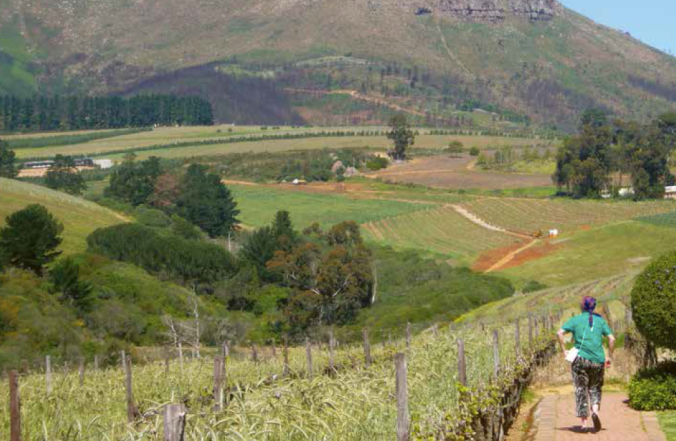
Barbara following a footpath in the wine country of Stellenbosch, South Africa - during one of her many adventures

Barbara following a footpath in the wine country of Stellenbosch, South Africa – during one of her many adventures

There is a book called “150 Good Food Jobs” and I’ve had 43 of them. This means I’m either really old, I can’t keep a job or I get distracted and curious by shiny objects. But basically, these have been encapsulated within two long-term careers, one in Napa Valley as a winery culinary director and the other at Cornell University and in Ithaca.

Two-and-a half years ago, I “retired” from my 20-plus years at the Hotel School. After some years teaching about wines and later restaurant management and co-owning an Ithaca restaurant, I served as an academic and career advisor to “hotelies” – some of the most entrepreneurial, engaging, smart young adults around. After a serious cancer scare I retired at age 55 and went rogue, looking for a new career combining my love of travel, food, culture and service.

A SEMESTER AT SEA

I found my calling in fall 2011, as the adult lifelong-learning coordinator for the University of Virginia’s Semester at Sea program. With my husband Dave, 500 undergraduates, 60 adult learners, the faculty and the crew, I sailed from Montreal to Casablanca, Morocco; Accra, Ghana; Cape Town, South Africa; Port Louis, Mauritius; Chennai, India; Penang, Malaysia; Ho Chi Minh City, Vietnam; Hong Kong and Shanghai, China; Kobe, Japan; Hilo, Hawaii; Puntarenas, Costa Rica; and Coxen Hole, Honduras before docking in Fort Lauderdale at the end of 120 days. students getting a semester’s credit while circling the globe, making 14 stops in 120 days.

My job was to keep the adults (“the Salty Dogs”) happy and occupied. A perk of the job was the opportunity to chaperone field food programs, which I often did, including a Tropical Spice Garden in Penang Pang, Malaysia; a cooking class in Capetown, South Africa; and a coffee plantation tour in Mercedes, Costa Rica.  This freedom in ports allowed my husband Dave and me to explore each host country independently for three to six days at a time. I spent that time focused on food; food in the markets, restaurants, and the street (which caused a bit of food poisoning and worse, two days in ship’s quarantine). Continue reading

The Darien Gap, Panama

Darien


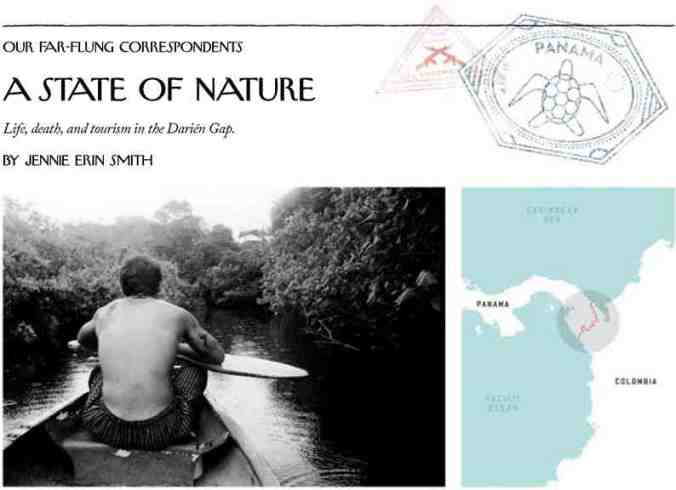
Remarkably, a second article in the same issue of the New Yorker devoted to one of our favorite topics–the wonders of nature. Click the image above to go to the source. The first one we linked to is by one of the magazine’s most distinguished writers, and we are pleased to encounter the author of the following for the first time:

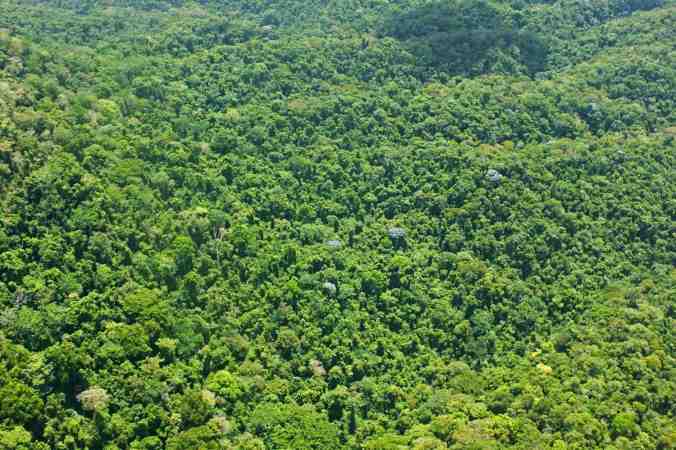
The Pan-American Highway runs sixteen thousand miles, from Anchorage to Tierra del Fuego, with one significant interruption: an expanse of rain forest along the border of Colombia and Panama. The road ends abruptly on the Panama side, just north of a national park, and picks up again as a dirt path, sixty miles southeast, in Colombia, in the floodplain of the enormous Atrato River. The region in between, which spans two coasts with jungles and mountains and a confounding web of rivers, is known locally as the Tapón del Darién—the Darién Plug—for its seeming impassability. Continue reading

Weird Businesses, Natural History Edition

Eric Prokopi, of Gainesville, in the five-thousand-square-foot fossil workshop that he built in his back yard. Photograph by Richard Barnes.

Eric Prokopi, of Gainesville, in the five-thousand-square-foot fossil workshop that he built in his back yard. Photograph by Richard Barnes.

I am not sure what to make of this.  Is it entrepreneurial conservation from a different angle? This story, in character with the New Yorker‘s brand of long form journalism, tells a remarkably odd story in must-read fashion:

Natural history goes to auction five or six times a year in America, and one Sunday last May a big sale took place in Chelsea, at the onetime home of the Dia Center for the Arts. The bidding, organized by a company called Heritage Auctions, began with two amethyst geodes that, when paired, resembled the ears of an alert rabbit. Then came meteorites, petrified wood, and elephant tusks; centipedes, scorpions, and spiders preserved in amber; rare quartzes, crystals, and fossils. The fossils ranged from small Eocene swimmers imprinted on rock to the remains of late-Cretaceous dinosaurs.

Continue reading

Nano-Journey

India is unique, says Thomas Chacko after his mega carathon

India is unique, says Thomas Chacko after his mega carathon

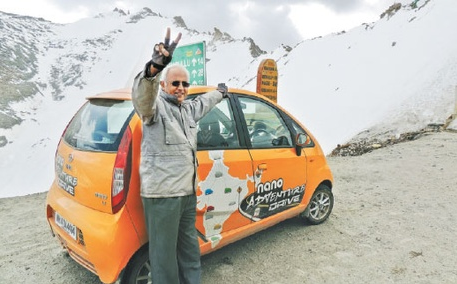
When Jules Verne wrote his novel Around the World In 80 Days 140 years ago the protagonist Phileas Fogg has to manage a circumnavigation of the globe by myriad types of transport, including by elephant during his crossing of India. He wouldn’t have dreamt of a tiny motorized vehicle like the one pictured above.

Author and motorcar enthusiast Thomas Chacko didn’t try to mange the world in 80 days, only India herself. Chacko, a Keralite, documented his journey in “real time” using the entertaining blog Mano et Nano, as well as a book, Atop the World, after the conclusion of his 26,500-km journey in a Nano car to all the state capitals, as well as the Union Territories, and the far corners of India. The journey, which began on May 3,  2012, concluded on July 20, last year.

In an interview with The New Indian Express Chacko commented:

Only one other country can compare with India, in terms of terrain, and that is the USA. We have beaches, mountains, hills, forests, deserts, swamps and canyons. You don’t have to go out of India to see and experience all this. Apart from that, no country has as many languages or communities. India is unique. Continue reading

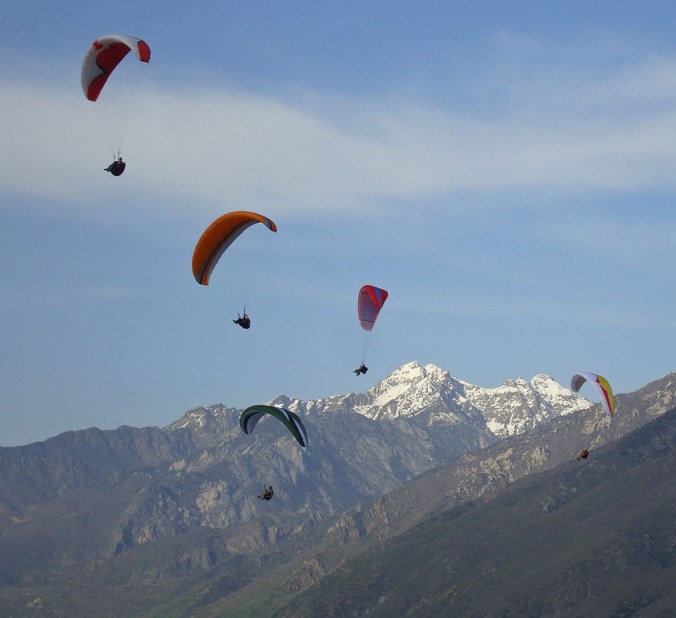
Gliding In Utah, And Protesting Strip-Mining

Click the image above to go to the full post by James Fallows at Atlantic Monthly‘s website:

Short version: a unique natural mountain configuration has made a site in Utah the best place in America for one particular pursuit. The pursuit is paragliding, and the location, Point of the Mountain south of Salt Lake City, has a very unusual combination of topography and natural windflow that makes it a perfect soaring spot. Point of the Mountain has attracted devotees from around the world, as shown below, and built a substantial tourist economy. But to get more gravel, a mining company has for the past ten days been bulldozing away the very ridgeline that is the basis for this world-renowned activity — as if earth-movers started chewing up a famous skiing slope or dredging sand from Malibu or Waikiki. It’s the familiar story of mountain-top removal mining, in a new setting with new effects.

Continue reading

CJ, Kashmir And Awesome Powder At The Top Of The World

Russ Juskalian for The New York Times. A skier in a backcountry section of the Gulmarg area.

Our friends at the New York Times appear to agree with our friend CJ that the place to be this ski season is Kashmir. Click the image to go to the story in the Travel section of Sunday’s edition:

The risks of a ski trip to Kashmir? Security, avalanches and the altitude. The rewards? Perfect powder, an absence of crowds and staggering Himalayan beauty.

Continue reading