See CITES Save

Loading rosewood timber on trucks at the port of Toamasina (Tamatave), Madagascar. Photograph: Babelon Pierre-Yves/Alamy

Loading rosewood timber on trucks at the port of Toamasina (Tamatave), Madagascar. Photograph: Babelon Pierre-Yves/Alamy

If the proclamations and rules coming out of CITES are even half-implemented, endangered species of various domains–aquatic, terrestrial, animal and plant–will find themselves on roads less perilous than the ones they have been on in recent decades:

Every species of mahogany and rosewood tree in Madagascar gained new protection on Tuesday against a rampant logging trade that threatens to wipe out some species before they are even discovered.

The 178 nations at the world’s biggest wildlife summit agreed unanimously to strictly regulate the international trade in mahogany timber. Continue reading
Read, Weep, Act

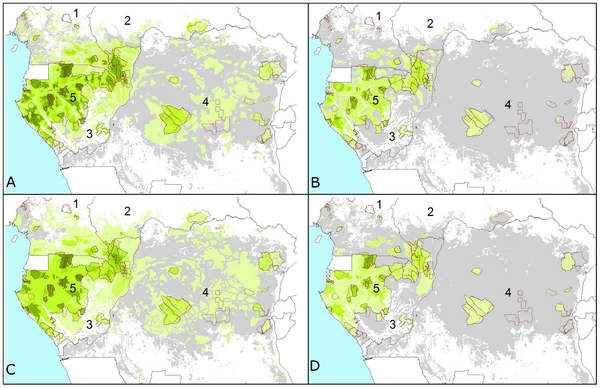
Figure 1. Elephant dung density and range reduction across the Central African forests.

A just-released scientific study documents the destruction.  Roughly 25,000 elephants per year are killed in Africa to feed the demand for ivory in Asia, and the pace has increased in the last decade such that, in another decade, extinction is possible.  A petition that led to one important-sounding announcement provided momentary hope until it was noted that no dates or even vague timelines were committed to.  For now, we have only the clear, cold facts of science and whatever stimulus these findings provide for us to take action:

Abstract

African forest elephants– taxonomically and functionally unique–are being poached at accelerating rates, but we lack range-wide information on the repercussions. Analysis of the largest survey dataset ever assembled for forest elephants (80 foot-surveys; covering 13,000 km; 91,600 person-days of fieldwork) revealed that population size declined by ca. 62% between 2002–2011 Continue reading

Hello From Ghana

Mole, Ghana

I have been in Ghana for five days, and this image above tells most of the story of the week that I have time to share in this post.  Since 1980 when I first met someone from this country, I have been looking forward to this visit.  A young man named Kwaku, his first time traveling outside Ghana, had just arrived in a southern Illinois August heatwave and was in the same 10-day soccer training camp as me.  During the previous two years I had captained an undefeated high school soccer team, had sat in a stadium watching Pele play his last professional game, and respectfully thought I knew something about the sport. Continue reading

Shine A Light

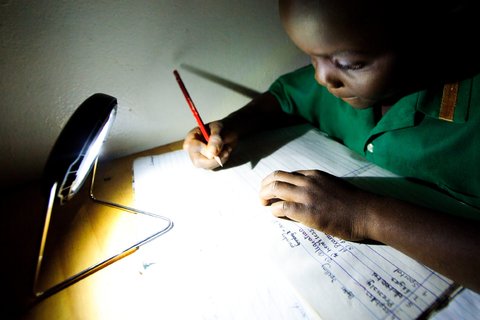
chipata-blog480

Green Blog shares this news about a significant innovation at the intersection of crowdfunding, renewables and community welfare in Africa and Asia:

By visiting Web sites like Kickstarter and Indiegogo, you can give money to any number of causes. These Web sites collect small amounts from many individuals in what is known as crowdfunding to finance everything from business start-ups to charitable causes to art projects.

While online crowdfunding is still relatively new, it has already demonstrated that many small contributions can add up. Deloitte, the accounting and consulting firm, estimates that the largest 30 crowdfunding sites raised more than $1.5 billion over the last five years, and expects that in 2013 alone the number could be $3 billion.

Continue reading

If You Happen To Be In Brooklyn

This slideshow requires JavaScript.

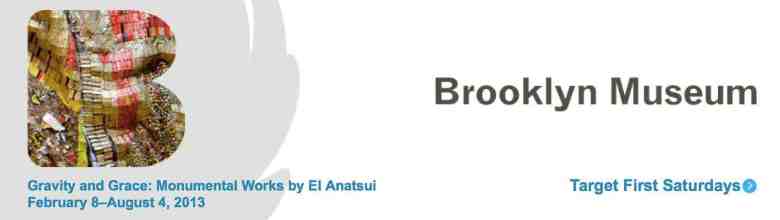
In anticipation of Raxa Collective’s collaboration with colleagues in Ghana starting this month (more on which soon), we are particularly susceptible to any mention of Ghana in the news and El Anatsui has been on our radar recently.  There is plenty to make us optimistic about Ghana’s future, not least its contributions to fine arts.  This show just opening at Brooklyn Museum looks worthy of a visit:

The first solo exhibition in a New York museum by the globally renowned contemporary artist El Anatsui, this show will feature over 30 works in metal and wood that transform appropriated objects into site-specific sculptures. Anatsui converts found materials into a new type of media that lies between sculpture and painting, combining aesthetic traditions from his birth country, Ghana; his home in Nsukka, Nigeria; and the global history of abstraction. Continue reading

Gorillas In His Midst

This slideshow requires JavaScript.

Yale Environment 360 has an excellent story on the various animals in this protected area, including the warden and those he is committed to protecting, but also the beasts who prey on those wards. Supporting national parks, wherever they may be and at whatever risk, has never been more critical:

The Perils and Rewards of Protecting Congo’s Gorillas

Virunga National Park, home to one of the last remaining populations of mountain gorillas, has witnessed years of war and civil strife. In an interview with Yale Environment 360, the park’s warden describes the lethal threats faced by his rangers and the remarkable survival of the park’s gorillas. Continue reading

Gravity and Grace

Arsenale installation from the Venice Biennale

Arsenale installation from the 2007 Venice Biennale

During a recent visit to the Nelson-Atkins Museum of Art in Kansas City I was struck by a 3-dimensional piece that combines the opulence of a Gustav Klimt painting and the earthy elegance of Ghanian Kente cloth. The comparison isn’t as bizarre as it might appear when it’s understood that its creator is the Ghanian artist El Anatsui. Over a decade ago the sculptor found a bag of thousands of colorful aluminum screw tops discarded by a local distillery. The artist began by cutting and folding the bottle tops into flat pieces then used copper wire to stitch them together, creating patterns inspired by his country’s iconic cloth. Continue reading

Thank You, Zambia

Zambia's leopard

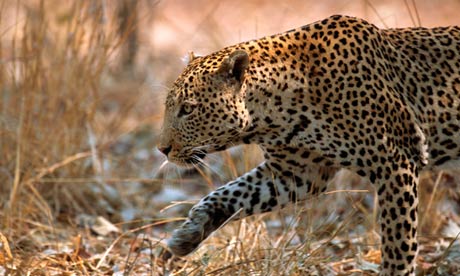
Zambia’s leopard numbers, as well as those of its lions, are too low for a sustainable hunting industry, says its tourism minister. Photograph: Brendan Raisbeck/Alamy

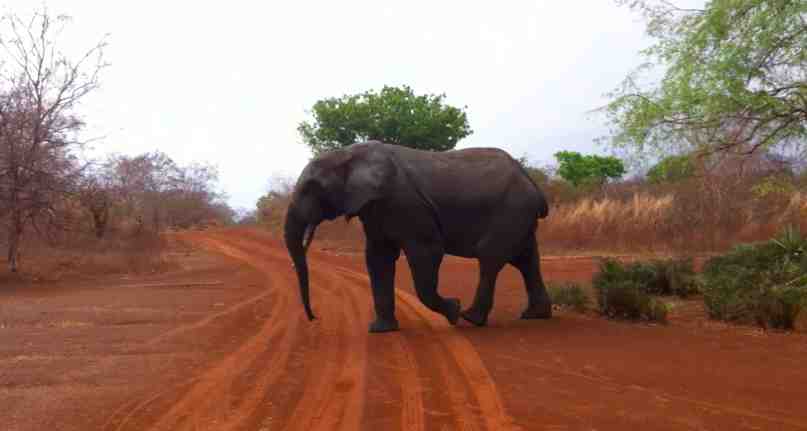
Click the image above to go to the whole story. No easy answers: sometimes hunting is the solution to conservation needs–refer to the US Fish & Wildlife Service for plenty of excellent case studies.  But big game hunting has an intuitively dangerous ring to it.  Zambia has made a decision for their territories:

Zambia has banned the hunting of lions and other endangered wild cats such as leopards because it sees more value in tourism than blood sport, the country’s tourism minister said. Continue reading

If You Happen To Be In Washington, DC

An ongoing exhibition at the Smithsonian’s National Museum of African Art asks visitors to consider the connections between art and science — and how they each attempt to explore the why, when and how of our existence. “African Cosmos: Stellar Arts” illustrates how the stars and planets we see in the sky have been influencing African art and ritual for generations. Continue reading

Elephants Adrift

“In African mythology the elephant reincarnates carrying the soul of a murdered God. It is thus the embodiment of the transmigration of souls. It is also the metaphor for the world’s preoccupation with Africa as an exotic location. The elephant thus embodies the world’s romanticism with Africa…” Andries Botha

South African artist Andries Botha has been paying homage to the strength, majesty and perseverance of elephants throughout his career.  Blending Western and African elements he has created numerous life size pieces, both as individuals and in groups, that portray a sense of mysticism in their unexpected settings. Continue reading

Crowdsourcing Wildlife Sightings

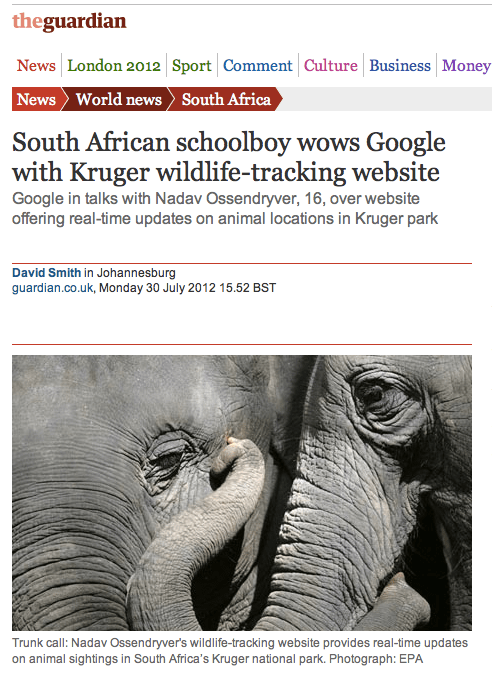
Yesterday’s Guardian had this interesting story of a young fellow’s innovation (click the image above to go to the full account):

In the decadent days when Theodore Roosevelt and British royals led African hunting expeditions, they had to rely on local trackers, patience and luck in their quest to bag “the big five”. Continue reading

Mapping Africa’s Glaciers

The Guardian recently ran this piece, whose surprise starts in the title (glaciers in Africa?) and continues on from there:

Ptolemy thought they were the source of the Nile and called them theMountains of the Moon because of the perpetual mists that covered them; Stanley claimed to be the first non-African to see their icecap; and the many thousands of subsistence farmers who today live on the slopes of the fabled Rwenzori mountains in Uganda and the Democratic Republic of the Congo fear that warming temperatures are devastating their harvests.

This slideshow requires JavaScript.

It Happened In Africa

Click the photo above to go to the original article announcing the creation of the largest wildlife park in the world, which is now a reality:

Five nations that form the central heart of the continent, Namibia, Zambia, Zimbabwe, Angola and Botswana recently signed the final documents to create an enormous conservation zone that encompasses 170,000 sq. miles (44,000 sq. kilometers) or 109 million acres. Altogether, the Kavango Zambezi Transfrontier Conservation Area (KAZA) or KAZA Peace Park, will include 36 game reserves, numerous national parks, forest reserves, conservancies, game and wildlife management areas and communal lands. Continue reading