The Wonders Of Trees Never Cease

goat-02_custom-060bac4eeff1a0b290ff201210009e650a2025d0-s1400-c85.jpg

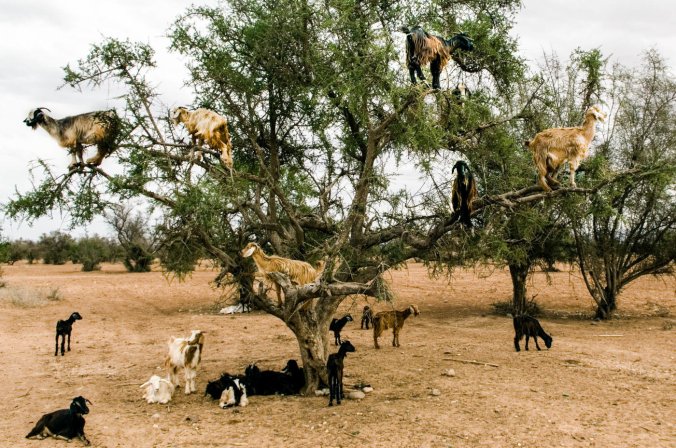
Goats climb an argan tree in Morocco to dine on its fruit. Jeremy Horner/Getty Images

At Chan Chich Lodge we are just embarking on a tree-related culinary journey, so any counterintuitive story about trees is likely to catch my attention these days.

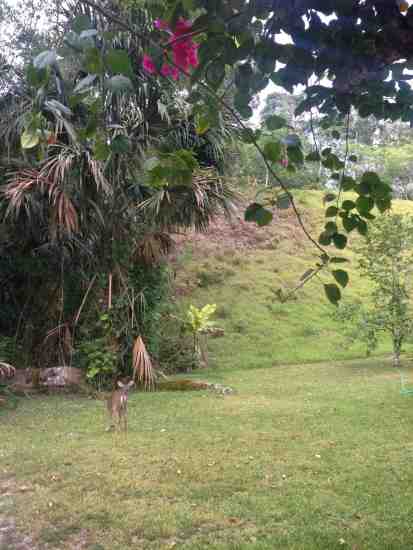
FigDeer.jpg

Thanks to Marc Silver at National Public Radio for the story about the picture above, Do Tree-Climbing Goats Help Plant New Trees? It is a short read and worth every second of your attention if you are interested in arboreal foodstuff.

This image to the left, while not as amusing as the one above, shows a deer doing the same thing with less panache. That deer will spread the seeds of that wild fig far and wide in the forest, increasing food supply. Continue reading

Gallon Jug’s Bird Friendly Coffee

CoffeeConsvtn.jpg

I am back at Chan Chich, with one goal before I start focusing on my plan to go to graduate school. A recurring theme in my work for La Paz Group, especially at Xandari, has been the intersection of birds and coffee. And now I have some months to think about how this may relate to what I will study in graduate school. One of the programs I am considering applying to is the Masters in Environmental Management at the Yale School of Forestry. Can I link what I have learned while working to what I would study there? If so, maybe I could link that to what I do after grad school.

This other post today reminds me of the value of geeking out from time to time. Most of my attention to coral reef comes from Phil Karp’s posts on this platform and I admit to preferring stories featuring real people and their entrepreneurial approaches to conservation. But science is the other best friend of conservation. Today my attention is turning to coffee, in advance of the arrival this week of an intern coming from Cornell University’s College of Agriculture and Life Sciences.

Just one of the many topics for an intern, with science and research on her side, to help us tackle over the next ten weeks, bird-friendly coffee has been on been on my mind since last year but I have been waiting for the perfect moment to focus. Nothing like the arrival of an intern to focus your mind. And so today in my task-oriented wanderings I came across this website (click the banner above), which I loved immediately for sharing this news on capsules, but the rest of the site is a great resource for present purposes as well:

A short round-up of coffee news.
Farmers, Loggers & Biodiversity

5184 (1)

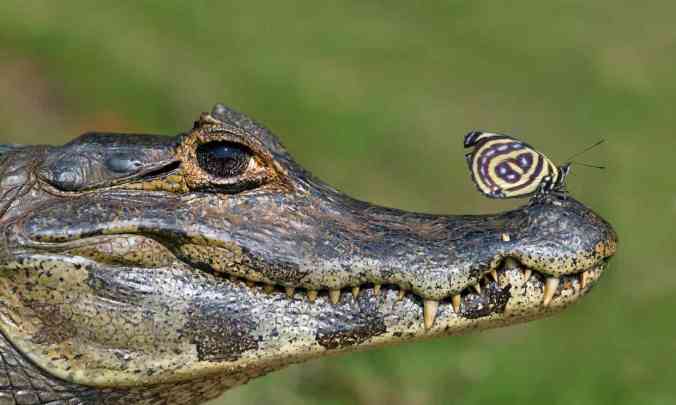
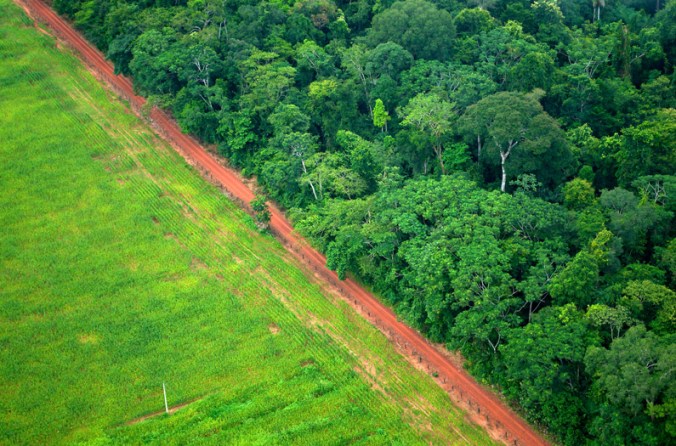
Serro Ricardo Franco is in one of the world’s biggest and most diverse ecological reserves. But reality on the ground is different, putting many animals at risk, such as Yacare caiman and giant river otters. Photograph: Angelo Gandolfi/Getty Images/Nature Picture Library

Sometimes, sitting in a glass house, reading the news makes me want to throw a stone. The glass house where I live includes a farm in an extremely biodiverse area. It is surrounded by nearly half a million acres where logging happens. But there is farming, as you can read about in the news below, and there are plenty of better ways of farming; there are loggers like those in the news below, and there are forests where extraction happens according to standards such as those set and enforced by the Forest Stewardship Council.

Instead of throwing a stone, I get up every day and make sure the glass around here is as transparent as possible, because we can demonstrate a better way of supplying food, of harvesting wood, and doing so with the protection of wildlife in constant view. Meanwhile, I do read the news from elsewhere and continue to share it here (thanks to the Guardian’s Jonathan Watts in Vila Bela da Santíssima Trindade for this one):

Wild Amazon faces destruction as Brazil’s farmers and loggers target national park

The Sierra Ricardo Franco park was meant to be a conservation area protecting rare wildlife

To understand why the Brazilian government is deliberately losing the battle against deforestation, you need only retrace the bootmarks of the Edwardian explorer Percy Fawcett along the Amazonian border with Bolivia.

During a failed attempt to cross a spectacular tabletop plateau here in 1906, the adventurer nearly died on the first of his many trips to South America. Back then, the area was so far from human habitation, the foliage so dense and the terrain so steep that Fawcett and his party came close to starvation.

He returned home with tales of a towering, inaccessible mesa teeming with wildlife and irrigated by secret waterfalls and crystalline rivers. By some accounts, this was one of the stories that inspired his friend Arthur Conan Doyle to write The Lost World about a fictional plateau jutting high above the jungle that served as a sanctuary for species long since extinct elsewhere. Continue reading

Leading Legumes To A Better Place


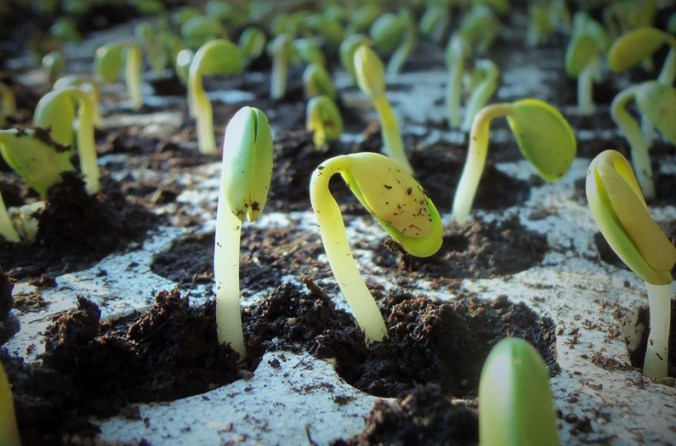
Anthropocene’s Emma Bryce has summarized the science of Building a better soybean:

What will it take to build crops that can withstand future climate changes? A group of plant biologists think they might be on to a solution for soybeans. Using genetic engineering, they’ve created a plant whose yields remain unaffected by high-stress conditions. The key lies in a genetic tweak that makes the plant overexpress a particular enzyme, which is thought to boost the efficiency of their photosynthesis cycle and enhance seed production. Continue reading

Coffee’s California Coming

27COFFEE1-superJumbo

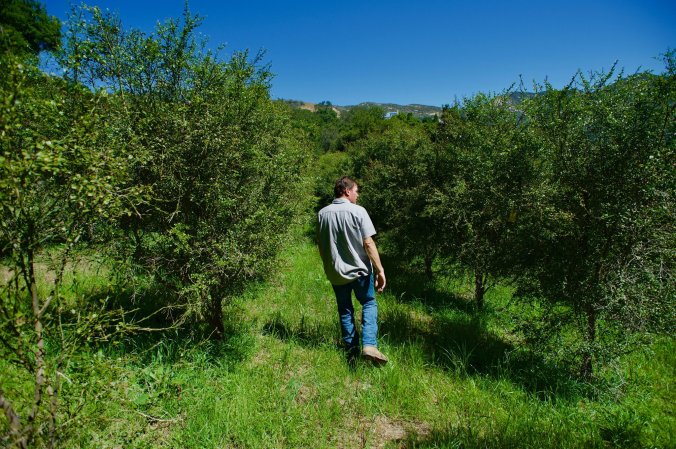
Jay Ruskey is one of the first farmers to be growing coffee commercially in California. His coffee plants share the farm with avocado and cherimoya trees and passion fruit vines. Credit Morgan Maassen for The New York Times

It always seemed that California could grow just about anything, so why did it take so long for this to happen? Thanks to Stephanie Strom for this story in the New York Times:

GOLETA, Calif. — There is a new crop growing in Southern California’s famous avocado groves — coffee.

About two dozen farms between San Diego and here, just outside Santa Barbara, are nurturing coffee bushes under the canopies of old avocado trees, in what may be the first serious effort in the United States to commercialize coffee grown outside Hawaii, home of Kona coffees. Continue reading

Crop Type & Pesticides

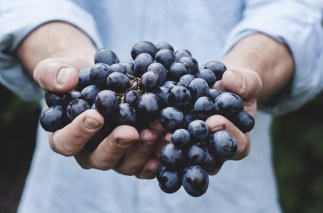
bunch-of-grapes (1)

Image: Pixabay

Thanks to Emma Bryce for A more nuanced approach to reducing insecticides on our food, shared via Anthropocene:

Food, Labels & Useful Information

16-whole-foods-produce.w710.h473.2x.jpg

Photo: Robert Nickelsberg/Getty Images

We link to the occasional food trend article when it matches something we are working on, whether it is the Chan Chich Lodge culinary program or the food production at Gallon Jug Farm. This article, Whole Foods Would Look a Lot Different If It Were Science-Based, almost lost me with the first sentence, an annoying cliche within a sappy first couple paragraphs, but there is a useful case made starting soon after. We are dealing with these very questions so I can suggest the majority of the article starting after the jump:

Whole Foods used to be my idea of grocery heaven. Once upon a time, I shopped at the California Street location in San Francisco — it was light and airy with produce for miles. I knew the cheesemonger. I had philosophical conversations with the butcher. I stared longingly at the Le Creuset bakeware. The soap aisle smelled like lavender. Heaven.

But eventually, I fell out of love. Or, to be more specific, I changed my mind about organic food after reading the research: It turns out organic isn’t more nutritious or even necessarily better for the planet. So I pretty much stopped shopping at Whole Foods altogether. Continue reading

GrowFood Carolina

how-growfood-works.png

I am always on the lookout for simple but effective graphics illustrating ideas that we attempt to put into action in our various projects–why reinvent the wheel? By rabbit hole good fortune, after I was referred to the Coastal Conservation League as a regional leader in entrepreneurial conservation for the southeastern USA, one of their programs, as illustrated above and described in words below, came to my attention:

The Conservation League started its Food and Agriculture program in 2007 with the goal of protecting South Carolina’s small, family farms. Between 1992 and 1997, more than 200 acres of rural land were converted every day to urban uses, placing South Carolina in the top ten states in the nation for rural land loss. We quickly realized that small farmers lacked access to the infrastructure available to industrial farms, and were therefore unable to say “no” when a developer offered to buy their land. The League saw a food hub as critical to our work protecting rural landscapes and improving quality of life across the coastal plain. Continue reading

Lost Rice, Found Alive

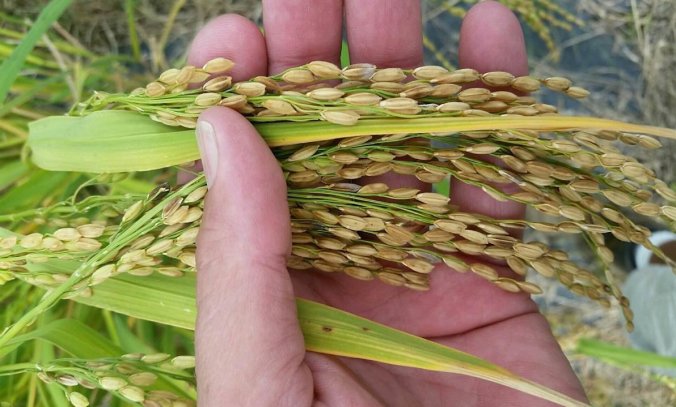
image005_custom-74fcf2c593047698233b11f237300862d88e143a-s1400-c85.jpeg

An upland rice strain. Courtesy of Brian Ward

Thanks to the salt and National Public Radio (USA) for this story about the strain of a grain means so much to billions of people around the world:

A grain of rice, like a grain of sand, sifts through your hands with a mysterious and lovely sameness. Mostly white or tan, hundreds or thousands of grains pour smoothly out of buckets, out of burlap, into bowls, with a sound like small waterfalls. Rice seems so simple, really. And yet, because it plays a central role in world cuisines, these modest grains can carry the weight of history. Sometimes that history is deeply surprising. Continue reading

Welcome News From Brazil

Thanks to Anthropocene for a moment of relief:

In Brazil, signs that a soy moratorium is slowing down deforestation

Cosmic Crisp

img_4971-2-_custom-32c796fc06c225a286485fa8bc034cc5f61b7652-s1400-c85.jpg

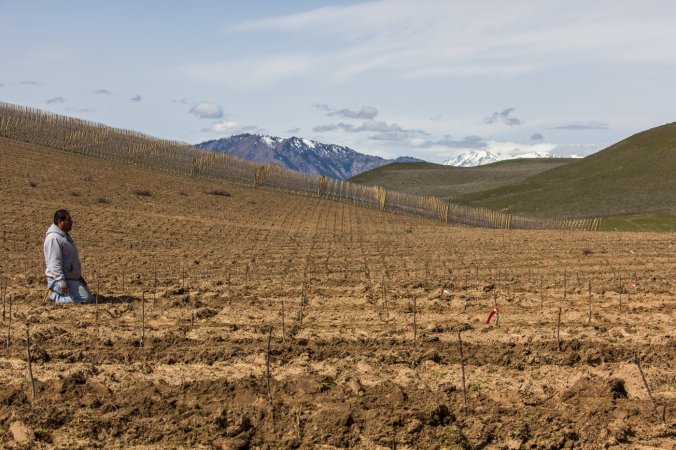
A worker takes a break after planting young Cosmic Crisp trees in an orchard near Wenatchee, Wash. Dan Charles/NPR

The folks at the salt, over at National Public Radio, deliver (click the image above to go to the story) the crispest, juiciest food stories:

Get ready for a new kind of apple. It’s called Cosmic Crisp, and farmers in Washington state, who grow 70 percent of the country’s apples, are planting these trees by the millions. The apples themselves, dark red in color with tiny yellow freckles, will start showing up in stores in the fall of 2019.: Continue reading

Breaking Rules When The Result Is Worth It

19berries-1-superJumbo

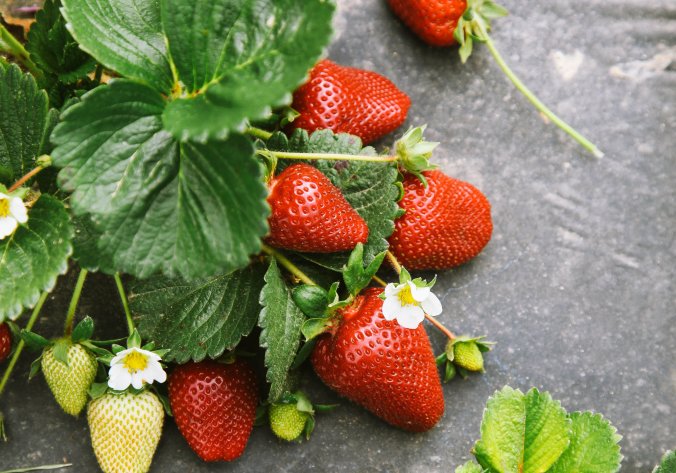
The strawberries at Harry’s Berries, grown in Oxnard, Calif., are harvested only once every five days, to give the fruit time to reach its peak flavor. Credit Amy Dickerson for The New York Times

Renegade behavior in the abstract attracts us almost always. We admit to favoring examples, cases, histories that point to unusual choices that we think provide a model for others to follow to solve problems. However, sometimes there is no choice but to point to the downside of renegade behavior, aka breaking the rules on which society depends. And there are plenty of lousy renegades we read about but do not foul up these pages with. Today, it’s coming up strawberries. Thanks to Rick and Molly and to Karen Stabiner for bringing this story forward:

Red, Ripe and Renegade: Berries That Break All the Rules

“This one should be O.K.,” he said, sounding not quite convinced. Then again, his definition of ripe is more stringent than most. Continue reading

Milpa To Mesa

Masienda.png

My foraging around about food leads me to many small pleasures, and here is one. Thanks to Florence Fabricant for bringing my attention to Masienda, whose founder has the kitchen credibility you would expect to have a company have such a huge leap forward in such a short timeframe: Continue reading

Gangsta Garden’s Gentle Giant

06Garden-master768

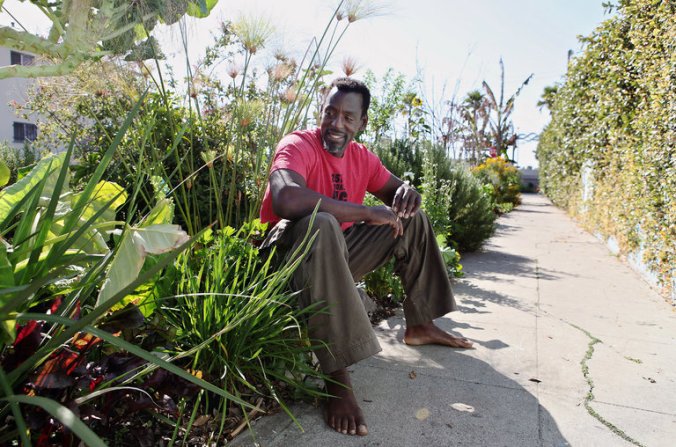
Ron Finley in a garden outside his home in Los Angeles. Credit Emily Berl for The New York Times

When Amie passed along a link to him way back when, it was all fresh news about an amazing challenge set up by an urban charismatic. Now that challenge has been turned around and amped up and we link again to Ron to help him gets what he needs:

Fighting Eviction, a Gardener Turns to Organic Industry Giants for Help

Green Farming Productivity

Thanks to Anthropocene, for this article, which adds to today’s green food theme:

On many farms, reducing pesticides probably won’t hurt profit or yields

Preparing Enough Food For 2050

unnamed-1.jpg

Thanks to Anthropocene for this summary of news explaining why We don’t really need to double food production by 2050, provided by Emma Bryce:

It sounds daunting: by 2050 we’ll have to double our food production in order to satisfy the appetite of the planet’s rapidly expanding population. This statistic has become so deeply-ingrained, in fact, that it’s being used to shape future agricultural policy. But a group of researchers, publishing in the journal BioScience, have challenged that influential estimate, arguing that it’s due for a significant upgrade to bring it in line with recent data. Continue reading

Cacao’s Curious Clues

4TB-amazon1-superJumbo.jpg

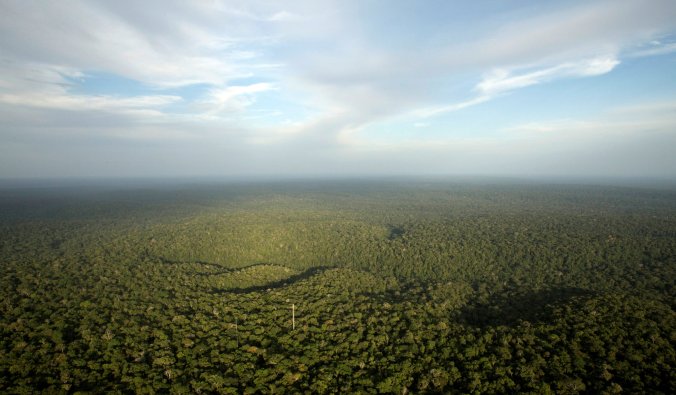
A view from the Amazon Tall Tower Observatory in São Sebastião do Uatumã, Brazil. A new study examines correlations between plant species in the forest today and archaeological finds. Credit Bruno Kelly/Reuters

Different day, different location, and our interest in cacao is  piqued again:

How the Amazon’s Cashews and Cacao Point to Cultivation by the Ancients

By

Scientists studying the Amazon rain forest are tangled in a debate of nature versus nurture.

Many ecologists tend to think that before Europeans arrived in the Americas, the vast wilderness was pristine and untouched by humans. But several archaeologists argue that ancient civilizations once thrived in its thickets and played a role in its development. Continue reading

Eat Your Vegetables, If You Can Find Them

vegcrisis_1-2-5a935c2edcf303caf9d2c322914a74c41ca02089-s1400-c85

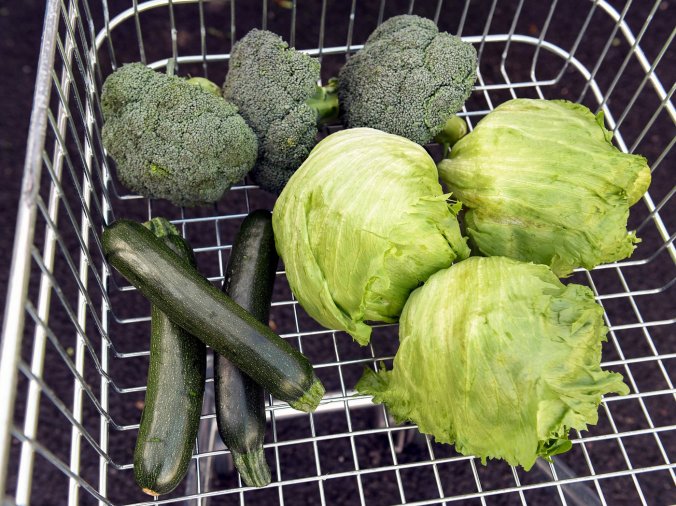
Vegetables were rationed at supermarkets in the U.K. due to poor weather conditions in Europe. Here, lettuce, broccoli and zucchini were rationed at a Tesco store in London. Victoria Jones/PA Images via Getty Images

Thanks to National Public Radio (USA) and the folks at the salt for this story about the implications of vegetable shortages in the UK:

It started in late January. At my local grocery store in South London, salad seemed to be just a few pence pricier than usual. But I didn’t think much of it.

Later that week, the same market had conspicuously run out of zucchini. I’m not particularly fond of it, but I lamented for the carb-conscious yuppies who depended — and subsisted — on spiralized zucchini spaghetti. How would they cope? Continue reading

You Had Us At Sweet Potato

logoWe have only recently discovered this resource but I expect you will start seeing a flow of interesting stories. sourced from Harvest Public Media, that touch on topics of interest to us here. For example, the mere mention of sweet potatoes was enough to get us interested:

011317_sweet_potatoes_chopped

According to the USDA, sweet potato consumption in the U.S. nearly doubled in just 15 years, from about 4 pounds per person in 2000. (U.S. Department of Agriculture/Flickr)

Sweet potatoes are undergoing a modern renaissance in this country.

While they have always made special appearances on many American tables around the holidays, year-round demand for the root vegetables has grown. In 2015, farmers produced more sweet potatoes than in any year since World War II. Continue reading

Scott Chaskey, Inspiration

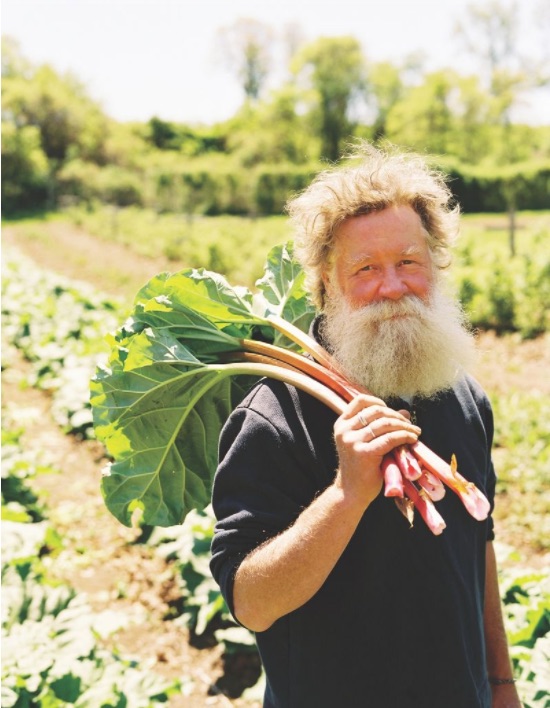
Chaskey.jpgI had not heard of him before, but as we move the Chan Chich Lodge farm to table program forward it is instructive to listen to him speak about his journey:

Farmer, poet, and pioneer of the community farming movement, Scott Chaskey is the kind of progressive thinker that doesn’t come around often. Weaving together his passion for farming and prose, the 66-year-old has penned multiple books on the community farming movement, creating a road-map for Americans who want to live off the land as a community. He talks to Here’s the Thing host Alec Baldwin about deciding to “eat consciously,” watching his love for the earth go global, and the food his kids hid from him when they were little.

This also has me looking at his books: Continue reading