Sea-Level Summer, Citrus, And Chilling At 51

From Plate 205: Limon Caietanus by Giovanni Battista Ferrari (1584-1665)

From Plate 205: Limon Caietanus by Giovanni Battista Ferrari (1584-1665)

Helena Attlee
THE LAND WHERE LEMONS GROW
The story of Italy and its citrus fruit
272pp. Particular Books. £20.
978 1 84614 430 2

The views, not to mention recent temperatures, lead most guests to sit outdoors with the breeze on the deck, on either the ground level or mezzanine, watching the fishermen haul in their catches, or the tug boats, or the ferries. 51 is alive with citrus in these sea level summer days and evenings, starting with a tall glass of iced minted-lime cooler, continuing with a chilled avgolemono soup;  and so on. Clarissa Hyman, a freelance food and travel writer, catches our attention with this book review in the Times Literary Supplement:

A paradox pervades the Sicilian citrus groves and gardens. The scent is intoxicating but too often the fruit lies rotten on the ground, unwanted and worthless. In this maddening, singular island, where they say the sun drives you crazy and the moon makes you sad, the irony is your breakfast orange juice will most likely be diluted, long-life concentrate from oranges grown in Brazil. Continue reading
Bats, Rice And Coexistence

Scientists believe wrinkle-lipped bats could prevent annual paddy losses of nearly 2,900 tons, enough to feed 26,000 people for a year. Photograph: Barbara Walton/EPA

Scientists believe wrinkle-lipped bats could prevent annual paddy losses of nearly 2,900 tons, enough to feed 26,000 people for a year. Photograph: Barbara Walton/EPA

Good news out of Thailand for both bats and rice and also for the concept of mutually beneficial coexistence:

Bats that prey on a major rice pest in Thailand could save paddy harvests worth millions of dollars and help contribute to better food security, claim scientists in a paper published in Biological Conservation.

Continue reading

Chicago’s Vertical Farming

Plant Chicago, NFP/Rachel Swenie

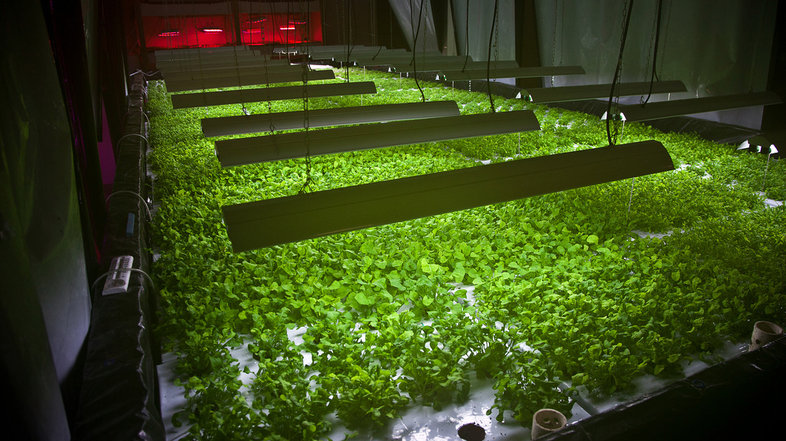
Arugula plant beds inside The Plant, a vertical farm operation in Chicago. Plant Chicago, NFP/Rachel Swenie

Thanks to National Public Radio (USA) for this story on their weekly program called The Salt:

From plant factories fueled by the magenta glow of blue and red LED lights, to the 30-foot tall Ferris wheel for plants in Singapore, we’ve shown you the design possibilities for growing vegetables up instead of out.

But critics ask, what kind of stresses does that put on the plant? And how do you feed this kind of intensive cultivation without spending more than what you get back in the harvest? Continue reading

Yes, I Should Be Vegetarian

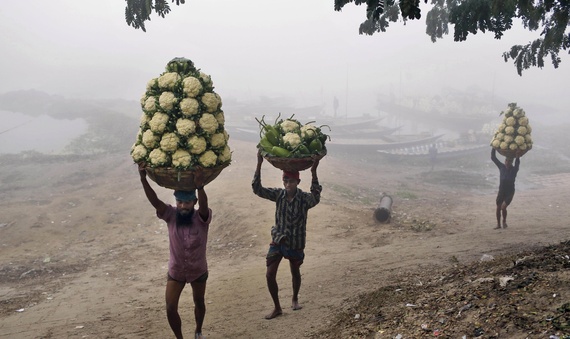
Unloading vegetables from a boat on a foggy January morning in Bangladesh (A.M. Ahad/AP)

Unloading vegetables from a boat on a foggy January morning in Bangladesh (A.M. Ahad/AP)

If you have thought about dropping animal protein from your diet, or at least thought about it and decided not to do so, this blog post at the Atlantic‘s website is worth a read:

“Let me be clear about this. A low carbohydrate diet is quackery,” Dr. Neal Barnard told me over the phone. “It is popular, bad science, it’s a mistake, it’s a fad. At some point we have to stand back and look at evidence.”

Note to self: Don’t ask Dr. Neal Barnard about limiting your carb intake.

“You look at the people across the world who are the thinnest, the healthiest, and live the longest; they are not following anything remotely like a low-carb diet,” he said. “Look at Japan. Japan has the longest-lived people. What is the dietary staple in Japan? They’re eating huge amounts of rice.” Continue reading

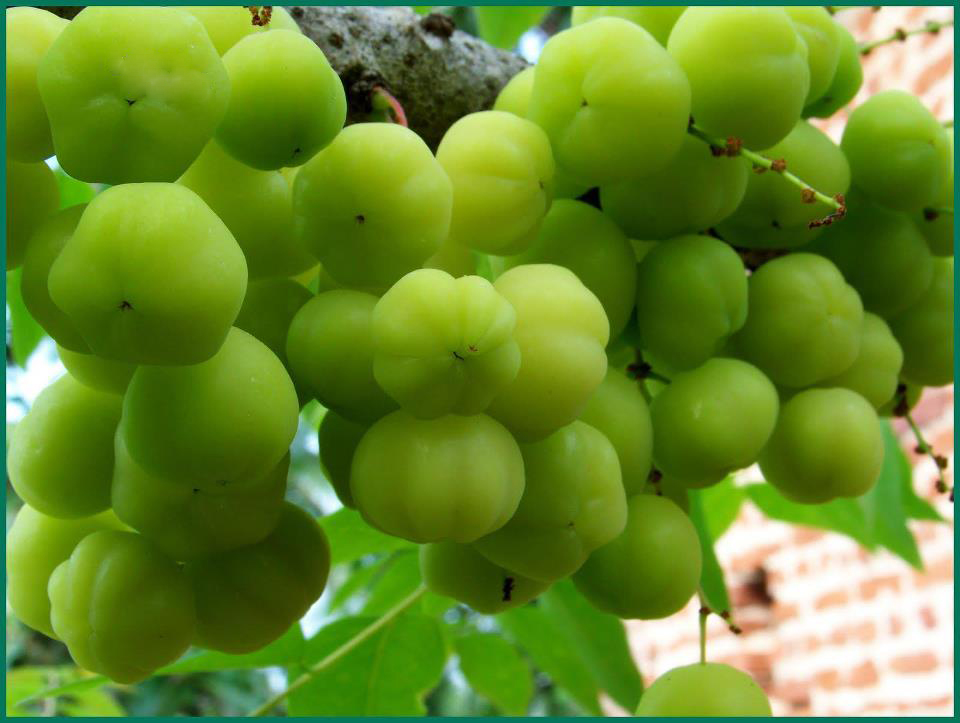
Taste Of Kerala – Star Gooseberry

Photo credits : Renjith Rajan

Photo credits: Renjith Rajan

Star Gooseberry is native to the Malay Islands and Madagascar. The small deciduous tree can grow up to 25-30 feet height. Abundantly found in Kerala for its acidic fruits that are mainly used for pickling and for the preparation of preserves. Although it also makes excellent jam, star  gooseberries are also used in traditional medicines.

Organic Farming At Cardamom County

Organic Farming

Organic Farming

At Cardamom County we believe in providing guests with the best experience possible, and an eco-friendly one at that. We not only provide this during their stay with things like rich flora on property and solar water heaters, but also through our food: with fresh eggs from our farms and a variety of greens for the most crisp and refreshing salads. Here are a few pictures of the farm. Soon, this fresh produce will be used in many of our upcoming properties. Continue reading

Enchanting Beauty of Backwaters

Photo credits Emmanuel Abraham

Photo credits: Emmanuel Abraham

The Backwaters of Kerala have  a unique ecosystem where fresh water from the rivers meets the salt water from the Arabian Sea. The partly brackish Backwaters stretch over 1900 km, providing drinking water and irrigating paddy fields. They include the large inland lakes of Kerala, as well as an entire network of canals, estuaries and curious water formations. Continue reading

Early Adopters Of Agricultural Ethics

In conversation with Milo recently, several of us concluded that we might soon expect a series of illuminating posts from him on the topic of alternative agriculture, much as we have had from him over the last few years illuminating and visually arresting series of posts on dragonflies, mushrooms and photography itself.  So, we share the article below from the Science section of the New York Times this week, in anticipation of those posts on a topic of great interest to Raxa Collective:

FARM-slide-V3OF-thumbStandard-v2The Elders of Organic Farming

By CAROL POGASH

For nearly a week, two dozen pioneers of sustainable agriculture from the United States and Canada shared decades’ worth of stories, secrets and anxieties.

Self-Sufficiency Taken To The Outer Extremes

Before the lights go out on the last New Yorker issue of 2013, one more of several articles we found worth the read, and relevant to our common themes of interest–community-building, innovation, environmentalism, farming, etc.–on this blog, even if we tend to incremental change rather than the radicalism on display here:

Marcin Jakubowski, the owner of a small farm in northwestern Missouri, is an agrarian romantic for high-tech times. A forty-one-year-old Polish-American, he has spent the past five years building industrial machines from scratch, in a demonstration of radical self-sufficiency that he intends as a model for human society everywhere. He believes that freedom and prosperity lie within the reach of anyone willing to return to the land and make the tools necessary to erect civilization on top of it. His project, the Global Village Construction Set, has attracted a following, but among the obstacles he has faced is a dearth of skilled acolytes: the people who show up at his farm typically display more enthusiasm for his ideas than expertise with a lathe or a band saw. Continue reading

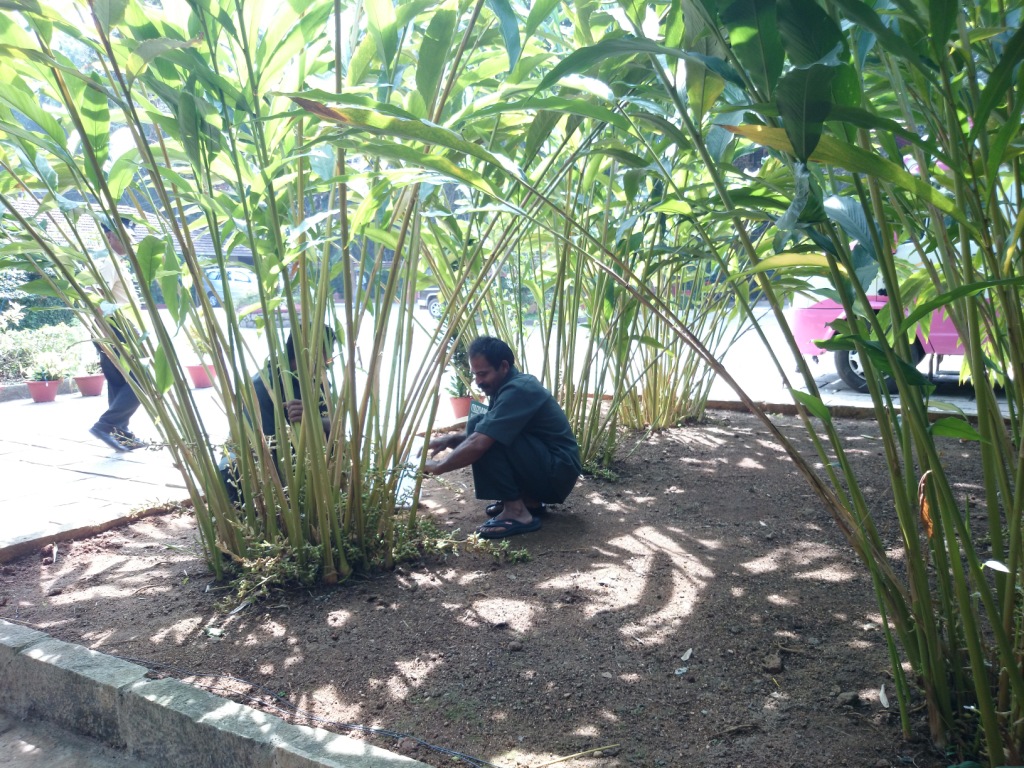
Cardamom Harvesting At Cardamom County

Cardamom Harvesting

Cardamom Harvesting

At Cardamom County we believe in organically grown vegetables and spices to provide our guests with the best produce that can be used to make the most sumptuous meals. We grow organic vegetables, fruits, spices and even eggs from our own farm. These pictures show our cardamom being harvested by staff members. Continue reading

Radical Interpretation Of Plants’ Secret Lives

When he goes out on a limb he invites others to join him, and like any journalist worth his salt he keeps pushing further out onto the limb. The venues in which he publishes deserve credit for having faith in readers willing to get out onto that limb:

In 1973, a book claiming that plants were sentient beings that feel emotions, prefer classical music to rock and roll, and can respond to the unspoken thoughts of humans hundreds of miles away landed on the New YorkTimes best-seller list for nonfiction. “The Secret Life of Plants,” by Peter Tompkins and Christopher Bird, presented a beguiling mashup  Continue reading

Wine In India

Kuni Takahashi for The New York Times. Sampling the product at York Winery.

Kuni Takahashi for The New York Times. Sampling the product at York Winery.

Thanks to India Ink for bringing our attention to a story about our neighborhood, broadly defined:

Cultivating a Wine Region in India | “In India, where whiskey is the alcoholic drink of choice and teetotalers exist by the legions, a wine culture has been almost nonexistent,” Shivani Vora wrote in The New York Times. Continue reading

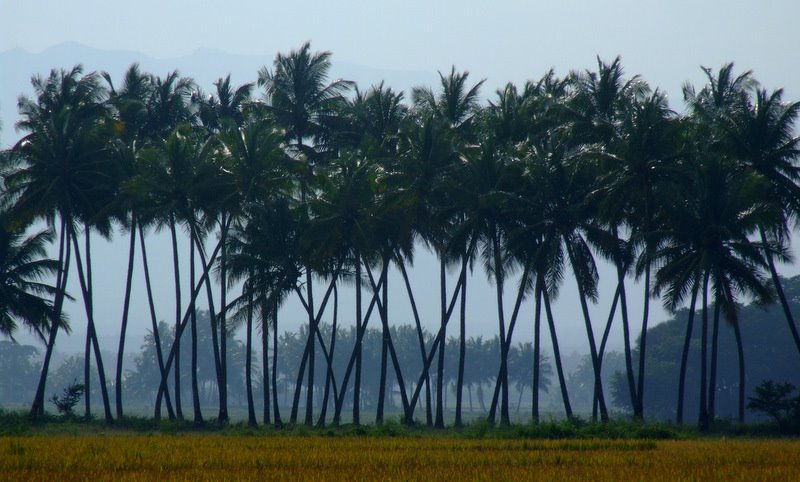
Coconut – Tree of Life

Photo credits :Ramesh Kidangoor

Photo credits: Ramesh Kidangoor

Kerala literally means the “land of Coconut” and is one of the leading producers of coconut in the world. Coconut trees are an integral part of the lifestyle and the economy of the state, and because of the numerous products and by-products derived from its various parts coconut is known as the “Tree Of Life”. Continue reading

The World Needs Another Golf Course Like It Needs Another Hole In The Ozone

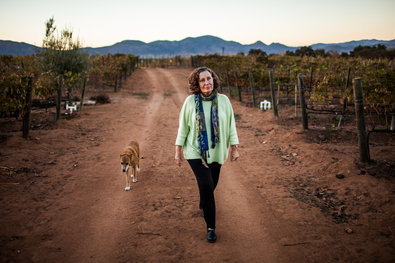
Max Whittaker for The New York Times Natalia Badán, a winery owner and longtime resident of the Guadalupe Valley, called a zoning change “an aggression.”

Max Whittaker for The New York Times
Natalia Badán, a winery owner and longtime resident of the Guadalupe Valley, called a zoning change “an aggression.”

If you have ever swung a golf club, in earnest, on a challenging hole somewhere on a beautifully crafted course, you might agree: the game is good for the soul. But there is such thing as too much of a good thing:

A Rustic Paradise, Open for Development

By DAMIEN CAVE Continue reading

Beauty of Munnar Tea Plantations

Photo credits:Ramesh Kidangoor

Photo credits: Ramesh Kidangoor

Located above 1700 meters Munnar was the summer residence of the British administration of South India.The British recognized the potential of tea and started planting on about 580 square kilometers of land. Now famous for its tea plantations, Munnar retains its colonial charm with sprawling estates, rolling hills , sparkling waterfalls undulating valleys and hamlets. Continue reading

Western Ghats Ecosystem Must Be Protected, But Humans Will Be Humans

The Hindu

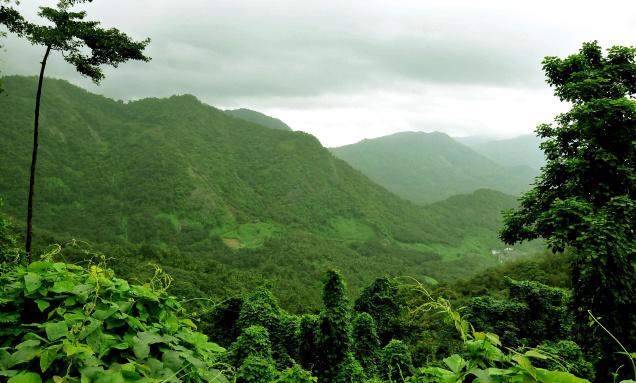
Local farmers in the Western Ghats, like their counterparts everywhere, generally want to be unencumbered to do what farmers do. Any given morning we wake up feeling complete solidarity with farmers. Full stop. We wake up every day looking for opportunities to support conservation where we live and work. Full stop. Currently, one such region where we work, known as the Western Ghats in southern India, is wrestling with the challenge of letting farmers be farmers while also allowing the ecosystem–one of those rare places worthy of being called a biodiversity hotspot–to continue to be the ecosystem.  Sometimes, farmers and ecosystems do not get along well. We thank the Hindu for its coverage of this issue, which is much more complicated than one article can convey:

…The sites, spread over 34 countries, “harbour the majority of the populations of more than 600 birds, amphibians, and mammals, half of which are globally threatened. Many of these irreplaceable areas are already designated as places of ‘Outstanding Universal Value’ under the UNESCO World Heritage Convention,” the report said. Continue reading

Questions About Urban Agriculture

The University of Washington’s magazine, Conservation, has a set of provocative new articles in the food-focused current issue, including this one:

The cultural—and agricultural—quest to reclaim and reform the food system appeals primarily to relatively privileged, mostly white urbanites. Committed to the pulse of city life, these advocates generally view the countryside as a place for weekend getaways. Still, they want to be close to the point of food production and in turn are bringing agriculture into the city, one vacant lot at a time, to close the gap between farm and fork. Continue reading

Queen of Spices

Queen Of Spices

Cardamom

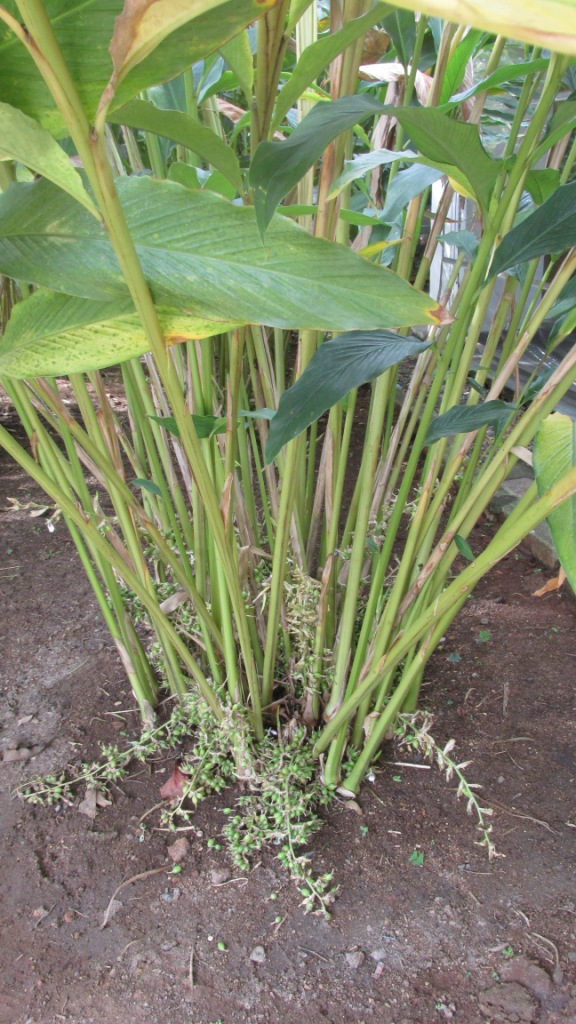
Cardamom is known as the “Queen of Spices” and Kumily is known to have the biggest cardamom market in the world. Exceptional care goes into growing this spice. It needs a minimum altitude of 800 to 1200 meters above sea level and plenty of shade and water. Kumily is located at 1100 meters  with an average annual rainfall of 3000 millimeters, making it the perfect atmosphere for the plant to thrive. Continue reading

Bullock Cart Re-Discoveries

Bullock Cart Discoveries

Bullock Cart Discoveries

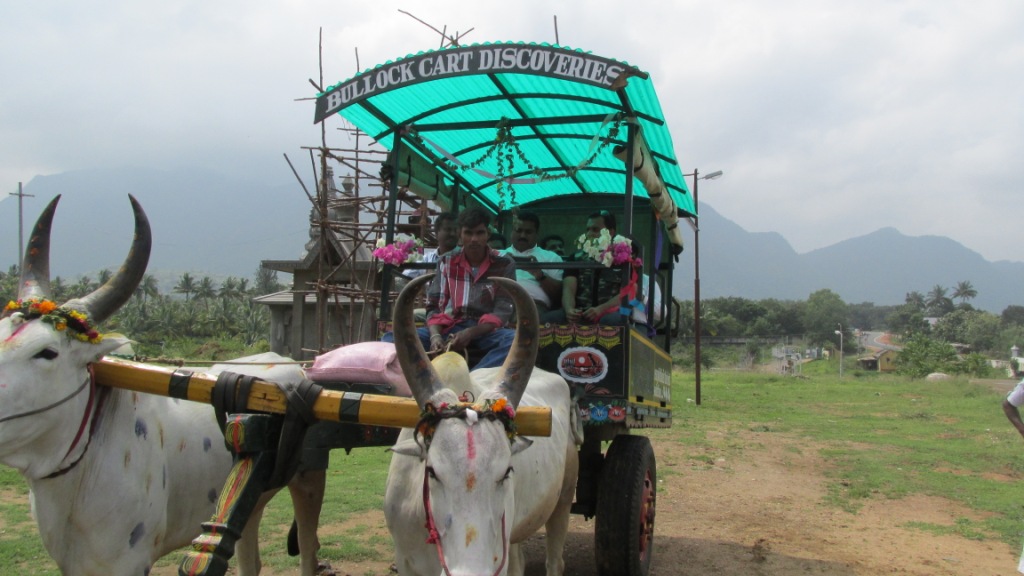
In the villages of India bullock cart rides are still very common modes of transportation, not only fun but also eco-friendly. Today the Raxa Collective Cardamom County team took part in the Thekkady TDPC (Tourism Destination Promotion Council) sponsored bullock cart within the local community to provide guests with a zero carbon experience that will also provide a source of income for the locals who cannot afford vehicles to exploit this large tourism market in the state. Continue reading

Cool Season Is Upon Us In Kerala

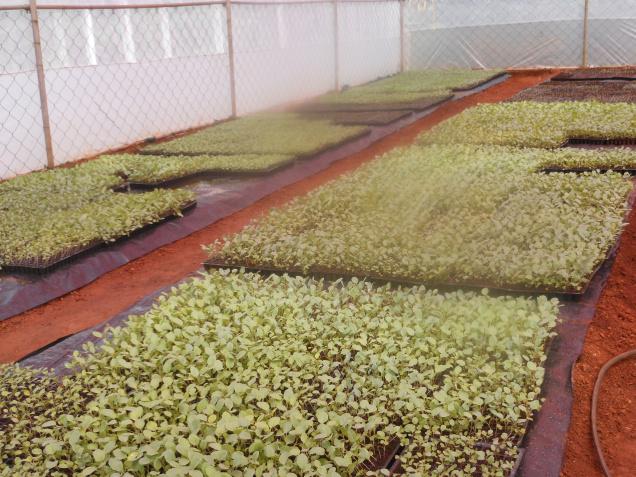
The Hindu. The cool season vegetable nursery of the Seed Processing Plant, Alathur, Palakkad under VFPCK.

The cool season vegetable nursery of the Seed Processing Plant, Alathur, Palakkad under VFPCK.

Raxa Collective has been on a mission to increase and improve the transparency of our food sourcing since 2010. Already, Cardamom County had established an organic garden and River Escapes had been engaged in local sourcing from fishermen in the backwaters. Milo was the first to suggest we add culinary quality oyster mushrooms to our organic gardens, and he set up the cultivation system there. The next leap forward was the development of Kayal Villa as a quiet retreat set on 6.5 acres of aquaculture and agriculture estate.

Next? Coolness.

‘Tis the season to plant veggies (thanks to The Hindu’s coverage of agricultural issues in Kerala):

The cool season vegetable cultivation in the plains of the district will start next week and end in February.

During the period, the Seed Processing Plant at Alathur, under the Vegetable and Fruit promotion Council, Keralam (VFPCK) will supply 10 lakh seedlings of cabbage and cauliflower to popularise cool-season cultivation using safe methods. Continue reading