Model Mad, Down Under

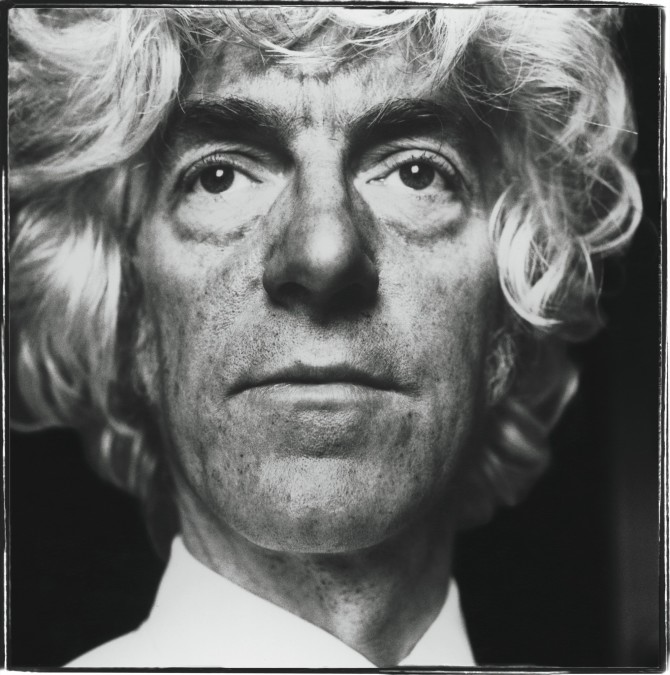
John Church in Hobart in September 2010. He is known internationally for helping to bring statistical and analytical rigor to longstanding questions about sea level rise. Credit Peter Boyer

We continue to keep our eyes open for stories that offer inspiration even in the face of apparent adversity.

A Parable From Down Under for U.S. Climate Scientists

HOBART, TASMANIA — John A. Church, a climate scientist, did not look or sound like a man who had recently been shoved out of a job.

Speaking softly and downing coffee at an outdoor cafe in this old port city, he sounded more like a fellow fresh off a jousting match. “I think we had a win — a bigger win than I ever anticipated,” Dr. Church said in an interview last month.

Australian climate science went through an upheaval last year, one that engaged the press and the public in defending the importance of basic research. In the end, Dr. Church did indeed lose his job, but scores of his colleagues who had been marked for layoffs did not. Some of them view him as having sacrificed his career to save theirs.

What happened in Australia shows the power of an informed citizenry keeping watch on its government. And it may turn out to be a precursor to an attack on fundamental climate research in the United States.
Continue reading

Preserving Biodiversity to Feed the World

BioDiv.jpg

Thanks again to Atlantic for its occasional short film series, and in this case specifically to Erica Moriarty for bringing our attention to a video by Independent Lens available for sampling over at PBS (click the image above):

In the last century, 94% of the world’s seed varieties have disappeared. Family farmsteads have given way to mechanized agribusinesses to sow genetically identical crops on a massive scale. In an era of climate uncertainty and immense corporate power, farmers, scientists, lawyers, and indigenous seed keepers are on a mission to defend the future of food. Botanical explorer Joseph Simcox has been to over 100 countries, collecting thousands of seeds. In this documentary from Independent Lens, he travels to the Peruvian Amazon. Continue reading

Gangsta Garden’s Gentle Giant

06Garden-master768

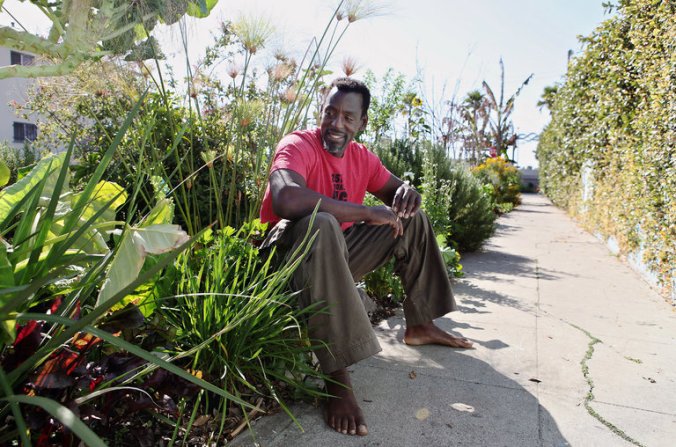
Ron Finley in a garden outside his home in Los Angeles. Credit Emily Berl for The New York Times

When Amie passed along a link to him way back when, it was all fresh news about an amazing challenge set up by an urban charismatic. Now that challenge has been turned around and amped up and we link again to Ron to help him gets what he needs:

Fighting Eviction, a Gardener Turns to Organic Industry Giants for Help

America’s Best Idea Just Got Better

In our current political climate we continue to applaud those who stand up for science, nature and culture. It’s been particularly heartening to watch the steward’s of our national parks create a virtual protective shield around the vision they’re charged to protect.

My personal standing ovation goes to the partially anonymous park ranger who spends his spare time creating downloadable maps of all our country’s national parks, by state, from A to Z. (F, Q, U and X seem to be the only letters missing…) In addition to maps, site visitors find all sorts of experiential tips to prepare for safe exploration.

Glacier Maps

If you’re looking for a Glacier map, you’ve come to the right place; currently I’ve collected 28 free Glacier National Park maps to view and download. (PDF files and external links will open in a new window.) Here you’ll find a bunch of trail maps, along with other maps such as campgrounds and the shuttle bus. You can also browse the best-selling Glacier maps and guidebooks on Amazon. Continue reading

Yarn Bombing, Indian-style

Elephants, many of whom have suffered serious abuse in the past, photographed wearing the knitted multi-coloured, pyjama-like garments knitted by local villagers Roger Allen

While the concept of yarn bombing (also called guerrilla knitting) is usually a playful way to bring color to an urban setting, this isn’t our first story about altruist knitting in the realm of animal protection.

This story seems particularly poignant considering it weaves together the matriarchal nature of elephants and the communal work of the village women…

Villagers knit jumpers for Indian elephants to protect the large mammals from near-freezing temperatures

Elephants in India are sporting colourful woollen jumpers after villagers knitted the super-size garments to protect the animals from near-freezing temperatures.

Women in a village near the Wildlife SOS Elephant Conservation and Care Centre in the northern city of Mathura reportedly began producing the colourful, pyjama-like garments after staff at the centre warned temperatures were approaching sub-zero at night. Continue reading

Admire & Emulate

5333.jpg

It is not the first time we have enjoyed a good long read about either of these companies’ and/or founders, but this one in the Guardian offers a good look circa 2017:

Patagonia and The North Face: saving the world – one puffer jacket at a time

The retail giants are not only competing to sell outdoor gear – they are rivals in the contest to sell the thrill of the wilderness to the urban masses Continue reading

Jimmy’s Sunny Disposition

What a decent man, we say every time we see news of Jimmy Carter. This story is no exception, and we especially appreciate the example he is setting with this action:

PLAINS, Ga. — The solar panels — 3,852 of them — shimmered above 10 acres of Jimmy Carter’s soil where peanuts and soybeans used to grow. The panels moved almost imperceptibly with the sun. And they could power more than half of this small town, from which Mr. Carter rose from obscurity to the presidency. Continue reading

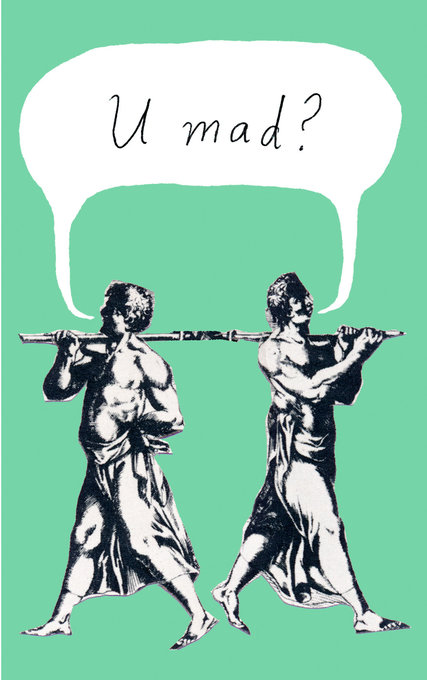
Mad, Yes

0115-bks-ivorytower-blog427-v3As we approach our 8,000th post on this platform we realize that for the nearly six years we have been posting there was plenty of hopeful, helpful news related to community, collaboration and conservation–the themes we committed ourselves to at  the outset.

Times seem different now, to state the obvious. And yes we are “mad” about what is happening around us. Madly determined. It will take discipline to remain focused and find the news that fits our purpose here. But we intend to.

The point has not been to ignore the bad news, of which there has been plenty in recent years, but to share a few notices each day that highlight better news. Or possible solutions. The spirit of our intent, which has been to support “the fight” as needed but remain civil to the end, is captured well in this book review:

How to Be Civil in an Uncivil World

By

Celebrating Real Accomplishment

feeney

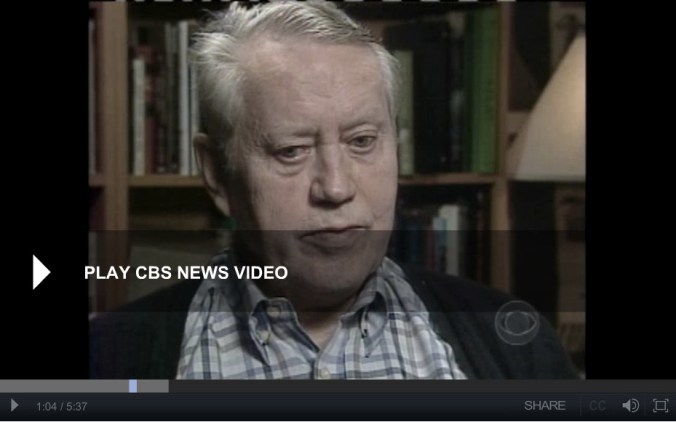
If you attended Cornell University 1980s or 1990s and earlier you may have heard his name if you were part of the Hotel School community, which he occasionally visited. Even then you would have heard simply that he was “a good friend” of his alma mater. It was only in the last decade or so that his visionary generosity was made public, most notably on CBS news in the USA. He had worked hard to keep his name out of the stories related to his foundation’s philanthropic giving.

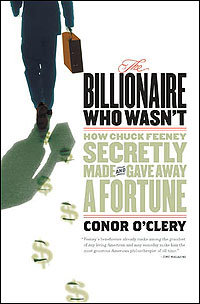
billionaircover-ecad87c5e5af133a76297c2d555e210992476de9-s1400-c85It eventually became easier to find information about  where all of that money went. Journalists did their work, and after he was revealed to be a genius of anonymous giving on a grand scale he reluctantly agreed to proper documentation of it all. He even agreed to a book-length documentation, which we first learned about here. Today the New York Times is reporting that he has finally achieved his goal of giving it all away. Bravo, Mr. Feeney, and thank you for reminding us what real accomplishment looks like:

…Nearly five years ago, Charles F. Feeney sat in a cushy armchair in an apartment on the east side of Manhattan, grandchildren’s artwork taped to the walls, and said that by the end of 2016, he was going to hand out the last of a great fortune that he had made. Continue reading

Altruism Is So 2011, And Even More So 2017

110905_r21085_g2048-670

Derek Parfit has few memories of his past and almost never thinks about it, a fact that he attributes to an inability to form mental images. Photograph by Steve Pyke / GETTY

Even though we had started a series of posts on the topic of altruism in 2011, our first year creating this platform, it was just after this article was published that we started paying close attention to the topic, and we had forgotten about it until just now.

Derek Parfit communicates convincingly about a logic for the common good being more important than that of the individual, and even put his own life and mortality into perfect context of the logic he was developing. So, though we resist posting obituaries of even our greatest heroes, his passing this week makes us think this profile is worthy of re-reading and sharing.

Even though our early attention to altruism led to hundreds of posts since 2011 for which altruism is at the core, this remembrance may stimulate even closer attention to altruism, a topic more worthy of attention than ever:

HOW TO BE GOOD

An Oxford philosopher thinks he can distill all morality into a formula. Is he right? Continue reading

App For Food Waste Reduction

‘A love for food and a distaste for waste’: Iseult Ward (left) and Aoibheann O’Brien in the FoodCloud warehouse in Dublin. Photograph: Mark Nixon for the Observer

‘A love for food and a distaste for waste’: Iseult Ward (left) and Aoibheann O’Brien in the FoodCloud warehouse in Dublin.
Photograph: Mark Nixon for the Observer

Thanks to the Guardian for their coverage of stories about reducing food waste:

FoodCloud: new app proves a nourishing idea for wasted food

The distribution of surplus food in Ireland is being transformed by FoodCloud. Killian Fox meets the duo behind the venture

Killian Fox

Within one community, there can be a business that’s throwing away perfectly good food and just around the corner there’s a charity that’s struggling to feed people in need,” says Iseult Ward of FoodCloud, a remarkable social enterprise which she co-founded with Aoibheann O’Brien in 2012. “We wanted to connect the two.” Continue reading

Food Waste Approaching Zero (Goals Are Powerful)

dsc_0080-90-beea8781c209d5611d13eacd9f03985d6f1a805d-s1100-c85

Junior Herbert, a volunteer with Olio, collects leftovers from vendors at London’s Camden Market. London has become a hub for apps and small-scale businesses that let restaurants and food vendors share leftovers with the public for free, and otherwise reduce the amount of edibles they toss. Maanvi Singh for NPR

Green entrepreneurship is alive and well in London (thanks to National Public Radio, USA, and its program the salt for this story):

Eat It, Don’t Leave It: How London Became A Leader In Anti-Food Waste

MAANVI SINGH

It’s around 6 o’clock on a Sunday evening, and Anne-Charlotte Mornington is running around the food market in London’s super-hip Camden neighborhood with a rolling suitcase and a giant tarp bag filled with empty tupperware boxes. She’s going around from stall to stall, asking for leftovers.

Mornington works for the food-sharing app Olio. “If ever you have anything that you can’t sell tomorrow but it’s still edible,” she explains to the vendors, “I’ll take it and make sure that it’s eaten.” Continue reading

Crowdrise

Norton.jpg

Today’s New York Times has an article that brings Ed Norton’s Crowdrise to our attention, both article (click headline below) and website (click image above) worth a look:

Charity That Begins With Spaghetti Sauce

By

06celebritygiv-norton-blog427Edward Norton recognized Paul Newman the philanthropist before discovering Paul Newman the actor. As a teenager, he watched his mother buy Newman’s Own products at the grocery store and was impressed that all profits went to charity.
“I thought — why would you buy any other spaghetti sauce if you can buy one where all of the net profits go to a kid’s cancer camp?” said Mr. Norton, who starred Continue reading

Generosity’s Change Agents

Vara-Charity-1200.jpg

The rise of a new, fast-growing class of charities known as donor-advised funds represents a momentous shakeup in charitable giving in the U.S. ILLUSTRATION BY MARCUS BUTT / GETTY

Thanks to the contributors to the New Yorker’s website, we get frequent updates on topics we are interested in that might not make it into the long form reportage of the print magazine; case in point:

THE WEALTH GAP IN PHILANTHROPY

By Vauhini Vara

Each year, Stacy Palmer, the editor of the Chronicle of Philanthropy, compiles a list of the U.S. charities that have raised the most money from private sources. In the twenty-six years that the Philanthropy 400 ranking has been published, one thing has stayed constant: United Way Worldwide is at the top. (The one exception was in 1996, when the Salvation Army briefly displaced it.) But when the results started coming in for this year’s list, which was published on Thursday morning, it became clear that a new No. 1 had emerged—an organization affiliated with Fidelity Investments, called Fidelity Charitable, which has grown to become one of the most influential charities in the world. “I was stunned,” Palmer recalled. The details were especially striking. Fidelity Charitable collected 4.6 billion dollars, a twenty-per-cent increase from the previous year. United Way ranked a distant second, with donations dropping by four per cent, to 3.7 billion dollars. “Not only were they”—Fidelity—“going to be No. 1, but they were going to be No. 1 by a lot,” Palmer remembered realizing. Continue reading

Banker, Genius, Good Guy

Jose Quinonez

Jose Quinonez, 2016 MacArthur Fellow, Mission Asset Fund, San Francisco/CA, Monday, Sept. 12, 2016.

In the years following the sub-prime and related financial crises, bankers got a thorough drubbing in the global imagination. But we have been depending on bankers in all our business and conservation activities all these years and never yet met a bad apple in the bunch. Still, kind of surprised to see a banker chosen for the prestigious awards we follow each year.  This year we are happy to see some extra coverage of the recipients of this award, as the following illustrates:

A Newly Minted MacArthur Genius on the Financially ‘Invisible’

“I wanted to change the world. I didn’t think I was going to do that by being a loan servicer.”

José Quiñonez has spent most of the past decade helping the financially invisible build credit and obtain loans. Continue reading

A Different Type of Hero

The Veerni Institute now makes it possible for 75 girls to continue their education. But the group has to turn away nearly 300 applicants each year for lack of funding. Poulomi Basu for NPR

The Veerni Institute now makes it possible for 75 girls to continue their education. But the group has to turn away nearly 300 applicants each year for lack of funding.
Poulomi Basu for NPR

“It all began with a shawl…” seems like the stuff of fairy tales, but the combined attraction to a handmade textile and the desire to help the woman weaving it proved a pathway to Jacqueline de Chollet’s life work. Over 20 years ago while traveling in a dusty village of India she saw a woman weaving the shawl in her home.

“She had three or four children including a baby she was nursing in her arms,” de Chollet recalls. “And she looked way older than her age.”

Hoping to provide a little help, de Chollet offered to buy the shawl. “And as soon as I gave her the money a man walked in and took the money away from her.”

De Chollet was outraged. “I felt, this woman — nobody cares about her. She’s off the map. She has no rights.”

Although de Chollet came from far different circumstances as this woman, growing up in the 1950s she felt that society dictated her position as a wife and mother. She wanted to make a difference in the world, and felt that addressing the issue of the rights of women and girls in India was an important first step. Continue reading

The Kindness Of Strangers

sanchez-cart_wide-29683f2f2abfb52b42bdcdab6c6787e5bbef67b4-s1100-c85

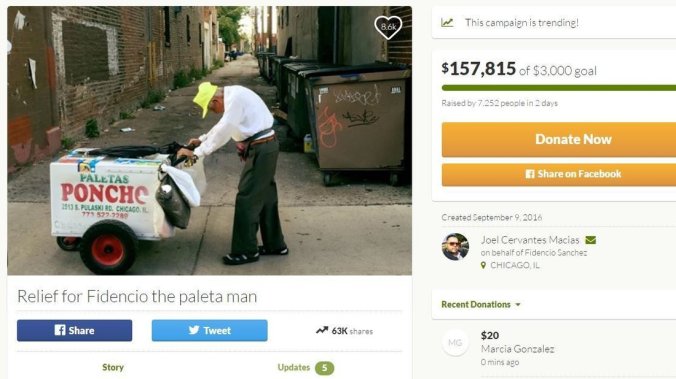
A fundraising campaign for Fidencio Sanchez has raised more than 50 times the original $3,000 that was sought. Go Fund Me

We can say, with no ideological intent whatsoever, that it is not good news that an elderly man in a prosperous nation must depend on the kindness of strangers; but if we add one iota of oomph to the momentum of a story like this going viral, we are more than happy to share occasions when that kindness is demonstrated with drama:

Strangers Raise $165,000 In 3 Days To Help Chicago Popsicle Vendor, 89

It was just a glimpse, but the scene spoke volumes — and started a push for help. Joel Cervantes Macias was struck by the sight of an elderly man pushing his cart of frozen treats on Chicago’s 26th Street, so he took a photo. That was last week; as of Monday afternoon, Macias had raised more than $165,000 to help a stranger. Continue reading

A Business Model To Fish For

patagonia

Heroes are, by definition, not easy to come by. When they get profiled, read it (this one is thankfully not merely fluff):

…The ordeal, and the perspective of middle age, snapped him to attention and caused him to refine the company’s mission. In the eighties, he’d been feeling increasingly uneasy about being a businessman and about the transformations and compromises that seemed inevitably to accompany corporate success. The company, he worried, was straying from its hard-core origins. “I was faced with the prospect of owning a billion-dollar company, with thousands of employees making ‘outdoorlike’ clothing for posers,” he said early in 1991, in a speech to the employees, in which he outlined his misgivings and his new resolutions. These subsequently appeared in the Patagonia catalogue, as a manifesto, under the heading “The Next Hundred Years.” Continue reading

A Rio Restaurant Feeding the Homeless

img_9450-hero

All images from modernfarmer.com

Before the start of the Olympics, I shared a story about Rio de Janeiro that put a slightly dour mood onto the prospect of the international event. However, there are other important stories to share that cast a much brighter light on Brazil’s second-most populous city. Here’s an inspirational story about a restaurant in Rio that exemplifies a business model rooted on two principles, altruism and sustainability, and is helping solve two major problems in the city: feeding the homeless and decreasing food waste.

by Andrew Jenner

It’s coming up on 1 p.m. on Saturday, and the kitchen staff is hard at work. On one end, they’re chopping cabbage, onions, chayote, and a chicken. On the other, another pair of cooks preps a tangerine and carrot sorbet. Massimo Bottura—a dude with owlish glasses whose establishment in Italy was just named the world’s best by the British magazine, Restaurant—peeks over their shoulders with encouragement and a caution: easy on the sugar, OK?

In the front of the house, volunteers wander to and fro, harried people jab their phones, and a Telemundo TV crew jockeys for a few minutes with Bottura and David Hertz, the Brazilian chef and social entrepreneur who represents the other half of the brains behind the place. Outside, a generator outside throws off diesel fumes and a hellish racket, while construction workers tear apart the sidewalk to—Bottura and Hertz desperately hope—fix some issue with the kitchen’s gas supply. It’s one of a million little problems this little restaurant has faced, but Refettorio Gastromotiva is the little restaurant that could.

Continue reading

Bill McKibben Deserves Better

07mckibbenSUB-master768.jpg

We frequently have linked to articles about, and to messages by, this man whenever we see them. It is not surprising to read this, but it is important that we are all aware of this additional price he pays for the actions he takes on behalf of the environment:

MIDDLEBURY, Vt. — THERE are shameful photos of me on the internet.

In one series, my groceries are being packed into plastic bags, as I’d forgotten to bring cloth ones. In other shots, I am getting in and out of … cars. There are video snippets of me giving talks, or standing on the street. Sometimes I see the cameraman, sometimes I don’t. The images are often posted to Twitter, reminders that I’m being watched.

In April, Politico and The Hill reported that America Rising Squared, an arm of the Republican opposition research group America Rising, had decided to go after me and Tom Steyer, another prominent environmentalist, with a campaign on a scale previously reserved for presidential candidates. Using what The Hill called “an unprecedented amount of effort and money,” the group, its executive director said, was seeking to demonstrate our “epic hypocrisy and extreme positions.” Continue reading