Rewilding, Panthers & People

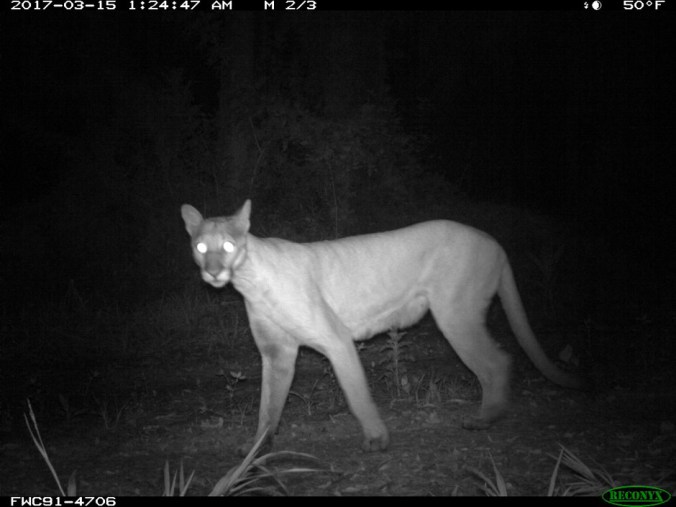
Filkins-The-Return-of-the-Florida-Panther.jpg

As Florida panthers have begun to multiply, they’ve been forced to search for new home ranges. PHOTOGRAPH COURTESY FLORIDA FISH AND WILDLIFE / FLICKR

Rewilding is a topic I started linking to as a matter of solidarity. While based in south India, I had plenty of exposure to residual evidence of the complicated–sometimes resplendently beautiful and other times brutally tragic–relationship between mankind and wild animals as played out over millennia, and still evolving. So I have kept an eye open for these stories, and have posted so many times on the topic that it might give the impression that it is a thing. As if it is happening more or better than it is really happening. But it is happening so I will keep the links coming.

Now I am in Belize most of the year, where the man-cat relationship is also millennia old, and as constant challenge as ever. But I am seeing it from well within the confines of Chan Chich Lodge and its surrounding hundreds of thousands of acres of healthy cat habitat. I know there are big cats in the USA, but not enough. That is why this story is a thrill. Dexter Filkins, never yet cited in these pages but whose reporting I depend on for other kinds of stories, was not a byline I expected to see on this story, but thanks to him for it:

For years, the Florida panther, a majestic creature that lurks in and around the forests of the ovbnm,./, has teetered on the edge of permanent disappearance. Closely related to the mountain lion, the panther once roamed across much of the South, but the ever-advancing modern world pushed it into a tiny corner of Southwest Florida. By the late nineteen-seventies, fewer than thirty survived.

Since then, the panther has been coming back, helped by a government- and privately backed expansion of its habitat. Florida panthers are now thought to number around two hundred. Indeed, there are so many big cats in the Everglades that they are venturing out in search of new territory. Continue reading
Sometimes Less Is More

Nijhuis-The-Many-Meanings-of-Biodiversity_01-640.jpg

In a new paper, researchers argue that oddball animals like the Cuban solenodon should be more aggressively protected. COURTESY NEW YORK ZOOLOGICAL SOCIETY / WIKIMEDIA COMMONS

Our focus is on developing and managing entrepreneurial opportunities to protect natural areas. More protection is better than less, we naturally assume. That is why we are intrigued by this blurb about a new scientific finding: “a small but strategic increase in protected lands could triple the amount of bird and mammal species preserved worldwide.”

The headline to this short item–CONSERVATIONISTS COULD BE SAVING MORE BIODIVERSITY IN LESS SPACE–has us clicking, and we thank the New Yorker’s commitment to science writing, and specifically Michelle Nijhuis for it:

Foxes, Habitat & De-Wilding

Five red fox kits around the tree.jpg

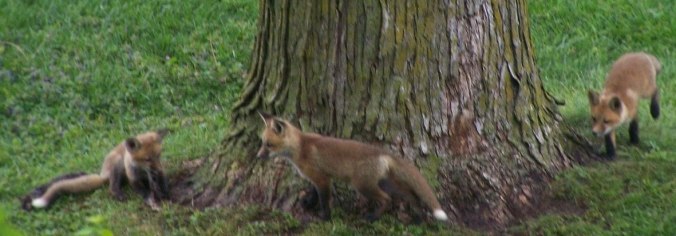
I recently received some photographs showing a family of foxes that had taken up residence near a home in the countryside an hour away from Kansas City. The foxes were wild, but even in this semi-rural landscape the foxes did not appear wild to me.

Vixen near the lakeIt was something about the context, seeing them in a yard I recognized well, that made me think about the essence of wildness. In the last year I have seen a number of grey foxes in the forests of Chan Chich and like most of the wild animals they do not seem to be afraid of humans; neither attracted to nor repelled by fear.

Vixen Apr 27 2017.jpgThe animal-human dynamic in both cases, the semi-rural home (of my in-laws, as it happens) setting of the foxes as well as those at Chan Chich seem to be one of peaceful coexistence, even apparent disinterest.  The human-animal dynamic is anything but disinterested, which the photos illustrate and that we see evidence of every day among Lodge guests. People want to see animals in their natural habitat. The animals’ apparent lack of fear of humans is related to the fact that there has been no hunting in the surrounding half million acres of forest for a couple generations.
It may also be that the foxes around the yard of the home in these photos also have not been hunted but something tells me that the foxes that seem habituated in and around human populations are different from those in these wild forests. I cannot quite articulate why I think that but today this book review got me thinking differently about the essence of wildness:

zuk-master180Imagine a time when scientists worked in secret, wondering if government officials would declare their research counter to state interests, endangering not only the personal liberty of the scientists themselves but their ability to let the experiments take them where the facts led. A time when how good a scientist you were was not all that mattered — what was important was how well you fit into political and ideological dictates. No, this is not a setup for a book ripped from yesterday’s CNN feed. Instead, it is the backdrop to a story that is part science, part Russian fairy tale and part spy thriller.

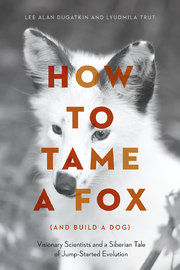
“How to Tame a Fox” sets out to answer a simple-seeming question: What makes a dog a dog? Put another way, how did an animal that started out as a bloodthirsty predator become one that now wants nothing more than a nice belly rub and the chance to gaze adoringly at a member of another species? Continue reading

Does The Monkey Smile?

SpiderMonkey.jpg

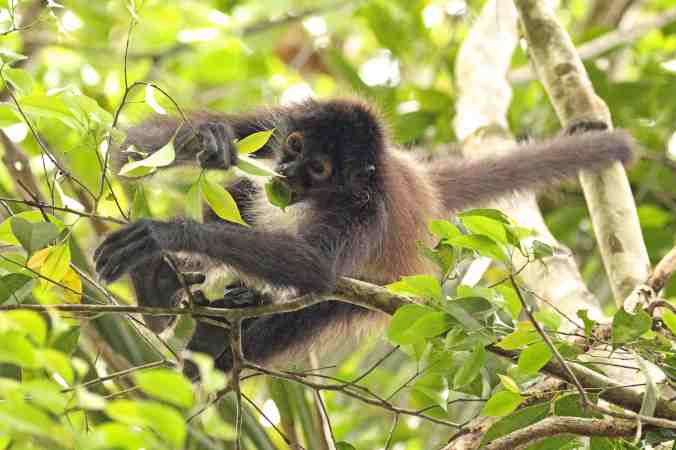
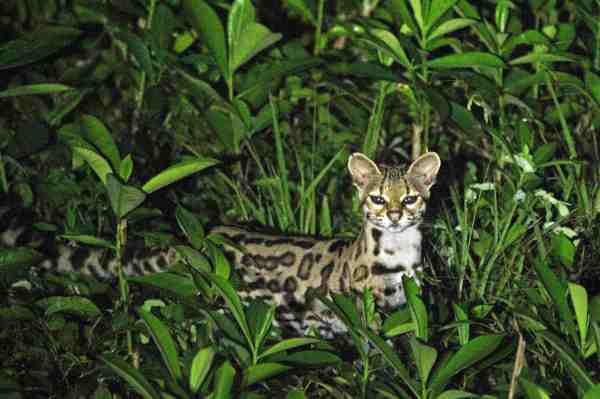
When sharing wildlife photos here, whether from guests or some of our own, the idea is to provide constant reminders, to ourselves and to everyone else, of the value of conservation. Even with a title of a post meant to draw a smile, it is not to be cute so much as to address the wonder of the moment captured in the camera. I really do wonder whether the margay purrs. And Chrissy Mason’s photo of the margay helped me wonder that more effectively.

The photo above, and the one below–both also shared by Chrissy–got me thinking about whether primates really smile, or whether it just looks that way to us (you must have seen that photo, reportedly a selfie taken by a macaque, that sure looks like a knowing grin). Continue reading

Does The Margay Purr?

MargayC1

Thanks for this photo go to a mom and daughter team who were out every day recently from pre-dawn until late evening, absorbing all on display at Chan Chich Lodge and its surrounding forests. Their last night, sharing the night safari with the family who contributed here, was a golden opportunity, so to speak. This margay looks so content, and intent, in a feline way, that I cannot help but wonder whether these wild cats purr.

Margay Jump Start

MargayRecline.jpg

In the post where I mentioned this margay sighting I did not yet have any photographic evidence. Now I do. Prior to their departure, the same Los Angeles family mentioned in this cat-sighting post handed me the memory card from their camera and I was able to pull these images. In the rush of the holiday weekend I had forgotten these until now. Above was the first, taken as quickly as the camera could be lifted to follow the spotlight. Below, an enlargement of the cat. Continue reading

Feline Trifecta

LeanderOcelot

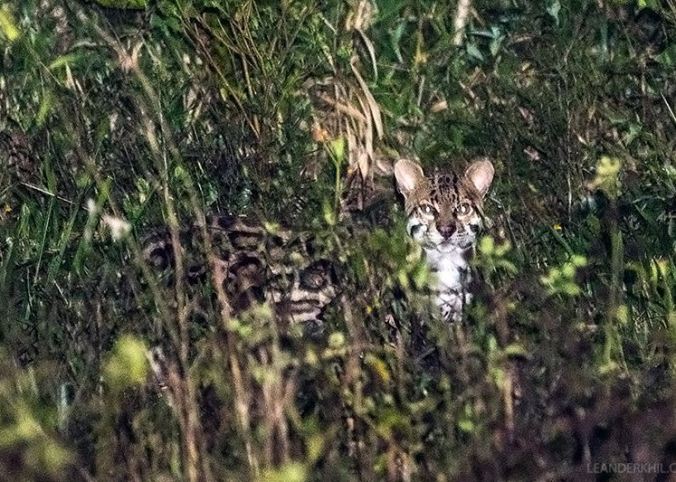
When Leander caught this cat in his camera some weeks ago, there was no telling if and when, or where, we might see it again. Last night, a family from Los Angeles who just the night before had seen two other species of cat during the night safari at Chan Chich Lodge, decided on a guided trek through the forest starting at 8pm. Continue reading

Eat More Fruit

chimp_wide-e9ca161342ebb893d6a491900854de4b7f2b84fc-s1400-c85.jpg

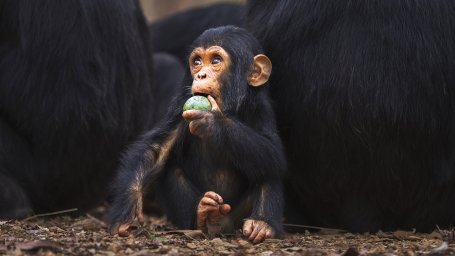
Compared to leaf-eaters, primates who ate fruit had around 25 percent more brain tissue. Anup Shah/Getty Images

Notwithstanding what I said here, eating fruit was already a good idea that now has one more bit of evidence. You should also eat it for the benefit of future generations, according to this story provided by the folks at the salt at National Pubic Radio (USA):

Primate brains may have grown larger and more complex thanks to a fruit-filled diet, a new study suggests.

The researchers analyzed the brain sizes and diets of over 140 primate species spanning apes, monkeys, lemurs and lorises and found that those who munched on fruit instead of leaves had 25 percent more brain tissue, even when controlling for body size and species relatedness. Take spider monkeys and howler monkeys, for example. Continue reading

Yarn Bombing, Indian-style

Elephants, many of whom have suffered serious abuse in the past, photographed wearing the knitted multi-coloured, pyjama-like garments knitted by local villagers Roger Allen

While the concept of yarn bombing (also called guerrilla knitting) is usually a playful way to bring color to an urban setting, this isn’t our first story about altruist knitting in the realm of animal protection.

This story seems particularly poignant considering it weaves together the matriarchal nature of elephants and the communal work of the village women…

Villagers knit jumpers for Indian elephants to protect the large mammals from near-freezing temperatures

Elephants in India are sporting colourful woollen jumpers after villagers knitted the super-size garments to protect the animals from near-freezing temperatures.

Women in a village near the Wildlife SOS Elephant Conservation and Care Centre in the northern city of Mathura reportedly began producing the colourful, pyjama-like garments after staff at the centre warned temperatures were approaching sub-zero at night. Continue reading

Buffalo, Back Big

14tb-bison-superJumbo.jpg

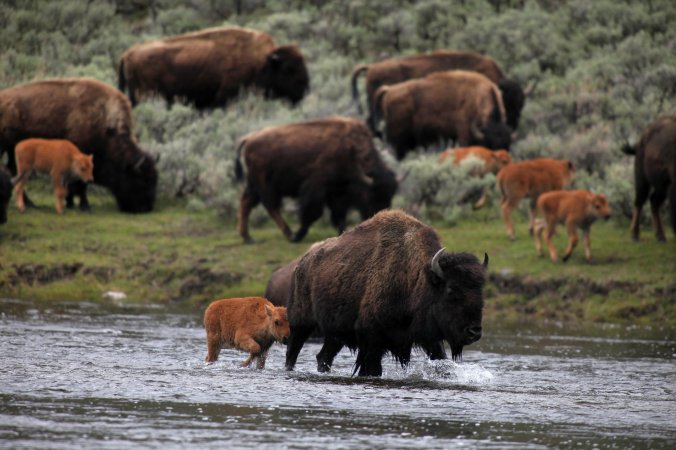
Bison and their calves in Yellowstone National Park. A fossil found in Canada provides the oldest evidence of bison ever discovered in North America. Credit Nicole Bengiveno/The New York Times

We love watching the return of this beast, so this story in today’s Science section is our kind of story:

When did North America become a home where the ancestors of buffalo roamed? Between 195,000 and 135,000 years ago, according to a study published Monday that reports on the oldest fossil and genomic evidence of bison on the continent. Continue reading

Marvelous Marvin’s Magical Mysteries

17039220_1419637051415082_6579151992410107862_o

At Chan Chich Lodge, in the northwest of Belize, something brings loyal guest back year after year, sometimes multiple times a year. There are many guests who have been coming to Chan Chich year after year for decades; there are more than a handful of guests who have had more than 200 total night stays at the Lodge, one couple approaching 300 nights and at least one couple approaching 400 nights. Having grown up in this business and knowing no other business, I do not have metrics to compare this level of loyalty to any other kind of business. Continue reading

Thank You National Public Radio (USA)

gettyimages-461032685-d9e390da618284547ffcceb14e2c93177fe08e0a-s1400-c85.jpg

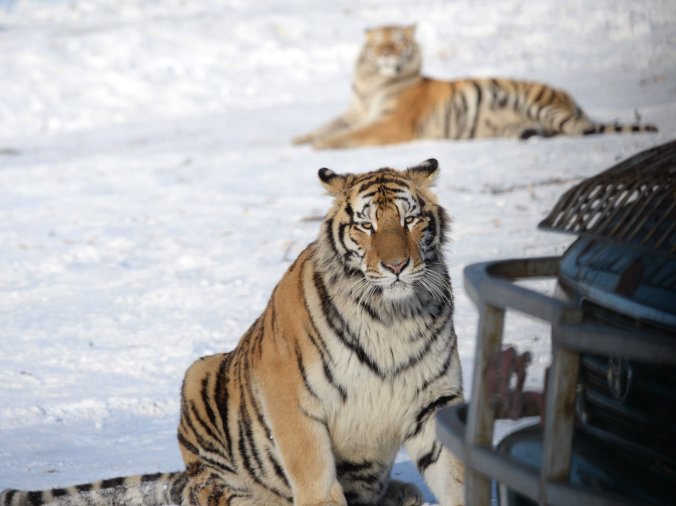
In this 2014 photo, two Siberian tigers rest beside a gamekeeper’s vehicle at the Harbin Siberian Tiger Park in China’s Heilongjiang province. Goh Chai Hin/AFP/Getty Images

We watched this video, from a link on social media that sometimes offers excellent, informative material related to the animal kingdom, wilderness, and conservation; but this turned our stomach so we are happy that NPR gives it exactly the kind of attention it deserves:

The Problem With That Video Of Tigers Squaring Off With A Drone

By Colin Dwyer

The video of about a dozen hefty Siberian tigers chasing and batting a flying drone from the sky seemed a lighthearted reprieve from the more serious news of the day. But since sharing the footage, we’ve become aware that it may conceal a darker story. Continue reading

Same Jaguar, Different Camera

ccljag1

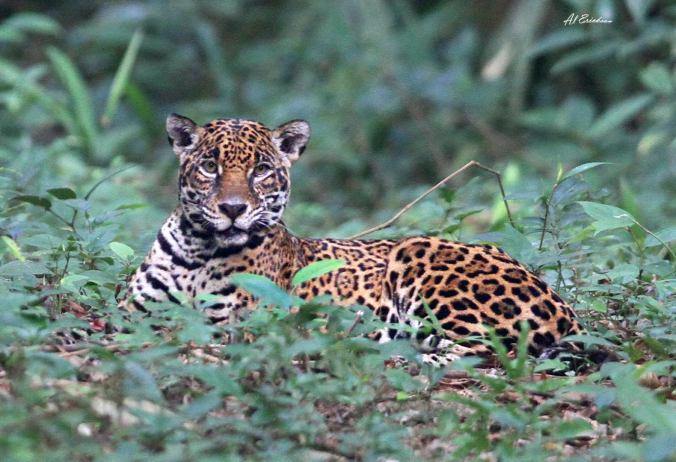
Yesterday I posted a couple images from a guest’s phone camera, including one of the cat above seen through the lens of a scope. What I did not know when I posted that was that another guide, Marvin who was with two other guests, had come upon the cat first and had signaled to Luis to bring his two guests to see the cat, which seemed quite relaxed in this location. Al Erickson, who is at Chan Chich primarily for photographing birds, took the photo above. Incidentally, he and his wife were the ones who pointed us to Bird Tales.

Lion Lost, Los Angeles

Puma2.jpg

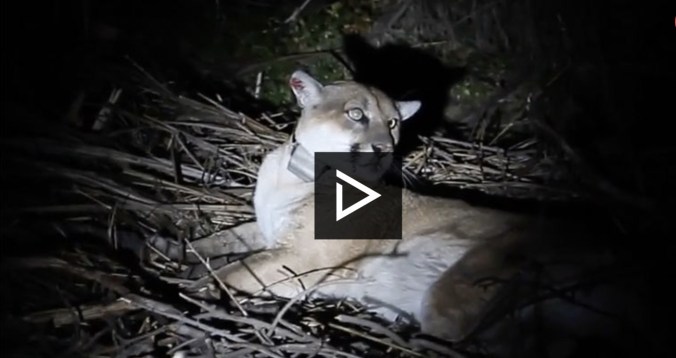
In case you did not see it yesterday, take a look at this when you have the time to read it in full. For now, over a quick coffee, click the image above to go to a video, 5:30 minutes long, to understand what the National Park Service is doing on behalf of this majestic lost cat:

The carnivore biologist Jeff Sikich captures and examines a mountain lion in the Santa Monica Mountains. Courtesy National Park Service

Urban Tracking And Other Soft Local Adventures

raccoontrack-1260x708

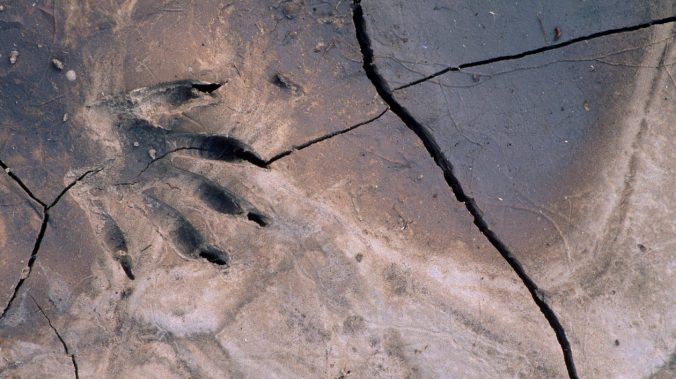
Raccoon track in mud along stream. Sarpy County, Nebraska. October 1996. Central Tallgrass Prairie Ecoregion. Photo © The Nature Conservancy (Chris Helzer)

It seems to go hand in hand with today’s other post, so thanks to The Nature Conservancy as always for this one:

A Field Guide to Tracking in Your Neighborhood

By Matt Miller

Tracking is one of the most family-friendly wildlife activities; you can enjoy it anywhere there is a patch of open ground. As I’ve written previously, kids love deciphering the mysteries of animal tracks. Even my two-year-old son loves checking out the tracks in our yard.

Continue reading

Fast Cats’ Feast

The cheetah is the fastest animal on land—a fact that is often repeated, but seldom truly appreciated. When documentary-makers film cheetas, they typically go for low-angle close-ups that capture the creature’s majesty, but that underplay its speed. The BBC’s The Hunt bucked the trend last year with aerial shots that reveal just how fast the cheetah is.

Ed Yong, writing on the Atlantic’s website, refers to the video clip above with his opening paragraph of Cheetahs Never Prosper. The cat lays the table for its feast, in full speed, and then Mr. Yong shares some plain truths: Continue reading

The Gift Of The Camera Trap

3-week-old-male-kitten-at-den-site-Laguna-Atscosa-NWR.jpg

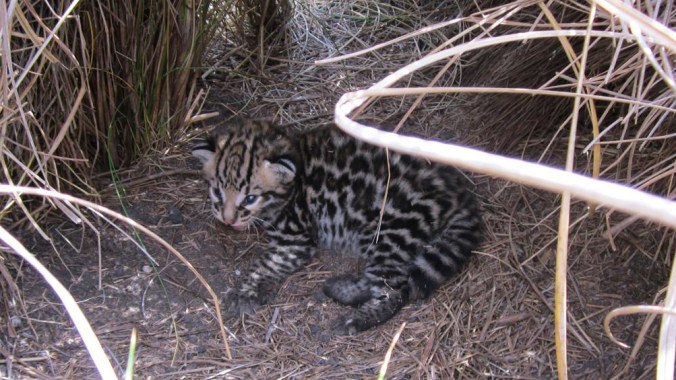
Three week old male ocelot kitten. Photo courtesy of US Fish and Wildlife Service

Thanks to Matt Miller and TNC’s Cool Green Science:

Camera Trap Captures Images of Texas Ocelot Kittens

Great news for ocelots: This year, several females with kittens were documented in South Texas using remote cameras.

The U.S. Fish and Wildlife Service (USFWS) issued a public service announcement brimming with good news, including the first ocelot den documented in 20 years on Laguna Atascosa National Wildlife Refuge, and ocelots with kittens on the Yturria Ranch, a private ranch protected by conservation easements held by The Nature Conservancy and USFWS. Continue reading

Walking on the Wildside

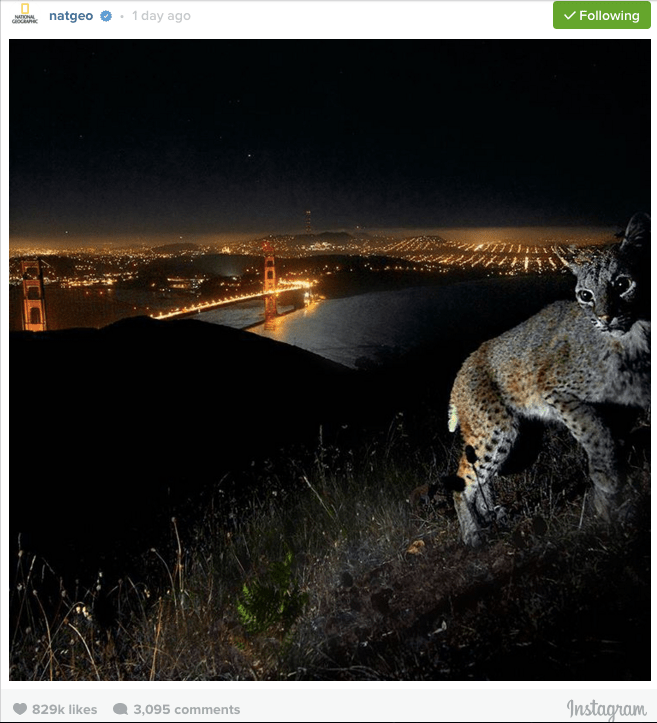
Camera Trap photo: Natgeo Instagram

Camera Trap photo: Natgeo Instagram

The photo above is a reminder that amazing camera trap captures of wildlife needn’t be limited to remote areas, or even exotic locations.

Bobcat takes a ‘selfie’ above Golden Gate Bridge

Seldom seen, bobcats rarely will stand still for a photo.

But every once in a while the shy, nocturnal feline will take a selfie — although not intentionally, of course.

This one triggered a remote camera hidden on a ridge in the Marin Headlands overlooking San Francisco and the Golden Gate Bridge. The camera was set up by National Geographic photographer Steve Winter.

The photo was posted today on the National Geographic’s Instagram account, but it’s apparently several years old. Continue reading

Big Weather & Big Cats At Chan Chich Lodge

Cockscomb Basin Wildlife Sanctuary is of interest because it is a pioneer in conservation in Belize–as Chan Chich Lodge is in its own way. But in writing about it Vicky Croke, for The Wild Life at WBUR (National Public Radio, Boston, USA), reminds a few of us of our time in Belize during Earl, and the aftermath during which jaguar sitings have been, and continue to be, inexplicably spectacular:

Jaguars Interrupted: Counting Big Cats After A Hurricane

Two months after Earl hit Belize, researchers at the world’s first jaguar reserve are still taking stock.

By Vicki Croke

This past summer, within days of gathering spectacular camera-trap footage of a female jaguar and her two tiny cubs sauntering through the Cockscomb Basin Wildlife Sanctuary in Belize, field scientists with Panthera, the global wild cat conservation organization, got the news that a tropical storm was forming and might just come their way. Continue reading

Rewilding, South Atlantic Edition

rainforest-animals

Galetti et al. “Reversing defaunation by trophic rewilding in empty forests.” Biotropica. 2016.

Thanks to Anthropocene:

A recipe for rewilding the Atlantic forest