No Kitten Videos Here, But Plenty Of Cats

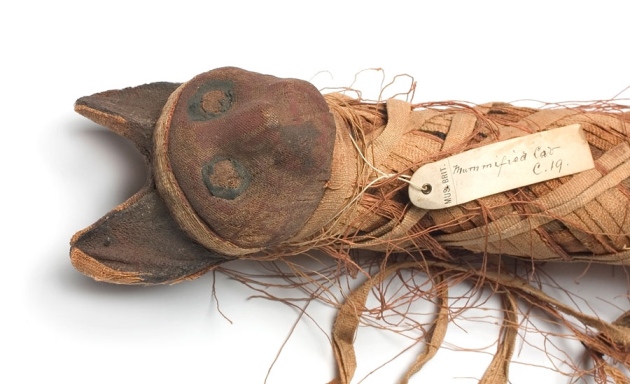
c0101823-egyptian_mummified_cat-spl_web

We are human, therefore we love cute kitten videos just like the next person. We just do not need to share them here. That is not our purpose. Ditto for puppy dog videos, though we have a soft spot for scientific explanation for how dog became man’s best friend. Especially when creatively oriented to non-scientists. Back to cats. We have been featuring them as often as possible here, when considered relevant. And then some links for good measure. Our thanks now to Nature, which brings scientific studies within reach of a motivated lay audience, for this story on one path by which cats came to their current prominent state of domestication in our lives:

How cats conquered the world (and a few Viking ships)

First large-scale study of ancient feline DNA charts domestication in Near East and Egypt and the global spread of house cats. Continue reading

Archaeoastronomy

William Gadoury used the position of a constellation to identify the location of a possible Maya city where an anomaly, shown above in a satellite image, was observed. Further study on the ground is required to determine the nature of this feature. IMAGE COURTESY OF ARMAND LAROCQUE via NATGEO

We have shared stories about Mayans, and especially the archaeological questions surrounding them, before; and also discussed the modern region that was once the civilization’s stronghold more recently. And although we missed the original news covering this interesting hypothetical discovery by a Canadian teenager, his recent interview with NatGeo brought the aspiring “archaeoastronomer’s” ideas to light, and we certainly hope Mr. Gadoury is right about the undiscovered settlement. Below, the first reporting by National Geographic, on May 11 of this year:

For gee-whiz value, the announcement has been hard to beat: A Canadian teenager discovers a lost Maya city without even stepping foot in the Central American jungle.

Unfortunately, this “discovery” appears to be the well-intentioned, albeit faulty, result of modern Western education colliding with an ancient civilization that saw the world in a very different way.

Continue reading

Museum in Your Pocket

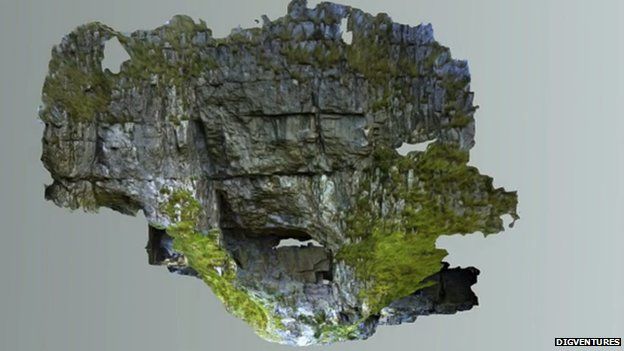
Archaeologists will turn Victoria Cave and its ancient bone collection into a digital museum. PHOTO: BBC

Archaeologists will turn Victoria Cave and its ancient bone collection into a digital museum. PHOTO: BBC

Victoria Cave was discovered by chance in 1837 and since then has been completely excavated. Within the cave’s thick clay deposits, scientists found an amazing record of climate change in the Dales over thousands of years. Excavators were particularly fascinated by ‘bone caves’ where there might be a possibility of finding evidence for the earliest humans along with long extinct animals. And now the cave and its bone treasures are being digitized.

Continue reading

Just Stop, Leave, And Do Not Come Back

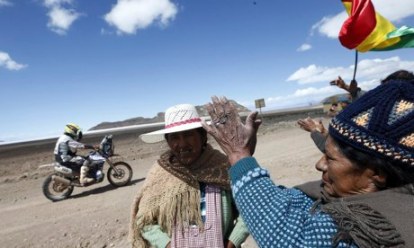
A Dakar rally competitor passes indigenous people between Bolivia and Chile. The rally, it is claimed, turns their land into a tourist attraction. Photo: Felipe Trueba/EPA

A Dakar rally competitor passes indigenous people between Bolivia and Chile. The rally, it is claimed, turns their land into a tourist attraction. Photo: Felipe Trueba/EPA

From 2008-2010, several contributors to this platform were spending time in the Patagonia region of Chile working on various projects, and during that period first came to know of the obscene event known as the Dakar Rally.

With no offense intended to motorbike racing, car racing or other enthusiasts of motorized sport, it is impossible to reconcile the destruction this event causes with any supposed positive outcomes. We can think of plenty of healthier alternatives to this method of getting around the southern part of South America. And yet, the event organizers have continued making their case to a government that has continuing granting an unwarranted privilege, and the annual event it is still going strong in spite of all the evidence of its negative spillovers:

The Dakar Rally of 500 off-road vehicles bumping and skidding through clouds of dust may be one of the world of motor sport’s most spectacular sights but archaeologists, environmentalists and indigenous groups are warning the 14-day event is ruining Chile’s ancient heritage.

Chilean government studies seen by the Guardian confirm the damage done to geoglyphs, protected sites, burial grounds and tracks on the Inca trail during previous races, but such is the race’s importance for tourism that it has once again been given the green light. Continue reading

A Tomb In Peru That Looters Thankfully Missed

Photograph by Daniel Giannoni. With eyes wide open, a painted Wari lord stares out from the side of a 1,200-year-old ceramic flask found with the remains of a Wari queen. Giersz and his colleagues think the Wari may have displayed the body of the queen after death in a royal ancestor cult.

Heather Pringle, at National Geographic, shares this about the photos (click on any image to go to the source) from this rare find:

The Wari forged South America’s earliest empire between 700 and 1000 A.D., and their Andean capital boasted a population greater than that of Paris at the time. Today, Peru’s Minister of Culture will officially announce the discovery of the first unlooted Wari imperial tomb by a team of Polish and Peruvian researchers. In all, the archaeological team has found the remains of 63 individuals, including three Wari queens. Continue reading

A Few Etruscan Tombs

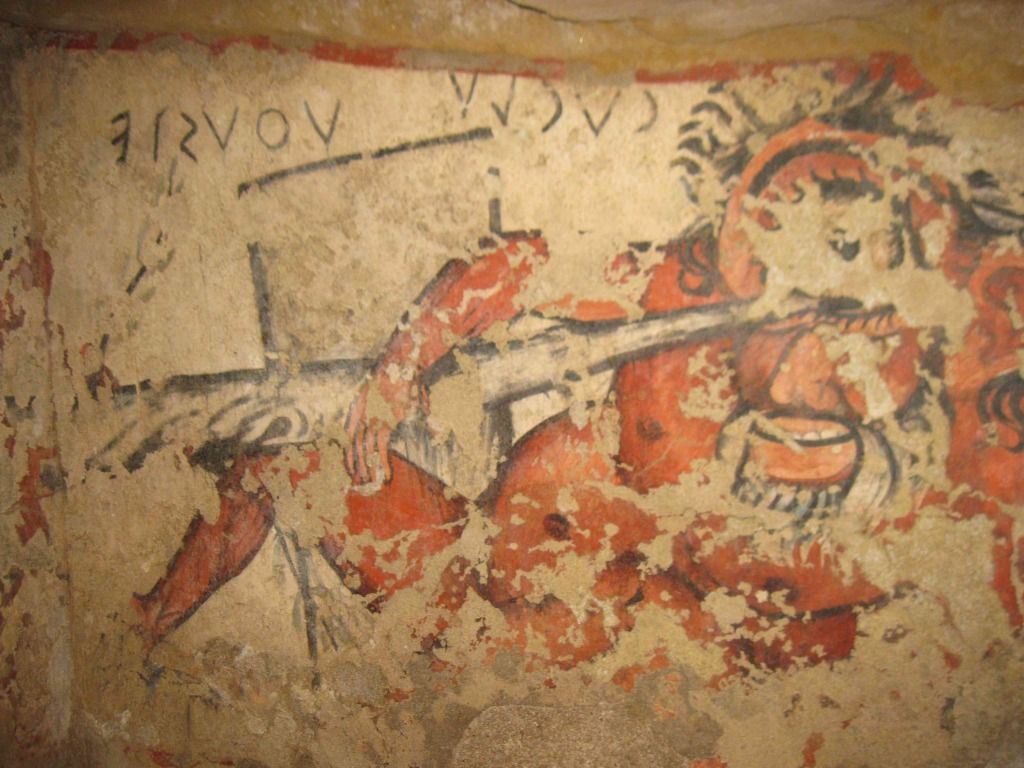
Polyphemus the Cyclops (Tomb of Orcus)

The Etruscans are, for all their great cultural influence on the Romans, a  poorly understood people. We know they once dominated northern Italy and much of its western coast and that they interacted extensively with not only the Romans but also many other native Italic tribes in the 1st milennium BC. Some of this contact is reflected linguistically: the modern English word “person,” deriving from Latin persona, entered the Latin language from Etruscan phersu Continue reading

Young Explorers

I recently discovered that National Geographic offers grants to researchers, conservationists, and explorers between 18 and 25 years old to pursue projects around the world in archaeology, filmmaking, biology, adventure, and exploration, to name a few fields. These Young Explorers Grants, which generally range between $2000 and $5000, can often be a perfect catalyst for more or future funding for people trying to fulfill a lifelong research dream or experiment with a concrete fieldwork idea — after all, having National Geographic’s name on your list of supporters is pretty impressive, and a sign of great potential!

This morning, I attended a workshop given by several members of the National Geographic team hosted by Cornell University and sponsored by the Lab of Ornithology, The North Face, and other groups, which gave an overview of NatGeo’s mission as well as quite specific examples of research possibilities from past and current Young Explorer Grantees. Continue reading

Using Small Mammal Remains for Environmental Archaeology

Credit: Bresson Thomas

Archaeological remains of small mammals generally weighing under 1kg, or micromammals, are important as environmental indicators, partly because they tend to specialize in certain habitats and are sensitive to change. Many factors affect their ranges of distribution, including predators, food requirements, competition, fire, shifts in precipitation patterns, and shelter availability. Micromammals such as voles and mice also tend to live in dense populations and have evolved rapidly through high fecundity. Due to these diverse and interrelated factors, the interpretation of micromammal remains—bones and middens, mostly—requires a deep understanding of the rodents’ relationship with its environment. In other words, ecological information is imperative to accurate assessment of archaeological data on micromammals.

But sometimes micromammal remains have answered modern ecological questions. For example, packrat middens in arid North America offer relatively high temporal, spatial, and taxonomic resolution (i.e., small intervals with which to measure time, space, or species range), and contain what is possibly the “richest archive of dated, identified, and well-preserved plant and animal remains in the world” (Pearson & Betancourt 2002, p500). Continue reading

Resilience, or Failure?

It is said that our early experiences create connections in our brains that last throughout our lives. In one particular case I know this to be true: visiting Tikal and Copan as a child filled me with a lifelong awe and interest in the Mayans. So in my current studies it is an easy leap from that simple interest to a more scholarly one.

For hundreds of years human civilizations have looked back on previous societies and wondered why they made certain decisions, how they coped with diverse problems, and what caused them to change. In his popular book Collapse: How Societies Choose to Fail or Succeed, Pulitzer-winning author Jared Diamond examines societies that he claims had unsustainable relationships with their ecosystems, and describes how their actions largely led to their demise. He also refers to some current communities, such as those of modern-day Rwanda, but for my purposes I will only address the past societies (the most academically pertinent and personally interesting to me being the Mayans, because their disappearance from their grandiose cities–Tikal and Copán, for example–has historically been mysterious, and may be closely related to environmental stresses). Continue reading