If You Happen To Be In New York

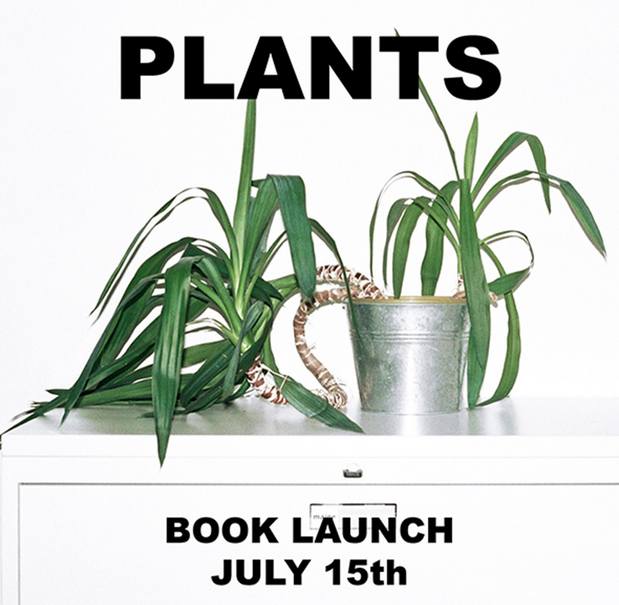
Book Launch


We believe in, and care about biophilia, which is a phenomenon first identified and named by E.O. Wilson. Thankfully, we are not the only ones. We appreciate the intersection between art and science in elucidating biophilia evident in this book. Thanks, Polly:

Polly Brown is a London based artist, and photographer. Continue reading

Bamboo Wind Chimes for Birds

One of the finished chimes

The picture above shows one of a couple bamboo wind chimes that Seth and I built to put up around Xandari. The sound is, err, rather wooden–but definitely mild and pleasant! You may be asking why we took it upon ourselves to demonstrate our mighty artistic prowess. Well, we really had the birds of Xandari in mind with this project. Specifically, a poor Buff-throated Saltator who had thrown himself against the spa window so many times that he had Continue reading

If You Happen To Be In London

bell03_3613_04

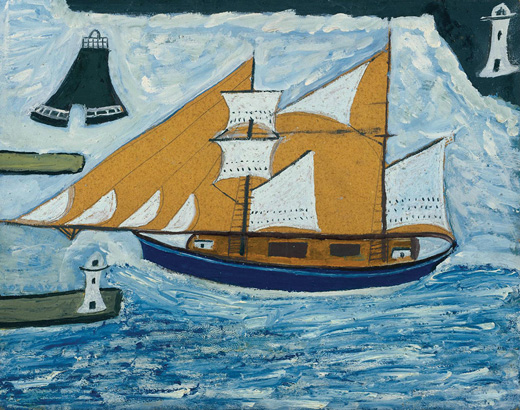
We have been meaning for nearly a year to recommend this article on the relationship between one man and several artists who were otherwise completely unrecognized by the art establishment over many decades. With this man as a champion, after a long effort the artists have finally come into the recognition previously denied to them.

This new show in London reminds us not only to share that article, but to share this review. What explains our interest in this sort of exhibit is the outsider status of the artists. Not “bad boy” outsiders clamoring for attention, but innovators. Thanks to London Review of Books for this review of a current show at the Tate:

‘Proud’ is an epithet that extends from the parade to the workbench. The swagger of troops marching down the street is transferred by the carpenter to the nail that juts out, no less cocky, no less full of itself. There’s much in Tate Britain’s new exhibition, British Folk Art (until 31 August), that straddles both forms of pride. It opens with a fanfare of stout, galumphing tradesmen’s signs: the outsize models of boots, keys, teapots, top hats and so on that dangled over high streets two centuries ago. Continue reading

Theyyam Face Make-up

Photo credits: Jithin Vijay

Photo credits: Jithin Vijay

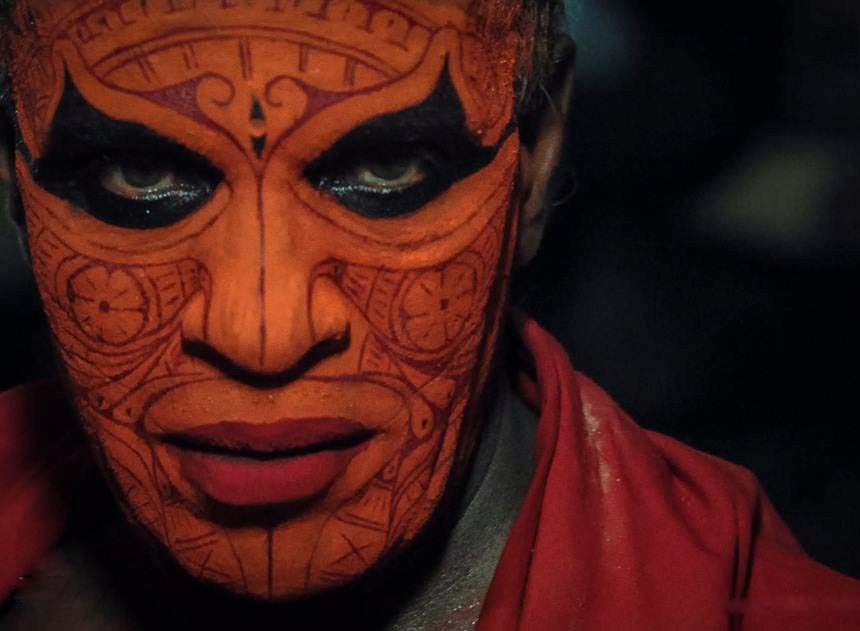
Face painting is one of the most important parts of Theyyam, an ancient form of worship in certain parts of Kerala. Theyyam dance make-up should be made from as many natural materials as possible. Coconut leaves are used as brushes, and the make-up artist should have perfect knowledge of how to combine colours.  Continue reading

Ornithologist’s Masterpiece At Auction

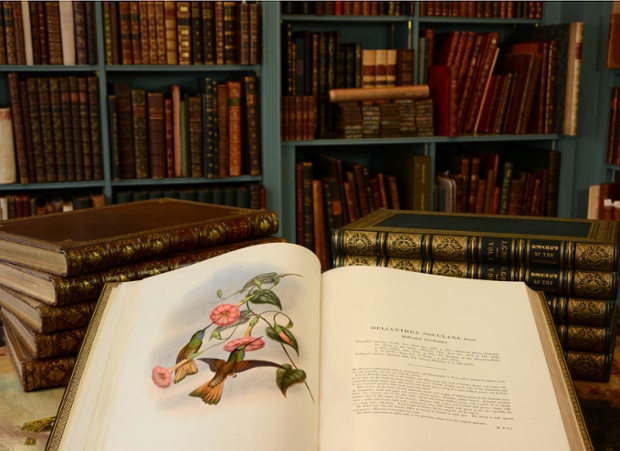
One of the 44 volumes containing over 3000 hand-coloured lithographs included in the sale


The Guardian notes the auction many of our ornithologically-oriented readers and contributors might find worth attending, even if not as bidders (given the expected final sale price) in order to see some of these prints up close (see samples after the jump):

Rare set of John Gould’s bird books for sale – in pictures

John Gould was one of the most brilliant ornithologists of the 19th century, and a talented artist to boot. He worked with Charles Darwin, travelled the world to research the beautiful folio works he produced, and set up a publishing company to sell them.

Continue reading

If You Happen To Be In London

folkartbanner

Tate Britain: Exhibition

10 June – 31 August 2014

During the next few months the exhibition will be at the Tate, and then moving to at least one other venue:

Discover the extraordinary and surprising works of some of Britain’s unsung artists in the first major exhibition of British folk art.

Steeped in tradition and often created by self-taught artists and artisans, the often humble but always remarkable objects in this exhibition include everything from ships’ figureheads to quirky shop signs, Toby jugs to elaborately crafted quilts. Continue reading

Performing Arts – Chamundi Theyyam

Photo credits : Jithin Vijay

Photo credits: Jithin Vijay

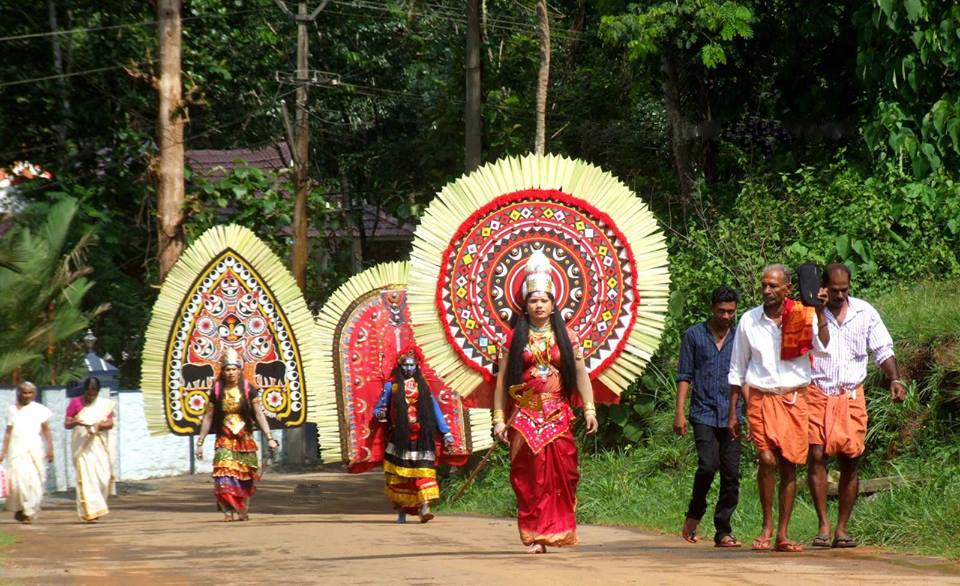
Kerala has a veritable array of performing arts. Theyyam or Kaliyattom is one of the most popular ritualistic dances of Kerala. Costumes with crownlike headgear, breastplates, ornaments, special face painting and variously shaped garments of cloth and palm leaf fronds make Theyyam a colourful visual. It is a devotional performance with a surrealistic representation of the divine. Continue reading

Performing Arts – Padayani

Photo credits : Ramesh Kidangoor

Photo credits: Ramesh Kidangoor

Padayani literally means the “ranks of an army”, but is also related to religious rituals and mythological stories. It is the symbolic victory march of Goddess Bhadrakali after she defeated the demon Darikan. Unmarred by caste distinction, it is a community celebration with audiences providing an active participatory role with drums and pipes used for musical support. Continue reading

Mobile Art Exhibitions

The Rodi Gallery, parked in Astoria Park in Queens. Credit Aaron Graham

The Rodi Gallery, parked in Astoria Park in Queens. Credit Aaron Graham

Thanks to the New York Times for its coverage of the arts in general, and for this specific reporting on the efforts to get art where it may be seen outside the normal venues:

On a recent Saturday, Elise Graham and her 22-year-old son, Aaron, pulled a 12-foot van into a parking spot on West 14th Street in Greenwich Village, swung open the back doors, lowered the aluminum stairs, and welcomed visitors inside their mobile Rodi Gallery.

Around the United States, art is on the roll. Inspired by the success of food trucks, gallery owners like the Grahams, who are based in Yorktown Heights, N.Y., have been taking their show on the road. For the last year, they have traveled to populated spots like the meatpacking district of Manhattan, the Peekskill train station and Astoria Park in Queens. This Saturday, they are parking in the center of Bushwick Open Studios, a three-day festival in Brooklyn. Continue reading

Mythology of Waste

This slideshow requires JavaScript.

It’s been several months since Chinese conceptual artist Xu Bing orchestrated the monumental task of suspending a pair of 12 ton birds into the nave of one of New York City’s most famous cathedrals. Fashioned from salvaged construction debris from Beijing’s World Financial Center, the phoenix pair is reminiscent of the more 2-dimensional work of Brazilian artist Vik Muniz in both philosophy and meticulously layered execution.

Throughout China’s history, every dynasty has had its form of phoenixes. Representing luck, unity, power and prosperity, these mythological birds have, for the most part, been benevolent, gentle creatures. But this pair, fashioned from the materials of commercial development, reflect the grimmer and grittier face of China today.

“They bear countless scars,” Mr. Xu explained, having “lived through great hardship, but still have self-respect. In general, the phoenix expresses unrealized hopes and dreams.” Continue reading

If You Happen To Be In New York

Carl Andre, 5 x 20 Altstadt Rectangle, 1967. Konrad Fischer Galerie. © Carl Andre/Licensed by VAGA, New York, NY.

Carl Andre, 5 x 20 Altstadt Rectangle, 1967. Konrad Fischer Galerie. © Carl Andre/Licensed by VAGA, New York, NY.

If you are in New York City you are close enough for a day excursion, so consider a visit some time in the next 10 months:

Dia Art Foundation to Present Carl Andre: Sculpture as Place, 1958–2010
May 5, 2014–March 2, 2015

The first major retrospective of Andre’s work in the United States since the late 1970s debuts at Dia:Beacon and then tours internationally

Andre’s signature floor-bound sculptures will be presented with the artist’s “typewriter drawings” and rarely exhibited objects known as Dada Forgeries

New York, NY–Tracing the full evolution over five decades of the thinking of Carl Andre, a crucial figure in the redefinition of contemporary sculpture, Dia Art Foundation will present Carl Andre: Sculpture as Place, 1958–2010 from May 5, 2014, through March 2, 2015, at Dia:Beacon. The retrospective will include approximately 50 sculptures displayed in Dia:Beacon’s main galleries; over 200 poems and works on paper presented in wooden vitrines designed by the artist; a selection of rarely exhibited assemblages known as Dada Forgeries; and an unprecedented selection of photographs and ephemera. This will be the first survey of Carl Andre’s entire oeuvre by a museum, and the first retrospective in North America since 1978-80. Continue reading

Watersports In The Sand

7bbaea46aa80e06b975831377339502b2d3e2953_620x311

Something about the sand, and the artists, down under…we give thanks to the New Zealand Herald for this story which, among other possible interpretations, demonstrates that much a great time can be had with much lower carbon footprint while engaging in sport at the beach, and on better yet it is a collaborative effort among several artists:

A group of imaginative artists has shown magic can be made from a few simple lines in the sand. Continue reading

Another Reason To Visit The High Line

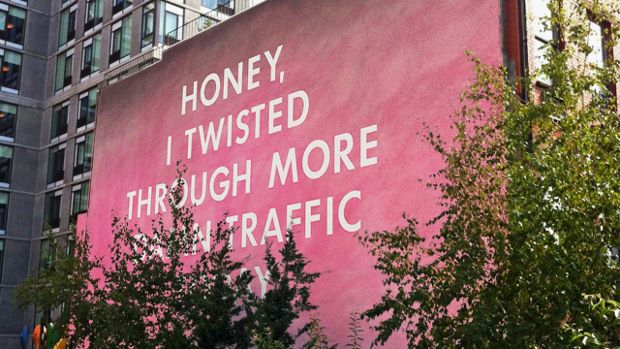
Rendering of Ed Ruscha's forthcoming High Line commission

Rendering of Ed Ruscha’s forthcoming High Line commission

Friends of the High Line, we try to remain steadfastly.  So, we count the following as good news. Thanks, as always, for the excellent arts coverage by Phaidon:

Ed Ruscha’s first public commission in NYC

His 1977 word painting will appear as a large hand-painted mural beside The High Line next month

Unveiled a few weeks after the city’s new mayor announced his commitment to lowering New York’s road deathsEd Ruscha’s High Line commission could be read like a vernacular traffic report.

Continue reading

If You Happen To Be In New York City

Screen Shot 2014-04-26 at 9.36.32 AMClick the image at left to learn more about two performances which, if you happen to be in New York City or close by this weekend, you might enjoy if you are a danceophile, Indophile, or both. Thanks to New York University for hosting a sample of our home country culture:

Following unforgettable performances by Shantala Shivalingappa and Rama Vaidyanathan in 2011, and Nrityagram Surupa Sen & Bijayini Satpathy in 2013, Dancing the Gods weekend festival highlighting classical Indian dance returns in 2014 with more striking artists.

“…both briskly exciting and exacting, [Dandekar’s turns are] a wonder…” THE NEW YORK TIMES

Continue reading

Small Ukrainian Museum’s Outsized Support Keeps Tradition Alive And Well

pysanky-easter


This qualifies as an unexpected form of entrepreneurial conservation, except among a few with insider knowledge. Several Raxa Collective contributors are amateur pysankyists, some bordering on master level, so this post is a tribute not only to a great museum which these contributors know well, but to the many non-Ukrainians who are inspired by this tradition enough to keep a Ukrainian art form alive and well:

Vegans, avert your eyes while the rest of us consider the egg. We’ve finally reached its season, at least as far as symbolism goes: spring, birth, something that the Theosophical Society calls “the origin and secret of being”—and that’s just the beginner-level stuff. What the grain of sand was to William Blake, the egg has been to just about everyone else. Brahma emerged from an egg, and so did the Tahitian god Ta’aroa and Pangu, the Chinese creator. The ancient Greeks practiced oomancy, divination by boiled egg white. Continue reading

‘Empty Room’ Artist Maya Lin On Changing The Course Of The World

Screen Shot 2014-04-21 at 6.28.17 PM

Aren’t we all? (Trying to change the course of the world, in our own chosen way.) Some by manual labor, some by intellectual labor, some by more typically defined fine art, among others. We appreciate any venue chosen by those who want to make a difference. Click the image above, or click here, to go to the video of artist Maya Lin, with excerpts of her recent lecture at Cornell University discussing:

her work, including her recent sculptures and the installation Empty Room, from her What is Missing? memorial, on view as part of beyond earth art • contemporary artists and the environment at the Milstein Hall Auditorium. 

Controlling Invasive Lionfish – Update on Market Solutions: Part 2/2 — Lionfish Art

spines and tails-photo3

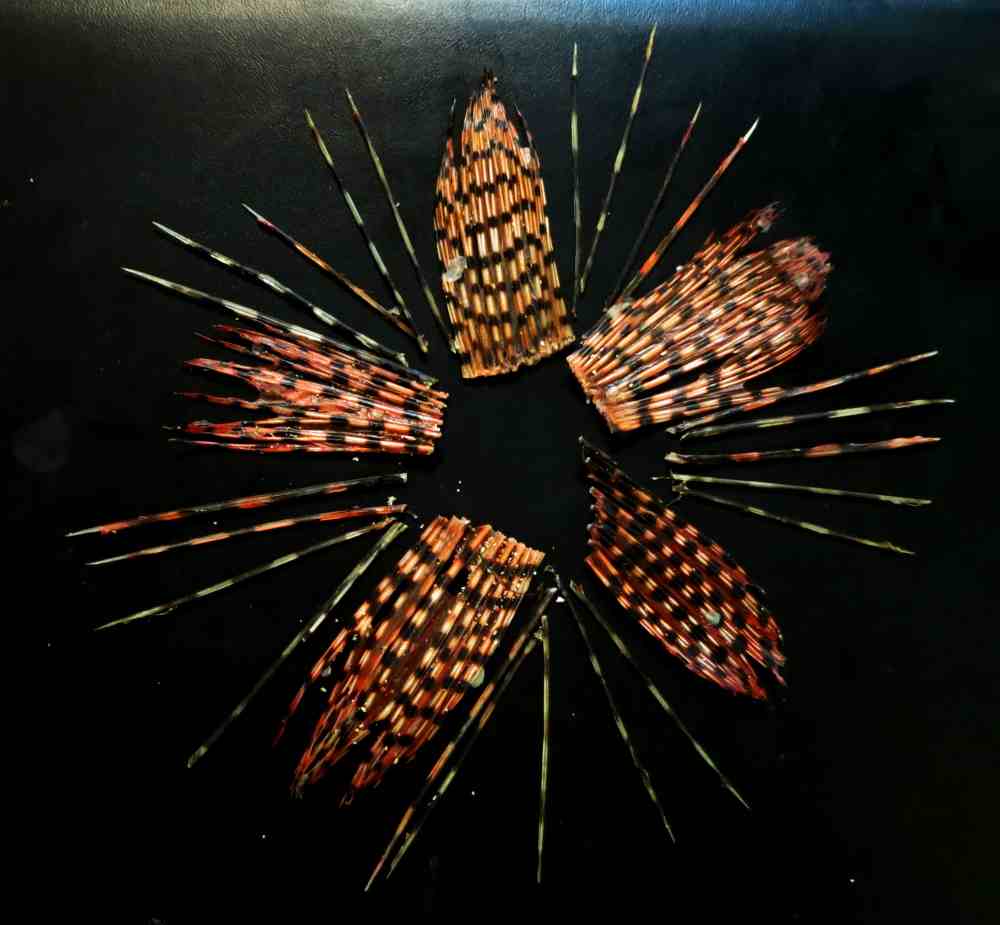
Array of dried lionfish spines and tails -ready for jewelry use Credit: ReefCI

In Part 1 of this post regarding market-based solutions to fighting the lionfish invasion that is threatening coral reef and other marine ecosystems throughout the Caribbean, Gulf of Mexico, and Southern Atlantic Seaboard of the United States, I wrote about the challenge of developing commercially sustainable strategies for undertaking the systematic removals that are needed to keep lionfish populations under control. I discussed the need to develop a series of vertical markets, pointing to promotion of lionfish as a seafood choice as the most obvious of these. Capture of juvenile lionfish for the aquarium trade as another.  A third market, and one in which I’m personally involved, is use of lionfish spines and tails for jewelry and other decorative items.  Continue reading

Ricardo Solis, Come To Kerala!

This slideshow requires JavaScript.

We have a soft spot for anyone who, young or old, finds a way to link art and nature. Ricardo Solis has a particular view, one which makes us smile, so here is a bit about him:

Ricardo Solis was born in Guadalajara, Jalisco, Mexico.  He graduated from the School of Visual Arts and acquired expertise in workshops taught by outstanding teachers. He has participated in several exhibitions nationally and internationally and his work is in major collections.

From a young age Ricardo was attracted to art and nature.  Continue reading

Collapsitarians Rising

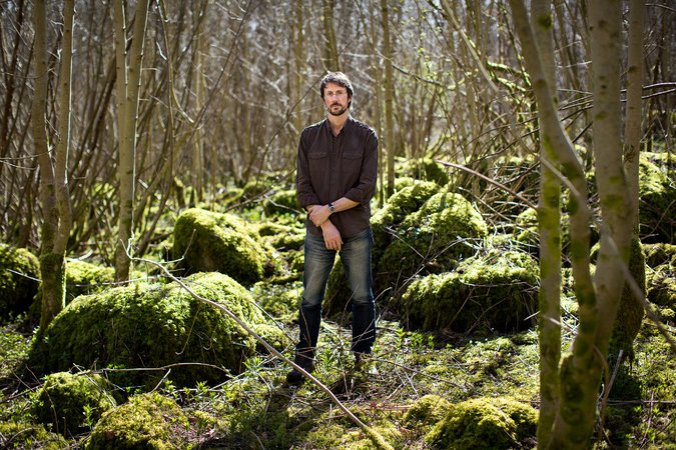
Paul Kingsnorth. Photo by Kenneth O Halloran

Paul Kingsnorth. Photo by Kenneth O Halloran

Collapsitarian sounds decidedly like the opposite of our approach on this platform, but in this profile I recognize observations and motivations, and even actions if not conclusions, out there among the practitioners. Read the story in this week’s New York Times Magazine:

By DANIEL SMITH

After decades of fervent environmental activism, Paul Kingsnorth decided it’s too late — collapse is inevitable. So now what?

If that seems intriguing, and especially if you want to smile and even laugh a bit, visit Paul Kingsnorth’s website:

OAQs

(Occasionally Asked Questions)

Could you puff yourself up in a few paragraphs of third person prose please?

Certainly. Paul was born in 1972. He studied modern history at Oxford University, where, as well as studying, he edited the student newspaper and was politically radicalised by his involvement in the road protest movements of the 1990s. Continue reading