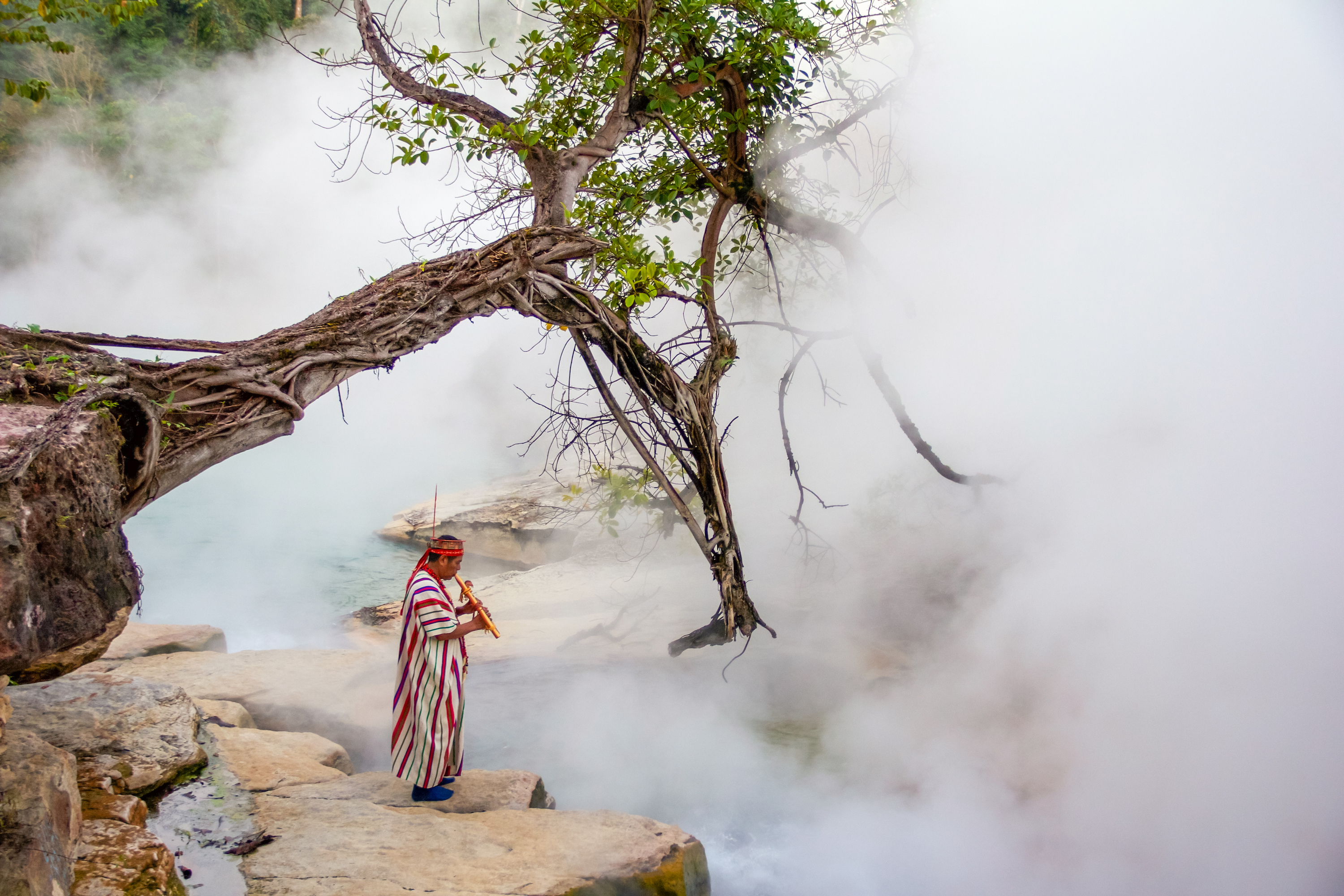
Finding a Boiling River in Peru

The Boiling River and an Amazonian shaman. Photo by Sofia Ruzo

Thanks once again to Chau Tu at Science Friday’s weekly written article, we’ve learned something new about the natural world, and it sounds like pretty much everyone except maybe a couple hundred people were unaware of its existence too: a steaming-hot river in the Amazon of Peru that isn’t volcanically heated. As Andrés Ruzo, the first geoscientist to study the water body, said in his TED Talk on the subject in 2014 (just released this February), “At a time when everything seems mapped, measured and understood, this river challenges what we think we know. It has forced me to question the line between known and unknown, ancient and modern, scientific and spiritual. It is a reminder that there are still great wonders to be discovered.” Here’s more from Chau Tu on the subject, and make sure to visit the Boiling River Foundation website.

Andrés Ruzo first heard about the Boiling River from his Peruvian grandfather, who shared a legend with him when he was a kid about the Lost City of Gold in Peru. “One of the details of the story was a ‘river that boils,’” Ruzo recalls.

Twelve years later, when Ruzo was studying at Southern Methodist University in Texas to become a geophysicist, he asked colleagues and other experts if they knew anything about a large river that boiled in the Peruvian Amazon. No one had; some scoffed at the inquiry. While thermal rivers do occur on earth, they’re generally tied to active volcanic or magmatic systems—neither of which were known to exist in the Amazon jungle, they said.
Continue reading

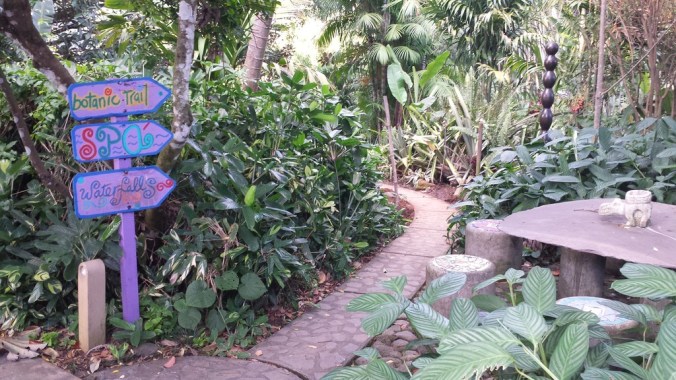
Over the River and through the Botanical Garden

20160105_164051_zpsalrrh8nfAt Xandari we offer a garden and farm tour that consists of showing guests through our botanical garden, Mandala garden, and orchid house and educating them on the properties of each of the plants. When I was asked to translate the tour for our head gardener Jose Luis I immediately accepted. However, after agreeing to be the translator it dawned on me that my rudimentary knowledge about plants (species, genus, and all that scientific terminology amounts to high school level biology) could be a limitation to the learning experience of the guests. Adding to my worry, the guests taking the tour are well versed in plant identification and were hoping to learn more about the tropical plants we have. To prepare myself, I skimmed the plant identification binder we have, decided to take it with me on the tour, and hoped for the best.
Continue reading

Witnessing (and Separating) Color

One must always be camera-ready at Xandari; otherwise one might miss the unexpected beauties that present themselves. On Friday I postponed my dinner (despite my grumbling stomach) in order to take a picture of the breathtaking sunset that was slowly sinking behind the mountains. I had to get to the sunset pool to capture this marvel, and believe it or not, I actually ran. Every second spent getting to the pool meant one less streak of vivid color highlighting the darkening sky. Not to mention, it also meant one second less of battery life on my camera phone with 4% battery left. The stakes were high.

I had not yet witnessed nightfall from the sunset pool, and as soon as I reached my destination I drew in a quick, shallow breath and let out long whispered ‘wooow.’ I was paralyzed with wonder. Birds were swooping down to drink some water from the pool, dodging and weaving one another with such swiftness that I’d lose track of which one I was looking at, all the while the sunlight retreated in the background. It was the ‘bleep’ of my “dying” phone that woke me to my senses and reminded me why I had run here in the first place. I took my pictures quickly and then observed the fleeting moment in stillness. Continue reading

Simple Beauty In Water

27mag-look-toshio-slide-FQI3-thumbWideFrom this week’s New York Times Magazine, a collection of sublime photographs:

Toshio Shibata’s Mesmerizing Photographs of Water

The Japanese photographer finds sublime beauty in unlikely landscapes.

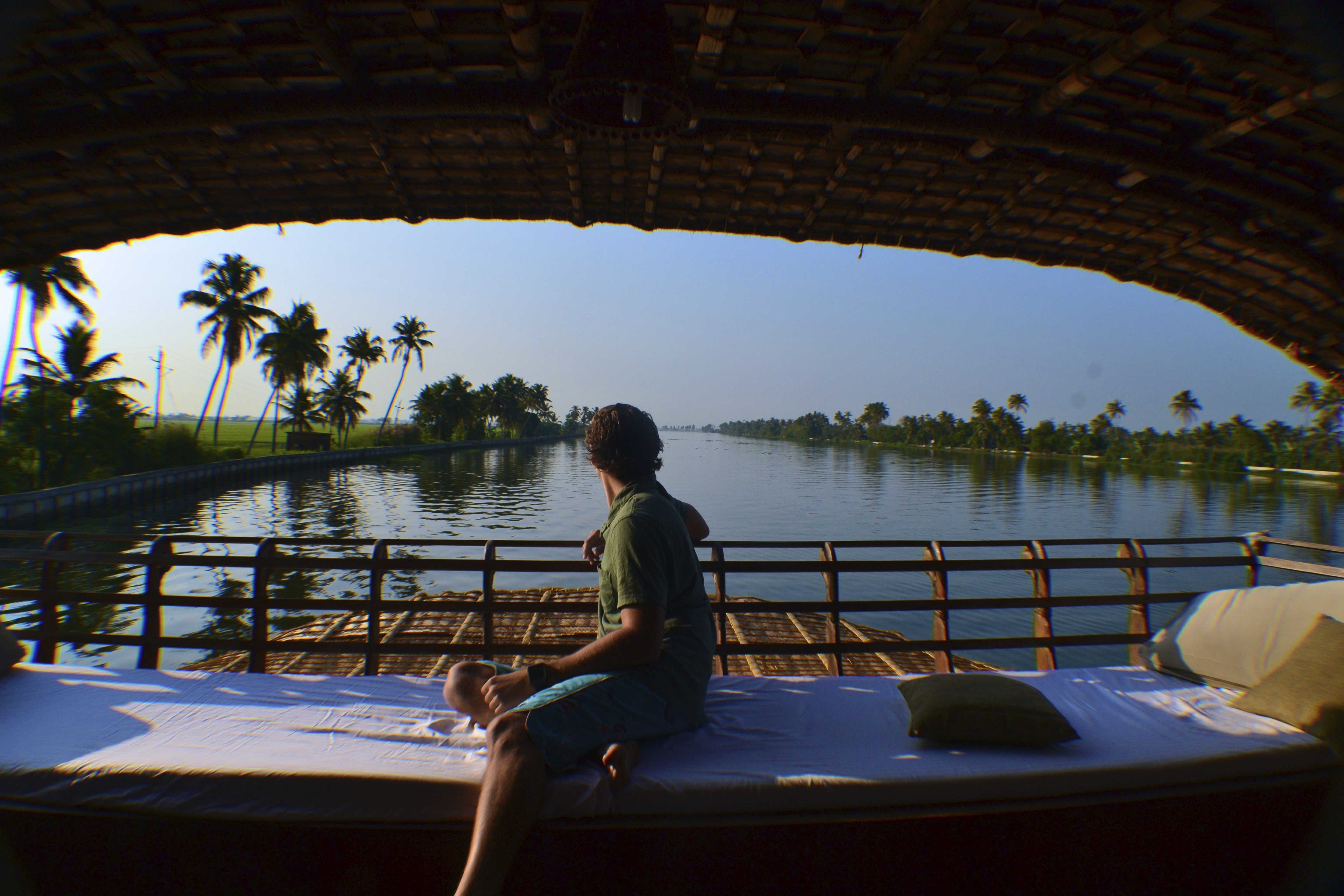
The Backwaters of Kerala, India

Upstairs deck/lounge

Upstairs deck/lounge

Our group of four was greeted with “tender coconuts” to drink while we got settled into the boat and into our bedrooms. Our houseboat was over 100ft long with three bedrooms, a dining room, an upstairs lounge deck and all the amenities of a hotel (including AC), I was in awe. The outside was covered in a coconut palm woven shell tied together by coconut husk rope. Truly a product of “Kerala”, meaning “Land of Coconuts”. Continue reading

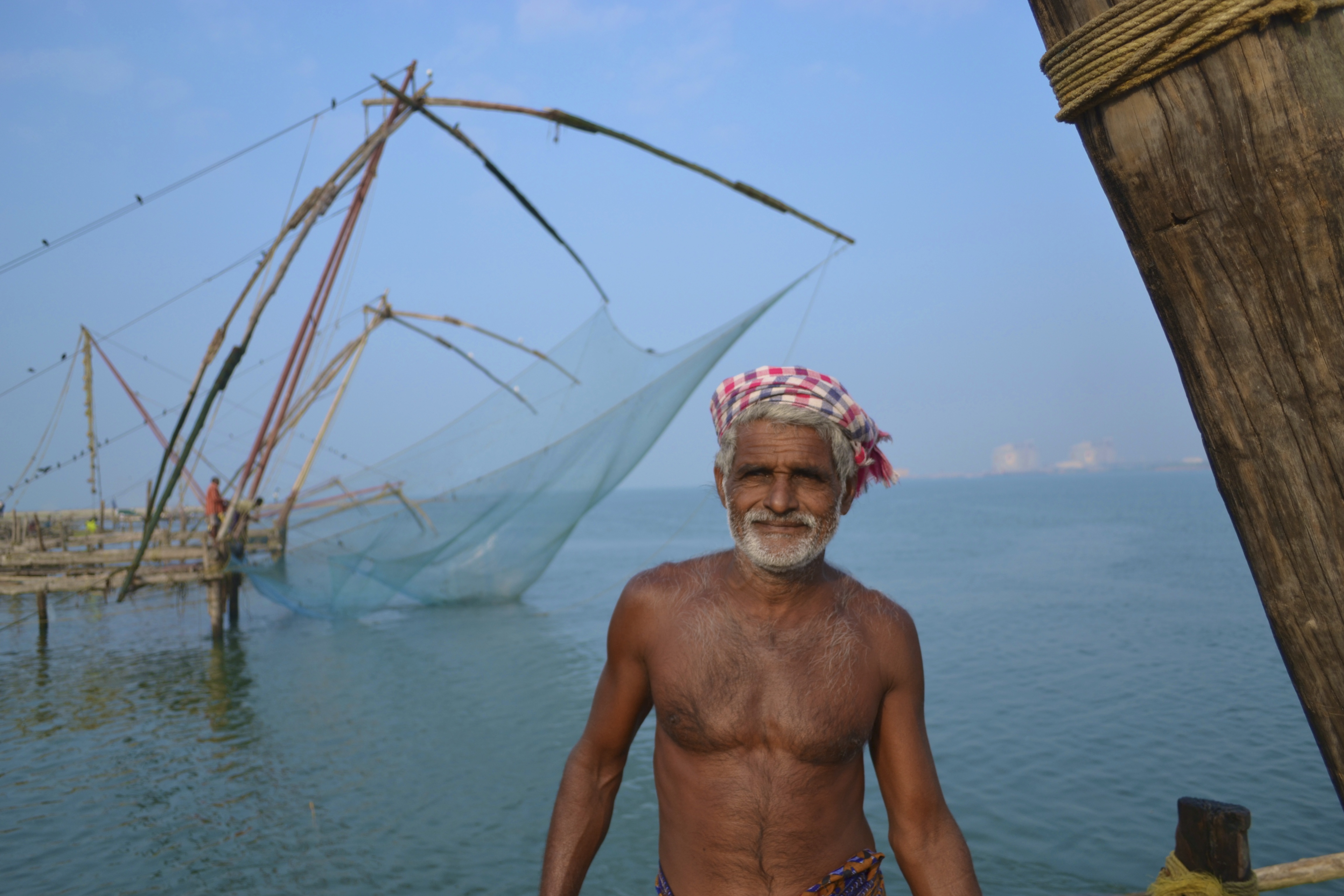
Chinese Fishing Nets, Kerala

Marconi in front of of the nets in Fork Kochi

Marconi

Marconi is an original decedent of the Mongolian people (a Chinese state at the time) who were the creators of the “Chinese Fishing Nets” in Kerala, India. These structures are at least 30 ft high and the nets stretch out more than 50 ft across the water! It takes half a dozen people to even attempt to heave the nets which work on a pulley system with GIANT boulders hanging from the opposite side to counteract the weight. Continue reading

Kuttanad – “the rice bowl of Kerala”

This slideshow requires JavaScript.

If you are like me, you enjoy the fresh air, green scenic views and appreciate a variety of cultures. Kuttanand, south of Cochin is a promising destination with its rich rice picking culture and its backwater systems. It also offers diverse species of animals, especially birds which can easily be spotted due to the open landscape.

Next on my Kerala bucket list!

To read more click here

(photo credits: Keralatourism.org)

A drive to Fort Kochi, India

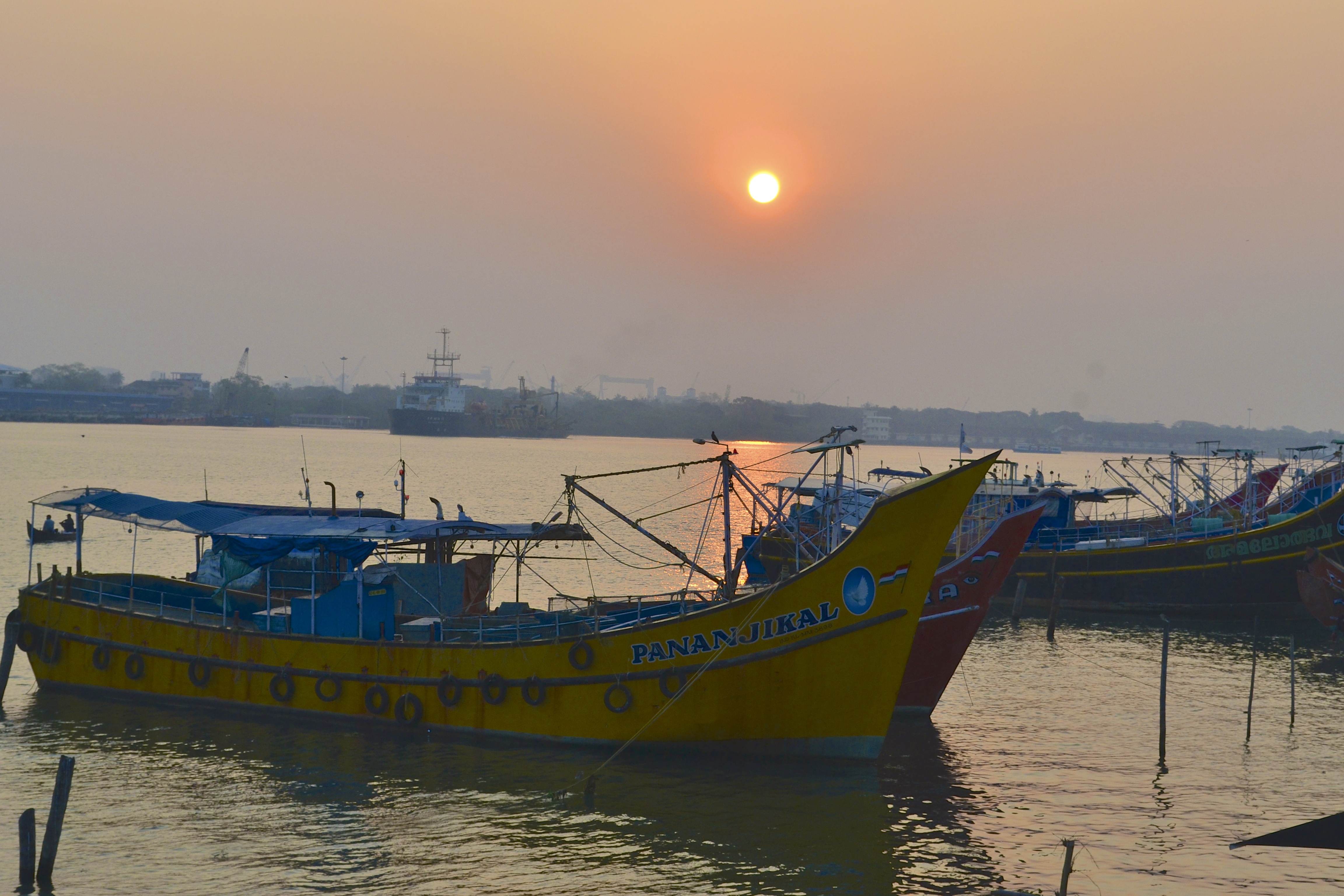
Sunrise over Cochin Harbor

Sunrise over Cochin Harbor

I flew into the Cochin airport in Kerala a few days ago for the first time. This is my first time to Asia and to a country whose language I do not speak (fluent in english and spanish). I was greeted by Udayan, one of Raxa Collective’s drivers who began driving me to the hotel. If you had read my last post, you would know that I am here to do an internship under Crist and Amie Inman (owners and operators of Raxa Collective), who I have been communicating with for months now. Amie especially, had warned me of the driving and how “In some parts of the world, people drive on the left side, others on the right side, but in India people drive everywhere”! That could not have been closer to the truth. As soon as we leave the airport parking lot, I hear horns going off, almost in symphony to one another, communicating back and forth. Tuk-tuks (a type of small yet quick 3 wheeler) are swerving in and out of traffic, motorcycles and cars zig-zagging in and out. The driver, completely calm and very good at what he does tells me that it will be a 45min drive. In my mind, I thought this wasn’t driving, but a type of noisy tetras.

Continue reading

Using Gravity as Glue

Michael Grab, whose work we have shared previously, is still working his magic with rocks. Stacking stones with the upmost precision and patience, he then destroys his precarious creations in ways that look amazing when played backwards, as shown towards the end of the video above. Grab shares with thisiscolossal:

Balance requires a minimum of three contact points. Luckily, every rock is covered in a variety of tiny to large indentations that can act as a natural tripod for the rock to stand upright, or in most orientations you can think of with other rocks. By paying close attention to the vibrations of the rocks, you will start to feel even the smallest “clicks” as the notches of the rocks are moving over one another. In the finest “point-balances,” these clicks can be felt on a scale smaller than millimeters, and in rare cases can even go undetected, in which case intuition and experience become quite useful.

Continue reading

The Beauty of Life With X-Ray Vision

Python and protea flower. The snake’s trachea is visible (credit: Arie van ’t Riet / SPL)

Thank you to the BBC’s Earth section for sharing Dutch medical physicist and artist Arie van ’t Riet’s work, which he accomplishes with his home x-ray machine and dead flora and fauna.

Arie van ’t Riet has a unique view of life on earth.

As a medical physicist based in the Netherlands, van ’t Riet teaches radiographers about radiation physics and safety. As part of his teaching program, van ’t Riet searched for an example to demonstrate and visualise the influence of x-ray energy on the contrast of an x-ray image. The higher the x-ray energy, the lower the contrast.

“I arrived at flowers. After some years I started to edit and partly colour these x-ray images. And I added animals,” he says.

Continue reading

Humans Have DNA For Making Feathers

Siberian Turkamanian Eagle Owl by Chris Paul. Via NatGeo.

We’ve always found feathers fascinating, both from an aesthetic and a biological perspective. Recently, the Cornell Lab of Ornithology’s bird guide website AllAboutBirds uploaded an interactive page solely focused on feathers, which is quite a wonderful mine of interesting information, cool animation, and amazing videography. But now, about a month late, we’ve learned that DNA researchers working on the genetic recipe for feathers have found that the sequences responsible for most of the steps involved in creating feathers are actually much, much older than feathers themselves. This indicates that we humans should have a sizable chunk of the feather-making genetic recipe as well! Carl Zimmer reports for the Phenomena section at National Geographic’s website:

Feathers are like eyes or or hands. They’re so complex, so impressive in their adaptations, so good at getting a job done, that it can be hard at first to believe they evolved. Feathers today are only found on birds, which use them to do things like fly, control their body temperature, and show off for potential mates. The closest living relatives of birds–alligators and crocodiles–are not exactly known for their plumage. At least among living things, the glory of feathers is an all-or-nothing affair.

Continue reading

Orchid Expo: Alajuela

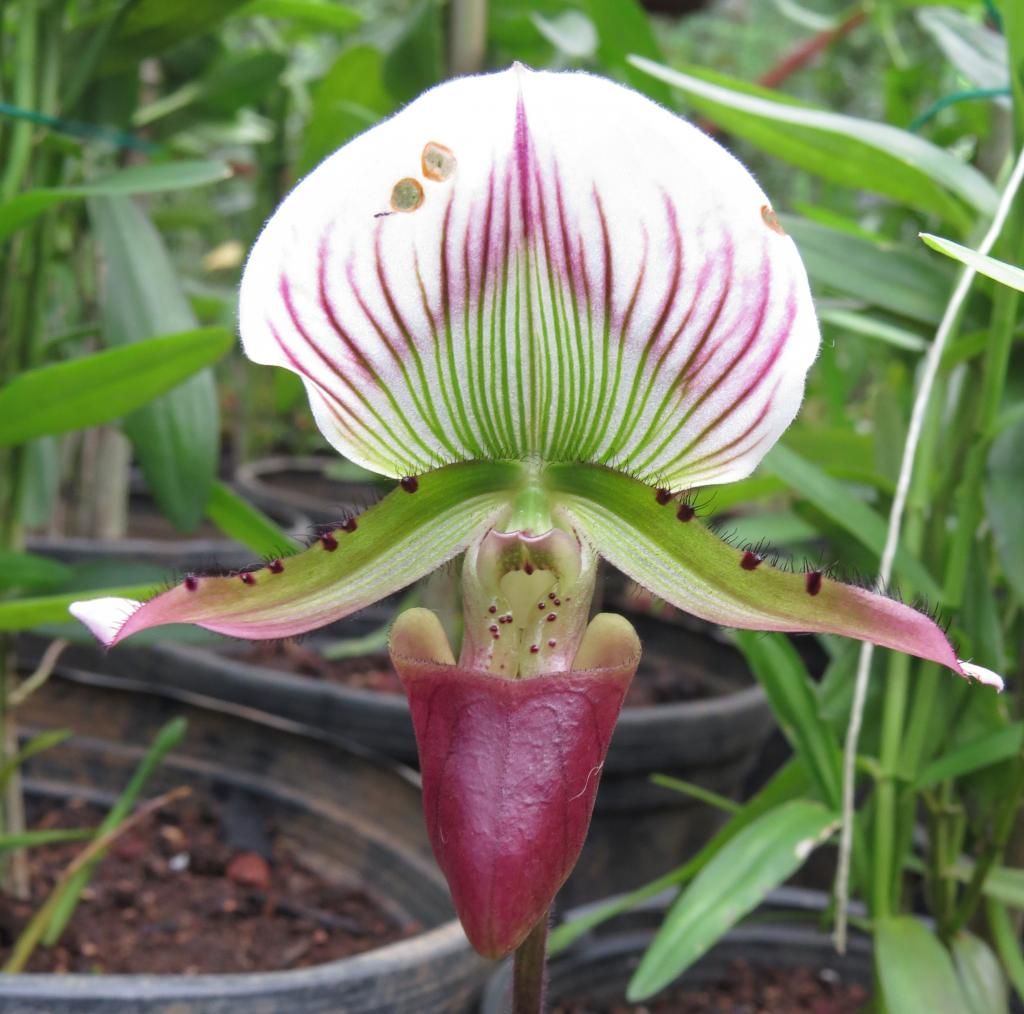
One of José Luis’s orchids at Xandari.

From Friday the 24rd of October to Sunday the 26th, Alajuela had their annual orchid exposition, which includes displays and awards as well as a few lectures on growing orchids and a section for sale or auction. As James and I have written before, Xandari has a wonderful collection of this family of flowers in addition to the general gardens thanks to the industrious efforts of our head gardener, José Luis Ballestero. He has a little greenhouse near Xandari’s restaurant with about a hundred plants that are often in varying stages of development, depending on how much time he has to prune them.

The three photos above are examples of some of the orchids on display in Xandari’s common area, like the reception, lobby, and restaurant room. At the expo this weekend, there were dozens of species and hundreds of individual plants, including hybrids, miniature flowers, and some fantastically strange Continue reading

Notes from the Garden: The Gift of Cardamom

10304348_10201573979311117_9159413022094666722_n

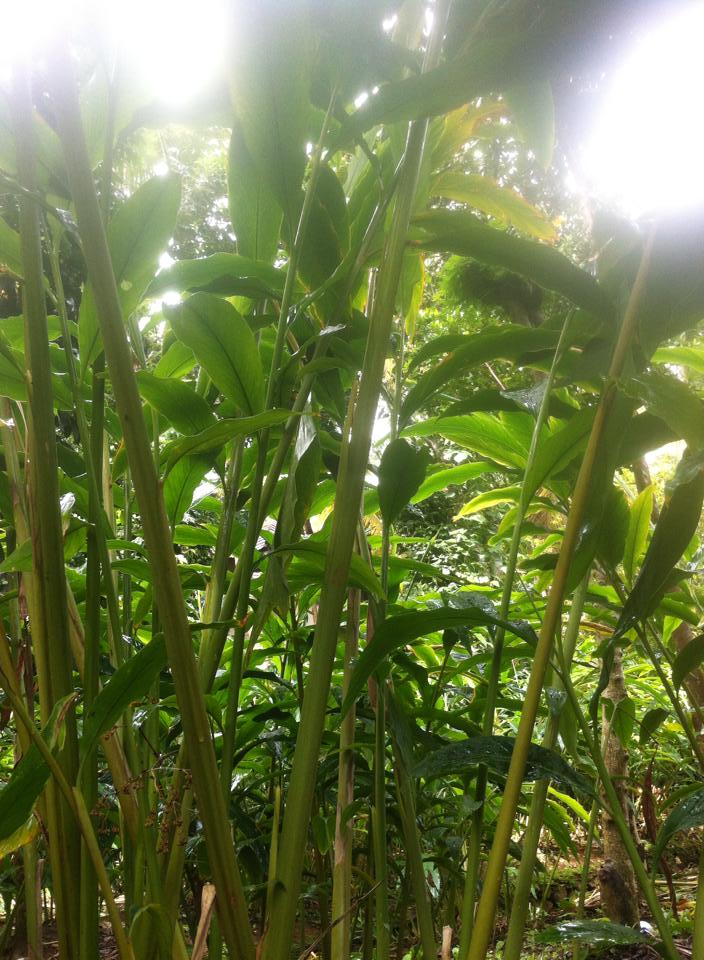
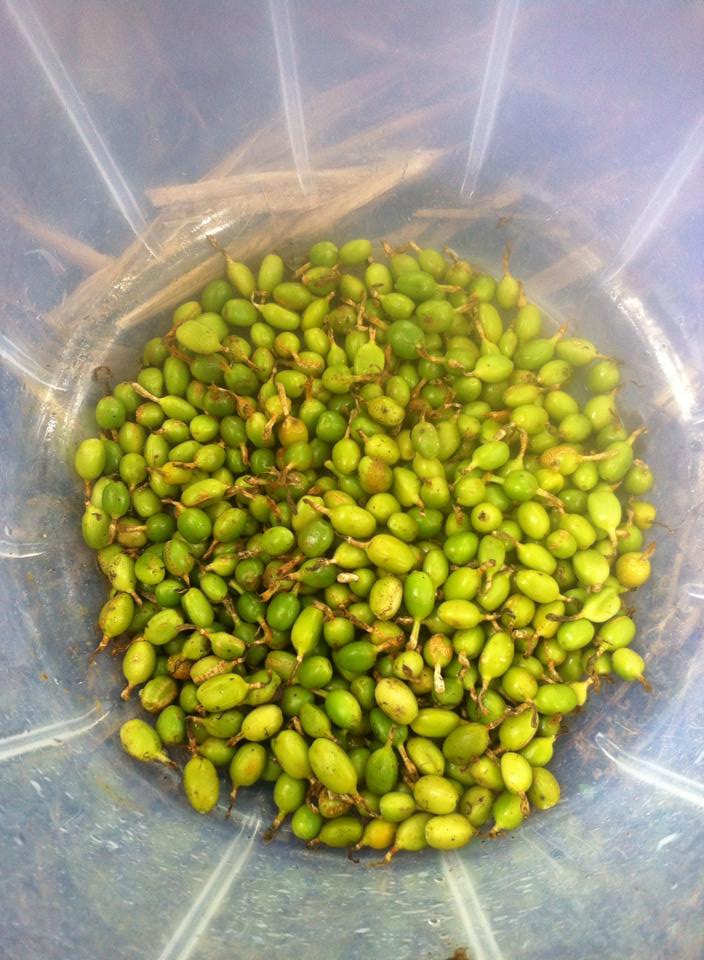
Today’s task in the garden was to harvest the ever-abundant cardamom in Cardamom County.

This is a task that cannot be completed by machines, so even in commercial fields, it must be handpicked. That is because figuring out which ones are ripe requires tuned fingers.

It was a bit of a learning curve for me at first because I thought I was supposed to be looking for which ones were the darkest, but then I learned otherwise.

I was looking for the ones that fell off easily into my hand from tugging slightly. When ripe, the small seed pods on the inside are dark colored.

10501720_10201573978111087_4542956712817123894_n

We may be most familiar with this sweet spice in masala chai tea, but it has many uses.

To do a little research, I asked the Ayurvedic doctor here if he could enlighten me on some of the traditional medicine uses of cardamom. He said that it is good for throat and lung troubles, skin problems such as acne, and digestive issues.

The type of cardamom we have here is the Malabar variety and it is native to Kerala. The green leaves are pretty tall- probably about 5 feet on average. The pods are on short vines that cluster at the bottom of the tall leaves.

When we were harvesting them, it started  Continue reading

Trekking through Periyar Tiger Reserve

Today I was fortunate enough to get to walk through one of the most biodiverse areas in the world second to the Amazon: Periyar Tiger Reserve.

I understand why people travel from all of the world to experience this place. In the United States, we are very proud of our national parks for their diversity and beauty. However, this park feels more untouched than the ones I have been to in the states. It kind of absorbs you. The paths in the forest seem less traveled. Honestly, it feels less touristy and more wild. We only trekked on the periphery of the jungle really. The center of the jungle truly is preserved and only certain people are able to go deep inside.

Continue reading

Michelia champaca – The Perfume Magnolia

Photo credits: Shymon

Photo credits: Shymon

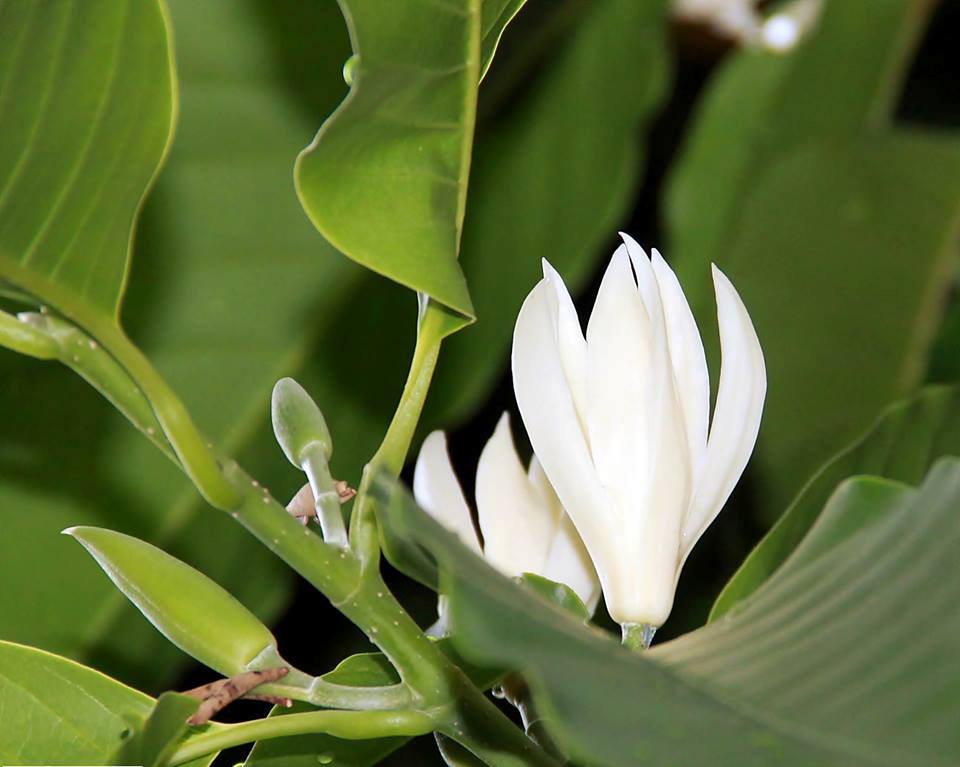
Michelia champaca is native to India, and is best known for its strong fragrance. A relative to the magnolia tree, this species grows in the wild throughout India’s Western Ghats. It is a sacred flower for Hindu temple grounds and around homes. Continue reading

Andhakaranazhi Beach – Alappuzha

Photo credits : Ranjith

Photo credits: Ranjith

Andhakaranazhi is a beautiful beach located 5km from Mararikulam beach (one of the most famous beaches in Kerala) in the Alappuzha district, approximately 30km from Kochi International Airport. There is a lighthouse near the beach, and the place is a confluence of the backwaters and the Arabian Sea. It is particularly beautiful at sunset and sunrise. Continue reading

A Young Architect’s Process from Concept to Construction to Cigarette featured in Indian Architect & Builder


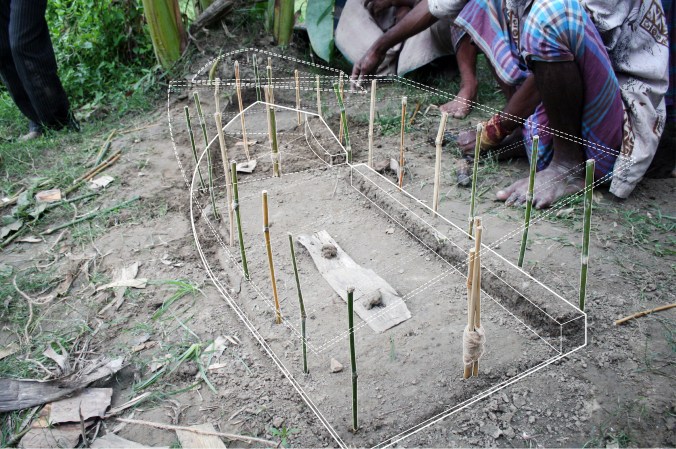
Preliminary model of the pavilion (Photo by Karen Chi-Chi Lin)

Preliminary model of the pavilion (Photo by Karen Chi-Chi Lin)

My very first internship was in Bangladesh with Panigram Resort, an eco-boutique resort in a rural farming town outside of Jessore, Bangladesh. I had no idea that it would ignite an insatiable curiosity about South Asia that would lead me back to the region several years later. I arrived in Kerala, India in 2012 not only with the amazing opportunity to return to a similar tropical biome and region, I had also returned to the same hospitality and resort family! Raxa Collective collaborates with Panigram Resort to help train Panigram Resort’s future leadership and staff.

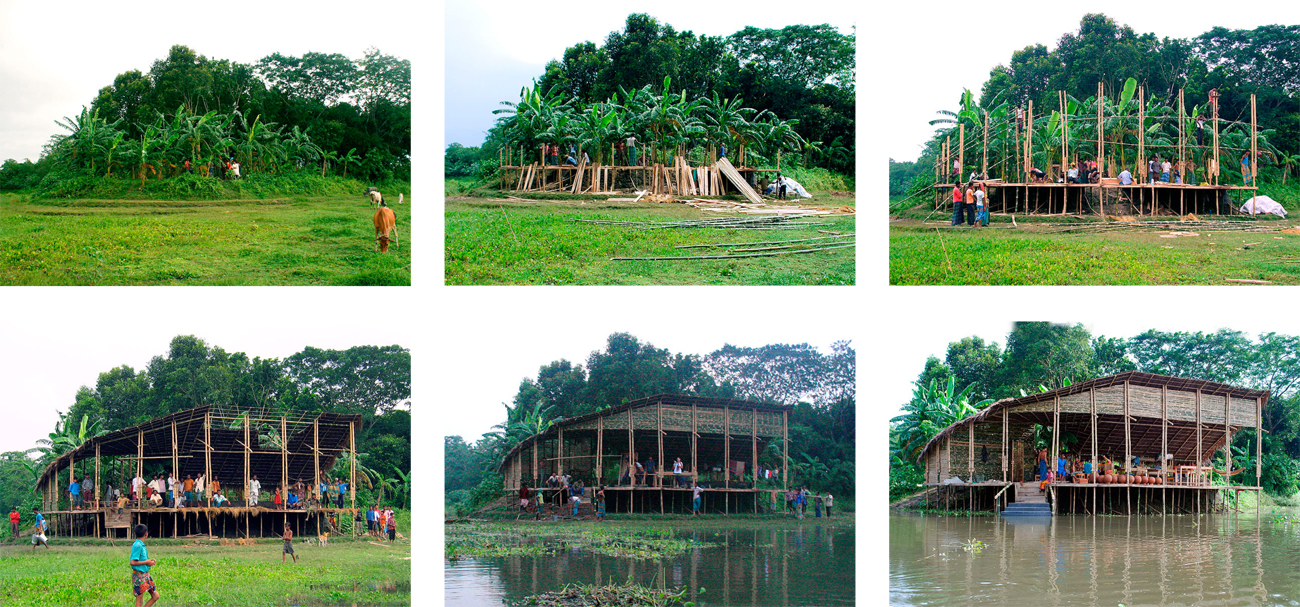
When I was working at Panigram Resort, I was tasked with building a temporary pavilion for hosting potential investor meals and events. It seemed like an uphill battle for me at the time: I was young (19 years old); I was female; and I was a foreigner. Who would listen to me? I recently shared my story and was awarded the Young Designers 2014 Award by the Indian Architects & Builders (IA&B) magazine. I hope you, too, will enjoy my anecdote about the process from concept to construction … and finally, acceptance.

Panigram Resort banquet pavilion from start to finish (Photo by Karen Chi-Chi Lin)

Panigram Resort banquet pavilion from start to finish (Photo by Karen Chi-Chi Lin)

I have never felt more accomplished than when I was handed a cigarette. Of course that requires an explanation. Continue reading

The Importance of Flowers

Photo credits: Christoph Hurni

Photo credits: Christoph Hurni

Flowers are quite important in Indian culture. They are needed in the temples to adorn the gods, as well as for other decorations, be it for a wedding or for any other function.

If you walk through a street which is close to a temple, you will see lots of flower vendors. Since it’s said that there are up to thirty-three million gods in Hinduism (isn’t that amazing?!), India clearly needs lots of flowers. Of course, many people don’t actually know all the millions of gods (including me), but luckily there aren’t many restrictions on what flowers can be used to adorn any given god!

Continue reading

Dharmadam Island – Kannur

Photo credits : Arif Rahman

Photo credits: Arif Rahman

Dharmadam Island is a small island in Kannur district. This five-acre island is covered with coconut palms and green bushes. It is just about a hundred meters from the beautiful sandy beach of Dharmadam. Continue reading