Bee Mogul Is A Thing

BeeMogul.jpg

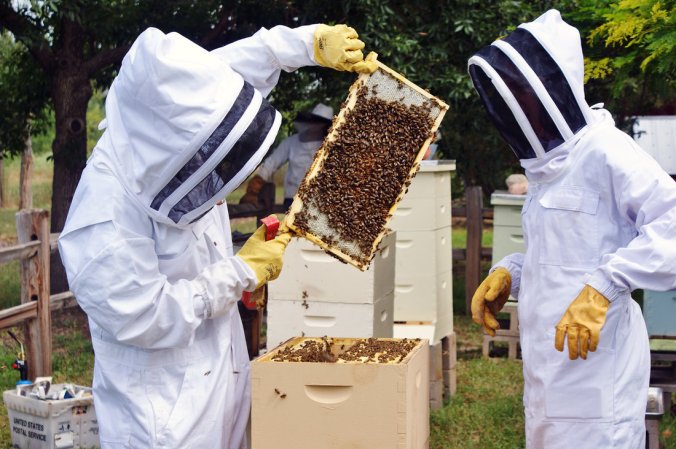
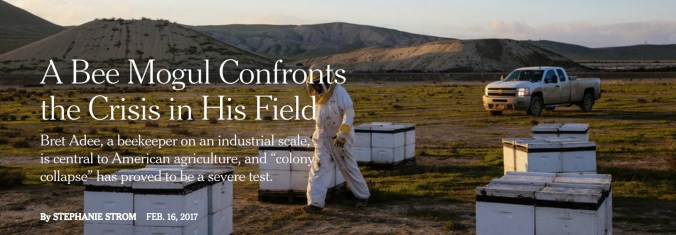
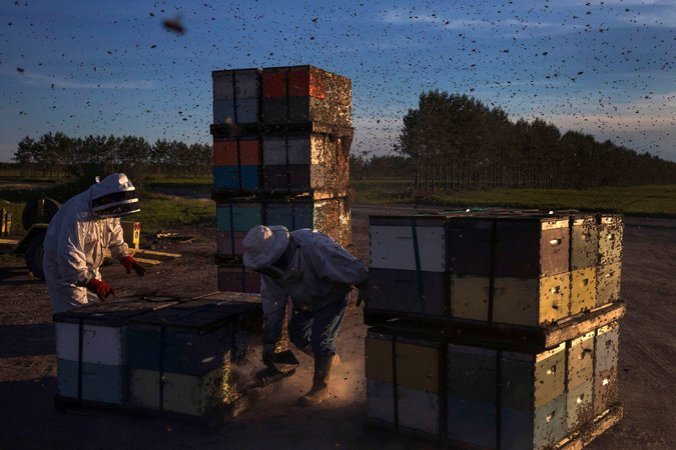
Bret Adee’s family operation provides more than two billion bees to farmers who need to pollinate their crops. Before the hives are moved to the California almond groves where they are used in January and February, they are kept on a cattle ranch at a safe distance from pesticide and herbicide sprays. Credit Kendrick Brinson for The New York Times

We already knew a fair amount about the business of bees, but had not yet heard the term bee mogul, which sounds like it may have been an excellent thing once upon a time, but now, maybe not so much:

KERN COUNTY, Calif. — A soft light was just beginning to outline the Tejon Hills as Bret Adee counted rows of wizened almond trees under his breath.

He placed a small white flag at the end of every 16th row to show his employees where they should place his beehives. Every so often, he fingered the buds on the trees. “It won’t be long,” he said.

Mr. Adee (pronounced Ay-Dee) is America’s largest beekeeper, and this is his busy season. Some 92,000 hives had to be deployed before those buds burst into blossom so that his bees could get to the crucial work of pollination. Continue reading
Bumble Bees & Conservation

06About-blog427-v2.jpg

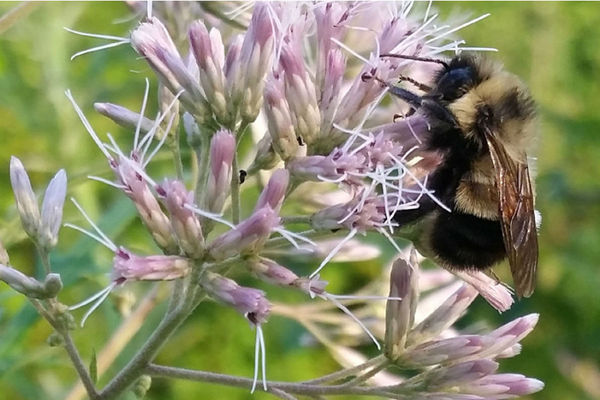
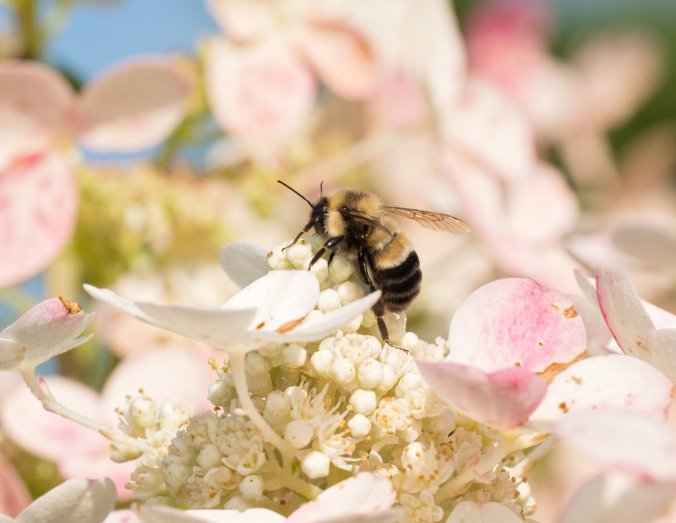
The rusty-patched bumblebee, once common across the continental United States, has been designated an endangered species. Credit Clay Bolt

One more gift of protection:

A Bumblebee Gets New Protection on Obama’s Way Out

By and

The Obama administration, rushing to secure its environmental legacy, has increased protection for a humble bumblebee. Continue reading

Keeping The Science Moving Forward, Rather Than Sideways or Backwards

00syngenta1-jumbo

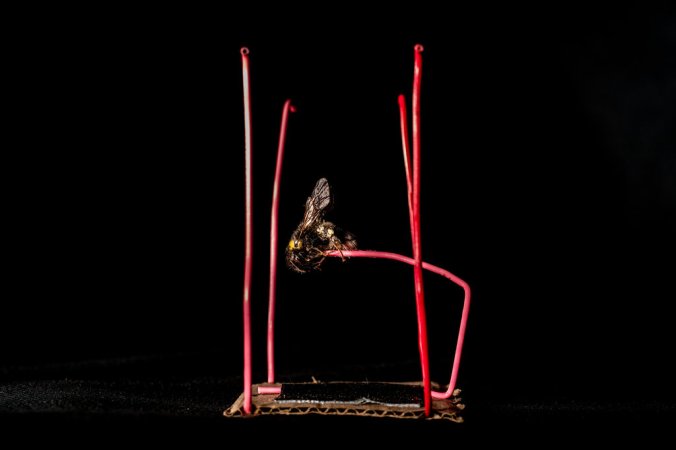
James Cresswell, a professor at the University of Exeter in England, has turned to less controversial areas of research on bees. Here, a bee is mounted on a wire in a wind tunnel, for research designed to estimate normal bee density. CreditAndrew Testa for The New York Times

It is a bit of a mystery story, worthy of the time if you care about bees (a minor character here) and especially if you care about the moral character of scientists while under pressure:

Scientists Loved and Loathed by an Agrochemical Giant

With corporate funding of research, “There’s no scientist who comes out of this unscathed.”

By

EXETER, England — The bee findings were not what Syngenta expected to hear. Continue reading

Bees In Need Get Boost

3000b

Honeybees alone are responsible for boosting the production of fruits, nuts and vegetables. But bee and other pollinator populations in the US have been in decline in recent years. Photograph: Klas Stolpe/AP

Thanks to the Guardian:

Bee’s knees: a new $4m effort aims to stop the death spiral of honeybees

General Mills is co-funding a project with the federal government to restore the habitat of pollinators such as bees and butterflies on North American farms Continue reading

Bee-Keeping Aspirational

04mag-04tip-t_CA0-master180.jpgThis note on How to Keep Bees by

…You’ll need a suit with gloves and a hood, as well as two boxes to house the hive. Flottum says bees aren’t fussy about their habitat — they could live on the side of your house or on your grill. “But you have to be able to inspect them,” he says. “I have to be able to take the cover off and lift up a comb of honey and have it inspected for disease by a government official.” The boxes can be made of plastic or wood; each kind has advantages and disadvantages, including cost and durability. Continue reading

Be The Bee

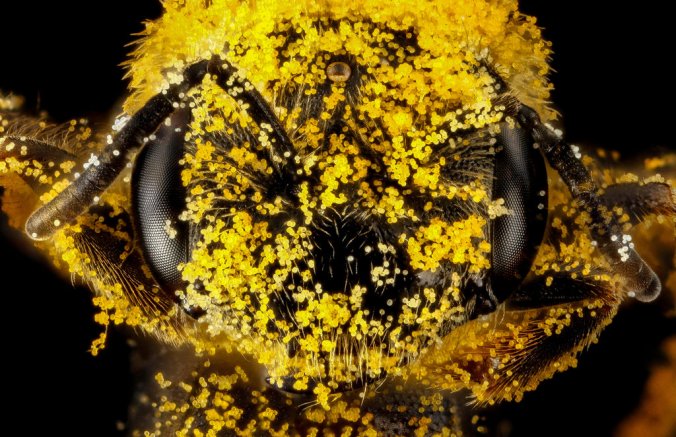
02beesproject-pollen-jumbo.jpg

SAM DROEGE/UNITED STATES GEOLOGICAL SURVEY

Science, as a section of the daily newspaper of old, was geek-out territory. In the modernizing news organization, it has every bit of that old intensity, magnified by the wonders of technology. This little item demonstrates the point:

You’re a Bee. This Is What It Feels Like.

We’re taking you on a journey to help you understand how bees, while hunting for pollen, use all of their senses — taste, touch, smell and more — to decide what to pick up and bring home.

By JOANNA KLEIN

Set your meetings, phone calls and emails aside, at least for the next several minutes. That’s because today you’re a bee.

Honeybees, Workers, Unite

honeybees

Every now and then a podcast changes my view on something important. Sometimes I cannot tell exactly what shifted my view–case in point is the podcast below which is full of facts I already knew, and if you have been following our site at all in recent years you would have seen dozens of posts covering many of these same facts. But somehow the personal touch of the two guests on this podcast intensified my view of the importance of bees in general, honeybees in particular, and our responsibility for finding a path to a future where bees can survive:

How Honeybees — and Humans — Are Being Stung by Environmental Problems

It’s just a tiny insect, but the humble honeybee has a huge impact on our way of life. Aside from providing honey, honeybees are responsible for pollinating a majority of the crops consumed in the United States and around the world, from blueberry patches in Maine to almond groves in California. But honeybees are facing both natural and manmade threats that are killing them by the millions. A major result of these threats — colony collapse disorder — is already being felt in the beekeeping industry, which has reported astounding losses in recent years. Continue reading

Arctic Bumblebees

bees-test-topper-jumbo.jpg

Superb science journalism:

Six Scientists, 1,000 Miles, One
Prize: The Arctic Bumblebee

A team of researchers scours the wilds of northern Alaska for Bombus polaris, a big bee that has adapted to the cold and that can teach them more about the effects of climate change.

By

DALTON HIGHWAY, Alaska — “To bees, time is honey.

— Bernd Heinrich, “Bumblebee Economics

Hollis and Bren Woodard capturing bees next to the Alaskan pipeline. Katie Orlinsky for The New York Times

One hundred miles north of the Arctic Circle, by the side of a dusty road, two women in anti-mosquito head nets peer at a queen bumblebee buzzing furiously in a plastic tube.

“I think it’s the biggest bumblebee I’ve caught in my life!” Kristal Watrous says. Continue reading

Bees’ Emotions

bees-experiment.gif

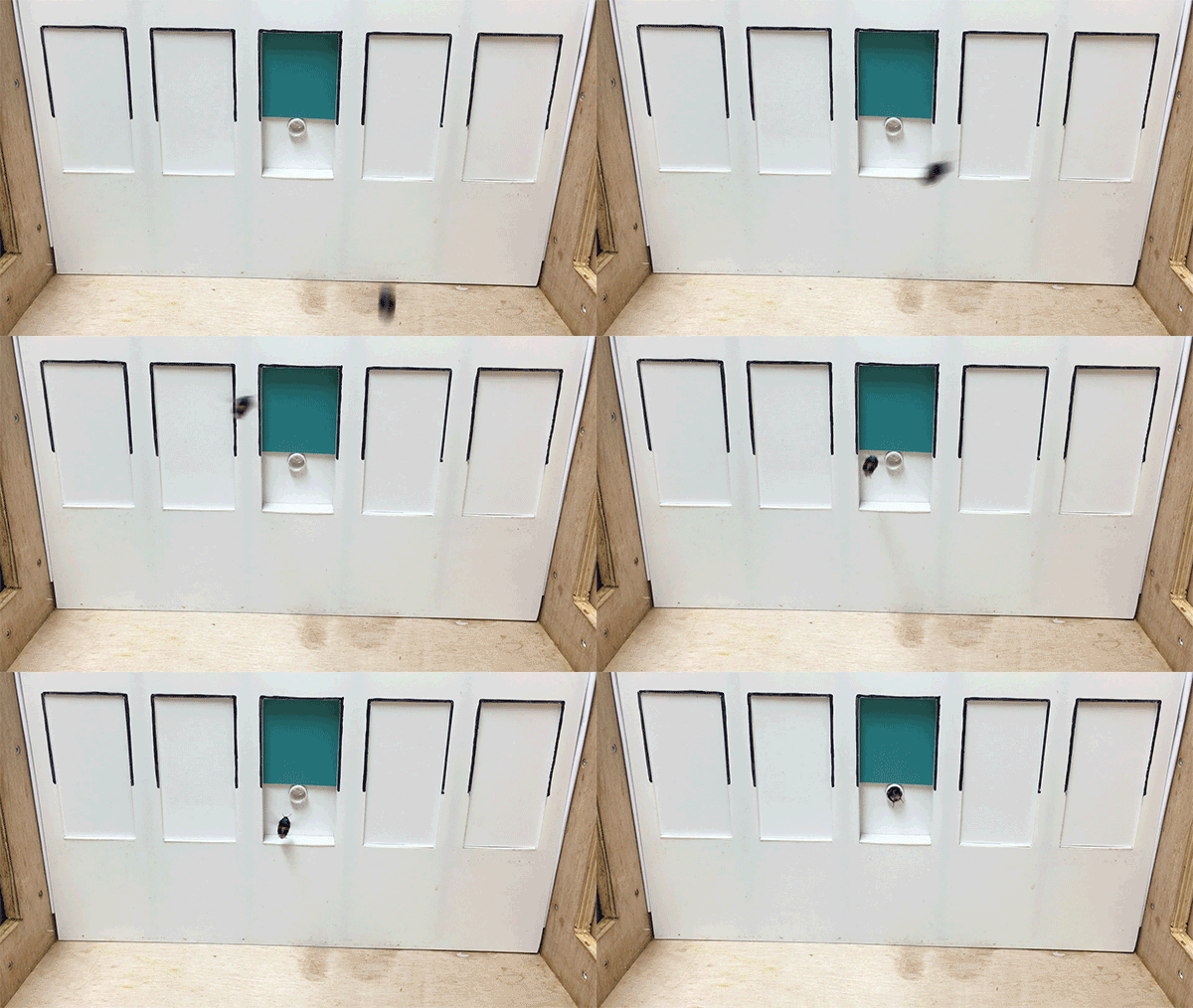
A bee enters a cylinder with an ambiguous reward in the study of bee “feelings.” CreditClint J. Perry

We avoid gimmickry but now a bee has finally convinced us that a gif can do just what is needed to convey a point:

The Sweet Emotional Life of Bees

By

It is hard enough to figure out emotions in humans — but insects?

Nonetheless, as far back as Darwin, scientists have suggested that insects have something like emotional states, and researchers continue, despite the difficulties, to try to pin those states down. Continue reading

Hudson Gardens & Bees

bee-keeping-1_custom-a8509931c91172a9b5681ef572c8d35e73a5f844-s1100-c85

Beekeepers inspect bee frames at the Hudson Gardens community apiary near Littleton, Colo. Modeled after community gardens, community apiaries allow beekeepers to maintain hives in public spaces — and offer each tips and support. Courtesy of Hudson Gardens

We like what we have been learning about Hudson Gardens:

Beekeepers Benefit From The Hive Mind In Community Apiaries

JODI HELMER

Even though Marca Engman read countless books, watched YouTube videos and took a beekeeping class before installing her first hive in 2012, she knew she’d need help in the field.

“The whole idea of beekeeping was overwhelming,” she recalls. “Every year is different and every hive is different.”

Rather than working a backyard beehive solo, Engman installed her first hive in the community apiary at Hudson Gardens, a nonprofit garden near Littleton, Colo. Continue reading

Bees, Status, Survival Of The Fitted

1004542_1_0922-bumble-bee_standard

A rusty patched bumble bee, under consideration for listing as an endangered species by the US Fish and Wildlife Service, pollinates a flower in Madison, Wis. Rich Hatfield/Reuters/File

The CS Monitor has an article today that raises an interesting question, whether the same rules that have worked well for eagles, owls, fish, wolves and bears (among other animal species) would be effective for the humble bumble bee and other similar creatures. We see a very good fit between the problem, which we have noted here frequently, and the solution, whose track record is not perfect but it is clearly the best mechanism we’ve got:

Could putting a bumble bee on the endangered list save it?

By Weston Williams

The past several years have not been kind to the humble bee.

But perhaps none suffer more than the rusty patched bumble bee, orBombus affinis, a fuzzy insect with a rust-colored patch on its abdomen. The bee used to be a common sight across the Midwestern United States, but now, the bee struggles to survive in a habitat broken apart by increased farming and commercial development.

The US Fish and Wildlife Service (FWS) is proposing to list the bee as endangered, which would grant it significant protections and hopefully save the bee from extinction. Continue reading
Building Better With Bees

Late spring is swarm season, the time of year when bees reproduce and find new places to build hives. John Clift/Flickr

Thanks to National Public Radio (USA):

Spring Is Swarm Season, When Beekeepers Are On The Hunt For New Hives

Late spring is swarm season — the time of year when bees reproduce and find new places to build hives. Swarms of bees leave the nest and zoom through the air, hovering on trees, fences and houses, searching for a new home.

While a new neighborhood beehive can be stressful for homeowners, it’s an exciting time for beekeepers, who see it as an opportunity.

Recently, these vital pollinators have been under threat. U.S. beekeepers report losing about a third of their honeybee colonies each year in recent years. And North America’s 4,000 other species of native bees are also declining.

So, when a swarm is announced on the Bee Town Bee Club Facebook page in Bloomington, Ind., beekeepers race to call dibs. Continue reading

It’s Not About The Bees’ Knees

ap_949363850208_wide-bbda2e746b641538788b34a3a1be22c85098086d-s1400-c85.jpg

Scientists say bumblebees can sense flowers’ electric fields through the bees’ fuzzy hairs. Jens Meyer/AP

Thanks to National Public Radio (USA) for this small scale science lesson:

Bumblebees’ Little Hairs Can Sense Flowers’ Electric Fields

The fields bend the hairs and that generates a nerve signal, scientists say.

Flowers generate weak electric fields, and a new study shows that bumblebees can actually sense those electric fields using the tiny hairs on their fuzzy little bodies.

“The bumblebees can feel that hair bend and use that feeling to tell the difference between flowers,” says Gregory Sutton, a Royal Society University Research Fellow at the University of Bristol in the United Kingdom. Continue reading

Bees, Art, Action

Terence-koh-slide-W63E-master768

The artist Terence Koh recently installed a single-occupancy “bee chapel” upstate, left; at right, the chapel has been reconstructed in a modified form at Andrew Edlin Gallery on the Bowery.Credit From left: Stewart Shining; Olya Vysotskaya

The New York Times has a story currently that would interest anyone aware of the crisis related to bees and other pollinators; it helps if you also see art as a worthy tool of engagement for addressing complex major challenges facing the planet, and humanity; have a read either way:

An Art World Provocateur Returns to New York With an Unexpected Subject: Bees

By

“Good afternoon,” the elusive artist Terence Koh said over the phone earlier this week. He’d called to discuss his new show, which opened at Andrew Edlin Gallery over the weekend. “I’m inside the bee chapel. I’m lying down and looking straight up at the ceiling. They’re really busy today because it’s sunny.”

The Beijing-born, Canadian-raised enfant terrible was once the poster boy of aughts excess — a decade ago, he gold-plated his own feces and sold them at Art Basel for about a half-million dollars; he also once, rather infamously, told T, “I am the Naomi Campbell of the art world.” But the past few years have brought a different turn: He discontinued his gallery representations and, in 2014, moved to a mountaintop in the Catskills. The relocation was widely construed as a ceremonial retirement of sorts, but Koh insists the opposite: “I never had any intention of quitting the art world, I just moved to a different part of the world,” he says. “It was something that happened naturally.” He has since lived peacefully in what he describes as a personal Eden dusted with goldenrod and apple trees. In the branches of one, he built a hut and called it a “bee chapel,” which would become the titular heart of his new exhibition. Continue reading
Human – Pachyderm – Apium Collaboration

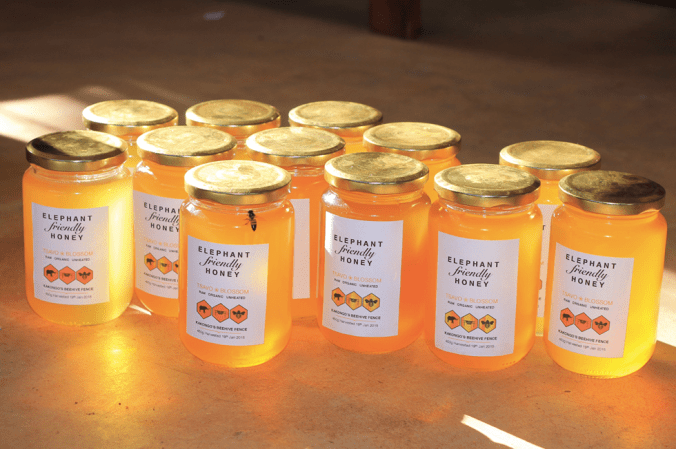
Innovation takes many forms. It’s especially satisfying when that innovation works with nature instead of against her. Examples of creative collaboration to solve environmental issues, be they unusual agricultural pest control or ways to avoid human/wildlife conflict such as this Elephant and Bee project are happy news indeed.

Some of our team live in Kerala, India – and know from personal experience the intelligence, and perseverance of elephants, when confronted with an obstacle to plants or trees they crave. This beehive fence concept is incredibly clever, taking advantage of the elephants’ natural fear of bees to keep them safe from potentially deadly conflict.

“I congratulate Dr. King as the winner of this important award. Her research underlines how working with, rather than against, nature can provide humanity with many of the solutions to the challenges countries and communities face. Continue reading

Better For The Bees

bee_wide-620b0e28784802026939d4d72fe1ae54cfa80f7d-s1400-c85

A bee gathers pollen from a park in Kensington, Md. With bee health in mind, home and garden products giant Ortho has announced it will phase out neonics, a class of pesticides, from its outdoor products. Allison Aubrey/NPR

We never expected to be publicly thanking a company like this one for an action it has committed itself to, but credit where it is due:

Home And Garden Giant Ditches Class Of Pesticides That May Harm Bees

A leading brand of home and garden pest-control products says it will stop using a class of pesticides linked to the decline of bees.

Ortho, part of the Miracle-Gro family, says the decision to drop the use of the chemicals — called neonicotinoids, or neonics for short — comes after considering the range of possible threats to bees and other pollinators. Continue reading

Pollinator Challenges & Our Self-Interested Responsibility

966911_1_0226-WPOLLINATORS_standard

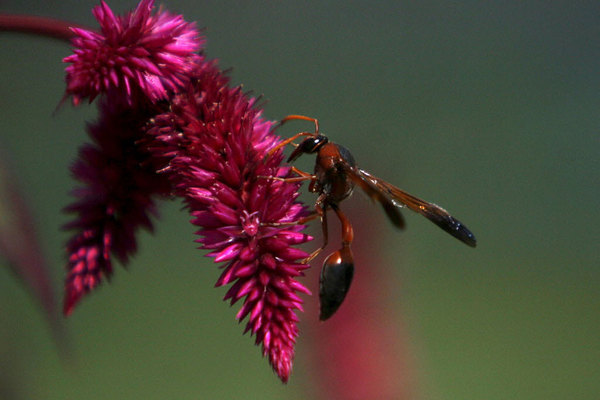
A wasp lands on a flower in a garden in Srinagar, India, Sept. 8, 2009. Bees and other pollinators face increasing risks to their survival, threatening foods such as apples, blueberries and coffee worth hundreds of billions of dollars a year, the first global assessment of pollinators showed on Friday.

It is worth seeing how various media outlets cover the same news we first linked to here. The CS Monitor, as always, has a thoughtful consideration of the news, asking the key question:

Earth’s bees and other pollinators need some human help: What can we do?

Pollinator populations around the world are declining, threatening hundreds of billions of dollars worth of agriculture. Humans are part of the problem, say scientists, but they can also be part of the solution.

We Must Do More

27pollinators-web1-master675

Beekeepers using a smoker to calm colonies before transferring them to another crop near Columbia Falls, Me. Plants that depend on pollination make up 35 percent of global crop production volume with a value of as much as $577 billion a year.CreditAdrees Latif/Reuters

For every story we love, there seems to be another which, as they say, not so much:

Decline of Species That Pollinate Poses a Threat to Global Food Supply, Report Warns

FEB. 26, 2016

The birds and the bees need help. Also, the butterflies, moths, wasps, beetles and bats. Without an international effort, a new report warns, increasing numbers of species that promote the growth of hundreds of billions of dollars’ worth of food each year face extinction.

The first global assessment of the threats to creatures that pollinate the world’s plants was released by a group affiliated with the United Nations on Friday in Kuala Lumpur, Malaysia. The summary will be posted online Monday. Continue reading

Are You on the Bee Highway?

Oslo's bee highway has pollen pitstops and bee hotels. PHOTO: Wikimedia Commons

Oslo’s bee highway has pollen pitstops and bee hotels. PHOTO: Wikimedia Commons

Oslo, Norway now has a “bee highway,” consisting of bee-friendly routes through the city. Each features flowery, green rest stops along the way so the bees can take a break and fill up on nectar.

Continue reading

Bees, Plans, Action

honeybee_custom-80bb7e068307e617ad8b91b388850f0445d6b9e0-s1300-c85

The federal government hopes to reverse America’s declining honeybee and monarch butterfly populations. Andy Duback/AP

The bee crisis is not new, but it remains a red hot issue of great importance to all of us (thanks National Public Radio, USA):

Plan Bee: White House Unveils Strategy To Protect Pollinators

BRIAN NAYLOR

There is a buzz in the air in Washington, and it’s about honeybees. Concerned about an alarming decline in honeybee colonies, the Obama administration has released a National Strategy to Promote the Health of Honey Bees and Other Pollinators.

NPR’s Dan Charles says the strategy, despite its rather bureaucratic title, is pretty straightforward: “The government will provide money for more bee habitat and more research into ways to protect bees from disease and pesticides.The Environmental Protection Agency also will re-evaluate a class of insecticides called neonicotinoids … which are commonly used on some of the most widely planted crops in the country.”

As NPR’s Allison Aubrey has reported:

Continue reading