Getting Social Underwater

 A coral grouper (Plectropomus leopardus) being cleaned by a cleaner shrimp (Urocaridella antonbruunii), in the Maldives. --- Image by © Jason Isley - Scubazoo/Science Faction/Corbis

A coral grouper (Plectropomus leopardus) being cleaned by a cleaner shrimp (Urocaridella antonbruunii), in the Maldives. — Image by © Jason Isley – Scubazoo/Science Faction/Corbis

Let’s talk social behavior. We know much about human relations and the social activities of animals like the chimpanzee. But how about underwater? Yes, the waters, too, are filled with social interactions if rapport between coral groupers and giant moray eels are anything to go by. Several studies have followed how the duo teams up to hunt and have their own ‘code’ of vigorous shimmying, head-stands and head-shaking to communicate about prey. Now, while gestures are commonplace among humans and are expected of intelligent animals like monkeys and dogs, how do fish manage this complex communication with their tiny brains? Redouan Bshary may be the man with the answers.

Continue reading

Happy Birthday, Carolus Linnaeus!

Remember Carolus Linnaeus? Go back to high school where you probably heard of taxonomy first; yes, it’s his invention. Well, it was his 308th birthday last week (May 23) and each year, it is celebrated with a list. Of new species discovered the previous year. Scientists found 18,000 new species in 2014, but the top 10 are in a league of their own. How about a spider that cartwheels to escape danger or a frog that gives birth to live tadpoles?

Continue reading

Be for Boreal Forests

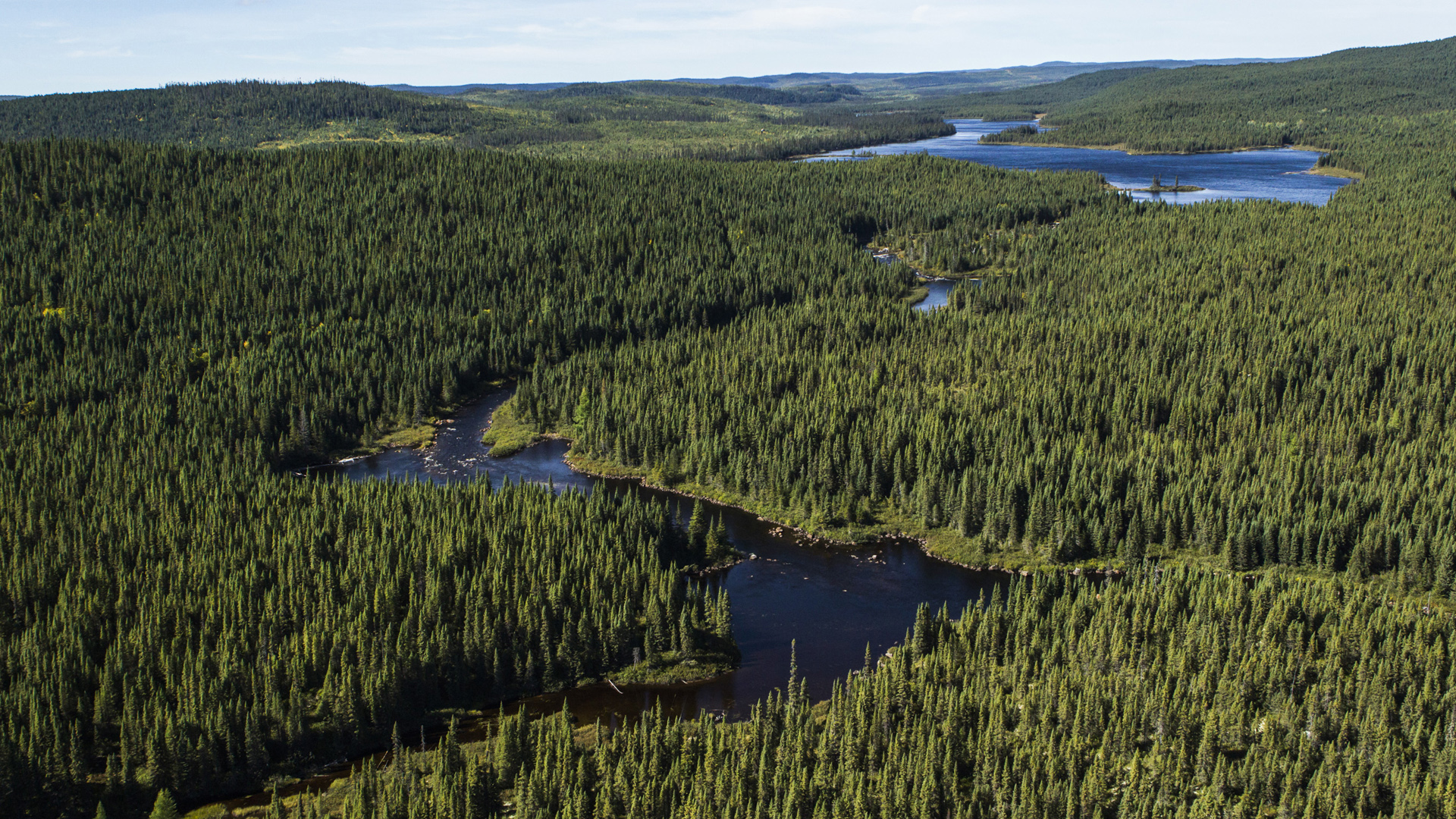
Canada’s boreal region covers almost 60 percent of the country’s land area, essentially spanning from the Atlantic to the Pacific. It is one of the largest and most complex ecosystems on the planet. PHOTO: borealfacts.com

Canada’s boreal region covers almost 60 percent of the country’s land area, essentially spanning from the Atlantic to the Pacific. It is one of the largest ecosystems on the planet. PHOTO: borealfacts.com

Question time. What is the largest intact forest on the planet? If you guessed Amazon, firstly you aren’t the only one; more importantly, you’ll have to know the answer is the Canadian boreal forests. Here are some facts: It covers a staggering 1.5 billion acres, between 1-3 billion birds flock nest and breed here each year, it alone stores 208 billion tonnes of carbon i.e 20 years worth of the world’s emissions from burning fossil fuels, and contains 200 million acres of surface fresh water alone. Yes, that’s a lot of numbers; but they are only some of the reasons for making sure these forests stay intact.

So, whether you enjoy a morning chasing warblers in Central Park’s Ramble, listening to ovenbirds sing in Rock Creek Park in Washington, D.C., scanning the Chicago waterfront for ducks or strolling the shaded paths of Mount Auburn Cemetery near Boston while vireos and tanagers flash through the old trees, you are drawing delight directly from that immense swath of unsullied northern forest.

Continue reading

Bats can Focus Biosonar by Stretching Mouths

While in Cockpit Country for our first expedition to Jamaica looking for the Golden Swallow, John, Justin and I watched in awe as hundreds and hundreds of bats flowed out of a cave and flew in a distinct path right by us over the course of half an hour. The slightly shoddy video below can only partly convey the sensation of having the flapping mammals zoom past in a steady stream. We’ve recently featured a couple stories of scientific developments in bat research on the blog, including wing-beat echolocation in fruit bats and singing for communication in other species.

A couple weeks ago, we learned via Discover Magazine’s science blog by Continue reading

The Impressiveness of Cephalopod Sight

Photo via EuclidLibrary

We’ve long known that octopuses have some of the most powerful eyes among invertebrates, but a recently published article in the Journal of Experimental Biology titled “Eye-independent, light-activated chromatophore expansion (LACE) and expression of phototransduction genes in the skin of Octopus bimaculoides” is showing that members of cephalopoda (octopus, squid, cuttlefish) may also have light-sensitive cells in their skin that effectively transform the large outer organ — already famous for its color- and shape-shifting qualities — into a perceptive one as well. The science sections of the New York Times and The Guardian, along with National Geographic‘s Phenomena webpage, all cover the story (click on the reporter’s name to reach the original articles):

Octopuses can mimic the color and texture of a rock or a piece of Continue reading

Mother’s Day Redux: Bluebird and her Babies

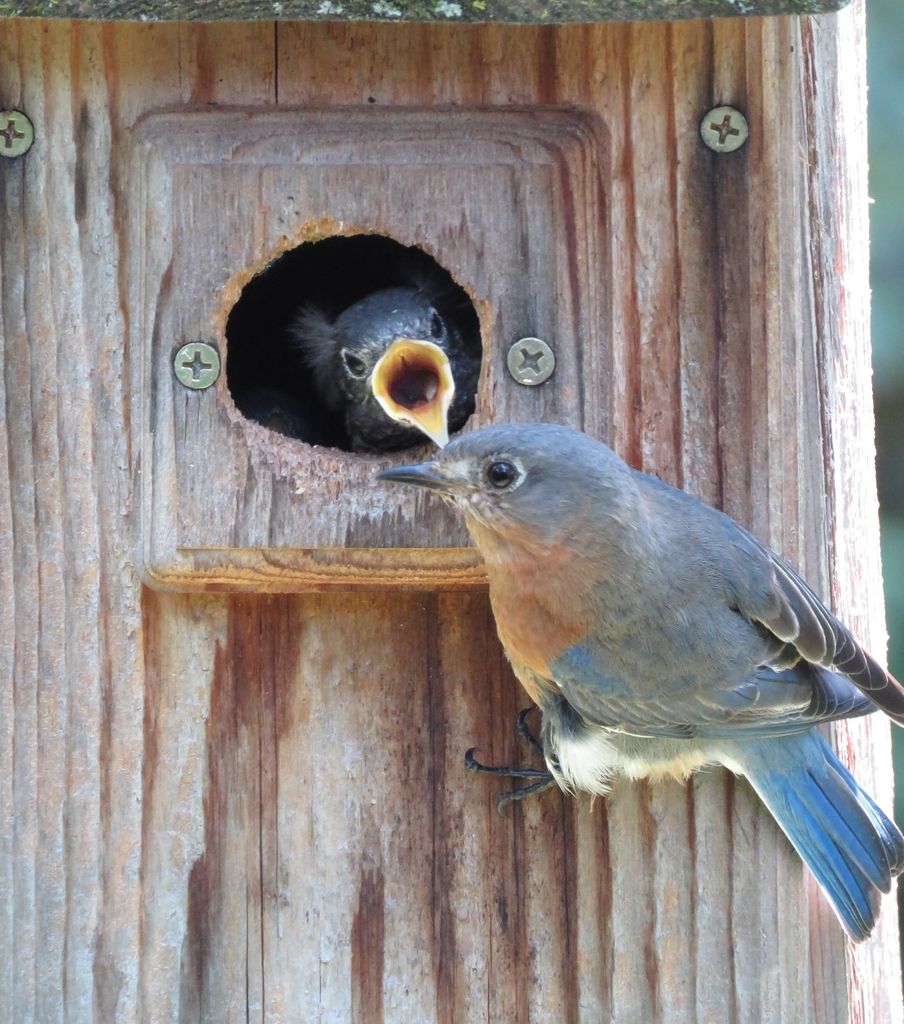
Mother bluebird feeding babies on Mother’s Day

A little less than a month before mother’s day (May 10th), a pair of bluebirds made their nest in one of the bluebird houses in our backyard in Atlanta. I was away studying at the university at the time, but my parents described to me in phone conversations the process familiar to anyone who has seen birds build a nest in their yard: first the birds made tentative visits to the site, then they began to carry in straw, twigs, and grass, finally the mother Continue reading

Green, Cause And Effect, Explained

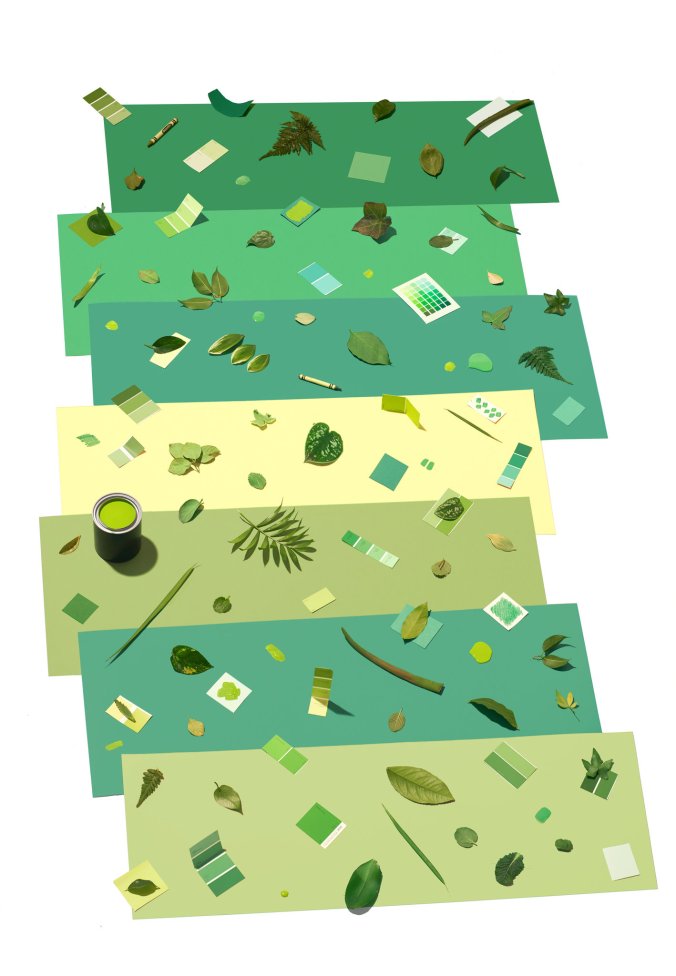
Photo Illustration by Andrew B. Myers for The New York Times

Photo Illustration by Andrew B. Myers for The New York Times

Considering she is one of our favorite science writers, it has been a while; just over a year in fact, since we last we read of her, at which time she was in one of our favorite locations. The wait was worth it, because this article helps us understand why we reference green so often in these pages:

…Goethe praised green as the “soothing” marriage of the chromatic opposites yellow and blue. George Washington called green “grateful to the eye,” and painted his Mount Vernon dining room a brilliant verdigris. And let’s not forget that everybody’s favorite elephant, Babar, wore a dapper suit in a “becoming shade of green.” Continue reading

Understanding The Lost Decade Of Young Turtles

Turtles in the study were less than two years old; they can take 10-20 years to reach sexual maturity

Turtles in the study were less than two years old; they can take 10-20 years to reach sexual maturity

Thanks to the BBC for this story:

‘Lost’ sea turtles don’t go with the flow

A tracking study has shown that young sea turtles make a concerted effort to swim in particular directions, instead of drifting with ocean currents.

Baby turtles disappear at sea for up to a decade and it was once assumed that they spent these “lost years” drifting.

US researchers used satellite tags to track 44 wild, yearling turtles in the Gulf of Mexico and compared their movement with that of floating buoys. Continue reading

If You Happen To Be In Ithaca: But You Don’t Have To Be

One of the many reasons we highlight the Cornell Lab of Ornithology on the pages of this site is the vastness of their offerings to both students and the general community (actual and virtual) sharing current studies in the field of ornithology. Continue reading

Marari Pearl Is Open; Some Promises We Can Make, And Others We Cannot

A policeman found a rare natural pearl (above) in his seafood stew that may bring $10,000 to $15,000 at auction.  PHOTOGRAPH COURTESY KAMINSKI AUCTIONS

A policeman found a rare natural pearl (above) in his seafood stew that may bring $10,000 to $15,000 at auction. PHOTOGRAPH COURTESY KAMINSKI AUCTIONS

March 13 we had the opening party for Marari Pearl. The festivities were fantastic; our team is stoked to serve. We are ready for you. Come on over! We have a thing for the pearl, as you will discover. We do serve seafood, primarily, and we set high expectations. However, they should be kept in check relative to the good fortunes of this patron at a restaurant in New England:

Cop Finds Rare Pearl Worth 10,000 Clams—in His Clam Stew

Formed by a grain of sand? Hardly ever in natural pearls; it’s usually to enclose a parasite.

Continue reading

Old Primate, New Name

Captive lesula from the DRC. Photograph: Maurice Emetshu/AFP/Getty Images

Captive lesula from the DRC. Photograph: Maurice Emetshu/AFP/Getty Images

Thanks to the Guardian for this article on the discovery that there is a primate that had not yet been named:

It all started with Georgette’s pet monkey. Deep in the Democratic Republic of Congo (DRC) rainforest, in the remote village of Opala, a team of researchers noticed a little girl with a strange-looking monkey on a leash in 2007. The girl, Georgette, told the scientists it was called ‘lesula,’ but no one had heard of it nor did the animal look like anything found in the DRC. They snapped a photo. Continue reading

All Hail This Whale Tale

Gray whale off the coast of Baja. Photo by Joe McKenna via Creative Commons

Gray whale off the coast of Baja. Photo by Joe McKenna via Creative Commons

Mr. Zimmer, whom we have been unintentionally neglecting as a source recently, has caught our attention again.  May we never tire of whale tales:

In May 2010, a whale showed up on the wrong side of the world.

A team of marine biologists was conducting a survey off the coast of Israel when they spotted it. At first they thought it was a sperm whale. But each time the animal surfaced, the more clearly they could see that it had the wrong anatomy. When they got back on land, they looked closely at the photographs they had taken and realized, to their shock, that it was a gray whale. This species is a common sight off the coast of California, but biologists had never seen one outside of the Pacific before.

Continue reading

Heroic Termites

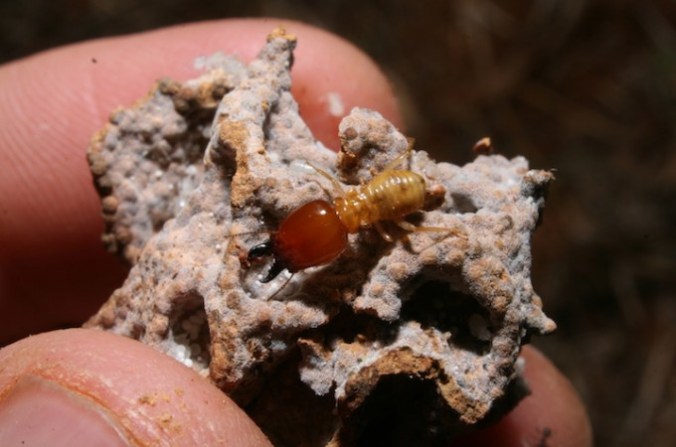
Termite on a fragment of its nest. Credit: Photo by Robert Pringle, Princeton University Department of Ecology and Evolutionary Biology.

Termite on a fragment of its nest. Credit: Photo by Robert Pringle, Princeton University Department of Ecology and Evolutionary Biology.

Conservation, on hiatus while they rethink their approach to a constantly rapid-fire changing media landscape, still provides the daily summaries of important environmental news to which we have become accustomed:

TERMITES EMERGE AS UNLIKELY CLIMATE HEROES

In the past several years, designers have looked to termite nests, earthen mounds that dot grasslands throughout the tropics, as a model for energy-efficient dwellings. Now, a study suggests that these mounds may also make their own landscapes more resilient to climate change, preventing savannas from turning into deserts during periods of drought. Continue reading

Flipping Tortoises

Credit: RubberBall / Alamy. Via BBC

A couple of our contributors have connections to tortoises through the Galápagos Islands, or at least from reading about them in the news. We’d always been aware of the danger for tortoises if they were flipped on their backs, but had never given the issue much evolutionary thought to consider the variations in the animals’ shells. Now, scientists at the University of Belgrade have published a paper on the self-righting ability of Hermann’s tortoises, which live in the Mediterranean. Matt Walker writes for the BBC:

Depending on your point of view, it is one of life’s great questions.

How does a tortoise that has flipped onto its back, get up again?

It’s not a rhetorical question, and it goes beyond being a metaphorical or metaphysical query, or a subject for drunken debate.

For a tortoise it is a deadly serious matter; being able to right itself counts as one of life’s epic struggles, a potential matter of life and death.

Continue reading

Bats Sing Like Birds Do. Who Knew?

Pipistrellus nathusii, a species of European bat.

We recently learned that certain types of fruit bat can echolocate with their wings, and now we’re discovering that some bats also make sounds for reasons other than sonar or distress calls! Although bat songs have been recorded as much as four decades ago, more and more singing bat species are being found by scientists today, and these batsongs seem to function the same way that birdsongs do. As Robert Krulwich points out for NPR, there are very few types of mammal that sing, so it’s nice to see the club growing. Krulwich’s article continues below:

Bats produce “pings” or “clicks,” right? They make these high-pitched sounds, too high for us to hear, but when their cries ricochet off distant objects, the echoes tell them there’s a house over there, a tree in front of them, a moth flying over on the left. And so they “see” by echolocation. That’s their thing. They are famously good at it.

Continue reading

Citizen Science, Decades In Development

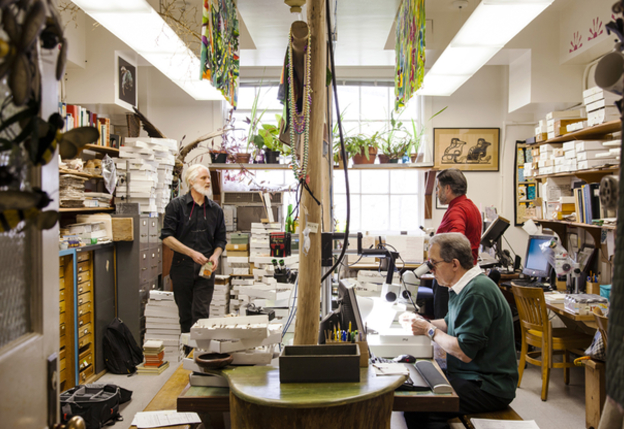
In Droege's lab at the Patuxent Wildlife Research Center, pizza boxes provide storage to thousands of pinned bee specimens. Volunteers Gene Scarpulla (in green) and Tim McMahon peer through microscopes to ID the insects.  Credit: Robert Wright

In Droege’s lab at the Patuxent Wildlife Research Center, pizza boxes provide storage to thousands of pinned bee specimens. Volunteers Gene Scarpulla (in green) and Tim McMahon peer through microscopes to ID the insects. Credit: Robert Wright

We started, before even knowing the terminology, paying attention to citizen science on this blog when we began to understand the parallels with entrepreneurial conservation. And now we link to stories whenever we can that help us better understand it:

Three Generations of Citizen Science: The Incubator

Once Sam Droege gets a research project up and running, he dreams up a new one–and builds it.

BY ANDY ISAACSON

It was a bright, breezy day in late April, the flowering azaleas having finally shrugged off the winter that overstayed its welcome, when Sam Droege sailed onto the grounds of the U.S. National Arboretum in Washington, D.C., behind the wheel of a pterodactyl. It was actually a ’98 forest-green Saturn, which Droege had painted with yellow wings and a red-and-yellow beak that tapered to a point down the center of the hood. A piece of wood, lined with a rusty crosscut saw, had been bolted to the roof: the crest. Little jingle bells, inspired by richly adorned buses in Pakistan, dangled from chains screwed into the rear bumper. Droege still had designs for neon undercarriage lights, and a mosaic of mirror shards to line the car’s ceiling–“but why stop there?” he wondered. It was a work in progress.

Continue reading

Systematically Distributing Holiday Cheer

The holiday season is about giving and the classic song quantifies the largess. The American Museum of Natural History is home to many happy childhood memories and I embrace their scientific form of expressing holiday cheer. Not everyone can claim their “True Love” is a “Science Geek” – but kudos to AMNHNYC for helping us all be Science Lovers!


The Differences Between Rabbits and Hares

A female European hare (right) boxes with a male in Wales. PHOTOGRAPH BY ANDY ROUSE, 2020VISION/NATURE PICTURE LIBRARY/CORBIS. Via National Geographic.

Thank you to Liz Langley from National Geographic for highlighting differences that we have always been curious about but never thought about looking into until they were laid out so clearly in a single place. And with cute photos and a couple puns to boot. The article below comes from Nat Geo’s “Weird Animal Question of the Week,” which we will be sure to visit in the future.

Hares and rabbits are in the same family, Leporidae, but they’re “different species, like sheep and goats are different species,” Steven Lukefahr, a geneticist at Texas A&M University in Kingsville, said via email.

Hares are also larger, have longer ears, and are less social than rabbits. The “most profound difference” is seen in baby hares versus baby bunnies, said Philip Stott, a wildlife ecologist at the University of Adelaide in Australia. (See National Geographic’s pictures of baby animals.)

First off, a hare’s pregnancy lasts 42 days, compared with rabbits’ 30-31 days with a bun(ny) in the oven.

Continue reading

The Glossiness of Tinamou Eggs

Eggs from tinamous being used for research at Hunter College. Tinamou eggs are up to 14 times as glossy as the average chicken egg. Credit Fred R. Conrad/The New York Times

Readers of the blog who have visited in recent months will know that I do a lot of work with chicken eggs for artistic purposes, and readers from years ago might remember that I worked with Celebrate Urban Birds at the Cornell Lab of Ornithology, and I often wrote about bird-related topics (and still do!). During one of CUBs’ photo competitions called Funky Nests, I posted on egg coloration, and looking back on that post I am very surprised to see that I didn’t mention the eggs of a family of birds called tinamous. I’m puzzled as to why I wouldn’t have written about tinamou eggs because they are curiously glossy. In addition to having quite pretty colors, the eggs are extremely shiny to the point of looking fake, or varnished by wood elves after they’re laid.

Perhaps I didn’t include tinamou eggs in my post because very little is understood about why their glossiness exists, as Rachel Nuwer reports for the New York Times this week in an article with a title that obviously caught my eye:

Easter Eggs Without a Kit

The Shy, Drab Tinamou Has a Stunning Palette That Still Holds More Mysteries Than Answers.

When it comes to shell color, most birds’ eggs conform to one of four motifs: colored with spots, colored without spots, white with spots or pure white.

Continue reading