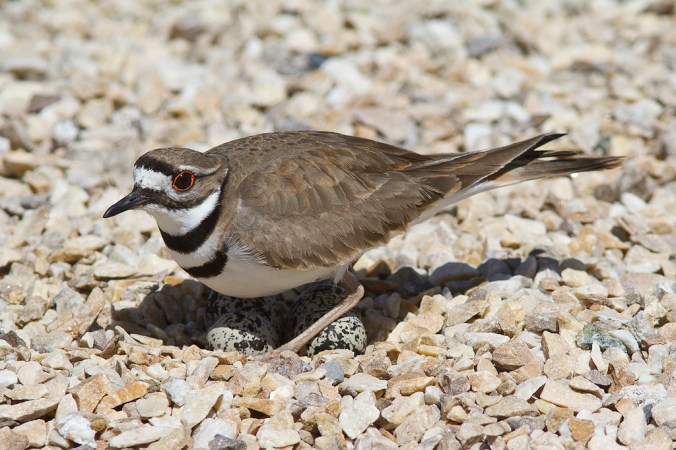
CUBs Focal Species Close-up: Killdeer

Photo of Killdeer in Upper Newport Bay Nature Preserve by Morgan Terrinoni

Photo of Killdeer in Upper Newport Bay Nature Preserve by Morgan Terrinoni


If you haven’t heard of CUBs–Celebrate Urban Birds–yet, click here. Unlike the rest of shorebirds in the family of plovers, dotterels, and lapwings, Killdeer inhabit places other than the beach. Why? In part this is because they enjoy expanses of gravelly rocks and short grass, and there is only so much coastline. With all the parking lots, golf courses, well-maintained lawns, grazed pastures, and athletic fields in the US alone, it isn’t surprising that they took to the niches that were much more open to a ground-dwelling bird than the fairly packed shores. The fact that Killdeer have chosen homes that quite often happen to be in (sub)urban areas points to the relative comfort the species has for human proximity, and to a degree explains their successful expansion throughout North America as year-round residents. Continue reading
Madagascar Pochard, Rescued From Expected Extinction

This slideshow requires JavaScript.

We are always more than happy to share news stories where a turn of luck, a bit of effort, and/or the will to survive keep a species in the game.  Here we thank Dr. Lee Durrell, the WCT and the WWT for their news release on the return of a nearly gone group of ducks:

The Madagascar pochard – arguably the world’s rarest bird – has bred successfully in captivity building hope that it can be saved from extinction.

Eighteen precious pochard ducklings are being reared at a specially built centre in Antsohihy, Madagascar, opened last year by Dr Lee Durrell. The birth of the ducklings is a key milestone in the conservation of the species, including an emergency expedition two years ago to take eggs into captivity. It is the ducks from those eggs that have now bred for the first time. Continue reading

Tracking The Golden Swallow

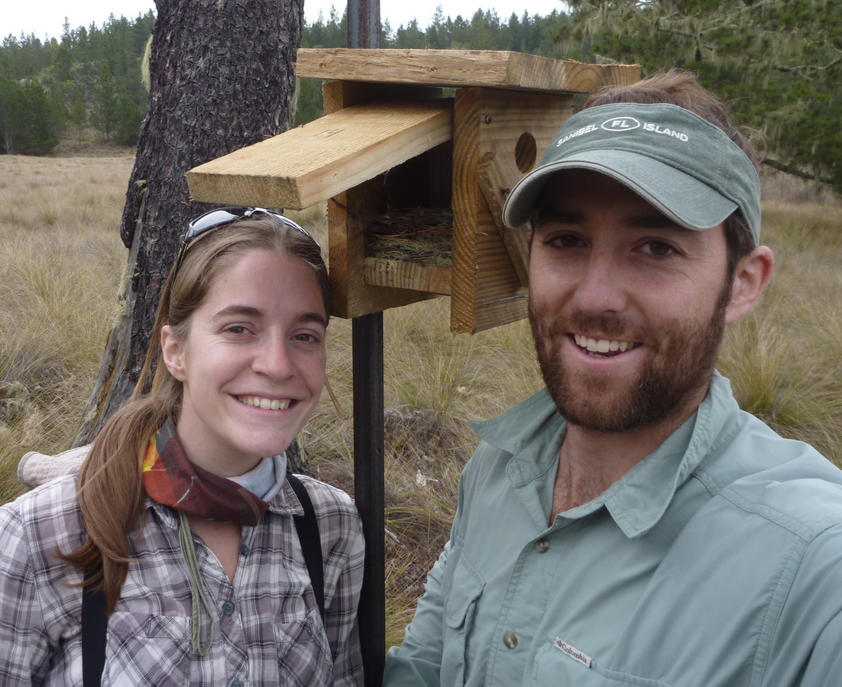
Marisol and Justin

Marisol and Justin

Dear La Paz Group followers,

I’m excited to have been invited to share with you current updates from the Cordillera Central of the Dominican Republic where I am active in uncovering the life history traits and conservation strategies surrounding the Golden Swallow (Tachycineta euchrysea), a threatened passerine endemic to the island of Hispaniola. Continue reading

Red-tailed Hawk Chicks Hatch on Earth Day at Cornell University

Photo by Cornell Lab of Ornithology

If you were up around 6AM this Earth Day you probably didn’t think to check the Cornell Lab Bird Cams, but if you had, you might have seen two hawk chicks hatch into their nest atop a light pole on one of Cornell’s athletic fields.

According to the Lab’s news release, the third chick (i.e. the egg in this picture) is due to hatch in the next 48 hours, so keep a close watch by following the link in the photo, and enjoy your Earth Day! As you check out the live feed, you’ll probably see the father hawk, Ezra (named for Cornell University’s co-founder Ezra Cornell), or the mother, Big Red (after Cornell’s sports teams) taking turns incubating the egg and chicks.

Be sure to refer to the Red-tailed Hawk cam frequently asked question page, and also check out the Great Blue Herons in Sapsucker Woods!

Lost and Found In Ghana

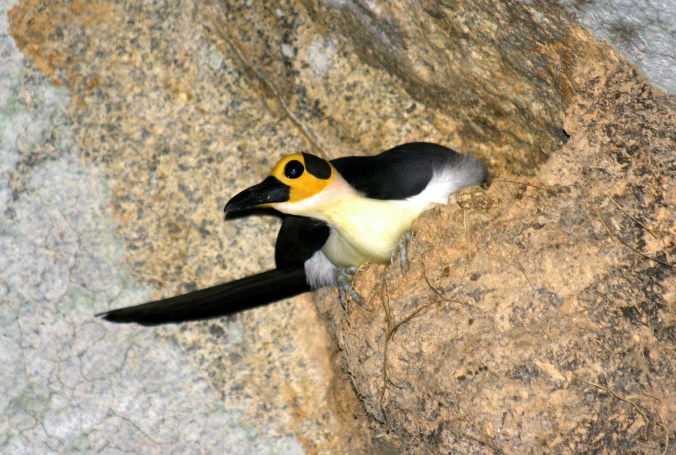
White-necked Picathartes - Photo Credit: David Shackelford Rockjumper Birding Tours

White-necked Picathartes – Photo Credit: David Shackelford Rockjumper Birding Tours

In March we’d introduced the White-necked Rock Fowl in our Bird of the Day series, and then neglected to tell the full story behind this charismatic bird. Shame on us! But better late than never I’m happy to share it now.

West Africa’s Upper Guinean forest block stretches along the coast from Sierra Leone to Ghana, and along with the Congolian forest block is considered a biodiversity hotspot. Up until the mid-1960s-early 1970s it is believed there were at least 200-300 breeding pairs of the endemic white-necked picathartes in Ghana alone. But up until 10 years ago there hadn’t been reports of the bird for nearly 4 decades, leading conservationists to believe it eradicated from the region.

Our colleague John Mason from the Nature Conservation Research Centre (NCRC) in Ghana has provided us with this fascinating story:

Efforts to locate rockfowl were not successful until 2003, when a research team from Louisiana State University, working in collaboration with NCRC and WD, re-discovered rockfowl in Ghana.  A single individual was mist-netted and one breeding site was recorded in the Subim Forest Reserve.  Subsequently the Ghana Wildlife Society located two additional colonies near this first site.  Continue reading

Silky Nests in Funky Places

Photo by Charles Spencer, AZ

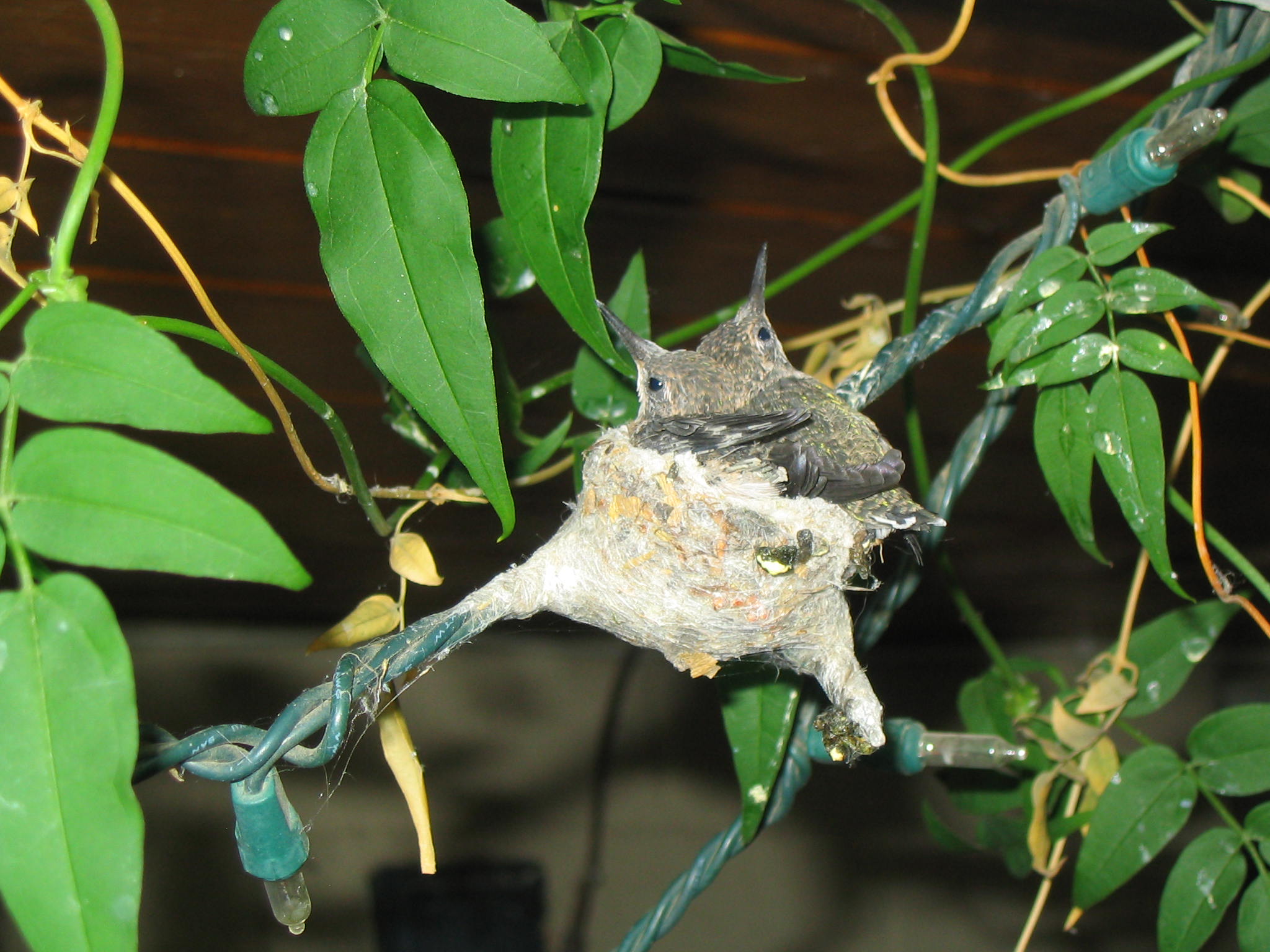
If you’ve ever watched a hummingbird for some time, you’ve probably thought that they’re one of the cutest and most exciting birds that you can find in your yard. Most would agree that it is some combination of their size, speed, vibrancy (of both color and motion), and relative rarity that can make them so appealing to us, but have you ever seen hummingbird nestlings? Or a nest, for that matter?

In the past couple years of the Funky Nests in Funky Places competition we’ve received photos of over a dozen hummingbird nests, all but one of which have been built on a man-made object! Seeing the hummingbird hatchlings poke their little beaks out of the tiny cup that the mother has created for them is a wonderful experience, and the feat of each minuscule nests’ construction becomes more impressive when you consider what the assembly materials are.

As you take a close look at the contributors’ photos shared here, you should be able to see (despite occasional blurriness) that the majority of the nest cup seems to be comprised of a silky substance. Surprisingly enough, much of this is spider web! Also known as spider silk, these strands of what humans normally think of as a fragile material (though some species of spiders produce silk with a higher tensile strength than steel) are perfect for hummingbirds’ purposes because they are sticky, light, stretchy, and strong.

Continue reading

Nature Books: Birds

9780810996137

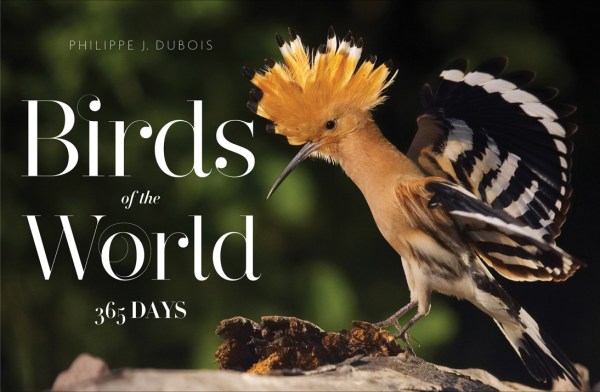
Looking through this publisher‘s catalogue, we see they give attention to a wide variety of charismatic flora and fauna.  For example, this book (click the image above to go to the source):

Birds of the World: 365 Days gives this perennially popular subject the 365 treatment: ornithologist and conservationist Philippe J. Dubois presents a “day in the life” of a year’s worth of species from five continents. The stunning images of birds in action, taken by some of the best avian photographers in the world, illustrate the text beautifully. Continue reading

If You Happen to be in New York City

Cycle 2, Version 3 by Sopheap Pich, 2008. Photo credit (c) The Metropolitan Museum of Art.

For the next several months, The Metropolitan Museum of Art (aka The Met) has quite a few great special exhibits open that I would recommend seeing. My two favorites from a visit to The Met last week are titled “Cambodian Rattan: The Sculptures of Sopheap Pich” and “Birds in the Art of Japan,” both on the second floor in the Asian Art section.

In the first exhibit, Pich uses wire, bamboo, rattan, and a couple other materials to craft beautiful abstract or representational sculptures, which are presented, as you can see in the picture on the left, with great lighting to create superb shadows around the piece. Pich and his assistants had to boil the rattan and bamboo cane in diesel oil to remove insect eggs, prevent fungal damage, and preserve the cane from discoloration.

Continue reading

Ghana, Canopy Walkways, Conservation

TNC Green Science Blog


Click the banner above to go to the blog, and the image below to go to the most recent post:

Boucher’s Birding Blog: Mamba Meets Bushbaby

MARCH 15, 2013  |  by: Timothy Boucher
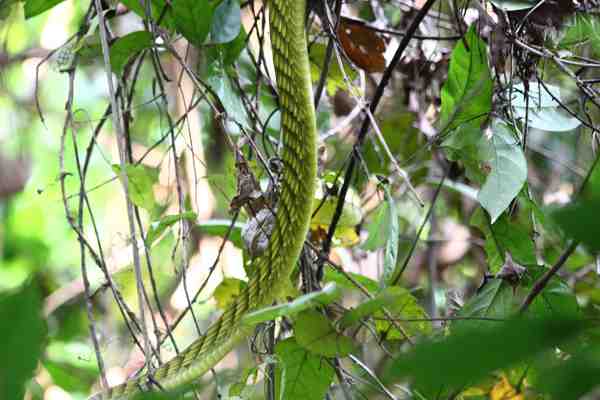
Many visitors see the canopy walkway as a low-tech amusement ride. But look closely, and wonders await: like this green mamba slithering past. Tim Boucher/TNC

Many visitors see the canopy walkway as a low-tech amusement ride. But look closely, and wonders await: like this green mamba slithering past. Tim Boucher/TNC

Sometimes when you go birding, you can’t help but see other animals – elephants, army ants, beautiful butterflies.

Occasionally, if you get out early (as birders always do), you can get to a park before the crowds and you might see something really special (and, in this case, gruesome).

In January, we traveled to Ghana for some superb birding. Our visit included the famous canopy walkway at the Kakum National Park near the Ivory Coast. The seven bridges strung high up in the trees usually teem with visitors who have no appreciation of the amazing birdlife. Continue reading

If You Happen To Be in New York City

This slideshow requires JavaScript.

From today until May 19 the New-York Historical Society will begin hosting a multi-phased exhibition of Audubon‘s early, exuberant period as an illustrator-naturalist:

Audubon’s Aviary: Part I of the Complete Flock

To celebrate the sesquicentennial of the New-York Historical Society’s purchase of the Audubon avian watercolors and the the release of the lavishly illustrated book Audubon’s Aviary: The Original Watercolors for “The Birds of America”―published by the New-York Historical Society and Skira/Rizzoli and winner of a 2013 New York Book Show Award Continue reading

James Prosek, Come To Kerala!

This slideshow requires JavaScript.

When we invite an artist to visit us, it is mostly but not always because we think their work would fit well with the natural environments where we work. And, of course, because we love what we have seen of their art. The slideshow above includes current and boyhood illustrations by an artist who would hopefully appreciate our daily attention to his beloved creatures in various places:

…The artist and author James Prosek uses vivid and highly detailed watercolors to capture the natural world. He’s compared often to Audubon, though unlike the 19th-century artist’s focus on birds, Prosek’s work most often focuses on animals with fins instead of feathers. Continue reading

Birds-of-Paradise Project

Photo by Tim Laman.

We’ve written about the birds-of-paradise before, mostly to share great images of them. But all that is about to be topped by the same folks who brought us two out of the three links above: Tim Laman and Ed Scholes. On February 19th, a new website was released that contains over two hours of footage never seen before, specifically designed to serve as an educational base for anyone trying to learn more about the whacky birds.

The Cornell Lab of Ornithology was one of the main funders for the project (others include the estate of Madelon G. and Robert Wehner, Conservation International, and the National Geographic Expeditions Council). According to their official press-release, the “website, videos, and interactive features were produced by the Cornell Lab’s Multimedia program with sound and video from the archives of the Lab’s Macaulay Library. Producer Marc Dantzker said the production team sorted through more than 2,500 video clips, almost 40,000 photos, and hundreds of sound recordings to find close-up examples of each adaptation, courtship pose, display feather, and dance move.”

So after eight years of painstaking research by Scholes and Laman, we get to enjoy this unforgettable imagery! Watch the video below of the King-of-Saxony, Continue reading

Katrina, Come To Kerala!

Thanks to this book review in the New York Times we see Katrina in a light similar to that of several other remarkable people we have strongly urged to visit our neck of the woods.  Katrina’s work is illustrated above and in these images from her website.

This slideshow requires JavaScript.

From the description of her new book we would find some of this work challenging (as anatomical renderings can sometimes be), but from an artistic, craft/technical and scientific point of view, phenomenal:

There is more to a bird than simply feathers. And just because birds evolved from a single flying ancestor, doesn’t mean they are structurally all the same. With over 300 stunning drawings representing 200 species, The Unfeathered Bird is the most richly illustrated book on bird anatomy ever produced and offers a refreshingly original insight into what goes on beneath the surface. Continue reading

Really, Nevada?

In the spirit of enthusiasm with which we welcomed the news of one politician’s move in an interesting direction, we grouse with equal enthusiasm about the actions of another politician, this one inclined in the opposite direction of entrepreneurial conservation (click the image to go to the story):

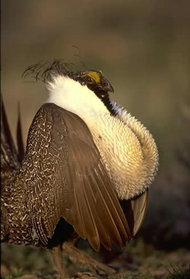
The ouster of a Nevada wildlife official has fanned a debate over whether the sage grouse can best be kept off the Endangered Species List by protecting its habitat or by killing more of its predators.

Kenneth Mayer, who had been the director of the Nevada Department of Wildlife and serves on regional and national committees that deal with sage grouse conservation, startled environmentalists and many Nevadans last week by announcing that Gov. Brian Sandoval had demanded his resignation. Continue reading

Bird Lovers, Unite Around Cats To Go

We appreciate the Guardian‘s coverage of this issue, and activists like this one:

Last week Gareth Morgan, an economist and conservation campaigner, called for cats to be confined or eradicated from his native New Zealand to protect the wildlife. Meanwhile, in the US, a study published this week in the journal Nature found cats are killing more birds and mammals than previously thought. Writer Tom Cox, who shares his home with four cats, and Morgan discuss whether it’s time we learned to live without our feline friends. Emine Saner listens in.

Continue reading

Thattekkad Bird Sanctuary

Photo credits: Ramesh Kidangoor

Thattekkad Bird Sanctuary is Kerala’s first officially recognized bird sanctuary. Named after the late renowned ornithologist Dr. Salim Ali, the small but intensely biodiverse area lies snugly between two branches of the Periyar river and the serenity of the Anamalai hills. This bird watcher’s paradise was once a rubber plantation, but due to its abundant wildlife and in order to protect the wide range of resident and migratory birds it was declared a sanctuary in 1983.

Continue reading

Dreamscapes

The Story Behind a Dream Shot – The Bird-of-Paradise Sunrise -A Greater Bird-of-Paradise (Paradisaea apoda) male greets the sunrise from his tree top display perch in the Aru Islands, Indonesia.

It shouldn’t seem surprising that the videos of such charismatic creatures have gone viral. But the study and associated film, book and lecture series seem to pack a similarly powerful punch.

Click the photo above to read about more about the million views and Tim Laman’s amazing stories.

Natural Born

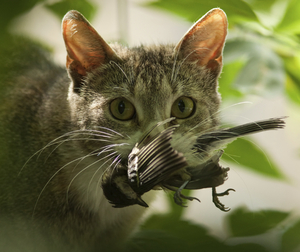
It is well-documented on this site that we are feline-lovers, but our Bird Of The Day commitments force our full disclosure of the facts. Among those of us contributing to this blog–or anyone otherwise affiliated with Raxa Collective–we are contributors to the problem reported here (citing numbers specific to the USA only):

Behind This Cute Face Is A Cold-Blooded Killer

There are as many as 47 million pet cats out hunting for prey. Add that to the tens of millions of feral cats and strays, and researchers estimate that the furry felines are responsible for billions of bird and small mammal deaths every year.

Click the image above to go to the story. Don’t ask us what we plan to do about it.  If you have any suggestions, we are all ears.

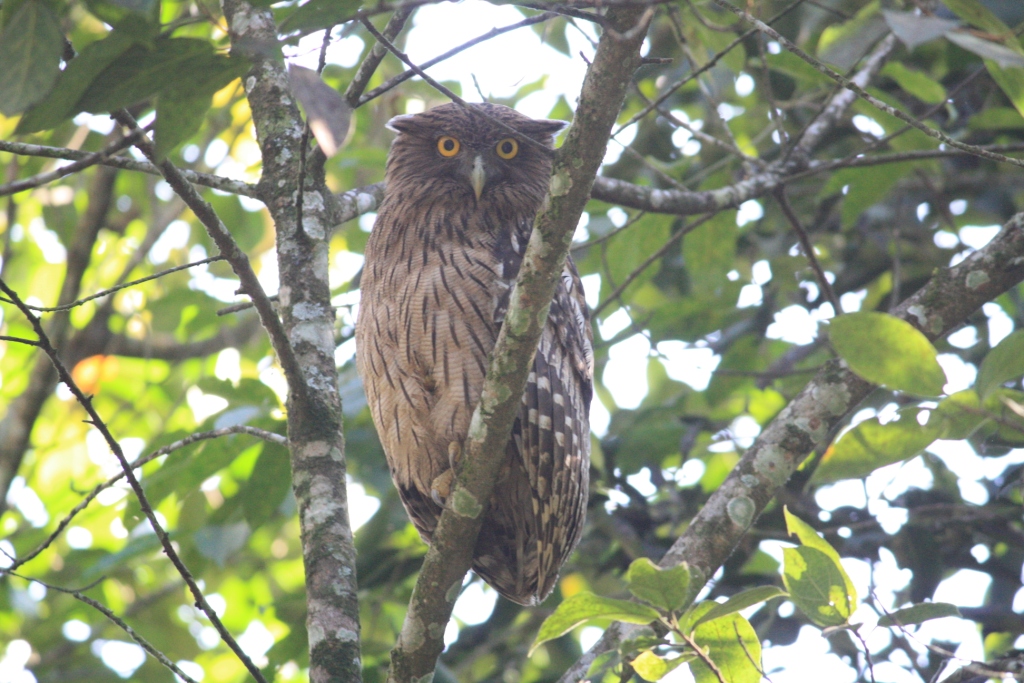
Wild Periyar- Brown Fish Owl (Ketupa zeylonensis)

Periyar’s diverse forest types and ecosystems- moist deciduous and evergreen forests, shallow banks and wet lands – attract more than 360 species of bird life. The Brown Fish Owl chooses habitats near the ponds, streams and lakes of Periyar. Continue reading

Prized Bird Activism

Click the image to the left to go to the National Audubon Society’s website to read the entire announcement:

George Archibald is the first recipient of the Dan W. Lufkin Prize for Environmental Leadership.  As founder of the International Crane Foundation (ICF), he has devoted his life to protecting cranes and their ecosystems around the world and to helping thousands of people understand, and be inspired by, the global significance of bird conservation.

In 1973, with fellow Cornell University graduate student Continue reading