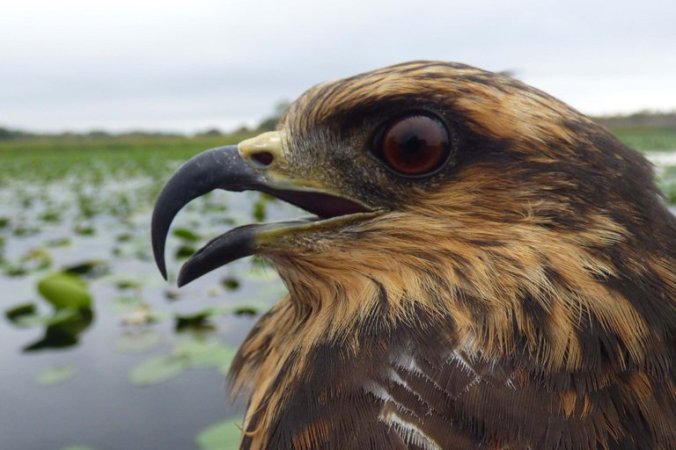
A North American snail kite in Florida. Researchers say the bird species has rapidly evolved larger beaks and bodies to eat a larger, invasive snail. CreditRobert Fletcher/University of Florida
Things Looked Bleak Until These Birds Rapidly Evolved Bigger Beaks
The invasive snails are two to five times larger than the native species, and young kites with larger bills that were able to feed on them were more likely to survive their first year. Credit Robert Fletcher/University of Florida
Conservationists have been sounding the alarm over invasive species for years, warning of the damage they can cause to habitats and native animals. But in Florida, an invasive snail might be helping an endangered bird species come back from the brink, researchers say.
The population of North American snail kites — birds that use curved beaks and long claws to dine on small apple snails in the Florida Everglades — had been dwindling for years, from 3,500 in 2000 to just 700 in 2007. Things began to look particularly bleak in 2004, when a portion of the Everglades was invaded by a species of larger snail that the birds had historically struggled to eat. Ornithologists assumed the shift would hasten the snail kite’s decline. Continue reading





 Birds feature more than any other topic in these pages. We have laid out bird-friendly territory over the years, and now Natalie Angier brings us a science news story that would be disturbing if not for our overall appreciation for the value of biodiversity.





 Organikos