Hunting & Gathering & Happiness

HuntGather

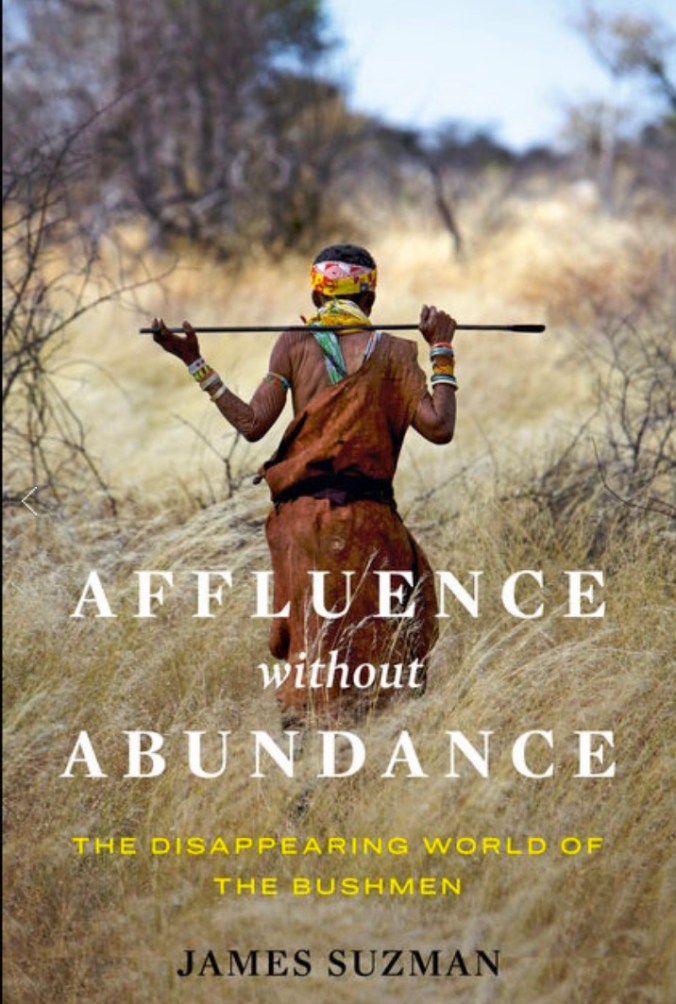
A few months ago we saw this interview with James Suzman, but delayed linking it until we had an opportunity to get ahold of the book. Our interest was caught by his explanation for why the topic was important:

24FIVEQUESTIONS-SUZMAN2-blog427

The author James Suzman.

…If we judge a civilization’s success by its endurance over time, then the Bushmen are the most successful society in human history. Their experience of modernity offers insight into many aspects of our lives, and clues as to how we might address some big sustainability questions for the future.

And then we neglected to post it until today, reminded about the book by the folks at National Public Radio (USA) in a new interview with the author on the same topic:

There’s an idea percolating up from the anthropology world that may make you rethink what makes you happy.

The idea is not new. It surfaced in the popular consciousness back in the late 1960s and helped to galvanize a growing environmental movement.

And now several books are bringing it back into the limelight.

The idea is simple: Perhaps the American and European way of living isn’t the pinnacle of human existence. Humanity hasn’t been marching — in a linear fashion — toward some promised land. Perhaps, Western society isn’t some magical state in which technology free us from the shackles of acquiring basic needs and allows us to maximize leisure and pleasure. Continue reading
The Conservation Model Of Martha’s Vineyard

YUP FOSTER MV COVER.jpg

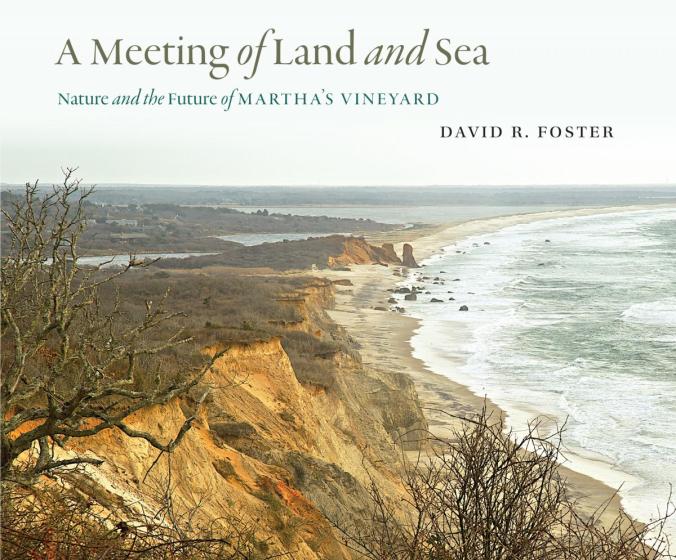
Whether or not you have been to Martha’s Vineyard, if you have been through our pages at all you will understand how this excerpt from the above book captures our attention and why we are interesting in tracking it down for a closer look:

The Vineyard landscape is distinct in many ways — most notably in land values, pace of development toward full build-out, the assemblages of plants and animals, and past success in land protection — but it typifies many qualities of Massachusetts and the greater New England region, including their conservation challenges. They share the history of agricultural and woodlot land use, the ongoing growth of their forests, the tension among farmed, open, and wooded lands, the relentless sprawl of development, the fragmentation of the land by many small, private landownerships, and the looming threats from climate change, sea level rise, insect outbreaks, and other stresses. Nevertheless, the Vineyard has put itself into a particularly strong position to address the looming challenges due to its expansive breadth of conserved lands, its forward-looking and Island-wide planning efforts and knowledge base about the landscape, and the capacity for ongoing land protection and stewardship. Continue reading

Moths Worthy Of Art Galleries

Index

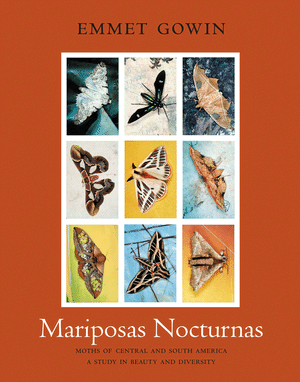
A collection of Gowin’s photographs from “Mariposas Nocturnas,” taken in February, 2007, at the Integral Forest Otonga, El Reventador, and Otongachi Reserve, in Ecuador.Photographs by Emmet Gowin / Pace/MacGill Gallery / © Emmet and Edith Gowin

k11112We have occasionally “discovered” the inspirational aspect of moths in all their variations, but had not thought so much of their beauty.  Thanks to Andrea K. Scott for bringing our attention to the photography of Emmet Gowin, whose “Mariposas Nocturnas: Moths of Central and South America, A Study in Beauty and Diversity” will be published this month by Princeton University Press. Also we thank her for mentioning that an exhibition of Emmet Gowin’s work will be shown at Pace/McGill Gallery from September 28th through January 6th, 2018:

The moth doesn’t enjoy the same charmed reputation as its lepidopteran cousin, the butterfly. Continue reading

If You Happen To Be In Berkley

FoerOn September 25, 2017 the Berkley Center for New Media is presenting “World Without Mind: The Existential Threat of Big Tech” that has our attention:

Franklin Foer reveals the existential threat posed by big tech and offers a toolkit to fight their pervasive influence. Elegantly tracing the intellectual history of computer science—from Descartes and the enlightenment to Alan Turing to Stuart Brand and the hippie origins of today’s Silicon Valley—Foer exposes the dark underpinnings of our most idealistic dreams for technology. The corporate ambitions of Google, Facebook, Apple, and Amazon, he argues, are trampling longstanding liberal values, especially intellectual property and privacy. This is a nascent stage in the total automation and homogenization of social, political, and intellectual life. By reclaiming our private authority over how we intellectually engage with the world, we have the power to stem the tide. At stake is nothing less than who we are, and what we will become. In this talk, Foer explains not just the looming existential crisis but the imperative of resistance.

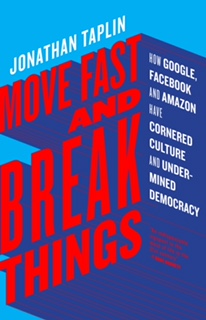
movefastThat got our attention at the same time as this book did, thanks to Elizabeth Kolbert’s review in this week’s New Yorker:

…Taplin, who until recently directed the Annenberg Innovation Lab, at the University of Southern California, started out as a tour manager. He worked with Judy Collins, Bob Dylan, and the Band, and also with George Harrison, on the Concert for Bangladesh. In “Move Fast and Break Things,” Taplin draws extensively on this experience to illustrate the damage, both deliberate and collateral, that Big Tech is wreaking. Consider the case of Levon Helm. He was the drummer for the Band, and, though he never got rich off his music, well into middle age he was supported by royalties. 

This is not a mainstay theme in these pages, but we have felt compelled from time to time to pass along an informative read on a topic that seems likely to continue growing in importance.

An Alternate Model For Books

Piazza-A-CSA-For-Books-1-1200.jpg

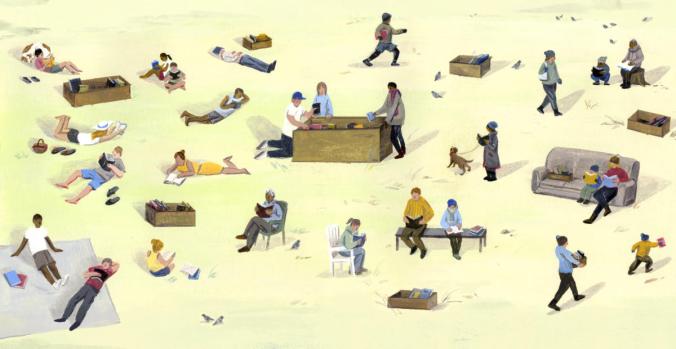
When Samantha Haskell took over a bookstore in Maine, she looked to local farms, and “community-supported agriculture,” for commercial inspiration.ILLUSTRATION BY SALLY DENG

Combining some of our favorite topics, including agriculture and books and transferable models of agriculture, our thanks to Adrea Piazza for A C.S.A. FOR BOOKS:

Mariah Hughs and her husband, Nick Sichterman, founded Blue Hill Books in 1986. It sits on Pleasant Street, in Blue Hill, Maine, a coastal town with a population that swells during the warmer months and thins out again each winter, reduced to its cast of fewer than three thousand year-round residents. This past winter, in the midst of that slow season, Hughs and Sichterman retired, leaving the bookstore in the hands of Samantha Haskell, who had been their full-time employee since 2010. Haskell had working capital to survive the first year, but, in order to maintain the breadth of the store’s inventory, she needed to raise additional funds. Rather than compromise the shelves, she looked to local farms for inspiration, devising a plan modelled after “community-supported agriculture,” commonly referred to by its initials, C.S.A. Blue Hill Books would become a community-supported bookseller: a C.S.B. Continue reading

Cry Sadness Into The Coming Rain

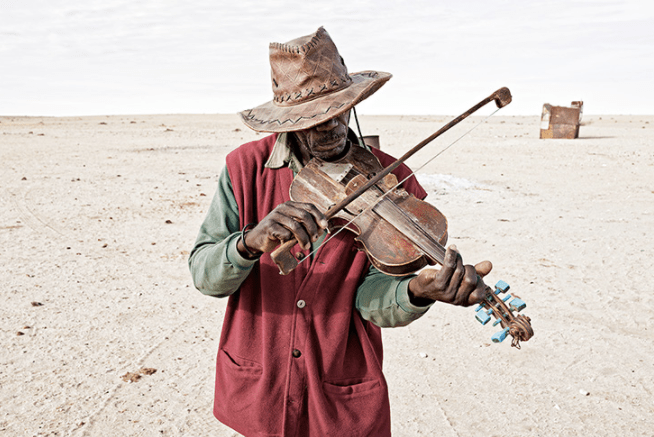
Gottlieb ǂKhatanab ǁGaseb aka Die vioolman (The Violinist) plays traditional Damara music at the funeral of Ouma Juliana ≠Û-khui ǁAreses on the family farm beneath the Dâures. Uis District, Erongo Region. December 2014

As an international company, our team tends to be spread out across the world, so more often than not many of our posts is a surprise to the rest. It was with that sense of synchronicity that I read Crist’s piece on Gerhard Steidl’s conservation work yesterday while I was in the midst of writing about this upcoming publication.

Born in Namibia, photographer Margaret Courtney-Clarke spent decades capturing life in remote places in Italy, the USA and numerous parts of Africa. Returning to Namibia after years away, she found the once familiar landscape drastically changed.

Cry Sadness Into the Coming Rain is a forthcoming publication by Steidl, Germany, 2017.

With strong memories of my formative years growing up on the edge of the Namib Desert in what was then known as South West Africa, I have returned to explore my obsession with this place and my lifelong curiosity for the notion of shelter. I have covered thousands of dusty kilometres across remote plains, through dry river beds, over sand dunes and salt pans, through conservancies and communal lands to photograph families in desperate, forgotten outposts. I try to capture the ‘transhumance’ – the search for work, forage and water – and the remnants of former habitats alongside once productive land.

In coastal towns I move with women and children across stretches of desert from one garbage dump to another – often with the loot they carry in their quest to create shelter and eke out a living. I focus on human enterprise and failure, on the bare circumstances of ordinary women and men forced to negotiate life, and of an environment in crisis. Continue reading

Entrepreneurial Conservation, Book

tny_steidl01 009

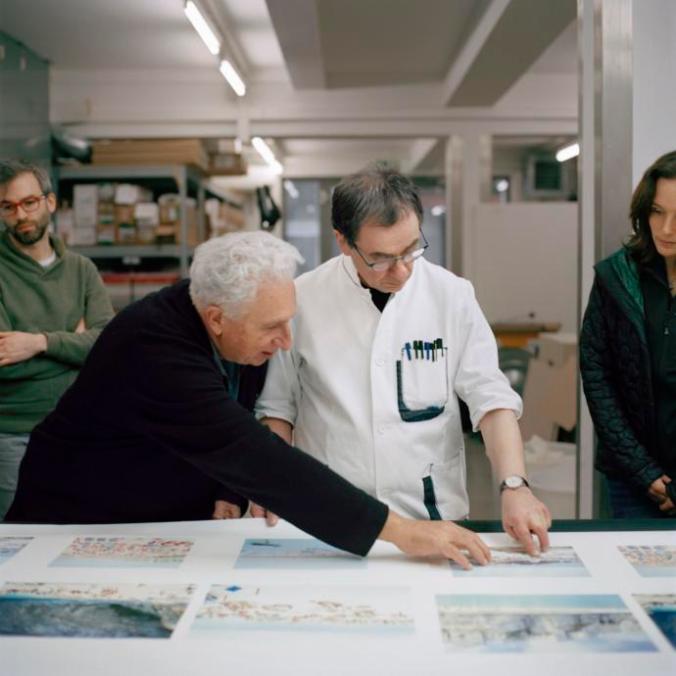
Steidl (pictured here with the Italian photographer Massimo Vitali) is engaged in an effort to print and catalogue work that might otherwise not be available, and to use advanced industrial means to distribute it widely. It is a Gutenberg-like goal, with the history of photography substituting for the word of God. Photograph by Mark Peckmezian for The New Yorker

We have frequently sampled the publications of Phaidon when we see relevance to themes we care about. There are plenty of books they produce that are about frill or fashion, and we are less than not interested in those. But we assume those books we like least are likely the ones that sell well enough to pay for the ones we like most. It is a principle we can live with. In our own work we commercialize experiences in nature in order to fund the conservation of that nature, and we live with all the paradoxes inherent in that.

In this week’s New Yorker there is a profile of one man whose life’s work is more or less displaying the same principle, again in the realm of books with photographs, paid for by work in fashion. It caught my attention at first in the same way the Phaidon books generally do, with regard to craft, beautiful display, etc., but there is more here. This man does not just produce lovely coffee table books.  He is clearly on a mission we can relate to, recognizable for an entrepreneurial approach to conservation. Read the one paragraph sampled below for a taste:

GERHARD STEIDL IS MAKING BOOKS AN ART FORM

He is the printer the world’s best photographers trust most. Continue reading

Foxes, Habitat & De-Wilding

Five red fox kits around the tree.jpg

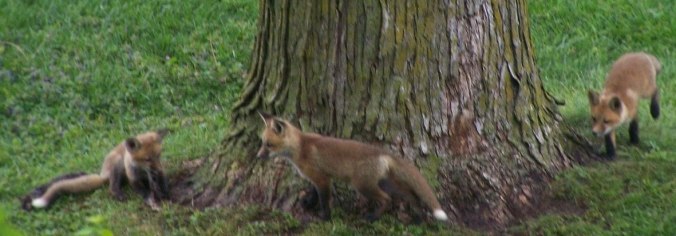
I recently received some photographs showing a family of foxes that had taken up residence near a home in the countryside an hour away from Kansas City. The foxes were wild, but even in this semi-rural landscape the foxes did not appear wild to me.

Vixen near the lakeIt was something about the context, seeing them in a yard I recognized well, that made me think about the essence of wildness. In the last year I have seen a number of grey foxes in the forests of Chan Chich and like most of the wild animals they do not seem to be afraid of humans; neither attracted to nor repelled by fear.

Vixen Apr 27 2017.jpgThe animal-human dynamic in both cases, the semi-rural home (of my in-laws, as it happens) setting of the foxes as well as those at Chan Chich seem to be one of peaceful coexistence, even apparent disinterest.  The human-animal dynamic is anything but disinterested, which the photos illustrate and that we see evidence of every day among Lodge guests. People want to see animals in their natural habitat. The animals’ apparent lack of fear of humans is related to the fact that there has been no hunting in the surrounding half million acres of forest for a couple generations.
It may also be that the foxes around the yard of the home in these photos also have not been hunted but something tells me that the foxes that seem habituated in and around human populations are different from those in these wild forests. I cannot quite articulate why I think that but today this book review got me thinking differently about the essence of wildness:

zuk-master180Imagine a time when scientists worked in secret, wondering if government officials would declare their research counter to state interests, endangering not only the personal liberty of the scientists themselves but their ability to let the experiments take them where the facts led. A time when how good a scientist you were was not all that mattered — what was important was how well you fit into political and ideological dictates. No, this is not a setup for a book ripped from yesterday’s CNN feed. Instead, it is the backdrop to a story that is part science, part Russian fairy tale and part spy thriller.

“How to Tame a Fox” sets out to answer a simple-seeming question: What makes a dog a dog? Put another way, how did an animal that started out as a bloodthirsty predator become one that now wants nothing more than a nice belly rub and the chance to gaze adoringly at a member of another species? Continue reading

Cavafy, Ithaca

cover_cavafy_pbIf you already read this,  you likely treated yourself to the poem the author referenced. I continue to lean on Kazantzakis but perhaps the best outcome for me of reading what Daniel Mendelsohn published in the current issue of the New Yorker was a direction to his translation of Cavafy:

An extraordinary literary event: Daniel Mendelsohn’s acclaimed two-volume translation of the complete poems of C. P. Cavafy—including the first English translation of the poet’s final Unfinished Poems—now published in one handsome edition and featuring the fullest literary commentaries available in English, by the renowned critic, scholar, and international best-selling author of The Lost. Continue reading

Utopia, Dystopia & Options

852ad6386c912e57e5ddca3d6602a1da.jpgI just listened to a conversation with Mr. Bregman, and as he explained the premise for his book I was struck: times like these are exactly when the seeds for utopian thinking are in the most fertile soil. The book itself is not likely my cup of tea, but I am impressed by this man’s effort to bring us this, now.

Cory Doctorow’s essay, over at Wired, is a perfect read to continue the thoughts on choices we make related to utopia versus dystopia:

…The difference between utopia and dystopia isn’t how well everything runs. It’s about what happens when everything fails. Here in the nonfictional, disastrous world, we’re about to find out which one we live in. Continue reading

Plant, Coffee Table Baiting

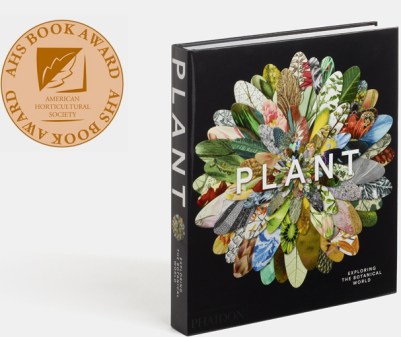
9780714871486-940-ahsPhotos by Penn, Steichen and other classic masters share the pages with some of today’s greatest photographers in this book. It brings our attention to flora in both natural and still-life settings, making this kind of debate irrelevant.

Floral arranging, an art form, can be seen as baiting, in a way. We are mindful of the fact that most of the world increasingly lives in urban settings. While our job is to provide access to the wonders of wild nature, there is a vital role for plants in the daily lives of urbanites to remind them to get back to nature from time to time. If this book provides coffee tables daily reminders of that imperative, we are all for baiting.

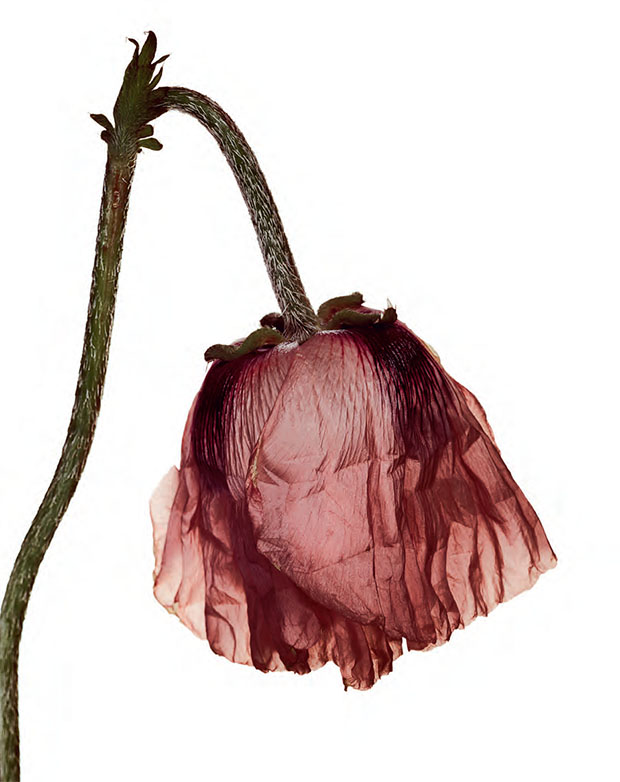
penn-poppy.jpg

Single Oriental Poppy (C), 1968 by Irving Penn. From Plant: Exploring the Botanical World

Plant wins American Horticultural Society Book Award!

Plant is ‘an art exhibit in book form’ says one of the judges – and who are we to disagree? Continue reading

A Book For Our Times

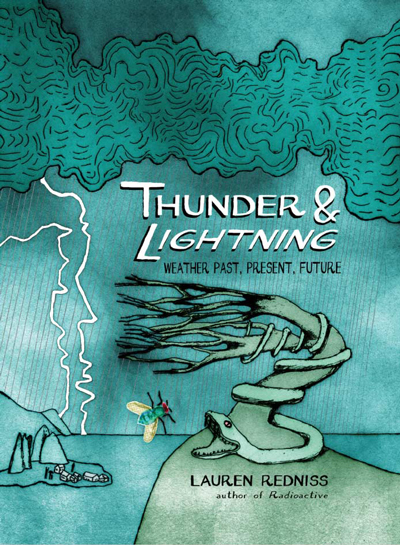
thunder-lightning-cover.jpgThis book just came back to my attention, after reading a review–excerpt after the jump–many moons ago. I am reminded that it looks worth the read; the publisher’s description may prompt a yawn at first, but let it sink in (i.e. a blurb about a book about weather might make your eyes droop just as the thought of seeds in a vault might, until you let that sink in):

In Thunder & Lightning, Lauren Redniss reveals how weather shapes our world and daily lives. She takes readers on a journey from the Biblical flood to the defeat of the Spanish Armada, from the frozen archipelagos of the Arctic Ocean to the ‘absolute desert’ of Atacama, Chile, unearthing surprising stories of savagery, mystery, and wonder. Continue reading

Yuval Noah Harari Speaks His Mind; What A Mind It Is

cover.jpg.rendition.460.707.jpgWe linked recently to a review of this book, and that makes a compelling case. His publisher’s blurb says:

Yuval Noah Harari, author of the bestselling Sapiens: A Brief History of Humankind, envisions a not-too-distant world in which we face a new set of challenges. Where do we go from here? And how will we protect this fragile world from our own destructive powers? In Homo Deus, he examines our future with his trademark blend of science, history, philosophy and every discipline in between.

But if you have 90 minutes to let the author compel you through discussion, the intelligence squared recording below will not let you down

A Decade Since The Last Flight Of The Scarlet Macaw

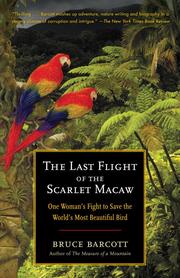
The+Last+Flight+of+the+Scarlet+Macaw.jpgWhen a book like this comes recommended, book reviews from a decade earlier are as fresh and relevant as ever:

…When McPhee wrote “Encounters With the Archdruid,” the American conservation movement was a religious and mystical force. It may still be so today, but the movement now employs nearly as many big-city lawyers and consultants as any corporation hoping to develop a mine, oil field or… dam. They’re out in force in Bruce Barcott’s new book, “The Last Flight of the Scarlet Macaw: One Woman’s Fight to Save the World’s Most Beautiful Bird,” the story of a bitter fight against a dam in western Belize. No, it doesn’t sound thrilling (which is doubtless why the publisher kept the word “dam” out of the title), but Barcott, a contributing editor at Outside magazine and the author of “The Measure of a Mountain: Beauty and Terror on Mount Rainier,” makes it so, mashing up adventure travel, biography and nature writing in a steamy climate of corruption and intrigue…

It is not the first time this book has been recommended to me, but yesterday a fellow hotelier in Belize mentioned it when describing his getting to know someone central to the book’s story, and this  reminded me that I still had not touched the book. It is, I am told, a must read.  Bruce Barcott provided an excerpt of his book back when it first came out, so I have just started.

The Nature Fix, Interview & Links

LopateNature.jpgThis is 20 minutes well spent if you share our interest in the links between nature and wellbeing; one hypothesis on this topic we favor being biophilia. But science is the realm of the nonstop quest, so the author’s explanation in this interview, of her motivations and her methodology, are worth hearing.

lopatenat2We have a preference for supporting independent bookstores so if this book goes onto your shopping list, before you otherwise get pulled in the direction of an online superstore, Powell’s is a great option; see what they have to say about the book:
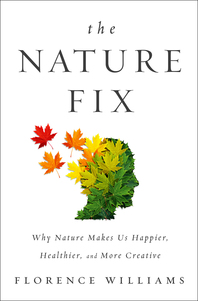
9780393242713_198An intrepid investigation into nature’s restorative benefits by a prize-winning author.

For centuries, poets and philosophers extolled the benefits of a walk in the woods: Beethoven drew inspiration from rocks and trees; Wordsworth composed while tromping over the heath; and Nikola Tesla conceived the electric motor while visiting a park. Intrigued by our storied renewal in the natural world, Florence Williams set out to uncover the science behind nature’s positive effects on the brain. Continue reading

Recommended By Guests At Chan Chich Lodge

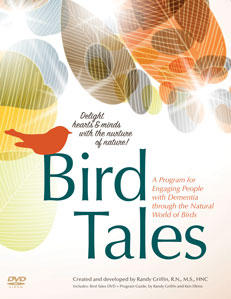
bird-tales-kitWhen guests of Chan Chich Lodge told me last evening about their local Audubon Center in Connecticut (USA), my first thought was a memory of the Audubon Center in my hometown, also in Connecticut, and how essential it was to the decisions I made to do what I do today.

Then they mentioned Bird Tales, and I had never heard of anything like this before, but it made so much sense to me I thought I should excerpt the description here and point it out to the many bird-centric visitors to our platform here (click the image to the left to go to the website of the Center that created the program):

…Initially working with four facilities operated by Transcon Corporation, our Audubon Center Bent of the River Education Program Manager, Ken Elkins, incorporated Audubon at Home environmental principles into the goals of these facilities to improve the quality of life for their residents. Continue reading

Scientist, Illustrator, Forgotten Metamorphosist

24tb-merian08-superjumbo

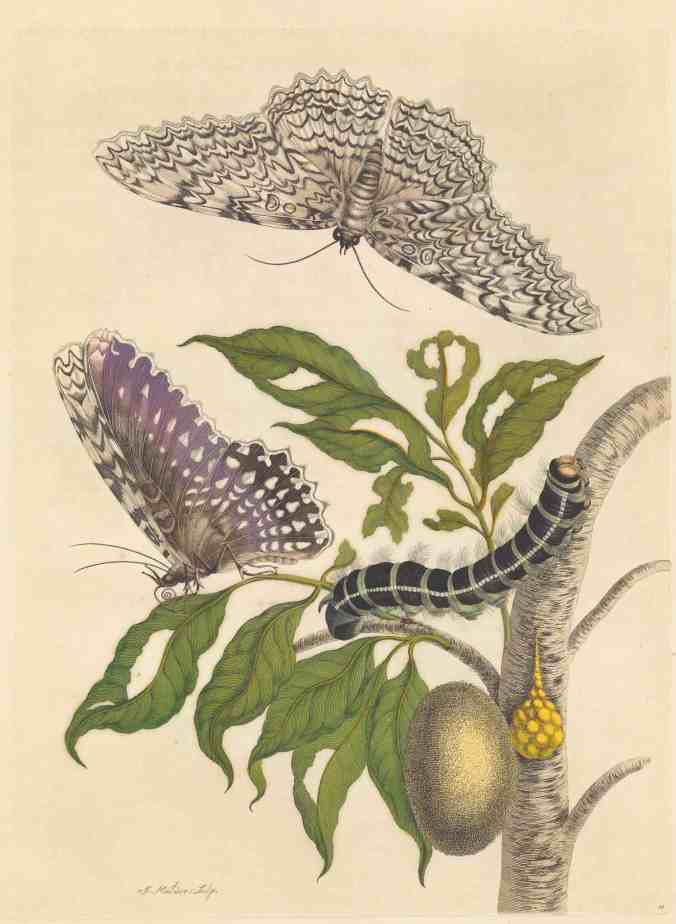
In some of Merian’s drawings, butterflies and caterpillars didn’t match. CREDIT MARIA SIBYLLA MERIAN, METAMORPHOSIS INSECTORUM SURINAMENSIUM, AMSTERDAM 1705, THE HAGUE, NATIONAL LIBRARY OF THE NETHERLANDS

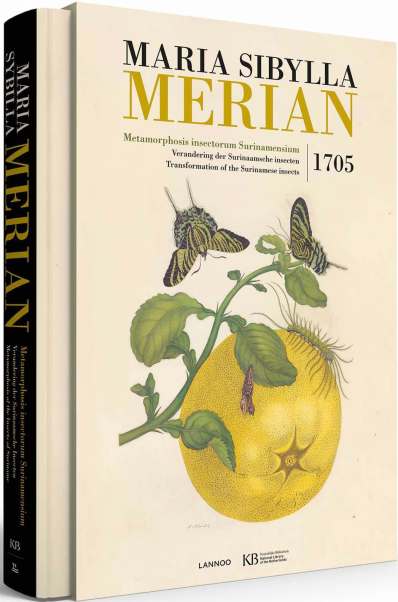
Any story with Metamorphosis in it is bound to get our attention, but a long-forgotten scientist getting her due is the intrigue that makes this story by JoAnna Klein–A Pioneering Woman of Science Re‑Emerges After 300 Years–coinciding with the republication of this book below, worthy of the read:metamorph

Maria Sibylla Merian, like many European women of the 17th century, stayed busy managing a household and rearing children. But on top of that, Merian, a German-born woman who lived in the Netherlands, also managed a successful career as an artist, botanist, naturalist and entomologist.:

“She was a scientist on the level with a lot of people we spend a lot of time talking about,” said Kay Etheridge, a biologist at Gettysburg College in Pennsylvania who has been studying the scientific history of Merian’s work. “She didn’t do as much to change biology as Darwin, but she was significant.” Continue reading

Raduan Nassar, Back To The Land

9780811226561On January 31st, 2017 New Directions Publishing is bringing this masterpiece, published originally in Brazil in 1984, to an English-reading audience for the first time:

For André, a young man growing up on a farm in Brazil, life consists of “the earth, the wheat, the bread, our table, and our family.” He loves the land, fears his austere, pious father, who preaches from the head of the table as if from a pulpit, and loathes himself as he begins to harbor shameful feelings for his sister Ana. Lyrical and sensual, written with biblical intensity, this classic Brazilian coming-of-age novel follows André’s tormented path. He falls into the comforting embrace of liquor as—in his psychological and sexual awakening—he must choose between body and soul, obligation and freedom.

I was completing a degree in literature the year this was first published, but Portuguese was not an option for my reading, nor was Brazil really on my map at that time. As a result, or for whatever other reasons, I never heard of this book before.

Work assignments took me to Brazil several times in the intervening decades, and Latin America has been home base for most of the last two decades. I know I must read this, and soon, so it has just moved to the top of my next-book list. But for a very different reason the author has my attention, thanks to this:

WHY BRAZIL’S GREATEST WRITER STOPPED WRITING

In 1984, at the height of his literary fame, Raduan Nassar announced his retirement, to become a farmer. Continue reading

A Spice Primer

spice

Our work in the land of spices, the Malabar coast of India, has taught us a thing or two about spices, but we never tire of hearing an expert share the fundamentals of their knowledge (click the image above to go to the podcast):

Lior Lev Sercarz, chef and owner of La Boîte, a destination spice shop in New York City, joins us to discuss his book The Spice Companion: A Guide to the World of Spices. He offers ways for home cooks to try new flavor combinations and make custom spice blends with a curated collection of 102 spices. He also details their histories and origins, and includes information on where to buy and store spices, five traditional cuisine pairings, and three quick suggestions for use.

Flavors Of The Place

1_wide-17f600e6a4d3c4284a5c8a3a063b37b0ccb81c12-s1100-c85

Japanese Chemist Dr. Kikunae Ikeda is credited with discovering MSG — one of the eight ingredients Lohman explores in her book. Peter Van Hyning

9781476753959_custom-6d2f889718b75f67b516ac79374219dc2dce2799-s400-c85

Thanks to the salt, at National Public Radio (USA) for this story, How Just 8 Flavors Have Defined American Cuisine, by Alan Yu, which also serves as a review for this book about the history of food in a country not thought to have its own cuisine:

Sarah Lohman has made everything from colonial-era cocktails to cakes with black pepper to stewed moose face. She is a historical gastronomist, which means she re-creates historical recipes to connect with the past.

That moose-face recipe dates back to the 19th century, and it wasn’t easy. She recalls spending hours trying to butcher the moose from Alaska in her kitchen in Queens, New York. She tried scalding the face in hot water to remove the fur, but it didn’t quite work and her apartment stunk of wet moose.

But “at the end of the day, people showed up and ate it, someone actually liked it, and then we ordered a pizza,” she says. Continue reading