What We Read, Why, And How

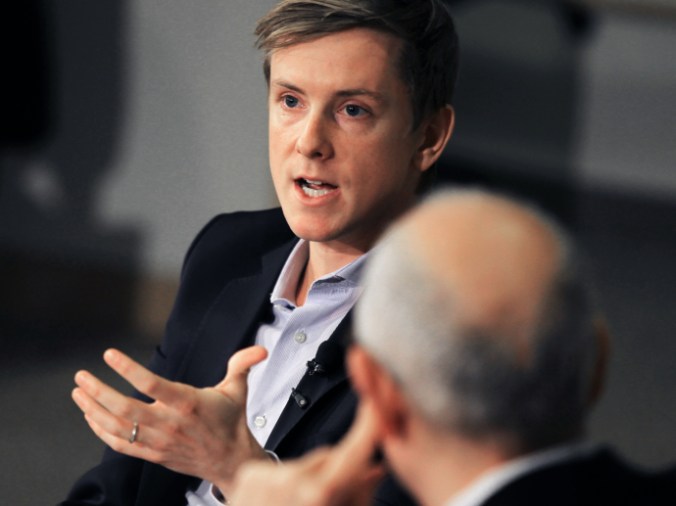
Chris Hughes, the thirty-one-year-old owner of The New Republic. CREDIT PHOTOGRAPH BY JONATHAN WIGGS/THE BOSTON GLOBE VIA GETTY

Chris Hughes, the thirty-one-year-old owner of The New Republic. CREDIT PHOTOGRAPH BY JONATHAN WIGGS/THE BOSTON GLOBE VIA GETTY

We care about books, and libraries, and languages, and long form journalism among other reasons to get perspective, to become informed beyond our local experience. When a century-old vital institution from any of these realms perishes, it is worth taking note, and mourning as George Packer does in a short punch of a post:

…As for the mass self-purge of editors and writers at The New Republic, it might be taken as part of the ongoing demise of old journalistic institutions in the face of new realities of technology and business. Or it might just be the story of one incompetent media mogul. Two years ago, with a lucky Facebook-based fortune and earnest talk about great journalism, Chris Hughes seduced a lot of hardened veterans of the New York-Washington news world who were desperate for a vision of the future.
Continue reading

Here, Now

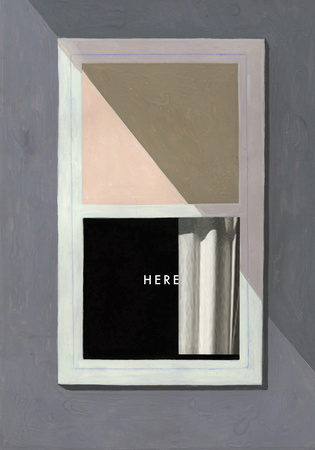
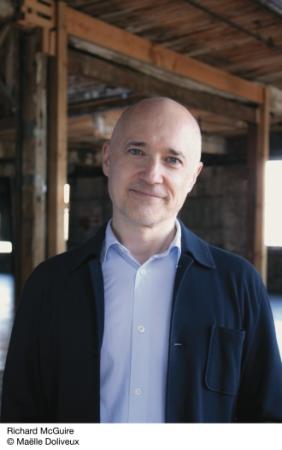
9780375406508We hope that the review of his book (thank you National Public Radio, USA), a hard cover tome that began as what we then called comic strips, brings one of the great graphic novelists of our time appropriate rewards worthy of his herculean efforts:

What is it about Richard McGuire’s Here? A simple-looking, black-and-white cartoon that first appeared in Raw magazine in 1989 — clocking in at a mere 36 panels — it’s maintained its hold on comic artists’ imaginations ever since. McGuire himself spent more than eight years creating this book-length version.

The words of his publisher, Pantheon, about the author make us want to explore this book and his earlier work, especially the toys:

downloadRichard McGuire is a regular contributor to The New Yorker. His work has appeared in The New York Times, McSweeney’s, Le Monde, and Libération. He has written and directed for two omnibus feature films: Loulou et Autre Loups (Loulou and Other Wolves, 2003) and Peur(s) du Noir (Fear[s] of the Dark, 2007). He has also designed and manufactured his own line of toys, and he is the founder and bass player of the no-wave band Liquid Liquid. The six-page comic Here, which appeared in 1989 in Raw magazine, volume 2, number 1, was immediately recognized as a transformative work that would expand the possibilities of the comic medium. Its influence continues to be felt twenty-five years after its publication.

Continue reading

Preservation Of Language

We have posted on the topic of intangible patrimony and include it in our explanation of entrepreneurial conservation; the topic extends to our interest in reading and the liberal arts. Below is a link to an op-ed piece published today, penned by a savvy academic whose primary focus is language, that we consider worthy of the brief reading time, even if you are not a language fanatic:

07gray-thumbWideGRAY MATTER

Why Save a Language?

Joint Ventures In Thanksgiving Cooking

Renee Comet Photography/Restaurant Associates and Smithsonian Institution

Renee Comet Photography/Restaurant Associates and Smithsonian Institution

We had not seen this book when it was first published two years ago, but now will seek it out to authenticate our commemorations for our table mates in distant lands:

The Native American Side Of The Thanksgiving Menu

Everyone knows the schoolhouse version of the first Thanksgiving story: New England pilgrims came together with Native Americans to share a meal after the harvest. The original menu was something of a joint venture, but over the years, a lot of the traditional dishes have lost their native flavor.

For those who want to create a feast that celebrates the flavors that Native Americans brought to the table, Chef Richard Hetzler put together an entire menu of options from his award-winning cookbook,The Mitsitam Cafe Cookbook. The recipes are drawn from the Mitsitam Native Foods Cafe at the Smithsonian National Museum of the American Indian, where Hetzler was lead chef until summer 2014. Since opening the cafe, he told NPR’s Celeste Headlee he observed a growing interest in native cooking.

Continue reading

Entrepreneurship In The New India

Recasting India How Entrepreneurship Is Revolutionizing the World's Largest Democracy by Hindol Sengupta Hardcover, 249 pages

I argue that in India you cannot be against the state. That would be madness … But the state should not be running five-star hotels, which it is still doing. – Hindol Sengupta

Thanks to NPR z(USA) for this review of a book that helps those of us working in India get a better grip of what we see around us. It is likewise an invaluable guide for those observing from afar the vibrant new economics of this ancient mix of cultures, all wrapped up in the largest democracy on earth:

It takes almost a month to get permission to start a business in India — a feature of the country’s four-decade experiment with centralized, state-controlled economic planning.

India began moving away from its old policies and opening up to outside investment in the early ’90s — but that movement towards a free market economy has happened in fits and starts, and is far from complete.

Hindol Sengupta is an editor-at-large with Fortune India, the magazine’s India arm, and he’s written a new book about the policy shift: Recasting India. 

When I sat down with him in New Delhi, he told me that India’s greatest economic battles “are being recast, the debate is being reframed” away from the longstanding idea that India’s protracted problems can only be solved by its government.

Continue reading

Resistance, Change, Art, Words–Liberating

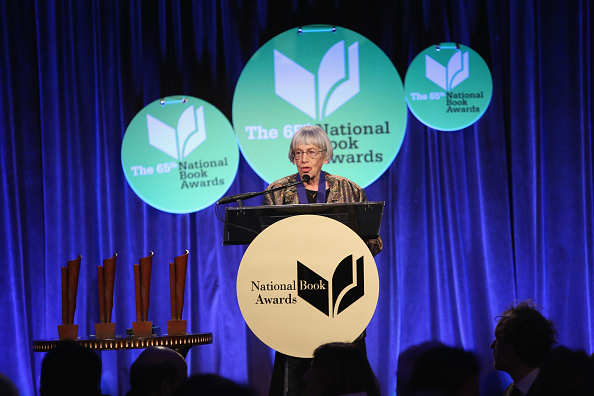
NEW YORK, NY - NOVEMBER 19:  Ursula K. Le Guin attends 2014 National Book Awards on November 19, 2014 in New York City.  (Photo by Robin Marchant/Getty Images)

NEW YORK, NY – NOVEMBER 19: Ursula K. Le Guin attends 2014 National Book Awards on November 19, 2014 in New York City. (Photo by Robin Marchant/Getty Images)

We do not normally pay attention to awards ceremonies, but this one catches our attention. We have said on occasion why we think books matter, why libraries matter, why the fate of publishing matters. On a good day, in our line of work, we approach the same ideal of books: to create experiences different from those encountered in normal, every day lives and by virtue of such experiences, to liberate. Comfort. Beauty. Taste. Wonderment, awe, perspective, yes yes yes.

But going somewhere. And that somewhere is freedom from the confines of norms, from the confines of places devoid of nature. The freedom of the road, a cliche that nonetheless has meaning.  Thanks to the New Yorker‘s Rachel Arons for pointing us to the short, powerful comment from an author who influenced many of us early in life to do what we do for a purpose:

…But it was Ursula K. Le Guin, accepting the Medal for Distinguished Contribution to American Letters early in the evening, who gave the definitive remarks of the ceremony, gliding through the genre debate and the Amazon-Hachette debacle on her way to explaining the crucial role that literature must play in our society.

Continue reading

Awesome Oceans, Awesome Curator, Awesome Book

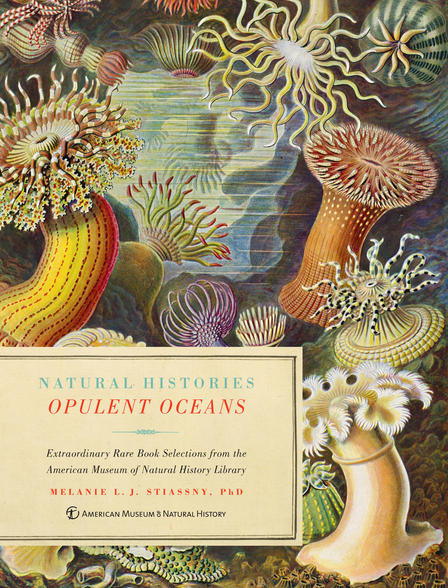
opulent-oceans_imagelarge

The American Museum of Natural History is a favorite childhood and parenthood hangout of many of the readers of these pages and visitors to places where Raxa Collective does its work. Our sense of awe about the natural world often starts in an urban institution like this one. No surprise, its curators are awesome in their own right. Here is one example from the AMNH blog a few weeks back:

Q&A with Curator Melanie Stiassny

This month marks the publication of Opulent Oceans:Extraordinary Rare Book Selections from the American Museum of Natural History Library (Sterling Signature, 2014), the third in a series showcasing the spectacular holdings of the Rare Book Collection in the Museum Library. Written by Curator Melanie L. J. Stiassny, the book includes essays about pioneering biologists who studied marine life. (And like the preceding volumes—Natural Histories (2012), which inspired the current exhibition, and Extraordinary Birds (2013)—it also showcases a variety of scientific illustrations that brought new discoveries to a growing audience of experts and laypeople alike.)

We recently spoke with Dr. Stiassny, who is Axelrod Research Curator in the Department of Ichthyology, about her experiences researching the book. Continue reading

A National Park Provides The Basis For A Unifying Theory Of Nature And Conservation

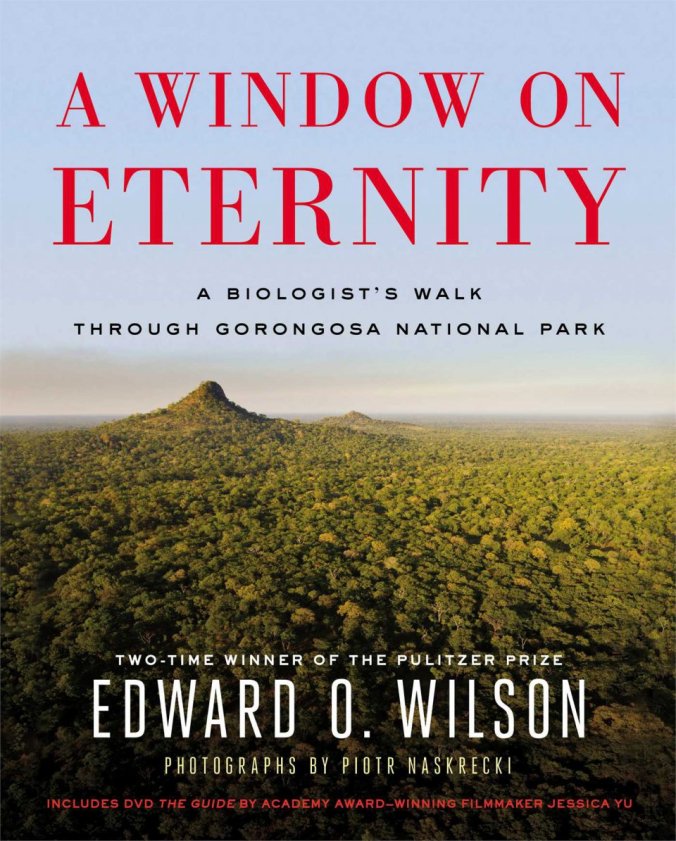
213442

Screen Shot 2014-11-11 at 4.41.14 PMThe last time we mentioned him, it was upon discovering a new (to us) resource and today we realize we had not yet taken the opportunity to highlight this book which he published earlier this year. His interview in late May, seen here on the website of another foundation that bears his name, is worth watching to help decide whether this book is for you, or not.

The excellent NHBS, a UK-bsed website, has this to say:

A Window on Eternity is a stunning book of splendid prose and gorgeous photography about one of the biologically richest places in Africa and perhaps in the world. Gorongosa National Park in Mozambique was nearly destroyed in a brutal civil war, then was reborn and is now evolving back to its original state. Edward O. Wilson’s personal, luminous description of the wonders of Gorongosa is beautifully complemented by Piotr Naskrecki’s extraordinary photographs of the park’s exquisite natural beauty. A bonus DVD of Academy Award-winning director Jessica Yu’s documentary, The Guide, is also included with A Window on Eternity…(continued after the jump)

EOWilson

Continue reading

Amazon, Thinking Of Our Future

LINES ARE DRAWN A battle over pricing may have been the Sarajevo moment. But the war is really about the future of publishing—and maybe of culture.

LINES ARE DRAWN A battle over pricing may have been the Sarajevo moment. But the war is really about the future of publishing—and maybe of culture.

I never tire of “think pieces” on Amazon because it is about our cultural future:

The War of the Words

Amazon’s war with publishing giant Hachette over e-book pricing has earned it a black eye in the media, with the likes of Philip Roth, James Patterson, and Stephen Colbert demanding that the online mega-store stand down. How did Amazon—which was once seen as the book industry’s savior—end up as Literary Enemy Number One? And how much of this fight is even about money? Keith Gessen reports.

By Keith Gessen  Photo Illustrations by Stephen Doyle Continue reading

Strunk, White, & ?

83675489cd8eeca11102a05f0acde9d1

Click the book cover to go to the Powell’s website for a description of the book we formerly only knew as being authored by, and generally referred to simply as, Strunk and White. We love Maira Kalman and never knew she had illustrated this classic. That is interesting enough, but if you are ever accused of being a member of the “grammar police” as some of us are, or are a fan of Steven Pinker, or both, check this out (thanks to the Chronicle of Higher Education):

The voice on BBC radio was that of Professor Steven Pinker, fluent and engaging as ever. But my blood froze as I listened to what he said.

On the panel show A Good Read (Radio 4, October 17, 2014), each guest recommends a book, which the other guests also read and discuss. And Pinker’s recommendation for a good read was … The Elements of Style !

It was like hearing Warren Buffett endorsing junk bonds. It was like learning that Stanley Kubrick called Plan 9 From Outer Space high-quality cinematography. It was like seeing Chet Atkins  (Never mind. I am too dispirited to go on with this potentially entertaining game of analogy-making.) Continue reading

Feral, Reviewed

washington-square

Thanks to Conservation for this review of a book I first started hearing about last year, and now have even more motivation to read:

ADD A FEW SPECIES. PULL DOWN THE FENCES. STEP BACK.

Brandom Keim reviews George Monbiot’s Feral

The early twenty-first century is a soul-searching moment for conservation. With each new report of vanishing species and dwindling biodiversity, the last century’s great successes grow distant. Fundamental ideals and assumptions, in particular our cherished notions of wilderness, often feel ill-fitted to a crowded planet of more than 7 billion people. Continue reading

Jaguar, Conservation, Book Time

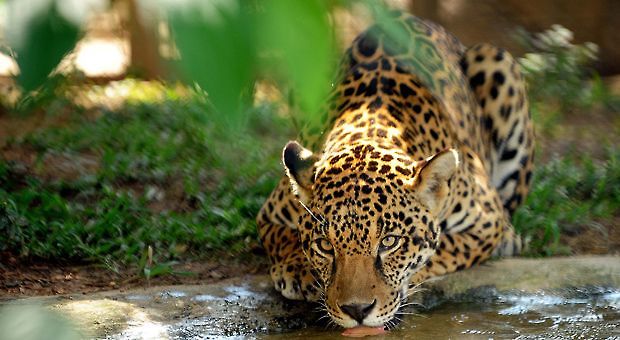
A captive jaguar drinks water in an enclosure at Petro Velho Farm, a refuge of the non-governmental organization NEX in Corumba de Goias, about 80 km from Brasilia, on January 11, 2013. EVARISTO SA/AFP/Getty Images

A captive jaguar drinks water in an enclosure at Petro Velho Farm, a refuge of the non-governmental organization NEX in Corumba de Goias, about 80 km from Brasilia, on January 11, 2013. EVARISTO SA/AFP/Getty Images

Listening to this interview it is just enough to clue you in to how Alan Rabinowitz has touched the lives of so many with the work he has done on behalf of jaguars and particularly conservation of their habitat:

Jaguars are the world’s third-largest wild cat – after tigers and lions. They have distinctive black rosettes on their fur and can weigh up to 250 pounds. Jaguars have been eradicated from 40 percent of their historic range. Today they live along a corridor from Argentina to Mexico. Their future is threatened by illegal hunting, deforestation and a loss of prey. One of the world’s leading big cat experts is responsible for creating a jaguar preserve in Central America, the first of its kind. In a new book, he shares why he’s committed to giving a voice to jaguars and how they helped him find his own voice.

Continue reading

Bookstores As Cultural Icons

Eckstein_books_07_Shakespeare

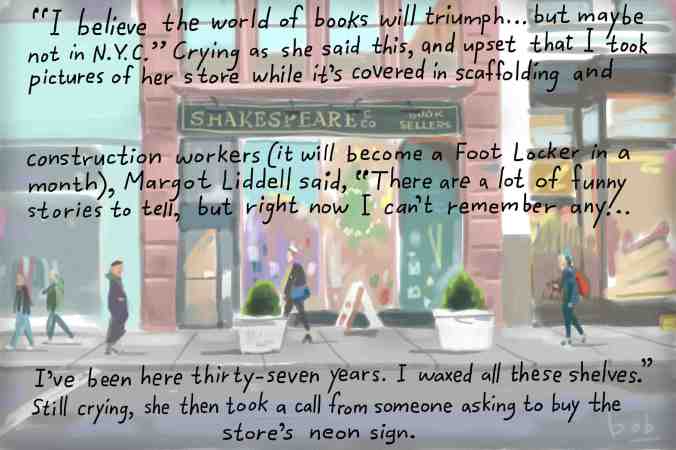
Many hope that these are not merely icons of an earlier time, but an essential asset of any culture. Click the image above to go to this exhibition on the New Yorker’s website:

The Endangered Bookstores of New York

BY

Recently, I was browsing for books at Powerhouse Arena, in Dumbo, and noticed a sign asking people not to snap photos of the books on display. What a thing to have to ask!  Continue reading

Why Study Classics?

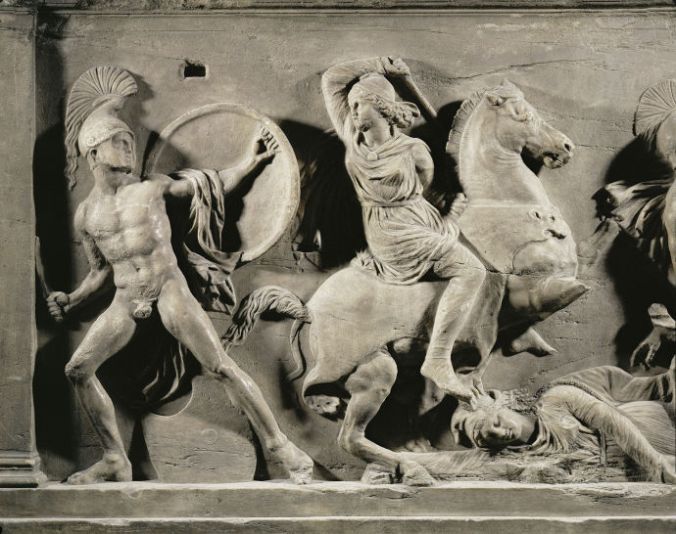
In some archaeological digs in Eurasia, as many as thirty-seven per cent of the graves contain the bones and weapons of horsewomen who fought alongside men. PHOTOGRAPH BY ERICH LESSING / ART RESOURCE

In some archaeological digs in Eurasia, as many as thirty-seven per cent of the graves contain the bones and weapons of horsewomen who fought alongside men. PHOTOGRAPH BY ERICH LESSING / ART RESOURCE

For every question why like this one, there must be many answers. We post enough on the topic to have some guesses. James, one day, may tell us his. For anyone who likes a good story, part of the answer must be simply that. But there may be more; for now let this post on the New Yorker‘s website speak for itself:

The Real Amazons

BY JOSHUA ROTHMAN

Here’s a story, told by Herodotus, about the fierce female warriors known as Amazons. Many thousands of years ago, a group of Greek raiders ventured into what is now northern Turkey. Travelling across the steppe, they came across a group of warrior women. The Greeks kidnapped them, locked them in the holds of their ships, and set sail for home. But the Amazons escaped. They recovered their weapons and killed their captors. Because they were horsewomen, and didn’t know how to sail, the ships drifted far off course. Eventually, though, they landed in the Crimea. The Amazons went ashore and stole some horses. They started marauding, gathering loot, and building up their strength. Continue reading

Book Covers, Storytelling, And The Mind’s Eye

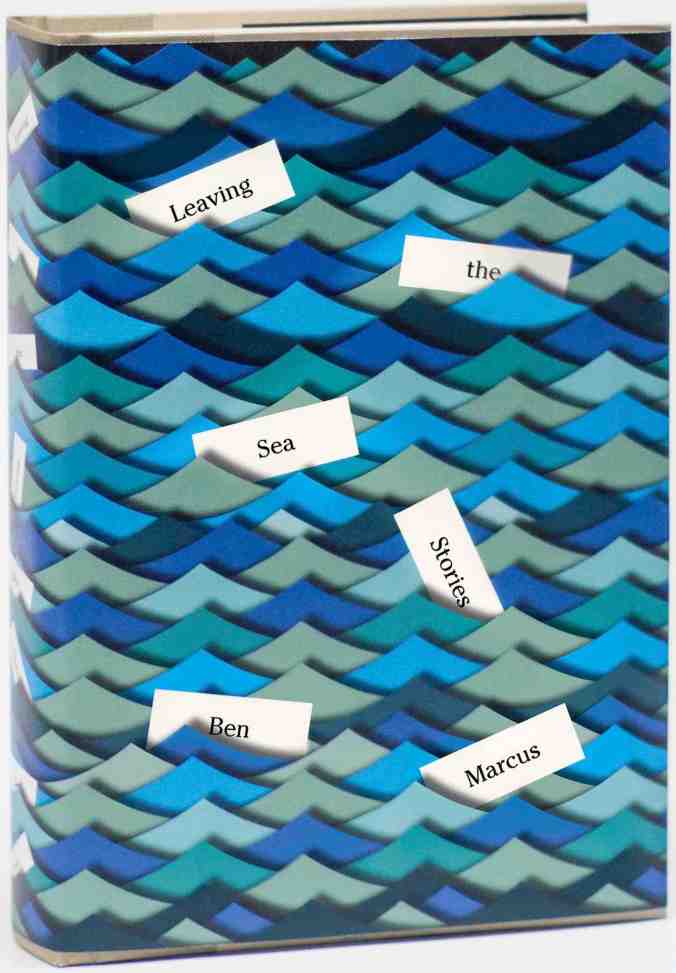
Author Ben Marcus described Peter Mendelsund's cover for his story collection Leaving the Sea as "sumptuous, playful and gorgeous to look at."

Author Ben Marcus described Peter Mendelsund’s cover for his story collection Leaving the Sea as “sumptuous, playful and gorgeous to look at.”

We are most of the time sharing stories, told by our own contributors or chosen by them from other sources, that say something relevant about community, about collaboration, and/or about conservation.  And many of us are involved day to day in hospitality that offers authentic experiences of immersion in “faraway places” relative to where the traveler comes from. We frequently share stories about books and libraries because they are the building blocks of preparation for appreciating what one finds on a long journey away from the familiar. So, this story about a book cover designer was destined to capture our attention:

Peter Mendelsund estimates he’s designed “somewhere between 600 and 1,000 book covers,” ranging from Crime and Punishment to Girl with the Dragon Tattoo. But the self-taught, sought-after designer says he spends a lot of time reading, too. Continue reading

Walter Isaacson On Geniuses Of The Digital Revolution

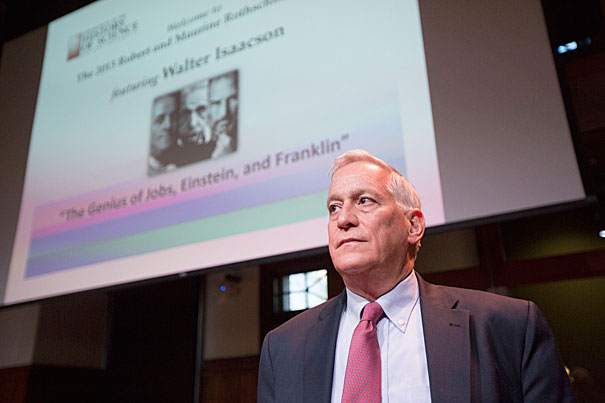
File photo by Kris Snibbe/Harvard Staff Photographer.  "We’re now in a phase in which the connection of creativity to technology is going to drive innovation," said Walter Isaacson ’74, a Harvard Overseer, biographer, and CEO of the Aspen Institute. "I do believe that it’s important for people to have an appreciation for the arts and humanities."

File photo by Kris Snibbe/Harvard Staff Photographer. “We’re now in a phase in which the connection of creativity to technology is going to drive innovation,” said Walter Isaacson ’74, a Harvard Overseer, biographer, and CEO of the Aspen Institute. “I do believe that it’s important for people to have an appreciation for the arts and humanities.”

Thanks to Christina Pazzanese and Harvard Gazette for this conversation with one of the more interesting biographers writing today:

Ghosts in the machines

The history of the Digital Revolution touches our hearts and heads, Isaacson says

In many ways, the entire Digital Era can rightly be laid at the courtly foot of Lord Byron’s rebellious daughter, Ada. Lady Lovelace was the poet’s only child born in wedlock, inheriting both her father’s headstrong, Romantic spirit and her mother’s practical respect for mathematics.

As the Industrial Revolution bloomed, her appreciation for the beauty of numbers and invention, an analytical approach she called “poetical science,” led her to write what is now regarded as the first algorithm and to help refine a machine that could be programmed to perform many different tasks, an idea that anticipated the modern computer by a century.

That’s where Walter Isaacson’s latest book, “The Innovators: How a Group of Hackers, Geniuses, and Geeks Created the Digital Revolution,” steps off.

Continue reading

Ambling, Thinking, Progress

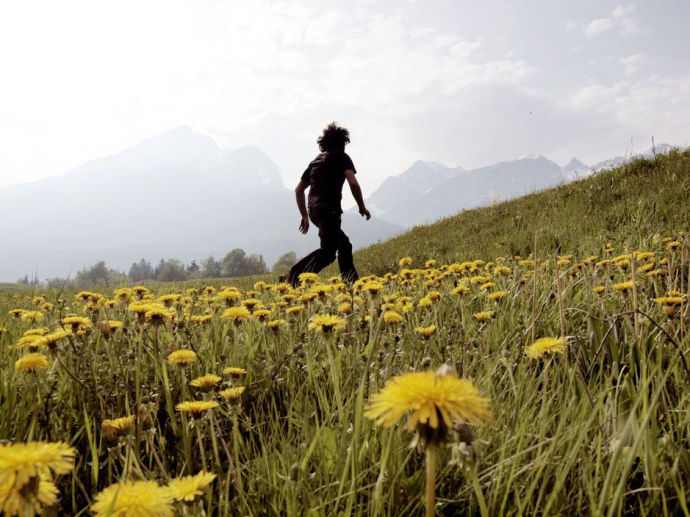
PHOTOGRAPH BY ALEX MAJOLI/MAGNUM

PHOTOGRAPH BY ALEX MAJOLI/MAGNUM

We are all for it.  We post here about walking frequently for a reason. When travelers join us, whether in Africa, Latin America or Asia there is a common thread in conversations about their journeys, with walking be essential to the value of the experience of new places. Otherwise, it is just site-seeing. This New Yorker post expands on the theme well, linking walking to thinking, which we stretch to imply (for our own work) the source of progress:

In Vogues 1969 Christmas issue, Vladimir Nabokov offered some advice for teaching James Joyce’s “Ulysses”: “Instead of perpetuating the pretentious nonsense of Homeric, chromatic, and visceral chapter headings, instructors should prepare maps of Dublin with Bloom’s and Stephen’s intertwining itineraries clearly traced.” He drew a charming one himself. Several decades later, a Boston College English professor named Joseph Nugent and his colleagues put together an annotated Google map that shadows Stephen Dedalus and Leopold Bloom step by step. The Virginia Woolf Society of Great Britain, as well as students at the Georgia Institute of Technology, have similarly reconstructed the paths of the London amblers in “Mrs. Dalloway.” Continue reading

Technology Aids Access Of Classicists To Classics

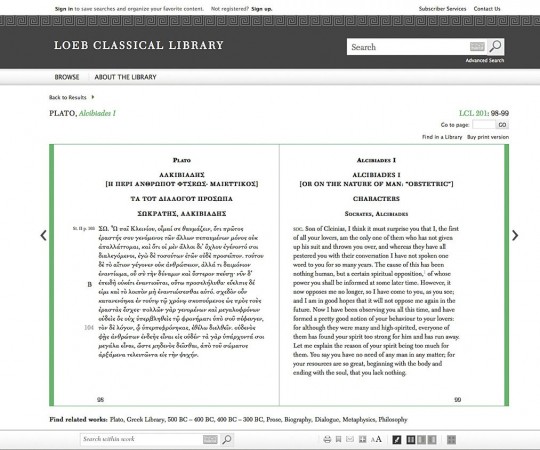
The Loeb classics, newly available online

The Loeb classics, newly available online

We do not know whether James has made his way to the library yet, but we imagine there are classical treasures in the vaults at Harvard University that can only be appreciated in person. But a scholar’s best friend will likely, increasingly be technology like this:

WHEN JAMES LOEB designed his soon-to-be-launched series of Greek and Roman texts at the turn of the twentieth century, he envisioned the production of volumes that could easily fit in readers’ coat pockets. A century later, that compact format is still one of the collection’s hallmarks. Beginning in September, however, the iconic books will be far handier than Loeb had hoped: users of the Loeb Classical Library (LCL) will have the entire collection at their fingertips. After five years of dedicated work on the part of the library’s trustees and Harvard University Press (HUP), which has overseen LCL since its creator’s death in 1933, the more than 520 volumes of literature that make up the series will be accessible online. Besides allowing users to browse the digitized volumes, which retain the unique side-by-side view of the original text and its English translation, the Digital Loeb Classical Library will enable readers to search for words and phrases across the entire corpus, to annotate content, to share notes and reading lists with others, and to create their own libraries using personal workspaces.  Continue reading

If You Care About Books But Have Not Followed This Story, Start Here

Craig Dilger for The New York Times. Douglas Preston, a best-selling author with Hachette Publishing, at his writing shack in Maine.

Craig Dilger for The New York Times. Douglas Preston, a best-selling author with Hachette Publishing, at his writing shack in Maine.

We started paying attention to this issue here. It relates to our longstanding belief that reading and books are essential goods. So who we trust with books matters:

Plot Thickens as 900 Writers Battle Amazon

Yesterday’s Best Half Hour Melted Into Today’s

Rothman-College-690x469-1407173630

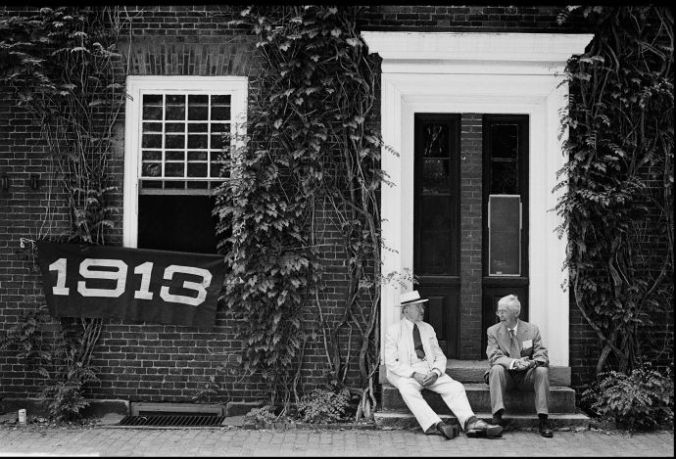
A pair of Harvard alumni on campus for commencement, in 1977. CREDIT PHOTOGRAPH BY CONSTANTINE MANOS/MAGNUM.

Just after this post had been published yesterday, starting with the acknowledgement of busy-ness and concluding that education plays a key, if mysterious role in character-building and communication capabilities, a kind of echo reverberated through the reading of this post by Joshua Rothman:

There’s a special joy in giving someone advice that’s sure not to be followed—“Wake up at the same time every morning”; “Don’t check your e-mail while on vacation”—and William Deresiewicz must have felt it when writing his recent cover story for The New Republic, “Don’t Send Your Kid to the Ivy League.” Hypercompetitive colleges, Deresiewicz wrote,  Continue reading