Farmageddon, Reviewed

As Kayleigh continues work begun last month, bringing our attention to all the ways we can improve our food sourcing, this book review seems timely. Barbara King, the reviewer, is a noted anthropologist but even more noted author on the topic of animal emotions. We have not read the book yet, but as always with a good book review our attention is drawn to reasons why we might, or might not, make time for this one.

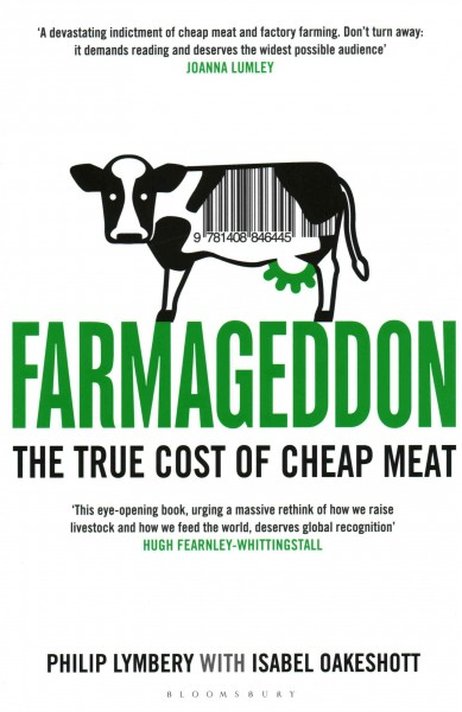
9781408846445_custom-edb29a20eb514ead6c26ac932f8f904d2cffa1a4-s3-c85

Thanks to National Public Radio (USA) for sharing the review:

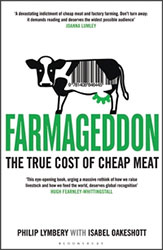
For Philip Lymbery, head of the U.K.-based Compassion in World Farming and his co-author Isabel Oakeshott, a visit to California’s Central Valley amounted to an encounter with suffering.

In Farmageddon: The True Cost of Cheap Meat, Lymbery and Oakeshott write that the mega-dairies of the Central Valley are “milk factories where animals are just machines that rapidly break down and are replaced.” At one huge dairy they visited, cows stood idly outdoors, some in shade and some in the sun. No grass cushioned their feet and certainly none was available to eat since, like almost all factory-farm cows, the animals were maintained on an unnatural diet of crops such as corn. The stench in the air was “a nauseous reek.” Continue reading

Ramayana Masam

Photo credit: Ranjith

The Ramayana is the holy book of Hindus. In Kerala during Karkkidaka Masam, which is the last month of Malayalam calender, the epic Ramayana is read in Hindu homes and temples. This year Ramayana Masam begins on July 17th and ends August 16th. Continue reading

One From The Long-form Pantheon

BusinessAdventures

This may not be the first, and certainly will not be the only place you see this reference to Bill Gates’s favorite business book.  We have a longstanding love of long-form journalism, aka detailed descriptive story-telling. So we link to the post on gatesnotes in celebration of an otherwise-might-have-missed-it book:

…Brooks was also a masterful storyteller. He could craft a page-turner like “The Last Great Corner,” about the man who founded the Piggly Wiggly grocery chain and his attempt to foil investors intent on shorting his company’s stock. I couldn’t wait to see how things turned out for him. (Here’s a spoiler: Not well.) Other times you can almost hear Brooks chuckling as he tells some absurd story. There’s a passage in “The Fate of the Edsel” in which a PR man for Ford organizes a fashion show for the wives of newspaper reporters. The host of the fashion show turns out to be a female impersonator, which might seem edgy today but would have been scandalous for a major American corporation in 1957. Brooks notes that the reporters’ wives “were able to give their husbands an extra paragraph or two for their stories.” Continue reading

If You Happen To Be In New York

Book Launch


We believe in, and care about biophilia, which is a phenomenon first identified and named by E.O. Wilson. Thankfully, we are not the only ones. We appreciate the intersection between art and science in elucidating biophilia evident in this book. Thanks, Polly:

Polly Brown is a London based artist, and photographer. Continue reading

Flora By Knight

This slideshow requires JavaScript.

The New Yorker’s website highlights with the images above the newly updated version of a book we intend to add to our collection:

The herbarium at the Natural History Museum in London contains nearly six million plant specimens, many of which are centuries old and were gathered from far-flung parts of the world. The British photographer Nick Knight was introduced to the collection in 1992, while exhibiting his own work at the museum. In the following years, he sifted through the collection, photographing thousands of what he considered to be the most visually alluring samples. The eighth edition of Knight’s book “Flora” is now available for purchase through Schirmer/Mosel.

All photographs by Nick Knight/Schirmer/Mosel.

The photographer’s publicist has this to say:

Continue reading

Books, Authors And Sparks Of Inspiration

In a climate of embattled bibliophilia, authors have been undertaking reading stunts to prove that reading—anything—matters. Construction by Stephen Doyle.

In a climate of embattled bibliophilia, authors have been undertaking reading stunts to prove that reading—anything—matters. Construction by Stephen Doyle.

Our occasional posts on books and book-ish things, on libraries and library-ish things, on authors and author-ish things, all grow out of the obvious: books are essential to humanity. We do what we can in the general interest of books. So, this item on the New Yorker‘s website about stunts in the stacks is welcome here and now:

In the nineteen-nineties, when you bought a book at Barnes & Noble the cashier slipped it into a plastic bag bearing a black-and-white illustration of an author’s face—Mark Twain, Oscar Wilde, Edith Wharton. Recently, I was poking around a bookstore in Manhattan and noticed a canvas tote for sale. In a simple red heart, the word “books” was spelled out in white letters. This tale of two bags is the story of decades of change in the publishing industry. “Books,” O.K.—but which ones? Continue reading

Ornithologist’s Masterpiece At Auction

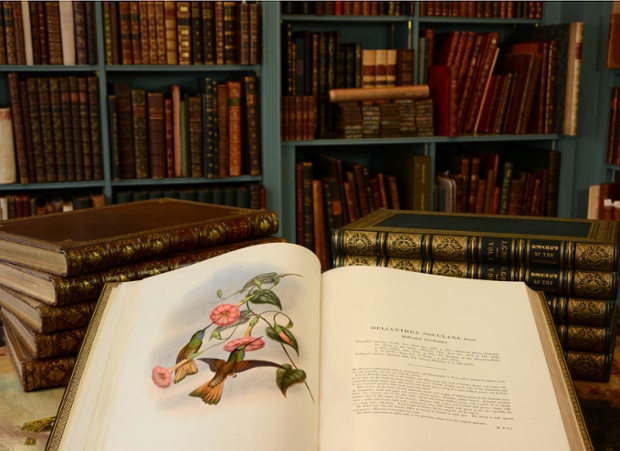
One of the 44 volumes containing over 3000 hand-coloured lithographs included in the sale


The Guardian notes the auction many of our ornithologically-oriented readers and contributors might find worth attending, even if not as bidders (given the expected final sale price) in order to see some of these prints up close (see samples after the jump):

Rare set of John Gould’s bird books for sale – in pictures

John Gould was one of the most brilliant ornithologists of the 19th century, and a talented artist to boot. He worked with Charles Darwin, travelled the world to research the beautiful folio works he produced, and set up a publishing company to sell them.

Continue reading

Reading Recommendations For Raxa Collective’s Extended Community, And From Raxa Collective Interns

Many universities in the western and northern regions of the world are concluding their academic years about now as summer break begins, which means it is time for Raxa Collective to begin welcoming interns. Some who join have already completed their undergraduate degrees, and prior to beginning their “real” careers they come to spend time in one of our communities, collaborating with our staff, local communities, etc..

One such case is a contributor who has just completed an undergraduate degree; before heading to New England to pursue Ph.D. studies he will carry out projects at Xandari that will allow him to perfect his Spanish language skills. Since he is going to be in the same community as these people below, starting in August, we post this “suggestions on summer reading” article from Harvard Gazette as a prompt for James to make his own summer reading recommendations in a new post. If he takes us up on this prompt we will see who follows his lead and shares their own reading recommendations…

Stephanie Mitchell/Harvard Staff Photographer. Yeats and Bishop made Bret Anthony Johnston's summer reading list but, he said, "I’m eager to happen upon unexpected used bookstores, tag sales, and library fundraisers, where I often buy books outside of my typical reading inclinations."

Stephanie Mitchell/Harvard Staff Photographer. Yeats and Bishop made Bret Anthony Johnston’s summer reading list but, he said, “I’m eager to happen upon unexpected used bookstores, tag sales, and library fundraisers, where I often buy books outside of my typical reading inclinations.”

Bret Anthony Johnston
Paul and Catherine Buttenwieser Director of Creative Writing

This summer I’m going to read W.B. Yeats and Elizabeth Bishop, and “Wynne’s War,” a new novel by Aaron Gwyn about special forces on horseback in Afghanistan.

Continue reading

Travel, Stimulation, Writing

Prochnik-2a In a post on the New Yorker website just now we discovered that last August we had neglected to read what we surely would have passed along here, an article that fits our blog’s themes well. George Prochnik had us with the first sentence:

Travel is my favorite stimulant, and while I was writing “ The Impossible Exile,” a portrait of the Viennese author Stefan Zweig, hunting-and-gathering expeditions to Zweig’s far-flung haunts felt imperative. Zweig was born in Vienna in 1881, but he became one of the most representative Viennese writers largely in absentia—idealizing the city’s cosmopolitanism while doing his best to embody it by making himself at home all across Europe. After the First World War, he set up his primary residence in Salzburg, but for large parts of the following years he was on the move—writing, in hotels, the short stories, essays, and biographies for which he became famous  Continue reading

Sea-Level Summer, Citrus, And Chilling At 51

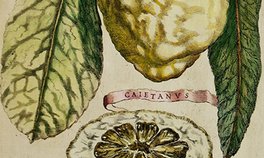
From Plate 205: Limon Caietanus by Giovanni Battista Ferrari (1584-1665)

From Plate 205: Limon Caietanus by Giovanni Battista Ferrari (1584-1665)

Helena Attlee
THE LAND WHERE LEMONS GROW
The story of Italy and its citrus fruit
272pp. Particular Books. £20.
978 1 84614 430 2

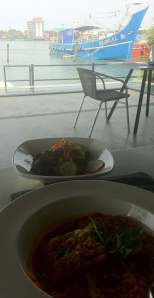
The views, not to mention recent temperatures, lead most guests to sit outdoors with the breeze on the deck, on either the ground level or mezzanine, watching the fishermen haul in their catches, or the tug boats, or the ferries. 51 is alive with citrus in these sea level summer days and evenings, starting with a tall glass of iced minted-lime cooler, continuing with a chilled avgolemono soup;  and so on. Clarissa Hyman, a freelance food and travel writer, catches our attention with this book review in the Times Literary Supplement:

A paradox pervades the Sicilian citrus groves and gardens. The scent is intoxicating but too often the fruit lies rotten on the ground, unwanted and worthless. In this maddening, singular island, where they say the sun drives you crazy and the moon makes you sad, the irony is your breakfast orange juice will most likely be diluted, long-life concentrate from oranges grown in Brazil. Continue reading

51-Spiced Vegetarian Lunch With View

Seasonal vegetables wrapped in chickpea crepe

51-spiced vegetables, wrapped in chickpea crepe, with summer tomato coulis

It is good to sit by the water at lunchtime, on occasion, and read while tasting something new (thanks, kitchen!). Here, an incidental passage from a book review that fit yesterday’s midday meal at 51:

…When my grandmother taught me to make banana pancakes, which we did every Wednesday night through much of my childhood, she would counsel “Hold the bowl” as I stirred, which became, in our letters to each other, code for “I love you.” At the beginning of Nigel Slater’s memoir “Toast: The Story of a Boy’s Hunger,” the author puts it this way: “It is impossible not to love someone who makes toast for you.”

Surely none of this was on my mind on April 5, 2013, when I purchased “Vegetarian Cooking for Everyone,” by Deborah Madison. I had, exactly a month previously, met a swell fellow, who happened to be vegetarian… Continue reading

Libraries Old And New, Big And Small, At The Core Of Communities

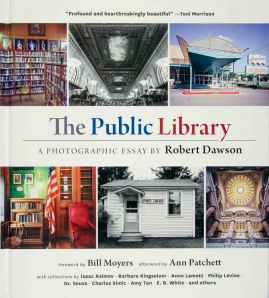
Cover_The_Public_Library_bookThis book by Robert Dawson pays attention to one of the institutions we care most about, libraries–specifically public ones. Why do we care so much about them? Because of the essential role they play in so many communities, both small and large, with regard to education and egalitarian opportunity.

Toni Morrison’s assessment of the book is that “Robert Dawson’s work is an irrefutable argument for the preservation of public libraries. His book is profound and heartbreakingly beautiful.”  From the author/photographer’s own website the text that introduces the work is a mix of promotion and fact:

This project is a photographic survey of public libraries throughout the United States featuring essays on libraries and the public commons from prominent American writers. The book The Public Library: A Photographic Essay will be published in April, 2014 by Princeton Architectural Press. ISBN 978-1-61689-217-3

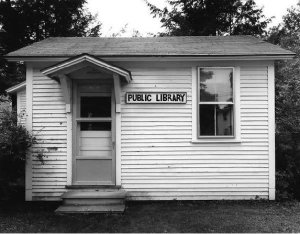
Smallest library, now closed, Hartland Four Corners, Vermont

There are over 17,000 public libraries in this country. Since I began the project in 1994, I have photographed hundreds of libraries in forty-eight states. From Alaska to Florida, New England to the West Coast, the photographs reveal a vibrant, essential, yet threatened system.

For the past two centuries public libraries in America have functioned as a system of noncommercial centers that help us define what we value and what we share. The modern library in the computer age is in the midst of reinventing itself. What belongs in a library? Continue reading

If You Happen To Be In Oxford

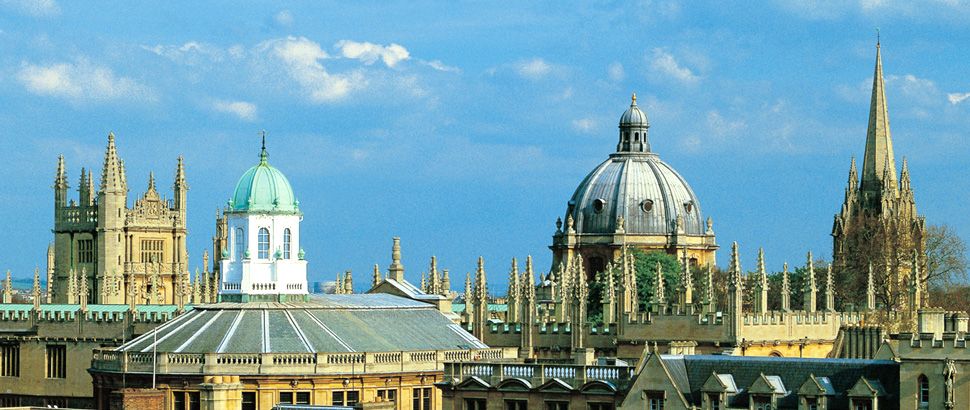
spires_view__970

As we continue menu/kitchen-testing at 51, we confront daily the question of how much meat we want to offer guests, how to source it ethically, and how to improve our vegetarian options.  This book has generated considerable food for thought, so to speak. March 27 at 4pm, during the Oxford Literary Festival, co-author of the book Farmageddon, which is reviewed here and here, will be speaking for one hour. Wish we could attend. If you can and do, please send video or notes:

39829The chief executive of Compassion in World Farming Philip Lymbery uncovers the trend towards mega-farming that he says is threatening our countryside, farms and food. He says farm animals have been disappearing from our fields as food production becomes a global industry. And the recent horsemeat scandal demonstrates that we no longer know for certain what is entering the food chain. Lymbery collaborated with Sunday Times journalist Isabel Oakesott onFarmageddon, an investigation into mega-farming that ranges from the UK to Europe, the USA, China, Argentina, Peru and Mexico. Continue reading

Understanding India, Day By Day, Book By Book

A-Strange-Kind-of-Paradise-195x300The majority of Raxa Collective’s contributors are Indian, but increasingly many of us are non-Indian (North American, European, Latin American, African, etc.) and some of us have been living in, observing and trying to understand India for years now. We find this book’s title (click to go to the source), and especially the blurb that goes with it on the author’s website, compelling:

A Strange Kind of Paradise is an exploration of India’s past and present, from the perspective of a foreigner who has lived in India for many years. Sam Miller investigates how the ancient Greeks, the Romans, the Chinese, Arabs, Africans, Europeans and Americans – everyone really, except for Indians themselves – came to imagine India. Continue reading

Hats Off To Dr. Seuss

This slideshow requires JavaScript.

Whether you’re a “hat person” or no, we’d be surprised if news of this exhibition didn’t bring a smile to the lips of anyone familiar with Theodor Seuss Geisel‘s books. For the first time in history “Dr. Seuss’s” personal hat collection is on tour in an exhibit called Hats Off to Dr. Seuss!which debuted at the New York Public Library in January and will stop in six states over the next seven months.

Continue reading

Getting To Inspiration, Unhindered

creativity_coverThere is a new book on our reading list, thanks to this interview with its author, Amy Wallace (if your reading list includes publications we regularly link to, especially those that offer long form journalism, this podcast is an incredible resource).  After listening to the interview, we found her website, and this book looks worth waiting for:

From Ed Catmull, co-founder (with Steve Jobs and John Lasseter) of Pixar Animation Studios, comes an incisive book about creativity in business—sure to appeal to readers of Daniel Pink, Tom Peters, and Chip and Dan Heath.

Creativity, Inc. is a book for managers who want to lead their employees to new heights, a manual for anyone who strives for originality, and the first-ever, all-access trip into the nerve center of Pixar Animation—into the meetings, postmortems, and “Braintrust” sessions where some of the most successful films in history are made. It is, at heart, a book about how to build a creative culture—but it is also, as Pixar co-founder and president Ed Catmull writes, “an expression of the ideas that I believe make the best in us possible.” Continue reading

Yoga In Perspective

San Antonio Museum of Art

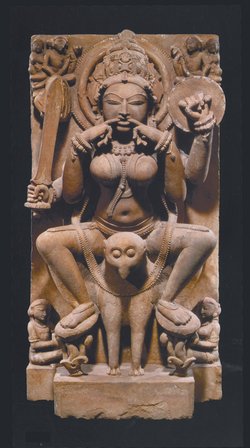
San Antonio Museum of Art. ‘Yogini’; sandstone statue, Kannauj, Uttar Pradesh, first half of the eleventh century. William Dalrymple writes that ‘in ancient India yoginis were understood to be the terrifying female embodiments of yogic powers who could travel through the sky and be summoned up by devotees who dared to attempt harnessing their powers.’

William Dalrymple, in the New York Review of Books, provides a summary of four books that should be considered essential reading to understand yoga in its proper historical context. The last few paragraphs are among the best:

…Yogis seem to have gone particularly out of control during the eighteenth-century anarchy between the fall of the Mughals and the rise of the British. This is a subject explored by William Pinch in his brilliant 2006 study of the militant yogis of the period, Warrior Ascetics and Indian Empires.

European travelers of the period frequently describe yogis who are “skilled cut-throats” and professional killers. “Some of them carry a stick with a ring of iron at the base,” wrote Ludovico di Varthema of Bologna in 1508. “Others carry certain iron diskes which cut all round like razors, and they throw these with a sling when they wish to injure any person.” A century later the French jewel merchant Jean Baptiste Tavernier was describing large bodies of holy men on the march, “well armed, the majority with bows and arrows, some with muskets, and the remainder with short pikes.” By the Maratha wars of the early nineteenth century, the Anglo-Indian mercenary James Skinner was fighting alongside “10 thousand Gossains called Naggas with Rockets, and about 150 pieces of cannon.” Continue reading

A Science Writer’s Public Service

41EWvquSk3L_SL500_AA300_.5095659_std

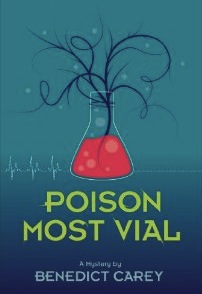
The famous forensic scientist Dr. Rama is dead – murdered – and suspicion has fallen on Ruby Rose’s father, the only family she has. Ruby is new to her school and is having enough trouble just making a friend; now she has far bigger problems. To save her father, she will have to solve the murder herself, relying for help on an elderly neighbor who used to be a toxicologist. But is this woman reliable? And is there enough time?

Benedict Carey is better known as a science reporter for the New York Times, but that is just his day job.  It certainly qualifies as public service, but in addition he moonlights on further public service. He explains his purpose:

Both books are adventures in which kids use science to save themselves and solve a mystery. It’s real science, accessible but not obvious, and builds understanding of some fairly advanced principles – transcendental numbers (among other things) in “Island of the Unknowns,” and mass chromatography in “Poison Most Vial.”

In a trailer park called Adjacent, next to the Folsom Energy Plant, people have started to vanish, and no one seems to care. At first Lady Di and her best friend, Tom Jones, barely notice the disappearances—until their beloved math tutor, Mrs. Clarke, is abducted, too. Mrs. Clarke has left them clues in the form of math equations that lead them and other kids all over the trailer park, through hidden tunnels under “Mount Trashmore,” and into the Folsom Energy Plant itself, where Lady Di and Tom Jones and a gang of other misfits uncover the sordid truth about what’s really happening there. That's Di on the left and Tom on the right.

In a trailer park called Adjacent, next to the Folsom Energy Plant, people have started to vanish, and no one seems to care. At first Lady Di and her best friend, Tom Jones, barely notice the disappearances—until their beloved math tutor, Mrs. Clarke, is abducted, too. Mrs. Clarke has left them clues in the form of math equations that lead them and other kids all over the trailer park, through hidden tunnels under “Mount Trashmore,” and into the Folsom Energy Plant itself, where Lady Di and Tom Jones and a gang of other misfits uncover the sordid truth about what’s really happening there. That’s Di on the left and Tom on the right.

Perfectly principled reality: if you had been restricted to Benedict Carey’s better known science reporting for the New York Times, that would be not such a bad thing. He also serves on the board of Edge, a non-profit which seeks to “arrive at the edge of the world’s knowledge, seek out the most complex and sophisticated minds, put them in a room together, and have them ask each other the questions they are asking themselves.” Again, not bad.

But we like in particular the effort to branch out further, reaching the next generation and aiding the mathematical and scientific efforts of educators who otherwise compete with entertainment of all sorts for the hearts and minds of youth.

That said, do not miss his reporting. He is a master at this trade, and improves the quality of conversation we are determined to engage in more often. His most recent article for the Times reviews the research into cognitive performance and aging and with humor and gravitas all at once he acknowledges why as we get older we tend not to be too interested in these findings: Continue reading

The Shifting Sands Of Relevance

An essay published today in Lapham’s Quarterly reminds us of one man’s contribution to the travel writing genre in a previous century, in comic form but with clear hints at important cultural issues related to travel.  The main theme of the essay, which is that not all writing important at a given moment in time travels well over time, is a humbling one considering the writer who is the subject of the essay:

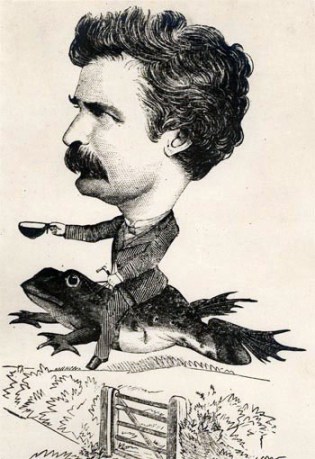
On November 18, 1865, the New York Saturday Press published a short sketch called “Jim Smiley and His Jumping Frog” about a frog-jumping contest in rural California. It “set all New York in a roar,” reported one journalist, and soon went viral, reprinted in papers from San Francisco to Memphis. The story’s author was Mark Twain, the pseudonym of a twenty-nine-year-old writer born Samuel Clemens. At the time, Twain was living in California, enjoying provincial renown as a Western humorist. The success of “Jim Smiley” made him nationally famous. “No reputation was ever more rapidly won,” observed theNew York Tribune. Continue reading

Then And There, Here And Now

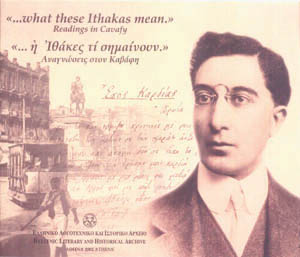
Orhan Pamuk says that “C. P. Cavafy makes no explicit reference to himself in his best and most stirring work; and yet, with every poem we read, we cannot help thinking of him.”

Does it take an Istanbulian to know one? Does it take a great writer to know one? You do not need to be a fan of poetry, nor of this particular poet, to appreciate the observations of one of the great observers of our time, with regard to living here and there but neither here nor there, and with regard to the idea of universality in art:

Cavafy was born in Alexandria, Egypt, in 1863, to a Greek family of wealthy drapers and cloth merchants. (The word kavaf, now forgotten even by Turks themselves, is Ottoman Turkish for a maker of  Continue reading