Fact-Checking Walter Isaacson

Walter Isaacson has done some remarkable things (according to his present byline he is “CEO of the Aspen Institute. Author of biographies of Steve Jobs, Albert Einstein, Benjamin Franklin, and Henry Kissinger. Former editor of Time, CEO of CNN”).  Little reason for him to doubt his own authority, on anything.  But he invites you to fact check the book he is currently working on, starting with a draft of a chapter published in Medium.  I appreciate the creative spirit of collaboration, and his faith in the wider community to get his facts both straight and full of color:

The Culture That Gave Birth to the Personal Computer

I am sketching a draft of my next book on the innovators of the digital age. Here’s a rough draft of a section that sets the scene in Silicon Valley in the 1970s. I would appreciate notes, comments, corrections

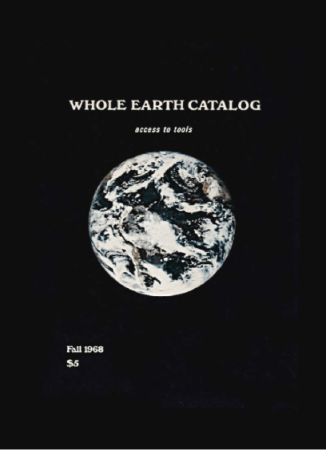
In that draft he makes reference to the starting point of the Whole Earth Catalog, and the meme that came with it of using an image of the earth from space to communicate its fragility and limitations as much as its wondrousness; which, along with the rest of the draft (as if you needed convincing) makes the book sound worth the wait: Continue reading
Eco On Journeys Of The Mind

9780847841219

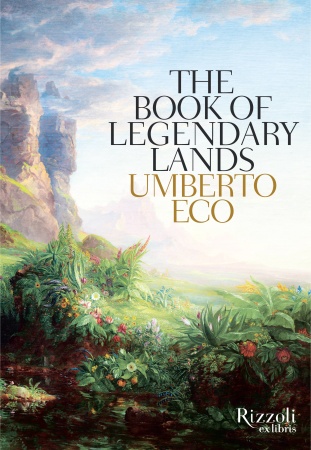
If you are a fan of Umberto Eco, and/or alternative travelogues, this book may be for you. If only the former, you might want to just go here or here.  In its blurb for Eco’s new book (click the image to the right to go to the source), the USA publisher Rizzoli Ex Libris has this to say, which make it at least worthwhile to search the book reviews:

A fascinating illustrated tour of the fabled places in literature and folklore that have awed, troubled, and eluded us through the ages. From the epic poets of antiquity to contemporary writers of science fiction, from the authors of the Holy Scriptures to modern raconteurs of fairy tales, writers and storytellers through the ages have invented imaginary  Continue reading

Technology, Activism, Discontent & Keeping It Honest

Doug McLean

It was just recently when we started noticing it on the Atlantic‘s website, and needed some time to determine the fit with our blog:

By Heart is a series in which authors share and discuss their all-time favorite passages in literature.

It took this one to make us realize the fit:

Jonathan Franzen on the 19th-Century Writer Behind His Internet Skepticism

His new book translates works by Karl Kraus, whose misgivings toward progress mirror Franzen’s belief that technology can be “very harmful” to artistic production.
 OCT 1 2013, 3:43 PM ET

We have several times linked to stories involving Franzen, and there is no question that it is in part because of his bird-loving devotions; but it is not only that.  We put ourselves in his corner a few months ago and there are plenty of paradoxes in this corner but read this to appreciate the depth of Franzen’s sense of purpose related to technology, starting with Joe Fassler’s excellent commentary:

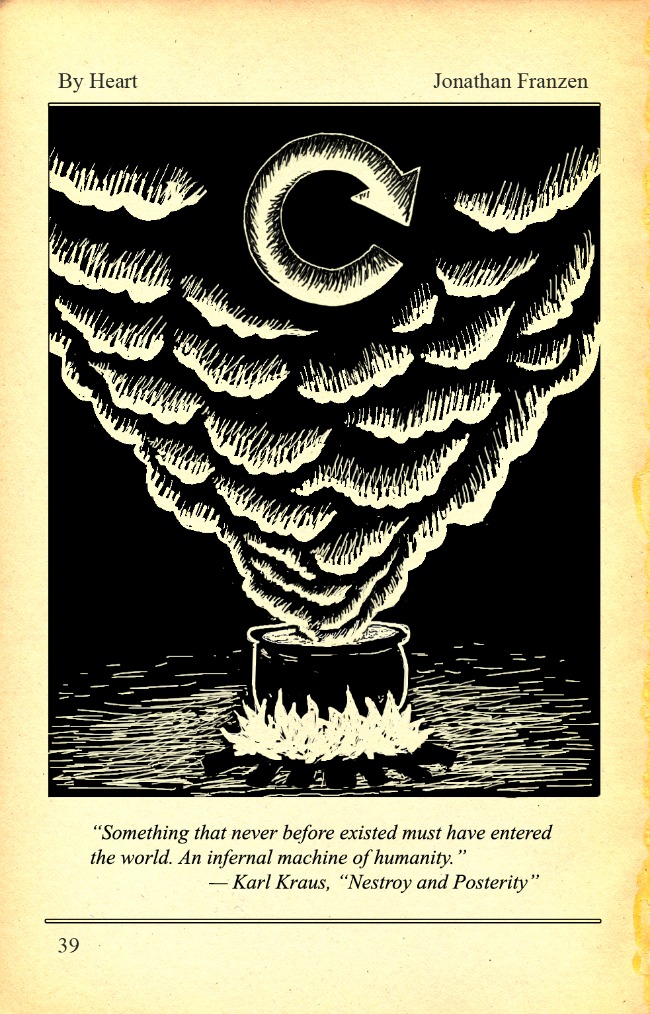
Karl Kraus, the Austrian satirist, playwright, and critic of the mass media, was born in 1874 and ran the magazine Die Fackel (“The Torch”) from 1899 until his death. And according to novelist Jonathan Franzen, he was the first-ever iteration of what we might now call a media theorist. Continue reading

Thanks For The First Book Press-Printed In The New World

Photograph by Emmanuel Dunand/AFP/Getty.

Photograph by Emmanuel Dunand/AFP/Getty.

If you are familiar with the history of the place now called the United States of America, you may be familiar with the role religious pilgrims played in the early settlement of the northeastern region of what is now that country (and what before that was the home of people who lived a very different life from the pilgrims before those pilgrims arrived, and a radically changed life after). Now, if you are a more ambitious follower of that history, you may know when the first printing press was brought to the New World, and by whom. And in that case, you likely also know what book was first published. Fitting that today, when Thanksgiving Day is celebrated in the USA, news of that first book is in front of us thanks to Casey Cep and the New Yorker‘s ever resourceful and innovative website:

Today, Sotheby’s will auction a copy of the first English-language book printed in America. “The Whole Booke of Psalmes,” or the Bay Psalm Book, as it is now known, is expected to sell for between fifteen and thirty million dollars, which would make it the most expensive book in the world. Continue reading

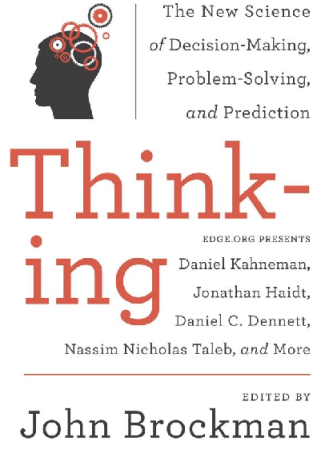
Thinking, Reviewed

If we had to stop scanning hundreds of news sources to support the habit we have of linking to stories that match our interests (we do not plan to stop) and read from only one source on the internet (preposterous to make a point), this site would be a good candidate. We rarely have the opportunity to link to it, because there is not much overlap with our themes of community, conservation or collaboration; but as a source of important ideas, and the occasional book review it is unbeatable:

“The confidence people have in their beliefs is not a measure of the quality of evidence but of the coherence of the story that the mind has managed to construct.” Continue reading

New Biography Of Gandhi

There was an uproar, just around the time that Raxa Collective was forming, over Joseph Lelyveld’s biography of Gandhi.  Many of us were new to India then, and had not understood just how much, how deeply and in how many ways Gandhi meant more than just history to all Indians. The international news coverage seemed as surprised as some of us, but generally did what they were supposed to do in reporting. This newspaper in particular seemed as objective as possible in reporting about the impact of a book that one of its own former editors had authored. Now, another biography, and we look forward to it. Thanks to the New York Times and their India Ink news service:

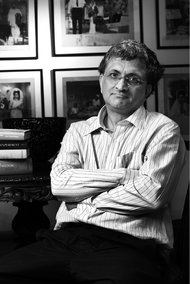
Ramachandra Guha is one of India’s foremost public intellectuals and historians. “Gandhi Before India,” his first volume of a two-part biography of Mohandas K. Gandhi, was published in India earlier this month. India Ink spoke to Mr. Guha about his decision to work on a biography of Mr. Gandhi, his choice to make Mr. Gandhi’s years in South Africa as the first volume of the biography, and Mr. Gandhi’s journey from a boy in the western state of Gujarat to his return to India as a major political figure. Continue reading

Reading, Libraries & Good Citizenship

'We have an obligation to imagine' … Neil Gaiman gives The Reading Agency annual lecture on the future of reading and libraries. Photograph: Robin Mayes

‘We have an obligation to imagine’ … Neil Gaiman gives The Reading Agency annual lecture on the future of reading and libraries. Photograph: Robin Mayes

Libraries still have enough friends that we do not yet count them out, but the challenges they face are undeniable. Thanks to the Guardian‘s coverage of one prominent writer’s address on this important topic:

Neil Gaiman: Why our future depends on libraries, reading and daydreaming

A lecture explaining why using our imaginations, and providing for others to use theirs, is an obligation for all citizens

It’s important for people to tell you what side they are on and why, and whether they might be biased. A declaration of members’ interests, of a sort. So, I am going to be talking to you about reading. I’m going to tell you that libraries are important. I’m going to suggest that reading fiction, that reading for pleasure, is one of the most important things one can do. I’m going to make an impassioned plea for people to understand what libraries and librarians are, and to preserve both of these things. Continue reading

Charles C. Mann, Come To Kerala!

Screen Shot 2013-10-15 at 9.47.30 AMMagazines are increasingly opening their archives, and the Atlantic has been at the forefront of sharing centuries’ worth of great writing. This particular great piece of writing is one whose author would no doubt appreciate the 1491-ness of Kerala. He joins a list of others we have already invited, for one reason or another. Click the image about to go to this writer/editor’s website and here for the 2002 article that begat the book:

1491

Before it became the New World, the Western Hemisphere was vastly more populous and sophisticated than has been thought—an altogether more salubrious place to live at the time than, say, Europe. New evidence of both the extent of the population and its agricultural advancement leads to a remarkable conjecture: the Amazon rain forest may be largely a human artifact
CHARLES C. MANN MAR 1 2002, 12:00 PM ET Continue reading

Popularity Contests Some Will Never Win

05SharksPeople@Thomas P. Peschak

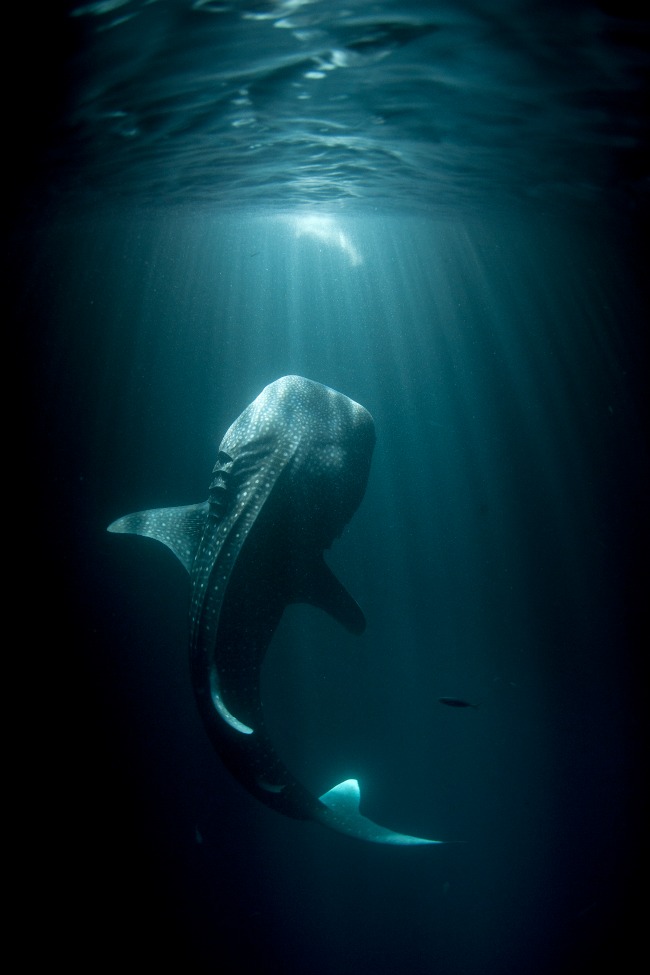
Whale shark. (Thomas Peschak / University of Chicago Press)

We note from time to time the tallies of our most popular posts and writers. Seth still has the record for “most instantaneously viral” with Volcano Sandboarding (3,000+ views in the first couple days after it was posted); Tim’s Carbon Emissions Series: Vacationers’ Diets is by far the most viewed with nearly 9,000 readers to date; Salim is by far the most widely read of our contributors, just having passed the 50,000 mark for views of his daily series on the natural and cultural heritage of south India (Thiruvathira Kali (Traditional dance of Kerala) being the most popular with nearly 3,000 views).

Phil’s most recent post has been a runaway hit, and rapidly approaching 1,000 views within a couple weeks it is on pace to put him in the ranks of our most popular contributors.  So when we saw the photo above, we thought of Phil’s series with the hope he contributes another post soon. Dr. Tenner’s book review, from which that photo comes, provides an essential reminder of facts, as well as visual testament to the beauties and tragedies associated with sharks, to counter whatever perverse attention those Shark Week shows purvey:

…Thomas Peschak makes an eloquent visual case for the sublimity of sharks—and also for their conservation. He notes that the media still devotes far more attention to rare shark attacks than to the urgent need to protect them from human depredation, especially the shark fin trade. He might have noted that Peter Benchley, who became wealthy through the 1970s novel and film Jaws, regretted the fear he had sown and became a shark advocate. In the long run, though, China’s removal of Mao Tse-Tung’s ban on shark fin soup as bourgeois decadence in 1987 may have resulted in more shark slaughter than all the horror books, films, and news items together. Great conservation photography like Peschak’s, one must hope, will have the power to change attitudes globally…

Continue reading

Obviously Worth A Look

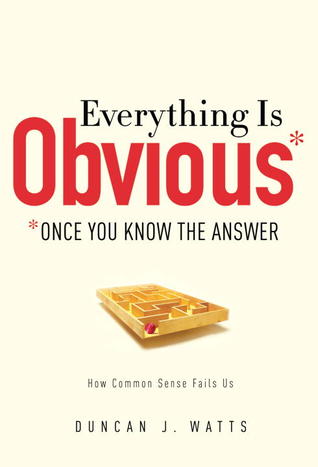
Avid consumers of Malcolm Gladwell’s scientific gumshoe writings for the masses, occasional consumers of Daniel Kahneman‘s constant illuminations of cognitive science, and those who just watch out for randomly passing-by phenomenal thinker/researcher/writers, will likely appreciate this from the Cornell Alumni Magazine profile of Watts:

A central part of Watts’s argument is that hindsight isn’t 20/20; it’s reductive and unreliable. In a section on the Mona Lisa, for example (see excerpt), he discusses how the painting languished in relative obscurity for centuries, only becoming world famous after it was stolen from the Louvre in the early 1900s—but since the idea of its greatness owing to a fluke is so inherently unsatisfying, people ascribe post-facto “common sense” explanations. (It’s the smile! It’s the fantastical background! It’s the genius of Leonardo da Vinci!) Continue reading

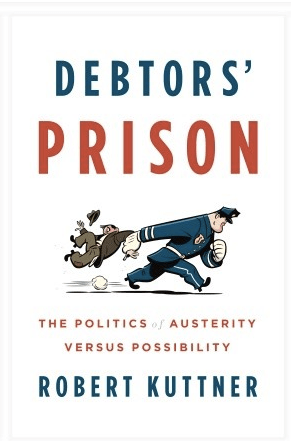
Debt Is Not Desirable And Prison Is Not Pretty, But Debtors’ Prison?

You can see what the publisher has to say about this book by clicking on the image to the right.  You can read about the book and its author, and even sample an excerpt. But our attention was brought to the book via this site, which provides a different excerpt from the book. We find this one intriguing because we see the author’s use of a literary figure to make a point about economics, entrepreneurship, risk-loss-gain tradeoffs, morality, civic duty and more:

“On October 29, 1692, Daniel Defoe, merchant, pamphleteer, and future best-selling author of Robinson Crusoe, was committed to King’s Bench Prison in London because he owed more than 17,000 pounds and could not pay his debts. Before Defoe was declared bankrupt, he had undertaken such far-flung ventures as underwriting marine insurance, importing wine from Portugal, buying a diving bell used to search for buried treasure, and investing in some seventy civet cats, whose musk secretions were prized for the manufacture of perfume. Continue reading

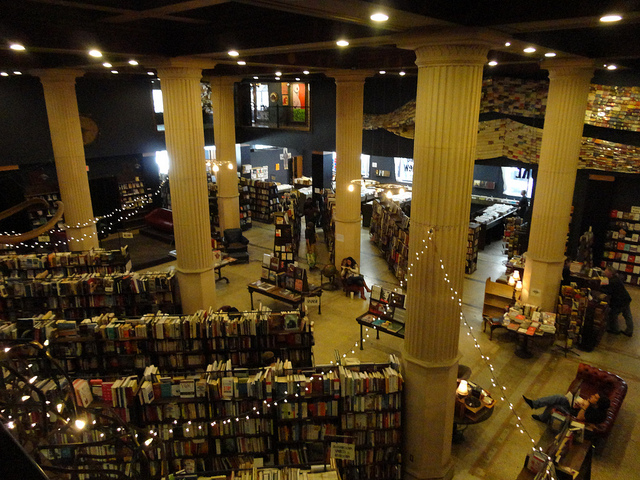
The Last Bookstore

Photography credit Scott Garner.

Thanks to Paris Review, and particularly Casey N. Cep, for a reminder of why bookstores have more meaning than other forms of merchandising:

…Our inheritance felt large, but it was the sawhorses that I most admired, especially when my father put them to use constructing bookshelves for my bedroom. My father was no stranger to construction; he built the log cabin in which I was raised. He inherited not only tools but also skills from his father, so he was able to cut, stain, and install the wide bookshelves on my bedroom walls in no time. The shelves were required to house my growing library, acquired book by book in a thrilling sequence of gifts, purchases, and trades. Continue reading

An Appreciation Of Words Well Used, And Masters Of The Same

Anthony Lane, film critic for the New Yorker, wrote an appreciation for Elmore Leonard that is now posted on their website.  When important literary figures pass away, that magazine’s editors and writers share personal stories that serve to celebrate the lives of those who will write no more. On this site, we have studiously avoided obituaries but occasionally shared links to celebrate contributions of the recently departed.

Here, a slightly different purpose for linking to Lane. Yes, read this and better appreciate the prolific author’s contributions, which helps ease remorse at his passing because the contributions keep on giving (if you choose to see it that way). But more to the point here, celebrate the critic’s appreciation.  It takes guts, and mastery of words, to pit pulp fiction against high art (this act of critical bravery is after the jump):

…“The Switch” was published in 1978. Leonard (or Dutch, as his friends called him) had been writing about cowboys since the start of the nineteen-fifties, but he moved on to modern gunslingers with “The Big Bounce,” in 1969, and by the late seventies he was in full spate. The fullness required no enrichment of the style, let alone beautification; incapable of primping, Leonard chose to plane and pare until he ended up with folks like Melanie and Frank. As for their conversation, swatted back and forth like Ping-Pong, the phrasing as dry as a scoreline: if you wanted that brand of comic beat, with all the frills torn off, where did you go before Leonard came along? Early Evelyn Waugh. Continue reading

Cricket Is Critical

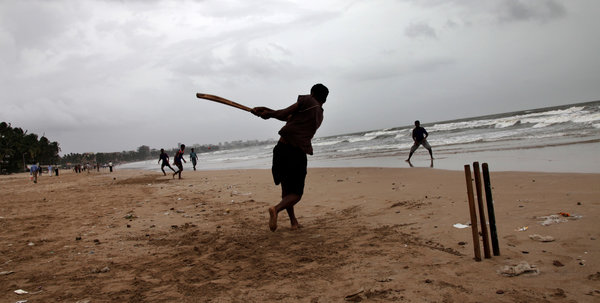
Kuni Takahashi for The New York Times. Juhu beach in Mumbai, India.

Kuni Takahashi for The New York Times. Juhu beach in Mumbai, India.

The abundant wildlife and traditional culture of India, especially Kerala and its neighboring states in the south, are our most common interests, both on this blog and within the lodging properties we develop and operate. Salim’s brief, daily posts are a mainstay of these interests. Selveraj’s frequent posts capture, in a single snapshot, the uniquely south Indian on-the-road experience.

What we offer less of, for good reason, is an attempt to capture “India” in small snapshots. The quotation marks denote that India is the name of a country, yes, but that it is realistically more the name of an idea; an ideal; any attempt to capture that in a single view or experience is futile because of the complex, diverse and dynamic components.

Continue reading

It’s About The Collaboration

All six minutes are a pleasure, but the last few seconds resonate across time and space:

This past fall, Yolanda Cuomo, a New York-based artist and graphic designer, learned that she had to vacate her Chelsea studio of twenty-five years. Continue reading

Ideas That Give ‘Far Out’ A New Meaning

Malayalam Milestone

Sabdatharavali compiled by Sreekanteswaram

Sabdatharavali compiled by Sreekanteswaram

Sreekanteswaram is our kind of hero, protecting his cultural heritage without much fanfare but with a sense of humor:

That the first and the most authentic Malayalam dictionary to date, Sabdatharavali by Sreekanteswaram G. Padmanabha Pillai, turns 90 this year is a fact lost on Malayalis basking in the language’s hard-won classical status.

While such forgetfulness on the part of language Tsars is understandable, given the backward status of linguists and lexicographers in cultural hierarchy, a handful of ordinary language-lovers like poet Kureeppuzha Sreekumar Continue reading

If You Happen To Be In New York

Last time we mentioned this library, it was to raise some important questions; on a previous occasion to recommend a lecture; this time we recommend what looks like an important exhibition curated by Leonard S. Marcus:

The ABC of It is an examination of why children’s books are important: what and how they teach children, and what they reveal about the societies that produced them. Through a dynamic array of objects and activities, the exhibition celebrates the extraordinary richness, artistry, and diversity of children’s literature across cultures and time. Continue reading

Books In A Pre-Amazonized India

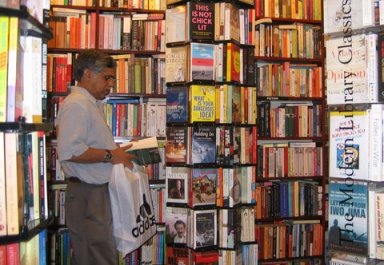
Courtesy of Jairaj Singh A customer at the Fact & Fiction bookstore in New Delhi.

Courtesy of Jairaj Singh
A customer at the Fact & Fiction bookstore in New Delhi.

Our friends at the India Ink blog site offer a cross-generational look at the world of books in our part of the world:

In the summer of 1984, two years before I was born, my father, Ajit Vikram Singh opened a small corner bookshop, Fact & Fiction, in South Delhi’s Vasant Vihar area,      Continue reading

“The Upcycle”, the sequel to “Cradle to cradle”

If you’ve read “Cradle to Cradle” and you come here regularly, chances are you’ll be as excited as I am to learn about the sequel : ‘The Upcycle”.

10 years ago William McDonough and Michael Braungart published one of the most important environmental manifestos of our time.

Based on biomimetics, Cradle to Cradle design is an approach to the design of products and systems. It models human industry on nature’s processes viewing materials as nutrients circulating in healthy, safe metabolisms. The book states that:

“All products can be designed for continuous recovery and reutilization”.

Every product can and should be conceived with the reuse of its materials in mind and every material can and should be conceived to be used again. Just like in nature, nothing goes to waste.

If you have not read it, McDonough’s TED talk Cradle to Cradle design will probably make you want to give it a go.

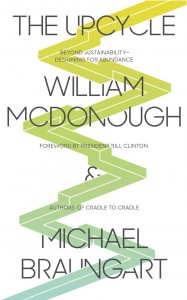
In their newest book  The Upcycle: Beyond Sustainability – Designing for Abundance,  McDonough and Braungart go further than ‘Cradle to cradle’ saying that we should be ambitious about our role on this planet.

“Industry can do better than “do no harm”: it can actively improve everything with which it comes into contact.” Continue reading