Urban forests play an important role. Not only continuing to act as the Earth’s lungs, but they perform other valuable services – least of all providing the sense of peace and refuge for both humans and wildlife.
Our urban trees in the James River Park System and City of Richmond perform valuable services for us. They anchor the soil on hills and along river and stream edges, which reduces runoff into the river. They provide habitat and food for animals, and moderate the temperatures and rainfall with their canopies. Continue reading →
There is grandeur in this view of life, with its several powers, having been originally breathed into a few forms or into one; and that, whilst this planet has gone cycling on according to the fixed law of gravity, from so simple a beginning endless forms most beautiful and most wonderful have been, and are being, evolved.
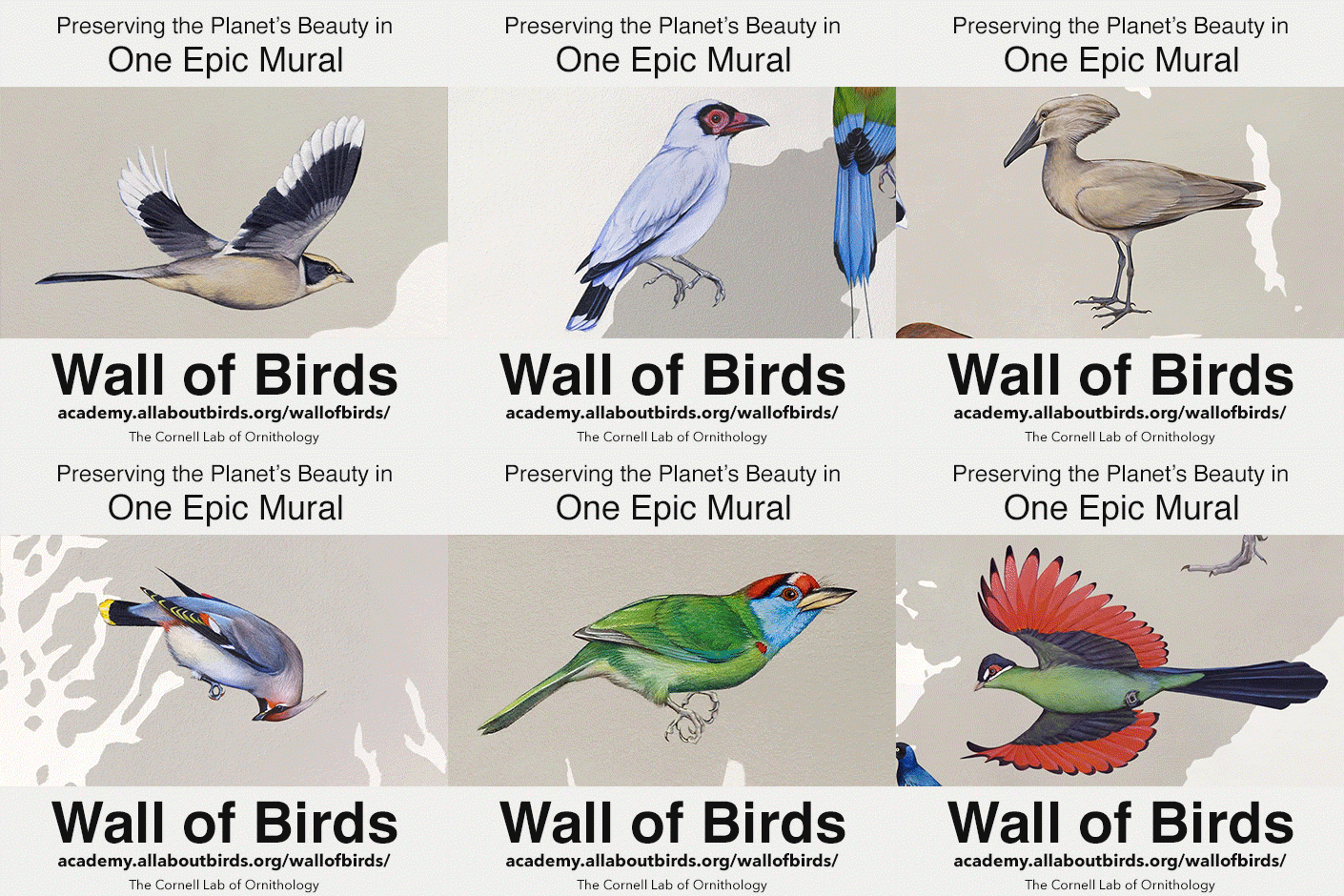
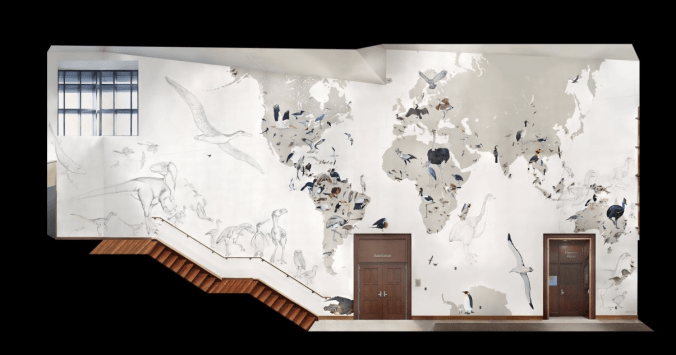
The Cornell Lab of Ornithology has long been a leading presence in the study, appreciation and conservation of birds. From citizen science programs, to eBird, to research collaboration with the the National Geographic Society, the Lab has helped to educate the public about the environmental importance of birds. The Wall of Birds, titled “From So Simple a Beginning,” from the Darwin quote above, celebrates the world of birds, showcasing biodiversity and evolutionary change, by featuring species from all surviving bird families alongside several extinct ancestors.
The scale of the mural is mind-blowing! The world map covers the largest wall of the Lab’s visitor center, with life-sized birds from each of the 243 taxonomic families of the world, placed in their geographical endemic locations. Check out the scale of the flying albatross in the lower left of the mural! The pale, gray scale depictions of the extinctions and ancestors adds to the complexity of the mural.
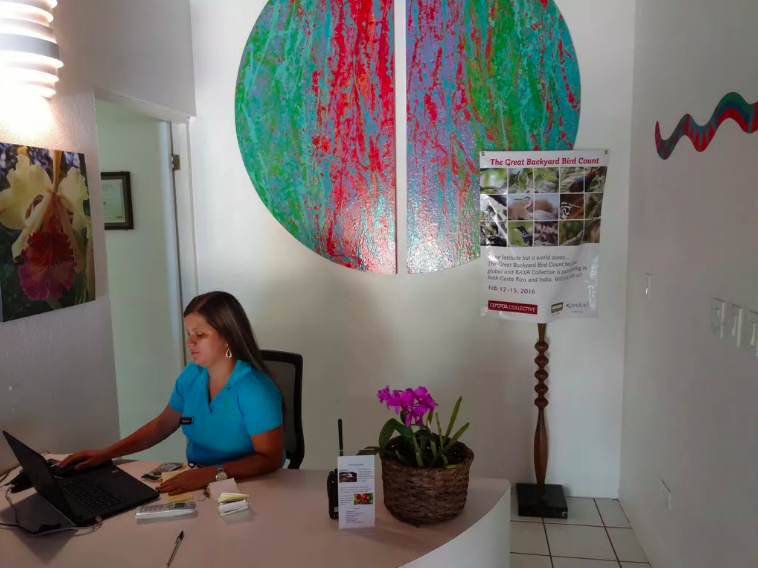
Patricia works at Reception, with the Great Backyard Bird Count sign behind her
Xandari Resort & Spa’s Great Backyard Bird Count started off with the piercing whistle of a Common Pauraque, followed by some wren vocalizations and a Great Kiskadee‘s eponymous (“great kis-ka-dee!”) call. While drinking my morning coffee before the scheduled birdwatching tour I listened to the sounds from the forest and recorded my first GBBC checklist of the day at 5:30.
Then, some guests and I watched birds from the restaurant terrace for almost half an hour before walking through the gardens as well, leading to two more checklists. The most exciting sightings this time were a small group of White-crowned Parrots and a Zone-tailed Hawk soaring alongside a Short-tailed Hawk.
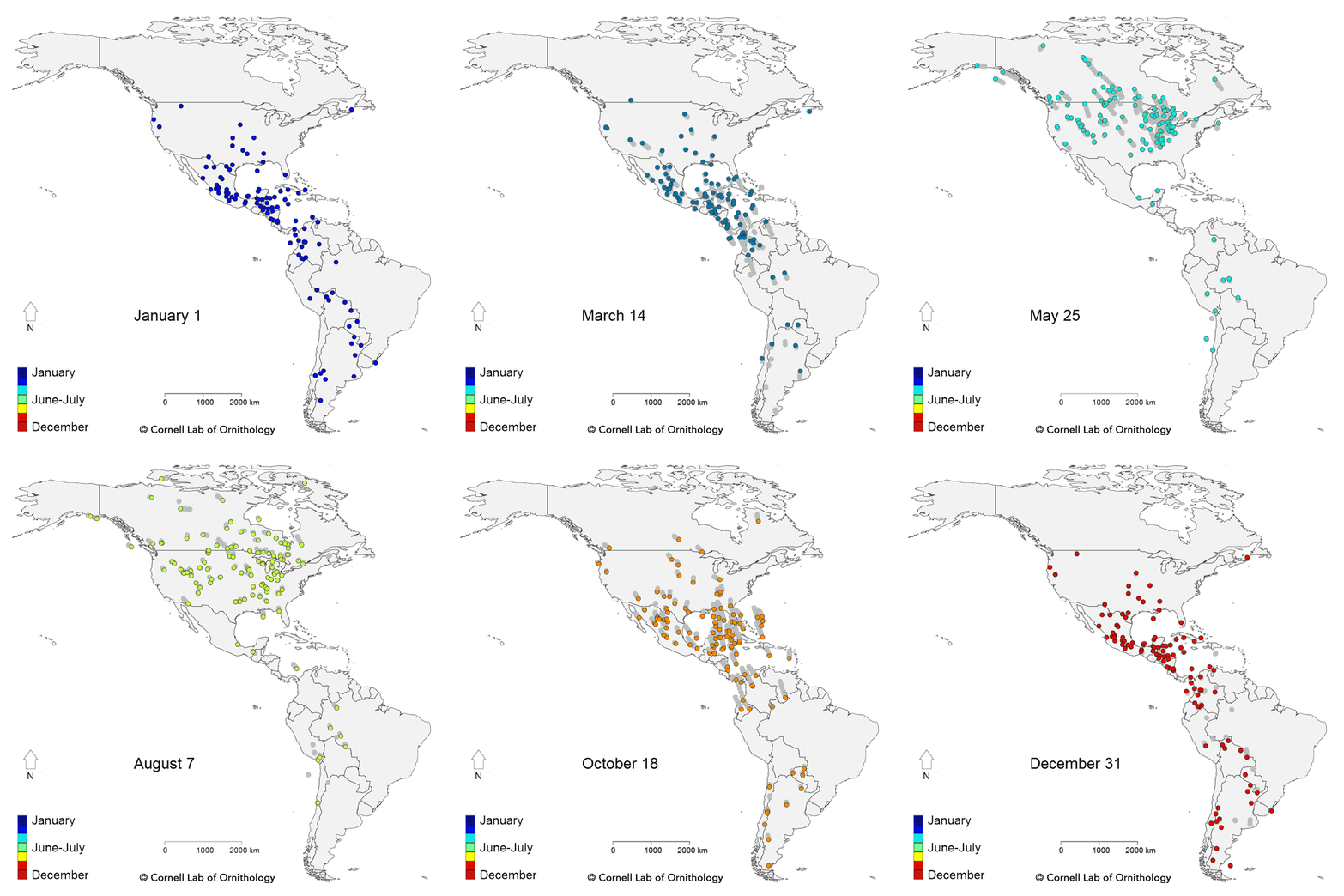
Each dot represents a single bird species; the location represents the average of the population for each day of the year
On January 20th, researchers at the Cornell Lab of Ornithology published a paper in the Proceedings of the Royal Society B titled “Convergence of broad-scale migration strategies in terrestrial birds.” Using data from eBird that indicated the presence and absence of over a hundred different bird species in the Western Hemisphere, they tracked migration patterns among the various species and found that many of them used very similar routes that avoided or took advantage of certain geographical or atmospheric factors. In short, the paper illustrated that scientists can use the data from eBird in just the manner that I always tell guests here at Xandari: with thousands of observations by people in different places and at all times of the year, population statistics, migration data, and other information can be gathered about bird species around the world. All through citizen science.
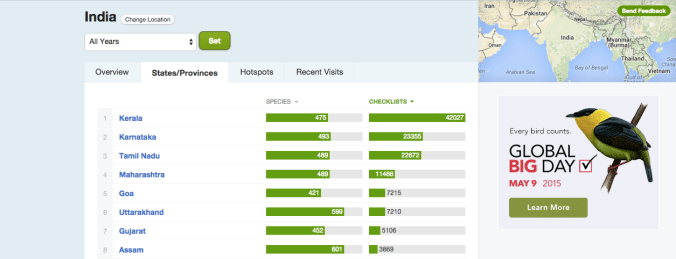
Between the on-going Bird of the Day series and many ornithologically focused posts, our interest in birds can’t be breaking news to any La Paz Group reader. We’re constantly hearing more about the importance of citizen science in all sorts of ecosystems, but with both birding and Kerala so close to our hearts we’re thrilled to applaud the enthusiasm of the Bird Count India community. Continue reading →
I’ve posted previously about the emergence of lionfish jewelry as one of several market-based approaches to controlling the invasion of this non-native species which poses an unprecedented threat to marine ecosystems in the Western Atlantic.
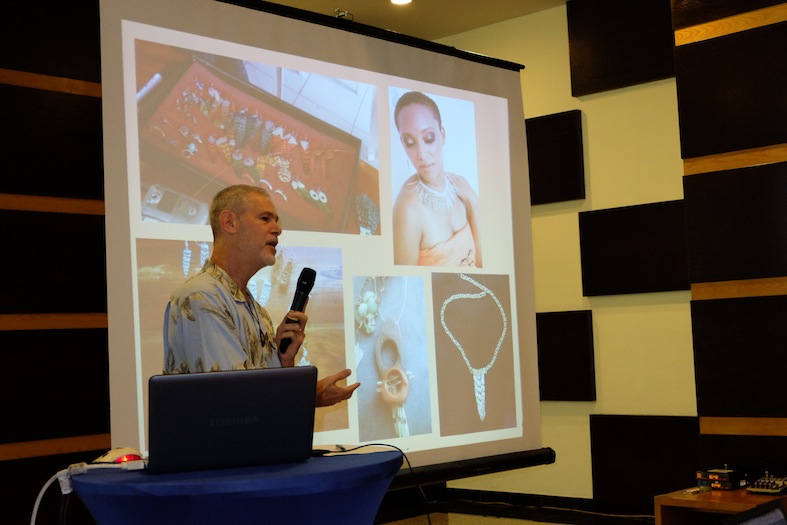
Last month I had the opportunity to make a presentation on lionfish jewelry at a special workshop on lionfish management that was held during the annual conference of the Gulf and Caribbean Fisheries Institute, in Panama. The conference program also included a full-day lionfish research symposium and a lionfish research poster session, both of which gave me an opportunity to learn more about the science aspects of the lionfish invasion and some of the latest findings on lionfish biology and behavior and to meet some of the leading researchers on these subjects.
This past month at Xandari was a good one for the resort’s eBird hotspot, since it saw the beginning of the migratory bird season in earnest (some species start migrating from North America in September or even late August). Not only were 91 distinct species seen throughout the month, but 15 of these species were newly observed on property (including three new representatives each of both raptors and warblers; four new swallows; and even a new hummingbird that was probably fleeing the rain-induced cooler temperatures at its higher elevation habitat). These fresh observations have bumped the hotspot’s species count up to 137, putting Xandari in a tie for 54th place by species count within the entire province of Alajuela, which as the third-largest province of Costa Rica includes some of the stronger birding sites in the country, like Arenal and Poás volcanoes and Caño Negro National Park (not to mention all the private reserves––like Xandari’s––that get lots of bird-watchers every year).
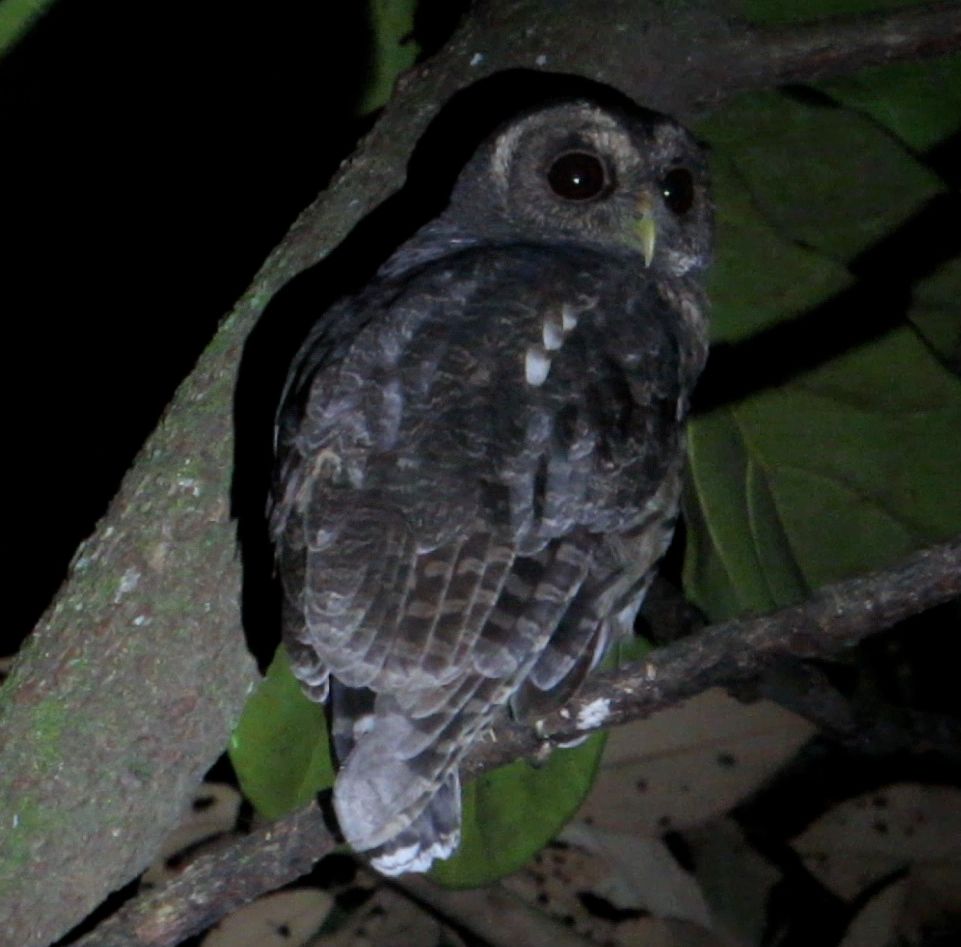
Last night, fittingly for Halloween, Jocelyn and I saw a Mottled Owl (not the first time at Xandari, but the first time filmed that I know of):
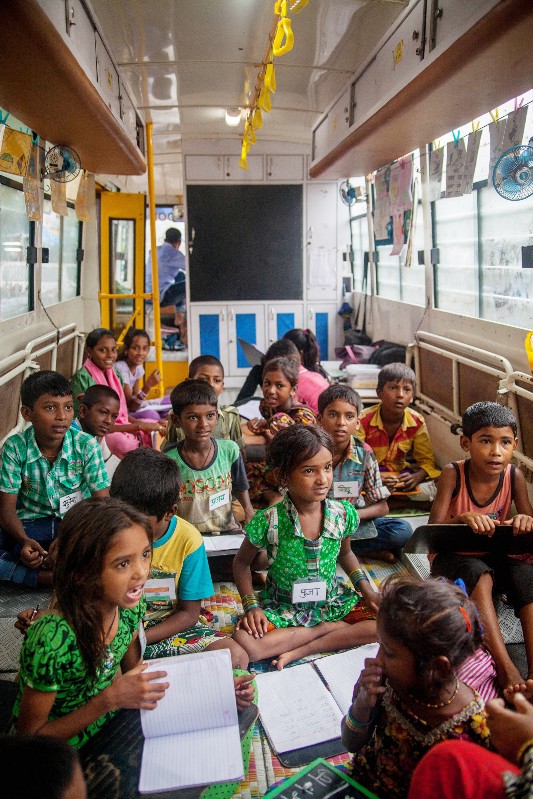
The buses can only hold 20 students, without much space to wiggle around or store books. But they have unique benefits — like their ability to reach many of Mumbai’s poorest migrants who live on illegal plots of land where schools can’t be built. PHOTO: Karen Dias
Mumbai’s education system has fallen gravely short of absorbing its children. Only 400,000 children were enrolled in municipal schools in 2014, according to a report by Praja, a non-partisan research and advocacy organization. That number actually dropped 11 percent since 2009, despite increased government spending on education.That leaves more than half of the children in Mumbai either out of school or learning in private institutions. At least 37,000 kids in Mumbai live on the streets and work with their parents to earn a few cents a day, according to advocacy organization Action Aid.
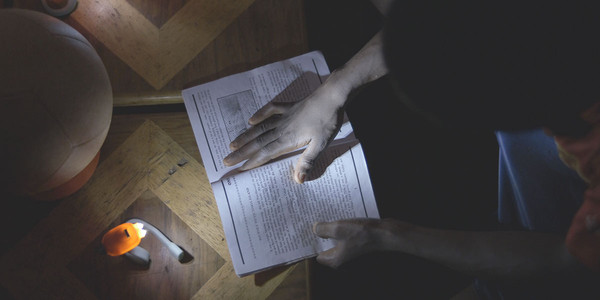
Medium brings you more on how a collaborative system of volunteers, activists and NGOs is transforming the darkness of ignorance in one of India’s largest cities.
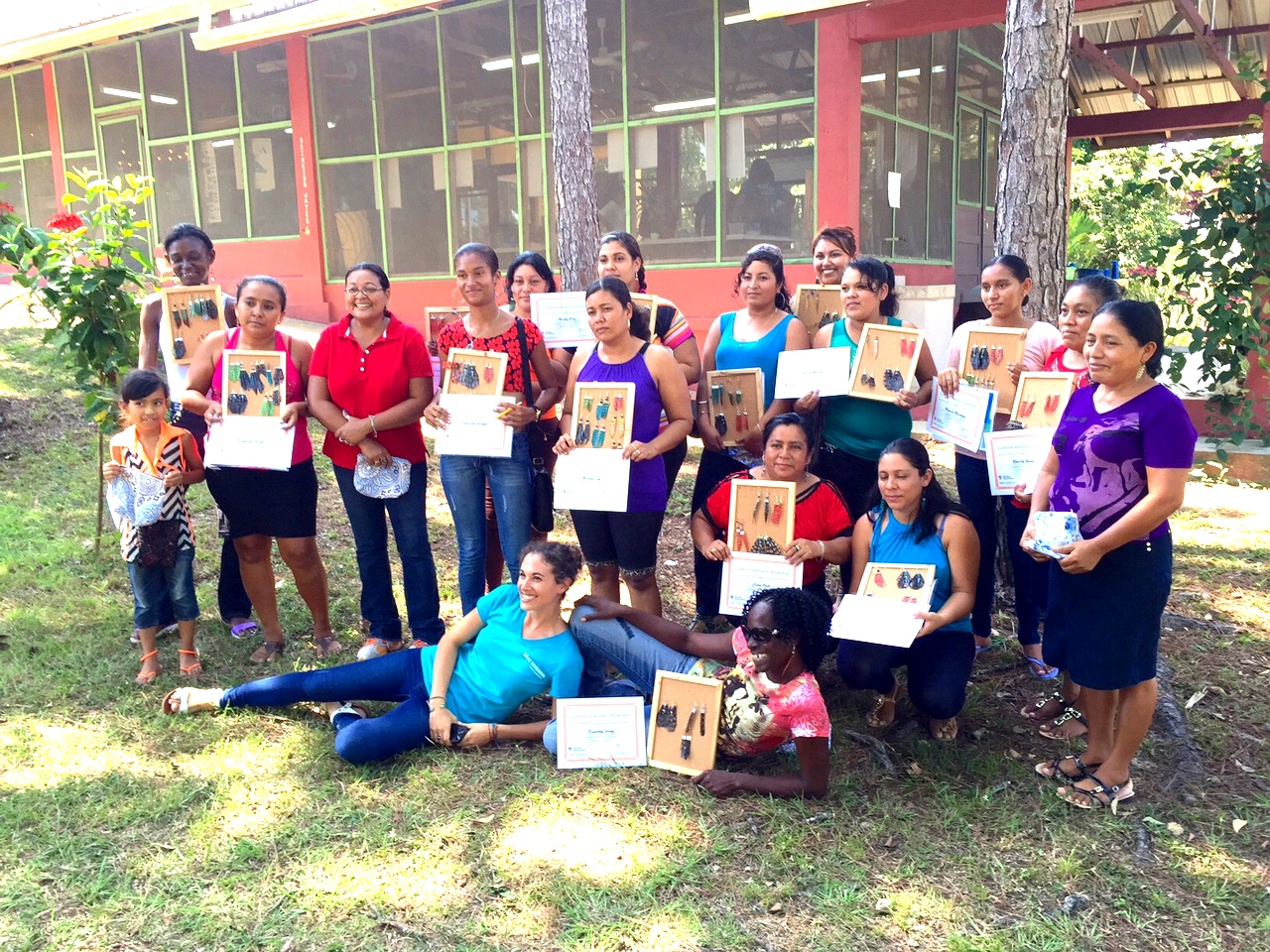
Last month, for the third year in a row, I spent two weeks in Belize where I had a chance to get an update on how the market is developing. I started my visit in Placencia, which is home to Kaj Assales, the most successful of the lionfish jewelry artists in the country, with her own jewelry line which she sells through her boutique as well as online. It was my first chance to visit her shop and to see some of her new designs.
Next I spent a week in the Sapodilla Cayes with ReefCI, the NPO that I first collaborated with to help jump-start the lionfish jewelry market in the country. This gave me a chance to practice my lionfish spearing skills, as the ReefCI team and visiting volunteers continue to remove several hundred lionfish per week dissecting a sample of 30-40 of these for stomach content. Data on size, sex, and stomach content is provided to the Belize Fisheries Department and has been a valuable input to its national lionfish control strategy. Coincidently, ReefCI’s lionfish control program was profiled in the August issue of United Airlines magazine; not only a nice recognition of the group’s efforts, but also a great boost for raising awareness about the lionfish invasion. Continue reading →
While marine protection agencies are generally supportive of these efforts and are indeed engaging in removals themselves, they lack the data and evidence needed to make informed decisions about the optimal mix of approaches and the level of effort and resources needed to effectively control the invasion. I recently had the opportunity to participate in a research expedition aimed at helping to address this gap. I was fortunate enough to be selected to join 29 other volunteer citizen scientists, professional/semi-professional spear fishers, and marine scientists for a fish survey and lionfish culling effort in the Flower Garden Banks National Marine Sanctuary. Situated about 100 miles off the coast of Texas, the sanctuary is home to a unique ecosystem with almost 300 species of fish, 21 species of coral, and several other invertebrate species. Lionfish are being observed with increasing frequency within the sanctuary, a cause for concern by the sanctuary’s managers. They have previously undertaken periodic culling of lionfish, but the recent effort was the first time that removals were undertaken in a systematic fashion. Continue reading →
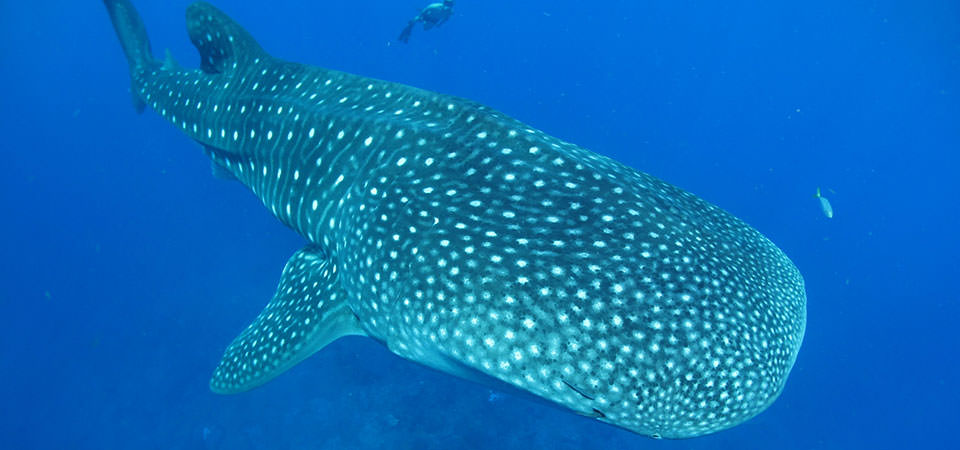
In celebration of International Whale Shark Day, which is August 30…
I’ve posted previously about ecotourism ventures focused on iconic marine species such as sharks, manta rays, and sea turtles and how such ventures can be linked to protection of the species involved. From a natural capital valuation standpoint, the link is based on the recognition that the revenue generated from wildlife tourism associated with the animals far exceeds the revenue that would be earned from their capture for meat and/or body parts. In a nutshell – they are worth more alive than dead!
One species that has been the focus of wildlife tourism in various parts of the world is the whale shark. The largest fish in the sea, whale sharks grow up to 40 feet in length and more than 45,000 pounds in weight. Continue reading →
Solenne, a French volunteer visitor of the school, contributing live soundtrack for the first screening of a silent film produced by students. PHOTO: Vikalp Sangam
Samuel and Alice (founder-teacher) editing the silent film together with the students. PHOTO: Vikalp Sangam
Students on a treehouse they built on their own initiative. PHOTO: Vikalp Sangam
Kindergarten students helping out with the peanut harvest. PHOTO: Vikalp Sangam
Students and teachers do not feel confined within walls of a classroom. PHOTO: Vikalp Sangam
Two kindergarten kids in the playground just outside the classroom. PHOTO: Vikalp Sangam
The Marudam School in Thiruvannamalai in Tamil Nadu. For starters, it’s run by an NGO – The Forest Way – a registered charitable trust involved in education, afforestation, environmental education, organic farming and more. Also, it receives no funding from the government. The school, set in an organic farm and powered by renewable energy, teaches its students about conscious living that respects the environment.
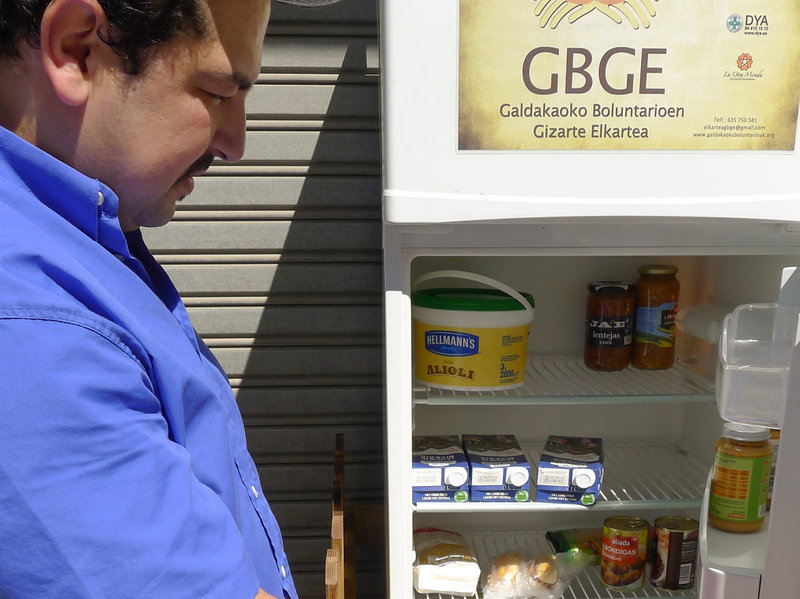
Issam Massaoudi, an unemployed Moroccan immigrant, checks out what’s inside the Solidarity Fridge. Massaoudi says it’s “amazing” to be able to help himself to healthy food from Galdakao’s communal refrigerator. PHOTO: NPR
Last year, a small act of kindness in the desert country of Saudi Arabia warmed the hearts of many across the globe. An anonymous individual put a fridge outside his house and called on neighbors to fill it with food for the needy. And now a pioneering project in the Basque town of Galdakao, population about 30,000, aims to eliminate wastage of perfectly good groceries and food. Solidarity refrigerator is showing the world how a little generosity can go a long way.
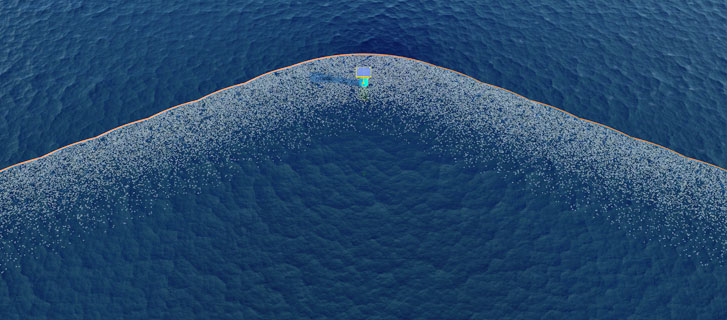
The Ocean Cleanup started tests in 2014 to see if the floating barriers are a feasible way to remove garbage. PHOTO: The Ocean Cleanup
Dutch engineering student Boyan Slat announced in a 2012 TEDx talk that he had invented a way for the oceans to rid themselves of plastic with minimal human intervention. About 8 million tons of plastic enters the ocean each year. Part of this accumulates in 5 areas where currents converge: the gyres. At least 5.25 trillion pieces of plastic are currently in the oceans, a third of which is concentrated in the infamous Great Pacific Garbage Patch. Slat’s idea is to building a stationary array with floating barriers that would filter and collect floating plastic using the ocean’s natural currents.
The Bike Project is run by former refugees and mechanics, who work with new refugees to fix up donated bikes. PHOTO: The Bike Project
13,500 refugees flee to London each year. In that same period, around 27,500 bikes are abandoned. Just one of these abandoned bikes can help a refugee save 20 pounds a week on bus fare. That’s 1,040 pounds a year. Having fixed, donated, and helped refugees maintain over 300 bikes, The Bike Project is turning the wheels of goodwill and community development.
A Swallow-tailed Kite – a relatively common CR species I first saw just last week – spotted from the El Copal Reserve in Cartago, Costa Rica.
About three years ago, I wrote in a post from Ecuador that “Even after taking a pretty intense ornithology class at Cornell University and working for the Lab of Ornithology, I don’t really consider myself a birder.” Last year I revised that statement a bit, clarifying that “now, as James and I add our observations around Xandari to eBird every day, my opinion may have changed slightly (though I can’t yet subscribe to the labels of bird-head or bird-nerd by a long shot).” Then, this January I wrote of myself and my friends John and Justin that, “Although none of us are the type of birder that pursue ‘life lists’ — a checklist of the thousands of bird species in the world that one has seen — we all use eBird and are definitely interested in seeing and identifying wildlife of any sort.”
Uncharted Play is a social enterprise based in New York City founded with the mission of harnessing the power of play to achieve social good. PHOTO: UP
1.2 billion people around the world lack access to reliable electricity. They end up using kerosene lamps or diesel generators for their lighting requirements. But did you know that the annual collective emissions from kerosene lamps all over the world is equal to the carbon emissions of 38 million automobiles? It’s not just the carbon footprint – burning kerosene lamps indoors is as bad for the lungs as smoking two packs of cigarettes per day.
Orchid Observers is a collaboration between the museum and Zooniverse, the citizen science platform established at the University of Oxford. PHOTO: Wikimedia Commons
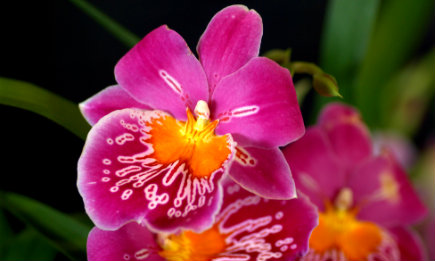
A citizen science project to study when and where orchids bloom around the UK has already revealed 200 new flowering locations for particular species. Members of the public are submitting and identifying orchid photos, and also annotating historical specimens. Called Orchid Observers, the initiative aims to measure the effect of warming, and other environmental changes, on the distribution of 29 different orchids. Orchid Observers is a collaboration between the museum and Zooniverse, the citizen science platform established at the University of Oxford. The data it yields will not only be used by researchers at the museum, but will feed into the biological records data held by the BSBI.
What radical policy the government adopts and implements to leave a strong footprint in the paradigm of global climate remains to be seen but micro steps are already being taken by individuals in various other sectors. Carbon offsetting is entering mainstream conversations and niche spaces like film making are thinking green. The first example of a carbon neutral production was George Clooney’sSyriana (2005). And now, the unit of the Bollywood movie Aisa Yeh Jahaan, starring Palash Sen and Ira Dubey among others and directed by Biswajeet Bora, has become India’s first ‘carbon-neutral’ movie.
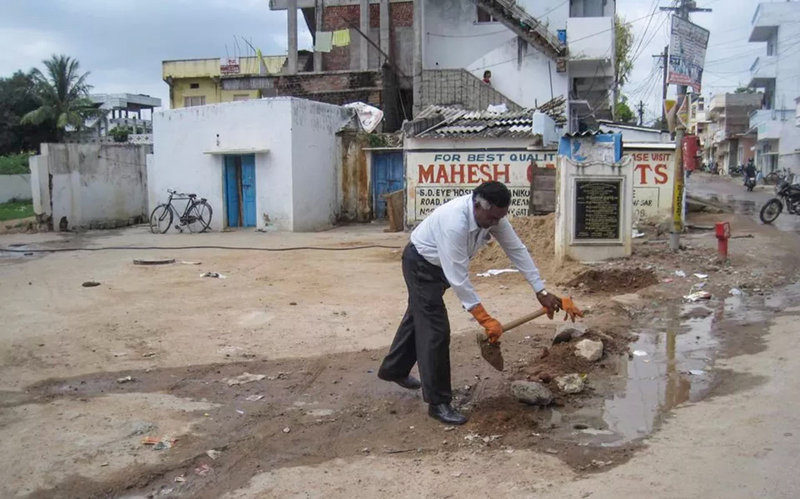
Another pothole bites the dust in India, thanks to the efforts of Gangadhara Tilak Katnam
“You shouldn’t be out there filling potholes at your age.” That’s what Venkateswari Katnam tells her 67-year-old husband, Gandgadhara. He doesn’t listen. Over the past five years, he estimates that he has filled around 1,100 potholes on the streets of Hyderabad. He carries bags of gravel and tar in the trunk of his Fiat, along with a spade, two brooms, a wire brush and a crowbar. When he spies a pothole — or learns of one from a Facebook message — he can usually fill it in under an hour. He clears out any debris or standing water, pours in the mix of gravel and tar, levels it off and waits about 30 minutes for it to set. He puts up red flags in English, Hindi and Telugu to make sure no one steps or drives in it. And when he’s done, he takes a selfie to add to his collection of filled pothole Continue reading →






 Organikos