Hunting Wild Coffee

merlin_149142180_e389d902-4d9f-4559-b2f6-687d704e15eb-jumbo.jpg

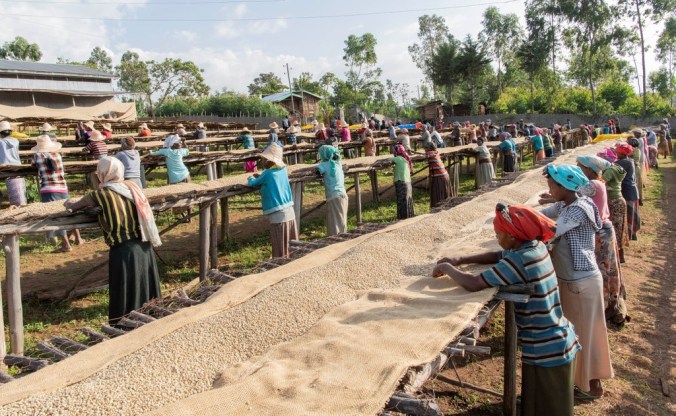
Drying coffee beans in Ethiopia. More than half of all species are at risk of vanishing in the wild because of climate change and deforestation. Maheder Haileselassie/Reuters

As much as I thought I learned in the last year about coffee, I got a hint just now, reading the article below, how steep my learning curve remains. 124 species of coffee? So much to hunt, so little time! Thanks to Somini Sengupta for this story:

15CLI-COFFEE2-jumbo.jpg

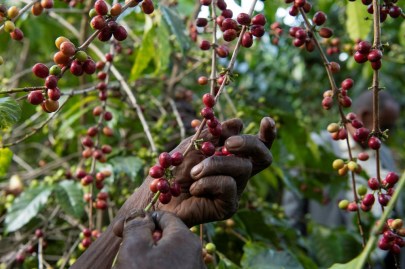
Picking coffee berries on a farm in Ethiopia. Maheder Haileselassie/Reuters

Aaron Davis, a British botanist, has spent 30 years trekking across forests and farms to chronicle the fate of one plant: coffee.

He has recorded how a warming planet is making it harder to grow coffee in traditional coffee-producing regions, including Ethiopia, the birthplace of the world’s most popular bean, arabica. He has mapped where farmers can grow coffee next: basically upcountry, where it’s cooler. He has gone searching for rare varieties in the wild. Continue reading

Buoyant Foundation’s Intriguing Architectural Innovation

This is the kind of story that displays the odd new reality of what can count for optimism–finding intriguing solutions for mankind’s self-inflicted catastrophes. From Anthropocene:

float-when-it-floods.jpg

Amphibious Architecture

Float when it floods

By Emily Anthes

amphibious-house.jpg

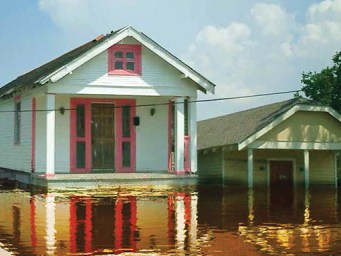
Amphibious structures are not static; they respond to floods like ships to a rising tide, floating on the water’s surface.

Last June, not long after a catastrophic thunderstorm swept through southern Ontario, bringing a month’s worth of rain in just a few hours, a group of 75 architects, engineers, and policymakers from 16 countries gathered in the city of Waterloo to discuss how humanity will cope with its waterlogged future. The timing of the conference was a fitting meteorological coincidence; in a world increasingly transformed by climate change, heavy rains and major floods are becoming more common, at least in some areas. In the summer of 2017 alone, Hurricane Harvey dumped more than 50 inches of rain over Texas; a monster monsoon season damaged more than 800,000 homes in India; and flash floods and mudslides claimed at least 500 lives in Sierra Leone. In the past two decades, the world’s ten worst floods have done more than a 165 billion dollars’ worth of damage and driven more than a billion people from their homes. Continue reading

Closure Requires Looking Forward

OConnor-The-Snow-Leopard.jpg

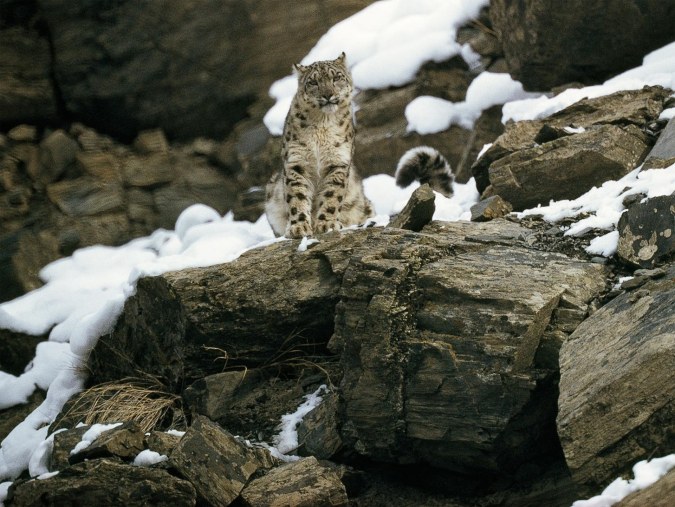
The zoologist George Schaller, whom Matthiessen accompanied to the Himalayas, says that, forty years after “The Snow Leopard” ’s publication, the animal has grown only slightly less mysterious. Photograph by George Schaller

9781137279293.jpgWhen I see the name Peter Matthiessen the first thing I think of is a recording of his voice on my telephone ten years ago. I knew he would be passing nearby and had invited him to see what we were doing in Patagonia. His message was a very warm decline of the invitation.

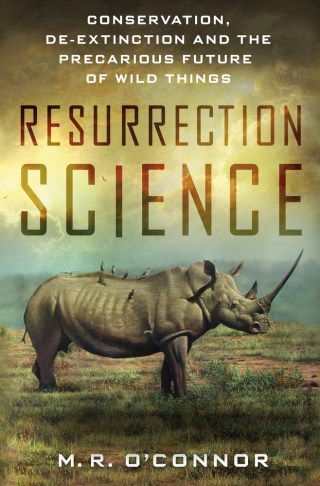
In addition to triggering that memory, M.R. O’Connor’s essay below reminds me that my family’s subscription to the New Yorker began in 1978, possibly with the late March issue in which Peter Matthiessen’s article about the snow leopard appeared. I can trace my interest in conservation back to that, and perhaps this accounts for why that magazine has been arriving weekly for me in the mail ever since. In the meantime this interest has exposed me to books like the one to the right. Which is as good a reason as anyway to make this link the 2018 coda (for me) on this platform:

In the autumn of 1973, the naturalist and writer Peter Matthiessen and the zoologist George Schaller set out on a gruelling trek into the Himalayas. They were headed toward the Dolpo region of the Tibetan plateau. Schaller wanted to study Himalayan blue sheep; Matthiessen hoped to see a snow leopard—a large, majestic cat with fur the color of smoke. Snow leopards, which belong to the genus Panthera, inhabit some of the highest mountain ranges in the world, and their camouflage is so perfectly tuned that they appear ethereal, as though made from storm clouds. Two of them feature on the Tibetan flag of independence, representing harmony between the temporal and spiritual planes.

For Matthiessen, a serious student of Zen Buddhism, the expedition wasn’t strictly scientific. It was also a pilgrimage during which he would seek to break “the burdensome armor of the ego,” perceiving his “true nature.” After it was published, in 1978—first, in part, in The New Yorker, then as a book—“The Snow Leopard,” his account of the trip, won two National Book Awards, becoming both a naturalist and a spiritual classic. It overflows with crystalline descriptions of animals and mountains: “The golden birds fall from the morning sun like blowing sparks that drop away and are extinguished in the dark,” Matthiessen writes. But it’s also an austere Buddhist memoir in which the snow leopard is as alluring and mysterious as enlightenment itself. Continue reading

Electrical Generation Can Look Like Sausage When Visualized Just So

Electric.jpg

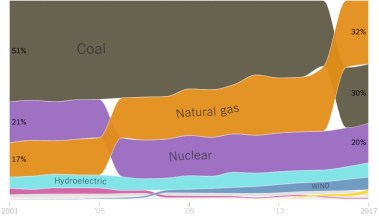
How the United States generated electricity from 2001 to 2017. Percentage of power produced from each energy source

America isn’t making electricity the way it did two decades ago: Natural gas has edged out coal as the country’s leading generation source … and renewables like wind and solar have made small yet speedy gains. But, each state has its own story.

Electric2

Nadja Popovich an explainer of complicated things with visualization techniques that have impressed us so far, now has this.

In Nevada, natural gas surpassed coal as the top source of electricity generation in 2005, earlier than in many other states. Coal’s role in the state’s power mix has continued to decline since then.

We cannot do justice to it, other than suggest you go see it for yourself. A state by state graphic representation of electrical generation methods:

How Does Your State Make Electricity?

Overall, fossil fuels still dominate electricity generation in the United States. But the shift from coal to natural gas has helped to lower carbon dioxide emissions and other pollution. Last year, coal was the main source of electricity generation for 18 states, down from 32 states in 2001.

Us & Them Versus The Rest

2200.jpg

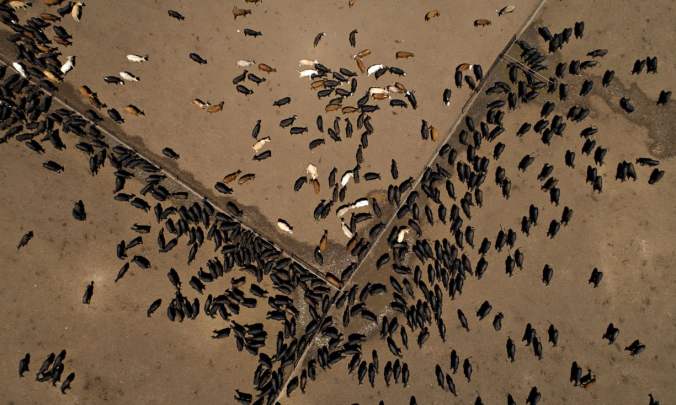
Beef cattle stand at a ranch in this aerial photograph taken above Texas. Meat and dairy accounts for just 18% of all food calories and around a third of protein. Photograph: Daniel Acker/Bloomberg via Getty Images

Them refers to the kinds of mammals in the photo above. Us refers to us humans. In keeping with yesterday’s post, Oliver Milman’s op-ed provides an excellent reminder that virtually all mammals living on planet earth today are we humans and the animals we farm for eating. There are still other species of mammals holding on, if barely, but they are being pushed to extinction largely due to the amount of meat we eat. Another good reason to go vegetarian, or vegan, or more simply just eating much less meat:

Why eating less meat is the best thing you can do for the planet in 2019

Eating meat has a hefty impact on the environment from fueling climate change to polluting landscapes and waterways

Recycling or taking the bus rather than driving to work has its place, but scientists are increasingly pointing to a deeper lifestyle change that would be the single biggest way to help the planet: eating far less meat. Continue reading

Fortune & Misfortune On Kerala’s Backwaters

Reuters_KeralaFloodingAugust2018_web.jpg

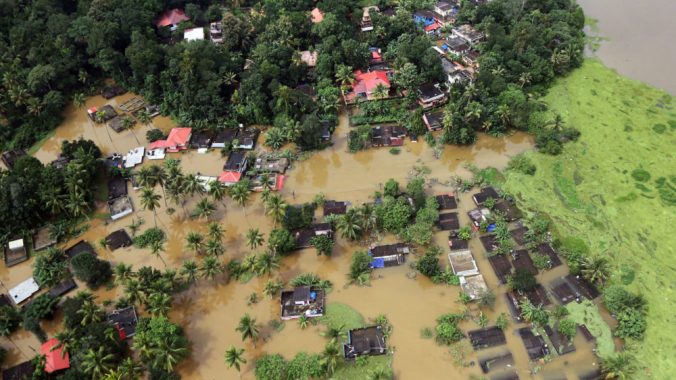
Partially submerged houses in Kerala, India last August. REUTERS / SIVARAM V

Any picture of a houseboat reminds me of our good fortune to live among the people of Kerala’s backwaters from 2010-2017. The photo below is no exception and I thank Fred Pearce, writing for Yale e360, for bringing to my attention the scale of misfortune facing our old neighbors from the most recent flooding. I knew about the disaster, but had not read in any detail until now what this implies for the future. Maybe this fortune could be applied to address those challenges:

In India, Nature’s Power Overwhelms Engineered Wetlands

The picturesque Kerala backwaters in southern India, increasingly popular with tourists, form a network of engineered canals, lagoons, lakes, and rice paddies. But a fatal monsoon deluge has highlighted the global problem of how developed wetlands often lose their capacity to absorb major floods.

GettyImages-1020694038_Kerala-Flooding_web.jpg

Floodwaters inundated much of Kerala’s low-lying coastal plain, including the village of Pandanad, pictured here. MANJUNATH KIRAN / AFP / GETTY IMAGES

In India, they call the state of Kerala in the country’s far south “God’s own country.” That wasn’t how it felt last August, when monsoon floods devastated its densely populated low-lying coastal plain. Around 500 people drowned, in an area best known to outsiders for its placid backwatersa network of brackish lakes, lagoons, and canals where growing numbers of Western tourists cruise the picturesque waterways aboard luxury houseboats.

Pearce_IMG_5233_Houseboat_web (1)

A luxury houseboat moored along Lake Vembanad near the tourist town of Kumarakom in Kerala. FRED PEARCE / YALE E360

Now that the floodwaters have abated, questions are being raised about whether the disaster was made worse by water engineering projects in the backwaters designed to feed the state’s population and attract tourists. Increasingly, Kerala residents are wondering if “God’s own country” is damned as well as dammed.

The floods came out of the Western Ghats. This chain of mountains down the west side of India is one of the country’s wettest places, drenched from June to September in monsoon. In early August, the rains there were exceptionally intense and unremitting. The rivers flowing from the mountains west toward the Arabian Sea dumped their water into the backwaters on a coastal plain that is largely below sea level.

Sixty-mile-long Lake Vembanad, at the heart of the backwaters, rose up and flooded surrounding wetlands and rice paddies, cities, and farming villages. A quarter-million people took refuge in 1,500 relief camps; 6,200 miles of roads and 115 square miles of farmland were damaged. Cochin International Airport was awash. Continue reading

A Blue Carbon Sink In Australia’s Midst

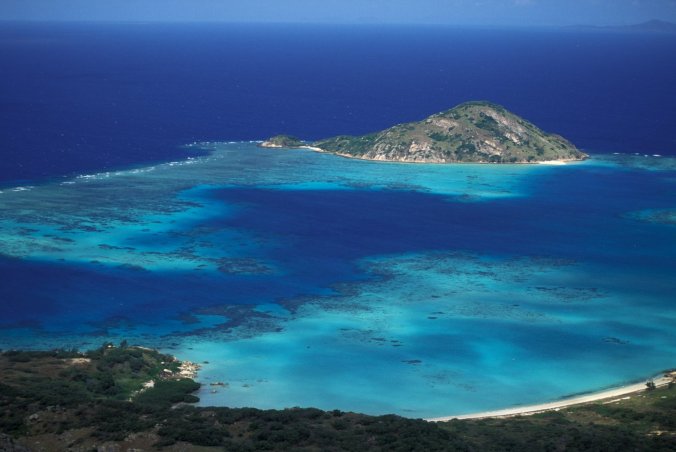
gettyimages-454427891_custom-36d471720410cb6431d89e0c31878279437006c1-s1400-c85

Researchers studied the carbon storage of deep-water seagrasses living at Lizard Island, Australia. Education Images/UIG via Getty Images

Thanks to National Public Radio for this:

Amid a sea of dire climate change news, researchers say they’ve found a rare bright spot.

A meadow of seagrass among Australia’s Great Barrier Reef — estimated to be twice the size of New Jersey — is soaking up and storing carbon that would otherwise contribute to global warming.

Scientists call this carbon-removal powerhouse a “blue carbon sink.” The term refers to an ocean or coastal ecosystem — including seagrasses, salt marshes and mangrove forests — that captures carbon compounds from the atmosphere, effectively removing carbon dioxide, a known greenhouse gas that contributes to climate change. Continue reading

All We Are Saying

1600 (1)

‘Eco-warriors’ and ‘climate hawks’: is it time to ease up on the war metaphors? Photograph: Amelia Bates/Grist

We connected a series of dots that we felt told a story. Get mad. I know I sure have felt mad in the midst of such alarming inaction. Maybe there is a better way to motivate and get something tangible done. Considering the stakes, I am willing to listen to and try just about anything. And in this essay Kate Yoder reminds me that when we launched this platform in 2011 we felt sure that wordsmithing was part of the solution we wanted to highlight. All that we have been saying since then, and how we have been saying it, was meant to be about a better future–so back to the words for inspiration:

To take on climate change, we need to change our vocabulary

When we talk about saving the planet, we employ the narrative of war. Does it only deepen our divisions?

4298

 A study found the language of war was effective in conveying urgency to participants. But does it work for everyone? Photograph: Damian Klamka/Zuma Wire/Rex/Shutterstock

Each dead house fly was worth a quarter, my mom told us kids, but I never earned any money. Every time I cornered a fly, I pictured goo marks left on the wall – spots splayed with tiny black guts and twisted legs. My halfhearted swats gave even the most sluggish fly time to escape.

That I genuinely couldn’t hurt a fly might have been something I picked up in church. I grew up attending a Mennonite congregation in Indiana. We weren’t the bonnet-wearing, buggy-riding sort, but we embraced some traditions, like the Anabaptist teaching of nonviolence. This sometimes expressed itself in an instinct for conflict avoidance.

So I was surprised when violence crept into my speech three years ago when I started working as a journalist covering climate change. Some ancient spirit took hold of me, and I found myself deploying the narrative of war. Carbon tax proposals were “battles” to be fought. Greenhouse gas emissions had to be “slashed”. “Eco-warriors” and “climate hawks” were leading the charge. Continue reading

Is Neutrality The Best Option?

lead_720_405A.jpg

A rending of Powerhouse Brattørkaia, an “energy-positive” building that will open to the public next year in Norway SNØHETTA

Thank you Norway, for demonstrating that we can do better than neutrality:

Norway Is Entering a New Era of Climate-Conscious Architecture

The country now has a suite of buildings that generate more energy than they use.

The European Union has a target of making all new buildings zero-energy by 2020, but in Norway, carbon neutrality isn’t enough.

A consortium in Oslo made up of architects, engineers, environmentalists, and designers is creating energy-positive buildings in a country with some of the coldest and darkest winters on Earth. “If you can make it in Norway, you can make it anywhere,” says Peter Bernhard, a consultant with Asplan Viak, one of the Powerhouse alliance members. Continue reading

Climate Change’s Impact On Everyday Life

Lobster

Illustration: Joey Yu/Joey Yu for Guardian US

When more people feel their livelihoods affected by climate change, then we might expect politicians to pay the price for inaction. Josh Wood, writing for the Guardian from Stonington, Maine has this evidence:

‘We live in a lobstocracy’: Maine town is feeling the effects of climate change

When lobsters are life, environmental change affects livelihoods, and warming waters will ultimately bust the lobster industry

3000 (4)The American lobster is a symbol of Maine, central to the state’s ethos and economy.

Its image appears on license plates, restaurant signs and clothing. It is sold alive, with its claws banded shut, on docks, at highway rest stops and supermarkets. Cooked, it is served everywhere from seaside shacks to the finest restaurants.

Lobster attracts tourists, feeds locals and is a lifeblood for coastal towns.

Its importance has even swelled in recent years as lobsters have been caught in record numbers. Lobster landings – or the amount of lobster caught – have risen fivefold in the past three decades. Lobster has become a half-billion-dollar industry in Maine. And the reason for the boom, according to scientists, is climate change. Continue reading

Enough Is Not Enough

181217_r33437web.jpg

Illustration by João Fazenda

Tired as we may be of reading about, talking about, posting about it, enough is not enough on this topic, so here goes (thanks as always to Elizabeth Kolbert):

Coal for Christmas at the U.N. Climate Conference

As negotiators from around the world gathered in Poland to discuss how to lower carbon emissions, the Trump Administration unveiled two schemes promoting fossil fuels.

Last week, representatives from around the world gathered to begin another round of climate negotiations in Katowice, a city in the heart of Poland’s coal-mining country. Delegates arriving at the meeting, known in United Nations-speak as a Conference of the Parties, or cop, were treated to an outdoor performance by a Polish coal miners’ band. Inside the convention pavilions, they found mounds of coal displayed behind glass, like objets d’art, as well as arrangements of coal-based cosmetics and coal-encrusted jewelry. Poland gets about eighty per cent of its electricity from coal, the most carbon-intensive of carbon-based fuels, and the Polish President, Andrzej Duda, noted in his opening remarks that the country had enough as yet unmined supplies to last another two centuries. “It would be hard not to use them,” he said.

Depending on how you look at things, a coal-stuffed climate summit is either completely absurd—“beyond parody,” as one commentator put it—or merely appropriate. With each passing month, the threat posed by global warming grows clearer. And so, too, does the world’s failure to take that threat seriously. “We are in trouble,” the United Nations’ Secretary-General, António Guterres, said at the cop’s opening session. “It is hard to comprehend why we are collectively still moving too slowly—and even in the wrong direction.” Continue reading

Graphics For Better Comprehension

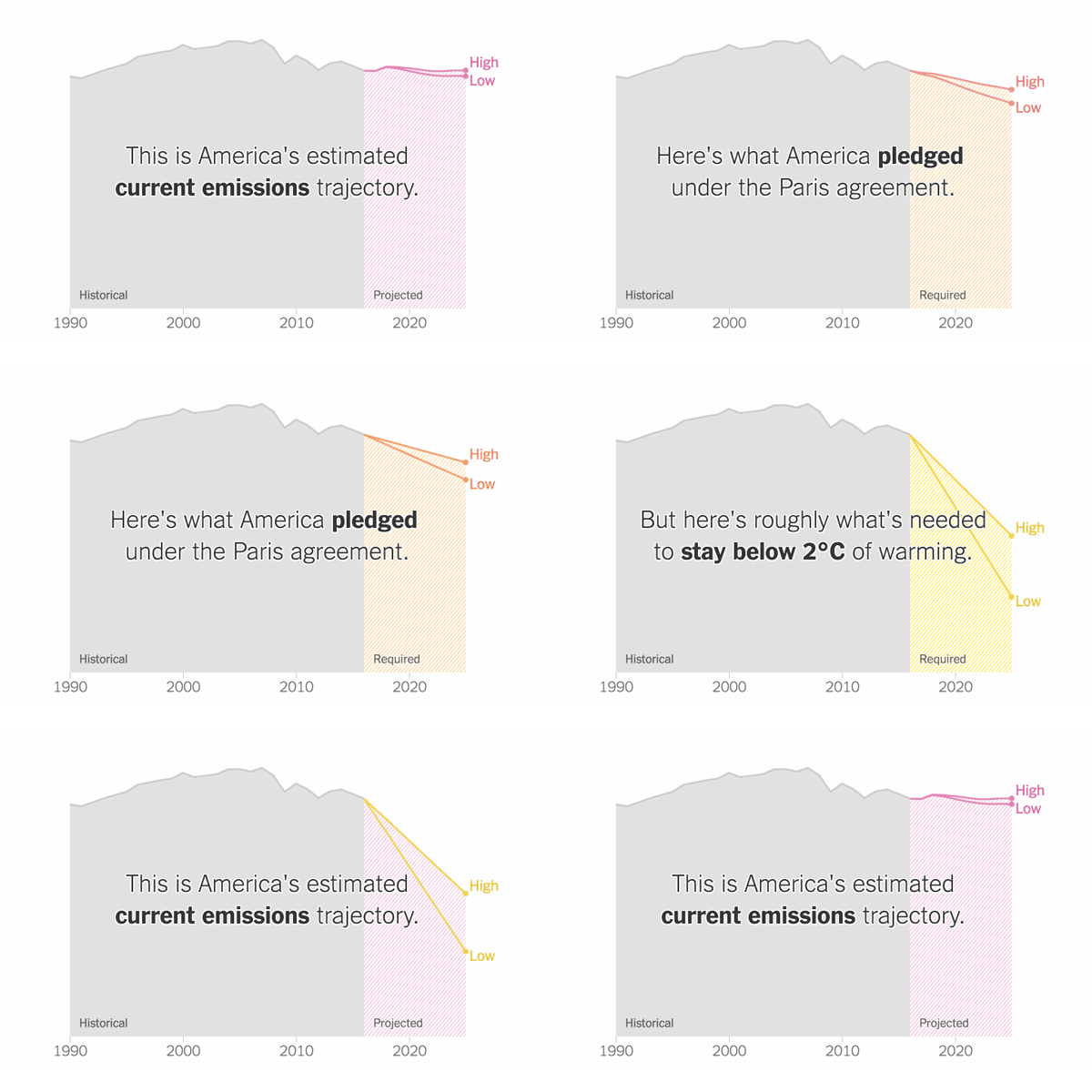
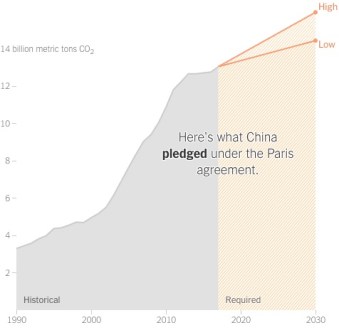
world-emissions-paris-goals-not-on-track-promo-1544191333747-threeByTwoSmallAt2X-v18.gif

Yesterday I was struck by a set of graphics that helped me see an old story in a new light. That was not a particularly important old story, as history of the planet goes; but it gave the manufacturing consent theme a new shine–in technicolor, black and white, and finer shades of gray. Today, on a story that is definitely of historic proportions related to the planet, my thanks again to Brad Plumer and his occasional writing partner Nadja Popovich, especially for its accompanying graphics:

Part Of The Solution

06CLI-AGRICULTURE1-jumbo.jpg

Harvesting soybeans in Mato Grosso, Brazil. Credit Yasuyoshi Chiba/Agence France-Presse — Getty Images

Thanks to Brad Plumer, whose reporting on environmental issues has been illuminating, for this fifth feature in our links out to stories that help us understand what we might do to be part of the solution:

Can We Grow More Food on Less Land? We’ll Have To, a New Study Finds

06CLI-AGRICULTURE2-jumbo

A farm in the Pays de la Loire region of France. Cows have an especially large environmental footprint. Credit Loic Venance/Agence France-Presse — Getty Images

WASHINGTON — If the world hopes to make meaningful progress on climate change, it won’t be enough for cars and factories to get cleaner. Our cows and wheat fields will have to become radically more efficient, too.

That’s the basic conclusion of a sweeping new study issued Wednesday by the World Resources Institute, an environmental group. The report warns that the world’s agricultural system will need drastic changes in the next few decades in order to feed billions more people without triggering a climate catastrophe.

The challenge is daunting: Agriculture already occupies roughly 40 percent of the world’s land and is responsible for about a quarter of humanity’s greenhouse gas emissions. But with the global population expected to grow from 7.2 billion people today to nearly 10 billion by 2050, and with many millions of people eating more meat as incomes rise, that environmental impact is on pace to expand dramatically. Continue reading

What Can We Learn From Above About Our Urbanization?

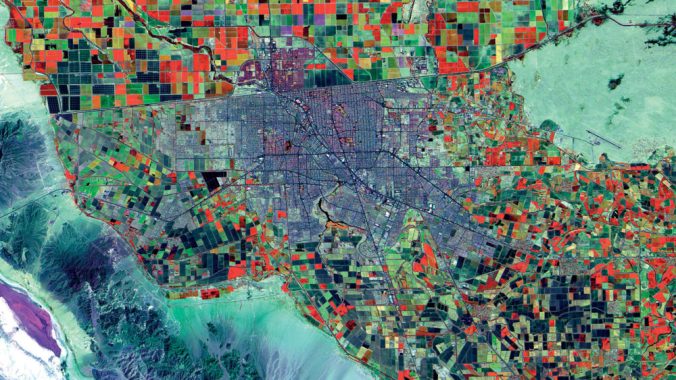
01_Seto_Reba_borders_MEXICALI-CALEXICO_web.jpg

The U.S.-Mexico border separating Calexico, California, and Mexicali, Mexico.

Katherine Bagley, Managing Editor at Yale Environment 360 (Yale e360, one of our go-to sources on this platform), has this to say:

From High Above, A New Way of Seeing Our Urban Planet

The world’s cities are expected to grow by another 2.5 billion people by 2050. A new collection of satellite images starkly illustrates the sheer size and imprint of the world’s urban centers and their vulnerability in the face of population growth and climate change.

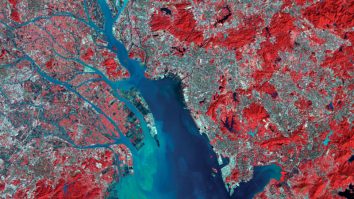
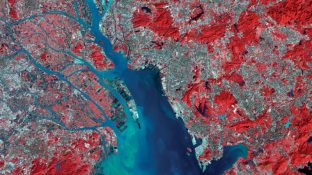
08_Seto_Reba_Expansion_SHENZHEN-AFTER_web.jpg

February 10, 1977. Population 43,000. LANDSAT OLI/TIRS

Driven by rapid economic expansion and global trade, the world’s urban population has more than quintupled since the mid-20th century, from 751 million people in 1950 to 4.2 billion today. Centuries-old cities have pushed upward and outward to accommodate the influx of people, and entirely new megacities, home to tens of millions, have sprung up.

08_Seto_Reba_Expansion_SHENZHEN-AFTER_web (1).jpg

February 7, 2016. Population 10.8 million. LANDSAT OLI/TIRS

Nowhere can this swift urban growth be seen as vividly as from space. In their new book City Unseen, geographers Karen C. Seto and Meredith Reba, experts in urbanization and global change, offer a collection of satellite images from all seven continents that exhibit the massive imprint these cities have on the landscapes around them.

“If you look at images of Las Vegas and Lagos and Shenzhen, you see how much land it takes to house billions people, and it’s astonishing,” Seto, a professor of geography and urbanization science at the Yale School of Forestry & Environmental Studies, says. “But the impact of urbanization is not only the direct land these people live on. It’s all these other non-urban places where we need to extract resources to house and electrify, to operate these cities. That’s part of the story too.” Continue reading

The Little Creatures We Cannot Live Without

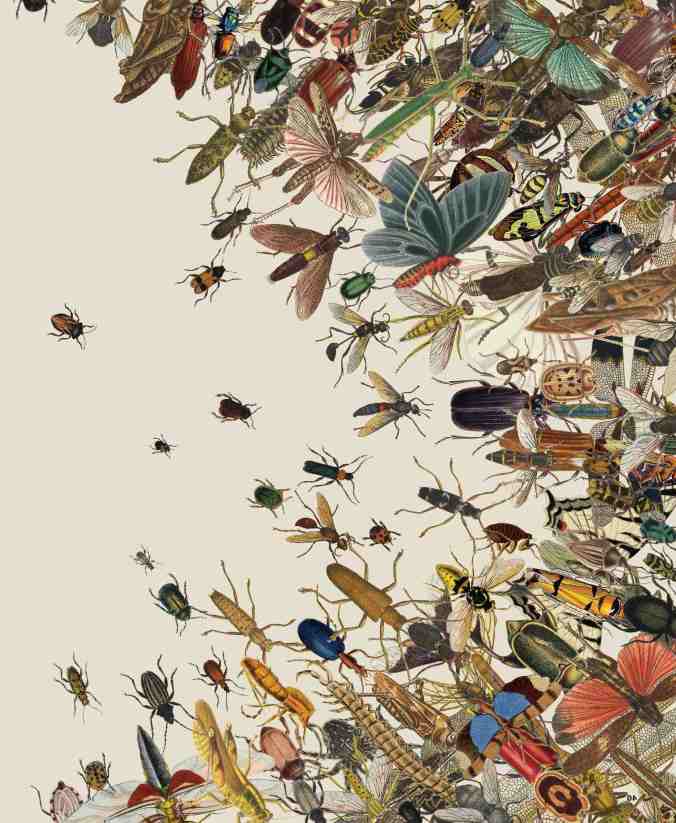
02mag-insects-image1-superJumbo-v3.jpg

Photo illustrations by Matt Dorfman. Source photographs: Bridgeman Images.

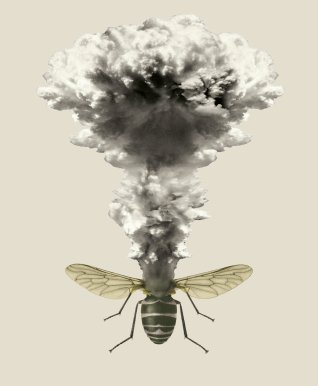
Brooke Jarvis has written a longform feature article with the word apocalypse in the title, which may make you wince and turn away. As might the word insect, even if you find the illustration above mesmerizing as I do. And reading to the end is an investment in time. But do not turn away just because the illustration below is alarming. It is another alarming topic we are responsible for taking account of.

02mag-insects-image2-superJumbo-v5.jpgSune Boye Riis was on a bike ride with his youngest son, enjoying the sun slanting over the fields and woodlands near their home north of Copenhagen, when it suddenly occurred to him that something about the experience was amiss. Specifically, something was missing.

It was summer. He was out in the country, moving fast. But strangely, he wasn’t eating any bugs.

For a moment, Riis was transported to his childhood on the Danish island of Lolland, in the Baltic Sea. Back then, summer bike rides meant closing his mouth to cruise through thick clouds of insects, but inevitably he swallowed some anyway. When his parents took him driving, he remembered, the car’s windshield was frequently so smeared with insect carcasses that you almost couldn’t see through it. But all that seemed distant now. He couldn’t recall the last time he needed to wash bugs from his windshield; he even wondered, vaguely, whether car manufacturers had invented some fancy new coating to keep off insects. But this absence, he now realized with some alarm, seemed to be all around him. Where had all those insects gone? And when? And why hadn’t he noticed? Continue reading

The Technology Of Negative Emissions

ClimeWorks_20170510DSC_6501_PhotosbyJuliaDunlop_web2.jpg

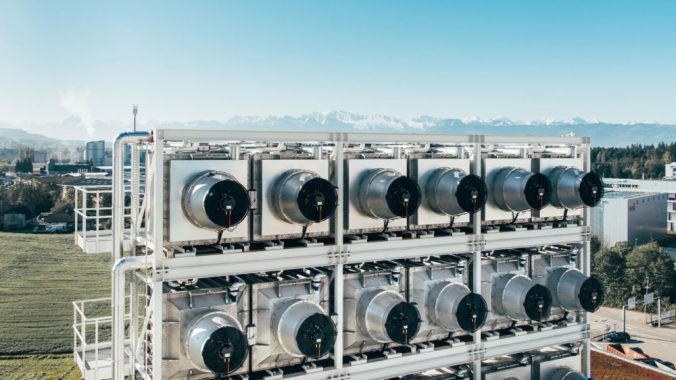
A direct air capture facility in Zurich, created by the Swiss-based technology company ClimeWorks. JULIA DUNLOP / CLIMEWORKS

I was not aware that Elizabeth Kolbert has been writing for Yale e360 for the entire time we have been linking to her New Yorker work on this platform. And then some, because she started publishing there ten years ago. This is her 17th publication for Yale e360 and it can help a layperson understand in a relatively short read whether technology has any chance of accelerating our progress on climate change mitigation:

Climate Solutions: Is It Feasible to Remove Enough CO2 from the Air?

A U.S. scientific panel reports that technologies that take CO2 out of the atmosphere could be a significant part of a strategy to mitigate global warming. In an e360 interview, Stephen Pacala, the panel’s chairman, discusses how these fast-developing technologies are becoming increasingly viable.

Is there still time to avoid runaway climate change? To a large degree, the answer depends on the feasibility of “negative emissions” — techniques or technologies that suck CO2 out of the air. In the latest report from the Intergovernmental Panel on Climate Change (IPCC), all scenarios for limiting warming to 1.5 degrees Celsius depend on negative emissions technologies, or NETs. Most 2-degree scenarios also rely on negative emissions; many call for removing billions of tons of CO2 per year by mid-century.

NETs_NationalAcademies_web.jpg

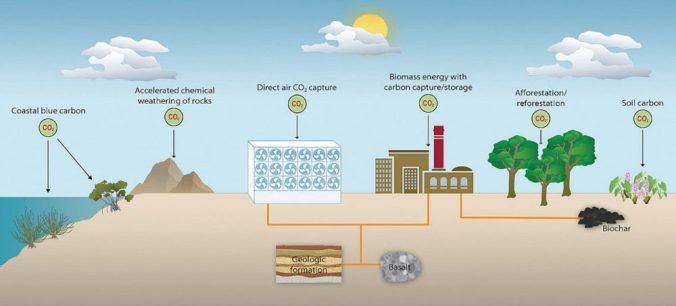
Negative Emissions Technologies (NETs) range from low-tech, such as planting more trees, to more high-tech options, such as developing machines to scrub CO2 from the air. NATIONAL ACADEMY OF SCIENCES, 2018

Yet most NETs remain either untested or unproved. To help bridge this gap, the National Academies convened a panel of scientists and asked it to propose a research agenda. The panel considered several possible techniques, ranging from the low-tech — planting more trees — to the high-tech — developing machines to scrub CO2 from the sky. It also looked at a hybrid technology that has become known as bioenergy with carbon capture and storage, or BECCS. The panel recommended several billion dollars be directed to research on NETs. Such technologies, it suggested, ought to be viewed as a “component of the mitigation portfolio,” rather than as a futuristic, last-ditch effort to reduce atmospheric CO2.

Pacala_IsometricStudios_web.jpg

Stephen Pacala. CREDIT: ISOMETRIC STUDIOS

Stephen Pacala, a professor of ecology and evolutionary biology at Princeton University, chaired the panel. In an interview with Yale Environment 360, he talks about why NETs are needed, what should be done to advance them, and why he believes that “direct air capture” technologies could come into widespread use within the next decade. Continue reading

News & Perspective

lead_720_405 (4).jpg

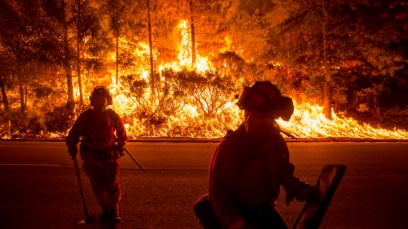
Firefighters battle the King Fire near Fresh Pond, California, in September 2014. NOAH BERGER / REUTERS

Posts like this one tend to not fare as well with readers visiting our platform. Whoever makes their way here is normally looking for what we normally offer, stories about entrepreneurial conservation. Which we believe can be a winning formula for the challenges at hand. But from time to time, we must acknowledge that the odds look grim.
merlin_146590158_372cbff0-acb2-4bf5-8308-f9b1c200405d-jumbo.jpg

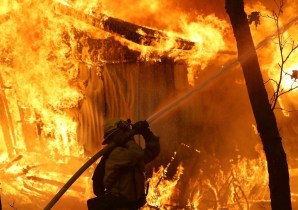
Fighting the Camp Fire this month in Magalia, Calif. Credit Justin Sullivan/Getty Images

Two articles, both very well written, about the report warning of the dangers of climate change to the US economy, note that the report is not likely to have much impact. Because of Black Friday? No, because the forces behind willful ignorance have been at it for a long time, with plentiful resources to strengthen their game. This cartoon says more in fewer words than either article on why. Nathaniel Rich’s short essay, dark and stark and alarming, is akin. Bill McKibben, though, once again hits the nail squarely and firmly, and more effectively than news, because of his trench-based perspective:
181126_r33282.jpg

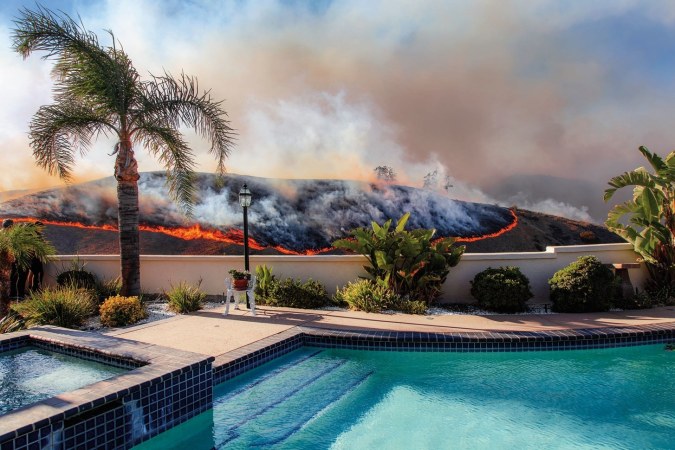
California is currently ablaze, after a record hot summer and a dry fall set the stage for the most destructive fires in the state’s history. Above: The Woolsey fire, near Los Angeles, seen from the West Hills. Photograph by Kevin Cooley for The New Yorker

How Extreme Weather Is Shrinking the Planet

With wildfires, heat waves, and rising sea levels, large tracts of the earth are at risk of becoming uninhabitable. But the fossil-fuel industry continues its assault on the facts.

Thirty years ago, this magazine published “The End of Nature,” a long article about what we then called the greenhouse effect. I was in my twenties when I wrote it, and out on an intellectual limb: climate science was still young. But the data were persuasive, and freighted with sadness. We were spewing so much carbon into the atmosphere that nature was no longer a force beyond our influence—and humanity, with its capacity for industry and heedlessness, had come to affect every cubic metre of the planet’s air, every inch of its surface, every drop of its water. Scientists underlined this notion a decade later when they began referring to our era as the Anthropocene, the world made by man.

I was frightened by my reporting, but, at the time, it seemed likely that we’d try as a society to prevent the worst from happening. Continue reading

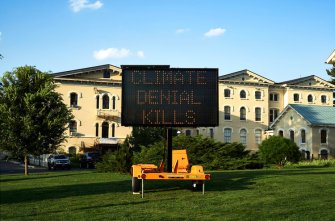
The Climate Museum’s Climate Signals


My only wish is to have been able to share this earlier, during the exhibition’s run. But better late than never.

Kormann-Queens-Climate-Signals.jpg

The “Ask a Scientist” event gives curious passerby the chance to pose their climate-related questions to scientists stationed around New York City. Photograph by Justin Brice Guariglia

Thanks to Carolyn Kormann for another fresh dose of creative rational thinking, with her short piece Ask a Scientist: How to Deal with a Climate-Change Skeptic:

Franzen, Watching Out For Birds

5760 (2).jpg

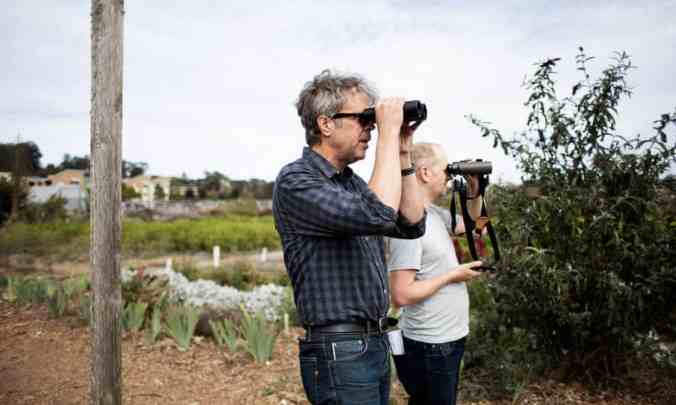
Freedom … Jonathan Franzen (left), birdwatching with Guardian writer Oliver Milman (right) at Natural Bridges Farm, Santa Cruz, California. Photograph: Talia Herman for the Guardian

Thanks to Oliver Milman writing for the Guardian from Santa Cruz, California with someone whose concerns about the intersection of books and technology, combined with his interest in birds and the art of watching, have led to us featuring him more frequently in these pages than most other people:

Jonathan Franzen: ‘Climate change isn’t the only danger to birds’

‘The two things I love most are novels and birds, and they’re both in trouble,’ says The Corrections author, one of the world’s most famous birdwatchers

1300.png

Illustration: Sarah Mazzetti

Birdwatching was once an activity that elicited a sense of mild shame in Jonathan Franzen. The author stalked New York parks with binoculars in hand, rather than on a strap, carefully hiding from view the word “birds” on his field guide. Debonair friends in London recoiled in horror when told of his pastime. Franzen was furtive, almost embarrassed. Now, he is one of the most famous birdwatchers in the world.

5648.jpg

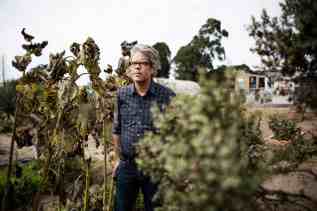
 Author and birdwatcher Jonathan Franzen, at Natural Bridges Farm where he goes to birdwatch in Santa Cruz, California, September 30th, 2018. Photograph: Talia Herman for the Guardian

“I totally let my freak flag fly now,” Franzen says as he scans for birds at a community garden near his home in Santa Cruz, California. His phone has an app that deciphers bird sounds. He travels the world to see recondite species. He has written about birds in essays, op-eds and novels.

“I was so socially unsuccessful in my youth and such a pariah in junior high that I really didn’t want to look like a dork,” says Franzen, the 59-year-old author whose best known works include The Corrections and Freedom. “I got over that. The success started to make me think: ‘Hey, it’s not me who’s got the problem.’” Continue reading

When Alarmism Is Required

Greenpeace_IllegalLoggingBrazilIndigenousLands_web.jpg

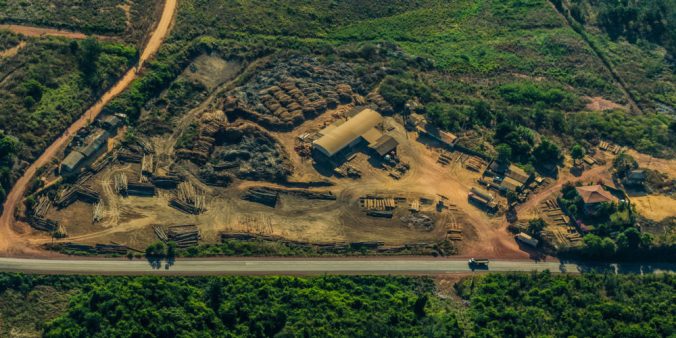
An illegal logging in the Alto Turiacu indigenous territory in Brazil’s Maranhão State in 2015. FÁBIO NASCIMENTO / GREENPEACE

Trust, a kind of social glue, keeps us from having to think nonstop about worst case scenarios. We trust that those with authority, whether intellectual or political, will use it responsibly. Thinking about this recently, I have been adjusting where I have least and greatest trust that responsible environmental actions are taken. Today I have made an adjustment on the former. The USA’s political leadership has been at the forefront of my thought when it comes to least responsible, least trustworthy actions. Philip Fearnside, an ecologist at the National Institute for Research in Amazonia (INPA) in Brazil, studies the consequences of deforestation in the world’s largest tropical forest, so his word carries scientific weight for me. He has put in perspective why I should turn my attention to Brazil:

Why Brazil’s New President Poses an Unprecedented Threat to the Amazon

Newly elected Jair Bolsonaro, an authoritarian nationalist sometimes called the “tropical Trump,” has staked out an environmental agenda that would open the Amazon to widespread development, putting at risk a region that plays a vital role in stabilizing the global climate.

BrazilElection2018_IndigenousProtester_Getty_web.jpg

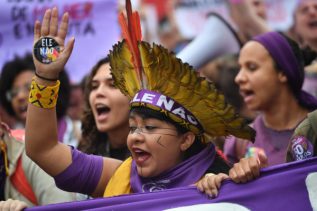
An indigenous woman protests against then-candidate Jair Bolsonaro, who has promised to ban the creation of new protected areas or indigenous territories, in Sao Paulo in October. NELSON ALMEIDA/AFP/GETTY IMAGES

For people concerned about the environment and climate change, U.S. President Donald Trump has proven to be as bad, or worse, than feared. He is in the process of pulling the United States out of the Paris Agreement, continues to flatly dismiss the science of human-caused global warming, and has worked ceaselessly to undo environmental regulations and weaken environmental agencies.

JairBolsonaro_Getty_web.jpg

Brazil’s president-elect, Jair Bolsonaro, has pledged to dismantle the country’s environmental regulations. MIGUEL SCHINCARIOL/AFP/GETTY IMAGES

Now, however, a new leader has emerged on the world stage who is poised to do even more global environmental damage than Trump. He is Jair Bolsonaro, the recently elected president of Brazil, and his extreme views on the environment, coupled with his control of nearly all the country’s levers of power, means that he is now in a position to do unprecedented harm to the Amazon and the international battle to slow climate change.

Not for nothing is Bolsonaro known as the “tropical Trump.” The parallels are many, including their embrace of the far right and their inflammatory rhetoric. And among their similarities is the way that a constant barrage of outrageous comments diverts discussion from the environmental damage that their policies portend. Continue reading