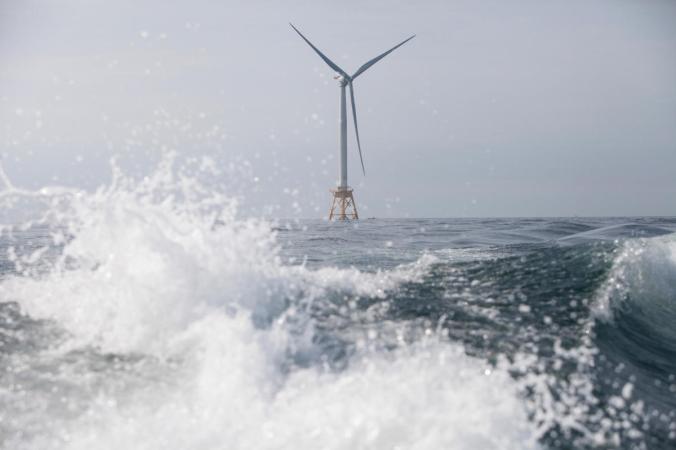
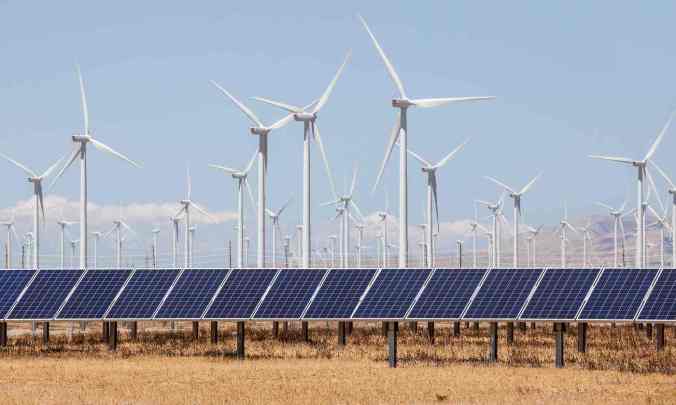
Our favorite doomsday machine, which we never tire of hearing about and sharing on this platform each time it has demonstrated its visionary worthiness, is back in the news. Discover Magazine brought this to our attention today: Continue reading
Climate Change
Model Mad, Mechanism
In this era, when saying no in creative manner has been raised to an art form, we remain on the lookout for model mad; but it does not have to be creative or novel. If there is an established machinery to utilize, utilize it! Here is an example. We are not surprised that, when asked, people say they want their environment protected, nonetheless we are pleasantly surprised that the “system” such as it is continues to even ask:
Public To EPA On Cutting Regulations: ‘No!’
As part of President Trump’s executive order to review “job-killing regulations,” the Environmental Protection Agency last month asked for the public’s input on what to streamline or cut. It held a series of open-mic meetings and set up a website that has received more than 28,000 comments, many of which urge the agency not to roll back environmental protections. Continue reading
Reanimating Coffee
Considering the coffee farming and roasting operation, not to mention all the coffee served at Chan Chich Lodge; also considering the constant search for new options relevant to ecologically sensitive operations, this catches our attention. Thanks to Anthropocene and Prachi Patel:
A simpler route to biodiesel from used coffee grounds
The world produces almost 10 million tons of waste coffee grounds every year. Researchers have now discovered an efficient way to turn that waste into a green fuel. Their simple one-step process, outlined in the Journal of Environmental Chemical Engineering, would save time and the cost of producing biodiesels from coffee. Continue reading
Environmentalism, It’s Just Good Business

Solar panels at the Googleplex, headquarters of Google in Mountain View, Calif. Its data centers worldwide will run entirely on renewable energy by the end of this year, the technology giant announced in December. Credit Smith Collection/Gado, via Getty Images
Although the current administration may be cloaking themselves in a fog of denial, we’re happy to read that much of corporate America is staying the course of their own emissions goals.
Nearly half of the Fortune 500 biggest companies in the United States have now set targets to shrink their carbon footprints, according to a report published Tuesday by environmental organizations that monitor corporate emissions pledges. Twenty-five more companies adopted climate targets over the last two years, the groups said.
Almost two dozen companies, including Google, Walmart and Bank of America, have pledged to power their operations with 100 percent renewable energy, with varying deadlines, compared with just a handful in 2015. Google’s data centers worldwide will run entirely on renewable energy by the end of this year, the technology giant announced in December.
“We believe that climate change is real, and it’s a severe crisis,” said Gary Demasi, who directs Google’s energy strategy. “We’re not deviating from our goals.” Continue reading
Model Mad, Down Under

John Church in Hobart in September 2010. He is known internationally for helping to bring statistical and analytical rigor to longstanding questions about sea level rise. Credit Peter Boyer
We continue to keep our eyes open for stories that offer inspiration even in the face of apparent adversity.
A Parable From Down Under for U.S. Climate Scientists
HOBART, TASMANIA — John A. Church, a climate scientist, did not look or sound like a man who had recently been shoved out of a job.
Speaking softly and downing coffee at an outdoor cafe in this old port city, he sounded more like a fellow fresh off a jousting match. “I think we had a win — a bigger win than I ever anticipated,” Dr. Church said in an interview last month.
Australian climate science went through an upheaval last year, one that engaged the press and the public in defending the importance of basic research. In the end, Dr. Church did indeed lose his job, but scores of his colleagues who had been marked for layoffs did not. Some of them view him as having sacrificed his career to save theirs.
What happened in Australia shows the power of an informed citizenry keeping watch on its government. And it may turn out to be a precursor to an attack on fundamental climate research in the United States.
Welcome News From Brazil

Image: CIFOR/Flickr
Thanks to Anthropocene for a moment of relief:
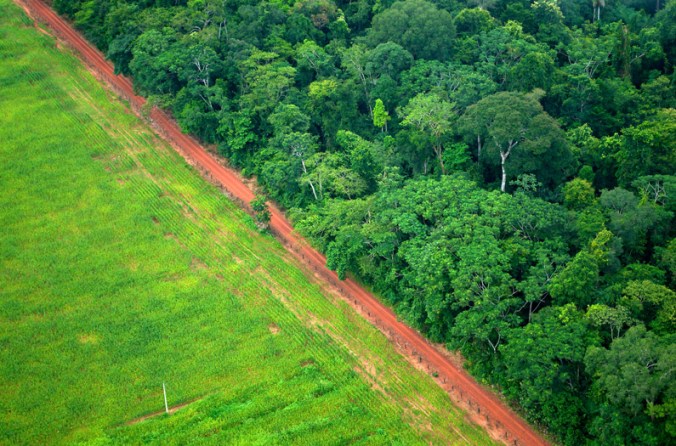
In Brazil, signs that a soy moratorium is slowing down deforestation
Optimal Mangrove
Thanks to Anthropocene’s Brandon Keim for the summary and insights from Mangroves optimized: How to make coastal habitats sequester even more carbon:
Of all the carbon buried in the floors of Earth’s oceans, most of it is found in the narrow strip of tidal marshes, seagrass beds, and mangroves along their edge. Known as blue carbon ecosystems, these vegetated coastal habitats “occupy only 0.2% of the ocean surface, yet contribute 50% of the total amount of carbon buried in marine sediments,” write researchers, led by Deakin University ecologist Peter Macreadie, in the journal Frontiers in Ecology in the Environment. Meter for meter, they’re some of the most effective carbon storage systems we have. But could people make them even more effective? Continue reading
Preserving Biodiversity to Feed the World
Thanks again to Atlantic for its occasional short film series, and in this case specifically to Erica Moriarty for bringing our attention to a video by Independent Lens available for sampling over at PBS (click the image above):
In the last century, 94% of the world’s seed varieties have disappeared. Family farmsteads have given way to mechanized agribusinesses to sow genetically identical crops on a massive scale. In an era of climate uncertainty and immense corporate power, farmers, scientists, lawyers, and indigenous seed keepers are on a mission to defend the future of food. Botanical explorer Joseph Simcox has been to over 100 countries, collecting thousands of seeds. In this documentary from Independent Lens, he travels to the Peruvian Amazon. Continue reading
If You Happen to Be at the Smithsonian – But You Don’t Have to Be
Science, entrepreneurship, conservation and innovation converge at this amazing open source summit with events in multiple Smithsonian locations ranging from New York City, Washington DC and Panama City.
Frequent contributor to this site Phil Karp, will participate in a forum on Restoring Nature. The synergy of forum subjects with our interest in wild foods and our work in conservation focused hospitality makes us wish we were there.
What’s Working in Conservation
Earth Optimism celebrates a change in focus from problem to solution in the area of global conservation with an unprecedented gathering of thought leaders, scientists, environmentalists, artists, civic leaders and international media.
The global conservation movement has reached a turning point. Continue reading
The Honeymoon Is Over

‘But when it comes to the defining issue of our day, climate change, he’s a brother to the fat old guy in DC.’ Photograph: Sean Kilpatrick/AP
Bill McKibben, tireless fighter for causes we believe in, editorializes with no affection for the man who not long ago seemed to be the embodiment of all that was better about the North American neighbor of the country that elected a man who effectively campaigned against environmental protection. We thought this one was different; we were wrong. We avoid political news, but we do not hide from, nor hide, a clear argument calling out horrific policy:
Stop swooning over Justin Trudeau. The man is a disaster for the planet
Donald Trump is a creep and unpleasant to look at, but at least he’s not a stunning hypocrite when it comes to climate change Continue reading
Dismantling Protection, Effectively & Efficiently

How is it that an Administration as disorganized as Donald Trump’s has been so methodical when it comes to attacking the environment? PHOTOGRAPH BY JOE RAEDLE / GETTY
I committed myself to not name the name, because it adds fuel to a flame that is already out of control. But if you have read any of the posts in our model mad series the name is clearly implied. Plenty of others name so well that it is best just to link their work. One of the best namer of names when it comes to our environment, and failure to protect it, is Elizabeth Kolbert. She occasionally points out that we do not simply fail to protect, but willingly allow the named to dismantle critical protections. We are sadly impressed that Dame Doomsday doesn’t disappoint with her latest contribution:
Next week, millions of Americans will celebrate Earth Day, even though, three months into Donald Trump’s Presidency, there sure isn’t much to celebrate. A White House characterized by flaming incompetence has nevertheless managed to do one thing effectively: it has trashed years’ worth of work to protect the planet. As David Horsey put it recently, in the Los Angeles Times, “Donald Trump’s foreign policy and legislative agenda may be a confused mess,” but “his administration’s attack on the environment is operating with the focus and zeal of the Spanish Inquisition.” Continue reading
Model Mad, Mayor

Anne Hidalgo, the Paris mayor, said she was “convinced that together, cities, businesses and citizens will save the planet. Their alliance is critical.” Credit Scout Tufankjian/C40
We started this model mad series of links to share stories of people, and of public institutions, and of private enterprises among others finding creative outlets for expressing resistance to powerful interests determined to undermine environmental responsibility. This governor was a favorite among our readers, so we expect this mayor will join the upper ranks of appreciation:
Anne Hidalgo, mayor of Paris, is also chairwoman of C40, a network of the world’s biggest cities committed to addressing climate change. As mayor, despite strong opposition, she has closed parts of the city — including along the bank of the Seine River — to traffic. Recently, I asked Ms. Hidalgo about her interest in environmental issues and why women are important to the solutions. Continue reading
Model Mad, Whitehouse
We have been suggesting that the model mad behavior in these particularly odd times is not to fight fire with fire, but to fight it with effective extinguishers. There are plenty of creative, as well as otherwise enlightened approaches you should consider. Here’s another. If what you hear out of the White House is infuriating you, consider what this Whitehouse has to say:
Sheldon Whitehouse is a politician with a great name, a bad haircut, and a pissed-off attitude. The second-term Democratic junior senator from Rhode Island has built his career around two seemingly unrelated issues—climate change and money in politics—and he’s just written a book to demonstrate how intimately connected they turn out to be. Continue reading
Rare Birds, Climate Change & Dialogue
We like birds. We like rare birds. Jerry Taylor sounds worthy of attention. Thanks to Marc Gunther and Yale 360 for Climate Converts: The Conservatives Who Are Switching Sides on Warming:
It’s hardly being noticed, given the current political atmosphere in Washington. But a small yet growing number of Republicans, conservatives, and libertarians are starting to push for action on climate.
As liberal Democrats and conservative Republicans pull farther apart in the long-running, increasingly polarized debate over climate change, Jerry Taylor is a rare bird — Continue reading
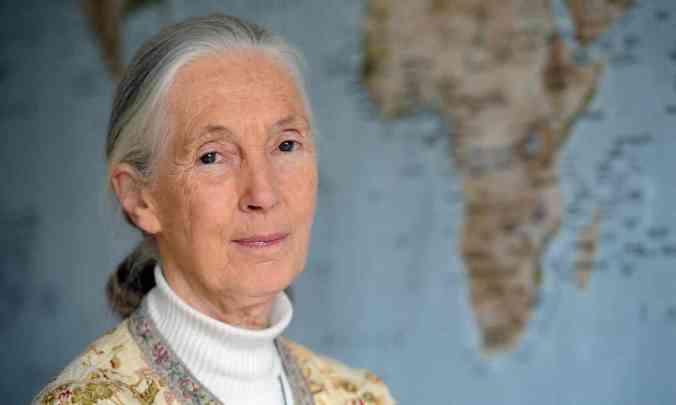
Model Mad, Jane
Seed Vault Deposit
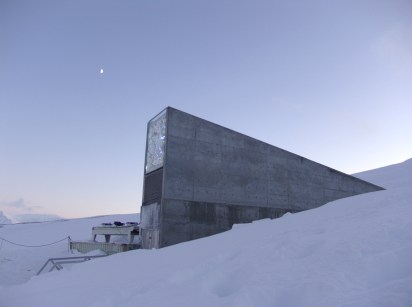
We have shared a couple times in the past about the seed vault, but just now it has come to our attention again in this press release from last month, provided by The Crop Trust, which reminds us of the meta-agriculturalist Cary Fowler, whose 2009 Ted talk is worth another quarter hour after a quarter hour on the short film above:
SVALBARD, NORWAY – 22 February 2017 – A major seed deposit critical to ensuring global food security was made to the Svalbard Global Seed Vault in the Arctic Circle today. Continue reading
Climate Change, Economic Growth, Santa Claus & Sanity Clause

America led the world in reducing carbon pollution in 2016, with a decline of three per cent. But the Trump Administration’s plans suggest that current trends are about to shift. PHOTOGRAPH BY KAYANA SZYMCZAK / THE NEW YORK TIMES / REDUX
Thanks to J. B. MacKinnon for this post on the New Yorker website about the relationship between things we know to be true, things we want to be true, and things which may seem like wishful thinking (for which Santa Claus might be the only hope if we cannot adhere to the sanity clause of our compact with the planet):
CAN WE SLOW GLOBAL WARMING AND STILL GROW?
On March 17th, the International Energy Agency announced that 2016 marked the third year in a row that global carbon emissions had stayed at the same level while the world’s economy grew. This three-time repeat has put to rest any lingering suspicions of gremlins in the data. Something new is happening. The global economy has now grown nearly ten per cent without any increase in the annual CO2 emissions that are the principal human contribution to climate change. In the parlance of sustainability, growth and emissions appear to have “decoupled.” Continue reading
Cattle, Climate & Cataloguing

South Africa’s indigenous Nguni cattle via Flickr
Thanks to Emma Bryce at Anthropocene for this summary on how preserving climate-resilient cattle breeds can boost Africa’s food security:
Herbal Patrimony Saved For Posterity, And For The Health Of Present Generations

Black cohosh is a valuable commercial medicinal plant, used to treat symptoms of menopause. TOM POTTERFIELD/FLICKR
Thanks to Nancy Averett at Yale360 for this:
Seeds of Commerce: Saving Native Plants in the Heart of Appalachia
In southern Appalachia, botanist Joe-Ann McCoy is collecting the seeds of thousands of native plant species threatened by climate change. But in this job-scarce region, she also hopes to attract an herbal products company to cultivate the area’s medicinal plants. Continue reading
Carbon, Climate, Concern & Confusion
Odd, but noteworthy (thanks to the Guardian for this article its environment section):
There’s broad support for climate policies in every state and county, but Americans view global warming as a distant problem
The Yale Program on Climate Change Communication published the findings of its 2016 survey on American public opinion about climate change. The results are interesting – in some ways confusing – and yet they reveal surprisingly broad support for action to address climate change. The Yale team created a tool with which the results can be broken down by state, congressional district, or county to drill down into the geographic differences in Americans’ climate beliefs. Continue reading