Tropical Peatland & Carbon Storage

2764

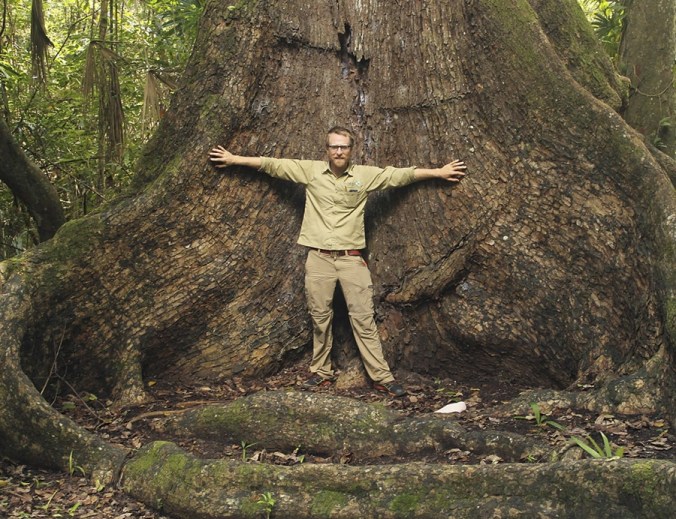
The remote Cuvette Centrale peatlands in the central Congo basin is one of the most carbon-rich ecosystems on Earth. Photograph: Simon Lewis/University of Leeds

This story was also covered in the New York Times, but the Guardian had a jump on the scoop, and included a photo (above) that more effectively helps to understand peat’s role in carbon capture; so we feature their story here:

World’s largest tropical peatland found in Congo basin

Carbon-rich peatlands could store three years’ worth of world’s total fossil fuel emissions, say scientists Continue reading

Coffee, Birds & How They Matter

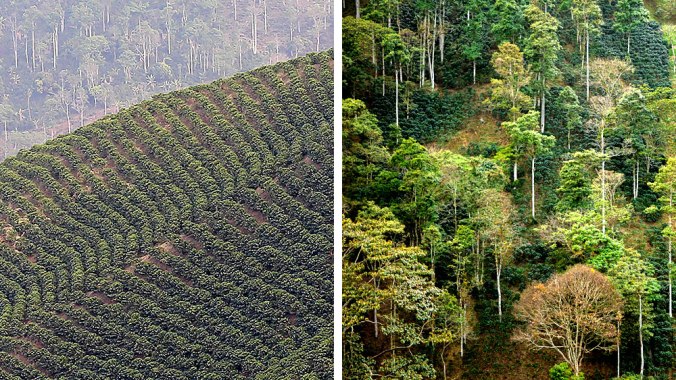
Sun-grown coffee (left) is a monoculture of coffee bushes. Shade-grown coffee (right) offers more habitat for forest species. Photos: Chris Foito/Cornell Lab Multimedia; Guillermo Santos).

Sun-grown coffee (left) is a monoculture of coffee bushes. Shade-grown coffee (right) offers more habitat for forest species. Photos: Chris Foito/Cornell Lab Multimedia; Guillermo Santos).

Our lives in the New World Tropics has allowed a frequent convergence between birds and coffee, even in the most simple terms of enjoying birdsong in our garden over the first morning cup. That very garden of our home in Costa Rica sits in what was historically cafetal (a coffee finca), with large trees shading the coffee that still grows along the little stream that runs along the property line. Blue-crowned motmots (the Central American cousin to the Andean Motmot mentioned below, have been frequent residents.

The coffee plantings at our home are insignificant compared to the 100+ acres of Gallon Jug Estate shade-grown coffee at Chan Chich. Of the nearly 350 bird species recorded in the Chan Chich Reserve’s 30,000 acres, a large percentage are migratory, making their home in the coffee as well as the healthy forest habitats that make up the reserve.

Sustainable agriculture is rarely a “get rich quick scheme”, but taken within the context of the “seventh generation stewardship”, the benefits will continue to outweigh the costs.

In Colombia, Shade-Grown Coffee Sustains Songbirds and People Alike

By Gustave Axelson

Early one morning last January, I drank Colombian coffee the Colombian way—tinto, or straight dark.

I sipped my tinto while sitting on a Spanish colonial veranda at Finca Los Arrayanes, a fourth-generation coffee farm and hotel deep in northwestern Colombia’s Antioquia region. The sun had not yet risen above the high ridges of the northern Andes. In the ambient gray predawn light, the whirring nocturnal forest insects were just beginning to quiet down.

My senses of taste and smell were consumed by the coffee, which was strong and bold in a pure way, the flavor flowing directly from the beans, not a burnt layer of roast. But my eyes were trained on a small wooden platform that held a couple of banana halves. The first bird to visit was an Andean Motmot, one of Colombia’s many Alice in Wonderland–type fantastical birds. It sported a green-and-turquoise coat and black eye mask, and it was huge—longer than my forearm, with a long tail with two circles at the end that swung rhythmically from side to side like the pendulum of a clock.

The motmot flew away and I took another sip of coffee to be sure I didn’t dream it. Another bird soon landed on the platform to pick at the bananas. This one was yellow, though Colombians call it tangara roja, because males of this species are completely red. In its breeding range, birders from the Carolinas to Texas know it as the Summer Tanager.

For more than 5 million years, a rainbow of Neotropical migrant birds (tanagers, warblers, and orioles) has been embarking on epic annual migrations from breeding grounds in North America to the New World tropics. In Colombia, these wintering areas are a lot different now than they were just 50 years ago. From the 1970s to the 1990s, more than 60 percent of Colombian coffee lands were cleared of forest as new varieties of sun-grown coffee were planted. During that same period, populations for many Neotropical migrant species plummeted—a drop many scientists say is related to deforestation of the birds’ wintering areas across Central and South America.

And yet, coffee doesn’t require deforestation. Continue reading

Bumble Bees & Conservation

06About-blog427-v2.jpg

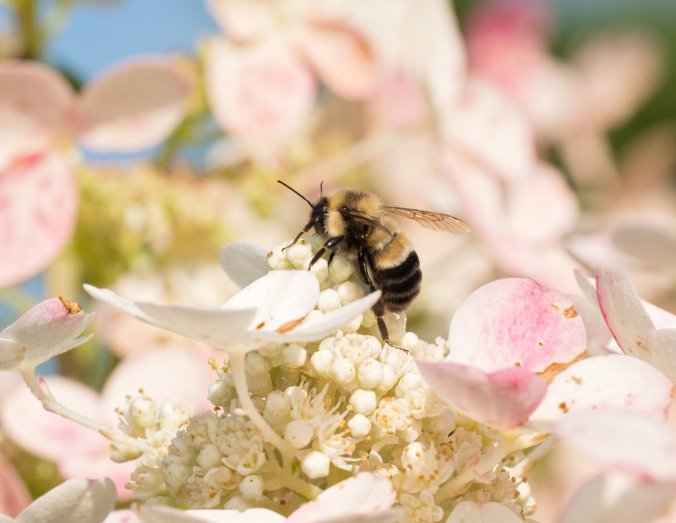
The rusty-patched bumblebee, once common across the continental United States, has been designated an endangered species. Credit Clay Bolt

One more gift of protection:

A Bumblebee Gets New Protection on Obama’s Way Out

By and

The Obama administration, rushing to secure its environmental legacy, has increased protection for a humble bumblebee. Continue reading

Adaptation, Climate Change, Winery Operations

08wine9-superjumbo

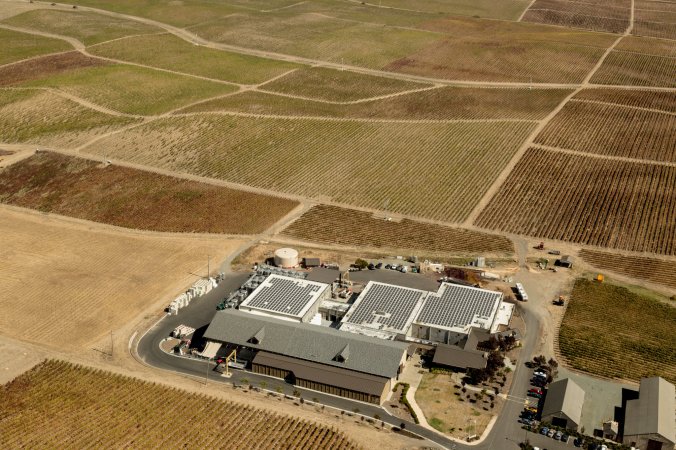
Solar panels dot the buildings at the family’s Carneros Hills Winery. Jason Henry for The New York Times

When a family does its homework on the property that represents its livelihood and our own appreciation for their craft, we take note just as we do when the professor teaches:

Falcons, Drones, Data: A Winery Battles Climate Change

Jackson Family Wines is among California
winemakers employing both high-tech and old-school
techniques to adapt to hotter, drier conditions.

By

08wine2-master675

Harvested grapes. Jackson Family Wines is one of the largest family-owned winemakers in the country. Jason Henry for The New York Times

On a misty autumn morning in Sonoma County, Calif., Katie Jackson headed into the vineyards to assess the harvest. It was late in the season, and an army of field workers was rushing to pick the grapes before the first rains, however faint, began falling.

But on this day, Ms. Jackson, the vice president for sustainability and external affairs at Jackson Family Wines, was not just minding the usual haul of cabernet, chardonnay and merlot grapes. She also checked on the sophisticated network of systems she had put in place to help crops adapt to a changing climate.

Continue reading

Walden Pond’s Enduring Lessons

08stager-master768.jpg

Kevin Hooyman

When a professor does years of research and teaching on a topic related to this particular pond, and then takes the additional effort to share his observations in cogent form as an op-ed, we believe it is worth at least 5-10 minutes of reading time:

What the Muck of Walden Pond Tells Us About Our Planet

By

In 1845, Henry David Thoreau repaired to a cabin in the woods beside Walden Pond “to front only the essential facts of life, and see if I could not learn what it had to teach.” During the last two years, my students and I have come to that same pond to see what we could learn from the sediments beneath it. Continue reading

Carbon Capture In India

3264-1

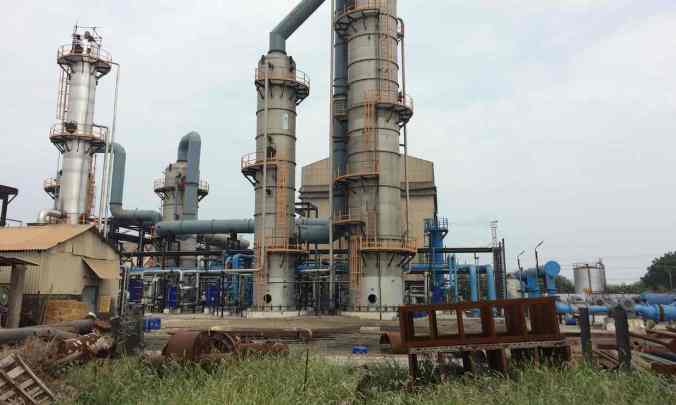
Tuticorin thermal power station near the port of Thoothukudi on the Bay of Bengal, southern India. The plant is said to be the first industrial-scale example of carbon capture and utilisation (CCU). Photograph: Roger Harrabin

Thanks to the Guardian’s Environment section for this news:

Indian firm makes carbon capture breakthrough

Carbonclean is turning planet-heating emissions into profit by converting CO2 into baking powder – and could lock up 60,000 tonnes of CO2 a year Continue reading

Old World Trade In Spices, Lessons for 21st Century Leadership Thinking

01ghosh-2-superJumbo.jpg

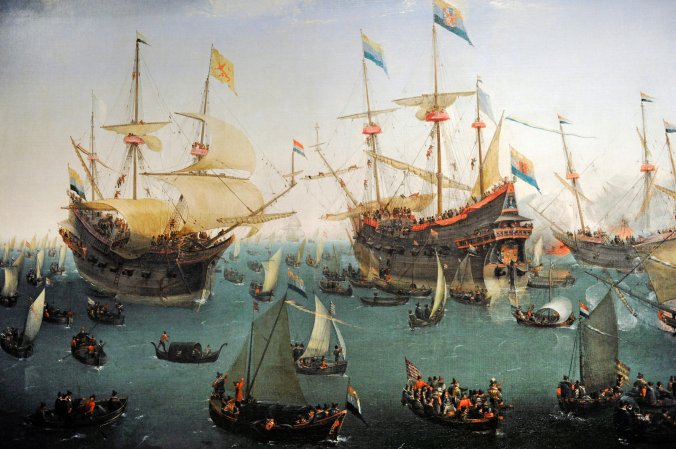
“The Return to Amsterdam of the Second Expedition to the East Indies,” painted by Hendrik Cornelisz Vroom, 1599. CreditPhas/UIG, via Getty Images

Amitav Ghosh, who we think of primarily as a writer of fiction, is also an important non-fiction thinker/author, and most recently published “The Great Derangement: Climate Change and the Unthinkable.” This op-ed in the New York Times puts future trade discussions into perspective in the most remarkable setting we can think of at the moment– the spice trade of centuries past. From our perch on the Malabar coast of India this is a welcome bit of history with which to welcome the new year and the challenges ahead:

GOA, India — For many years the word “globalization” was used as shorthand for a promised utopia of free trade powered by the world’s great centers of technological and financial innovation. But the celebratory note has worn thin. The word is now increasingly invoked to explain a widespread recoiling from a cosmopolitan earth. People in many countries are looking nostalgically backward, toward less connected, supposedly more secure times.

But did such an era ever exist? Was there ever an unglobalized world? Continue reading

The State Of Great

29brown-hp-master768

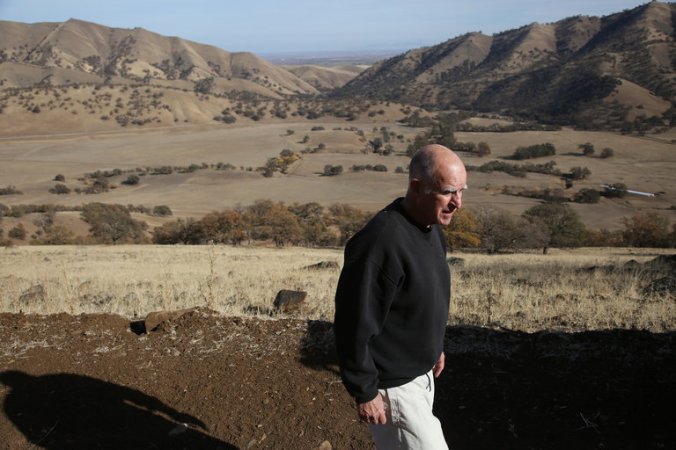
Gov. Jerry Brown at his 2,514-acre family ranch in Colusa County, Calif. “I wouldn’t underestimate California’s resolve if everything moves in this extreme climate denial direction,” he said. “Yes, we will take action.” Credit Jim Wilson/The New York Times

This article, by Adam Nagourney and science writer Henry Fountain, gives climate-concerned citizens everywhere hope that recent tectonic shifts on the political landscape in the USA will not result in complete abandonment of reason within all the states of that union:

LOS ANGELES — Foreign governments concerned about climate change may soon be spending more time dealing with Sacramento than Washington.” Continue reading

Bright Spot To Close Out 2016

solar2016

Thanks to Bloomberg for a surprising bit of good news about the prospects for solar energy going forward:

World Energy Hits a Turning Point: Solar That’s Cheaper Than Wind

Emerging markets are leapfrogging the developed world thanks to cheap panels.

by Tom Randall

A transformation is happening in global energy markets that’s worth noting as 2016 comes to an end: Solar power, for the first time, is becoming the cheapest form of new electricity.  Continue reading

Christmas Bird Count, 2016

Seth’s work at the Cornell Lab of Ornithology, with the Celebrate Urban Birds initiative helped us all get a close look at citizen science in action. Past Christmas counts since then have been an annual tradition in these pages. Thanks to Lisa Feldcamp for a note on this topic with her post Give Kids the Gift of Birding on The Nature Conservancy’s website Cool Green Science:

The annual Christmas Bird Count is one of birding’s most cherished traditions. This year, consider introducing the count to a child. There’s no better time to get a youngster started in birding.

“When I was a kid in a large family of eight kids in Upstate New York, my parents told us we could do anything that cost less than $5; baseball, boy scouts, or birding,” says Tom Rusert of Sonoma Birding. “I joined Junior Audubon with my brothers, not realizing it would be a life sport to enjoy forever. It really is no different than any other sport.” Continue reading

Winds Over The Water Serving Those On Shore

00windpower-superjumbo

The Block Island Wind Farm’s turbines off the coast of Rhode Island in August. They began spinning on Monday and will deliver electricity to Block Island, a community nearby. Credit Kayana Szymczak for The New York Times

 Thanks to the Science section of the New York Times:

America’s First Offshore Wind Farm Spins to Life

By

Until this week, all of the wind power generated in the United States was landlocked. Continue reading

Understanding The Solar-Carbon Threshold

sunset

Image: Daniel Parks/Flickr

We are constantly playing catch up with the terminology, let alone the science, of environmental efficiency in all its forms and considerations. Anthropocene delivers the daily goods, in the form of a summary of an environmentally-oriented scientific study, that we constantly find useful:

Solar power will cross a carbon threshold by 2018

Flow Chart

water

This excellent interactive story, Mapping Three Decades of Global Water Change, b

Banks, Rainforests, We The People

04DEFORESTATION-superJumbo.jpg

Young orphaned orangutans on a climbing expedition with their keeper at International Animal Rescue’s orangutan school in West Kalimantan, Indonesia. Credit Kemal Jufri for The New York Times

We first started paying close attention to the plight of the ecosystem in the image above when we saw the talk given by Willie Smits, who has taken action, to say the least, in the interest of protecting that rainforest and its inhabitants. It is not because of the orangutans (though see the photo below and try to resist reading on) that we find this article compelling; it is because there is a clear and compelling call to action on holding our institutions accountable:

How Big Banks Are Putting Rain Forests in Peril

By

In early 2015, scientists monitoring satellite images at Global Forest Watch raised the alarm about the destruction of rain forests in Indonesia.

Environmental groups raced to the scene in West Kalimantan province, on the island of Borneo, to find a charred wasteland: smoldering fires, orangutans driven from their nests, and signs of an extensive release of carbon dioxide into the atmosphere. Continue reading

Mexico’s Experimentation With Community-Based Forestry

DSC-NT1216_05.jpg

Thanks to Discover magazine for this (subscription required):

Can Community-Based Logging Fight Climate Change?

In Mexico, conservationists hope sustainable logging can provide jobs, protect the habitat and keep carbon from the atmosphere. Continue reading

Something’s Wrong With This Picture

3872

Under current legislation, European bioenergy plants do not have to produce evidence that their wood products have been sustainably sourced. Photograph: Wolf Forest Protection Movement

Thanks to the Guardian for this coverage of disturbing news from Europe:

Protected forests in Europe felled to meet EU renewable targets – report

Europe’s bioenergy plants are burning trees felled from protected conservation areas rather than using forest waste, new report shows

Arthur Neslen

Protected forests are being indiscriminately felled across Europe to meet the EU’s renewable energy targets, according to an investigation by the conservation group Birdlife. Continue reading

The Definition Of Rich

22rockefellerjp-master768

David Kaiser, is a fifth-generation Rockefeller and the head of a family fund fighting Exxon Mobil. Credit Sasha Maslov for The New York Times

The saying “that is rich” means, in this case, something more like–Really, Exxon Mobil?

Exxon Mobil Accuses the Rockefellers of a Climate Conspiracy

By

Exxon Mobil, under fire over its past efforts to undercut climate science, is accusing the Rockefeller family of masterminding a conspiracy against it. Yes, that Rockefeller family. Continue reading

Big New Grove

980x-12

We wish the Earl well, and appreciate his efforts:

Ireland to Plant Largest Grove of Redwood Trees Outside of California

By Steve Williams

An estate in Ireland has revealed plans to create a redwood grove that will be the largest of its kind outside California. The initiative serves as a testament both to Ireland’s heritage and its commitment to fighting global warming. Continue reading

Renewable Energy Outlook

light-bulbs2.jpg

World electricity production going from black to green

In a time of troubling headlines, the more promising headlines can get lost, but they are there. At least with regard to renewable energy. Click the image above to read the summary of this book at Anthropocene or the image below to go to the source:

MTrenew2016.jpgThe rapid spread of renewable energy is a bright spot in the global energy transition towards a low carbon economy. Despite lower fossil fuel prices, renewable power expanded at its fastest-ever rate in 2015, thanks to supportive government policies and sharp cost reductions. Continue reading

The Future Of Food & Taxes

5126

Food production causes a quarter of greenhouse gas emissions, largely from the raising of cattle and other livestock. Photograph: Mike Kemp/Getty Images

Tax meat and dairy to cut emissions and save lives, study urges

Surcharges of 40% on beef and 20% on milk would compensate for climate damage and deter people from consuming as much unhealthy food

Damian Carrington

Climate taxes on meat and milk would lead to huge and vital cuts in carbon emissions as well as saving half a million lives a year via healthier diets, according to the first global analysis of the issue. Continue reading