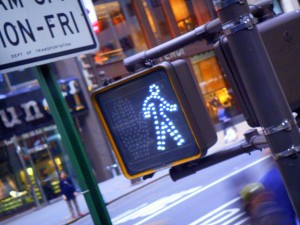
Why We Walk

Photo Courtesy of digitaldeconstruction.com

Photo Courtesy of digitaldeconstruction.com

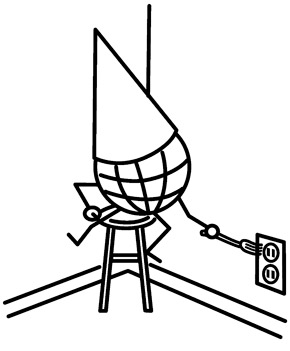
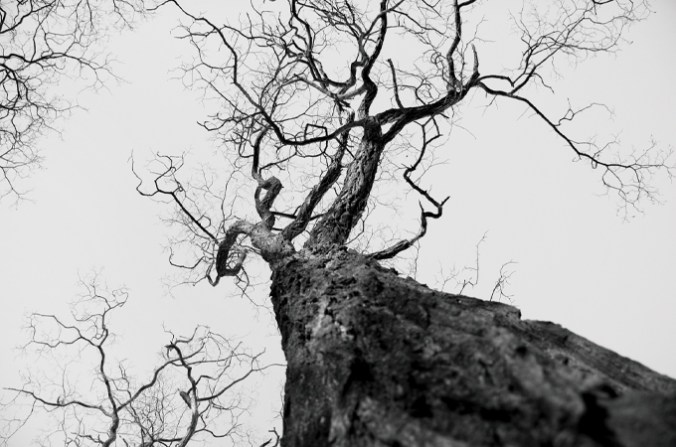
I have been endlessly fascinated by walking. I asked myself Why We Walk while I walked 400 km on the Camino de Santiago. A recent article by Adam Gopnik in the New Yorker has brought me to this question again in a new context. The article talks about what it means to be a pedestrian in the modern world and how the role of walking has changed as it’s become less necessary. The sad thing about walking for pleasure instead of necessity means that it occurs less. Many of us spend our lives in the sitting position: sitting in cars to then go sit at work and then sitting at home after a long day of sitting. I’m generalizing here as I call myself out on my sedentary life. Our bodies are made to walk, so I must ask myself, Why Don’t We Walk?

Roads are not enjoyable to walk in an increasingly auto dependent world. When living in a residential area there isn’t much activity to make walking around something that invites ‘randomness’. Adam Gopnik writes in the New Yorker about Why We Walk. He says,”We start walking outdoors to randomize our experience of the city, and then life comes in to randomize us.” The sidewalks are public space. In the suburbs we have a lot of private space and little public space. I have to wonder how it could affect our psyche to not brush up against the world. I wonder what we take away when we lose the opportunity to have chance interactions in indeterminate public spaces.  I wonder how creative we could be as a culture if the majority of our interactions with strangers didn’t occur over money exchanges. Adam Gopnik talks about the vague excitement and pure chance of walking in New York City.

You could walk anywhere. Saturday all day, Sunday all day, I’d tramp through the lower-Manhattan neighborhoods. The differences, architectural and social, among Tribeca and SoHo and the East Village, to name only contiguous areas, were distinct and vivid and nameable then: cast-iron buildings shading off into old egg- and paper-carton factories sweetly interrupted by small triangular parks, and edging over, as you walked east, into poor-law tenements that were just being reclaimed by painters. I would set off on a Saturday morning and walk all day, and achieve Kazin’s feeling of vague excitement, of unearned release, in a way that I have never felt before or since.

I like this description because it shows the way he was able to interact with the environment around him as a walker. Suburbs that are designed for cars make walking an outdated form of transportation. It’s inefficient and time consuming if you live in a city that’s designed for cars rather than pedestrians. In the suburbs, there aren’t many people dancing in the ‘sidewalk ballet’ as Jane Jacobs puts it. So, I just wonder what a healthier culture there would be if there were more public space for people to live outward facing lives that brushed up against each other.

The article brings up a quote from Frédéric Gros’s book A Philosophy of Walking, “The purpose of walking, is not to find friends but to share solitude, for solitude too can be shared, like bread and daylight.” This quote to me highlights the sort of communion we can have with each other while walking. While I was walking the Camino, I felt that communion with fellow walkers as well as with the landscape. I was sharing solitude with the landscape. I think taking away that walking aspect of communion in our lives further isolates us from nature. Continue reading
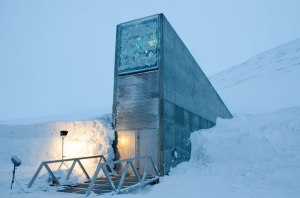
Seed Vault, Conservation For The Long Run

Travels to the seed vault on top of the world

Travels to the seed vault on top of the world

In advance of a story of our own, albeit set in the tropics at our upcoming beach resort, on this same topic, we thank Conservation for the story  they offered in an earlier issue of their magazine about this seed vault way way north:

…One day in Svalbard lasts four months, and the sun never sets; one night lasts four months, and the sun never rises. The other four months consist mainly of either long days with short nights or long nights with short days. Here the equinoxes—the two days annually with 12 hours each of daylight and darkness—really mean something. But what does “a day” mean here, and how many are there in a year? Continue reading

Nothing To Laugh About, But We Cannot Help Ourselves Every Now And Then…

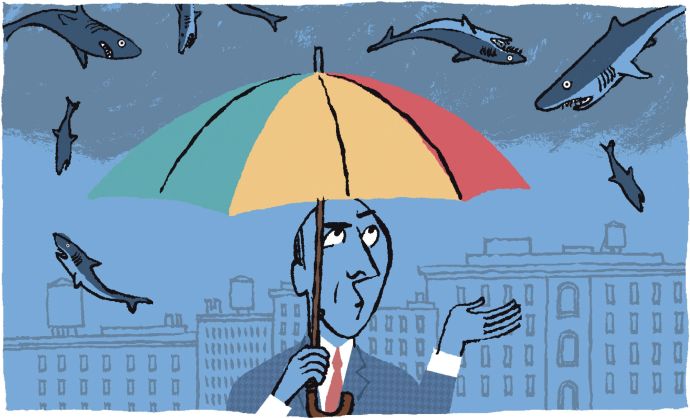
ILLUSTRATION BY MIGUEL GALLARDO.

ILLUSTRATION BY MIGUEL GALLARDO.

True, we sometimes share doom and gloom, but sparingly. We attempt here to balance it with a note on Deniers (we share full text here, but please click through to the original so the author and publication receive proper benefit):

I accept that changes in climate are causing ocean updrafts that draw killer sharks into the atmosphere and then drop them on populated areas, but I don’t believe human activity is the cause.”

“Out here in Oklahoma, we have the same problems that the rest of the country is experiencing, with wind-borne sharks crashing through billboards and attacking folks on their way to work and so on. We have yet to see a single study, however, that connects any of these shark conditions specifically to our local fossil-fuel industries.”

“Tree-ring studies done on petrified wood from Utah reveal six-inch-long fossilized teeth of the Megalodon, the largest shark in the history of the earth, embedded in the trunks of ponderosa-pine trees more than three hundred thousand years old—trees that lived a thousand miles from the nearest ocean! So tell me: did my S.U.V. cause that?” Continue reading

Notes from the Garden: Quantifying Farm-to-Table

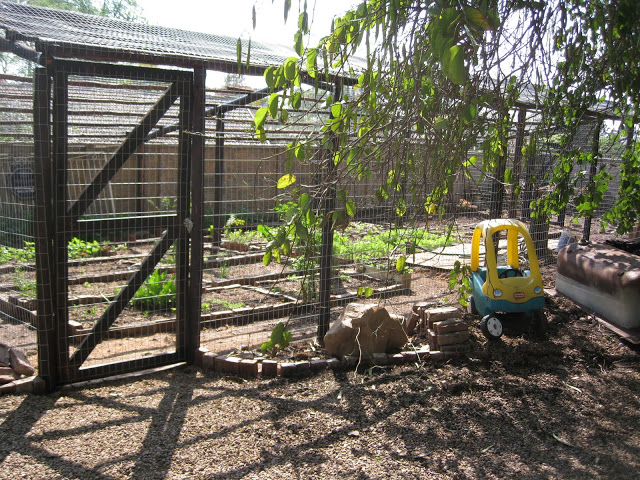
We are in process of building a monkey-proofed area of the garden. You can see my past post to get a feel for the evolution of this idea. The main issue with providing the Cardamom County restaurant with food from the on-site organic farm is monkeys. We were inspired by these subsistence farmers in Ixopo, South Africa, who blogged about building their monkey-proof vegetable cage. They, too, are neighbors with a nature reserve, so their situation is quite similar to Cardamom County! Now, we are on our way to having a truly farm-to-table menu!

Here is the cage we are modeling ours after. Check out their blog: http://foodieschannel.blogspot.com/2011/04/this-isnt-really-recipe-but-its-about.html

Here is the cage we are modeling ours after. Check out their blog: http://foodieschannel.blogspot.com/2011/04/this-isnt-really-recipe-but-its-about.html

You may be wondering, why is there all this buzz these days about farm-to-table? There is more to it than just fresh, delicious food.

Obviously, a lot of nature gets destroyed for agricultural purposes. In the United States, so much land gets wasted on sprawling, inefficient development. In the in-between spaces, you could feed a nation. But we eat up our open, natural spaces for agriculture. Our agriculture is rarely local so it leads to problems of unnecessary carbon emissions from transport and a lot of not-fresh food in grocery stores. When we can use the land we have already developed on to provide the people there with food, why spread ourselves out so thin into nature? Continue reading

Essential (Brief, Clear) Reading On Climate Change

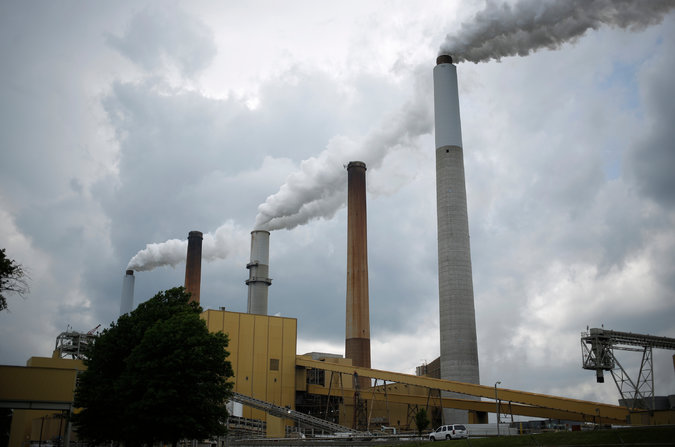
Carbon dioxide emissions like those from coal-fired power plants should be taxed to spur energy innovation. Credit Luke Sharrett for The New York Times

Carbon dioxide emissions like those from coal-fired power plants should be taxed to spur energy innovation. Credit Luke Sharrett for The New York Times

Denial and obfuscation about climate change have been well documented strategies of those who would promote current enrichment and consumption over future well being. And even non-deniers have been hard-pressed to do anything substantial to counter the deniers.  It tough economic times, anything goes, it seems. We need more heroic behavior from influential business leaders.

Henry M. Paulson, chairman of the Paulson Institute at the University of Chicago, former secretary of the Treasury of the United States, former chairman of Goldman Sachs, and notably a long-time member of good standing and service to the political party stacked with politicians and business leaders who deny the reality of climate change, has this to (heroically dare to) say in the Opinion section of this week’s Sunday New York Times:

The Coming Climate Crash

Lessons for Climate Change in the 2008 Recession

THERE is a time for weighing evidence and a time for acting. And if there’s one thing I’ve learned throughout my work in finance, government and conservation, it is to act before problems become too big to manage.

For too many years, we failed to rein in the excesses building up in the nation’s financial markets. When the credit bubble burst in 2008, the damage was devastating. Millions suffered. Many still do. Continue reading

Climate Rescue Plan’s Price Tag

This slideshow requires JavaScript.

The New York Times continues to prove its journalistic value in the realm of today’s most important topics, notably with regard to the environment:

KEWAUNEE, Wis. — Bryan T. Pagel, a dairy farmer, watched as a glistening slurry of cow manure disappeared down a culvert. If recycling the waste on his family’s farm would help to save the world, he was happy to go along.

Out back, machinery was breaking down the manure and capturing a byproduct called methane, a potent greenhouse gas. A huge Caterpillar engine roared as it burned the methane to generate electricity, keeping it out of the atmosphere. Continue reading

Antarctic Melt Under The Sea

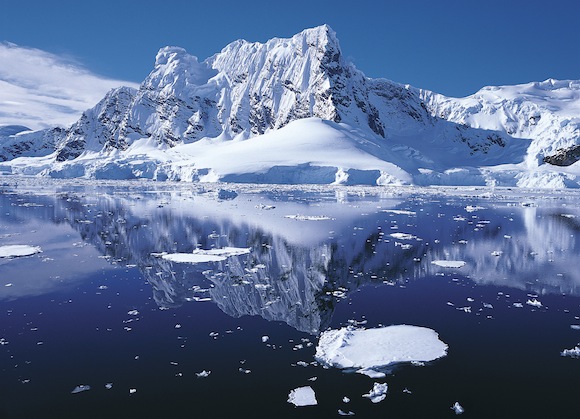
West coast of Antartica

Photograph by Robert Harding/Corbis

A blog post at the New Yorker‘s website rounds up recent news from the Antarctic’s underwater environs, and its not what could be mistaken for good:

It’s been an exciting news month for the polar ice sheets. A study published on May 28th in the journal Nature indicated that, fourteen thousand six hundred years ago, the rapid shedding of Antarctic icebergs raised the world’s median ocean levels by six and a half feet in a little more than a hundred years. That bit of paleoclimatology comes on the heels of a pair of studies, published two weeks ago, concluding that glaciers in the West Antarctic have passed a tipping point and are now doomed to disintegrate and melt. Sea levels will rise by four feet, and up to ten feet if the rest of the West Antarctic ice sheet follows. A third study concluded that parts of Greenland’s ice cap will be eaten away from below, since it is piled atop newly discovered canyons, which will allow warm ocean water to encroach inland for up to sixty-five miles. The rising waters won’t be witnessed by anyone reading this post, as the really big effects lie hundreds of years in the future. But, if the predictions are correct, all of Florida south of Fort Lauderdale will eventually drown. So will broad swaths of the coastal countries bordering the Indian Ocean. Continue reading

Something In The Air

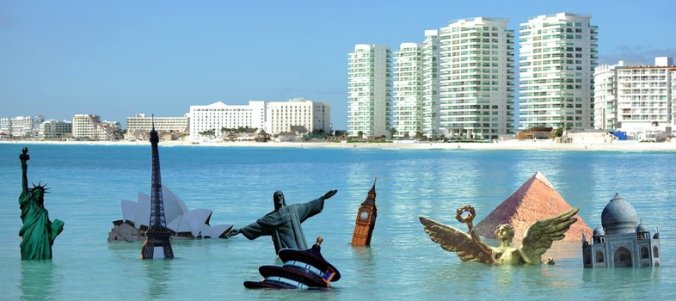
A Greenpeace protest juxtaposed the drowning of some of the world's most iconic structures with Cancun, Mexico's, rising skyline. Juan Barreto/AFP/Getty Images

A Greenpeace protest juxtaposed the drowning of some of the world’s most iconic structures with Cancun, Mexico’s, rising skyline. Juan Barreto/AFP/Getty Images

After this recent story, we maybe are just more aware of this theme and watching for it, or else there is something sticky about it:

Climate Change: A Time For Humor, A Time For Action

Continue reading

Go Ahead, Laugh About Climate Change

climate-change-comedy-290I am not 100% certain that laughter is an antidote to anything, but every now and then it seems like the only option. HOW TO LAUGH AT CLIMATE CHANGE, by Michelle Nijhuis, had its intended effect on me:

Continue reading

Bedeviling Bovine Biproducts

cow-butt

Roberta Kwok, over at Conservation, shares a new view on the humble cow:

COWS VS. COAL

To reduce emissions, the usual thinking goes, we should promote alternative energy and declare war on coal. But researchers argue that policymakers are ignoring a crucial climate threat: cows. Continue reading

A Minor Detraction From Aging’s Major Detractors

old-tree

Thanks to Roberta Kwok for her ever-concise summaries of remarkable scientific findings on Conservation‘s website, this one following the theme of a companion post with regard to aging organisms:

SCORE ONE FOR THE REALLY OLD GUYS

Aging is generally associated with slowing down. But scientists have found that trees actually grow faster as they get older, making them star players in a forest’s carbon storage. In fact, one old tree can fix as much carbon in a year as the total amount of carbon in a “middle-aged” tree. Continue reading

Climate Change Preparedness

Photograph by Ed Kashi/VII.

Photograph by Ed Kashi/VII. On Monday, the United Nations Intergovernmental Panel on Climate Change released a report on the impacts of global warming, for which it says the world is ill prepared. Elizabeth Kolbert wrote about a leaked draft of the report in this piece, originally published on November 5, 2013.

Not everything we read pleases us. So not everything we post on this site, in spite of our overriding mission to report positive news about conservation wherever we can find it, is meant to draw a smile. Wouldn’t be prudent, as someone once said. Nor would it be prudent to assume someone, somewhere, or anyone anywhere, has taken appropriate measures to even catalogue ways in which we should be preparing for the consequences of climate change. Not if, as some greedy doubt-mongers want people to wonder, but when. Thanks to Elizabeth Kolbert, our favored dismalist on climate change, for this Comment on the New Yorker‘s website:

Late last week, a Web site that claims that there is no scientific consensus on global warming published a leaked draft report on the impacts of global warming. The leak was apparently intended to embarrass the authors of the report, which is the latest installment from the Intergovernmental Panel on Climate Change. However, it seems mostly to have had the opposite effect: Continue reading

Do The Green Thing Countdown 28/29

tumblr_n33p2xFFaL1qz5g9bo1_1280

“Let’s Ride” is a cool, clean visual that says it all, whether you are already a member of the biking community, or yet to become one:

Josh Higgins built and led the design team behind Barack Obama’s 2012 presidential campaign and is now Communication Design Manager for Facebook. Using fresh colours and geometrical shapes, his poster rallies the world to do more bike riding and less driving.

“I have always loved cycling and rode a bike since age 6 because it is fun,” says Josh. “Now I am a bit older I realize it is so much more. Riding a bike is a proven stress releaser. It is great for our environment and whether you are riding purely for pleasure or to get from point A to point B, you will arrive feeling relaxed, energized and happier about the world.”

Why?

Continue reading

Do The Green Thing Countdown 27/29

tumblr_n31wkrCfVp1qz5g9bo1_1280

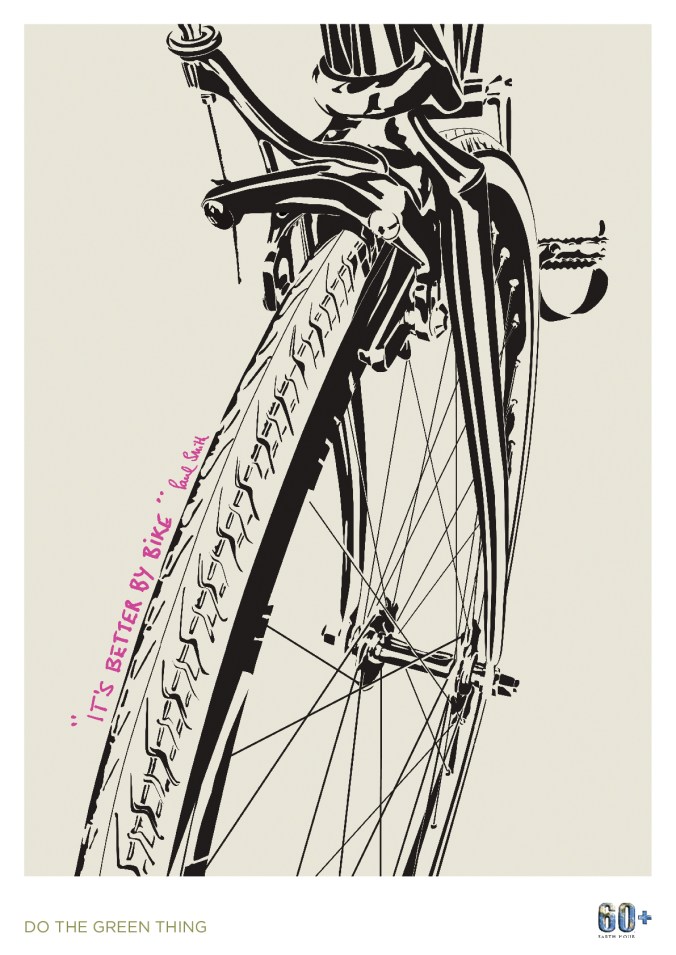
Better By Bike” speaks again on the topic of bicycle power, in the interest of Earth Hour as promoted by WWF and which Raxa Collective’s community will be participating in:

Today we are delighted to present a poster from a man who needs no introduction, but that won’t stop us from introducing him anyway. Sir Paul Smith is one of the most admired figures in the world of fashion: a style guru, a gentleman and a mad keen cyclist. He has created a piece of heartfelt pro-pedal propaganda featuring one of his own cycles and a message in his own writing: “it’s better by bike”. We agree.

Why?  Continue reading

Himalayan Honey Harvest

This slideshow requires JavaScript.

Like birds, bees are a common thread on these pages, for both their innate beauty, and their importance to life on earth. Although much of the honey on the market in the world today comes from cultivated hives, the history of gathering wild honey goes back millennium. 

For generations the Gurung tribespeople of central Nepal have assembled twice a year around cliffs filled with colonies of  the world’s largest honeybee, Apis laboriosa. This dangerous Himalayan honey-harvest was recently documented by U.K.-based travel photographer Andrew Newey, who spent two weeks capturing this dying tradition, which is under the threat of commercialization.

“For hundreds of years, the skills required to perform this dangerous task have been passed down through the generations” writes Newey, “but now both the bees and traditional honey hunters are in short supply.” Continue reading

Chocolate, Climate Change, Future Scenarios

Reuters

Reuters

The Atlantic’s website picked up this story about one of the world’s largest chocolate companies, and its approach to the future with regard to climate change:

…Now—in response to all this bigness, all this complexity, all these diversified models—it has prepared for a changing world. The Hershey Company is hiring a futurist.

That’s not what companies call it, exactly. Hershey’s is hiring a “Senior Manager” in “Foresight Activation,” someone with experience converting “existing foresight (trends, forecasts, scenarios) into strategic opportunities (SOs).” Continue reading

Cold, Hard Truths

Photograph by Martin Rollins.

Photograph by Martin Rollins.

Thanks to Maria Konnikova on the New Yorker‘s website for this post showing how one’s personal experience, for example with weather, can impact one’s perception of broader range of phenomena, such as climate change:

The winter of 2010 was brutal. In February, three blizzards smashed into the mid-Atlantic in the span of three weeks, burying the region under record amounts of snow. Thousands of people lost power; grocery-store shelves were stripped bare; cars were abandoned on highways; even the federal government shut down. The first two blizzards, which were Category 3 winter storms, paralyzed cities from Washington, D.C., to New York and became known, collectively, as the Snowmageddon. Lisa Zaval, a researcher studying perceptions of global warming, told me that she noticed that the storm also had a “strange side effect: an increase in skeptical remarks about global warming.” News reports, she said, expressed disbelief in the phenomenon, while blogs like If Global Warming Is Real Then Why Is It So Cold? began to pop up. “People seemed to be taking the extreme cold weather as evidence against global climate change,” she said. Continue reading

Better About The Weather

c714f9b2f

Click the image above to go to a post on the Atlantic‘s website by Senior Editor and technology writer Alexis Madrigal about being better prepared to discuss the weather.  Not the way a previous generation might have talked about it, but no thanks at all to the climate conundrums confronting this and future generations:

Talking about the weather used to be a euphemism for not talking about anything at all.

But lately, that once-innocent diversion has become mottled with darkness. No matter how many times scientists tell us that weather isn’t climate, the day-to-day weather sure does remind us of the long-term trends that together form the climate.

Is the unseasonably warm, dry weather we’re having in California a pleasant occasion for pleasantries or an impending sign of planetary doom? Maybe both. Continue reading

Vivid Performance Art, Clearing The Fog Surrounding Climate Change

eva-mosher1Sometimes, as with a good cup of coffee in the morning, our wake up is enhanced with a dose of intoxicating taste to get our senses going. As we swing from polar vortex to the next big thing in climate change, thanks to the dean of Duke’s Nicholas School of the Environment for this article on Eva Mosher and the important role performance art may play in the needed wake up call:

Convincing Americans that climate change is a real and present danger has proven to be a daunting and often frustrating challenge for scientists. Despite the growing evidence of climate change, and humanity as the driver of that change, there remains a hardcore 20 percent or so that reject the whole notion of it and a healthy percentage that remain unconvinced that humans are causing it. And on top of those dismal statistics, more than half of Americans believe that climate change does not represent a threat to them.

Scientific Data vs. Vividness and Accessibility Continue reading

Sustainable Forestry And Eco-efficient Wood Heating

This slideshow requires JavaScript.

Thanks to Harvard Gazette for this follow up story shedding more light on the role of forests of Massachusetts in better understanding the planet’s ecological needs:

In heavily wooded New England, forests are dynamic ecosystems that support a range of plants and animals, and their ability to soak up carbon also makes them an important piece of the climate-change puzzle. How changes to forests over time affect the flow of carbon through the atmosphere has long been a focus of researchers at the 3,700-acre Harvard Forest. Now, three wood-fired boilers are providing those scientists with a new tool to expand their understanding. Continue reading