Economic Models Adapting To Evolving Challenges

tnc_61185884_preview_cropped.jpg

Aerial view of flooded rice fields participating in California’s BirdReturns program. White areas are dense gatherings of birds. Photo © Drew Kelly for The Nature Conservancy

The Moneyball approach to thinking about how to make the next big breakthroughs in conservation–not surprising that we are hearing this from The Nature Conservancy’s best and brightest:

Economics: The Next Frontier in Conservation Science

BY ERIC HALLSTEIN, SARAH HEARD

Engaging in markets is not new for The Nature Conservancy. But with our roots as a land trust, we thought about markets in a very specific way. We bought property to protect biodiversity using donor and public funding. We were in the market for “externalities.” Continue reading

We Will Be For It

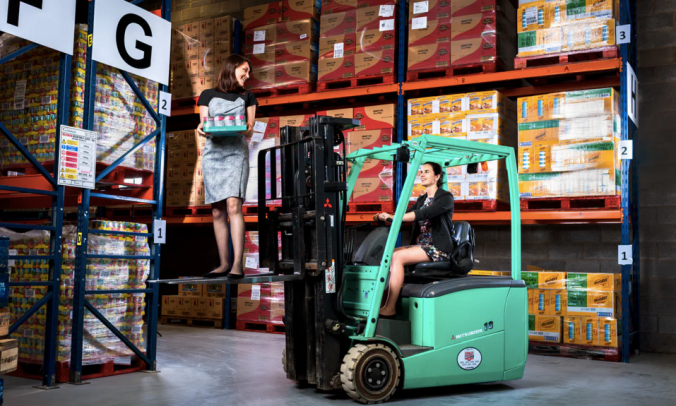
rideshare

We have not seen one yet, apart from Uber and Lyft (which we have been grateful for as users already), but when we do see any pure form(s) of this mythical app our support will be early and often:

Carpooling apps could slash congestion, fuel use, and emissions

Bear Ears Monuments, Cheering & Detraction

cedar-mesa_custom-427276f5586a9f7a0a22192760db944d7196cb73-s2500-c85.jpg

Photo by Josh Ewing/Bears Ears Inter-Tribal Coalition

The Food & Environment Reporting Network updates our understanding of the added significance of Bear Ears Monument, and its detractors:

Bears Ears Monument Is A Win For Tribal Food Sovereignty. Will Trump Undo It?

By Kristina Johnson

Seven years ago, the Navajo tribal council in southeastern Utah started mapping the secret sites where medicine men and women forage for healing plants and native people source wild foods. They wanted to make a case for protecting the landscape known as Bears Ears, a place not only sacred to their tribe, but to many other tribes in the region, going back thousands of years. In one of his final acts in office, President Obama late last month created the 1.35-million-acre Bears Ears Monument, in a move that proponents say will safeguard the area’s ecology and guarantee food sovereignty for the region’s Native Americans.: Continue reading

Fish & Coconuts & Conservation

S.W. Reddy’s discussion of the islands where she carried out empirical research in the behavioral economics vein reminds of some fundamental similarities to Kerala, especially the fish and coconuts part. Thanks to the Nature Conservancy’s Cool Green Science for bringing this to our attention (if you do not have 15 minutes for the video now, save the text below for later reading):

Bringing Behavioral Insights into Conservation Programs and Policies

By Sheila Walsh Reddy

Behavioral science and economics have provided important insights for health, finance, and many other domains, but are largely untapped resources for conservation. A new paper in Conservation Letters helps practitioners tap into behavioral sciences. Continue reading

The Vertical Farm, Explained In Long Form

170109_r29265

Vertical farming can allow former cropland to go back to nature and reverse the plundering of the earth.Illustration by Bruce McCall

For all the reasons we have to enjoy reading this — the Ithaca, New York setting we care deeply about, including Cornell University not least, plus a main character straight out of entrepreneurial conservation central casting — most importantly we have been posting on vertical farming for years and this exposes some of what we have been missing up to now. We have taken information as it arrives on our doorstep, in small bundles. Now, a more in-depth look at the past, present and future of:

THE VERTICAL FARM

Growing crops in the city, without soil or natural light.

By Ian Frazier

No. 212 Rome Street, in Newark, New Jersey, used to be the address of Grammer, Dempsey & Hudson, a steel-supply company. It was like a lumberyard for steel, which it bought in bulk from distant mills and distributed in smaller amounts, mostly to customers within a hundred-mile radius of Newark. It sold off its assets in 2008 and later shut down. In 2015, a new indoor-agriculture company called AeroFarms leased the property. It had the rusting corrugated-steel exterior torn down and a new building erected on the old frame. Then it filled nearly seventy thousand square feet of floor space with what is called a vertical farm. The building’s ceiling allowed for grow tables to be stacked twelve layers tall, to a height of thirty-six feet, in rows eighty feet long. The vertical farm grows kale, bok choi, watercress, arugula, red-leaf lettuce, mizuna, and other baby salad greens. Continue reading

Thank You, China, For Pandolin Protection

gettyimages-630598630_wide-7e4e677e0cd500d7c0e39f09b54a995411618f81-s1100-c85

An undated photo, released Wednesday, shows Shanghai customs officers checking pangolin scales at a port in Shanghai. Chinese customs seized over three tonnes of pangolin scales, state media said, in the country’s biggest-ever smuggling case involving the animal parts. STR/AFP/Getty Images

Thanks to National Public Radio (USA) for reporting the news related to this remarkable animal:

China Announces Its Largest-Ever Seizure Of Trafficked Pangolin Scales

Camila Domonoske

Chinese officials have seized 3.1 tonnes (more than 3.4 tons) of illegally trafficked pangolin scales from a port in Shanghai, according to state media. Continue reading

Redemption, Dammed Rivers Edition

kim-newlifealongwashingtonstateselwhariver-1200

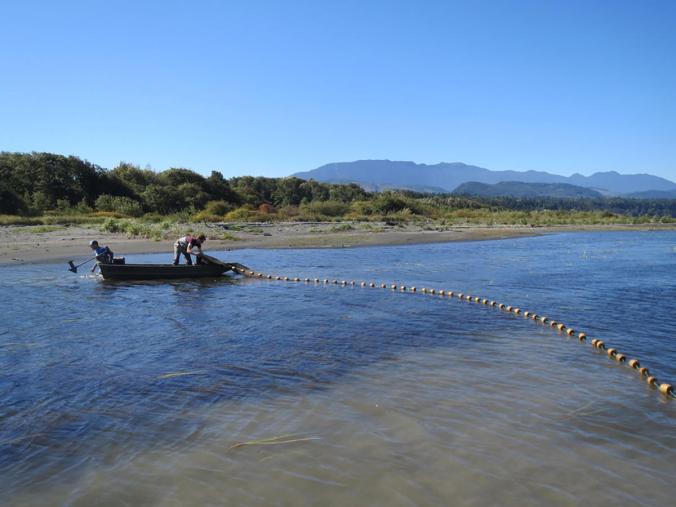
It’s been only two years since the removal of the last of the dams that obstructed the Elwha River, in Washington State, but already species are returning. Photograph Courtesy E. Tammy Kim

Among our favorite story types, the story of ecological recovery, which is to say of redemption, the following is a welcome addition to the files of 2016:

NEW LIFE ALONG WASHINGTON STATE’S ELWHA RIVER

By E. Tammy Kim

…Shaffer and her colleagues have sampled the Elwha’s nearshore region, where the river meets the ocean, once or twice a month since 2006. August, of course, is an ideal time; when you go in January, McBride said, “your fingers freeze, so you just put ’em under your armpits.” The work of the C.W.I. now seems particularly vital, because, for the first time in several generations, the forty-five-mile-long Elwha is a living river, end to end. Between 2011 and 2014, two large, century-old hydroelectric dams were demolished as part of a federal recovery effort. Continue reading

Greening Museums

garden_drawing

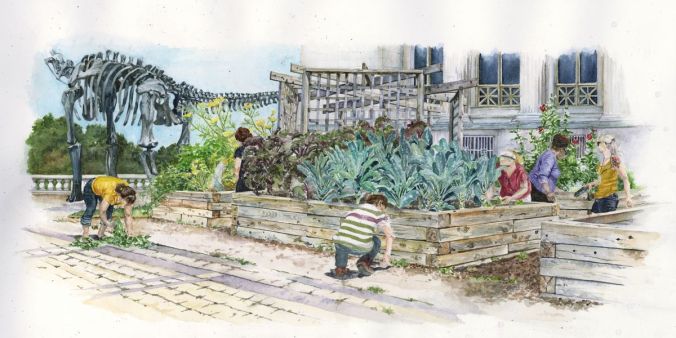
Illustration by Emily Woodworth

There have been moments in recent months when continued attention to the little details we see, and link to concerning incremental improvements in environmental sensitivity, social responsibility, or any other sustainability metric seems akin to “rearranging the deck chairs on the Titanic.” Political turmoil, and specifically political commitment to dismantle environmental protection in various influential countries, might make incremental change seem even less significant to some. These deck chairs are different. Every instance of care and action is a data point worthy of attention, and we will continue to connect the dots. Today, from the Field Museum of Chicago and their awesome Green Team:

THE FIELD MUSEUM’S GREEN TEAM

A Greener Field (the Museum’s “green team”) began as a grassroots recycling effort in 1989, and now has over 40 members representing every area of the Museum.  Staff members who share the Museum’s commitment to improving sustainability attend monthly meetings which provide an outlet for them to share successes and challenges in terms of greening their departments, as well as a vehicle to initiate and help implement institution-wide programs.  From bike sharing programs to recycling and composting Continue reading

The Gift Of The Camera Trap

3-week-old-male-kitten-at-den-site-Laguna-Atscosa-NWR.jpg

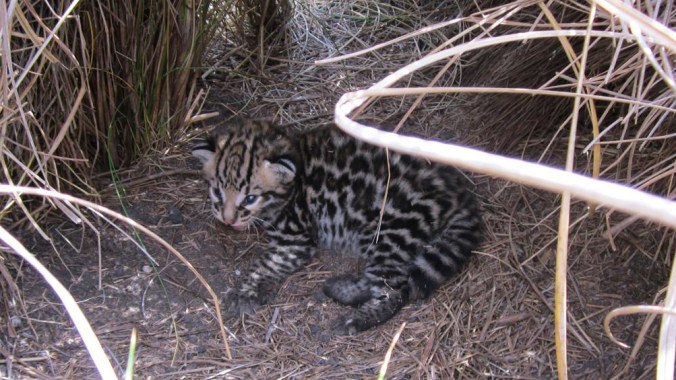
Three week old male ocelot kitten. Photo courtesy of US Fish and Wildlife Service

Thanks to Matt Miller and TNC’s Cool Green Science:

Camera Trap Captures Images of Texas Ocelot Kittens

Great news for ocelots: This year, several females with kittens were documented in South Texas using remote cameras.

The U.S. Fish and Wildlife Service (USFWS) issued a public service announcement brimming with good news, including the first ocelot den documented in 20 years on Laguna Atascosa National Wildlife Refuge, and ocelots with kittens on the Yturria Ranch, a private ranch protected by conservation easements held by The Nature Conservancy and USFWS. Continue reading

Cabo Pulmo & Octavio Aburto’s Masterful Storytelling

David and Goliath

The more we look around, the more we find that Mr. Aburto is telling the Cabo Pulmo story as well as anyone:

The People (Past and Present)

What make Cabo Pulmo a success story is its people: when faced with the dilemma to either continue fishing or to turn towards conservative goals, the community decided they needed to change. Continue reading

Christmas Bird Count, 2016

Seth’s work at the Cornell Lab of Ornithology, with the Celebrate Urban Birds initiative helped us all get a close look at citizen science in action. Past Christmas counts since then have been an annual tradition in these pages. Thanks to Lisa Feldcamp for a note on this topic with her post Give Kids the Gift of Birding on The Nature Conservancy’s website Cool Green Science:

The annual Christmas Bird Count is one of birding’s most cherished traditions. This year, consider introducing the count to a child. There’s no better time to get a youngster started in birding.

“When I was a kid in a large family of eight kids in Upstate New York, my parents told us we could do anything that cost less than $5; baseball, boy scouts, or birding,” says Tom Rusert of Sonoma Birding. “I joined Junior Audubon with my brothers, not realizing it would be a life sport to enjoy forever. It really is no different than any other sport.” Continue reading

Sunstein & Thaler On Kahneman & Tversky

sunstein-thaler-thetwofriendswhochangedhowwethinkabouthowwethink-1200

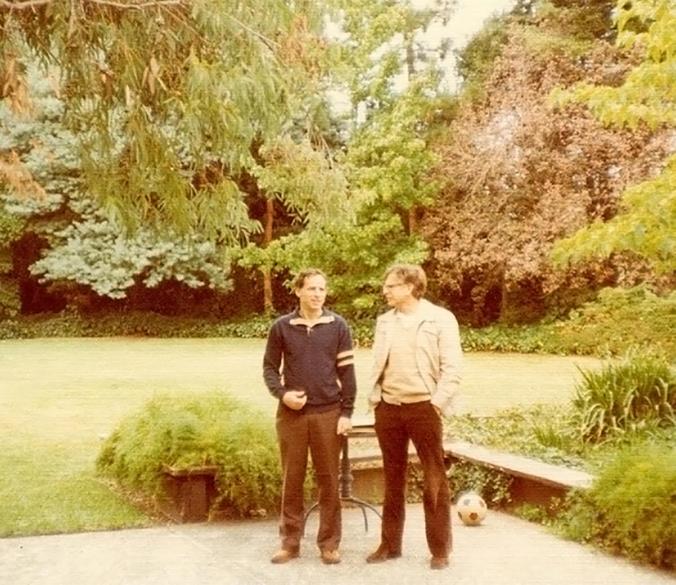
The book “The Undoing Project: A Friendship That Changed Our Minds,” by Michael Lewis, tells the story of the psychologists Amos Tversky, left, and Daniel Kahneman, right. Photograph Courtesy Barbara Tversky

We are more and more intrigued by this book, reviewed by two who knew the subject(s) better than most:

THE TWO FRIENDS WHO CHANGED HOW WE THINK ABOUT HOW WE THINK

By and

In 2003, we reviewed “Moneyball,” Michael Lewis’s book about Billy Beane and the Oakland A’s. The book, we noted, had become a sensation, despite focussing on what would seem to be the least exciting aspect of professional sports: upper management. Beane was a failed Major League Baseball player who went into the personnel side of the business and, by applying superior “metrics,” had remarkable success with a financial underdog. We loved the book—and pointed out that, unbeknownst to the author, it was really about behavioral economics, the combination of economics and psychology in which we shared a common interest, and which we had explored together with respect to public policy and law. Continue reading

App For Food Waste Reduction

‘A love for food and a distaste for waste’: Iseult Ward (left) and Aoibheann O’Brien in the FoodCloud warehouse in Dublin. Photograph: Mark Nixon for the Observer

‘A love for food and a distaste for waste’: Iseult Ward (left) and Aoibheann O’Brien in the FoodCloud warehouse in Dublin.
Photograph: Mark Nixon for the Observer

Thanks to the Guardian for their coverage of stories about reducing food waste:

FoodCloud: new app proves a nourishing idea for wasted food

The distribution of surplus food in Ireland is being transformed by FoodCloud. Killian Fox meets the duo behind the venture

Killian Fox

Within one community, there can be a business that’s throwing away perfectly good food and just around the corner there’s a charity that’s struggling to feed people in need,” says Iseult Ward of FoodCloud, a remarkable social enterprise which she co-founded with Aoibheann O’Brien in 2012. “We wanted to connect the two.” Continue reading

Surfing, Farming, Learning

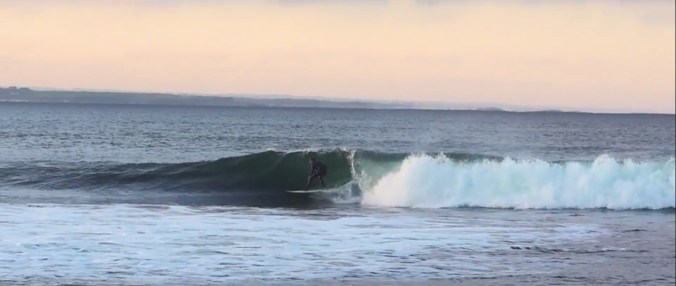
surf1

We have on occasion linked to video shorts offered over at the Atlantic website; this one is worth the seven minutes:

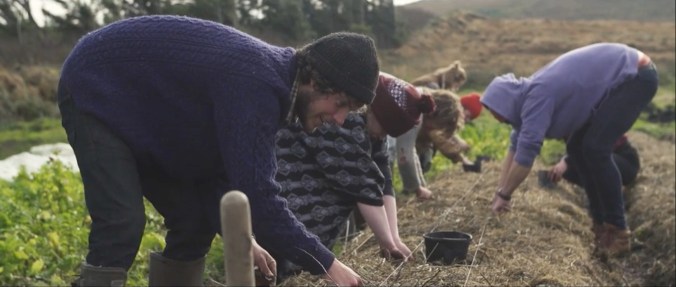
When Pro Surfers Learn to Farm

Video by The Perennial Plate

What happens when a group of professional surfers get tired of the global surfing circuit?

Surf2.jpg

This charming short documentary tells the story of how three friends abandoned their sports careers for the whimsical calling of growing organic vegetables on Ireland’s Wild Atlantic Way. Continue reading

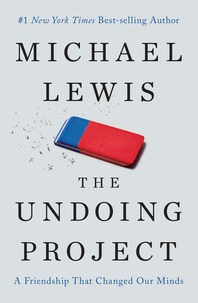
The Undoing Project, Reviewed

9780393254594_198.jpegWe are happy to see that the book mentioned last month is now available and has been reviewed in the New York Times, among other places, in addition to author interviews that are worth a look:

In the fall of 1969, behind the closed door of an otherwise empty seminar room at Hebrew University, two psychologists began a collaboration that would upend the understanding of human behavior. Those first conversations were filled with uproarious laughter and occasional shouting, in a jumble of Hebrew and English, which could sometimes be heard from the hallway. Continue reading

Another Small Step For Mankind

05standing-master675

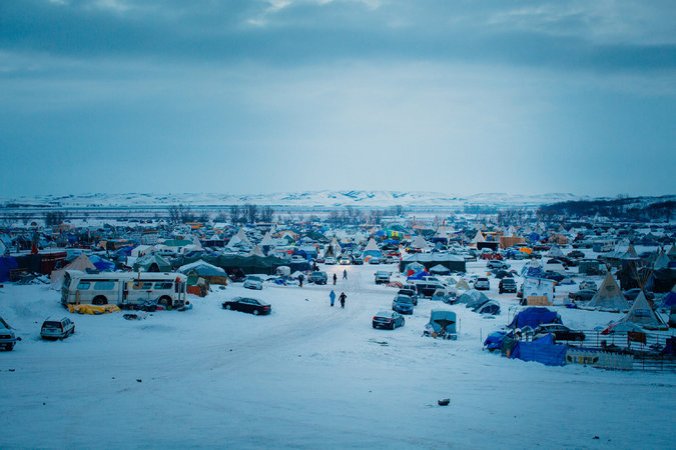
A camp in Cannon Ball, N.D., where cold weather has set in. Credit Alyssa Schukar for The New York Times

Protesters for a cause we could understand and side with, namely the keeping of commitments made long ago to the pre-Columbian inhabitants of the North American continent, have apparently won. Not so common, so we celebrate. And we like the twist in this story below, with unexpected allies. We did not quite believe the news when we first saw it, but now it seems certain enough to post it for posterity:

As North Dakota Pipeline Is Blocked, Veterans at Standing Rock Cheer

By

FORT YATES, N.D. — After four deployments to Iraq and Afghanistan, after being hit by a roadside bomb and losing two friends to explosions, Jason Brocar floated from job to job, earning enough to pay for long solo hikes where his only worries were what he would eat and where he would sleep. He was deep into a rainy trek through Scotland when he noticed friends back home talking about a place called Standing Rock. Continue reading

Banks, Rainforests, We The People

04DEFORESTATION-superJumbo.jpg

Young orphaned orangutans on a climbing expedition with their keeper at International Animal Rescue’s orangutan school in West Kalimantan, Indonesia. Credit Kemal Jufri for The New York Times

We first started paying close attention to the plight of the ecosystem in the image above when we saw the talk given by Willie Smits, who has taken action, to say the least, in the interest of protecting that rainforest and its inhabitants. It is not because of the orangutans (though see the photo below and try to resist reading on) that we find this article compelling; it is because there is a clear and compelling call to action on holding our institutions accountable:

How Big Banks Are Putting Rain Forests in Peril

By

In early 2015, scientists monitoring satellite images at Global Forest Watch raised the alarm about the destruction of rain forests in Indonesia.

Environmental groups raced to the scene in West Kalimantan province, on the island of Borneo, to find a charred wasteland: smoldering fires, orangutans driven from their nests, and signs of an extensive release of carbon dioxide into the atmosphere. Continue reading

World Class Recycling

wit-germany-recycle-superJumbo.jpg

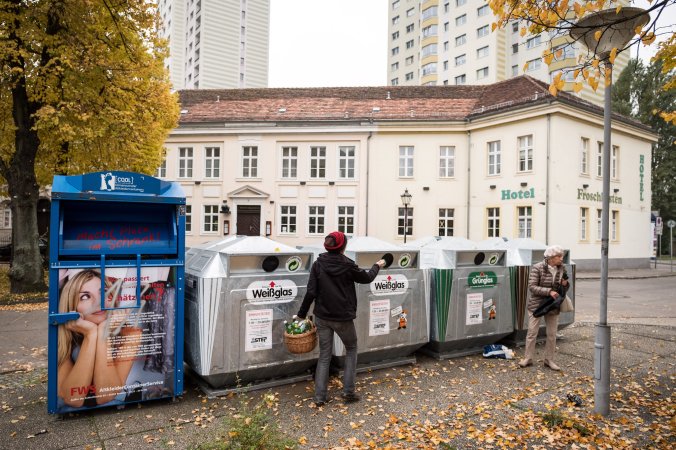
Recycling bins for glass bottles — both clear and colored — in Potsdam, Germany. Credit Gordon Welters for The New York Times

Thanks to the New York Times for reminding us who’s who in the world of recycling:

Germany Gleefully Leads List of World’s Top Recyclers

By

The praise from a German friend was the first sign that I had gone native.

“You see?” he said to his American wife, pointing to the sink where, without thinking, I was rinsing out the plastic yogurt cup I’d just emptied, unwrapping its cardboard sleeve and separating the foil from the lip of the container. “That is how to recycle!”

What may sound like a lot of extra fuss over trash has become second nature among Germans, the world’s recycling champions. Continue reading

Mexico’s Experimentation With Community-Based Forestry

DSC-NT1216_05.jpg

Thanks to Discover magazine for this (subscription required):

Can Community-Based Logging Fight Climate Change?

In Mexico, conservationists hope sustainable logging can provide jobs, protect the habitat and keep carbon from the atmosphere. Continue reading

Living Walls

As Kochi is awash with participating artists putting finishing touches on their Kochi-Muziris Biennale works, it’s exciting to see art flourishing in other cities on a regular basis.

Atlanta’s Living Walls seeks to promote, educate and change perspectives about public space in local communities via street art.  Dozens of international artists participate in an annual conference on street art and urbanism that began in August 2010 in the city of Atlanta. Continue reading