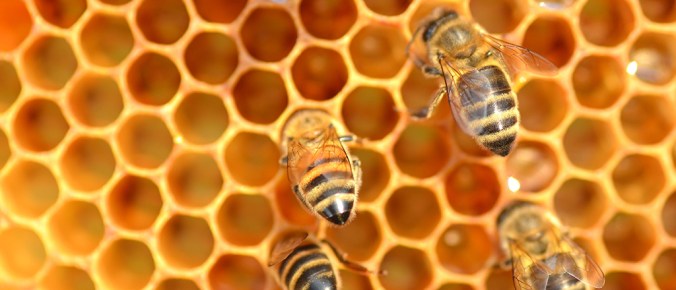
Honeybees, Workers, Unite

honeybees

Every now and then a podcast changes my view on something important. Sometimes I cannot tell exactly what shifted my view–case in point is the podcast below which is full of facts I already knew, and if you have been following our site at all in recent years you would have seen dozens of posts covering many of these same facts. But somehow the personal touch of the two guests on this podcast intensified my view of the importance of bees in general, honeybees in particular, and our responsibility for finding a path to a future where bees can survive:

How Honeybees — and Humans — Are Being Stung by Environmental Problems

It’s just a tiny insect, but the humble honeybee has a huge impact on our way of life. Aside from providing honey, honeybees are responsible for pollinating a majority of the crops consumed in the United States and around the world, from blueberry patches in Maine to almond groves in California. But honeybees are facing both natural and manmade threats that are killing them by the millions. A major result of these threats — colony collapse disorder — is already being felt in the beekeeping industry, which has reported astounding losses in recent years. Continue reading

Save The Truffle, A Campaign We Are Destined To Support

3b044a32123901-56703376190bcThis is a series of videos realized to launch “Save The Truffle” a new brand aiming to promote traditions and the conservation of the White Truffle of Alba. In this videos Agnello Renato, one of the last and most important “trifulau” (truffle seeker) of the zone, shares his stories about being a truffle seeker.For this project I took care of shooting, lighting and editing.
Creative project by Grid Studio.

Our family has a very happenstance connection to truffles that goes back to some sustainable tourism development work I carried out in Croatia starting in 2000, which led to our nirvanic 2006-2007 spent on an island in the southern Adriatic. But on my first visit to Croatia, in late autumn 2000, on a weekend off from work a local friend took me to Istria and the rest is history. You either love them or you probably will be disgusted by them, and I was in the former camp. A month later, coming home to my family in Costa Rica, I had some vacuum-packed fresh truffles; since then, we have been devotees.

A few years later, Milo became an encyclopedic mycophile, and a few years after that Seth had the chance to take a mycology courses at Cornell as an undergrad. So we are all happy to see this campaign represented by the logo above left. The article that brought our attention to this campaign is worth a read, whether you are a foodie, a fungist, or any kind of traditionalist. Click the logo to see some of the early creative work emerging for the campaign. We look forward to seeing more, but for now appreciate the journalist’s keen eye for what really matters in this story:

Amid Hills of Wine and Truffles, a Mission to Give Fungus Room to Breathe

Tasting The Place

aarvlisalt

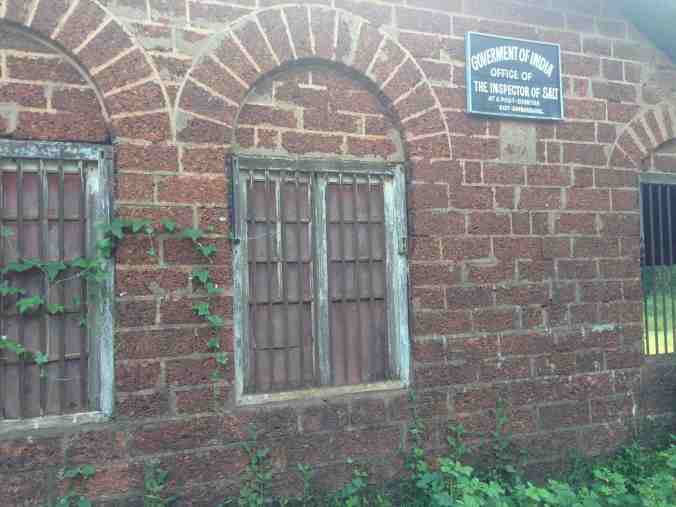
Where I am located, since last week and until next, there is an abundance of flavors; both in terms of intensity and in terms of diversity. Thanks to a longstanding tradition of ensuring that those flavors pop, there is not only salt, but salt inspection. Only the finest will do, and the finest is also harvested locally. Just as the fish is harvested locally as in the photo below, taken a few hundred meters from where I am typing right now.

img_5532

Continue reading

If You Happen to Be In Gainsville

This slideshow requires JavaScript.

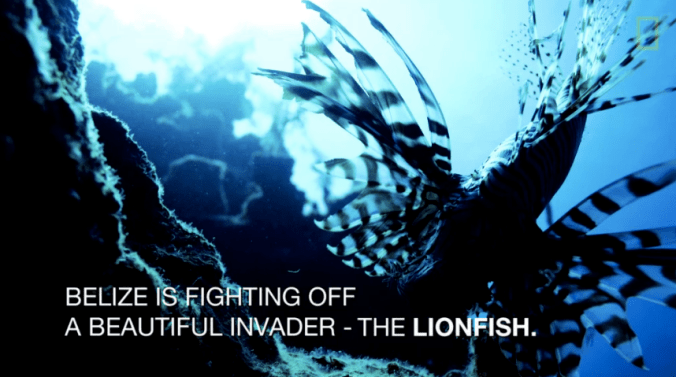
We’ve been posting on the environmental impact of the invasive lionfish ever since contributor Phil Karp took on the project of building a demand for the notoriously difficult to catch fish. Helping to build a market for the delicious meat and beautiful spines created income for local fishermen and their families in numerous areas of the Caribbean.

ReefSavers was created with all these goals in mind. Founded to gain control of the Lionfish population in the southeast US and Caribbean, they work toward both harvesting and developing a stable market in which supply can always meet the current demands. By unifying

the organizations working to control the Lionfish outbreak into a cohesive market place. Channeling all harvested Lionfish through a centralized market place will allow for a more stabilized fishery. With the creation of the Lionfish Market Place organizations will have a centralized place to sell their catch and buyers will not have to worry about limited supplies. By opening the Lionfish Market buyers for the whole state of Florida will be connected with a more constant supply, in turn this access will help to grow the industry and put revenue into the hands of the people trying to fight the outbreak.

The ReefSavers team came up with innovative strategies to help with supply and demand logistics, fanning the market for the fish for both chefs and more importantly, consumers. Welcome the Lionfish Invasion Tour in Gainsville, Florida! Continue reading

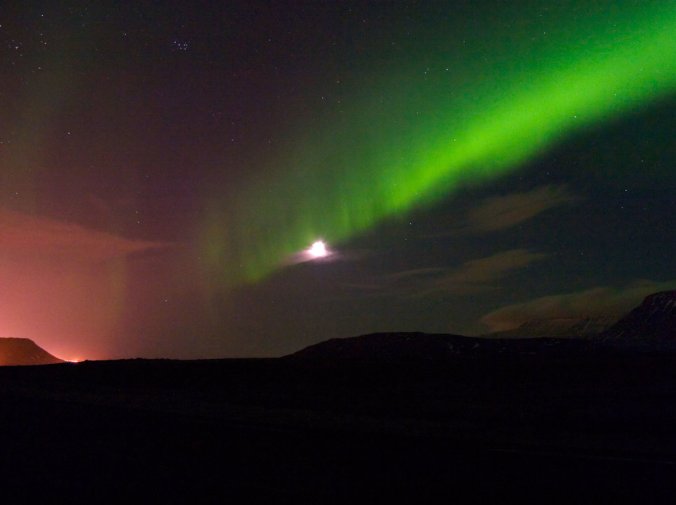
Northern Lights, Iceland Edition

gettyimages-90757605-8f66af30a0491ce9c83ab10665cfc9ea55f536fd-s1100-c85

The northern lights over Iceland in February. The glowing orange area on the left side are the lights of the capital, Reykjavik. Jamie Cooper/SSPL via Getty Images

Thanks to National Public Radio (USA) for letting us know where they still take these things seriously:

Better To Have Fizzled Than To Have Never Tried

20threlkeld-web1-master768

Hikers on Blencathra, in the Lake District in England. Two years ago, ramblers, climbers and hill-lovers banded together to try to buy the peak, but the effort has now fizzled. Credit Phil Moore for The New York Times

I admit to being partial to the idea of rewilding, as I have come to know about it, which I admit is limited; but with our bias for restoration of wildlife habitat clearly stated I find this story worth sharing:

In English Lake District, Tradition and Conservation Clash

By

THRELKELD, England — It was to have been a grand gesture, a deal that would transfer a mountain in the fabled English Lake District from the landed gentry to those who roam its heights, reversing a centuries-old pattern of ownership by the upper-crust few. Continue reading

Save Your Screen Time, Kochi!

The Kochi-Muziris Biennale 2016 “main stage” doesn’t start until December, but Kochi is already throbbing with activity – from the Piramal Art Residency at Pepper House to introductions to this year’s participating artists on the KMB Facebook page.

Interested in film and video? The Signs Festival 2016 begins in less than a week at the Kochi Town Hall on September 28th.

SiGNS, the pioneering festival in India for digital videos featuring national level competition for documentaries and short fiction for the prestigious John Abraham National Awards. John Abraham Awards was instituted in 1999 by the Kerala Region of Federation of Film Societies of India  Continue reading

Lionfish Tales

This is issue has been on our radar for some time, in most part due to contributor Phil Karp‘s posts on his work with groups in Belize and other parts of the Caribbean focused on this goal. The concept of “If You Can’t Beat ’em, Wear ’em” carries a powerful message of innovative practices to manage the invasive species that’s causing havoc in the southern Atlantic and Caribbean waters. Continue reading

If You Happen To Be In The Boston Area

so16_image_page_036_image_0001

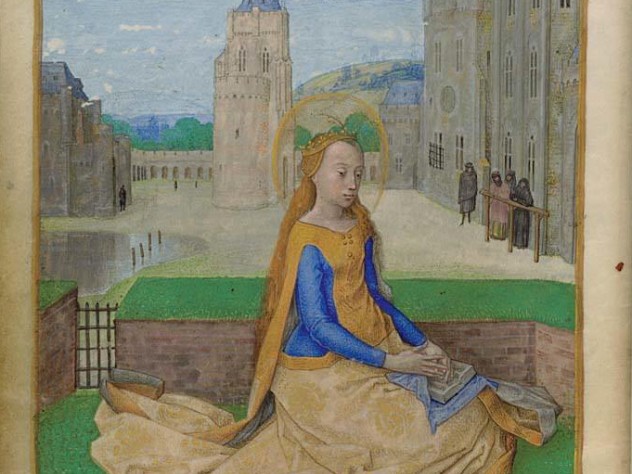
Saint Barbara, attributed to the “Ghent Associates” of the Master of Mary of Burgundy, from a book of hours-missal, c. 1485-1490. Courtesy of Houghton Library/Harvard University

We check in from time to time at magazines published by universities where we have recruited. This article, which we appreciate topically because of the conservation of cultural heritage described, makes us wish we could visit the venues described in “Illuminations.”  Lily Scherlis provides a good example of why we keep coming back to this magazine–crisp, clear writing and a compelling argument in favor of looking back into history for an enriching perspective on crowdsourcing versus individual authorship (read to the end of the quoted section):

…These works were born into a world where literacy was scarce and almost universally affiliated with religion: the exhibition description refers to monasticism as, at its heart, a “cult of the book.” I imagine how compelling written religious text would have been to early readers: the words echo off the page, as if read by an invisible voice heard only by you, but are available to other readers as well. Continue reading

Carbon-Calculated Menu Planning

co2emmissionsmeal

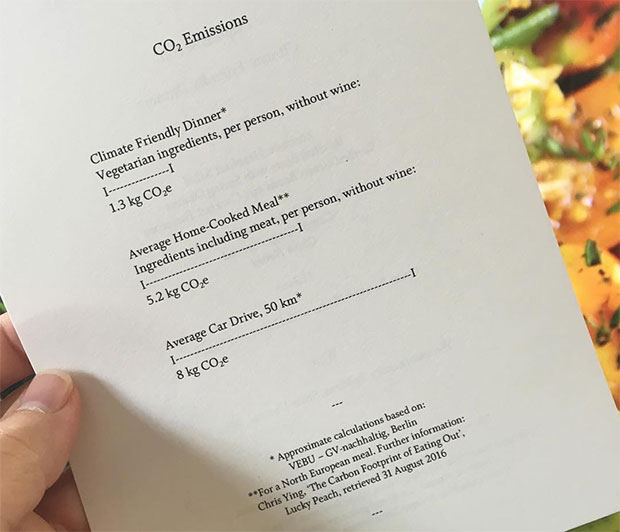
The menu from Studio Olafur Eliasson’s dinner for the Climate Museum’s Miranda Massie. Image courtesy of the artist’s Instagram

From the folks at Phaidon, news of a top artist’s contribution to the climate change conversation, in a manner we can kind of relate to:

Olafur Eliasson puts carbon on the menu

When Eliasson’s studio cooked a meal for NYC’s Climate Museum director it listed one additional ingredient.

The artist Olafur Eliasson is on the board of the Climate Museum, a US institution which endeavours to use the sciences, art, and design to inspire dialogue and innovation that address the challenges of climate change. The museum hasn’t been built, yet Eliasson has submitted a few concept sketches, picturing a globular structure that should, someday soon hopefully stand in New York City. Continue reading

The Future Of Coffee Matters To Us For More Than One Reason

3000

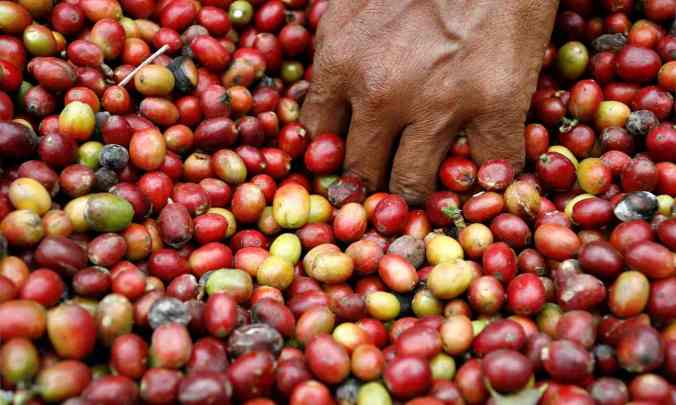
A farmer with coffee cherries from his latest crop, the seeds of which are roasted, ground and brewed to make coffee. Photograph: YT Haryono/Reuters

We work in several countries where coffee production is important to the national economy. We serve coffee in every property we have ever managed. Many of us working in La Paz Group are coffee junkies.

But more than that, as I have mentioned at least once in these pages, we care extra deeply about the future of coffee because on one of the properties we manage, some excellent arabica estate coffee is growing in the shade of a rainforest canopy. I owe you more on that topic. For now, what has my attention is ensuring the long run sustainability of this organic coffee production.

So you can be sure of where some of our team members will be next Tuesday. Join us if you can:

Climate change is threatening the world’s coffee supplies: what can we do? – live chat

Join us on this page on Tuesday 20 September, 2-3pm (BST), to debate the future of coffee, and the millions who depend on it, in the face of climate change

What we’ll be discussing Continue reading

Light Dance

Light, Darkness. Movement, Stillness. Sound, Silence.  The contrast and flow of these opposites make the heart race.

White Canvas is only one of the innovative projects created by the interdisciplinary artistic team that makes up COCOLAB. Continue reading

A Different Type of Hero

The Veerni Institute now makes it possible for 75 girls to continue their education. But the group has to turn away nearly 300 applicants each year for lack of funding. Poulomi Basu for NPR

The Veerni Institute now makes it possible for 75 girls to continue their education. But the group has to turn away nearly 300 applicants each year for lack of funding.
Poulomi Basu for NPR

“It all began with a shawl…” seems like the stuff of fairy tales, but the combined attraction to a handmade textile and the desire to help the woman weaving it proved a pathway to Jacqueline de Chollet’s life work. Over 20 years ago while traveling in a dusty village of India she saw a woman weaving the shawl in her home.

“She had three or four children including a baby she was nursing in her arms,” de Chollet recalls. “And she looked way older than her age.”

Hoping to provide a little help, de Chollet offered to buy the shawl. “And as soon as I gave her the money a man walked in and took the money away from her.”

De Chollet was outraged. “I felt, this woman — nobody cares about her. She’s off the map. She has no rights.”

Although de Chollet came from far different circumstances as this woman, growing up in the 1950s she felt that society dictated her position as a wife and mother. She wanted to make a difference in the world, and felt that addressing the issue of the rights of women and girls in India was an important first step. Continue reading

2016 Cornell Council for the Arts Biennial: Abject/Object Empathies

With fewer than 90 days to go until the 3rd edition of the Kochi-Muziris Biennale we admittedly have biennales on our mind. We thank one of our 2012 design interns, Chi-Chi Lin, for bringing this one to our attention.

The Cornell Council for the Arts (CCA) is a campus wide organization that promotes collaboration and artistic experimentation to inspire innovative and challenging projects by students, faculty, departments and programs from all disciplines. The focus of the 2016 CCA Biennial 

is on the cultural production of empathyThe upcoming biennial will address the ways in which feeling is form and explore how the objects, buildings, clothing, machines, languages, and images we construct are shaped by our intentional or implicit emotional, interdependent relationship to others. Whether by framing a connection that already exists or by providing the condition for new connections, what we create can either merely extend our own personal desires, goals, and directives, or can alternatively function as a bridge between who I am and who you are so that aesthetic experiences are interdependent, collaboratively generated and inherently reciprocal. Continue reading

One Step Forward, Slip Sliding Away

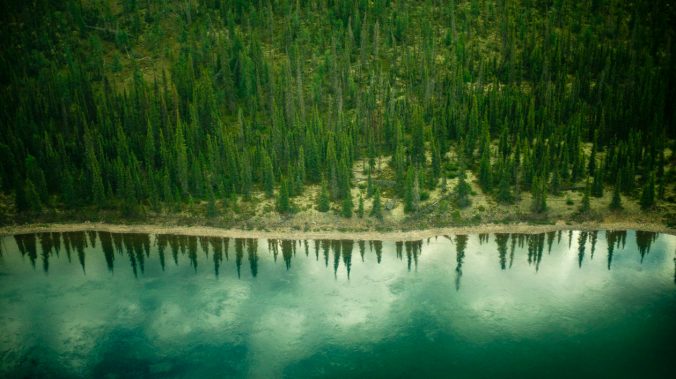
Aerial view of the Thelon River and forest landscape of Canada's far northern Thelon Game Sanctuary. The refuge is the largest and most remote game sanctuary in North America. For the Akaitcho Dene people, the Upper Thelon River is "the place where God

Aerial view of the Thelon River and forest landscape of Canada’s far northern Thelon Game Sanctuary. The refuge is the largest and most remote game sanctuary in North America. For the Akaitcho Dene people, the Upper Thelon River is “the place where God began.” In 2011 The Nature Conservancy’s lead scientist Sanjayan and Canada program director Dr. Richard Jeo went on an expedition through through this pristine area with young members of the Dene First Nation. They traveled by canoe along the Thelon River ending in North America’s largest and most remote wildlife refuge, the Thelon Game Sanctuary. This photograph is from that trip. PHOTO CREDIT: © Ami Vitale

Thanks to Cool Green Science, the conservation science blog of The Nature Conservancy, for this sobering update on the state of affairs of meeting conservation targets (um, those related to whether or not this planet will be one our future generations will be able to live on):

Global Wilderness Areas in Decline Despite Conservation Targets

BY JUSTINE E. HAUSHEER

Conservation today operates in a world of targets: Protect 17 percent of terrestrial systems and 10 percent of marine systems by 2020; keep global climate change below 1.5 degrees Celsius by 2100; halve the rate of natural habitat loss.

But despite widespread adoption of protected area targets, wilderness areas are still declining rapidly across the globe. Now, new research shows that 9.6 percent of all global wilderness has disappeared in the last 20 years. Continue reading
The Kindness Of Strangers

sanchez-cart_wide-29683f2f2abfb52b42bdcdab6c6787e5bbef67b4-s1100-c85

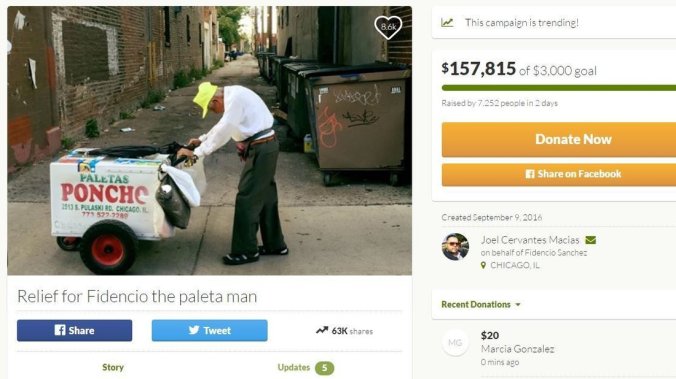
A fundraising campaign for Fidencio Sanchez has raised more than 50 times the original $3,000 that was sought. Go Fund Me

We can say, with no ideological intent whatsoever, that it is not good news that an elderly man in a prosperous nation must depend on the kindness of strangers; but if we add one iota of oomph to the momentum of a story like this going viral, we are more than happy to share occasions when that kindness is demonstrated with drama:

Strangers Raise $165,000 In 3 Days To Help Chicago Popsicle Vendor, 89

It was just a glimpse, but the scene spoke volumes — and started a push for help. Joel Cervantes Macias was struck by the sight of an elderly man pushing his cart of frozen treats on Chicago’s 26th Street, so he took a photo. That was last week; as of Monday afternoon, Macias had raised more than $165,000 to help a stranger. Continue reading

A Business Model To Fish For

patagonia

Heroes are, by definition, not easy to come by. When they get profiled, read it (this one is thankfully not merely fluff):

…The ordeal, and the perspective of middle age, snapped him to attention and caused him to refine the company’s mission. In the eighties, he’d been feeling increasingly uneasy about being a businessman and about the transformations and compromises that seemed inevitably to accompany corporate success. The company, he worried, was straying from its hard-core origins. “I was faced with the prospect of owning a billion-dollar company, with thousands of employees making ‘outdoorlike’ clothing for posers,” he said early in 1991, in a speech to the employees, in which he outlined his misgivings and his new resolutions. These subsequently appeared in the Patagonia catalogue, as a manifesto, under the heading “The Next Hundred Years.” Continue reading

Momentum In Tribal Territory


12tribes-listy9-jumbo.jpg

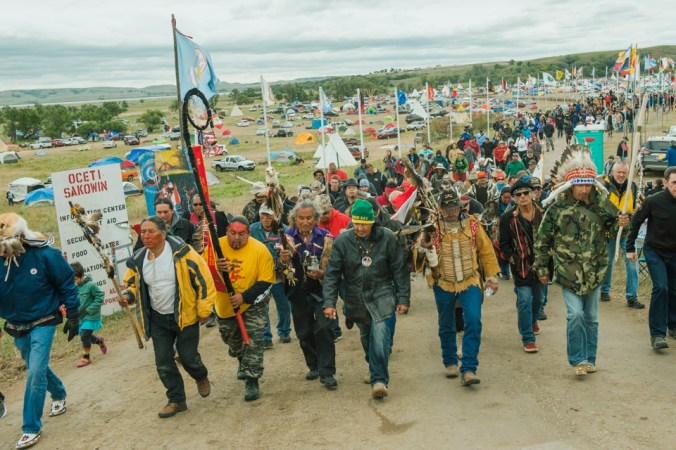
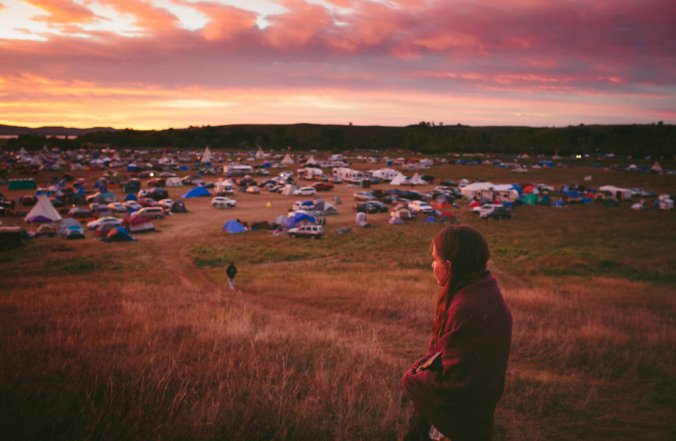
Susan Leopold, a member of the Patawomeck tribe of Virginia, watching the sun rise over an encampment where thousands have come to protest an oil pipeline near Cannon Ball, N.D.   Credit Alyssa Schukar for The New York Times

This is a great follow up to the earlier stories we read on this topic. We appreciate that the New York Times is now giving this as much attention as it deserves, and doing so with the dignity and respect that the protesters deserve:

From 280 Tribes, a Protest on the Plains

NEAR CANNON BALL, N.D. — When visitors turn off a narrow North Dakota highway and drive into the Sacred Stone Camp, where thousands have come to protest an oil pipeline, they thread through an arcade of flags whipping in the wind. Each represents one of the 280 Native American tribes that have flocked here in what activists are calling the largest, most diverse tribal action in at least a century, perhaps since Little Bighorn. Continue reading

The Medicine We Fear Instinctively

Specter-Gene-Drives-And-Endangered-Birds-1200.jpg

Genetically modified mosquitoes could be the solution to Hawaii’s quickly disappearing avian population, including the island’s famous honeycreepers. PHOTOGRAPH BY RESOURCE HAWAII / ALAMY

Michael Specter writes frequently (but not exclusively) about frighteningly unpleasant, sometimes devastatingly horrible topics with grace not often found in technically rigorous writing. Here, in a short post, he addresses the prospects of a technology many rightly fear and its potential to address many rightly feared environmental (the one in the title below obviously catches our attention) and health challenges:

COULD GENETICALLY MODIFIED MOSQUITOES SAVE HAWAII’S ENDANGERED BIRDS?

By

Every four years, thousands of environmentalists gather at the World Conservation Congress to assess the state of the planet, and to consider what might be done to protect it.  Continue reading

Make Trouble When It Is Needed

lead_960 (1).jpg

Protesters demonstrate against the Energy Transfer Partners’ Dakota Access oil pipeline near the Standing Rock Sioux reservation in Cannon Ball, North Dakota, U.S. September 9, 2016. REUTERS/Andrew Cullen

We are happy that the trouble-maker who brought this to our attention, and those pictured above are heard by the Trouble-Maker-In-Chief of the USA (who we hope uses his remaining four months in that office to similar good effect):

The Obama Administration Temporarily Blocks the Dakota Access Pipeline

The surprise move came after a federal judge declined to stop the 1,100-mile fossil fuel project’s construction.

The Standing Rock Sioux Tribe and the hundreds of Native protestors who have joined them in rural North Dakota won a huge but provisional victory in their quest to stop the Dakota Access pipeline, as the U.S. government announced late on Friday afternoon that it was voluntarily halting work on the project. Continue reading