#4 Of One Dozen Love Letters About Xandari

The Sri Padmanabhaswamy temple, in Trivandrum, has been amassing gold for centuries. PHOTOGRAPH BY CHIARA GOIA

What I love most about Xandari is this fact: over nearly two decades, several tens of thousands of guests have trusted Xandari with their valuable vacation time, and that faith has been reciprocated with such authentic hospitality that Xandari has one of the most loyal clientele of any hotel I know of. Most guests coming to Xandari today are related through kinship or friendship to guests who have already been at Xandari before. That loyalty is like treasure buried deep inside of Xandari. Continue reading

#3 Of One Dozen Love Letters About Xandari

X3By the time that MLHS had completed the acquisition of Xandari in Costa Rica we were already well under way with the development of what is now Xandari Pearl, on the beach about 40km south of Xandari Harbour. Reflecting today on what I love about Xandari, I again am reminded of some rather heroic decisions made by George M George, and the board of directors who he reported to.

In 2010, when we were in the early months of this relationship between MLHS and La Paz Group, there was already a completed architectural plan for the beach property that MLHS owned at Marari. There were already permits applied for the construction of those plans. So it was with some trepidation that I took a firm position in my recommendation to the board George reported to: those plans would result in a resort that would not fit the strategic road map I was laying out. To start with, it was 80+ rooms; and there were other issues but scale was the one I focused on.

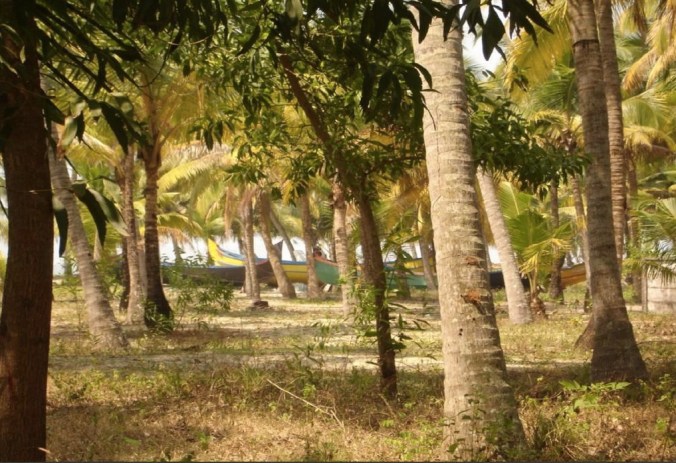
Just now I was looking at the powerpoint presentation I brought into the board room with me to make my case about abandoning the original plans for the resort at Marari. The first image in that presentation was the one above, which was a photo snapped just some days prior to the meeting. I talked about the natural beauty of the beach property, and how our target market would appreciate meandering on paths through as much of that as we could preserve; ideally we would not cut a single tree. We would let the local fishermen continue to keep their boats on property. And other points about that land. Continue reading

#2 Of One Dozen Love Letters About Xandari

The October-November, 2014 issue of Conde Nast Traveler’s India edition came with a special supplement. This low resolution image of that feature includes the cover and the page inside that featured our newly opened property (click the image to be taken to a more recent honor from the same magazine; when you get to the December recommendation be sure to scroll down to see our mention last month on that publication’s website).

The timeline may have looked choppy in the first love letter, but that is how it goes with reminiscences, even when the archival material is immaculate. To give an overview of the Xandari story in a manner that conveys my deep debt of gratitude, but also keep it reasonably short (two decades condensed to 12 posts), I am going to jump around starting with the image above.

* blurry text on the right of the image is reprinted at the end below

On the left of that image is the cover of a special edition–India’s Stunning Boutique Hotels–published by Conde Nast Traveller in October 2014; to the right of the cover was the story about the property we had just opened for our client MLHS, led by George M George. This publication arrived at exactly the moment we were opening the hotel, then named Spice Harbour, soon to be rechristened Xandari Harbour. And Raxa Collective, the code name for our assignment with MLHS, would eventually (July 1, 2016, thus these dozen love letters starting yesterday) revert to our company’s proper name, La Paz Group. Continue reading

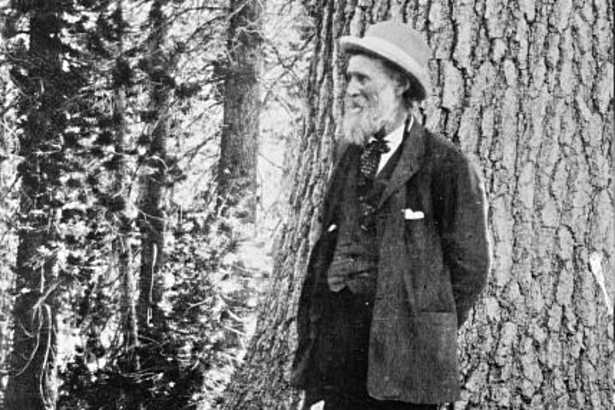
John Muir’s Writings About Yosemite

lead_large (3).jpg

Library of Congress

We posted about John Muir’s writings in the Atlantic four years ago, once we realized they were so accessible in that magazine’s archives. In that post, two years into our foray in India, we simply wanted to share our amazement that Muir had written about India as an example relevant to the case for protecting the forests of North America. We have also posted about Muir indirectly, including a lovely photo-documented post about his visit with Teddy Roosevelt to several wilderness areas that would become iconic national parks.

As we prepare for the expansion of our activities in India, and in advance of our announcement of two exciting new conservation initiatives in Mesoamerica that we will embark upon next month, I have been going back through our archives, enjoying some examples of the historical perspective this platform has allowed us to share.

Today, in the spirit of the centenary of the National Parks Service, and considering this past weekend’s visit to Yosemite by the President of the USA, it makes sense to share another of Muir’s several contributions to The Atlantic, this one specifically about the first national park (which predates the creation of the NPS):

The Yosemite National Park

“All the world lies warm in one heart, yet the Sierra seems to get more light than other mountains.”

JOHN MUIR   AUGUST 1899 ISSUE

Of all the mountain ranges I have climbed, I like the Sierra Nevada the best. Though extremely rugged, with its main features on the grandest scale in height and depth, it is nevertheless easy of access and hospitable; and its marvelous beauty, displayed in striking and alluring forms, wooes the admiring wanderer on and on, higher and higher, charmed and enchanted. Benevolent, solemn, fateful, pervaded with divine light, every landscape glows  Continue reading

#1 Of One Dozen Love Letters About Xandari

xneighbor1

Xandari’s neighborhood includes some of the best estate-quality coffee land in Costa Rica

I keep correspondences for as long as possible. With all of our moving around some of my older paper correspondences have been lost along the way, but since the advent of email, and especially since archiving email has been possible, I have been a diligent archivist.

So, as I reflect on the completion of our engagement with MLHS June 30, that gives me a dozen opportunities for daily reflection on Xandari as we prepare to hand over the keys. Email archives keep it real.

My relationship with George M George, related in an earlier post, started a couple years after I had first met the man who created Xandari in Costa Rica. From the mid- to late-1990s I was focused on destination-level strategy work in Costa Rica and other countries in that region. I met Sherrill Broudy first during those years as part of my effort to understand the hotel investors who came to Costa Rica from other countries. At that point, the main building of Xandari and just a few villas had been built. Continue reading

Coral Reef Bright Spots

lead_960 (3).jpg

Tane Sinclair-Taylor

Thanks, as always, to Mr. Yong and his team at Atlantic Monthly:

Why Some Coral Reefs Are Thriving

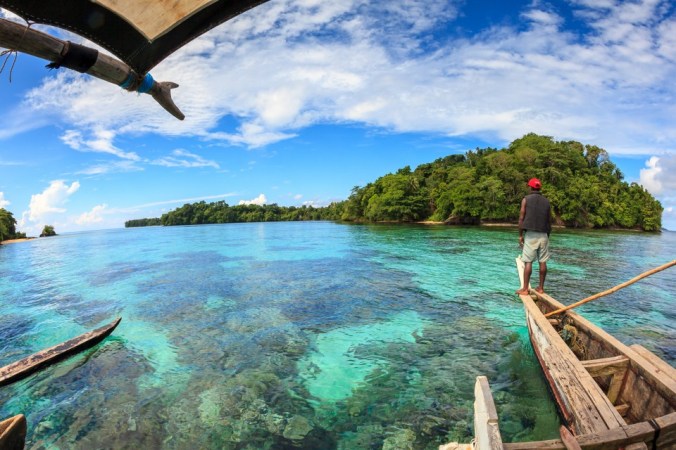
Not all of the world’s reefs are in bad shape—and a few of the healthiest are managed by humans.

by Ed Yong

In 1990, Jerry Sternin from the global charity Save the Children traveled to Vietnam to fight malnutrition. His strategy was simple. He looked for ‘bright spots’—mothers whose children were bigger and healthier than average, even though they were just as poor and disadvantaged as their neighbors. And he asked: what were they doing differently? Continue reading

Our Goal Here

We will continue sharing news stories and sharing anecdotes from our daily work lives that reflect Raxa Collective’s orientation to Community, Conservation & Collaboration. Those “3C’s” have been essential ingredients of La Paz Group’s work since the beginning, which is how they became the focal points of Raxa Collective. We have also had Sense & Sensibility as watchwords in our company for the last 16 years or so, and that will not change. Continue reading

Community, Collaboration & Conservation 2011-2016

As pop-ups go, this has been long-lived. We listened to the communities we came to Kerala to serve; we collaborated with them every day of the week, each month, year after year since arrival; and the conservation work will continue. We will be watching and commenting from our new site at lapazgroup.net, which will retain all our material from the past five years.

My personal thanks to all the individuals who are listed in the Contributors section above. It would be unfair to highlight any one or even just a few of them. By definition each one broke through the inertia sometimes described as the collective action problem–leaving it to someone else to do–and did the writing and illustration needed to make our work resonate with a broad audience. And if you look at the number of views, visitors and comments they left behind, our readers seemed to appreciate all that. We had employees, as well as interns, plus friends and family— even our main man on more than one occasion contributing–individually, collectively, collaboratively.

Thanks said, we hope you will continue to follow us after the name change in a couple days.

The Collective Of Raxa

As we wind down this pop-up endeavor, a comment on our collaborators. First and foremost on the George M George of 2010, whose vision was what got this collective going. George had come to my attention ten years earlier in a classroom in France, where I was offering a course called Organizational Behavior in the Masters program Cornell Hotel School had established there. My first, and lasting impression of George was that he valued laughter over all else. Continue reading

Raxa Collective, A Purposeful Pop-Up

When the first post appeared on this site we did not have a specific end date in mind. But now we do. Nearly 7,000 posts, half a million views and 1,825 days later on June 14, 2016 five years of blogging about community, collaboration and conservation around the world under the banner of Raxa Collective will be complete. We will continue these endeavors, and more, under the banner of La Paz Group. We will incorporate enhancement and expansion ideas that our readers, friends, colleagues and contributors have all shared with us.

Raxa Collective has had a very specific objective: the creation of a meaningful brand with community, conservation and collaboration as the core values. Xandari is that brand; it is the legacy of a collaboration between MLHS and La Paz Group. We expect that Xandari’s remarkable sense of community will continue to flourish under MLHS’s own guidance, as La Paz Group moves on to new challenges in the realm of entrepreneurial conservation.

Archaeoastronomy

William Gadoury used the position of a constellation to identify the location of a possible Maya city where an anomaly, shown above in a satellite image, was observed. Further study on the ground is required to determine the nature of this feature. IMAGE COURTESY OF ARMAND LAROCQUE via NATGEO

We have shared stories about Mayans, and especially the archaeological questions surrounding them, before; and also discussed the modern region that was once the civilization’s stronghold more recently. And although we missed the original news covering this interesting hypothetical discovery by a Canadian teenager, his recent interview with NatGeo brought the aspiring “archaeoastronomer’s” ideas to light, and we certainly hope Mr. Gadoury is right about the undiscovered settlement. Below, the first reporting by National Geographic, on May 11 of this year:

For gee-whiz value, the announcement has been hard to beat: A Canadian teenager discovers a lost Maya city without even stepping foot in the Central American jungle.

Unfortunately, this “discovery” appears to be the well-intentioned, albeit faulty, result of modern Western education colliding with an ancient civilization that saw the world in a very different way.

Continue reading

Fighting Flouting Fishing Fleets

3888

Chinese boats banded together with ropes, after alleged illegal fishing in South Korean waters in the Yellow Sea off the southwestern coast county of Buan. Photograph: Dong-A Ilbo/AFP/Getty Images

Tragedy of the commons on the high seas, fought by those who perceive their interests in common enough to do something about it (a tricky thing, as we note frequently), once again in the news.  Thanks to the Guardian, and environmental reporter Emma Bryce, for this reportage:

Tens of countries sign up to shut pirate fishers out of their ports

The first of its kind, a new international treaty obliges signatories to intercept pirate fishers before they can sell their catch

In March, the Argentinian coast guard shot at and sank a Chinese vessel that was alleged to be fishing illegally in Argentinian waters (the crew were all rescued). While it’s unclear whether the boat was committing crime, the incident showed that the tension surrounding pirate fishing is reaching a peak, marked elsewhere by increasing conflict, and the detainment and scuttling of illegal fishing fleets. But for pirate fishers, the financial gains appear to be worth these risks. Continue reading

Architecture’s Role In Renewal

aravena-slide-ZVL1-articleLarge

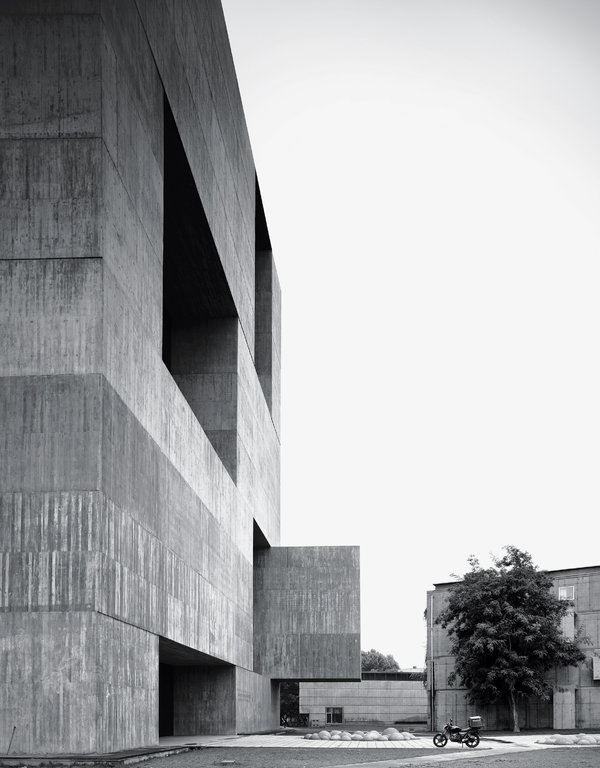
The fortress-like facade of the 17,000-ton Angelini Innovation Center in Santiago, Chile, which Alejandro Aravena designed for the Pontificia Universidad Católica de Chile in 2011. CreditPhotograph by Anthony Cotsifas

There is an excellent story in today’s New York Times about an architect, likely to become a celebrity due to the prize he won this year. I am not a huge fan of concrete (notwithstanding this), but so what? None of my business, plenty of Chilenos would say, and rightly so. However, as noted in my post yesterday, I can sometimes turn on a dime of an image is moving enough. And this image is enough to draw me in to Mr. Aravena’s world. So is this story that the photo illustrates:

Alejandro Aravena, the Architect Rebuilding a Country

Good-looking, charming and a celebrity in his native Chile, the surprise winner of this year’s Pritzker cares more about solving social problems than exercising his artistic chops.

By

THE EARTHQUAKE, one of the biggest ever recorded, hit in the middle of a late February night in 2010. The real damage came 18 minutes later, with the tsunami, crashing from the Pacific up the estuary of the River Maule, where the small, hardscrabble city of Constitución nestles. Continue reading

Waste Not, Want Not

Indian weddings (and other big parties) serve a lot of food — and have a lot of leftovers. Now there's a plan in Mumbai to share the surplus with those who are hungry. Mahesh Kumar A./AP

Indian weddings (and other big parties) serve a lot of food — and have a lot of leftovers. Now there’s a plan in Mumbai to share the surplus with those who are hungry.
Mahesh Kumar A./AP

Living in India provides daily examples of life’s major contradictions: silence and chaos, simplicity and grandeur, lack and excess… Traditional Indian weddings illustrate the examples of abundance – even the most modest of weddings will represent some version of the the proverbial “groaning board” – be it traditional banana-leaf thali of south India or an elaborate multi-course dinner in towering tents. Whenever food is prepared for a crowd there’s potential for waste, even in the so-called “developed world”.

The beauty of this inspiring story is how it taps into Mumbai’s dabbawalla system, taking advantage of the extraordinary logistics of a food distribution system that has functioned well for decades. (If you’ve never seen Ritesh Batra’s beautiful film The Lunchbox, run and find it now…)

India has 194.6 million undernourished people — that’s more than half the world total.It’s what people mean when they talk about “food insecurity:” the economic and social condition of limited or unpredictable access to adequate food.

But in a study published in the August 2015 issue of the journal Lancet, researchers found that India also has 46 million obese citizens.

The dabbawallas — Mumbai’s lunch delivery collective — have stepped in with an initiative they’re calling the Roti Bank. Their aim is to connect the have-nots with the have-too-muchs.

“We deal with food every day, so we’re ideally placed to fix this,” says Dashrath Kedare, a co-founder of the Roti Bank and a leader of one of the dabbawalla unions. Continue reading

Xandari, Monday Morning

WestPoolSunrise

We are currently in the middle of filming a series of short films at Xandari, here in Costa Rica, to match the series of short films we have made of the various Xandari properties in Kerala, India. The film crew arrives at 4:45 so we can catch the rising sun, which I find best viewed from the west edge of the property. Above you can see some of the coffee planted in the last two years, in the midst of one of Xandari’s highly productive organic vegetable gardens. The film crew is drawn to this space at sunrise and sunset. Soon you will see why, cinematically. For now, some more images from the edge of the forest reserve, following Saturday morning’s outing; this time focused on various introduced species of flora that complement Costa Rica’s most famous introduced species of plant (high grade arabica coffee). Continue reading

Human – Pachyderm – Apium Collaboration

Innovation takes many forms. It’s especially satisfying when that innovation works with nature instead of against her. Examples of creative collaboration to solve environmental issues, be they unusual agricultural pest control or ways to avoid human/wildlife conflict such as this Elephant and Bee project are happy news indeed.

Some of our team live in Kerala, India – and know from personal experience the intelligence, and perseverance of elephants, when confronted with an obstacle to plants or trees they crave. This beehive fence concept is incredibly clever, taking advantage of the elephants’ natural fear of bees to keep them safe from potentially deadly conflict.

“I congratulate Dr. King as the winner of this important award. Her research underlines how working with, rather than against, nature can provide humanity with many of the solutions to the challenges countries and communities face. Continue reading

Private Property in the US

The sand hills of Alberta © Ken Ilgunas via NYTimes

We’d never given this issue much thought, but the idea of private property remaining accessible to others who will act responsibly as passersby is an interesting one. If nothing is damaged and the goal is simply to get from one place to the other, or enjoy nature without borders, then why not? Ken Ilgunas writes an opinion editorial for the Sunday edition of the New York Times:

A COUPLE of years ago, I trespassed across America. I’d set out to hike the proposed route of the Keystone XL pipeline, which had been planned to stretch over a thousand miles over the Great Plains, from Alberta, Canada, to the Gulf Coast. To walk the pipe’s route, roads wouldn’t do. I’d have to cross fields, hop barbed-wire fences and camp in cow pastures — much of it on private property.

I’d figured that walking across the heartland would probably be unlawful, unprecedented and a little bit crazy. We Americans, after all, are forbidden from entering most of our private lands. But in some European countries, walking almost wherever you want is not only ordinary but perfectly acceptable.

Continue reading

Processed Views

Although a previous post that embraced the sculptural qualities of food had a far more lighthearted intent, the juxtaposition of Carleton Watkins’ classic photographs and Barbara Ciurej and Lindsay Lochman’s irreverent dioramas has to be viewed with a certain level of irony. The iconic photos of America’s great national parks brought a sense of the country’s vastness home.

The pioneering nineteenth-century landscape photographer Carleton Watkins visited Yosemite during a time of rapid industrialization in the American West, but you’d never know it from the majestic tranquility of the rivers, mountains, forests, and rock faces he depicted. In her book “River of Shadows,” Rebecca Solnit, chronicling the life of another influential photographer of the time, Eadweard Muybridge, whose studies of high-speed movement helped to pioneer motion-picture technology, wrote that Watkins’s landscapes “looked like the true world everyone sought but no one else could locate among the mining booms, railroad building, land grabs, mobs, and murders” of the period. And yet Watkins’s images—which provided many people back East their first views of Yosemite’s idyllic splendor—were, in some sense, an advertisement for the possibilities of the West, and the vast untapped resources that American corporations of the eighteen-sixties and seventies were rushing to exploit. Continue reading

Architectural History, Revised

Screen Shot 2016-04-03 at 8.17.32 AM

Thanks to the Guardian for this unexpected revision to our architectural history–click above to go to a four and a half minute video explaining:

Fifty-seven years after Jørn Utzon commissioned the work, a 6.5-square-metre wool tapestry by the Swiss-French architect, designer and painter Le Corbusier has been finally unveiled in its intended home. Jan Utzon (the son of Sydney Opera House architect Jørn Utzon), Lasse Andersson (Head of Exhibitions, Utzon Center) and others reveal the untold story of a collaboration between two of the 20th century’s greatest architects, for one of the 20th century’s greatest buildings

UberPool’s Social and Environmental Impacts

http://www.nytimes.com/2016/03/31/technology/car-pooling-helps-uber-go-the-extra-mile.html?action=click&pgtype=Homepage&version=Moth-Visible&moduleDetail=inside-nyt-region-0&module=inside-nyt-region&region=inside-nyt-regio

For “baby boomers” the concept of car pooling is a standard one – and not just for over-scheduled kids being taken to after school soccer, dance and music classes. In the mid-20th century fewer people owned a car, and if they did it was one per family, so it was a common occurrence for friends or neighbors to coordinate their morning commutes. Augmented by public transportation, those trips were part of the community fabric.

As the now global Uber app continues to both expand and adapt to the market’s changing demands and needs, it’s possible that UberPool may have both social and environmental impacts.

Unlike a standard Uber ride, in which a single rider starts a one-time trip, UberPool works like a party line for cars. Travis Kalanick, Uber’s co-founder and chief executive, describes it as the future of his company — and thus the future of transportation in America.

Call up the app, specify your destination, and in exchange for a significant discount, UberPool matches you with other riders going the same way. The service might create a ride just for you, but just as often, it puts you in a ride that began long ago — one that has spanned several drop-offs and pickups, a kind of instant bus line created from collective urban demand…

…Mr. Kalanick said it was likely that soon, in big cities and even in many suburbs, most Uber rides will be pooled, meaning each Uber car will be serving more than one rider most of the time.

If that occurs, and if Uber continues growing at its breakneck pace, it would represent a momentous transformation in how Americans get around. Continue reading