Indian Music, European Violin

Clarinet, mandolin, saxophone - the Carnatic tradition of Indian classical music is a ground of growing collaborations across the world. PHOTO: Aambal

Clarinet, mandolin, saxophone – the Carnatic tradition of Indian classical music is a ground of growing collaborations across the world. PHOTO: Aambal

Indian classical music has our attention today. Thanks to its fluidity and pliability that makes it a thriving collaborative space. If you want the history of this art form, find it here. And for crossovers of Western strains and Indian sensibilities, head here. For much of Indian cultural evolution and practice, music is not a standalone art form. It forms the crux of cultural discourse, an important part of the axis that binds community, ritual, practice and social mores. The Carnatic music form of South India is a rather interesting and rich tradition among the musical traditions of the world. For one, it is tremendously alive and vibrant, not just in South India but also in different ways around the world.

Interestingly, the Carnatic form has also been receptive to a great number of innovations, especially in the sorts of instruments it has drawn into its fold. The European violin, for instance, finds an entry as late as the 19th century but has become near irreplaceable in the Carnatic context and performance formats of today. Tipped as being the one instrument that is as close as possible to the infinite flexibilities of the human voice, the violin has spawned different playing styles and traditions of its own in its comparatively brief but highly impactful history.
Continue reading

Sri Lanka Takes the Ecofeminism Route

The new national scheme aims to set up 1,500 community groups around Sri Lanka's 48 lagoons, which will offer alternative job training and micro-loans to 15,000 people. The groups will be responsible for the upkeep of designated mangrove forests.

The new national scheme aims to set up 1,500 community groups around Sri Lanka’s 48 lagoons, which will offer alternative job training and micro-loans to 15,000 people. The groups will be responsible for the upkeep of designated mangrove forests. PHOTO: Outdoor Conservation

Big news for the environment: Sri Lanka’s new government just took the unprecedented, historic step to protect all of its mangroves. The move, the first of its kind anywhere in the world, will provide long-term environmental, social and, last but not least, economic benefits to the Indian Ocean island nation, and provide a model for other vulnerable tropical nations to follow. Whose are the champions of this mission? Women.

Started in the 1970’s and gaining in much popularity during the next two decades, ecofeminism seeks to foster a connection between repression of women with the damage caused to nature and natural resources. It is based on the philosophy that both women and nature exhibit the same values and characteristics like nurturing and hence see it as the responsibility of women to undertake ecological causes. One of the most memorable events of ecofeminism occurred in Kenya when rural women planted trees as part of a soil conservation effort to avert desertification of their land as a part of the Green Belt Movement formed by Wangari Maathai. The women of Greenham Common Peace Camp were instrumental in the removal of nuclear missiles there, a fight lasting for over ten years. Sometimes ecofeminism has also been an avenue through which minority and repressed communities like the Native Americans have found their voice. Mohawk women along the St. Lawrence River established the Akwesasne Mother’s Milk Project to monitor PCB toxicity while continuing to promote breastfeeding as a primary option for women and their babies. More.

Continue reading

Casual Cultural Conservation Through Dance

The only working Danish windmill in the US.

A few weeks ago I visited a friend from Cornell whose family lives in Nebraska and comprises a good portion of the Scandinavian Folk Dancers of Omaha. I’d seen them perform before at the New England Folk Festival in April, held in Mansfield, Massachusetts, but unfortunately at that point my phone’s camera wasn’t the right tool for the job of documenting their great dancing. This time, when the group performed on a much more intimate stage at the Danish Tivoli Festival in Elk Horn, Iowa, (Elk Horn and neighboring Kimballton apparently make up the largest rural Danish settlement in the US) I was ready with my camera and was able to take some half-decent videos of several of the dances. The audio quality isn’t the best given the slightly windy conditions, but hopefully you can get a general feel for the experience in the video below.

We’ve featured some thoughts on dance on the blog before, especially given Kerala’s Continue reading

Getting Social Underwater

 A coral grouper (Plectropomus leopardus) being cleaned by a cleaner shrimp (Urocaridella antonbruunii), in the Maldives. --- Image by © Jason Isley - Scubazoo/Science Faction/Corbis

A coral grouper (Plectropomus leopardus) being cleaned by a cleaner shrimp (Urocaridella antonbruunii), in the Maldives. — Image by © Jason Isley – Scubazoo/Science Faction/Corbis

Let’s talk social behavior. We know much about human relations and the social activities of animals like the chimpanzee. But how about underwater? Yes, the waters, too, are filled with social interactions if rapport between coral groupers and giant moray eels are anything to go by. Several studies have followed how the duo teams up to hunt and have their own ‘code’ of vigorous shimmying, head-stands and head-shaking to communicate about prey. Now, while gestures are commonplace among humans and are expected of intelligent animals like monkeys and dogs, how do fish manage this complex communication with their tiny brains? Redouan Bshary may be the man with the answers.

Continue reading

Museums, Libraries, And An Innovative Hybrid

DRAWING BY LINYU YEN, COURTESY THE SKETCHBOOK PROJECT

DRAWING BY LINYU YEN, COURTESY THE SKETCHBOOK PROJECT

Museums, as well as libraries and other community institutions get a disproportionate share of our attention on this blog. When we see a random variation like the following, we cannot help but follow the trail (thanks to Jordan Kisner):

One recent Wednesday afternoon, a man wandered into a library on North Third Street in Brooklyn and asked how he could sign up for a library card. The young woman behind the counter smiled and explained that at this particular library there were no cards—or even traditional books. The Brooklyn Art Library, housed in a Williamsburg storefront with unfinished floors and exposed piping, is, instead, home to the Sketchbook Project, a collection of crowdsourced sketchbooks that is, according to its staff, the largest in the world. The project was founded in 2006, when Steven Peterman and Shane Zucker, two art students living in Atlanta, began mailing blank Moleskines to anyone who wanted one for a small fee, and then archiving whatever came back. Now anyone can pay twenty-eight dollars for a sketchbook, or sixty-three dollars for a digital membership, which means that their books will be scanned in full and archived online in a digital library. Continue reading

If You Happen To Be In New York City

Richard Serra, left, and Philip Glass in the 1970s. Credit Richard Landry

Richard Serra, left, and Philip Glass in the 1970s. Credit Richard Landry.

Two Raxa Collective contributors remember reading and discussing a profile of Richard Serra a dozen years ago (linked in the announcement below) in advance of a visit to the architectural wonder in Bilbao, Spain created by Frank Gehry. Serra’s persona, his strong views on the boundaries between art and architecture, enrich the viewing experience of his sculpture, especially if that sculpture is viewed within a Frank Gehry building. Now there is an opportunity to experience Serra’s sculpture in the context of one of the most revered living composers.

If you are a fan of cross-arts collaboration, this upcoming performance should be on your radar.  If you have been looking for a way to make a contribution to solve a specific problem related to the recent earthquake in Nepal, then the only question is whether you will be in New York City on June 27 when these two luminaries in their respective field offer a remarkable such opportunity:

The composer Philip Glass once worked as an assistant for the sculptor Richard Serra, after the two befriended each other in Paris in the early 1960s and swapped cultural touchstones.

Continue reading

Where Does This Light Come From?

Energy from solar, biomass and hydrogen is coming together for the first time in India to light up a tribal hamlet. PHOTO: The Telegraph

Energy from solar, biomass and hydrogen is coming together for the first time in India to light up a tribal hamlet. PHOTO: The Telegraph

When India’s Rabindranath Tagore became the first non-European to win the Nobel Prize for Literature in 1913, he made headlines. He continued to be in the news when he decided to use the prize money to set up a university town in India. Today, Santiniketan and its Visva-Bharati University can stake claim to their unique set of trailblazers of alumni; Nobel winning economist Amartya Sen and ace Indian auteur Satyajit Ray are among them. While the light of education draws thousands to the gates of the university town, its hinterland remains in darkness. But in education that leads to innovation we trust and there seems to be a glimmer of a sustainable solution on the horizon.

Continue reading

Put a Face to Litter

Every day in Hong Kong, more than 16,000 tons of waste is dumped in the streets and public spaces. PHOTO: hkcleanup.org

Every day in Hong Kong, more than 16,000 tons of waste is dumped in the streets and public spaces. PHOTO: hkcleanup.org

Going by Hong Kong’s Cleanup Challenge, your DNA can rat you out the next time you toss as little as a candy wrapper on the beach or in the park. The country is taking its trash problem seriously, with an entire week in June dedicated to cleaning urban spaces and its coastline. In fact it generates 6 million tonnes of trash a year – the weight of 350 blue whales. Clearly, this is not sustainable. And that’s precisely why one of the country’s NGOs and the advertising firm Ogilvy & Mather came up with the Face of Litter campaign.

Continue reading

Check This Out

anarc71

We watch the comments and forwarding links on each of our posts, and there have been many fellow travelers over the years coming and going from our community. Here is one fellow we would like to point your attention to, first to thank him for his shoutout of our site; second because we like the name Milo, which got us to click his link; third we find his message kindred to our own; and last but not least because of the graphic above, which is worth more than a thousand words.

Collective Roots

Attention to detail is a highly prized attribute in all aspects of the work we have been doing in India since 2010, and we hope it doesn’t seem pedestrian to extend that concept to something as commercial as shopping. Some people may beg to differ, but there are many cases where the “consumer transaction” is so much more.

We’ve spent many happy hours in exploration to find sustainably produced, cottage industry items. A trip to Gujarat led us to the Kala Raksha Trust. Walks in Cochin led us to the Vimalalayam Convent School, and the NGO A Hundred Hands has introduced us to many of the wonderful craftswomen whose products we highlight, including designer Usha Prajapati from Samoolam.

We’ve been great fans of the results of her work with the women of Bihar from the moment we saw it, and hearing her personal story adds a beautiful dimension to the concept of “self-help”. Thanks to FvF (Freunde von Freunden) for their inspiring online interview.

Samoolam, Usha’s design collective, which is making a name for its beautiful hand-crocheted lifestyle products, is incredible not just because its founder is young, talented and inspiring, but because its process of creation is held together by a network of strong and talented women much like her – women who make things happen, who are changing their worlds, one crochet bead at a time.

Continue reading

Desalination Technological Innovation, Well Timed, Much Needed

freshwater

Drought solution? A invention from MIT and Jain Irrigation Systems can turn salt water into clean drinking water using solar energy. Photo credit: Shutterstock

Thanks to EcoWatch for this good news:

MIT’s Solar-Powered Desalination Machine Could Help Drought-Stricken Communities

Lorraine Chow

A team from the Massachusetts Institute of Technology and Jain Irrigation Systems have come up with a method of turning brackish water into drinking water using renewable energy. With parts of the planet running dangerously low on fresh water, this technology can’t come soon enough.

This solar-powered machine is able to pull salt out of water and further disinfect the water with ultraviolet rays, making it suitable for irrigation and drinking. As the MIT News Office explained, “Electrodialysis works by passing a stream of water between two electrodes with opposite charges. Because the salt dissolved in water consists of positive and negative ions, the electrodes pull the ions out of the water, leaving fresher water at the center of the flow. A series of membranes separate the freshwater stream from increasingly salty ones.”

Continue reading

If You Happen To Be On Ponce De Leon

Screen Shot 2015-04-25 at 5.25.37 AM

It’s been awhile since we wrote about Nick Cave and the inspired and inspiringly creative form of upcycling he applies in his “happenings”. It seems particularly appropriate that this particular Flux Project (sounds pretty pop-up, right?) takes place at Atlanta’s Ponce City Market, an adaptive reuse renovation of the historic 1926 Sears & Roebuck building into an urban community of hub of living, work and public space.

About the work

Up Right: Atlanta is a “call to arms, head and heart” for Cave initiates—the lead characters of this work. Through the performance, they are prepared mind, body and spirit to face the forces that stand in the way of self-hood, to enter a world over which they have complete control. Initiates become warriors of their own destiny.

Continue reading

Action, Louder Than Words, Easier Said Than Done

Screen Shot 2015-04-23 at 5.15.09 AM

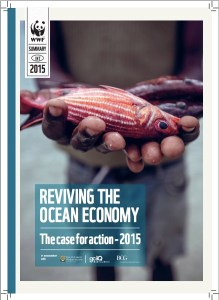
WWF today released a report at once alarming (the photo on the report cover to the right, put in context, is a visual gateway to reporting on par with writings of the gloom maven, which we cannot get enough of) and at the same time inspiring (the photo below of a young girl participating in mangrove restoration hints at the hope for the future), which is motivation enough to read it. The key word is action. Action we must take. And for our part we are committed to sharing as broadly and deeply and as often as possible on actions considered, actions taken, and the result of actions. Click the image to the right to download a low resolution pdf copy, or at least read the summary below from the WWF website:

The value of the ocean’s riches rivals the size of the world’s leading economies, but its resources are rapidly eroding, according to a report released by WWF today. The report, Reviving the Ocean Economy: The case for action – 2015, analyses the ocean’s role as an economic powerhouse and outlines the threats that are moving it toward collapse.

The value of key ocean assets is conservatively estimated in the report to be at least US$24 trillion. If compared to the world’s top 10 economies, the ocean would rank seventh with an annual value of goods and services of US$2.5 trillion.

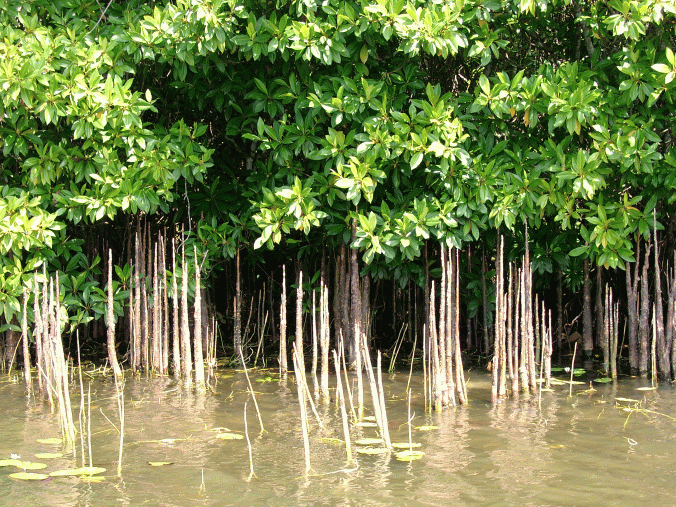
Mangrove restoration. Mangroves store carbon and provide over 100 million people with a variety of goods and services, such as fisheries and forest products, clean water, and protection against erosion and extreme weather events. The rate of deforestation of the planet's mangroves is three to five times greater than even the average global forest loss.

© Jürgen Freund / WWF. Mangrove restoration. Mangroves store carbon and provide over 100 million people with a variety of goods and services, such as fisheries and forest products, clean water, and protection against erosion and extreme weather events. The rate of deforestation of the planet’s mangroves is three to five times greater than even the average global forest loss.

Continue reading

Kathryn Schulz, Come To Kerala

Screen Shot 2015-04-10 at 6.14.56 AM

Past invitations have been sent to environmentally-oriented illustrators, to entrepreneurial conservation artists, to sandplay free spirits, to wildlife management scientists, and to food prodigies; but not enough attention has been paid, in our invitations, to word specialists. So, moving right along, Kathryn please be our guest. We would love to host you here and/or here and/or here.

We have not read the book in the link above, nor even a review of the book, but we are linking to its homepage because there you will find not only information about her book but also links to the two TED talks given by the author, whose profession is listed as Wrongologist. Catchy titles are not what catch us. Scintillating writing on the meaning of words does. For that, you could not do much better than starting here, which will also justify our invitation, as wordplay appreciators, to one of the best:

What Part of “No, Totally” Don’t You Understand?

BY KATHRYN SCHULZ

Not long ago, I walked into a friend’s kitchen and found her opening one of those evil, impossible-to-breach plastic blister packages with a can opener. This worked, and struck me as brilliant, but I mention it only to illustrate a characteristic that I admire in our species: given almost any entity, we will find a way to use it for something other than its intended purpose. We commandeer cafeteria trays to go sledding, “The Power Broker” to prop open the door, the Internet to look at kittens. We do this with words as well—time was, spam was just Spam—but, lately, we have gone in for a particularly dramatic appropriation. In certain situations, it seems, we have started using “no” to mean “yes.”

Here’s Lena Dunham demonstrating this development, during a conversation with the comedian Marc Maron on his podcast “WTF.” The two are talking about people who reflexively disparage modern art: Continue reading

Danish Can-Do Greenery

Screen Shot 2015-04-10 at 5.53.12 AM

Read a bit about their work, mission and invitation, and contagion takes on a new meaning:

Sustainia is a think tank and consultancy headquartered in Copenhagen, Denmark. We identify readily available sustainability solutions across the world and demonstrate their potential impacts and benefits in our work with cities, companies, and communities.

By focusing on innovative breakthroughs, inspiring alternatives and new opportunities, Sustainia is shaping a new narrative of optimism and hope for a sustainable future that seeks to motivate instead of scaring people with gloom and doomsday scenarios. Continue reading

From The Department Of Save It For Later

Screen Shot 2015-04-09 at 4.58.56 AM

Anyone, anywhere, who believes that something is worth saving (preserving, conserving, protecting, etc.) enough to dedicate time and effort, among other resources, we are likely to support it however we can. Our Bird of the Day feature is an example that goes back to one man’s collection of photographs he took personally containing all the birds, endemic and otherwise, that inhabit and/or migrate through south India. This collection is part of his passionate commitment to wilderness conservation in Kerala and other neighboring states.

We asked, in 2011, if Vijaykumar would allow us to publish his photographs in the interest of promoting conservation. He said yes. By now we have probably published all of the collection as it was in 2011, but he is still photographing and contributing. And four years later we have talented birders, many of whom are also exceptional wildlife photographers, contributing their photographs from all over the world. Seth became an employee of the Cornell Lab of Ornithology that same year, and that has led to a whole bunch of other interesting bird-related posts that we host.

Meanwhile New York City has rarely been a subject we cover from a conservation perspective, though its Public Library is of special interest to us. We have not linked to Jeremiah’s blog previously, but it is the type we favor, as you might have noticed, so here goes. Maybe there is more NYC in store for us.

Continue reading

Ecological Intelligence, Desperately Needed, Requires Social Intelligence, The Foundation Of Which Is Individual Emotional Intelligence

Screen Shot 2015-04-08 at 11.41.53 AM

To do what we do, at Raxa Collective, and to do it well, and to succeed, requires alchemy. We are neither sure we are doing it, nor how to do it, nor whether it can be explained; thus, alchemy. No formula. For those of us with management education, of a certain age, there was a certain author who brought alchemy closer to theory, and so closer to the grasp. A conceptual grasp more often than an actual grasp. Mastery? Not even close. But try? Yes. In the beginning it was all about emotional intelligence, but expanded in interesting directions to now include even ecological. Important ideas. Powerful tools. In the current Education section of the New York Times, a small dose that helps understand why:

How to Be Emotionally Intelligent

What makes a leader? Knowledge, smarts and vision, but also the ability to identify and monitor emotions and manage relationships.

The Dumbest Experiment In History, By Far

Screen Shot 2015-04-05 at 7.14.35 AM

It’s official, our blog-crush on this particular conservation-focused entrepreneur. We have not yet heard (click above for a podcast in which “Neil deGrasse Tyson explores the future of humanity with one of the men forging that future: billionaire entrepreneur Elon Musk, CEO of SpaceX and Tesla Motors. Co-hosted by Chuck Nice and guest starring Bill Nye.”) or yet read (continue below to Motherboard‘s interview) anything to make us question that he is the real deal; a living, breathing visionary achiever of heroic proportions:

Elon Musk: Burning Fossil Fuels Is the ‘Dumbest Experiment in History, By Far’

Written by JASON KOEBLER, STAFF WRITER

Elon Musk, founder of Tesla and SpaceX, and chairman of SolarCity, and the guy who dreamt up the hyper loop, says we shouldn’t need an environmentally motivated reason to transition to clean energy. We’re probably going to run out of oil sometime; why find out if we can destroy the world while we do it, if an alternative exists?

“If we don’t find a solution to burning oil for transport, when we then run out of oil, the economy will collapse and society will come to an end,” Musk said this week during a conversation with astrophysicist and Cosmos host Neil deGrasse Tyson. Continue reading

Embracing Student Activism


Students have been rallying for change since the time of Plato with varying degrees of effectiveness. In fact, the act of questioning authority through dialogue is part and parcel to the educational process. It’s heartening when the voices of resistance from multiple communities join forces to activate change.

Congratulations to the students of Syracuse University for rallying SU to remove endowments to direct investments in coal, gas and oil companies.

Syracuse is the biggest university in the world to have committed to remove its endowment from direct investments in coal, oil and gas companies. It aims to make additional investments in clean energy technologies such as solar, biofuels and advanced recycling.

In a statement, the university said it will “not directly invest in publicly traded companies whose primary business is extraction of fossil fuels and will direct its external investment managers to take every step possible to prohibit investments in these public companies as well”. Continue reading

Necessary Measures Implemented By A Good Man, In A Great State, In A Moment Of Ecological Crisis

California Governor Jerry Brown, left, discusses snowpack at Phillips Station, which this year is bare in April for the first time ever. PHOTOGRAPH BY MAX WHITTAKER/GETTY

California Governor Jerry Brown, left, discusses snowpack at Phillips Station, which this year is bare in April for the first time ever. PHOTOGRAPH BY MAX WHITTAKER/GETTY

We cannot say it is good news, but it is heartening to read news of a man we have always admired taking action in the great state of California, the land of endless possibilities (except where water is concerned). Deniers, back off. Get with the program:

Phillips Station sits about sixty-eight hundred feet up in the Sierra Nevada mountain range, not far from the ski resorts near the southern shore of Lake Tahoe. Each year around this time, a surveyor from the California Department of Water Resources thrusts a hollow, aluminum tube into the snow at Phillips Station—one of a number of such stations across the state—to collect a cylindrical sample. The aim is to measure the depth of the snow, which, as it melts and trickles down the mountain and into rivers and reservoirs, becomes one of California’s most crucial sources of water. Continue reading