Aquatic Ecstasy, Safely

Greg Long at the the 2004-2005 Mavericks Big Wave Surf Contest; Half Moon Bay, March 2, 2005. CREDIT PHOTOGRAPH BY BY ROBERT B. STANTON/WIREIMAGE VIA GETTY

Greg Long at the the 2004-2005 Mavericks Big Wave Surf Contest; Half Moon Bay, March 2, 2005.
CREDIT PHOTOGRAPH BY BY ROBERT B. STANTON/WIREIMAGE VIA GETTY

We are looking forward to the arrival in a few weeks of our colleague Derek, coming to us from Costa Rica, where he grew up at Bosque del Cabo. Which means that, among other things, he is a surfer dude like his dad. Which means, while he knows the thrill of a wave he also knows that safety is essential.

Derek will be leading the Aquatic Ecstasy initiatives at our newly opened Marari Pearl and this blog post below reminds us of one of his key imperatives if there is to be any lasting effect of aquatic ecstasy. Safety. We excerpt the blog post below beginning the quotation after some gruesome description of what waves can do, and some language (the type of salty language that surfer dudes use in the most harrowing situations) that our younger readers do not need to see, but you can read the whole post here):

…With more influential surfers wearing the vests, inflatable technology caught on quickly. Dorian’s Billabong wetsuit, too, found a market among professionals. (Neither the V1 suit nor Patagonia’s vest are available commercially yet.)

“No one’s doing anything in giant surf without flotation devices unless they’re trying to act macho or something,” Hamilton said. Continue reading
Cool Green Science Celebrates The Celebrate Urban Birds Initiative

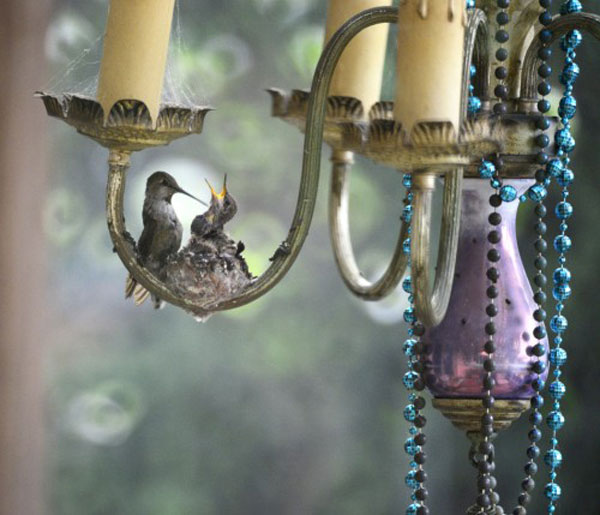
Hummingbirds nesting in a patio chandelier. Photo by Lydia D’moch for the CUBs Funky Nests in Funky Places 2014 competition.

Hummingbirds nesting in a patio chandelier. Photo by Lydia D’moch for the CUBs Funky Nests in Funky Places 2014 competition.

The Nature Conservancy is currently promoting their blog called Cool Green Science, which we expect to be a new source for us to regularly share links to on topics we particularly care about.  We like the blog’s stated purpose:

noun 1. Blog where Nature Conservancy scientists, science writers and external experts discuss and debate how conservation can meet the challenges of a 9 billion + planet.

2. Blog with astonishing photos, videos and dispatches of Nature Conservancy science in the field.

3. Home of Weird Nature, The Cooler, Quick Study, Traveling Naturalist and other amazing features.

Cool Green Science is managed by Matt Miller, the Conservancy’s deputy director for science communications, and edited by Bob Lalasz, its director of science communications.

Of course we would like you to consider visiting Xandari for this purpose, but we appreciate Lisa Feldkamp’s point. She is the senior coordinator for new science audiences at The Nature Conservancy and earlier this week she posted on a topic that is near and dear to us:

What is Celebrate Urban Birds?

You don’t need to book a trip to Costa Rica or the Amazon to enjoy great birding. Continue reading

Healthy Hybrids In Vivid Living Color

Kalettes, BrusselKale, Lollipop Kale and Flower Sprout: This little vegetable, a cross of kale and Brussels sprouts, goes by a lot of names. Rain Rabbit/Flickr

Kalettes, BrusselKale, Lollipop Kale and Flower Sprout: This little vegetable, a cross of kale and Brussels sprouts, goes by a lot of names. Rain Rabbit/Flickr

Our farm to table program in support of 51‘s Malabar Soul Food menu, in which Kayal Villa‘s acreage is serving double duty as beautiful and bountiful, is in full swing, so National Public Radio (USA)’s story here catches our attention:

Does a cross between Brussels sprouts and kale sounds like your vegetable dream come true? Maybe so, if you’re someone who’s crazy for cruciferous vegetables and all the fiber and nutrients they pack in.

Meet Kalettes, a hybrid of the two that looks like a small head of purple kale. It arrived in U.S. supermarkets like Trader Joe’s and Whole Foods this fall, and is being marketed as “a fresh fusion of sweet and nutty.” Continue reading

When Walls Can Talk

As preparation for the second edition of the Kochi-Muziris Biennale slides into the preopening home stretch the streets of Fort Kochi are awash with colorful activity. Stay tuned for more images as they continue to unfold!

This slideshow requires JavaScript.

Birds, Shakespeare & Ecology

Screen Shot 2014-12-05 at 5.11.25 AM

Thanks to National Public Radio for this story of unusual collaboration:

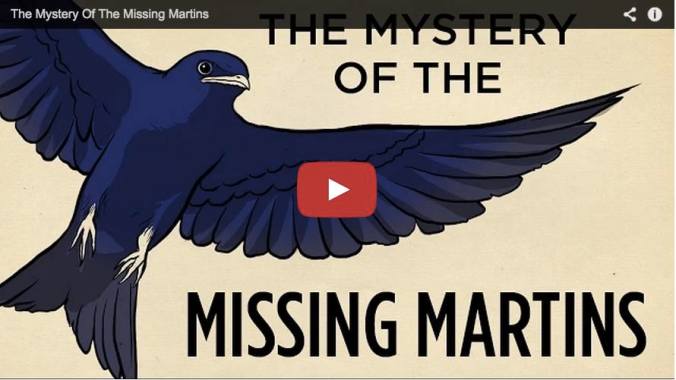
The Mystery Of The Missing Martins

When half a million songbirds didn’t show up at their usual roosting spot this summer, I went looking for them. My search took me to the back roads of South Carolina, where I saw firsthand evidence of Shakespeare’s influence on American ecology, met a society of strangely enthusiastic landlords, and learned a bizarre fact about the missing birds: They don’t nest in nature anymore. They only breed in houses provided by humans.

Gifts That Give Back, Often In More Ways Than One

Each item, including boots from Guatemala, a basket from Rwanda and a soda can cuff from Kenya, are handmade. And when people buy these gifts, the profits go back to the artisans and their community. Courtesy of Teysha; Indego Africa; Serrv

Each item, including boots from Guatemala, a basket from Rwanda and a soda can cuff from Kenya, are handmade. And when people buy these gifts, the profits go back to the artisans and their community. Courtesy of Teysha; Indego Africa; Serrv

Thanks to National Public Radio (USA) for this coverage of artisanal products that use materials that might otherwise be called waste, all of which channel resources to where they are most needed, a topic we never tire of reading about:

After you’ve seized all the deals on Black Friday, Small Business Saturday and Cyber Monday, it’s giveback time.

Today is Giving Tuesday, the day that asks people to donate to a good cause. This online campaign was created three years ago by the 92nd Street Y, a cultural and community center in New York, with the support of a slew of partners, including entrepreneurs, philanthropists and the United Nations. The idea is that you can kick off the holiday season by donating your money or time. At least $32.3 million was donated on Giving Tuesday 2013, according to a survey by the trade publication NonProfit Times.

But if you’re still in an acquisitive mood, there are ways to shop altruistically. There are nonprofits and even companies that sell handmade products whose profits go back to artisans and toward community projects in poorer countries. Continue reading

Water Hyacinth EcoDevelopment Projects

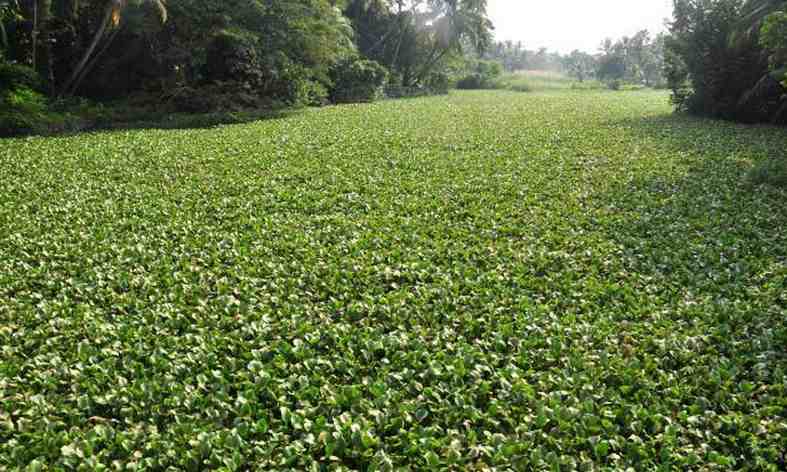
Water hyacinths choke the Poorna river at Tripunithura. Photo: Vipin Chandran; The Hindu

Water hyacinths choke the Poorna river at Tripunithura. Photo: Vipin Chandran; The Hindu

There are many similarities between Indian and Thai river life; watching villagers and people on barges going about their daily lives on the water is one, and the flora and fauna of river life is another. While traveling on the Chao Phraya River it only took a moment to see how the water hyacinths have the potential to choke river traffic. My excitement was piqued when Chananya from Asian Oasis told me that there was an established industry to use the plant for decorative, household and furniture purposes. Continue reading

Dog + Humans = Team

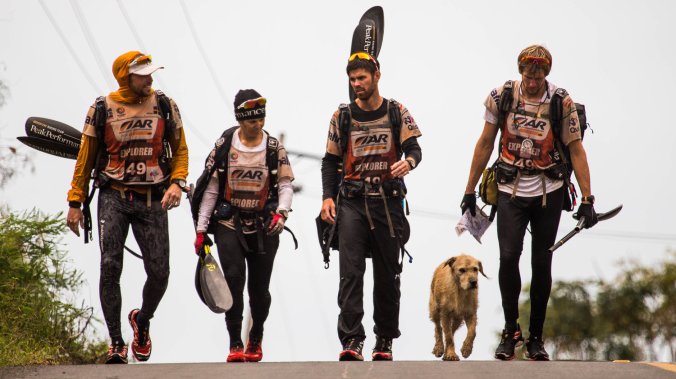
Team Peak Performance says that after six days, they "crossed the finish line with 5 members instead of 4 as the 12th top team in the world." Krister Goransson/Peak Performance

Team Peak Performance says that after six days, they “crossed the finish line with 5 members instead of 4 as the 12th top team in the world.” Krister Goransson/Peak Performance

This takes us back to our Patagonia Expedition Race days. Thanks to National Public Radio (USA) for this reminder of what sometimes counts as the secret ingredient of teamwork in situations that require extraordinary endurance:

After a stray dog in Ecuador met a team of Swedish adventure athletes, he grew so attached to the squad that he ran for miles and swam along to keep up with them. Now Arthur the dog is world-famous — and it all started with a meatball.

Continue reading

Sneak Peek at Xandari’s Upcoming Holiday Tree

The Raxa Collective Holiday tree at Cardamom County, 2012.

Two years ago, the Raxa Collective team designed a new kind of conical decoration to replace the traditional pine tree at Cardamom County, one of Raxa Collective’s properties in Kerala, India. Pictured left, this tree received many compliments from employees and guests alike, was considered a success all around, and came out again last year with some new ornaments at Cardamom County. For the last several years, Xandari has relied on a small palm tree from the gardens here as the holiday ornament, but the resort has been looking for alternatives. When I showed the team what might now be considered the “Raxa Collective tree,” they were immediately excited and started planning to build one straight away.

And so it was that Edwin (José Luis‘s brother) and I found ourselves in two of the several bamboo groves on Xandari property with a saw and a machete on Tuesday. We started out with a simple sketch design of our planned tree based on the images we’d seen of the Indian version, then set out to cut a couple bamboo poles for the construction phase. We knew we’d need three 2.1 meter poles for the pyramid sides, so we got them from one type of medium-thickness bamboo. Then we needed twenty-one rods of seven different lengths (see design photo above), so we went to a grove of thinner type of bambooContinue reading

Good Writing, According To Steven Pinker

Thanks to Intelligence Squared for the last dozen years of excellent debate, Oxford style, and in particular for this recent conversation that picks up where this last post, and the one before that, left off in terms of making us want to hear more from Steven Pinker:

STEVEN PINKER ON GOOD WRITING

with Ian McEwan

Steven Pinker is one of the world’s leading authorities on language, mind and human nature. A professor of psychology at Harvard, he is the bestselling author of eight books and regularly appears in lists of the world’s top 100 thinkers.

On September 25th he returned to the Intelligence Squared stage to discuss his latest publication The Sense of Style, a short and entertaining writing guide for the 21st century. Pinker argued that bad writing can’t be blamed on the internet, or on “the kids today”. Continue reading

Foodpreneurship

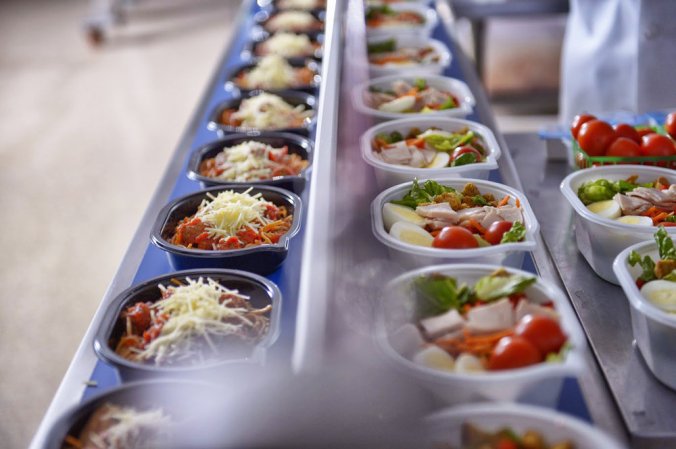
Revolution Foods makes healthy kids meals for both schools and stores. Co-founder Kristin Richmond says mentoring and support have been key to the success of her business. Shelly Puri/Courtesy of Revolution Foods

Revolution Foods makes healthy kids meals for both schools and stores. Co-founder Kristin Richmond says mentoring and support have been key to the success of her business. Shelly Puri/Courtesy of Revolution Foods

In the past year, with conceptualization and then food trials that led to the opening of 51, this story catches our attention and interest. Thanks to the salt, over at National Public Radio (USA) for the new vocabulary:

Culinary Institute’s School For ‘Foodpreneurs’ To Cook Up Innovation

The Culinary Institute of America may be best known for churning out chefs. And some of its graduates — from Grant Achatz to Roy Choi to Anthony Bourdain — have succeeded in entertaining and inspiring a new generation of foodies.

But not all CIA graduates don chef toques. Continue reading

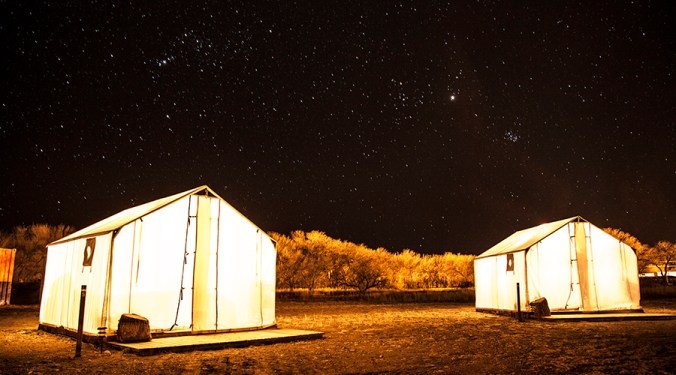
Origins Of Chocolate In Costa Rica

We had not heard of this series until now, but considering the geographic and foodstuff focus of this current episode, we want to know more, especially considering what we learn in the show’s About section:

Iron Way Films, the creators of Original Fare, has spent the last seven years traversing the globe in search of authentic stories and incredible locations. We’ve explored tropical oceans with musicians & pro-surfers. Road horses through big sky back country with ranch riders. Tasted backyard wine deep in the tiny towns of Provence. We’ve glamped, we’ve camped, we’ve lived on boats and spent far too much time in rental cars.

But we always sought to uncover what makes a place special- and what makes it unique.

EL-COSMICO-NIGHT-TENT900x5001

Continue reading

Neighborhood Electric Vehicles

Ecocruise Cruser Sport (Ecocruise Vehicles)

Ecocruise Cruser Sport (Ecocruise Vehicles)

Thanks to the BBC for this new entrant into our vocabulary:

Ecocruise Cruser Sport is the golf cart, accelerated

…Depending on the region in which they are registered, NEVs are limited by law (and usually, by engine output) to speeds below 25mph or 35mph. The best resemble earnest attempts at space capsules, the worst evoke street-legal golf carts (and often because they are, quite simply, street-legal golf carts).
Continue reading

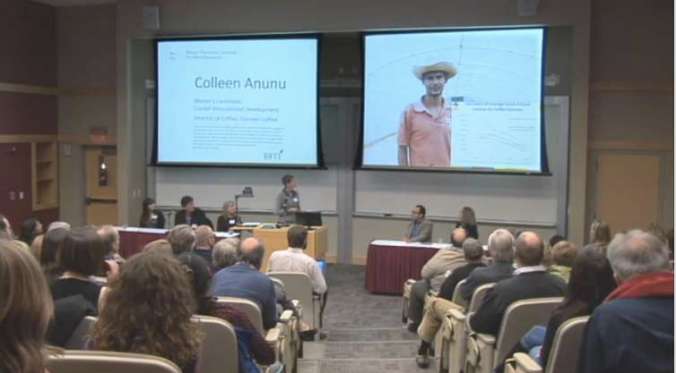
Around The World Of Coffee In One Hour

Screen Shot 2014-11-18 at 11.47.40 AM

Click the image above, or title below, to go to the video:

Coffee: From Gene to Bean to Global Scene

Six researchers from the Boyce Thompson Institute for Plant Research, Cornell University’s Lab of Ornithology, Dyson School of Applied Economics and Management, School of Hotel Administration, and College of Agriculture and Life Sciences investigate the culture of coffee, including: consumer tastes and choices, the social impact of development and production, the ecological impacts of coffee farms, and how the plant’s genome sequence can provide insight into this popular beverage.

Redefining Benefits And Welfare, With Fresh Fruits And Vegetables

These wooden tokens are handed out to shoppers who use SNAP benefits to purchase fresh produce at the Crossroads Farmers Market near Takoma Park, Md. Customers receive tokens worth twice the amount of money withdrawn from their SNAP benefits card — in other words, they get "double bucks." Dan Charles/NPR

These wooden tokens are handed out to shoppers who use SNAP benefits to purchase fresh produce at the Crossroads Farmers Market near Takoma Park, Md. Customers receive tokens worth twice the amount of money withdrawn from their SNAP benefits card — in other words, they get “double bucks.” Dan Charles/NPR

Thanks to the salt, a food-specialized segment on National Public Radio (USA), for this story of one country’s expanding definition and innovative rethinking of welfare, and of the various benefits associated with welfare:

The federal government is about to put $100 million behind a simple idea: doubling the value of SNAP benefits — what used to be called food stamps — when people use them to buy local fruits and vegetables.

This idea did not start on Capitol Hill. It began as a local innovation at a few farmers’ markets. But it proved remarkably popular and spread across the country.

“It’s so simple, but it has such profound effects both for SNAP recipients and for local farmers,” says Mike Appell, a vegetable farmer who sells his produce at a market in Tulsa, Okla.

The idea first surfaced in 2005 among workers at the New York City Department of Health and Mental Hygiene. They were starting a campaign to get people to eat more fresh produce. Continue reading

Crowd-sourcing Hacker Help On Behalf Of Natural History

American Museum of Natural History

American Museum of Natural History

Thanks to the Atlantic‘s coverage of the topics we care about, as always:

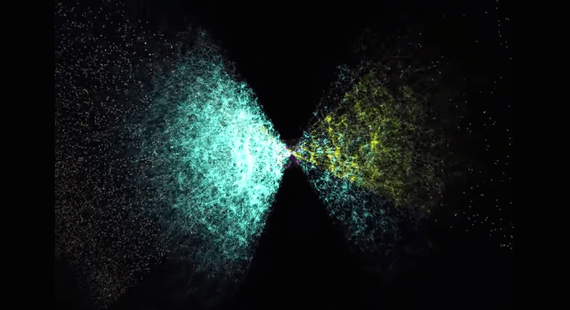
On a Friday night in New York City you can find just about anything. And this past Friday about 130 hackers gathered in the Hayden Planetarium to participate in the American Museum of Natural History’s very first hackathon.

The premise was simple: The museum handed the huge dataset they call The Digital Universe to the hackers and gave them 24 hours to make something. (Part of what made this hackathon different was the literal universe of data hackers were given. More on that in a minute.) There were some specific challenges and categories (Education, Visualization, Tool Kit, and Wildcard) but the hackers were otherwise free to explore the data and run with it. Continue reading

Chocolate, New Sense

Le Laboratoire Cambridge features a restaurant, the Cafe ArtScience. The restaurant's bar features a glass-globed drink vaporizer called Le Whaf. Andrea Shea/WBUR

Le Laboratoire Cambridge features a restaurant, the Cafe ArtScience. The restaurant’s bar features a glass-globed drink vaporizer called Le Whaf. Andrea Shea/WBUR

Thanks to National Public Radio’s program, the salt, for this idea on how we can expect to enjoy chocolate in new ways in the future:

David Edwards has been called a real-life Willy Wonka. The biomedical engineer has developed, among other things, inhalable chocolate, ice cream spheres in edible wrappers, and a device called the “oPhone,” which can transmit and receive odors.

Edwards is based at Harvard, but much of his work has been done in Paris, at a facility he calls Le Laboratoire. Now he’s opened a similar “culture lab” closer to home: Le Laboratoire Cambridge in Cambridge, Mass. Continue reading

Education, Innovation, Puzzling Future

Online education is a technology with potentially revolutionary implications—but without a precise plan for realizing that potential. CREDIT PHOTOGRAPH BY MELANIE STETSON FREEMAN / THE CHRISTIAN SCIENCE MONITOR VIA GETTY

Online education is a technology with potentially revolutionary implications—but without a precise plan for realizing that potential. CREDIT PHOTOGRAPH BY MELANIE STETSON FREEMAN / THE CHRISTIAN SCIENCE MONITOR VIA GETTY

If the first post of today was rather too depressing, here is an interesting puzzle to take your mind off that subject. In honor of all of this year’s interns, many of whom are probably thinking about MOOCs for various reasons, we thank the New Yorker’s Elements writer Maria Konnikova for this intriguing distraction:

On July 23rd, 1969, Geoffrey Crowther addressed the inaugural meeting of the Open University, a British institution that had just been created to provide an alternative to traditional higher education. Courses would be conducted by mail and live radio. The basic mission, Crowther declared, was a simple one: to be open to people from all walks of life. “The first, and most urgent task before us is to cater for the many thousands of people, fully capable of a higher education, who, for one reason or another, do not get it, or do not get as much of it as they can turn to advantage, or as they discover, sometimes too late, that they need,” he told his audience. “Men and women drop out through failures in the system,” he continued, “through disadvantages of their environment, through mistakes of their own judgment, through sheer bad luck. These are our primary material.” He then invoked the message emblazoned on the Statue of Liberty: Open University wanted the tired, the poor, the huddled masses. To them, most of all, it opened its doors. Continue reading

Strength in Diversity

Birds


Strength in diversity, as illustrated in this scientific study described in Nature:

Sticking with co-authors with similar surnames to yours might dent the impact of your work. The reason is unclear, but bibliometrics suggest that teams with greater ethnic diversity generate papers that make more of a splash in the scientific literature.

Continue reading

Bravo To Our Friends At EARTH, Thanks To Our Friends At Whole Foods

141029Bananas-300x194

Bananas from EARTH University are available at over 400 Whole Foods locations in Canada and the U.S. (Courtesy of EARTH University)

The Tico Times, in Costa Rica, reports on the the growth of sustainably grown banana cultivation, and their distribution in North America:

The supermarket chain’s new “Responsibly Grown” produce rating system was launched earlier in October and divides fruits, flowers and vegetables into three categories: Good, Better and Best, based on suppliers’ farming practices.

Continue reading