Coconut – Tree of Life

Photo credits :Ramesh Kidangoor

Photo credits: Ramesh Kidangoor

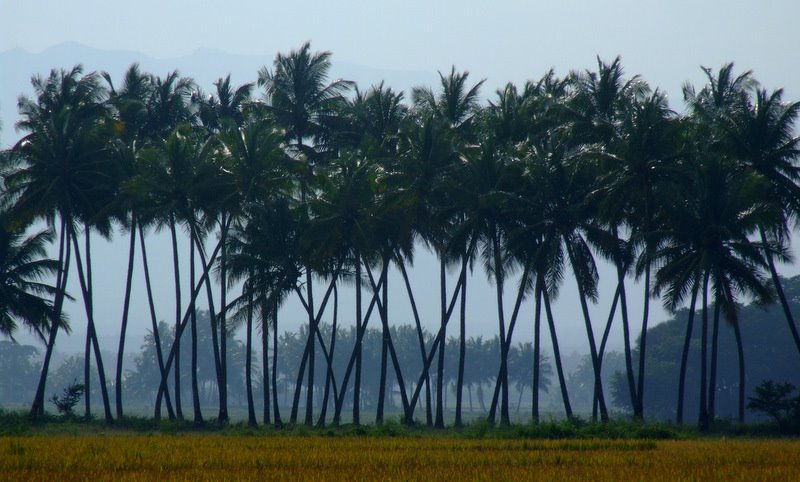
Kerala literally means the “land of Coconut” and is one of the leading producers of coconut in the world. Coconut trees are an integral part of the lifestyle and the economy of the state, and because of the numerous products and by-products derived from its various parts coconut is known as the “Tree Of Life”. Continue reading

Beauty of Munnar Tea Plantations

Photo credits:Ramesh Kidangoor

Photo credits: Ramesh Kidangoor

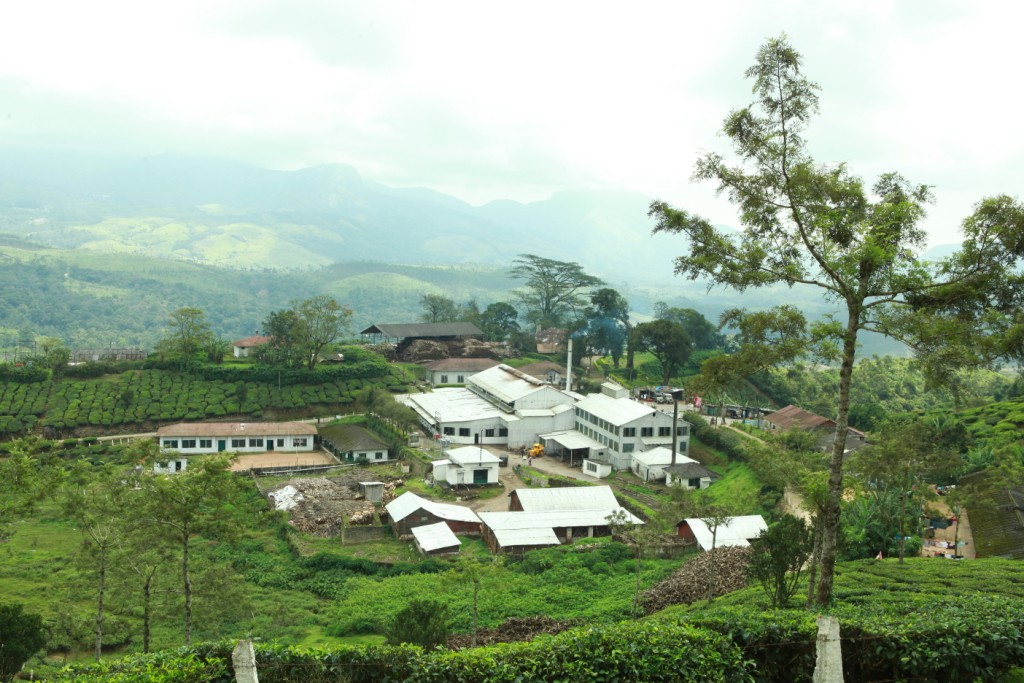
Located above 1700 meters Munnar was the summer residence of the British administration of South India.The British recognized the potential of tea and started planting on about 580 square kilometers of land. Now famous for its tea plantations, Munnar retains its colonial charm with sprawling estates, rolling hills , sparkling waterfalls undulating valleys and hamlets. Continue reading

Understanding Better How Our World Works

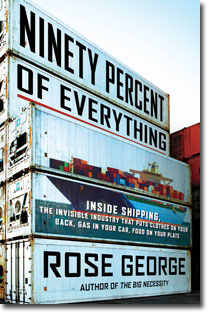
We are frequently late to the party. Fortunately it is often just in the nick of time.  This time, thanks to one of the podcasts we regularly listen to for exactly this purpose, we re-discovered Rose George (having first learned of her through her book previous book, The Big Necessity) and discovered her new book as it hits the market. There does not appear to be much in direct relation to community, conservation or collaboration  within this book, but we appreciate the author’s dedication to a topic that helps us understand better how our world works:

On ship-tracking websites, the waters are black with dots. Each dot is a ship; each ship is laden with boxes; each box is laden with goods. In postindustrial economies, we no longer produce but buy. We buy, so we must ship. Without shipping there would be no clothes, food, paper, or fuel. Without all those dots, the world would not work.

Freight shipping has been no less revolutionary than the printing press or the Internet, yet it is all but invisible. Away from public scrutiny, shipping revels in suspect practices, dubious operators, and a shady system of “flags of convenience.” Continue reading

Pink Rose

Photo credits: Eldhose

Photo credits: Eldhose

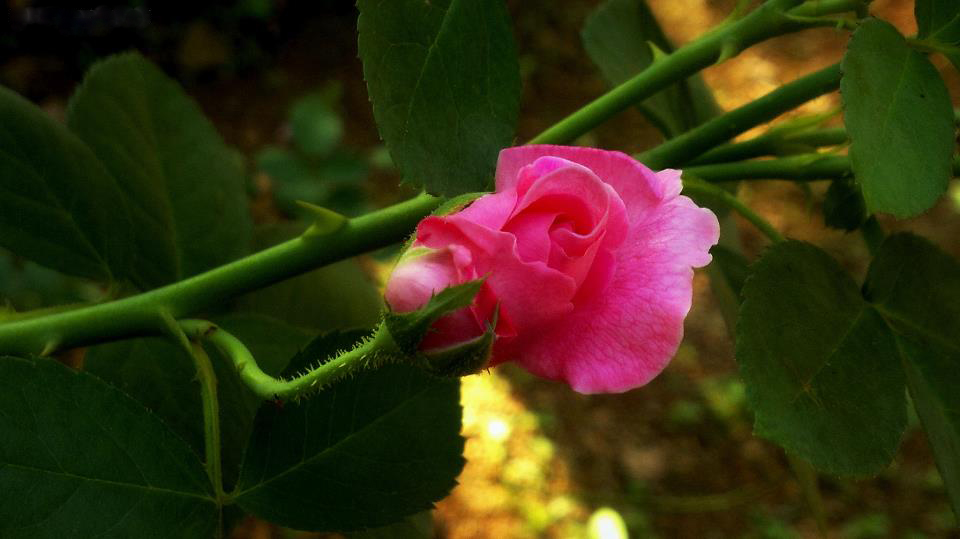
Pink Roses are popularly crop for commercial and domestic cut flowers. This low-growing climber is well-suited to cooler regions and therefore is very commonly found in the High Ranges of Kerala. Pink Roses are good repeat bloomer.

Continue reading

If You Happen To Be In Sydney


This slideshow requires JavaScript.

Down under, where there is no aurora borealis, the do-it-yourself creatives have taken matters into their own hands, using vivid colors to attract your attention–and thrown a big party to boot (May 24 – June 10 according to this press release):

…“Vivid Sydney is where technology, commerce and art intersect—delivering real business outcomes. With 37 per cent of Australia’s creative industries located in NSW, supporting creative industries through events like Vivid Sydney is key to the NSW Government’s strategy to grow the NSW economy,” Mr Stoner said. Continue reading

Kerala Cities – Ernakulam (Kochi)

Photo Credits: Ramesh Kidangoor

Photo Credits: Ramesh Kidangoor

Known as the commercial capital of Kerala, Ernakulam is the one of the largest cities in the state. Ernakulam refers to the eastern part of the twin cities Ernakulam-Kochi. Alive and throbbing with people, shopping centers, cinemas, hotels, offices, plush buildings, and restaurants; the factors that come together to create the quintessential city life can be experienced here with an International Airport an hour away. Ernakulam is the only city in Kerala where one can experience the conveniences of an urban lifestyle that is now increasingly prevalent in the larger cities of India, in addition to the criss-crossing backwaters that make the area famous. Continue reading

Cardamom – Elettaria cardamom

A native of India’s Western Ghats, Cardamom belongs to the Ginger family. Known as the “Queen Of Spices”, it is one of the most famous and popular spices used in India and the Middle East. The dried berry of the plant is called chotti elaichi in Hindi, which means small cardamom. Continue reading

Vattavada Munnar

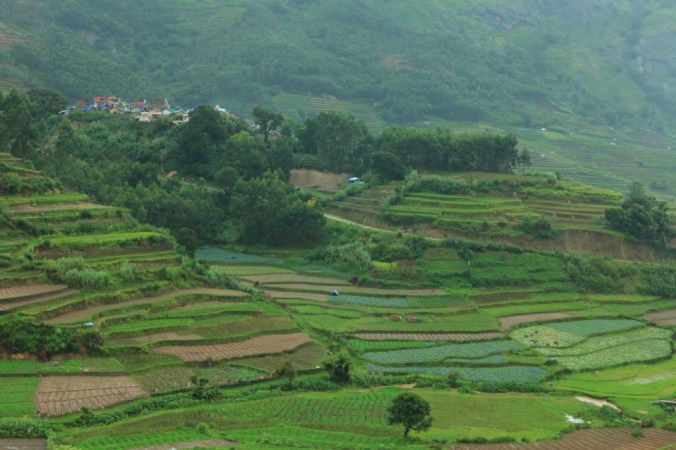
Vattavada is a serene village situated near Munnar at an altitude of 6000 ft above the main sea level. It is a high range agricultural zone but instead of tea plantations vegetables are predominantly cultivated on the terraced slopes and valleys of the area. Carrot, cabbage, beans, onion, chillies, beetroot, potatoes  and leafy vegetables are the famous crops from Vattavada. Continue reading

Wild Periyar – Indian Sandalwood

Sandalwood (santalum album) is a small evergreen tree that can grow up to 15 metres high. This hemiparasitic tree (feeding off the roots of other plants) is found widely in the Periyar Tiger Reserve, although is considered threatened in many parts of the world. Continue reading

Come To India, Alan Moore!

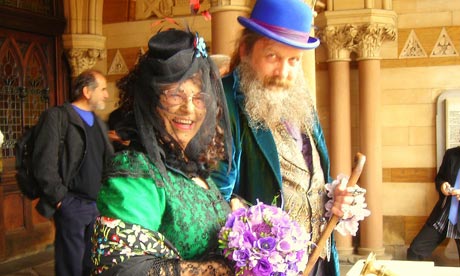
The wedding of Alan Moore and Melinda Gebbie. Photograph: Neil Gaiman/Writer Pictures

The wedding of Alan Moore and Melinda Gebbie. Photograph: Neil Gaiman/Writer Pictures

Please bring your bride, too.  We extend this type of invitation to the too few happy few who clearly work for the pleasure of their craft (or so it seems, observing them), rather than the money.  In our own small way, 180+ full time members of Raxa Collective in Kerala–not to mention contributing photographers, interns and other friends to our purpose–are all attempting the same. For whomever might have missed it, this profile is worth the read:

…Moore has a complicated relationship with money. “Pure voodoo,” he says now. “Only there as long as we believe in it.” Challenged, during a television interview this year, about why he would sign away the movie rights to a comic such as Watchmen if he didn’t ever want it to become a movie, Moore said he gave up the rights because he never expected any adaptations to happen; he called it making money for old rope. Continue reading

Cumbum Vegetable Market (Tamil Nadu)

Cumbum is located about 25km away from Thekkady and is famous for its weekly fresh vegetable market. People from Kerala and Tamil Nadu buy their produce here both in wholesale and for domestic use. Garlic, Onion, Tomato, Okra, Beans, Carrot and Green chilies are the popular vegetables from this market.

From the 2012 Net Impact Conference, Part 1

A couple weekends ago, I attended the 2012 Net Impact Conference, which was hosted by the University of Maryland in Baltimore this year. If you’re unfamiliar with Net Impact, it is a 30,000-member nonprofit focused on mobilizing students and professionals to solve the world’s most pressing environmental and social problems through the public and private sector. I would personally describe Net Impact as an organization dedicated to mobilizing young professionals to make impacts with their careers. It’s an awesome organization.

Continue reading

Marigold

Marigold is a long lasting bloomer bearing numerous single, yellow to orange flowers on each stem. It is commonly found in the high ranges of Kerala, but grows throughout India. These flowers are mainly used for garlands, Temple offerings and medicinal purposes.

Continue reading

Mysore Flower Market

Photo credit: Ramesh Kidagoor

The Mysore Flower Market is the perfect place to get fresh local flowers. Its bustling pathways are filled  with roses, brightly coloured marigold and highly scented jasmine. This flower market is one of the city’s main attractions.

Continue reading

Mysore Fruit Market

Photo credit: Ramesh Kidangoor

One of the most colorful and oldest fruit markets in India, Mysore Fruit Market is famous for the freshness and purity of the produce available here. Just off the city’s main thoroughfare, this market is used by the locals daily. Continue reading

Creative, Effective, Collective Action

Thanks to our friends at Colossal for pointing us here:

I can’t speak from personal experience about the political climate in Yekaterinburg, Russia but if we take this video from the ad agency Voskhod at face value it appears the powers that be neglected the city’s infrastructure one day too long. Continue reading

We’re No Angels

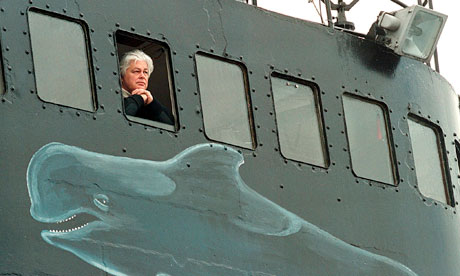
Captain Paul Watson says that the alleged incident in 2002 did not occur in Costa Rican waters. Photograph: Corbis

He’s no angel.  That would be the view of whaling and fishing interests, which include countries and big companies (plus plenty of soulless mercenaries, poachers and thugs).  Whales might think otherwise. 800 large endangered bluefin tuna, saved from poachers by this man and his organization, might too.  He counts plenty of our contributors as admiring, angel-cheering, distant observers.  Our observations are tempered by acknowledgement of the conundrums wrapped up in his in-your-face, semi-legal tactics (not our style).  But we care about fisheries and related topics as much (while trying to keep our wits about us) as those complexities.  And those forces Paul Watson is battling are certainly not always angelic themselves. Nor are we, always, for that matter.  Click the image above for the story in The Guardian:

California-based marine conservation organisation Sea Shepherd suspects that Costa Rica may have made a deal with Japan to have him extradited. Continue reading

Carbon Emissions Series: Scope 3 for Hospitality

If someone asks you to measure your property’s scope 3 emissions, you should tell them that it’s basically impossible. Because it is. That’s the gist of this post. But before we despair over the endless range of scope 3 emissions for a hotel property, let’s toss in the GHG Protocol’s definition:

Scope 3: Other indirect emissions, such as the extraction and production of purchased materials and fuels, transport-related activities in vehicles not owned or controlled by the reporting entity, electricity-related activities (e.g. T&D losses) not covered in Scope 2, outsourced activities, waste disposal, etc.

How far does your supply chain reach? The vast scope, depth, and complexity of hotels' supply chains and customer interactions make scope 3 measurement a daunting task.

Carbon Emissions Series: Scope 2 for Hospitality

In our continuing discussion about the types of greenhouse gas (GHG) emissions, we have now come to scope 2 and how it relates to the hospitality industry. Much of the research at the Cornell Hotel School focuses on lowering electricity usage, which directly correlates with scope 2 emissions. Let’s start off with a definition.

Scope 2: Indirect GHG emissions from consumption of purchased electricity, heat or steam.

One of the biggest sources of scope 2 emissions is the coal-fired power plant, which emits CO2, NOx, SOx, and a number of heavy metals. Although it is extremely inefficient, coal remains a major source of electricity in the United States.

Continue reading