The Sun Over Africa Is Powerful

170626_r30168_rd.jpg

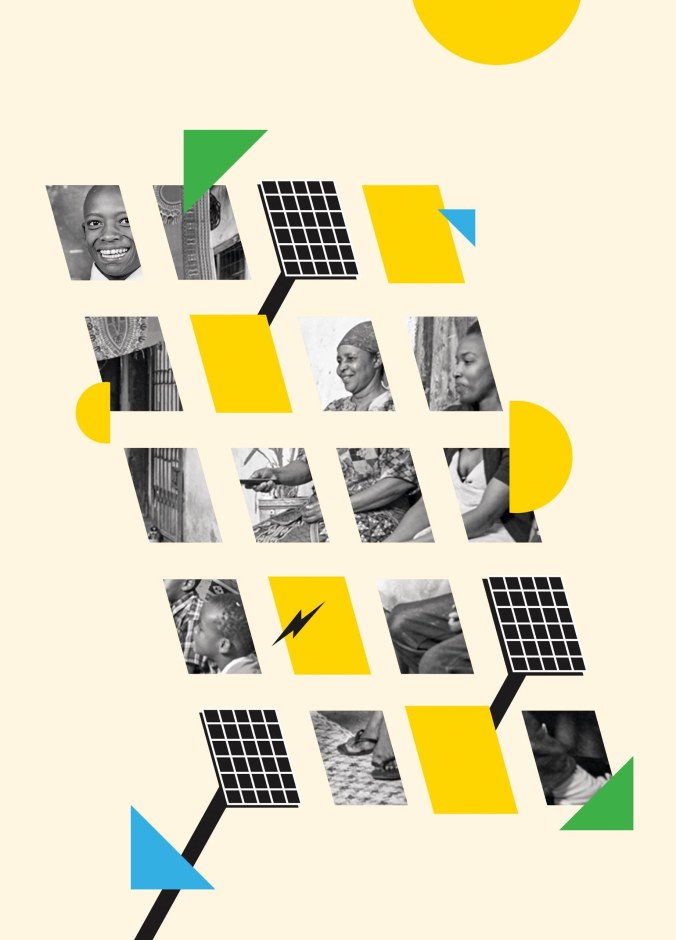
In eighteen months, entrepreneurs brought electricity to hundreds of thousands of people in places that the grid failed to reach. Illustration by Oliver Munday / Photographs courtesy Mathieu Young / Off-Grid Electric

The author has been featured in our pages mainly as an activist, but it is good to see he has returned to the New Yorker as a reporter, writer, and keen observer:

The Race to Solar-Power Africa

American startups are competing to bring electricity to communities that remain off the grid.

By Bill McKibben

The cacao-farming community of Daban, in Ghana, is seven degrees north of the equator, and it’s always hot. In May, I met with several elders there to talk about the electricity that had come to the town a few months earlier, when an American startup installed a solar microgrid nearby. Continue reading

Sustainable Village Highlight: San Juan la Laguna, Guatemala

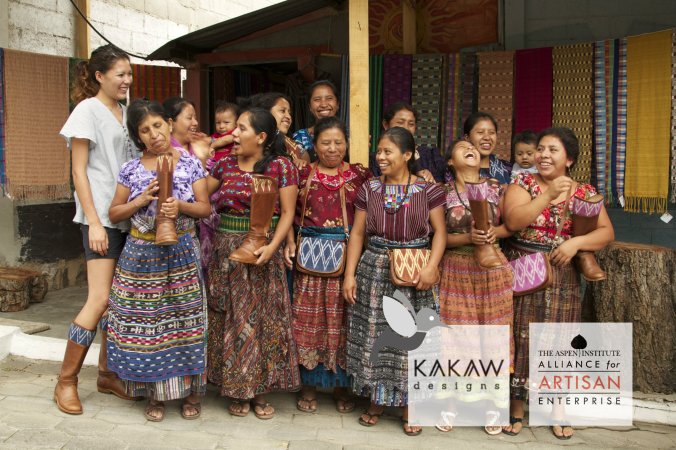
Hi, there! I’m Mari Gray, founder of artisan-made brand Kakaw Designs, based in Guatemala. After studying International Relations and Spanish at UC Davis and then working for several non-profits in Latin America, I became disillusioned and decided to focus on sustainable development through a social enterprise, partnering with talented artisan communities in Guatemala.

I feel incredibly fortunate to work with different artisan groups in Guatemala through Kakaw Designs (pronounced <kekao> like the cacao tree), an artisan-made brand I started about four years ago.  We currently work with several different artisan groups: two weaving, one embroidery, two teams of leathersmiths, and one silversmith; all to make our designs come to life.  But it was for a good reason that we started with the weaving cooperative Corazón del Lago in San Juan la Laguna, at Lake Atitlán.

Kakaw Designs Alliance logo

We would never have been able to launch Kakaw Designs without this group of forward-thinking, professional weavers from this small Maya village.  The community itself is exceptional, with sustainability clearly a focus through:

  • Use of natural dyes in textile production, also using local traditional techniques such as backstrap weaving and ikat designs  <<Learn more by watching our video>>
  • Organization of weavers in cooperatives or associations, where women work together and can therefore take larger orders and offer quality control
  • Up-and-coming development of community ecotourism, especially birding

Continue reading

A Food Writer & The Shock Of The New

13-apple.w512.h600.2x.jpg

Food has recently returned to the center of our attention, and in the outback of Belize we have had some lovely surprises. An unexpected essay, from one of the food world’s most prominent writers, gives another view altogether from the USA:

The New Foodieism

To care about food now is to care about the future of this country.

By Mark Bittman

Like many of us, I spent the winter muddling through a mental miasma, pondering the meaning of life and democracy. I did, of course, think about “food” — how it’s produced, marketed, discussed, consumed, and so on — during my self-imposed hiatus from near-constant writing, which began more than 18 months ago. Continue reading

Graduation Day in Sylvester Village

IMG_0767

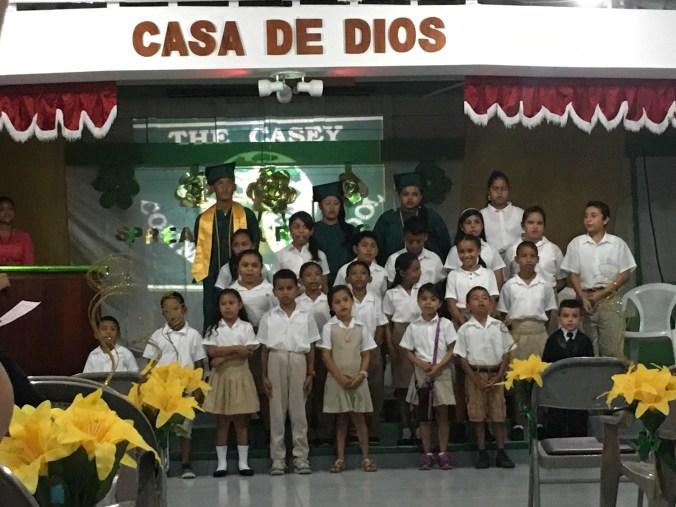
Earlier this week I did something that I couldn’t possibly have anticipated would be part of my Chan Chich experience: I attended a primary school graduation.

Sylvester Village is a community where employees of Chan Chich and Gallon Jug Farm live with their families. The Casey Community School is where many of the village’s children go for their first years of education. As one might imagine, the school is not very big. In fact, this year the school only had one kindergartner. Growing up in suburban America, this was very different from my early education which had about 24 kids in a first grade class with multiple classes per grade. However, perhaps the biggest difference from my experience was the school’s emphasis on community.

Continue reading

Climate, Agriculture & Disruption

corn-shot_custom-954dc74482bc59c82397d81f4660d015b059809a-s1400-c85

Journalist Chris Clayton writes for an audience filled with climate skeptics: farmers and leaders of agricultural businesses. He’s telling them that a changing climate will disrupt their lives. Courtesy of Chris Clayton

From the salt over at National Public Radio (USA), here is an interview in keeping with the spirit of yesterday’s post on peaches:

…Clayton is a Midwesterner and agricultural policy editor at DTN/The Progressive Farmer. He’s also the author of The Elephant in the Cornfield: The Politics of Agriculture and Climate Change, which describes in detail how farmers and farm lobbyists have dealt — or, more often, refused to deal — with a changing climate.

It has sometimes put Clayton in an awkward spot, as he acknowledged when I reached him this week in his office in Omaha, Neb.

Does it make you nervous, as a reporter at a farm publication, talking about climate change?

All the time. I feel like the guy who has to tell people things they don’t want to hear. But if I simply ignore the topic or ignore the issues, am I doing anybody any favors? Continue reading

When Life Gives You Lionfish…

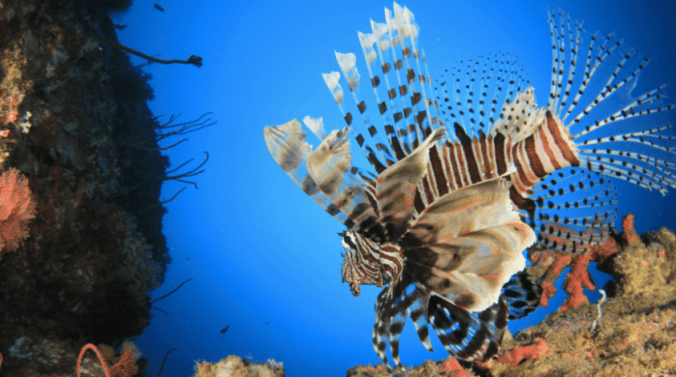
Market-based approaches to controlling invasive lionfish populations were highlighted at a recent GEF event in Grenada.

La Paz Group contributor Phil Karp has long been our guide into marine ecosystems, with both citizen science and social entrepreneurship posts on his work with groups in Belize and other parts of the Caribbean focused on these goals.

This collaboration with Sarah Wyatt,  a colleague from the Global Environment Facility, illustrates the on-going market-based approaches to managing the invasive species while creating new cottage industry opportunities.

Seeing a lionfish while diving in the Caribbean is a cause for mixed emotions.  On the one hand, one marvels at the exquisite beauty of the fishes’ flowery fins and its amazing adaptability to a range of habitats, from shallow estuaries with low salinity to deep reef environments. But then you remember that these fish don’t belong in the Caribbean, and that the very versatility noted above makes them an invasive menace. Indeed, if the fish you are looking at is a female, she may be carrying up to 30,000 eggs, and may have thirty or more native fish or crustaceans in her stomach.

One of the many impacts of the Anthropocene era on global biodiversity is the increased spread of invasive species, like the lionfish, due to rapid globalization. With the United Nations Ocean Conference taking place in New York next week, the conservation and sustainable use of the oceans and marine resources is high on the international agenda.  While long recognized as an environmental and biodiversity threat, invasive species also pose a threat to livelihoods, particularly in developing countries where incomes may be heavily dependent upon a single sector or product.

Traditionally, efforts to eradicate or control invasive species have been focused on public sector interventions.  But control efforts are often expensive and are either out of reach, or pose severe strains on limited budgets of developing countries.  Hence there has been growing attention to identification of market-based control approaches which create commercial incentives for removing the invaders, providing a financially sustainable means of control… Continue reading

Thank You Nebraska!

Nebraska

We have refused to give up hope because there continue to be a trickle of stories like this, thanks to the Guardian. Bruce Springsteen dedicated a whole album to Nebraska, and this short news via video reminds us of that state’s great people:

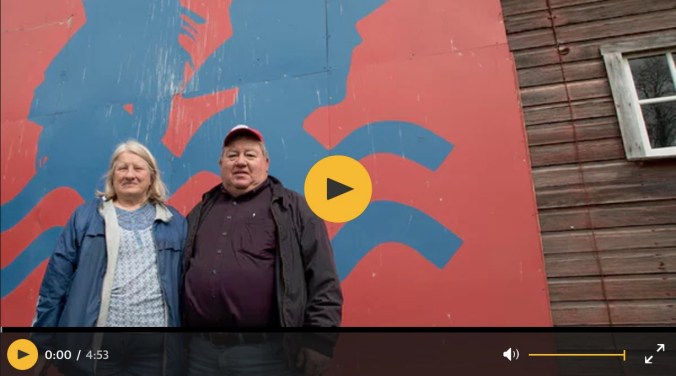
After Trump’s revival of the Keystone XL pipeline project, some communities along its route are getting ready to fight back. Others see the US president keeping his promise to ‘make America great again’. The Guardian drove along the proposed route of the pipeline, through three red states – Montana, South Dakota and Nebraska – to hear what those who will be affected have to say about it

Strengthening Our Birding With Citizen Science

team-belize-720x405.jpg

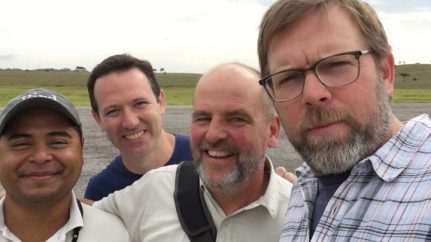
Team Belize finished with 242 species. From left: Roni Martinez, Andrew Farnsworth, Steve Kelling, Brian Sullivan.

Seth, since his time working for the Cornell Lab of Ornithology, and even after his time in Ithaca, has helped me to see how important the Lab’s work is to what our company has been doing since he was an infant. Citizen science is an essential component, and at Chan Chich Lodge guests have responded to the passion the guides have for eBird, which is why we put so much attention into this year’s Global Big Day. And it is why we are already planning the next collaboration with the Lab, a collaboration Seth will lead on our side. For now, a final roundup of stories from last weekend, starting with our favorite team:

…After pooling their lists, the teams ended the day with a whopping 327 species combined—reflecting not just great birding but the region’s importance to an immense diversity of birds. Team Belize topped the friendly group competition with 242 species (including 40 species the other teams didn’t find); Team Mexico found 224 species (with 43 unique to their list); and Team Guatemala tallied 213 (with 23 unique)…

58126301-520x611

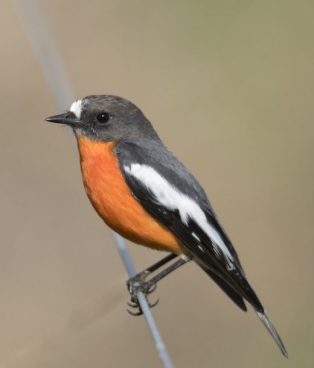
Flame Robin by John Cantwell/Macaulay Library, taken on Global Big Day

Also, the final numbers are in and news published late yesterday confirmed what I suspected as day was breaking in Belize, titled Global Big Day 2017: birding’s biggest day ever:

…On 13 May 2017, almost 20,000 birders from 150 countries around the world joined together as a global team, contributing more than 50,000 checklists containing 6,564 species—more than 60% of the world’s birds. This is a new record for the number of bird species reported in a single day, Continue reading

Sticking To Mission & Unintended Consequences

GBD2017Result1

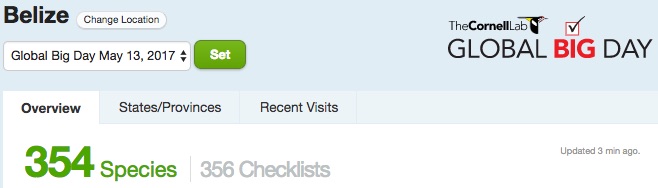
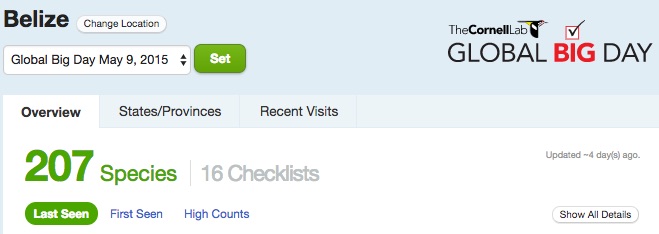
In recent months, as we prepared to host Team Sapsucker Belize at Chan Chich Lodge, our goals were focused on the citizen science mission. Using a couple simple metrics, the event was a clear success, comparing the number of species counted in Belize this year versus last year, and especially looking at the number of checklists submitted.

GBDResult16.jpg

If you look at this as the third iteration of an event that we hope to grow in future years, the progress from beginning to present is promising. As I type this there are still more than 40 hours of data entry remaining for this year’s event, so the increase in this year’s participation and species identification will likely grow larger by this time Wednesday.

GBDResult15.jpg Continue reading

GrowFood Carolina

how-growfood-works.png

I am always on the lookout for simple but effective graphics illustrating ideas that we attempt to put into action in our various projects–why reinvent the wheel? By rabbit hole good fortune, after I was referred to the Coastal Conservation League as a regional leader in entrepreneurial conservation for the southeastern USA, one of their programs, as illustrated above and described in words below, came to my attention:

The Conservation League started its Food and Agriculture program in 2007 with the goal of protecting South Carolina’s small, family farms. Between 1992 and 1997, more than 200 acres of rural land were converted every day to urban uses, placing South Carolina in the top ten states in the nation for rural land loss. We quickly realized that small farmers lacked access to the infrastructure available to industrial farms, and were therefore unable to say “no” when a developer offered to buy their land. The League saw a food hub as critical to our work protecting rural landscapes and improving quality of life across the coastal plain. Continue reading

Happy Plants?

04GARDEN1-master768.jpg

A dense carpet of woodland perennials. Thomas Rainer, a landscape architect, calls plants “social creatures” that thrive in particular networks. Credit Mark Baldwin

Thanks to the landscape architect Thomas Rainer, and the author, for these observations:

Thomas Rainer and I have both been doing the botanical thing for decades; we know, and use, many of the same plants — and even much of the same horticultural vocabulary. But what he and I see when we look at a butterfly weed or a coneflower, or what we mean when we say familiar words like “layering” or “ground cover,” is surprisingly not synonymous. Continue reading

Keystone Continues Calling

3733.jpg

Thanks to the Guardian for keeping attention where it is due:

Life on the Keystone XL route: where opponents fear the ‘black snake’

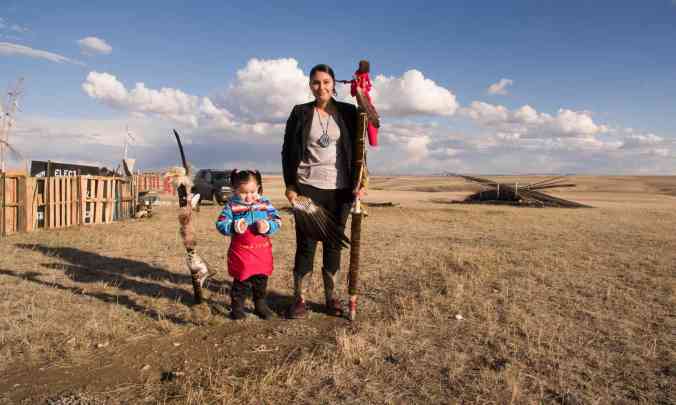
Part one: In Montana, Native Americans fear a leak could destroy their way of life, but local politicians worry about the threat of protesters above all else

Words by Oliver Laughland, photos and video by Laurence Mathieu-Léger

“)ur people call it the black snake because it is evil,” says Tressa Welch, as thunder clouds steamroll the blue sky over the plains of Wolf Point. “And like snakes they come out of nowhere, they slither and strike unknown.” Continue reading

For The Wordies In Our Midst

ap_070703038854_wide-8db38f345e52dcc1cd10af2ed21699e9704f7293-s1400-c85

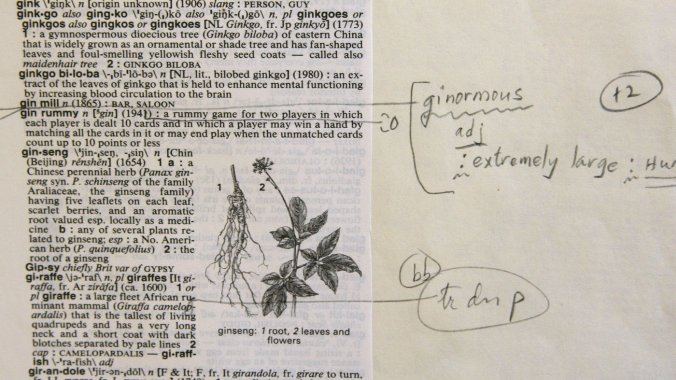
A galley proof shows some of the work that went into adding “ginormous” to Merriam-Webster’s 2007 collegiate dictionary. Charles Krupa/AP

We care about the meaning and use of words about as much as we care about the specific themes words are used in these pages to evoke in all manner of variation: conservation, community, collaboration, food, etc. Among us are perhaps some repentant grammar scolds, so thanks to the Atlantic’s Megan Garber for this review, which I was led to read after listening to an interview with Kory Stamper (click the image above to go to that podcast):

The Case Against the Grammar Scolds

The lexicographer Kory Stamper’s new book, Word by Word: The Secret Life of Dictionaries, is an eloquent defense of a “live and let live” approach to English.

lead_960 (7)

Louis du Mont / Getty

Continue reading

Letters to Young Farmers

PHOTO ILLUSTRATION BY THE DAILY BEAST

The reference of the title isn’t lost on us, for the “everyday act of creation”, of coaxing bounty from the soil, is a form of poetry. We applaud both the advisors and the ears on which the advice falls.

Letters to a Young Farmer is full of good counsel for the next generation from the likes of Wendell Berry, Michael Pollan, and the noted novelist Barbara Kingsolver.

Dear young farmer,

Let me speak to you as a familiar, because of all the years I’ve cherished members of your tribe. Of course, I also know you’re only yourself, just as I remember the uniqueness of every intern, WWOOFer, and summer weed-puller who has spent a season or two on our family’s farm. Some preferred to work without shoes. Some were captivated by the science of soils, botany, and pest management. Some listened to their iPods, or meditated, or even sang as they hoed and weeded, while others found no music among the bean bee­tles. A few confessed to finding this work too hard, but many have gone on to manage other farms or buy places of their own. In these exceptional souls I invest my hopes….

Continue reading

Democratizing Coffee Consumption

12COFFEE3-master675-v2

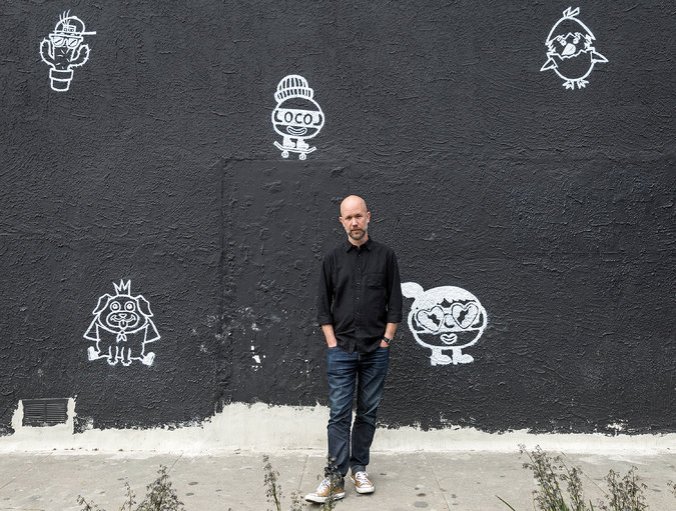
Tony Konecny, the head of coffee operations at Locol, outside the branch in the Watts neighborhood of Los Angeles. CreditEmily Berl for The New York Times

We have no reason to debate the logic of a more reasonably priced cup of quality coffee:

Has Coffee Gotten Too Fancy?

By

LOS ANGELES — The $1 cup of coffee is divisive, as drinks go.

For some, it’s a staple of the American morning: a comforting routine, a good deal. Anything that costs more than $1 is needlessly expensive, a waste of money — the coffee from a deli, diner or doughnut cart is all you need to start the day. For others, the $1 cup is suspiciously cheap. Maybe it tastes bad, or its production does harm to the land and is unfair to laborers. If you have to pay more, then that is probably a reflection of a drink’s true cost. Continue reading

Family, Editorializing, Persistence

962.jpg

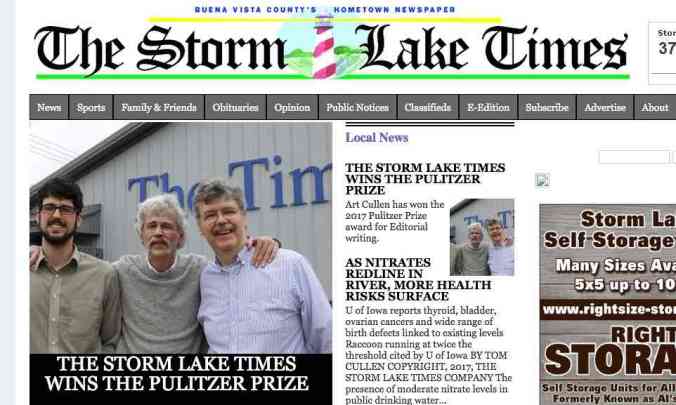
A front page screen shot of Iowa’s Storm Lake Times, which has won a Pulitzer Prize. Photograph: Storm Lake Times

There seems to be a tradition in the field of journalism in the USA whereby one publication celebrates another’s victory in the Pulitzer awards race. Thanks to the Guardian for its shout out, from across the water, to this little publication. As a member of a small organization with multiple family members working together; an organization that editorializes about food as much as anything else; an enterprise that persists against the odds; I particularly like the David & Goliath ring of this:

Tiny, family-run Iowa newspaper wins Pulitzer for taking on agriculture companies

Art Cullen owns the 3,000-circulation Storm Lake Times with his brother John. His wife and son also work at the paper Continue reading

Model Mad, Podcast

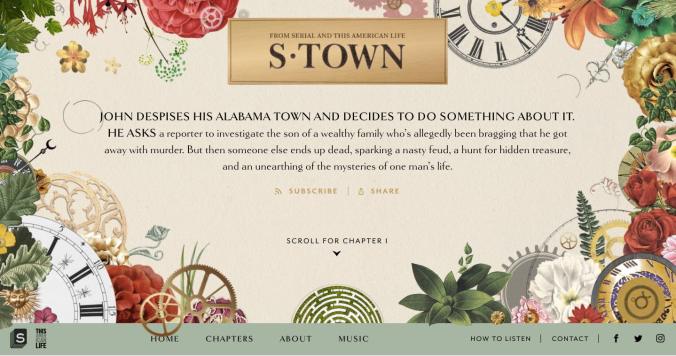
STown

We, among millions of others, had to have a listen. It would be useless to comment on it, but we pass it along to the few people who have not yet heard about it. The only comment here, besides the advisory that it was produced for a mature audience, might be the conclusion that in the model mad series we have been running, this one takes the cake. Maybe with this one we need to close out that series. Until we see something better, that’s it.

Gaps, Meaning & More

09GAP-superJumbo-v2.jpg

Kyle DeNuccio, right, on Lake Batur in Bali, a gap year stop. CreditKyle DeNuccio

I am currently interviewing candidates to join us for summer internships, and possible university gap year projects at Chan Chich Lodge. Most importantly the projects will focus on various food-related initiatives, some longstanding goals and others more in the spirit of random variation. We have had plenty of awesome interns, as well as wondrous wanderers and sometimes sabbaticalists join us here and there for more than two decades, and we feel qualified to claim that this fellow (who reminds me a bit of this fellow) speaks truth:

Independence Days: My Perfect Imperfect Gap Year

By

Midway through a lackluster freshman year at the University of San Diego, I called my parents and told them I planned to leave school after the spring semester. Continue reading

Model Mad, Mayor

02QNA-master768-v2

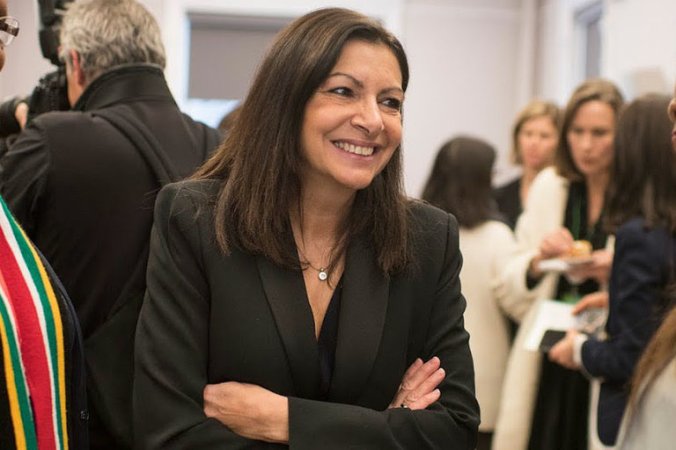
Anne Hidalgo, the Paris mayor, said she was “convinced that together, cities, businesses and citizens will save the planet. Their alliance is critical.” Credit Scout Tufankjian/C40

We started this model mad series of links to share stories of people, and of public institutions, and of private enterprises among others finding creative outlets for expressing resistance to powerful interests determined to undermine environmental responsibility. This governor was a favorite among our readers, so we expect this mayor will join the upper ranks of appreciation:

Anne Hidalgo, mayor of Paris, is also chairwoman of C40, a network of the world’s biggest cities committed to addressing climate change. As mayor, despite strong opposition, she has closed parts of the city — including along the bank of the Seine River — to traffic. Recently, I asked Ms. Hidalgo about her interest in environmental issues and why women are important to the solutions. Continue reading

Why We Use eBird, A How-To Primer Explaining Our Motivations

Chan-Chich-Lodge-logoThis article published by Audubon (click their banner below to go there) continues to provide fresh illumination on the basics of eBird; also on why we have made eBird central to our birding activities for guests in recent years, and why Chan Chich Lodge is collaborating with the Lab of Ornithology this Global Big Day event .

AudubonLogo

Since its launch in 2002, eBird has revolutionized the way birders worldwide report and share their observations. A joint project by the Cornell Lab of Ornithology and Audubon, eBird is a free online program that allows birders to track their sightings, while other birders watch and search in real-time. Articles have been written about eBird with mind-bending titles like, “eBird Changed My Life” and “The Agony and Ecstasy of Surrendering to eBird.” In a front-page science headline in 2013, The New York Times called it “Crowdsourcing, for the Birds,” and concluded that eBird is “a revelation for scientists” and gives birders “a new sense of purpose.” Continue reading