Model Mad, Corporate

oh418v0r-1Thanks to EcoWatch for identifying these companies for speaking out, as is their right and responsibility as much as their self-interest–a good self-interest in conservation–and providing another example of model mad, corporate style:

The most anticipated outdoor recreation event of the year just finished in Salt Lake City, Utah, where hundreds of outdoor brands from small business outfitters to industry pioneers like Patagonia and Black Diamond Equipment gathered to witness the cutting-edge in outdoor gear. Continue reading

Model Mad, NPS

4212

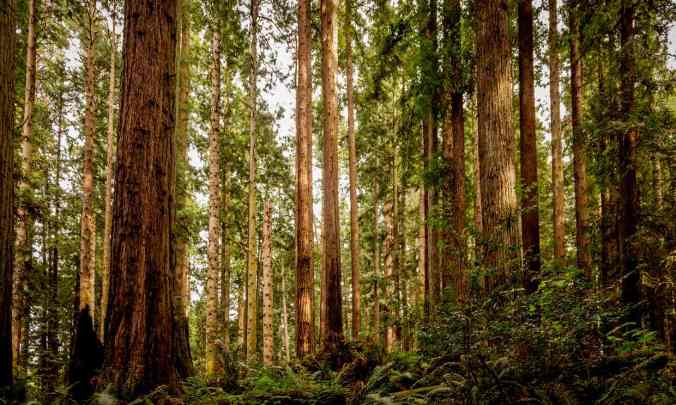
Redwood national park in California. Photograph: Jeffrey Schwartz/Alamy

We like what we see of the madly determined folks risking their professional careers in the interest of the environment and social justice:

National Park Service climate change Twitter campaign spreads to other parks

A day after three climate-related tweets sent out by Badlands National Park were deleted, other park accounts have sent out tweets that appear to defy Trump

The National Park Service employees’ Twitter campaign against Donald Trump spread to other parks on Wednesday, with tweets on climate change and a reminder that Japanese Americans were forcibly interned in camps and parks during the second world war.

A day after three climate-related tweets sent out by Badlands National Park were deleted, other park accounts have sent out tweets that appear to defy Trump. One, by Redwood national park in California, notes that redwood groves are nature’s number one carbon sink, which capture greenhouse gas emissions that contribute to global warming…

…Golden Gate national park in California said in a tweet that 2016 was the hottest year on record for the third year in a row. The tweet directed readers to a report by Nasa and the National Oceanic and Atmospheric Administration, also known as Noaa…

…The tweets went beyond climate change.

Death Valley national park tweeted photos of Japanese Americans interned there during the second world war, a message that some saw as objecting to Trump’s pledge to ban Muslims from entering the country and a proposal to restrict the flow of refugees to the United States…

Read the whole story here.

Model Mad, McKibben

McKibben-ABadDayfortheEnvironmentwithManyMoretoCome-1456x750-1485299497.jpg

PHOTOGRAPH BY DOUG MILLS / THE NEW YORK TIMES / REDUX

Bill McKibben is the founder of 350.org and we have posted on him so many times in the past for his environmental and other forms of activism we sometimes forget that he also has a day job, as the Schumann Distinguished Scholar in environmental studies at Middlebury College. Today he posted in a manner that captures well what we meant when we used the word mad, and qualified our intent to remain madly determined:

…There’s not the slightest evidence that Americans want laxer environmental laws. A poll released last week showed that nearly two-thirds of Americans would prefer that the E.P.A.’s powers be preserved or strengthened. Solar power, meanwhile, polls somewhere in the neighborhood of ice cream among Democrats, Independents, and Republicans alike. Continue reading

An Uncommon Conundrum

22eagles1-jumbo-v5.jpg

Illustration by Kelsey Dake

For our bird-centric and conservation-focused readers especially, this is a rich one:

When the National Bird Is a Burden

Bald eagles have been the emblem of the United States for more than two centuries. Now, in some parts of the country, they’re a nuisance. Continue reading

Take Note Of NRDC

NRDC.jpg

In times that try our souls in so many ways, it helps to know that organizations like this one are prepared, and worthy of your consideration for your support:

We rely on wilderness not only to inspire and enjoy but also to protect our watersheds, clean the air we breathe, and provide a home for the diverse species that enrich our world. Continue reading

Grasslands, Underdogs & Hope

tnc_88008054_preview_cropped-1260x708.jpg

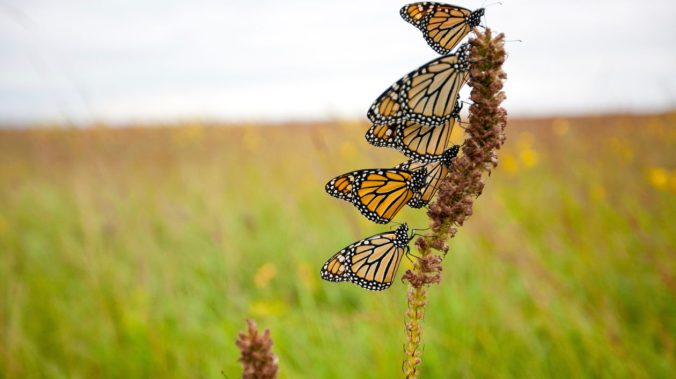
Butterflies congregating on the Nature Conservancy’s Bluestem Prairie, considered one of the largest and best northern tallgrass prairies in the United States, designated by Minnesota as a state natural area. Photo © Richard Hamilton Smith

We agree with the sentiment, never underestimate the underdog; more often than not, we root for the underdog. Thanks to the Nature Conservancy’s Cool Green Science for the reminder, in an ecological context:

Can Grasslands, The Ecosystem Underdog, Play an Underground Role in Climate Solutions?

By Marissa Ahlering

Never underestimate the underdog — in sports or in ecosystems. My favorite baseball teams, the Royals and the Cubs, reminded us of this over the last two years, and prairies (the underdog in the world series of ecosystems) proved this again recently in an analysis demonstrating that grasslands have a role to play in our climate change solutions (Ahlering et al. 2016).

Globally, grasslands are one of the most converted and least protected ecosystems (Hoekstra et al. 2005). The rich soil of Earth’s grasslands plays an important role in feeding the world and because of this much of our grassland has been converted to row-crop agriculture. Loss of grasslands is a big problem for two reasons: Continue reading

Catch Da Lion

Our contributors have posted frequently about the implications of lionfish as invasive species on this site, but we’re always happy to support new programs and initiatives, especially in Belize.

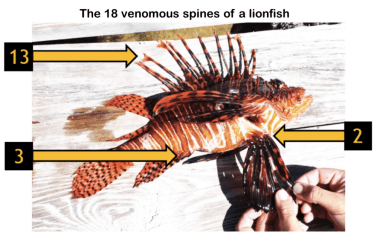
This one is particularly fun and informative, explaining exactly how to manage the spines, how to catch them, how to eat them and how to wear them!

Multiple programs are popping up to help reduce the impact of this invasive species…

Get involved!

  1. Ask your local dive shop, tour operator or tour guide about going out to catch lionfish! Many businesses around Belize offer guests the chance to go out and remove lionfish from our beautiful reefs!
  2. Find that friend who has a boat and head out to the reef to go catch lionfish yourself! See the FAQ below for more information on the tools you will need!
  3. Organize or participate in a Lionfish tournament! Lionfish tournaments have been organized in San Pedro, Caye Caulker, Dangriga and Placencia. Anybody can form a team and enter to catch the most, biggest & smallest lionfish for prizes and good fun!Interested in organizing one, contact us here for support regarding best practices, tournament rules and the materials you will need to get started!
  4. OR, join one of Blue Ventures’ Lionfish expeditions, to get involved in research & culling efforts in Bacalar Chico Marine Reserve!
  5. OR join ReefCI’s lionfish programme

Now you try!

Continue reading

Montenegro, 2017

5565

Wild and wet … Lake Skadar national park, Montenegro. Photograph: Alamy

It is now ancient history, but it may as well be yesterday, since I can look at the photo above and it has no less of an impact on me. When Montenegro was still part of what remained of ex-Yugoslavia, La Paz Group worked in partnership with UNDP on a project for the Prime Minister of this soon-to-be independent nation. He was visionary, and wanted to replicate what Costa Rica had accomplished as a small ecologically diverse country–harnessing sustainable development to ensure his country would not become the victim of the forces of mass tourism.

Skadar Lake was the crown jewel in the country’s potential attraction of ecologically-oriented travelers, and the perfect complement to the wild beauty of the coast line and the spectacular mountains. Montenegro has done a very good job in the decades since my first visit to Skadar Lake (standing exactly where the photographer above stood, looking at my own photos from that visit), communicating its commitment to those principles. Nonetheless, the challenges never go away, so we wish them continued success in fighting the dark forces:

Montenegro’s pristine Lake Skadar threatened by new resort

Tourism in Montenegro is booming, but the approval of plans for a new ‘eco-resort’ has led to protests from conservationists who fear it will threaten a stunning national park Continue reading

Economic Models Adapting To Evolving Challenges

tnc_61185884_preview_cropped.jpg

Aerial view of flooded rice fields participating in California’s BirdReturns program. White areas are dense gatherings of birds. Photo © Drew Kelly for The Nature Conservancy

The Moneyball approach to thinking about how to make the next big breakthroughs in conservation–not surprising that we are hearing this from The Nature Conservancy’s best and brightest:

Economics: The Next Frontier in Conservation Science

BY ERIC HALLSTEIN, SARAH HEARD

Engaging in markets is not new for The Nature Conservancy. But with our roots as a land trust, we thought about markets in a very specific way. We bought property to protect biodiversity using donor and public funding. We were in the market for “externalities.” Continue reading

Carbon Capturing Crystals

crystals.jpg

Thanks to Anthropocene for this summary of a scientific news item worthy of our attention:

A cheaper way to pull carbon dioxide from the air, turn it into crystals

Jane Alexander, Come Back To Belize

janealexander

Jane Alexander describes, about half way through the conversation above, being in Belize with Alan Rabinowitz several decades ago for birdwatching, and how it changed her life. 41imiogqjal-_sx336_bo1204203200_She has been a committed conservationist ever since, as she also describes in this 2012 interview in Audubon Magazine. Anyone who uses an extra 15 minutes of fame – – after a lifetime endowed with plenty of it, well earned for her professional accomplishments — for this purpose is a class act in our book. She has a book that looks worthy of her, according to the publisher’s description:

A moving, inspiring, personal look at the vastly changing world of wildlife on planet earth as a result of human incursion, and the crucial work of animal and bird preservation across the globe being done by scientists, field biologists, zoologists, environmentalists, and conservationists. From a longtime, much-admired activist, impassioned wildlife proponent and conservationist, former chairperson of the National Endowment for the Arts, four time Academy Award nominee, and Tony Award and two-time Emmy Award-winning actress. Continue reading

Tropical Peatland & Carbon Storage

2764

The remote Cuvette Centrale peatlands in the central Congo basin is one of the most carbon-rich ecosystems on Earth. Photograph: Simon Lewis/University of Leeds

This story was also covered in the New York Times, but the Guardian had a jump on the scoop, and included a photo (above) that more effectively helps to understand peat’s role in carbon capture; so we feature their story here:

World’s largest tropical peatland found in Congo basin

Carbon-rich peatlands could store three years’ worth of world’s total fossil fuel emissions, say scientists Continue reading

Coffee, Birds & How They Matter

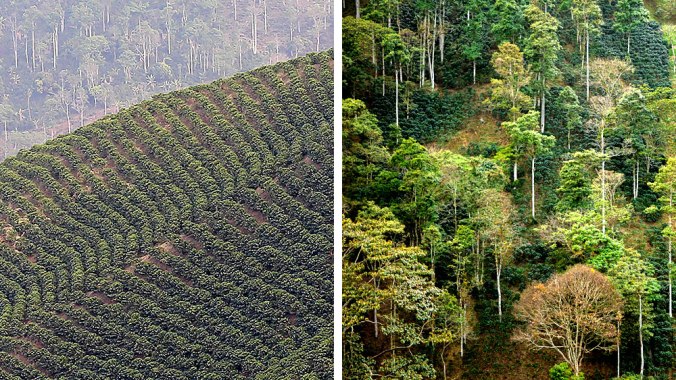
Sun-grown coffee (left) is a monoculture of coffee bushes. Shade-grown coffee (right) offers more habitat for forest species. Photos: Chris Foito/Cornell Lab Multimedia; Guillermo Santos).

Sun-grown coffee (left) is a monoculture of coffee bushes. Shade-grown coffee (right) offers more habitat for forest species. Photos: Chris Foito/Cornell Lab Multimedia; Guillermo Santos).

Our lives in the New World Tropics has allowed a frequent convergence between birds and coffee, even in the most simple terms of enjoying birdsong in our garden over the first morning cup. That very garden of our home in Costa Rica sits in what was historically cafetal (a coffee finca), with large trees shading the coffee that still grows along the little stream that runs along the property line. Blue-crowned motmots (the Central American cousin to the Andean Motmot mentioned below, have been frequent residents.

The coffee plantings at our home are insignificant compared to the 100+ acres of Gallon Jug Estate shade-grown coffee at Chan Chich. Of the nearly 350 bird species recorded in the Chan Chich Reserve’s 30,000 acres, a large percentage are migratory, making their home in the coffee as well as the healthy forest habitats that make up the reserve.

Sustainable agriculture is rarely a “get rich quick scheme”, but taken within the context of the “seventh generation stewardship”, the benefits will continue to outweigh the costs.

In Colombia, Shade-Grown Coffee Sustains Songbirds and People Alike

By Gustave Axelson

Early one morning last January, I drank Colombian coffee the Colombian way—tinto, or straight dark.

I sipped my tinto while sitting on a Spanish colonial veranda at Finca Los Arrayanes, a fourth-generation coffee farm and hotel deep in northwestern Colombia’s Antioquia region. The sun had not yet risen above the high ridges of the northern Andes. In the ambient gray predawn light, the whirring nocturnal forest insects were just beginning to quiet down.

My senses of taste and smell were consumed by the coffee, which was strong and bold in a pure way, the flavor flowing directly from the beans, not a burnt layer of roast. But my eyes were trained on a small wooden platform that held a couple of banana halves. The first bird to visit was an Andean Motmot, one of Colombia’s many Alice in Wonderland–type fantastical birds. It sported a green-and-turquoise coat and black eye mask, and it was huge—longer than my forearm, with a long tail with two circles at the end that swung rhythmically from side to side like the pendulum of a clock.

The motmot flew away and I took another sip of coffee to be sure I didn’t dream it. Another bird soon landed on the platform to pick at the bananas. This one was yellow, though Colombians call it tangara roja, because males of this species are completely red. In its breeding range, birders from the Carolinas to Texas know it as the Summer Tanager.

For more than 5 million years, a rainbow of Neotropical migrant birds (tanagers, warblers, and orioles) has been embarking on epic annual migrations from breeding grounds in North America to the New World tropics. In Colombia, these wintering areas are a lot different now than they were just 50 years ago. From the 1970s to the 1990s, more than 60 percent of Colombian coffee lands were cleared of forest as new varieties of sun-grown coffee were planted. During that same period, populations for many Neotropical migrant species plummeted—a drop many scientists say is related to deforestation of the birds’ wintering areas across Central and South America.

And yet, coffee doesn’t require deforestation. Continue reading

If You Happen To Be In London

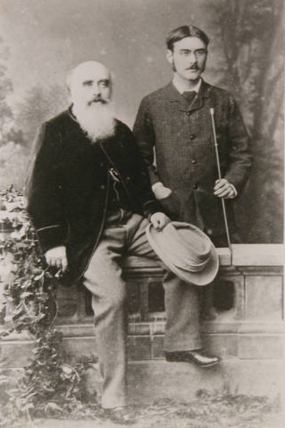
John Lockwood Kipling with his son Rudyard Kipling, 1882. © National Trust/Charles Thomas

John Lockwood Kipling with his son Rudyard Kipling, 1882. © National Trust/Charles Thomas

Kipling is almost a household name for many in our group, but primarily in the context of Rudyard Kipling, the writer of the well-known stories and fables about India. When researching the author a few years back I was surprised to learn about his talented father, whose beautiful illustrations graced the early editions of several of his son’s books.

Rudyard Kipling’s bookplate ‘Ex Libris', Lockwood Kipling, 1909. © National Trust Images/John Hammond

Rudyard Kipling’s bookplate ‘Ex Libris’, Lockwood Kipling, 1909. © National Trust Images/John Hammond

Those lucky enough to be in London this month can visit the Victoria & Albert Museum for the exhibition Lockwood Kipling: Arts and Crafts in the Punjab and London.

More of note, not only was the senior Kipling an artist, writer, museum director, teacher, and influential figure in the Arts and Crafts movement – he was also a conservationist, distinguished for promoting the traditional textile crafts of India and what is now Pakistan.

The exhibit coincides with Conferences and Symposia related to the 3-year international research project on Kipling’s legacy.

The 19th century Arts and Crafts revival in British India is a fascinating chapter in the international history of art and design. However, John Lockwood Kipling’s career as designer and architectural sculptor, curator and educator, illustrator and journalist, has received little attention. Continue reading

Bumble Bees & Conservation

06About-blog427-v2.jpg

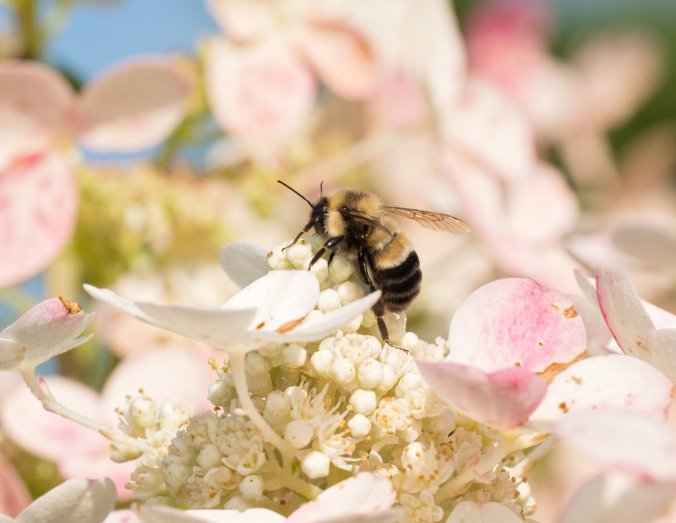
The rusty-patched bumblebee, once common across the continental United States, has been designated an endangered species. Credit Clay Bolt

One more gift of protection:

A Bumblebee Gets New Protection on Obama’s Way Out

By and

The Obama administration, rushing to secure its environmental legacy, has increased protection for a humble bumblebee. Continue reading

Bear Ears Monuments, Cheering & Detraction

cedar-mesa_custom-427276f5586a9f7a0a22192760db944d7196cb73-s2500-c85.jpg

Photo by Josh Ewing/Bears Ears Inter-Tribal Coalition

The Food & Environment Reporting Network updates our understanding of the added significance of Bear Ears Monument, and its detractors:

Bears Ears Monument Is A Win For Tribal Food Sovereignty. Will Trump Undo It?

By Kristina Johnson

Seven years ago, the Navajo tribal council in southeastern Utah started mapping the secret sites where medicine men and women forage for healing plants and native people source wild foods. They wanted to make a case for protecting the landscape known as Bears Ears, a place not only sacred to their tribe, but to many other tribes in the region, going back thousands of years. In one of his final acts in office, President Obama late last month created the 1.35-million-acre Bears Ears Monument, in a move that proponents say will safeguard the area’s ecology and guarantee food sovereignty for the region’s Native Americans.: Continue reading

Birding By Season

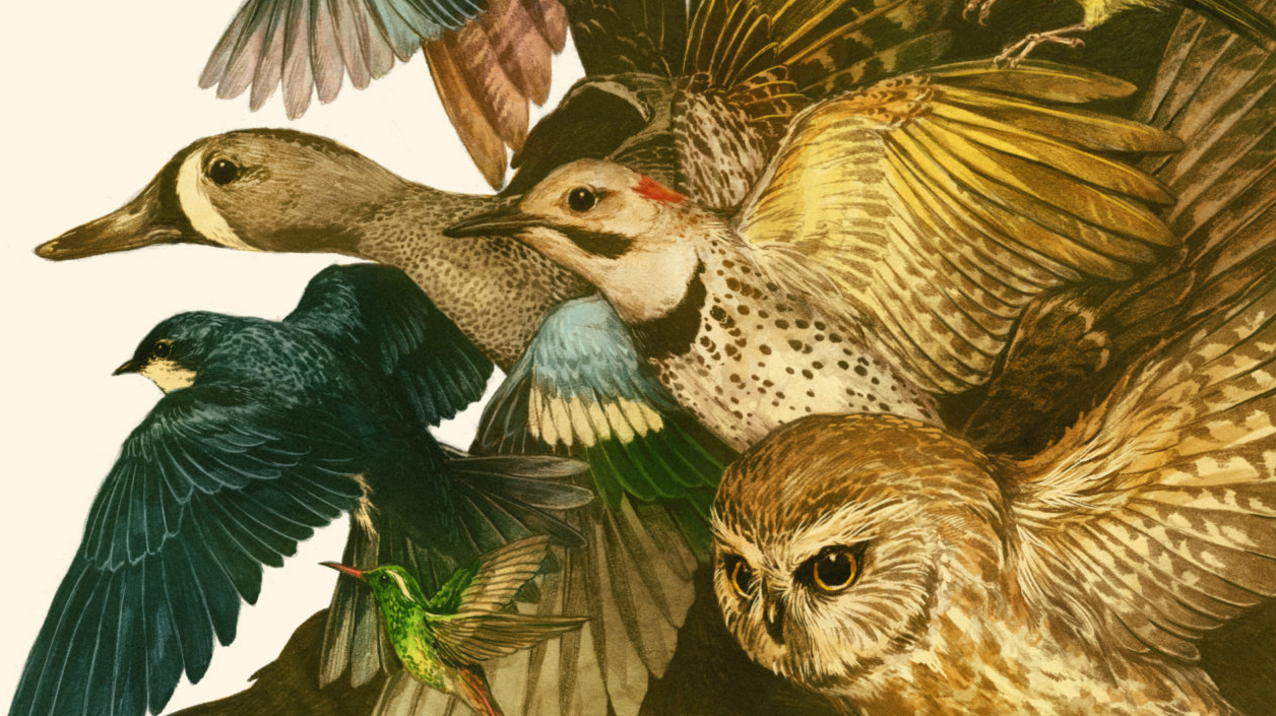
Violet-crowned, blue-throated and magnificent hummingbirds, along with a dozen other bird species, have been recorded at the the Conservancy’s 380-acre Ramsey Canyon Preserve. © Teagan White

Violet-crowned, blue-throated and magnificent hummingbirds, along with a dozen other bird species, have been recorded at the the Conservancy’s 380-acre Ramsey Canyon Preserve. © Teagan White

Thanks once again to the Nature Conservancy’s Cool Green Science blog for simultaneously highlighting conservation history as well as inspiration to spend time outdoors. We stand with the TNC and all organizations in support of the legendary legislation that illustrates the core principles of wildlife and land stewardship.

The Audubon Society states it simply, the Migratory Bird Treaty Act protects birds from depredatory human activities. And the more we involve ourselves in birding activities, the more appreciation and awareness we have for the fragility of our ecosystems and the biodiversity they sustain.

 A Birding List for the New Year

In 2016, birders celebrated the centennial of the signing of the United States’ Migratory Bird Treaty. In 1918, the resulting legislation became one of the country’s first major pieces of environmental law. Today birders reap the benefits of the act, which barred, among other things, the hunting of migratory birds during nesting and mating seasons.

Continue reading

Walden Pond’s Enduring Lessons

08stager-master768.jpg

Kevin Hooyman

When a professor does years of research and teaching on a topic related to this particular pond, and then takes the additional effort to share his observations in cogent form as an op-ed, we believe it is worth at least 5-10 minutes of reading time:

What the Muck of Walden Pond Tells Us About Our Planet

By

In 1845, Henry David Thoreau repaired to a cabin in the woods beside Walden Pond “to front only the essential facts of life, and see if I could not learn what it had to teach.” During the last two years, my students and I have come to that same pond to see what we could learn from the sediments beneath it. Continue reading

New Rules, Fishing & Conservation

seal-caught_custom-88cc31db868f28dc5d59726aed04e66499e21c83-s1400-c85.jpg

Divers release a seal from fishing gear. Getting entangled in active or abandoned fishing gear often leads to injury or death in marine mammals. NOAA Marine Debris Program/Flickr

Thanks to the salt folks at National Public Radio (USA) for this news on a rule change that could do for all marine mammals what has already been done for dolphins:

The vaquita is a small porpoise found only in the northern Gulf of California, in Mexico. Today, the species is critically endangered, with less than 60 animals left in the wild, thanks to fishing nets to catch fish and shrimp for sale in Mexico and America. The animal is an accidental victim of the fishing industry, as are many other marine mammals. Continue reading

Fish & Coconuts & Conservation

S.W. Reddy’s discussion of the islands where she carried out empirical research in the behavioral economics vein reminds of some fundamental similarities to Kerala, especially the fish and coconuts part. Thanks to the Nature Conservancy’s Cool Green Science for bringing this to our attention (if you do not have 15 minutes for the video now, save the text below for later reading):

Bringing Behavioral Insights into Conservation Programs and Policies

By Sheila Walsh Reddy

Behavioral science and economics have provided important insights for health, finance, and many other domains, but are largely untapped resources for conservation. A new paper in Conservation Letters helps practitioners tap into behavioral sciences. Continue reading