Using Those Final Months Well

midwayatoll_wide-1f160673ec1ed0fd74e6f9d1873a19f4ecc530f8-s1100-c85

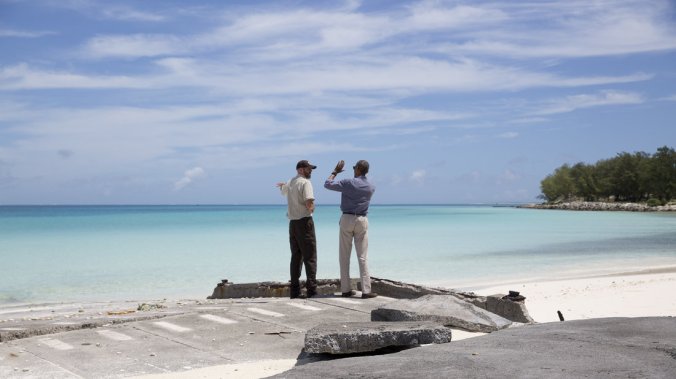
President Barack Obama on Midway Atoll in the Papahānaumokuākea Marine National Monument, Northwestern Hawaiian Islands, earlier this month with Marine National Monuments Superintendent Matt Brown. Obama expanded the monument using his authority under the 1906 Antiquities Act. Carolyn Kaster/AP

We are happy to see the Antiquities Act again proving so useful, so soon (the clock is ticking):

Obama To Designate First Marine National Monument In The Atlantic Ocean

During the Our Ocean conference later this morning in Washington, D.C., President Obama will establish the first national marine monument in the Atlantic Ocean.

The area of the Northeast Canyons and Seamounts Marine National Monument is the size of Connecticut and has been called an “underwater Yellowstone” and “a deep sea Serengeti.” Continue reading
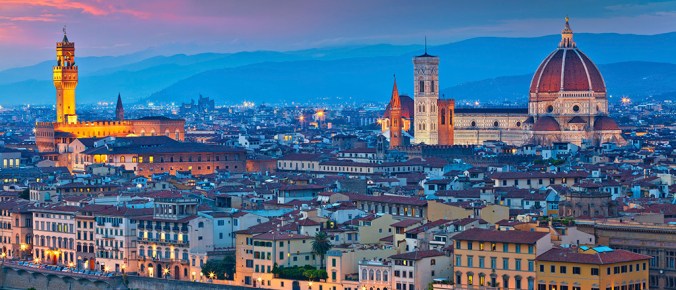
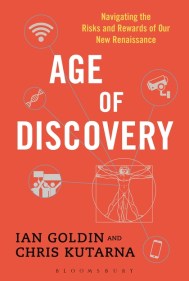
Renaissance & Other Possible Interpretations Of Our Times

florence

During my morning walk today, while taking in the Onam visuals, I was at the same time absorbing sound, in the form of conversation, from the same phone that was snapping pictures. I use the time of my walks to listen to podcasts, one of the easiest ways for me to stay attuned to happenings and ideas from the USA, my onetime home, and home to many of the people who visit properties we manage.

The central idea of today’s podcast, at once frank about the perils of the “Age” we are in now but also optimistic about how to harness modern tools to navigate these times, took me by surprise:

New Maps, New Media and a New Human Condition

AgeofDiscovery-copy.jpgscreen-shot-2016-09-14-at-2-14-06-pm

Some 500 years ago, Johannes Gutenberg, Nicolaus Copernicus, Michelangelo and others were part of the Renaissance, a time of significant cultural change. Now, authors Ian Goldin and Chris Kutarna say we are in the midst of a second Renaissance.

Continue reading

One Step Forward, Slip Sliding Away

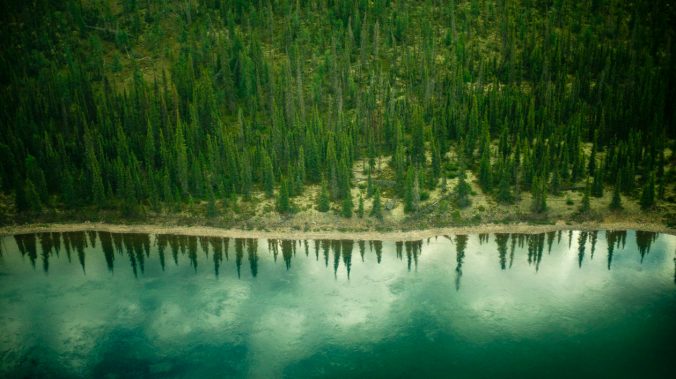
Aerial view of the Thelon River and forest landscape of Canada's far northern Thelon Game Sanctuary. The refuge is the largest and most remote game sanctuary in North America. For the Akaitcho Dene people, the Upper Thelon River is "the place where God

Aerial view of the Thelon River and forest landscape of Canada’s far northern Thelon Game Sanctuary. The refuge is the largest and most remote game sanctuary in North America. For the Akaitcho Dene people, the Upper Thelon River is “the place where God began.” In 2011 The Nature Conservancy’s lead scientist Sanjayan and Canada program director Dr. Richard Jeo went on an expedition through through this pristine area with young members of the Dene First Nation. They traveled by canoe along the Thelon River ending in North America’s largest and most remote wildlife refuge, the Thelon Game Sanctuary. This photograph is from that trip. PHOTO CREDIT: © Ami Vitale

Thanks to Cool Green Science, the conservation science blog of The Nature Conservancy, for this sobering update on the state of affairs of meeting conservation targets (um, those related to whether or not this planet will be one our future generations will be able to live on):

Global Wilderness Areas in Decline Despite Conservation Targets

BY JUSTINE E. HAUSHEER

Conservation today operates in a world of targets: Protect 17 percent of terrestrial systems and 10 percent of marine systems by 2020; keep global climate change below 1.5 degrees Celsius by 2100; halve the rate of natural habitat loss.

But despite widespread adoption of protected area targets, wilderness areas are still declining rapidly across the globe. Now, new research shows that 9.6 percent of all global wilderness has disappeared in the last 20 years. Continue reading

Momentum In Tribal Territory


12tribes-listy9-jumbo.jpg

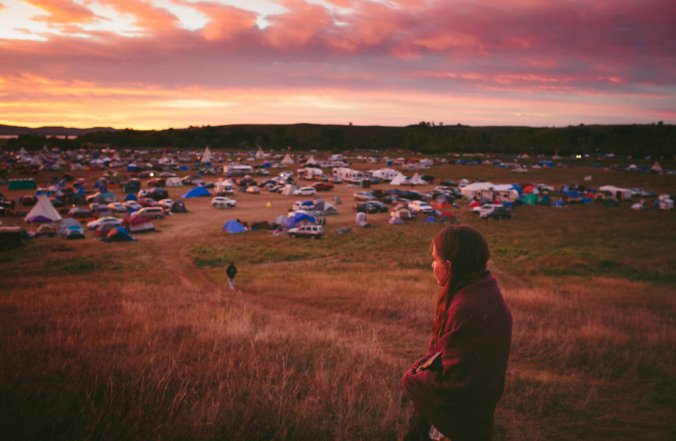
Susan Leopold, a member of the Patawomeck tribe of Virginia, watching the sun rise over an encampment where thousands have come to protest an oil pipeline near Cannon Ball, N.D.   Credit Alyssa Schukar for The New York Times

This is a great follow up to the earlier stories we read on this topic. We appreciate that the New York Times is now giving this as much attention as it deserves, and doing so with the dignity and respect that the protesters deserve:

From 280 Tribes, a Protest on the Plains

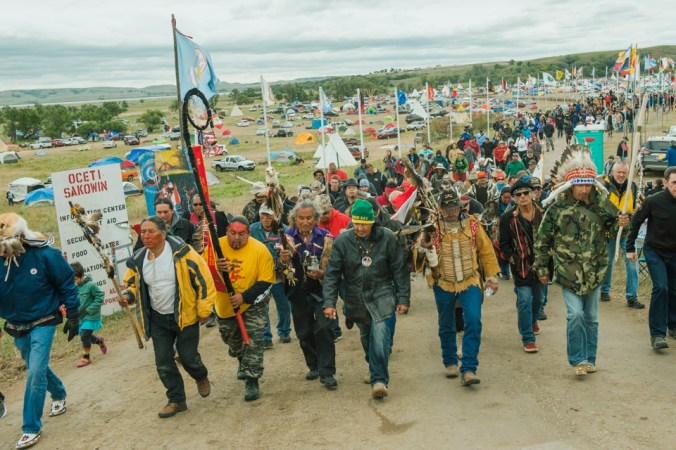
NEAR CANNON BALL, N.D. — When visitors turn off a narrow North Dakota highway and drive into the Sacred Stone Camp, where thousands have come to protest an oil pipeline, they thread through an arcade of flags whipping in the wind. Each represents one of the 280 Native American tribes that have flocked here in what activists are calling the largest, most diverse tribal action in at least a century, perhaps since Little Bighorn. Continue reading

Antiquities Act & Presidential Creativity

Sally Jewell

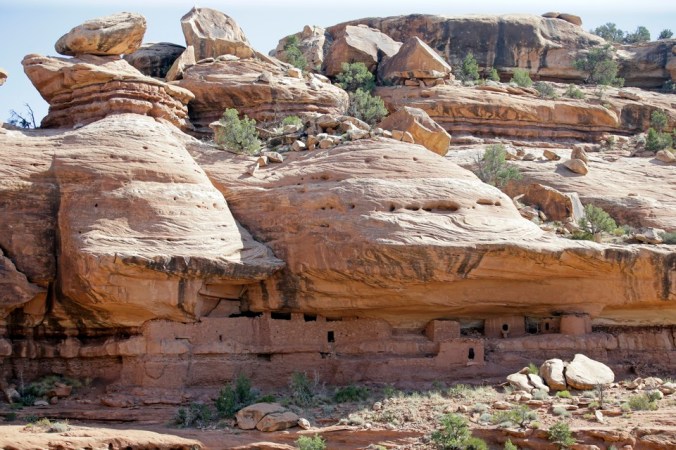
This July 15, 2016, file photo, U.S. The “Moonhouse” in McLoyd Canyon, near Blanding, Utah, is shown during U.S. Interior Secretary Sally Jewell tour. Hundreds of people who oppose the proposed Bears Ears National Monument in southeastern Utah showed up at Senate field hearing Wednesday, July 27, 2016, in Blanding on the polarizing topic. The meeting comes just weeks after Jewell visited the area and hosted a public town hall to hear from people from both sides. (AP Photo/Rick Bowmer)

The Atlantic has another story we appreciate today, besides this one. Whether Utah wants it or not, the designation sounds appropriate, and we appreciate the creative efforts of the President of the USA to dust off the Antiquities Act for this purpose:

…1.9 million acres in southeast Utah that President Obama is pondering designating a national monument. The “ears” in question are twin buttes hovering over the surrounding San Juan County, a sprawling stretch of wilderness that now finds itself at the white-hot center of a brawl over public-land management, presidential authority, and the 110-year-old Antiquities Act. Continue reading

The Medicine We Fear Instinctively

Specter-Gene-Drives-And-Endangered-Birds-1200.jpg

Genetically modified mosquitoes could be the solution to Hawaii’s quickly disappearing avian population, including the island’s famous honeycreepers. PHOTOGRAPH BY RESOURCE HAWAII / ALAMY

Michael Specter writes frequently (but not exclusively) about frighteningly unpleasant, sometimes devastatingly horrible topics with grace not often found in technically rigorous writing. Here, in a short post, he addresses the prospects of a technology many rightly fear and its potential to address many rightly feared environmental (the one in the title below obviously catches our attention) and health challenges:

COULD GENETICALLY MODIFIED MOSQUITOES SAVE HAWAII’S ENDANGERED BIRDS?

By

Every four years, thousands of environmentalists gather at the World Conservation Congress to assess the state of the planet, and to consider what might be done to protect it.  Continue reading

Make Trouble When It Is Needed

lead_960 (1).jpg

Protesters demonstrate against the Energy Transfer Partners’ Dakota Access oil pipeline near the Standing Rock Sioux reservation in Cannon Ball, North Dakota, U.S. September 9, 2016. REUTERS/Andrew Cullen

We are happy that the trouble-maker who brought this to our attention, and those pictured above are heard by the Trouble-Maker-In-Chief of the USA (who we hope uses his remaining four months in that office to similar good effect):

The Obama Administration Temporarily Blocks the Dakota Access Pipeline

The surprise move came after a federal judge declined to stop the 1,100-mile fossil fuel project’s construction.

The Standing Rock Sioux Tribe and the hundreds of Native protestors who have joined them in rural North Dakota won a huge but provisional victory in their quest to stop the Dakota Access pipeline, as the U.S. government announced late on Friday afternoon that it was voluntarily halting work on the project. Continue reading

Yosemite, Bigger & Better

ap_16251730452359_custom-c087184ae5c62fc4faaf27c7f89712aed7b80839-s1400-c85

A photo provided by The Trust for Public Land shows Ackerson Meadow in Yosemite National Park, Calif. Visitors to the park now have more room to explore nature with the announcement on Wednesday that the park’s western boundary has expanded to include Ackerson Meadow, 400 acres of tree-covered Sierra Nevada foothills, grassland and a creek that flows into the Tuolumne River. Robb Hirsch/AP

The full story here. All we can say is a three-letter word (no spoiler, so after the jump):

Yosemite National Park is growing by 400 acres — the largest expansion to the park since 1949.

NPR’s Nathan Rott reports that the new addition to the park, a stretch of land along the western boundary of Yosemite, has historically been used for logging and cattle grazing.

The Trust for Public Land, a conservation group, bought the land from private owners for $2.3 million and donated it to expand the park. The purchase was supported by the Yosemite Conservancy, National Park Trust and American Rivers, as well as private donors.

“The area includes a sprawling grassy meadow, wetlands and rolling hills dotted with tall pine trees, and is known to be home to at least two endangered species,” Nathan reports. Continue reading

From A Favorite Trouble-Maker

591.jpg

‘We see the effects of warming on land: the floods, the droughts, the refugees headed towards temporary safety.’ Photograph: Malcolm Francis/NIWA

Please click here so that credit goes to the source for this editorial by one of the thinkers we regularly turn to, one of our favorite sources of reminder to take action:

So, just as a refresher, it’s always good to remember that we live on an ocean planet. Most of the Earth’s surface is salt water, studded with the large islands we call continents.

It’s worth recalling this small fact – which can slip our minds, since we humans congregate on the patches of dry ground – because new data shows just how profoundly we’re messing with those seven seas. The International Union for the Conservation of Nature has published an extensive study concluding that the runaway heating of the oceans is “the greatest hidden challenge of our generation”. Continue reading

Pandas & Baboo

dsc01051_zpsamb3vgjs

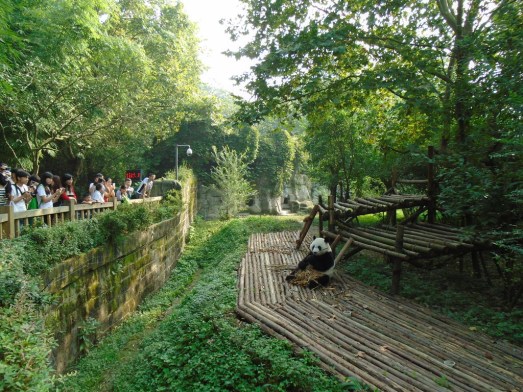
Giant panda feasting on some bamboo at Chengdu Research Base.

Reading this morning’s news about the giant panda being moved from “endangered” to “vulnerable” by the International Union for Conservation of Nature, reminds me of my small stuffed (artificial) panda bear called Baboo and the backstory to getting him.

During my semester abroad in China two years ago, I made a trip to Sichuan province and visited the Chengdu Research Base of Giant Panda Breeding. I had never seen a panda before and the opportunity to watch many of them (not only the giant panda, but also the red panda) was an opportunity I did not want to miss.

Continue reading

Doing More for Protected Lands and Oceans

3500

Photograph: Owen Humphrey’s/PA

Almost fifteen percent of the Earth’s land is enclosed in national parks or other protected areas, which accounts for approximately 20 million sq km. This figure is close to an internationally agreed goal to protect 17 percent of the land surface by 2020. Comparatively, ocean conservation only accounts for 4 percent of total surface of the ocean, covering 15 million sq km. In spite of these statistics – which reflect a positive outcome of the increased attention and importance given to land and ocean conservation – there are concerns over how well these areas are managed and whether they effectively protect endangered species, as Seth wrote a few days ago.

progress report by the UN Environment and the International Union for Conservation of Nature (IUCN) warns that some of the most biodiverse ecosystems are not being protected and that the management of many protected areas is deficient.

Less than 20% of areas considered crucial hubs for species are fully protected, the report states, with countries routinely failing to assess the effectiveness of their national parks nor provide wildlife corridors that allow animals to roam between protected areas.

Continue reading

Our Attention to Plants (or Lack Thereof)

landscape-1439490128-plants

Compared to “juicy” pop culture news, nature-lovers and conservationists constantly have to fight for people’s attention on subjects like endangered animals or protected wildlife. However, the struggle for plant devotees to garner people’s interest on green eukaryotes is much more difficult, except maybe for some garden-popular flowers and vegetables, and perhaps a few trees, but otherwise plants go unnoticed.

Conservation efforts are devoted overwhelmingly to animals; compared to the hundreds of plant species easily found but mostly overlooked in our environs. There’s even a formal name for this: plant blindness. And in a study published in the journal Conservation Biology, biologists Kathryn Williams and Mung Balding of Australia’s University of Melbourne ask whether it’s inevitable: Are people hard-wired by evolution to ignore the vegetal world? Can something be done about it?

“We are absolutely dependent on plants for life and health, but so often they fade into the background and miss out in the direct actions we take to protect our planet,” says Williams. “I wonder how the world would look if more people, instead of seeing a wall of green, saw individual plants as potential medicine, a source of food, or a loved part of their community.”

Continue reading
Bluestem Ranch Returns to Osage Nation

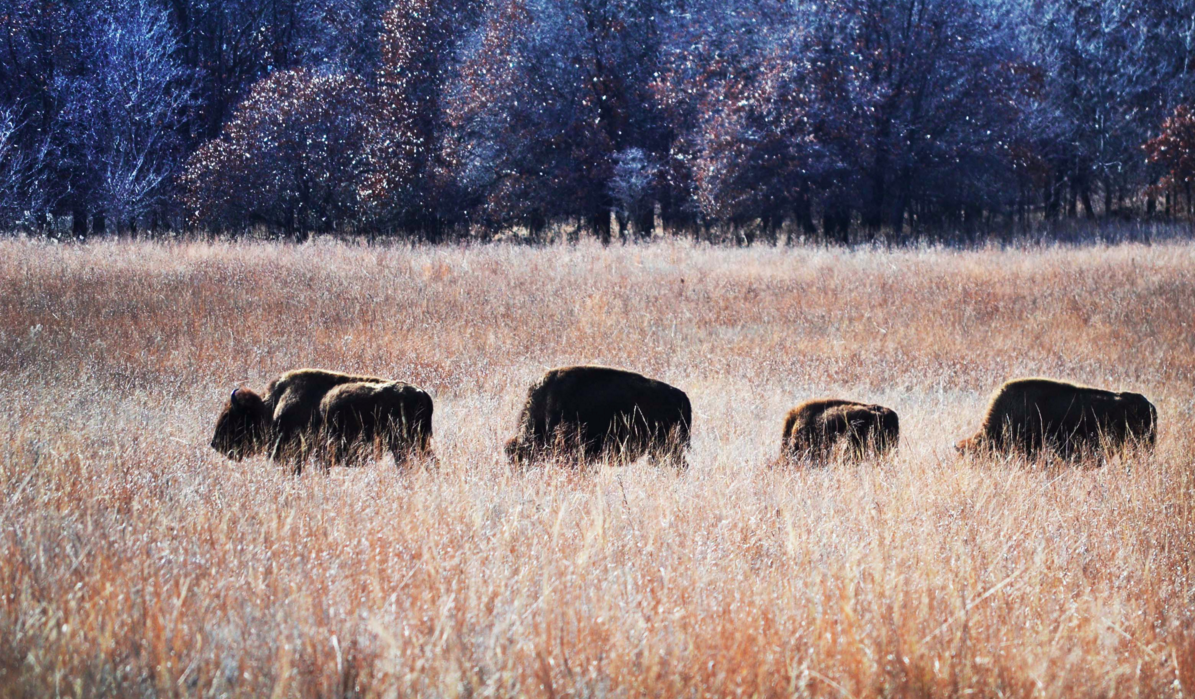
Bison on the Bluestem Ranch

Bison on the Bluestem Ranch

Osage Nation Takes Ownership of Ted Turner’s 43,000-Acre Ranch

Ted Turner is the second largest individual landowner in North America, with approximately two million acres of personal and ranch land. His lands are more than conservation, as he’s managed to unite economic viability with ecological sustainability and environmental projects including water resource and timber management, and the reintroduction of native species to the land.

Although the recent news of the sale of Bluestem Ranch back to the Osage Nation might impact his land holdings, it certainly adds to his legacy of positive land management.

The Osage Nation is filing applications for federal trust status to protect the land from future sale…. Continue reading

Papahānaumokuākea Quadrupled

Humuhumunukunukuāpua`a, the state fish of Hawaii (reef trigger fish) via statesymbolsusa.org

Hot on the heels of the creation of the new Katahdin Woods and Waters National Monument comes the expansion of Papahānaumokuākea Marine National Monument, which was designated by President George W. Bush in 2006 and became a World Heritage site four years later. This growth in the protected area quadruples the conservation monument’s size to 582,578 square miles and has been accomplished under President Barack Obama’s use of the Antiquities Act. Oliver Milman reports:

The monument, which is now double the size of Texas, stretches outward from the north-western Hawaiian islands and includes Midway Atoll, famed for its former military base and eponymous battle that was crucial in the US defeat of Japan in the second world war. The protected area is now larger than the previous largest marine reserve, situated around the Pitcairn Islands and announced by the UK last year.

Continue reading

eBird Workshops in Guatemala

First of all I would like to give to you a brief introduction of myself since it’s the very first time I have the great opportunity to write a post here – by the way thanks Amie, Crist and Seth Inman for the invitation.

I am a 20 year old birder from Guatemala and I have been in touch with nature and birds since I was a little kid. I remember being carried by my dad on his back and going out to the field to go birding. He needed to take care of me but he didn’t want to just stay at home wasting valuable hawk migration time, so he took me with him no matter what. I remember I enjoyed it A LOT, not only because I liked being carried, but the memories of the field guide open in my dad’s hands and his binoculars hanging by his neck and his trying to point out the bird and later showing it to me in the book are things I will never forget. Of course I was too young to actually spot the bird and appreciate it in the field but I do remember looking at the birds carefully in the field guide. A few years later I was so excited when he gave to me my first pair of binoculars as a Christmas present! I felt like a pro ornithologist (although I didn’t know that word yet). That same year he bought his first spotting scope so when I wasn’t able to see the bird and observe it through my binoculars myself he would find it on the scope so I could enjoy the beauty, behavior, different plumages – everything of the birds. I immediately fell in love with birding and all of what biding had to offer to me. Continue reading

Adjutant Storks and their Conservation Brigade

A rag picker looks for valuables among a group of Greater Adjutant Storks in a garbage dump site near Deepor Beel Wildlife Sanctuary in Assam. Photo by Ritu Raj Konwar, via The Hindu

Looking at the photo above, you may not see much to like in the Greater Adjutant, a type of stork found primarily in northern India and parts of Cambodia. But these big birds are important scavengers in their ecosystem, helping to break down dead animals. In this way they’re like vultures, a similarly-maligned group of relatively unattractive birds. As you’ll read below, many rural communities in India historically did not welcome the Greater Adjutant, which is classified as endangered by the IUCN. But storks, like other large avian families such as vulture and cranes, are not doing too well on a global scale: of the nineteen species of stork, the IUCN labels fifteen of their population trends as decreasing; four are endangered, while two are near-threatened and three are vulnerable. All of which makes the news from the state of Assam in India even more heartening:

On a cloudy day in July, in a remote village in northeastern India, Charu Das excitedly imitates the awkward movements of a stork with her hands.

In a few months, the greater adjutant stork—called hargilla, which means “swallower of bones” in Sanskrit—will descend on this hamlet, situated in Assam’s Brahmaputra Valley, to breed in large numbers.

Continue reading

The Recovery of the Island Fox

3000

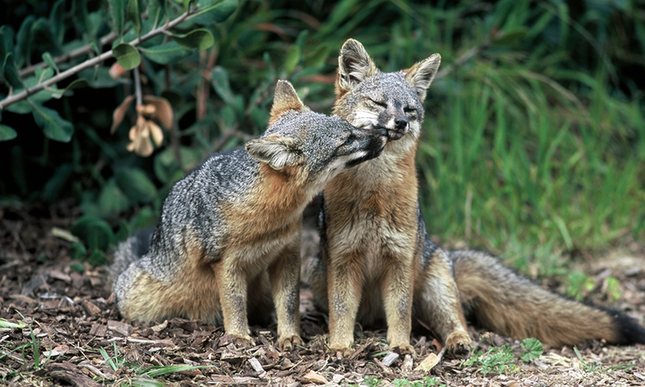
Island Foxes. Source: The Guardian

We are happy to share another win for wildlife conservation. One of America’s rarest mammals, the island fox, has experienced a record-breaking recovery twelve years after the species was declared endangered. Here’s the story from The Guardian:

The US Fish and Wildlife Service (FWS) has delisted three subspecies of island fox – endemic to the San Miguel, Santa Rosa and Santa Cruz islands – just 12 years after they were granted endangered species protections due to a catastrophic 90% population loss.

The island fox is one of the smallest canids in the world, around the size of a domesticated cat. They are thought to have evolved on the channel islands, located off southern California, over the past 6,000 years and initially thrived due to a lack of predators, feasting on mice, crickets and the occasional crab.

However, the island fox suffered badly during the late 1990s after use of the pesticide DDT wiped out bald eagles on the islands. Golden eagles, which prey on the foxes, quickly replaced the fish-loving bald eagles, leading to numerous fox deaths.

Continue reading

Conservationists and Climate Change

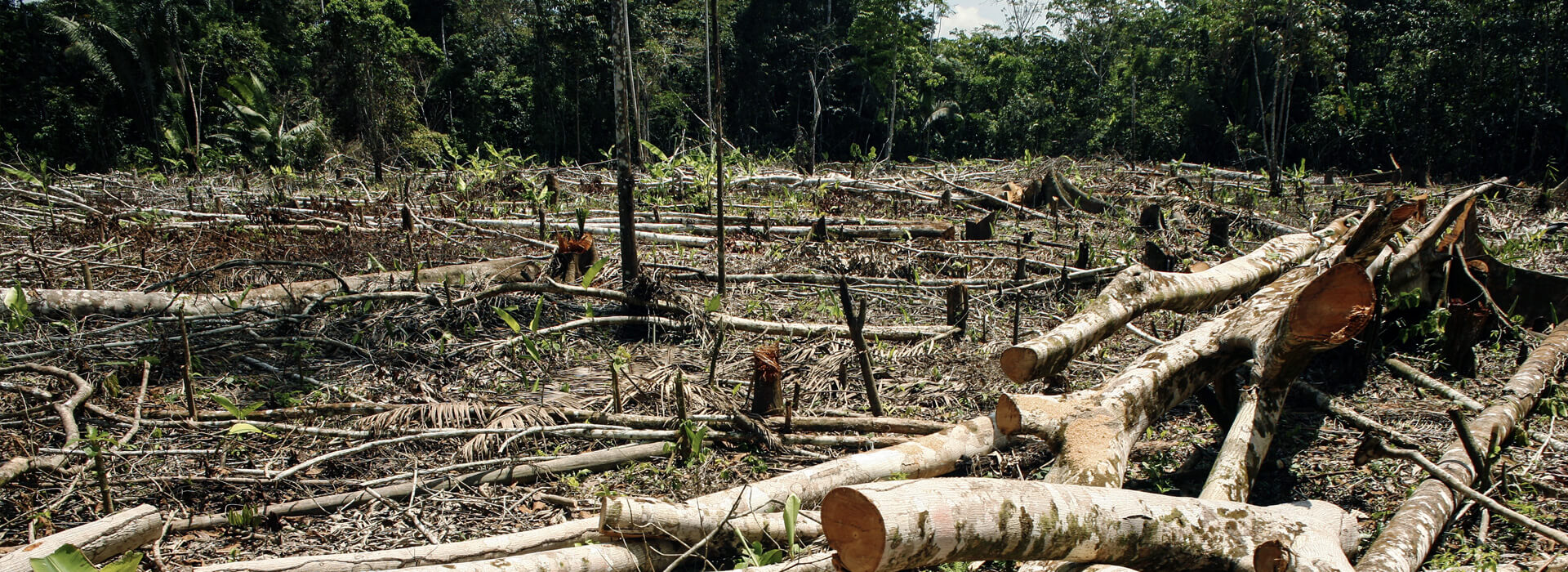
Deforestation in Peru, photo via the American Bird Conservancy’s habitat loss webpage

Almost two weeks ago, we shared a story from Conservation Magazine that covered a recent discussion piece published in the academic journal Biological Conservation, which was titled, “From biodiversity-based conservation to an ethic of bio-proportionality.” The author argued that the word ‘biodiversity’ limited conservationists to too small a goal in policy changes; in her opinion, ‘bioproportionality’ would be a better baseline. Today, we consider another contrasting view on conservation and what it should focus on when biodiversity is threatened, this time sourced from a commentary article in Nature, and covered by environmental writer Michelle Nijhuis for the New Yorker:

In January of this year, James Watson, an Australian scientist who works for the Wildlife Conservation Society, noticed an image that had been tweeted by a friend of his, a physician in Sydney. With a chain of progressively larger circles, it illustrated the relative frequency of causes of death among Australians, from the vanishingly rare (war, pregnancy and birth, murder) to the extremely common (respiratory disorders, cancer, heart disease). It was a simple but striking depiction of comparative risk. “I thought, ‘Why hasn’t anyone done something like this for the rest of nature?’ ” Watson recalled.

Continue reading

Honoring World Lion Day

01-asiatic-lion-ngsversion-1470838592918-adapt-885-1

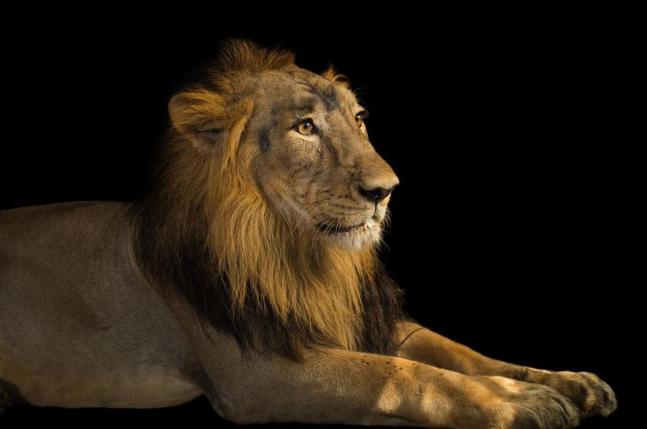
A male Asiatic Lion. Source: National Geographic

In celebration of World Lion Day (August 10th), here’s a motivational and uplifting conservation story of Asiatic Lions in west India’s Gir National Park:

The Asiatic lion once roamed vast swaths of the Middle East and Asia, but indiscriminate hunting and killing to protect livestock led to their mass slaughter. By the late 1800s, as few as 10 of the animals remained on Earth.

Their last refuge became western India’s Gir National Park, a protected area where these endangered animals are now on an upward trend. According to a 2015 census, a little more than 500 lions—the world’s total wild population—live in Gir, up from 411 in 2010. In comparison, about 20,000 African lions remain in the wild. (See a map of the lion’s decline worldwide.)

Continue reading

Pepper’s Historical Place

A painting of Muziris by the artist Ajit Kumar. In 2004, excavations in Kerala sparked new interest in this lost port. Illustration: KCHR

A painting of Muziris by the artist Ajit Kumar. In 2004, excavations in Kerala sparked new interest in this lost port. Illustration: KCHR

Our first exposure to the name Muziris was during the planing stages of the 1st edition of the eponymous Kochi-Muziris Biennale in 2012. The flurry of activity in Fort Kochi not only brought Kochi into the spotlight of the international Art World, but added focus to the archeological works at Kerala’s ancient port.

Lost cities #3 – Muziris: did black pepper cause the demise of India’s ancient port?

Around 2,000 years ago, Muziris was one of India’s most important trading ports. According to the Akananuru, a collection of Tamil poetry from the period, it was “the city where the beautiful vessels, the masterpieces of the Yavanas [Westerners], stir white foam on the Periyar, river of Kerala, arriving with gold and departing with pepper.”

Another poem speaks of Muziris (also known as Muciripattanam or Muciri) as “the city where liquor abounds”, which “bestows wealth to its visitors indiscriminately” with “gold deliveries, carried by the ocean-going ships and brought to the river bank by local boats”.

The Roman author Pliny, in his Natural History, called Muziris “the first emporium of India”. The city appears prominently on the Tabula Peutingeriana, a fifth-century map of the world as seen from Rome. But from thereon, the story of this great Indian port becomes hazy. As reports of its location grow more sporadic, it literally drops off the map.

Continue reading